We spend a lot of time in the Jewish world worrying about the survival of “Jewish identity.” For a tradition that has lasted thousands of years, it’s hard to think of anything more important.
The problem is that identity is an intimidating idea. It’s also nebulous. Lots of people today have more than one identity. They can say “I’m an artist, I’m an activist, I’m an American, I’m a teacher, I’m an atheist,” and so on.
Trying to prioritize these identities feels complicated and unnecessary. If the identities themselves are fluid and open to change, why cast them in stone?
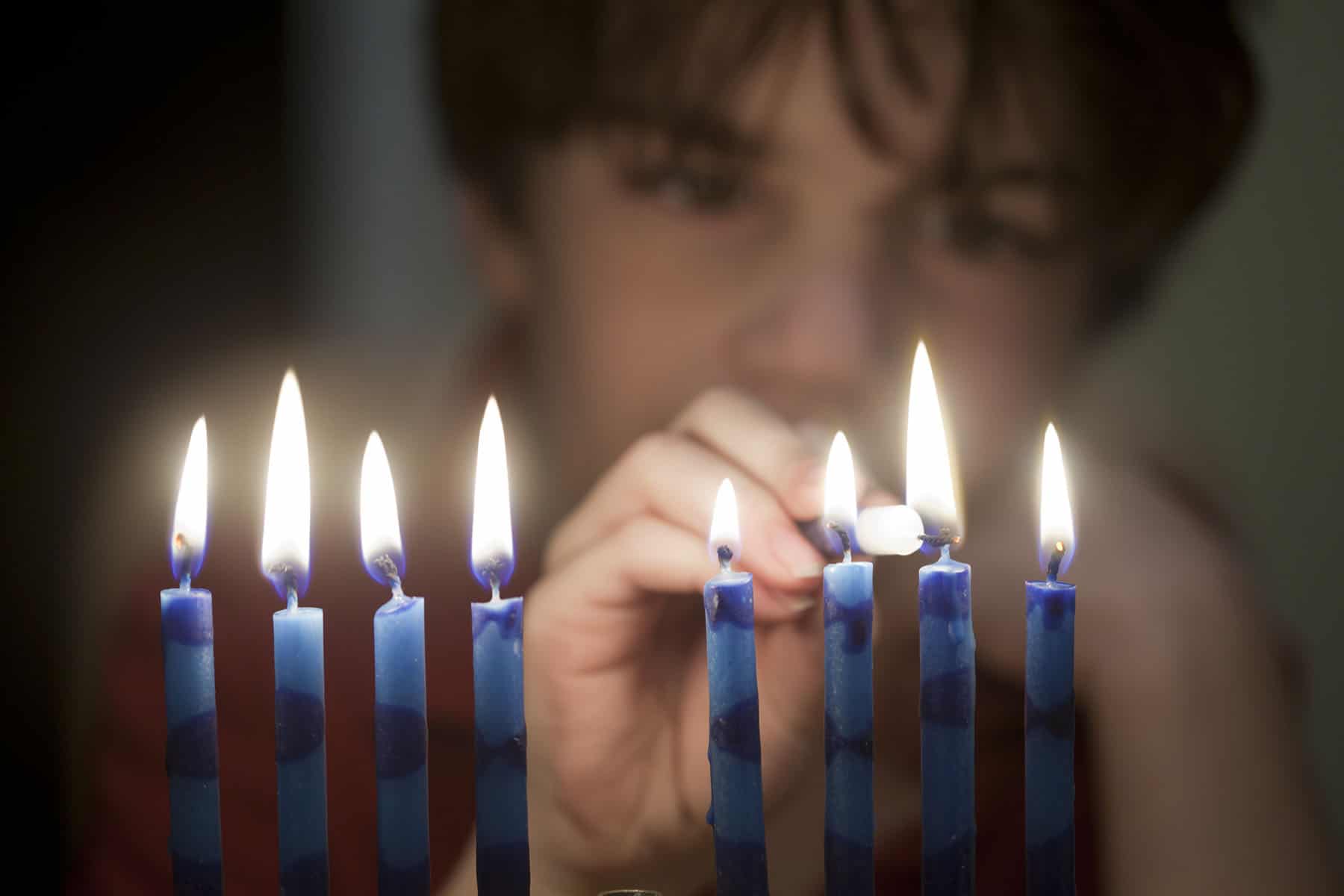
The Hanukkah story is commonly discussed as an epic battle over identity. The Jews had to fight to stay Jewish; miracles happened; light triumphed over darkness. That’s big stuff.
But those big ideas would have little meaning unless we took the time to light Hanukkah candles. That principle itself is a big Jewish idea — we translate theory into practice, the spiritual into the ritual, the epic into the singular act.
I can spend years asking myself, “Who am I?” But it won’t guide me as much as asking, “What should I do now?” The concrete is always more relatable than the abstract.
I can spend years asking myself, “Who am I?” But it won’t guide me as much as asking, “What should I do now?”
Jewish organizations that want to strengthen Jewish identity might want to follow that approach: Focus on the act and let the identity happen. There’s certainly a long menu to choose from: Visit a sick person in the hospital, light the Shabbat candles, host a Shabbat meal, take a Torah class, put mezuzahs in your home, assist the needy, etc.
This is the approach of Chabad, arguably the most successful Jewish outreach organization. Their thousands of emissaries around the world follow the same blueprint: They invite and enable Jews to do a mitzvah, what they call “a good deed.” They don’t ask you to change your lifestyle or become more “religious.” That may be a result, but it’s not their focus. Their focus is on honoring the singular good deed.
This is also how life works. We build our lives one deed at a time, one choice at a time. Eventually, these choices and deeds add up to determine who we are and shape our identities.
Who I am depends on what I do. Let’s reflect on that tonight as we continue to light the Hanukkah candles.