fbpx

December 15, 2020

Hanukkah “Maccabees” Story Reenacted at Drive-Thru

Wielding a hammer and shield, Judah the Maccabee resisted an order from the arrogant, fart-breathing, broccoli-loving King Antiochus that the Jews cease all religious practices.

The choreographed fight scene that followed between the protagonist and antagonist of the Festival of Lights unfolded not in the land of Judea, or even inside a conventional theater, but before a backdrop erected in a downtown Los Angeles parking garage as part of the family-friendly “Maccabees: A Drive Thru Experience.”

Featuring one dozen live actors, a giant inflatable menorah and a trio of stations consisting of live reenactments of the Hanukkah story, the interactive and experiential drive-thru—an increasingly popular form of entertainment during the COVID-19 pandemic that has allowed people to come together without getting out of their cars—concluded a limited five-day run on Sunday, while drawing families from all backgrounds, Rabbi J.J. Duchman, creator of the drive-thru, said.

“While 95-percent of all in-person celebrations were cancelled, we were able to maintain this and bring it to Orthodox, Conservative and Reform families and even non-Jewish people,” Duchman said in an interview.

“Maccabees” was held in a multilevel parking garage near the Staples Center.

On Sunday, I attended the drive-thru with my dad and four-and-a-half-year-old nephew, who barely could contain his excitement as staff people dressed up as dreidels and Maccabees waved our vehicle inside the garage.

Inside, a sign explained that by tuning into 93.1 on the FM dial, we could hear music and dialogue from the show. This was pretty cool, as was the giant inflatable menorah that was set up at the entrance. After we drove through, a masked staff person asked us if we wanted to have our photo taken.

Then we arrived at the first station, where a video featuring a turban-wearing narrator provided historical background for the Hanukkah story, explaining how it was set in Judea during the reign of the Seleucid Empire, among other information that likely went above my nephew’s head.

At the second station, a live actor portrayed the priest Mattathias, Judah’s father, who defied a guard that had been dispatched by Antiochus to stop the Jews from celebrating Shabbat. A fight scene ensued.

The final station depicted the ultimate showdown between Judah and Antiochus. Crowd-pleasing swordplay led to Antiochus’ defeat, which segued into Judah discovering oil in the wrecked temple, oil seemingly enough for one night but miraculously lasting for eight.

The rededication of the temple – the basis for Hanukkah, which literally translates to “rededication” – followed.

The 30-minute drive-thru blended education, family-friendly theater and only slightly irritating bumper-to-bumper traffic.

The 30-minute drive-thru blended education, family-friendly theater and only slightly irritating bumper-to-bumper traffic.

Lasting a breezy 30 minutes, the event also underscored how community leaders like Duchman have not let the pandemic get in the way of offering programming for the community.

The final video segment of the drive-thru offered a brief message about Duchman’s recently launched nonprofit, Power of Youth, which he founded with his wife, Frumie, and which seeks to provide children with opportunities to discover joy.

Judging by the smiling faces of children attending the drive-thru on Sunday, the husband-and-wife team are succeeding at this worthwhile mission.

Hanukkah “Maccabees” Story Reenacted at Drive-Thru Read More »

Netanyahu, Gantz Sign Jewish Unity Document

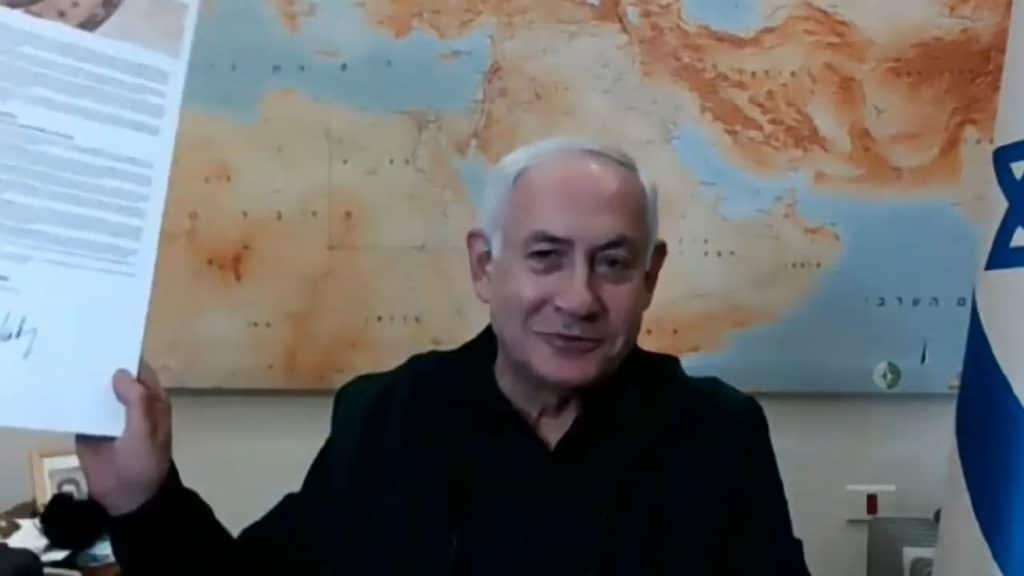
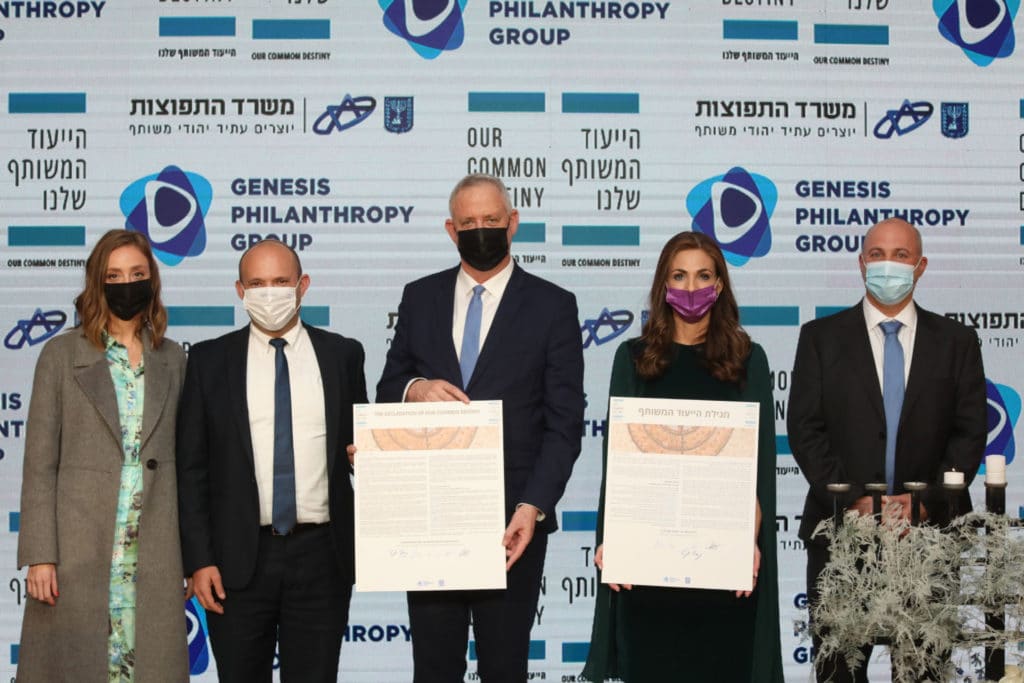
Israeli Prime Minister Benjamin Netanyahu and Defense Minister Benny Gantz were among the Israeli leaders who signed a Jewish unity document on December 14.

The document is a declaration from Our Common Destiny, an initiative from The Genesis Foundation in partnership with Israeli Ministry of Diaspora Affairs and guidance from Israeli President Reuven Rivlin’s office. The declaration states, “Throughout history, even as we emerged from horrific death camps, we never abandoned our principles. Nor did we forsake our prayer and hope to return to our Land and establish an ideal society. We strive to be a nation that will bring blessing to all nations, promote peace and prosperity the world over, uphold our values and traditions, and maintain our commitment to keep the ‘Ways of G-d, ways of righteousness and justice.’”

The declaration goes on to acknowledge that the Jewish community worldwide is “experiencing the challenges of shifting Jewish identities and diminishing affiliation. In view of these concerns we believe that the time has come to rise above internal disputes.” In order to achieve Jewish unity, the declaration focuses on five principles: security and well-being, mutual responsibility and connection, strengthening Jewish identity, light unto nations and world development and improvement.

“For the sake of our People we seek peace and we seek goodness, and we believe that we must act together for the benefit of the entire world,” the document concludes. “We make these pledges because of our commitment to our shared destiny and to the enduring and eternal significance of the People of Israel.”

The signing of the declaration took place at the Tower of David Museum in Jerusalem; Netanyahu attended the event via Zoom since he has to quarantine after being exposed to someone who has COVID-19, The Jerusalem Post reported. Netanyahu called the document signing an “important day” and that he was “excited” to see public menorah lightings happen across the world.

“There are still phenomena of racism and antisemitism and we must fight them with fearless determination,” Netanyahu said. “But the light is immeasurably greater than the darkness. If we continue to adhere to the policies we have pursued to strengthen Israel’s power, we will bring more achievements and more peace alliances, more prosperity and pride for us and our brothers and sisters abroad.”

Gantz, who attended the event in person, said, “We are only as strong as we are united beyond our differences. We belong to one another and to the larger story of our people. The Hanukkah holiday symbolizes the story of the common destiny that we mark today, our eternal concern for our brothers and sisters, the understanding that we are connected to each other, our willingness to act for Our Common Destiny.”

Another attendees in-person and virtually included Israeli Minister of Diaspora Affairs Omer Yankelevich, New Right Knesset Member Naftali Bennett, Jerusalem Mayor Moshe Leon and Genesis Philanthropy Group co-founder and trustee Mikhail Fridman.

Netanyahu, Gantz Sign Jewish Unity Document Read More »

A Catastrophe in the Red Sea is Imminent

Hosting at least 365 stony coral species and more than 1000 species of fish along its entire coastline, the Red Sea is categorized as one of the most productive coral reef ecosystems in the world. Not only do marine organisms depend on the productivity of coral reefs but so do people. In fact, 28 million people living along its coastline throughout Yemen, Saudi Arabia, Jordan, Djibouti, Eritrea, Sudan, Egypt, and Israel depend on the Red Sea’s vast ecosystem for food and as a source of livelihood.

Annual tourism revenues hover in the $12 billion range, and the yearly value of fisheries amounts to approximately $230 million for the region. Economics aside, the rich biodiversity the Red Sea contains also has the potential to yield new advancements in medicine as antiviral drugs and anticancer agents have already been developed using extracts of marine sponges from reefs in the Caribbean.

But on top of all of this, coral reefs serve a supremely important role in terms of regulating the amount of carbon dioxide in Earth’s atmosphere. Reef building corals, like ones located in the Red Sea, contain photosynthetic algae, known as zooxanthellae. Through photosynthesis, these algal organisms remove carbon dioxide from the water to make food in the form of carbohydrates that both the zooxanthellae and the coral polyps can consume. In a way, they act like underwater versions of rainforests, but like their terrestrial counterparts, coral reefs are under threat from a wide variety of stressors including ocean acidification, rising coastal urbanization, and overexploitation of marine resources.

But now, another threat is endangering the Red Sea and its diverse ecosystem; an impending catastrophe whose damage dwarfs the 1989 Exxon Valdez Oil Spill.

Another Giant Oil Spill

60 kilometers off the west coast of Yemen, a country currently experiencing a brutal civil war, lies the Safer Floating Storage and Offloading (FSO) tanker. Since its takeover by Houthi rebels in 2015, the FSO tanker has not undergone any maintenance to prevent its decay, which researchers now fear is nearing its final stages.

If the vessel does indeed decay to the point of leakage, the consequences would be devastating. The first thing to consider in this plausible scenario is the scale of the disaster by examining the infamous Exxon Valdez incident. 260,000 barrels of oil were spilled covering 1,300 miles of coastline and killing hundreds of thousands of marine wildlife animals in the process. Even 30 years later and intense clean-up efforts, certain areas of Alaska’s Prince William Sound still contain large traces of crude oil. By contrast, the Safer FSO tanker holds 1.148 million barrels worth of crude oil, more than four times the volume of Exxon Valdez. Plus, a massive spill any time in these winter months would be even more destructive as winter currents can more widely disperse oil.

“Coral reefs line almost all 4,000 kilometers of the Red Sea’s coastlines and also surround multiple islands within it, so the oil that spills in any part of the Sea threatens these valuable ecosystems,” says Prof. Maoz Fine of Bar-Ilan University’s Goodman Faculty of Life Sciences and the Interuniversity Institute for Marine Science.

A Geopolitical Nightmare

Currently, the Houthis, an armed political movement, control access to the Safer FSO single-hull tanker. Up until recently, they have denied the UN’s requests to board the vessel to develop proper risk impact analyses and contingency plans in the event of an otherwise likely spill. Allowing the UN’s involvement would be necessary in preventing the spill from occurring.

However, Under-Secretary-General for Humanitarian Affairs and Emergency Relief Coordinator, Mark Lowcock, remains wary of the Houthi authorities reluctant cooperation. He noted that similar assurances were made by the Houthis in August 2019 before being withdrawn the night before the UN inspection team was supposed to board the vessel. Regardless, the lack of smooth cooperation has impeded the UN’s ability to take concrete steps to prevent the potential spill, despite multiple warnings of the FSO tanker’s degradation.

“Not only are Red Sea ecosystems and the livelihoods of 28 million people at stake, but an oil spill could aggravate the security situation in the region as vital resources become polluted, scarce, and contested,” says Inger Anderson, Under-Secretary-General and Executive Director of the United Nations Environment Program (UNEP). Anderson predicts the entirety of Yemen’s fisheries would be affected within days and spark an estimated $1.5 billion worth of damage over the next 25 years. She warns that a spill of this magnitude would also prompt the closure of Yemen’s nearby port in Al Hudaydah for at least six months, thereby causing food and fuel prices to spike drastically. Other countries bordering the Red Sea would also be similarly affected in due time.

“Responding to a spill would mean containing and recovering the oil at sea and cleaning up the shoreline, but it will take years for ecosystems and economies to recover,” says Anderson. “To top it all, the COVID-19 crisis has relegated the oil spill issue further down the priority list of regional States.”

Can this be Prevented?

In the absence of assessment procedures, the only way to truly eradicate the threat of the Safer’s massive oil spill is to physically remove the oil from the vessel. However, this requires rounds of necessary inspection, appropriate repairs, and proper maintenance in order to safely extract the oil before disposing of the deteriorating tanker altogether, a proposal outlined by Martin Griffiths, the UN envoy for Yemen. Unfortunately, this response strategy has not been initiated due to the Houthis noncompliance despite the Yemen Government’s approval.

According to a policy brief article published on December 15, 2020 in Frontier in Marine Science, the authors write that 4.8 million barrels of crude oil and refined petroleum products normally pass through the Red Sea each day. The authors recommend the immediate drafting of leak containment strategies specific to the Red Sea’s water currents and urge oil companies who transport their products across the Sea to make yearly contributions towards spill mitigation funds regulated by the UN.

Focusing global efforts towards clean, renewable, and sustainable energy is critical for the tumultuous years to come. Without shifting away from the reliance on fossil fuels, the routine transport operations of oil across our waters will continue to threaten marine ecosystems and the communities that depend on them. It’s not just the Safer spill that needs to be prevented, it’s the other potential incidents that are to likely happen in the future.

ZAVIT – Science and Environment News Agency

A Catastrophe in the Red Sea is Imminent Read More »

NY Hebrew School Website Hacked With Nazi Imagery, Leaked Personal Information

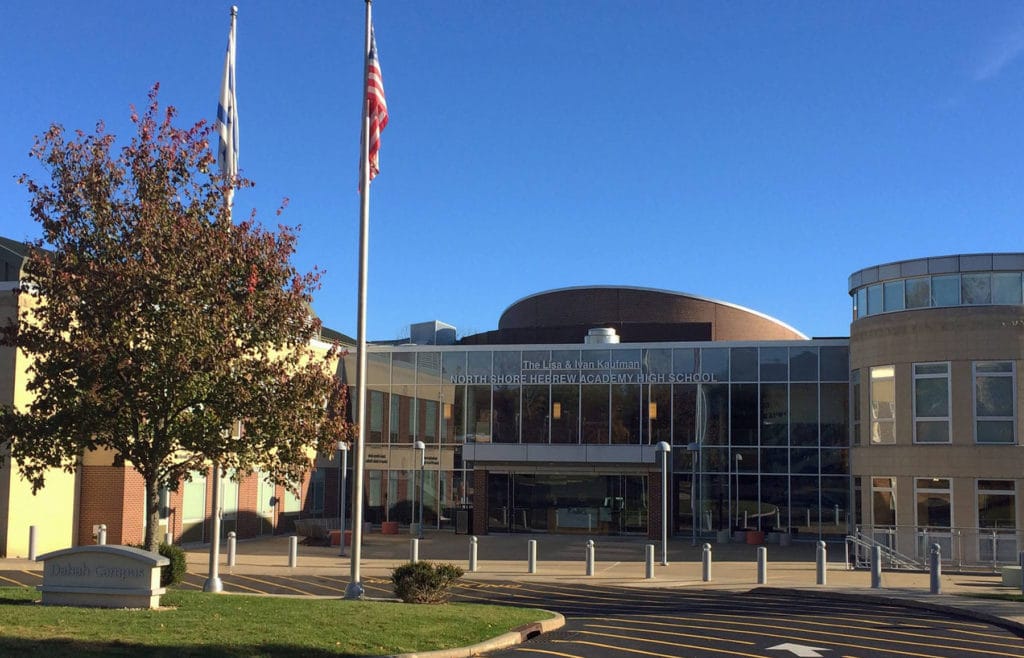
A Hebrew school in Long Island, New York, was hacked with neo-Nazi imagery that also resulted in leaked personal information about students enrolled at the academy.

The school that was targeted was The North Shore Hebrew Academy in the Great Neck area. The Stop Antisemitism.org watchdog first tweeted about the incident, sharing a video of “Nazi songs, imagery, messages” being played on a student’s laptop and noting that the hackers “also leaked students’ and teachers’ addresses and credit card information.” The Jewish group also tweeted screenshots from the hack, showing messages such as “stop editing k— I can see your webcam” and “May Allah save your soul.”


Additionally, the hack also resulted in images of Adolf Hitler and a fake application for a field trip to Auschwitz with the deadline being “January 1945” and that students and their guardians will have to “declare themselves as Jews” in a Nazi office.


Daniel Vitow, the headmaster of the school, told The New York Post that they were working with law enforcement on the matter.

Jewish groups condemned the hack.

“Appalled to see antisemites targeting a Jewish school with cyberhate,” Anti-Defamation League (ADL) CEO Jonathan Greenblatt tweeted. “[ADL New York/New Jersey]
is working with school administrators to solve the problem and with authorities to identify the culprits.”


Roz Rothstein, co-founder and CEO of StandWithUs and the daughter of Holocaust survivors, similarly said in a statement, “StandWithUs condemns the disturbing antisemitic images and photos used to hack the system of the North Shore Hebrew Academy in Great Neck, NY. We value our long-standing relationship with this school community, including our many High School Interns there over the years, and have reached out to learn more and offer our support. We thank the Nassau County Police Department for investigating this incident and for ensuring the school is safe for our students. We urge anyone with helpful information to please contact the police department.”

Stop Antisemitism noted in a later tweet that this is the first time that a Google video platform, which the school was using, has been hacked. “Could yesterday’s worldwide Google outage have given these sophisticated hackers an entry way into the school?” they asked.

Local leaders also denounced the hack.

“I am disgusted by the anti-Semitic online attack on the North Shore Hebrew Academy,” Nassau County Executive Laura Curran said in a statement. “There is a zero-tolerance policy for anti-Semitism or any kind of bigotry in Nassau County. We will never accept anyone being abused or intimidated in this county because of who they are.”

New York State Senator Anna Kaplan, a Democrat, similarly said in a statement, “It’s truly unthinkable that anyone could be so consumed by anti-Semitism and hatred that they would commit such a vile and repugnant crime against our community during Chanukah, but this is a horrific reminder that hatred and anti-Semitism are alive and well even in our own backyards, and we must ALL speak out in no uncertain terms that we reject it at every opportunity and in every corner of our community. The entire community stands with the students, families and staff of the Shore Hebrew Academy community during this difficult time, and our law enforcement has my full support to ensure this vile hate crime is prosecuted and the neo-Nazis responsible for it are brought to justice.”

U.S. Representative Kathleen Rice (D-N.Y.), whose district includes Long Island, also tweeted that the hack was a “vile anti-Semitic attack” and that “the perpetrators must be held accountable. We will never allow this hatred in our communities.”

The American Jewish Committee thanked Rice “for standing with the Jewish community and for your unambiguous condemnation of antisemitism. Hate has no place in Long Island or anywhere else in America.”

NY Hebrew School Website Hacked With Nazi Imagery, Leaked Personal Information Read More »

Dreaming of a Jewish Christmas

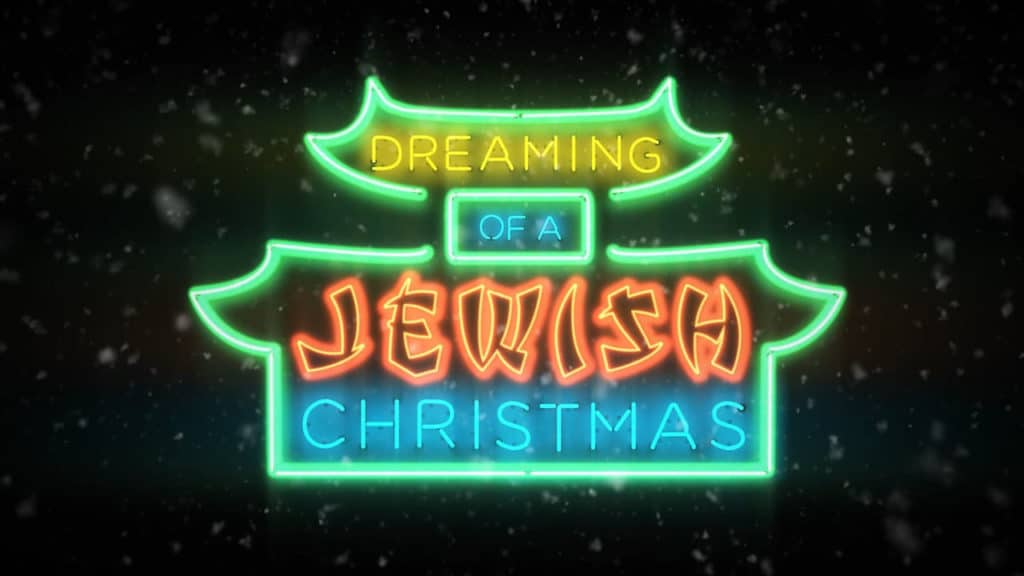
For a sheer mind-boggling scenario it’s hard to beat the movie “Dreaming of a Jewish Christmas.”

How about serenading a roomful of predominantly Jewish customers by a group of Chinese waiters singing “Walking in a Winter Wonderland” — in Yiddish, yet —at a Canadian restaurant on Christmas Eve?

Or that “Rudolph the Red-Nosed Reindeer” is an allegory of the Jewish immigrants — with prominent noses— who swarmed into New York and were derided as “Orientals” by the “real” Americans.

The launching pad for the film’s shenanigans and weighty analyses is the simple fact that almost all popular Christmas songs were the works of Jewish composers and writers, many of whom — like the pioneer moguls of Hollywood — were emigrants from Russia.

almost all popular Christmas songs were the works of Jewish composers and writers.

The most prominent exemplar is, of course, Irving Berlin, whose “I’m Dreaming of a White Christmas” is considered the biggest song hit of all time (even if Wold War II GIs, stationed in remote parts of he world, adjusted the title to “I’m Dreaming of a White Mistress.”)

Other famed composers and writers of Christmas songs — many with Anglicized names — are Mel Torme, Jay Livingston, Sammy Cahn, Joan Javits, Phillip Springer, Johnny Marks, Felix Bernhardt, Gloria Shayne Baker and Mitchell Parish.

Torme wrote “Chestnuts Roasting on an Open Fire” supposedly in 45 minutes while trying to keep warm during a cold Boston winter.

Analyzing the Jewish Christmas phenomenon of the film, directed by Canadian Larry Weinstein, are such heavyweights as Harvard professor Alan Dershowitz, comedian Jackie Mason and musicologist Rob Bowman.

Some of the Christmas songs were composed to buck up the populace during national crises. “I’m Dreaming of a White Christmas,” which is not about Jesus but about snow, was made famous by crooner Bing Crosby in the wake of the Japanese attack on Pearl Harbor in December 1941.

The songs, and the non-religious sentiments they evoke, found universal echo in the past three years in the Czech Republic, Slovakia, Estonia, Germany, France, Sweden, Switzerland, Finland and Austria, whose television networks have shown the film repeatedly.

Interestingly, the evolution of Christmas from a religious observance to a general feel-good celebration was preceded in colonial America by a reverse development.

The stern pilgrims saw Christmas as a heathen holiday and an excuse for drunken orgies and the governor of Massachusetts ordered all inhabitants to keep working on that day.

Keeping up with their Christian neighbours, American Jews have to some extent secularized Chanukah, with more emphasis on gifts and dreidel spinning than on prayers.

In our days, Christmas has even been drawn into the political arena. Greeting someone with “Merry Christmas” or instead “Happy Holidays” now indicates a person’s political leanings, just as wearing a face mask or not has become a similar division point in pandemic times.

To catch a virtual screening of “Dreaming of a Jewish Christmas” will require some research, said Phil Miller of 7th Arts, the film’s distributor.

He advises interested fans, of whatever religious preference, to Google the film’s title and see if any nearby theaters are streaming it. Some 20 theaters have signed up so far, mainly located in New York state, Arizona

Dreaming of a Jewish Christmas Read More »

Jewish Identity, One Mitzvah at a Time

We spend a lot of time in the Jewish world worrying about the survival of “Jewish identity.” For a tradition that has lasted thousands of years, it’s hard to think of anything more important.

The problem is that identity is an intimidating idea. It’s also nebulous. Lots of people today have more than one identity. They can say “I’m an artist, I’m an activist, I’m an American, I’m a teacher, I’m an atheist,” and so on.

Trying to prioritize these identities feels complicated and unnecessary. If the identities themselves are fluid and open to change, why cast them in stone?

The Hanukkah story is commonly discussed as an epic battle over identity. The Jews had to fight to stay Jewish; miracles happened; light triumphed over darkness. That’s big stuff.

But those big ideas would have little meaning unless we took the time to light Hanukkah candles. That principle itself is a big Jewish idea — we translate theory into practice, the spiritual into the ritual, the epic into the singular act.

I can spend years asking myself, “Who am I?” But it won’t guide me as much as asking, “What should I do now?” The concrete is always more relatable than the abstract.

I can spend years asking myself, “Who am I?” But it won’t guide me as much as asking, “What should I do now?”

Jewish organizations that want to strengthen Jewish identity might want to follow that approach: Focus on the act and let the identity happen. There’s certainly a long menu to choose from: Visit a sick person in the hospital, light the Shabbat candles, host a Shabbat meal, take a Torah class, put mezuzahs in your home, assist the needy, etc.

This is the approach of Chabad, arguably the most successful Jewish outreach organization. Their thousands of emissaries around the world follow the same blueprint: They invite and enable Jews to do a mitzvah, what they call “a good deed.” They don’t ask you to change your lifestyle or become more “religious.” That may be a result, but it’s not their focus. Their focus is on honoring the singular good deed.

This is also how life works. We build our lives one deed at a time, one choice at a time. Eventually, these choices and deeds add up to determine who we are and shape our identities.

Who I am depends on what I do. Let’s reflect on that tonight as we continue to light the Hanukkah candles.

Jewish Identity, One Mitzvah at a Time Read More »

This ‘Chanukah Fun Truck’ Brings ‘Eight Magical Nights’ to Special Needs Children Throughout New Jersey

With the COVID-19 pandemic worsening this holiday season, many people who never had to worry about how they would pay for a holiday meal are now turning to food banks for the very first time. Feeding America says that 80 percent of its food banks are serving more people than they were at the same time last year.

Friendship Circle is one of the fastest growing Jewish organizations in New Jersey, providing a wide array of innovative programming which helps to promote a greater awareness and understanding of both the unique needs and the unique gifts of those with special needs.

Rabbi Zalman Grossbaum is the Founder of Friendship Circle New Jersey and CEO of LifeTown—two organizations that provide social programs for special needs children throughout New Jersey.

LifeTown is a 53,000-square-foot, fully inclusive and accessible center for children with special needs, where they can listen to religious lessons, take cooking lessons, and many more activities.

And with New Jersey having the highest rate of special needs in the country, Friendship Circle’s holiday miracle is helping keep each child’s spark lit. According to the Centers for Disease Control and Prevention, an estimated 24% of New Jersey state residents have a disability.

“I hope that what we are doing here can also be an inspiration to others,” Grossbaum says. “We think of issues like this, where vast numbers of people are facing isolation, you would think there’s nothing we can do. But every single person can do something. Pick up a phone and call somebody. Think of someone who lives alone. Drop off a package at the door. It doesn’t have to be a large package. A small little thought can make such a big difference.”

The children were “in need of some holiday spirit,” Grossbaum emphasized, “even if it’s a small gesture in the face of a larger problem.” With COVID-19 forcing everyone into isolation, Grossbaum recognizes the difficulty for the tens of thousands of children who regularly take part in his programs. “They have been isolated too long,” he said.

LifeTown was born from Friendship Circle’s social mission, transitioning from religious programs to a more “secular mission.” The enclosed village of storefronts aims to be a place where children with special needs can go to take part in everyday activities that many take for granted. You can see a video of how LifeTown works here.

But while many holiday celebrations are virtual this year, Friendship Circle New Jersey added a new spin on helping these children celebrate the holidays with its Chanukah Fun Truck. The Truck comes complete with a large dreidel display, crafts, VR games, an instant photo booth, and holiday treats and prizes. But more importantly, the fun and educational truck is already helping children with special needs and their families celebrate the holiday, making stops at the houses of many Friendship Circle families during Chanukah.

On December 10, the first night of Chanukah, the Chanukah Fun Truck kicked off its tour of home visits to children in Morristown, then leading a Menorah car parade through Morristown, Livingston, and West Orange. Over the course of Chanukah, the Truck is visiting over 100 homes and other locales for its celebration, with more than 250 families expected to visit the truck during the eight-day holiday.

“The lights of Chanukah remind us that even during the most difficult situation we can kindle a light and make the world a better and brighter place,” Rabbi Grossbaum told Jewish Journal. “The challenges that we face this year call on us to be more creative to bring the spirit of Chanukah to people who would otherwise feel isolated and lonely. The smiles on the kids’ faces make the effort worthwhile.”

Friendship Circle New Jersey prides itself in providing exciting, interactive programs that bring to life the spirit and richness of the Jewish traditions, bringing parents and siblings, children and teens with special needs together during the holiday season. And during this pandemic, it couldn’t be a better time.

This ‘Chanukah Fun Truck’ Brings ‘Eight Magical Nights’ to Special Needs Children Throughout New Jersey Read More »

How My 88-Year-Old Grandma and I Found Love

In the spring of 2015, I sat on the 33 bus swiping through Tinder dispiritedly and let out a huge sigh. The San Francisco online dating hustle was wearing on me, and analog dating hadn’t gotten me very far, either. But beyond the confines of my Tinder matches, my singledom looked even bleaker when I compared it to Los Angeles, where my 88-year-old grandmother Hilda had found herself a boyfriend. My 88-year-old grandmother found a boyfriend before I did.

Hilda — affectionately known to her family as Omama (Grandma in German) — had not dated since my grandfather died 20 years earlier. She wore her wedding ring as a tribute to their marriage, which had spanned four decades. Up until recently, she had spent her evenings at Torah Study or watching Jeopardy alone.

My 88-year-old grandmother found a boyfriend before I did.

Omama grew up in Berlin and escaped Nazi Germany on the Kindertransport, an organized rescue effort that brought nearly 10,000 Jewish children to Great Britain from Nazi Germany between 1938 and 1939.

In April 2015, Burbank City Council invited Omama to be honored at City Hall for speaking to middle and high school students about her experience during the Holocaust. They informed her they were sending someone to pick her up and drive her to the event.

Omama was surprised when they sent a 92-year old Austrian Holocaust survivor sharply dressed in leather oxfords and a felt hat. His name was Herb.

When the City Hall event came to a close, Herb drove Omama back to her home in Studio City. As he pulled up to the home she had raised three boys in, he paused to ask, “Would you consider going out to dinner with me one night?”

Omama didn’t give Herb an answer, but the next day, he sent her an email, reiterating his request for a date. Omama called my father (her youngest son) for advice. “I don’t know what to do. I don’t really know him,” she said. My dad told her that he was sure the man was okay, being a 92-year-old. And so, with my father’s blessing, Omama agreed to accompany Herb to dinner.

Omama and Herb quickly bonded over their trauma of escaping the Nazis and the experience of rebuilding their lives in Los Angeles. Their once-a-week meetings expanded to frequent companionship. Herb drove Omama to the theatre and to Trader Joe’s, and Omama made Herb dinner. Soon enough, she was no longer watching Jeopardy alone. She began to fondly refer to Herb as “Herbie.”

Omama was especially impressed that Herb could drive at his age. He was willing to drive her wherever she wanted to go, including to Lake Hollywood for her daily stroll with her walking group.

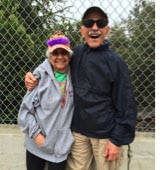
On May 27, 2015, I received an email from Omama containing a photo of Herb and her at Lake Hollywood. I replied, “Herb is so cute!!!!  Maybe soon I will have a boyfriend too!” Omama quickly wrote me back: “Love is in the air so you will have one soon.  Love, Omama.”

Omama and Herb at Lake Hollywood

It turned out that Omama was a fortune teller. Within the year, Christian (6’3” with a bio proclaiming “Let’s do art things”) appeared on my Tinder screen. I swiped right and asked if he’d like to meet up on Sunday. “I have plans Sunday. Thursday?” Ah, a man with plans. A man who schedules plans! A millennial unicorn!

I met Christian at a hip bar in the Mission district. I walked slowly from work to the bar, fearing that I’d be early, yet when I approached the front door, I saw that he was early as well. We talked for hours and drew on a piece of paper together. Art things. We drew intersecting lines over each other’s, lost in good conversation and smoky mezcal.

I called my parents to tell them my good fortune: I had met someone who I like who also likes me. “But you won’t like his name,” I said. Jesus? No. Christian? Yes. His German last name elicited the question of what his grandparents were doing during World War II. But once my parents met Christian, they approved of him too, of his gentleness, his enthusiasm to converse in German with my father or play tennis with my mother and the gifts he’d bring for their cat.

After three months of dating Christian, I moved to the East Coast to finish my Masters of Social Work. He wrote me letters and sent flowers after I presented my thesis. One weekend, he visited me at school, and we spent our time together in a Boston walk-up brownstone, strolling around in the warm summer night, drinking wine and laughing. As Christian boarded his flight back to San Francisco, I called my dad and said, “I think I’ve found my Herbie.”

Christian and I have been together for almost five years now. We had intended to be married in front of our family and friends this past October, but the coronavirus thwarted our plans. Deciding not to postpone our nuptials, we were legally married by our Rabbi in a private ceremony on October 9, 2020. Our large wedding with family and friends has been postponed to summer 2021. Herbie and Omama, now 94 and 97 years old, are still going strong. God willing, they will be there to say Mazel Tov! I am looking forward to seeing my grandmother pull into the venue’s parking lot with Herbie at the wheel.


JULIA SIMONE FOGELSON is a licensed clinical social worker and psychotherapist. She lives in Oakland, CA, with her husband Christian and their dog Clover.

How My 88-Year-Old Grandma and I Found Love Read More »

david suissa podcast curious times

Pandemic Times Episode 112: Is the Vaccine the Light at the End of the Tunnel?

New David Suissa Podcast Every Tuesday and Friday.

Personal reflections on the miracles and challenges ahead.

How do we manage our lives during the coronavirus crisis? How do we keep our sanity? How do we use this quarantine to bring out the best in ourselves? Tune in and share your stories with podcast@jewishjournal.com.

Listen on Apple Podcasts

Listen on Spotify

Listen on Stitcher

Follow David Suissa on FacebookTwitter and Instagram

Pandemic Times Episode 112: Is the Vaccine the Light at the End of the Tunnel? Read More »

2021 Preview: Israel Awaits Restoration and Transformation

We wait. Israelis wait.

What for?

We wait for COVID-19 vaccinations to begin — hopefully as soon as next week. The prime minister of Israel is slated to take the first shot on Saturday night, live for everyone to watch.

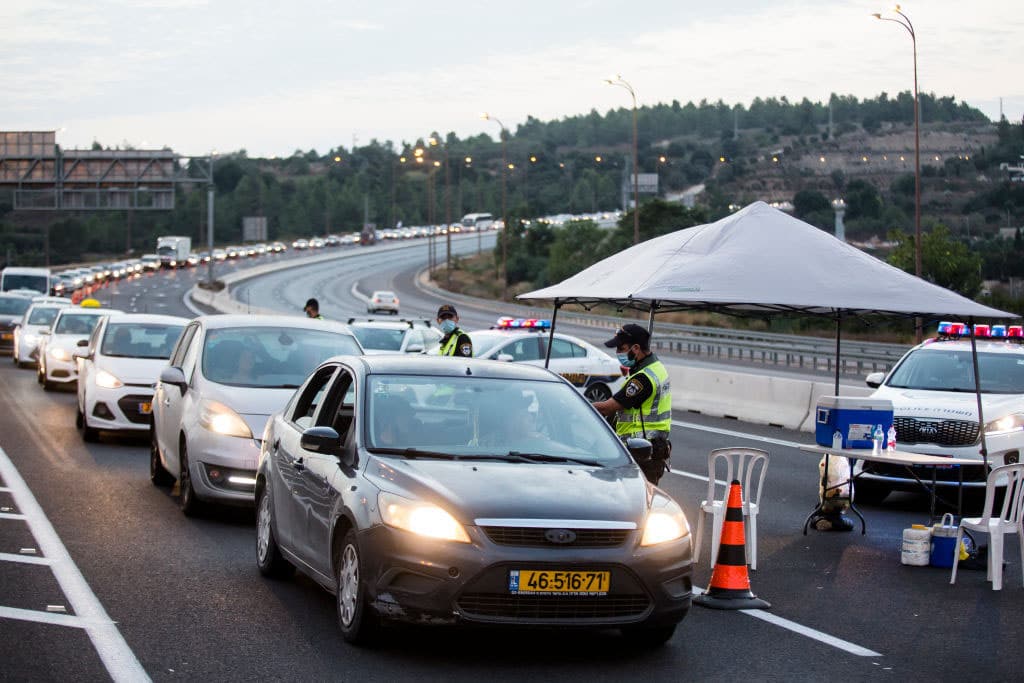
We also wait for a third lockdown. I know, it’s quite absurd to discuss a third lockdown alongside the vaccine, but that’s the way things are. Today in Israel, 2,200 new infections were registered. The cabinet already decided that when we hit 2,500 new cases, all commerce will be shut down — again. If this will not be sufficient, we are headed the way of the Netherlands (who just started their own lockdown).

We also wait for next Wednesday, December 23. That is the last day in which new elections can be prevented. If there is no political turnaround by then, and no legislation passes by which to mark an agreed-upon election day, then March 23 it is. Mark your calendars: this is three days before Passover. A holiday we hope and expect to celebrate with our extended families — that is, if all goes well with the vaccine.

We wait.

What for?

We wait for 2021. One of the nice things about being Jewish is the ability to live with a two dimensional calendar. We live by the Jewish calendar and also by the Gregorian calendar. We conclude a year before Rosh Hashanah but can add a midterm conclusion at the end of the secular calendar that we use alongside most of the rest of the world.

So we wait for 2021. We wait for it to be the reverse of 2020. In the year that is about to end, the world turned upside down because of the pandemic, and Israel’s politics remained unmoved. Immobile. Businesses closed down, patients died on respirators, hospitals worked in emergency mode, civilians stayed indoors, offices were empty, roads vacant. Everything changed because of the pandemic. That is — except our political system.

Everything changed because of the pandemic. That is — except our political system.

Our politicians kept saying that we are in a special situation, that these are no ordinary times. But their actions did not befit their words nor the state of affairs. They kept using polarizing language, kept plotting against one another and kept looking for an immediate political gain rather than the greater good. For us, the people, 2020 was the opposite of 2019. For our politicians, 2020 was the undisrupted continuation of 2019.

So we wait for 2021 to be the opposite of that. We wait for 2021 to be a year in which the old habits — those of 2019 — will be restored. We wait for restaurants to open up, for offices to fill, for roads to be congested, for businesses to compete, for families to celebrate as families. To sit to the Seder (did I mention that the Seder is possibly just three days after Election Day?) with parents and brothers, with nephews and aunts. We want 2021 to be like 2019 except for one thing: politics. We wait for our political arena to be turned upside down in 2021. It is time for our politicians to go through the hell and fire that beseeched their constituencies this year.

2021 ought to be a year of restoration of civilian life and transformation of political life. So, we wait. For the vaccine to perform its magic. For the lockdown to put a final nail in the pandemic’s surge. For the Knesset to dissolve and let Israel have a go at political transformation. On New Year’s Eve — a day I never considered as my holiday — I might drink to that.

2021 Preview: Israel Awaits Restoration and Transformation Read More »