I am a white Ashkenazi (European) Jew and I have a genetic condition called G6PD Deficiency. This condition, which affects those with Middle Eastern, African, and some Asian ancestries, has an evolutionary benefit in that it provides protection against malaria. But for many of those with the condition, it also requires avoidance of medications such as aspirin, certain types of antibiotics, and foods such as mint and legumes. G6PD Deficiency can be dangerous for those who are not aware they have it.
What does this have to do with antisemitism? On the progressive left, much of the discourse surrounding Israel is implicitly based on the idea that modern-day Jews – especially modern-day Ashkenazi Jews who are white – do not originate in the Middle East and are therefore not descendants of ancient Israelites. Many progressives view biblical narratives as either entirely fictional or as a semi-fact-based account of the history of modern-day Palestinians. This is why memes such as “Jesus was Palestinian” are so popular. This is also why many progressives do not view archaeological evidence as proof of the continuity of Jewish life within the land of Israel.
On a personal level, this line of thinking led a young resident at a university medical center to dispute my history of G6PD Deficiency, as he did not believe Jews are Middle Eastern. He said he had only seen the condition in those who are Syrian or Egyptian. He apologized, however, after a new genetic test he ordered for me came back positive.
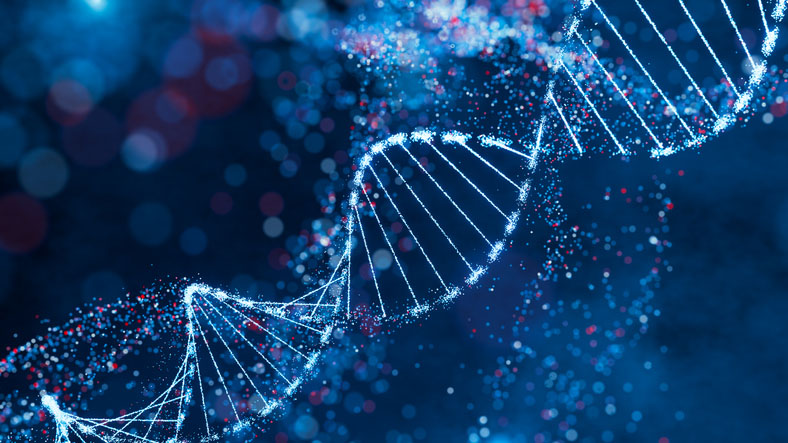
Not surprisingly – especially for those Jews who believe in the veracity of biblical narratives– genetic studies have shown that most Jews, even those who are white, have Middle Eastern ancestry through their paternal Y chromosome lines. For a subset of Jews like me, Middle Eastern ancestry also appears on the genetic maternal line. This is why I have G6PD Deficiency, as it is a maternally-linked condition. My own maternal (mitochondrial) DNA haplotype, which had been classified as “Ashkenazi (European) Jewish” by 23andMe, is shared by some Palestinians.
[For those individuals with Y chromosomes who want to learn about their own paternal histories, deep ancestry testing is now available through FamilyTreeDNA. One Ashkenazi Jewish friend found out that he is related to the Saudi royal family].
Sadly, the IHRA definition on antisemitism leaves out the erasure of Jewish Middle Eastern genetic ancestry as a type of antisemitic speech, perhaps because the question of “who is a Jew” is not exclusively genetic in origin – anyone, of any race or ethnic background, can properly convert to Judaism and be fully accepted as a Jew by the entire Jewish community.
Yet the denial of the Middle Eastern origin of most Jews is a key type of antisemitism, as it erases the basic concept of a collective Jewish peoplehood formed in Israel thousands of years ago. This erasure can then be used to argue that since Jews are not a Middle Eastern people, then Jews have no right to a homeland in the Middle East, even if that homeland exists side-by-side with a homeland for Palestinians, whose Middle Eastern genetic origin is not in dispute. Support for Israel’s existence, even within pre-1967 borders, is therefore directly related to the genetic question.
I urge anyone engaged in fighting antisemitism to emphasize Jewish Middle Eastern genetic origin. Do not accept at face value when someone says “antisemitism is wrong” yet denies Israel’s right to exist as a Jewish homeland. They may not view Jews as Semites.
Simone Joy Friedman is the Head of Philanthropy for EJF Philanthropies.