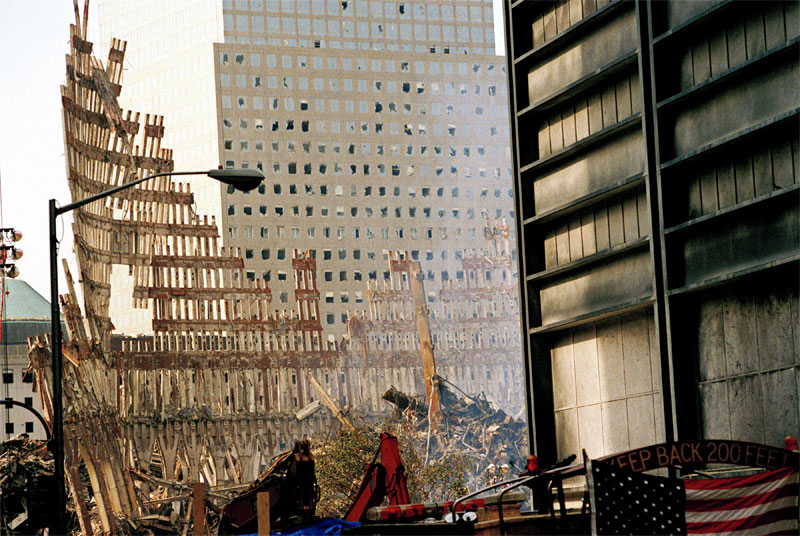
One score and a couple of days ago, Osama bin-Laden’s al-Qaeda henchmen brought acts of terror to this continent and conceived a millennial war dedicated to the proposition that the United States was the Great Satan.
In almost a New York minute, Japan’s attack on Pearl Harbor on December 7, 1941, that red-letter day of infamy in America’s collective consciousness, was supplanted by another day so emblematic of catastrophe, it needed only two numbers to name it. And much of the world, faced with its own brushes with extremism and the special precautions it required, latched on by treating 9/11 as a global symbol of Islamic terror. On that day, the mighty United States saw two of its skyscrapers fall and its military defense fortress under attack.
For some, 20 years feels like yesterday. Others need an asterisk to rouse their memory. To America’s enemies who just outlasted its invasion of Afghanistan, the War on Terror has barely begun.
Whether you feel American boots should have left that dusty, rocky ground a long time ago, there should be no illusions about the symbolism of the departure. The days of American retaliation for 9/11 are over even though there were no terms of surrender or official end of hostilities. Quite the opposite: The Taliban has declared victory. And they are not entirely wrong. They now head a theocratic nation with a misogynistic, homophobic domestic agenda, and with terrorism as its chief export. Jihadist recruiting has been brisk. Stay tuned for more radicalizing videos surfacing on YouTube. Islamists are counting on our complacency and short attention spans. And they are right to do so.
Twenty years from now, 9/11 will have taken place a generation ago. With each anniversary, the rawness lessens.
The passage of 20 years creates a distance that de-personalizes memory. Twenty years from now, 9/11 will have taken place a generation ago. With each anniversary, the rawness lessens. One day it will more resemble other epochal, historical events: the Civil War, assassination of political leaders, earthquakes and hurricanes.
And, as a nation, we will lose the memory of what it felt like on that day.
Remember the hysteria, the surreal atmosphere? Commercial jetliners flying into the Twin Towers. Jumpers from the 93rd floor of the North Tower. Color-coded threat assessments changing daily. New rules on air travel. The London Tube targeted. Suddenly people around the world were avoiding landmarks … just in case.
Americans, especially New Yorkers, were in a state of shock. But were they? A people in shock ordinarily can’t make change of a $20 bill. Disoriented, they have trouble remembering their names. You might find them walking into walls.
It is the telltale sign of grief, the trivial finally put in its place.
New Yorkers regard themselves as a rugged lot. Street tough. Hardnosed. The mass murder of nearly 3,000 of their own, horrific though it may be, is only a temporary setback. Soon after 9/11, routines were taken up again. Trading on Wall Street resumed on September 17. The lights on Broadway theaters returned by September 13. On September 21, the New York Mets played the first professional sporting event in the city where the dust from the fallen World Trade Center had still not settled.
The shortest shiva on record for a city of so many Jews.
The nation insisted on a return to normalcy—as soon as humanly possible. Otherwise the terrorists might claim they had won. But on September 11, they had won, no matter how many New York City restaurants were without reservations by the weekend.
After all, the World Trade Center was a jihadist fantasy writ large. Synonymous with American capitalism. A symbol of its sleek perversions. Even King Kong was no match for its towering, beguiling facade. Imagine bringing such an immense structure—two of them!—to its knees.
Immediately after 9/11, America was in the throes of a feverish patriotism. President George W. Bush reminded the world that “you are either with us or against us.” France’s refusal to join coalition forces that invaded Iraq caused a culinary dustup in Franco-American relations. French fries were renamed Freedom fries. Side dishes became part of the fray. The country music group, the Dixie Chicks, lost their recording career for insufficient moral support of the war. Comedian Bill Maher was yanked from network television for disagreeing with the president.
But those sensitivities would soon diminish. The War on Terror was not popular even though America seemed to be winning it. Hollywood reflected the national mood, producing a number of films critical of America’s involvement and its dehumanizing dimensions—“The Green Zone,” “Lions for Lamb,” “The Hurt Locker,” “Eye in the Sky,” “Home of the Brave,” “The Lucky Ones,” “In the Valley of Elah,” “Camp X-Ray,” “Rendition.” There was no love lost over the war, and still unflattering movies about the war were box office disappointments.
Ironically, two films more sympathetic to America, “Zero Dark Thirty” and “American Sniper,” fared better.
Unlike the Greatest Generation that fought in World War II, the 20-year fight against global terror didn’t inspire the same pride and passions. Following the failure to uncover weapons of mass destruction in Iraq, public debate shifted away from Islamic terror to American deception and power. Even after the Boston Marathon Bombing, on Patriot’s Day, of all days, most Americans refused to get worked up and worried about terrorism.
A curious post-9/11 phenomenon, actually. With the Holocaust, for instance, historical memory, and even cultural representations, produced very little if any ambiguity about moral categories. The Nazis were the bad guys—plain and simple.
With the deep cynicism about the deep state, and the depth of racist accusations against the white and privileged, is there any wonder why anything that smacks of American Exceptionalism won’t arouse public sympathy?
Of course, the present cultural moment might provide an explanation. Anti-American bashing is now fashionable—even among America’s own citizens. With the deep cynicism about the deep state, and the depth of racist accusations against the white and privileged, is there any wonder why anything that smacks of American Exceptionalism won’t arouse public sympathy? A nation seriously considering defunding its police isn’t likely to direct much admiration toward its military.
9/11 is clashing with the current woke culture wars. This past milestone anniversary date provided a reprieve. But the continued ambivalence about American patriotism is making it difficult to know which side the angels are on—with respect to an actual war, the one on terror.