
“The road is long
With many a winding turn
That leads us to who knows where …”
-“He Ain’t Heavy He’s My Brother,” the Hollies
“Phone calls long distance
To tell you how you’ve been
Forget about the losses, you exaggerate the wins …”
-“The Road,” Jackson Browne
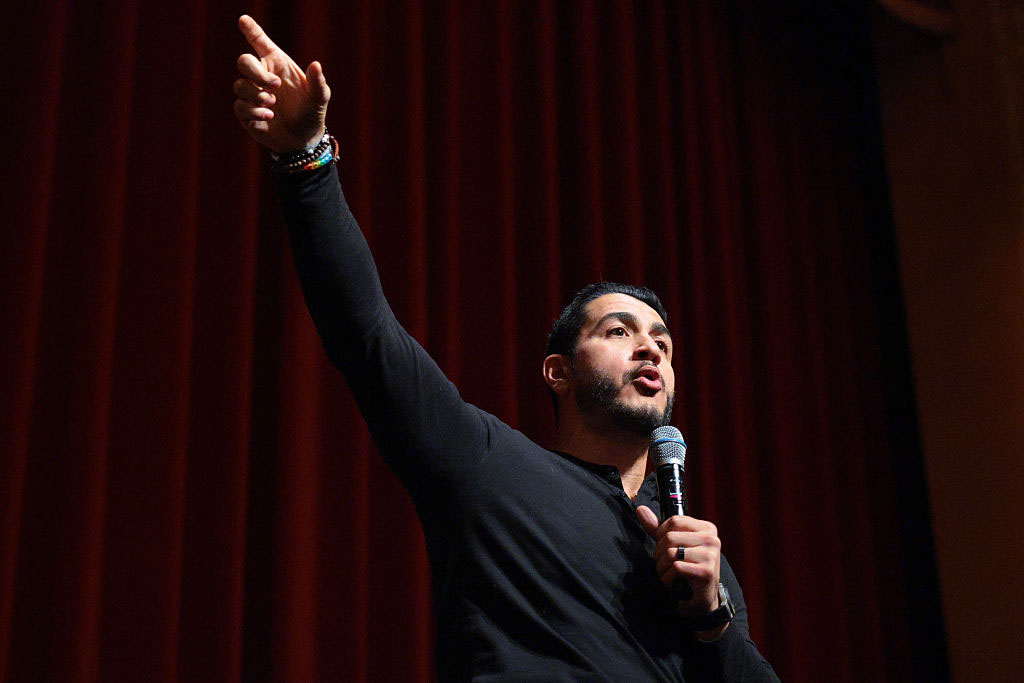
With all its up and downs, I still love the road. Now that my work has come to a screeching halt and there are no shows, I feel like a drunk in a bar who just heard the clanging of the last-call bell but still wants a few more.
I was flying high doing gigs. Some were great: staying in the finest hotels and circling the skies in private jets. Some not-so-great: circling my room in a Motel 6; eating dinner off of a 30-year-old, faded Melmac plate; hopping in a cab at 6 a.m. alone on a rainy morning in Mobile, Ala., to do a local radio show; or taking the 2 a.m. mail train out of Philadelphia back to my 300-square-foot New York studio. I didn’t care. A gig is a gig. It’s a simple life. If you test a new joke and it works, it’s a great night. If not, the road is long and lonesome. That was my life.
For 40-plus years, I’ve been a working road comic. I’ve been almost everywhere at least twice. My dream was to do it until I couldn’t do it anymore. Has the pandemic lockdown made that a reality? Maybe.
Like the Energizer Bunny, working comedians keep going. Mel Brooks said, “If you’re on the merry go round, don’t jump off till it stops.” Redd Foxx, Dick Shawn, Harry Einstein and Al Kelly died while performing. The great George Burns, who lived to be 100, once was asked about retirement. “Retirement at 65 is ridiculous. When I was 65, I still had pimples.”
Comedy, like any job, can keep you young and vital if you enjoy doing it. Most comics are on a lockdown hiatus. How do we stay sane? How do we not get depressed? How do we not eat ourselves out of our clothes?
At the beginning of the pandemic, I joked about it. After two months, I was getting serious. (A serious comedian is like an upbeat funeral home director: bad for business.) I started to ask myself big questions: Will I die from this? Will my wife be OK? Will my kids have a future?
When the student was ready, the teacher appeared. I read that there were two new books on Yogi Berra, a catcher who played 18 seasons with the Yankees. I wondered if the great Reb Yogi had something to say that might help me.
Berra, who died in 2015, was famous for his “Yogi-isms.” For example: “When you come to a fork in the road, take it.” I think he meant just keep going — don’t stand still or go back. Moving forward indicates you believe in the future.
“I usually take a two-hour nap from 1 to 4.” When you’re not working, it’s easy to forget what time or what day it is. It’s easy to get depressed. A friend told me he knows when it’s Shabbos because that’s the only day of the week he wears pants.
A serious comedian is like an upbeat funeral home director: bad for business.
“The future ain’t what it used to be.” Reb Yogi meant that we may have to find other ways to grow and be happy; what we thought life was going to be may not be that anymore.
“You can observe a lot by watching.” He meant that it’s good to shift the focus from yourself toward others; watch and learn how they get through this.
“The towels are so thick; I could hardly close my suitcase.” Travel light and don’t overpack your brain with scary nonsense, otherwise you may not be able to close it down at night.
And finally, my favorite: “It ain’t over till it’s over.” Truer words were never spoken. Thanks, Reb Yogi. Now everybody: Play ball! We are all still in this game.
Mark Schiff is a comedian, actor and writer.