Move over Luciano Pavarotti, Placido Domingo and Jose Carreras.
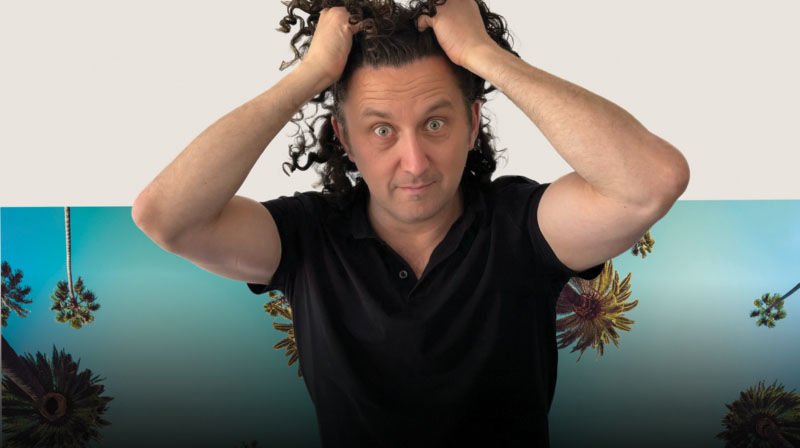
The Three Jewish Tenors are coming to the Orange County Performing Arts Center in Costa Mesa next month, accompanied by the Pacific Symphony Orchestra.
Cantors David Propis, Alberto Mizrahi and David Katz — all of major U.S. congregations — will perform cantorial classics, arias and showtunes. They’re equally at home on the operatic stage as the bimah: Mizrahi has understudied for Pavarotti, Propos’ 1998 Carnegie Hall debut was dubbed "stunning" by The New York Times, and Katz received standing ovations for his starring role in "La Boheme."
The goal of the March 14 concert, presented by the Jewish Community Center of Orange County (JCC), is to raise more than $100,000 to benefit the JCC and participating Jewish organizations. It also aims to bring Jewish music out of the synagogue and into the concert hall: "We’re trying to elevate the work in a way that makes it more accessible to a cross-generational public," says Chicago-based Mizrahi.
The Three Jewish Tenors began during a round of golf between sessions of a cantorial convention in Chicago in 1993. Propis, Mizrahi and Katz’s predecessor, Cantor Meir Finkelstein, were puttering around the course while harmonizing Yiddish songs and snippets of the Verdi opera, "Rigoletto."
The Houston cantor flashed back to the concert his renowned father, Dov Propis, had performed with fellow cantor-opera singers Jan Peerce and Richard Tucker. It was the 1950s — the Golden Age of cantorial music — a time when Tucker and Peerce regularly appeared with symphony orchestras and received the enthusiasm usually reserved for secular stars.
Propis’ mind then flashed forward to the early 1990s, when The Three Tenors — Pavarotti, Domingo and Carreras — had become classical music’s hottest ticket. The opera stars were selling out concert halls and inspiring copycats such as the Three Irish Tenors and the Three Mo’ Tenors.
The light bulb went off inside Propis’ head. "I thought, ‘If they can do it, why can’t we?’" he recalls. "Why not The Three Jewish Tenors?"
The cantor was so sure of his idea that he went for broke — literally — when proposing the act as a fundraiser for his Conservative shul. "I basically pledged my salary for a year if we didn’t make a profit," says Propis, who was vindicated when a 1995 concert with members of Houston’s Symphony Orchestra netted $120,000. In 1996, another Houston concert sold out a month before the performance and raised $350,000.
Concert proceeds from this stop on the tenors’ national tour will benefit the JCC transition fund to the new Samueli Jewish Campus to be built in Irvine, according to David Goldberg, JCC development director.
Propis hopes it will also build some Jewish pride. "After every concert, people tell me how proud they feel to be Jewish," he says. "Having Jewish music in a symphony hall setting gives a new kind of legitimation to Jewish music, and says it can compete with the best."
For tickets ($20-$65) and information about a preconcert reception and dinner, call (714) 755-0340, ext. 123.