
Dear Rabbi,
Although I was raised Jewish, attended Hebrew school and became a bar mitzvah, my family was not particularly observant. At some point, my father — the grandson of Orthodox rabbis — became less and less involved in Jewish life, except during holidays and yahrtzeits.
In my mid-30’s, my non-Jewish wife became pregnant with our first daughter. Having agreed to raise her Jewish when we married eight years before, we chose to go to a rabbi in our community to find out what that meant. We took classes, studied and together discovered the richness and beauty of Judaism. As a result, I have become a ba’al teshuvah and my wife converted to Judaism. We now maintain a strictly kosher home, eat out only in kosher restaurants, observe Shabbat and holidays, are raising our daughter with the love and warmth of our faith, and feel a sense of completeness in our lives.
Ironically, while my wife’s Catholic family has come to accept this arrangement, my family has not. They feel we have become fanatics and argue that our observance of kashrut is irrational and outdated. This has become a source of friction, and I just don’t know what to do, feeling utterly perplexed and in some ways rejected. How do we ease this tension?
Dan
Dear Dan,
Thank you for writing me. Mazal tov on rediscovering your heritage and on returning to God’s path. I do hope that you, your wife and children derive great naches throughout your lives from the sacred way of life that is Judaism.
I am not surprised that some of your Jewish relatives would be threatened by your life. You write that you feel perplexed and rejected. My guess is that your father and family would describe their feelings in precisely the same terms. So I have two suggestions:
1. You are the ones who have introduced a change into the family’s life and way of doing things. So the burden is on you to demonstrate to your family that this change doesn’t mean you don’t love and respect your family and that you will not allow your observance to create a distance between you and your relatives. You can explain that face-to-face or in a letter, but you need to communicate it clearly and soon. Then you need to continue to demonstrate that commitment and connection through your deeds and words until your family comes to trust it as true.
2. That having been said, you and your wife have every right to live an observant Jewish life and to expect respect and honor from your family as well. They don’t have to share your desire to observe, but they must respect your life choices, just as you respect theirs. Your family was observant for thousands of years. The nonobservance was for a mere half-century, at most. So, it is actually true that you are the one returning to the normal ways of your family. And, it should be said, you are doing what you can to assure the continuity of Judaism in your family. How bad can that be, even if it is occasionally excessive?
Above all, be patient. People can adjust to a great deal, but it does take time.
God bless you all,
Rabbi Artson
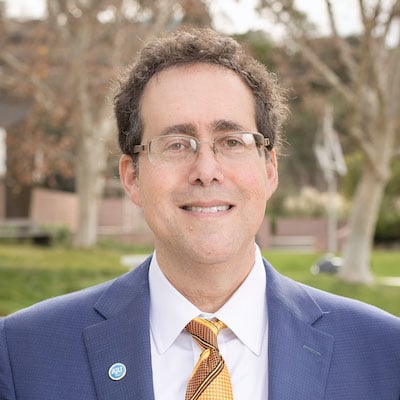
Rabbi Bradley Shavit Artson serves as dean of the Ziegler School of Rabbinic Studies at University of Judaism and is the author of “It’s A Mitzvah! Step-by-Step to Jewish Living” (Behrman House and the Rabbinical Assembly).

































