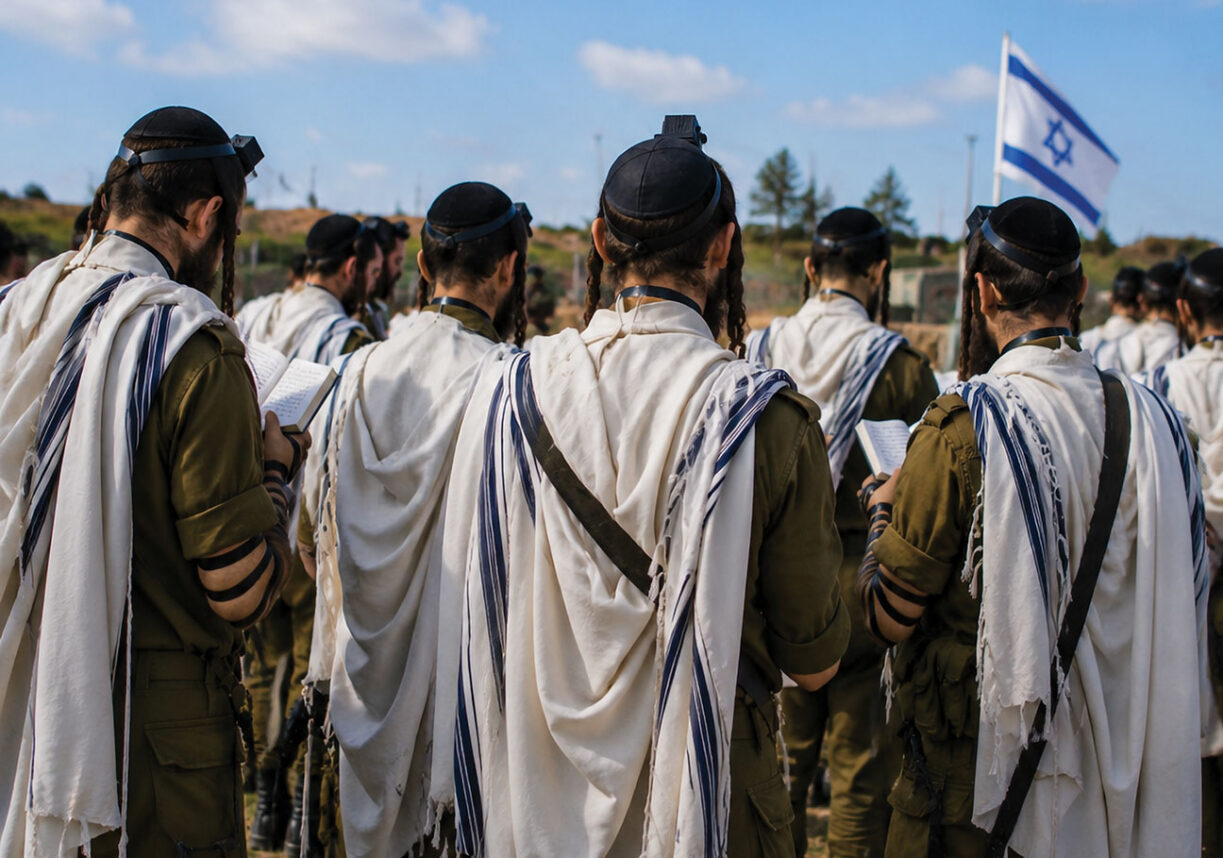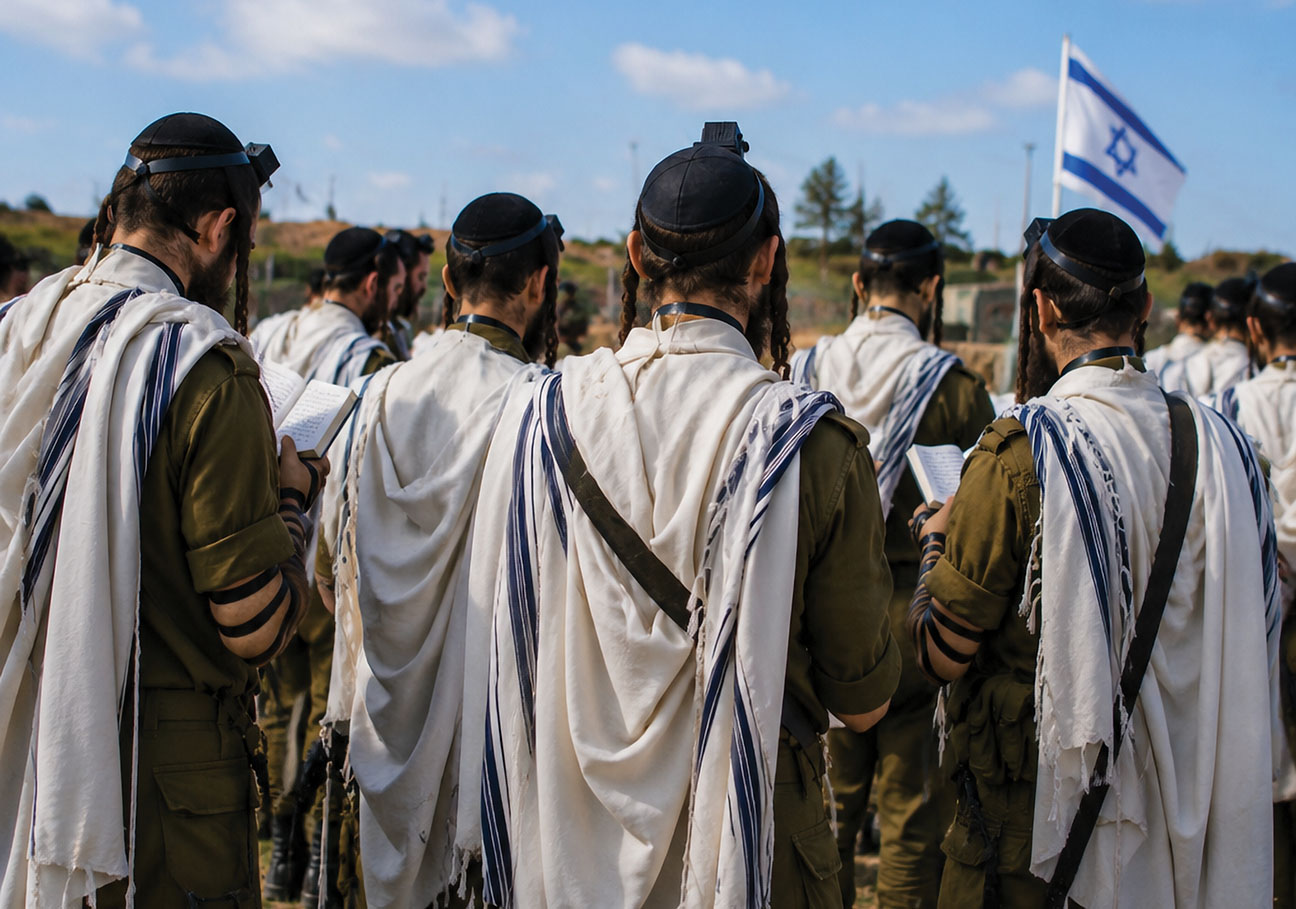
At 18, Jonathan S. made a decision that cost him almost everything. Raised in a Haredi home in Jerusalem, with eight brothers and sisters, he enlisted in the IDF to the Haredi Nahal Battalion unit. Driven by a sense of Zionism and a desire to contribute to his country, he enlisted out of a desire to contribute to the country, despite knowing the consequences. The decision came with a devastating price: his family cut ties with him, and the community he had known his entire life ostracized him.
“People don’t always realize what you’re giving up,” Jonathan said. “For some, it’s not just about joining the army. It can mean losing your parents, your siblings, your friends, your entire community. It also reduces your chances of getting a good shidduch. You have to be incredibly strong to go through something like that.”
The decision also meant serving without the family support system most young soldiers rely on. He was identified as a lone soldier by the IDF and received assistance with rent for a place where he could go on his time off, but he missed his parents and siblings dearly. One day, he decided to go back home and knocked on the door.
“My mom didn’t open it. I called out, ‘It’s me, Jonathan, please open the door.’ I heard my siblings inside, but no one dared opening it. I stood there for a few minutes and kept knocking until I heard my mother say, ‘Go away, you aren’t welcome here.”
Those were the last words he heard his mom tell him. He hasn’t been back since.
When he completed his three years of military service, the difficulties only intensified. The financial assistance he had received as a lone soldier ended abruptly, and he had no home to return to. “While all my friends went back home, I had no place to go back to. Suddenly I needed to figure out what to do and how to survive.”
Now, 12 years later, married and a father to two small children, he said he understands why many Haredi young men hesitate before taking the same step. The fear is not necessarily serving in the army, being uncomfortable or even risking their lives. It’s the fear of having their families and communities turn their backs on them.
For decades, the question of Haredi enlistment remained one of Israel’s most sensitive and unresolved conflicts. Most ultra-Orthodox men were able to avoid military service through an arrangement where full-time yeshiva students are exempted from the draft. What began as a limited exception after Israel’s founding is now a widespread practice, with tens of thousands of Haredi men remaining outside the military system.
The debate intensified dramatically after the Oct. 7, 2023 attacks and the war that followed. As the IDF struggled with manpower shortages and reservists were called for repeated, lengthy deployments, often leaving behind families and jobs, many Israelis questioned why one sector of society remained largely exempt from service. For them, the issue became a matter of equality and shared responsibility.
For many Israelis, the exemptions came to symbolize a profound inequality. While most Jewish Israelis are drafted at age 18 and return for reserve duty throughout adulthood, most ultra-Orthodox men continued their Torah studies, married and raised families while remaining outside the military system.
Within the Haredi community, however, the court’s decision represented a threat to a way of life built around Torah study. Once the blanket exemption was no longer recognized, young men who did not enlist risked facing financial consequences, including losing certain government benefits like discounts in purchasing a home and subsidized daycare and lower taxes. They also risked being arrested for failing to comply with enlistment order. The prospect of enforcement triggered massive demonstrations by Haredi leaders and their supporters, who argued that the state was attempting to force a fundamental change in their religious and communal identity.
For 18-year-old Shlomo Simcha, the son of a rabbi who made Aliyah from the United States, the decision to enlist was ultimately clear. The events of Oct. 7 only reinforced his belief that he wanted to serve his country.
While he supports greater Haredi participation in the IDF, Shlomo does not believe the government’s current approach is effective. He argues that forcing enlistment may actually deepen resistance within the community.
“I think the way the government is handling it is the wrong way,” he said. “There should be a system where people can serve but forcing them is pushing them further away. After Oct. 7, many of my friends wanted to join. But when the law became the focus, it pushed them away,” he said. “The more pressure you put on people, the more extreme some of them become.”
Yitzchak Yaakov Auerbach, 24, from Jerusalem, was born and raised in a Haredi home. He served in a combat unit and since the outbreak of the war with Hamas, he has spent 500 days as a reservist, both in Gaza and Lebanon as part of the 98th Division.
Yitzchak, who is soon to be married, said that most of his friends didn’t enlist. They continued studying in yeshiva, and some had gotten married while he was serving. However, he doesn’t feel like his life or career was held back as a result and he understands those who choose not to enlist themselves. “It’s just not culturally acceptable in our community. They haven’t even thought about enlisting.”
Yitzchak and Shlomo are two of the Haredi soldiers The Journal spoke with. They said they were proud of their service and believe it gave them valuable tools for life. While they believe that serving in the army should be mandatory, they understand the deep concerns that prevent many young Haredi men from enlisting.
To understand why so many Haredim continue to resist military service, one must first understand the world they come from. For them enlisting is not simply a personal decision or a matter of obeying the law. It can mean risking everything they have ever known — their family, their friends, their community and, in some cases, even their home.
Among young Haredi men, the transition from yeshiva life to the military represents a dramatic change, not only in their daily routine but from the entire environment they have been raised in. From a young age, their lives often revolve around Torah study, prayer and a close-knit religious community with strict social and religious boundaries. Many have little interaction with secular society, and some have limited interaction with women outside their immediate families.
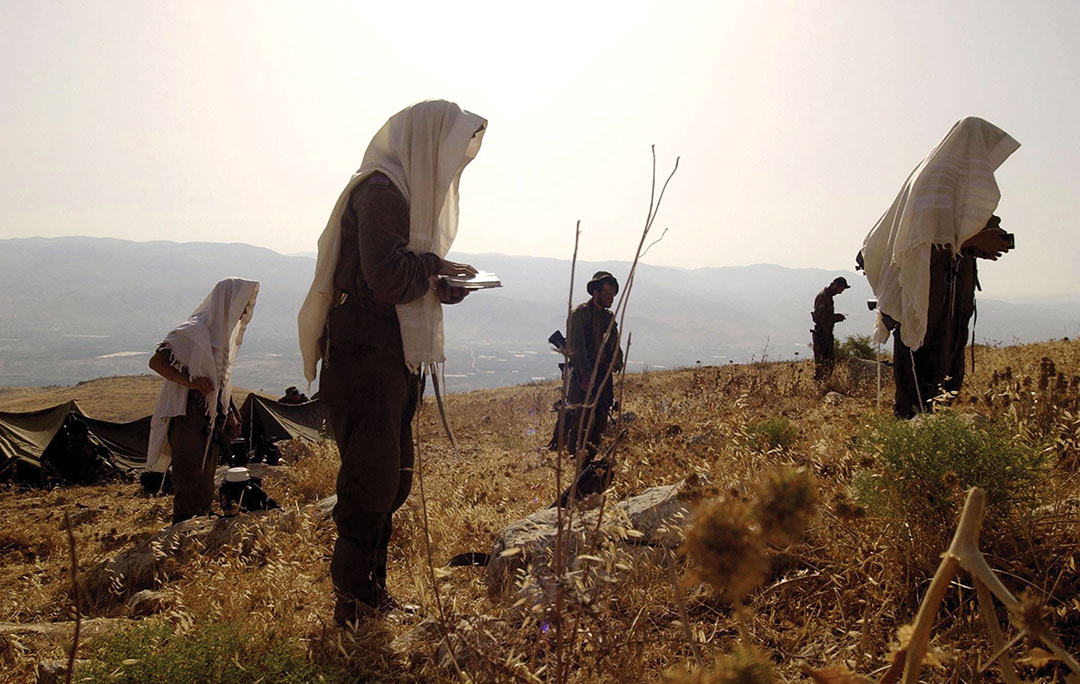
Their concerns are not necessarily about serving the country itself, but about whether they can maintain their religious identity within the military environment. The IDF has created dedicated Haredi service tracks, designed to accommodate religious requirements, including kosher standards, prayer schedules and the ability to observe Shabbat. These arrangements allow Haredi soldiers to serve in a variety of roles, including combat positions for those who choose them, as well as technological, intelligence, administrative and other positions.
Still, for those coming from a community where military service has traditionally been discouraged, the challenge is not only practical but social. Enlisting can mean stepping outside the path expected of them by their families, rabbis and peers — and for some, risking their place within the community they have always known.
David, 26, was raised in Bnei Brak by Orthodox parents who later divorced. Growing up in a Haredi environment, he never knew a single Haredi man who had served in the IDF. Still, from childhood, he pictured himself one day wearing an Israeli army uniform. He knew that making that dream a reality would mean going against the wishes of both parents and the expectations of the community in which he was raised.
“Both of my parents were completely against it, but I was very determined,” he said. The transition proved difficult. After several months of basic training, he struggled emotionally. “I didn’t know what I was getting into,” he said. “There was no one to prepare me.”
Things changed after he transferred to become a combat instructor, a role in which he said he finally found his place. A few months into his service, he was introduced to the Michael Levin Lone Soldier Center by another lone soldier. Soon afterward, he moved into one of the organization’s homes in Jerusalem, where he found the support system he had been missing.
“It was the smartest decision I made during my service,” he said. “The atmosphere, the friendships, the people — they gave me everything I needed.”
Even after completing his military service, he continued living at the center for several months. He later returned there as a counselor to help other lone soldiers facing the same challenges he once did.
For young men who lose their families after enlisting, organizations such as the Michael Levin Lone Soldier Center often become a lifeline. The nonprofit supports approximately 3,500 lone soldiers each year, providing guidance beginning a year before enlistment and continuing for up to five years after discharge. It also operates six residential homes in Jerusalem, Petah Tikva and Herzliya, offering more than 100 lone soldiers not only a roof over their heads but also a sense of belonging. According to the organization, many of the Israeli-born lone soldiers it assists come from Haredi backgrounds and were left without family support after choosing to serve. For them, the center becomes far more than temporary housing — it provides Shabbat meals, counseling, practical assistance and, perhaps most importantly, a community that replaces the one many were forced to leave behind.
After weeks of protests, demonstrations and growing pressure from the ultra-Orthodox political parties, their efforts ultimately succeeded. On July 14, Israel’s parliament approved legislation that effectively preserves the exemption of most ultra-Orthodox men from military service, a move that became one of the most controversial political decisions during the war.
The Knesset approved two measures: one freezing the arrests of ultra-Orthodox men who had failed to report for military service, and another recognizing Torah study as a “foundational value” of the state. Together, the measures represented a major concession by Prime Minister Benjamin Netanyahu’s coalition to the Haredi parties, which had long demanded formal protection of their community’s exemption from the draft.
The decision came at a time when the IDF was facing severe manpower shortages after nearly three years of war in Gaza, Lebanon and against Iran. Each year, approximately 13,000 ultra-Orthodox men reach draft age, but fewer than 10% enlist, according to figures presented to a Knesset committee.
Israel’s military chief of staff, Lt. Gen. Eyal Zamir, warned that the legislation was “clearly and unequivocally inconsistent” with the army’s needs, saying it was unacceptable for the military to grant mass exemptions while demanding unprecedented sacrifices from its soldiers.
Political analysts also viewed the decision as part of Netanyahu’s effort to maintain the support of the ultra-Orthodox parties ahead of upcoming elections. “Netanyahu is trying to ensure that Haredim are going to negotiate only with him after the next elections,” said Shlomit Ravitsky Tur-Paz, head of the Religion and State program at the Israel Democracy Institute.
For Haredi leaders and their supporters, however, the legislation represented a victory in protecting their religious identity and preserving a way of life centered around Torah study. They argued that government attempts to force enlistment threatened the foundations of their community.
We reached out to Jonathan again following the recent developments and asked for his reaction. He said he was disappointed by the decision, believing that both the IDF and young men in the Haredi community could benefit from their service.
“I think it’s a shame,” Jonathan said. “There are many who would like to contribute, but they grow up in a very sheltered environment, and sometimes they don’t even have the opportunity to consider another path. There is so much to gain and learn from serving in the military. If only the ultra-Orthodox community was open to that, I’m sure many men would have been happy to serve.”
Jonathan hopes that whatever solution Israel ultimately reaches, people on both sides will better understand the realities facing Haredi young men.
David, who also paid a personal price for enlisting, said he is troubled by the growing hostility he sees between secular and Haredi Israelis. “I’m Orthodox, and I served in the army,” he said. “Sometimes I feel people put all Haredim into the same box. There are many of us who do serve, and there are secular Israelis who never served, yet you don’t see demonstrations against them.”
Rather than deepening the divide, David hopes the debate will encourage greater understanding between the two communities. “I wish there were more dialogue between Haredim and secular Israelis,” he said. “I hope that, over time, we’ll see more Haredi young men choosing to enlist, not because they’re forced to, but because they want to.”