One of the challenges of living in chaotic and uncertain times is that we’re constantly bombarded by bad news. And then, seemingly out of nowhere, some good news will sneak in. It could be an inspirational sermon, a feel-good story, a spiritual insight, anything designed to uplift us.
Human nature, however, likes to settle in one place. It’s less confusing if we just pick a side. In a sense, the bad news and the good news compete for our minds and hearts. That’s why I often meet people who fall squarely on either side: those who see everything as a blessing, others who can’t stop railing about the darkness of our times.
Of course, they’re both right.
For me, the deepest value of Passover is that it doesn’t let us pick a side. We’re forced to confront the darkness of slavery, just as we are forced to contemplate the immeasurable value of freedom. This dual confrontation—the ability to hold two very opposite thoughts at the same time—is the essence of a healthy mind.
We can confront the unspeakable darkness of the massacres in Ukraine, while not ignoring the incredible outpouring of humanitarian aid to rescue millions of refugees.
We can rail against the rise of terrorism in Israel, while not ignoring that the Abraham Accords have begun to transform the relationship between Jews and Arabs in the Middle East.
We can bemoan the terrible rise in violence in Los Angeles, while also watching a sunset on Santa Monica beach and reminding ourselves that this is still one of the great cities of the world.
We can commiserate that technology is owning our lives, while remembering that we have the free will and agency to take back control.
We can express outrage at societal sins like racism, while not ignoring the significant progress that this country’s system of laws has enabled.
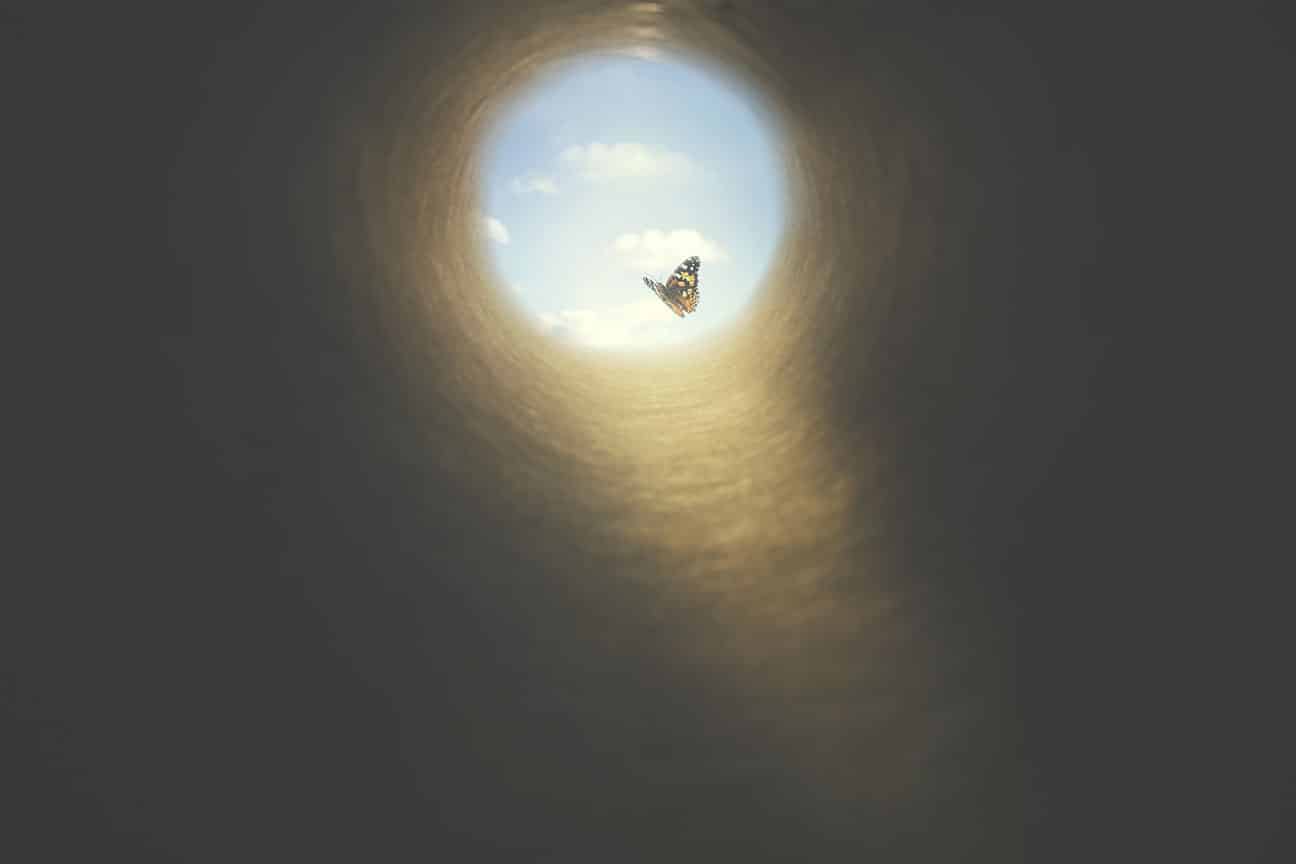
In other words, no matter what human nature says, life is not either/or. We confront darkness, but we don’t ignore the light. We embrace the light, but we don’t ignore the darkness.
The Passover seder can be seen as a great dance between darkness and light. We don’t read our story like a Hollywood movie. Slavery is not a set up for the big ending of liberation. Nothing is resolved. The whole point of the Jewish story is that we’re a work in progress, a messy one. We aim for progress, yes, but we never lose sight of the darkness. If anything, the darkness is there to fuel the drive for progress.
If we have a personal tendency to look at the glass as half-empty or as half-full, the Passover seder compels us to look at the whole glass. Why? Because our lives, our realities, are in that whole glass.
If we have a personal tendency to look at the glass as half-empty or as half-full, the Passover seder compels us to look at the whole glass. Why? Because our lives, our realities, are in that whole glass.
May our recognition of the full glass lead to the creation of more good news, in our lives and in the world.
Shabbat shalom and Happy Passover.