“Shtisel,” the Israeli series about an Ultra-Orthodox family in Jerusalem’s Haredi community, has been a worldwide hit since it premiered its first season on Netflix in 2018, five years after its debut in Israel. Its insular world may be foreign to most, but its themes of love and faith, jealousy, loyalty, social pressures, and generational conflicts are universal.
Ahead of the pandemic-delayed third season’s launch on the streaming service in spring 2021, Temple Emanu-El’s Streicker Center celebrated the last night of Hanukkah with an exclusive advance screening of episode one, preceded by a live, virtual Q&A with series stars Michael Aloni (Akiva), Shira Haas (Ruchami), Neta Riskin (Giti), Doval’e Glickman (Shulem) and writer Ori Elon.
Set four years after the events of Season 2, the premiere was full of surprising developments and one very big shocker that we won’t reveal here. But the cast’s insights during the Q&A were both entertaining and revelatory.
Artist Akiva Shtisel married Libbi and had a daughter in the time jump since the second season. “Will this relationship continue? We’ll see that and his life as an artist and his loving and complex relationship he has with his father,” Aloni said, noting that he had tears in his eyes when he read the script. “I can’t tell if it was from joy or sorrow or a mixture of both.”
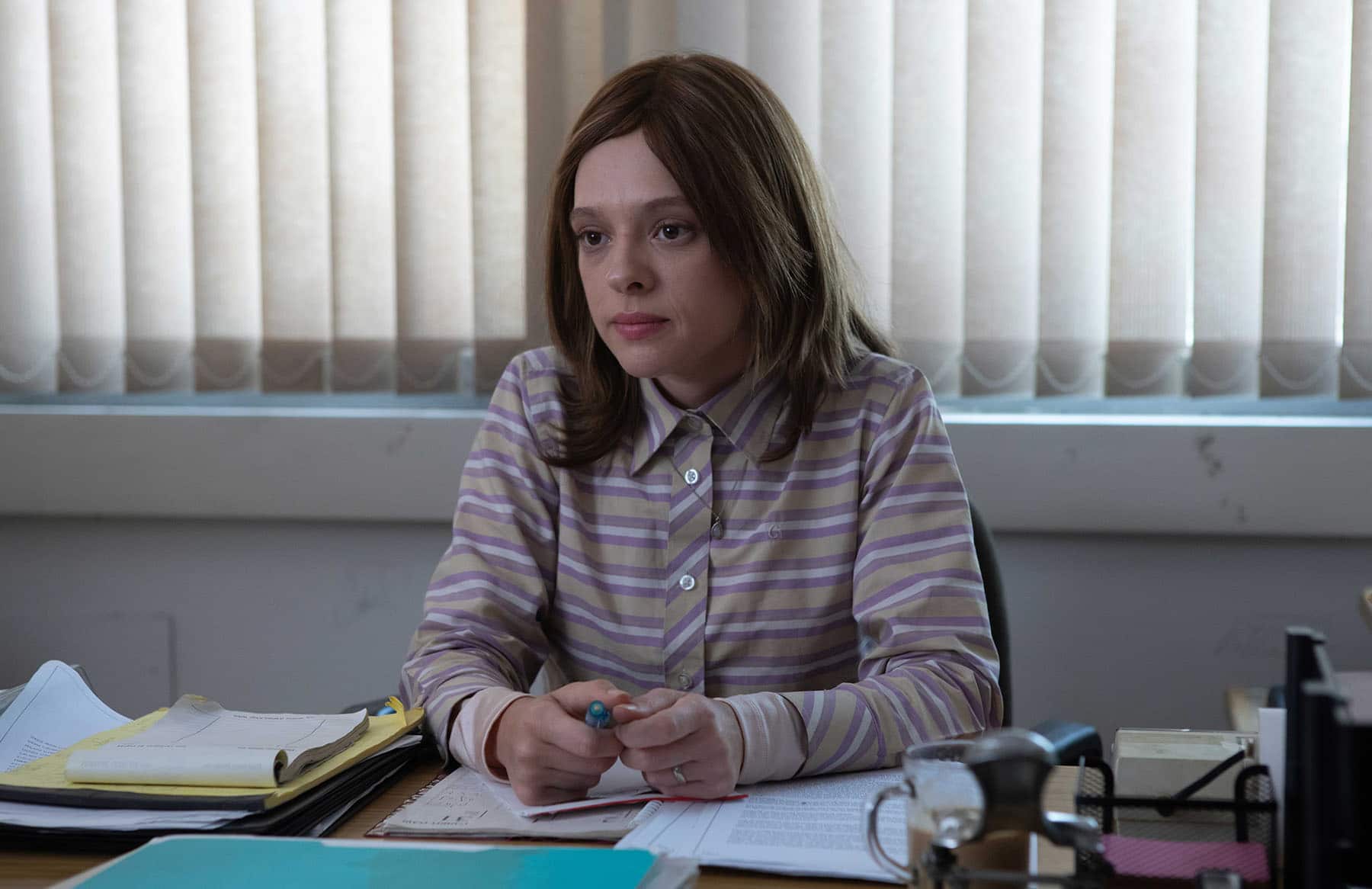
Ruchami only has a few brief scenes in the premiere, but Haas promises a lot more to come. “I see how mature she’s become since the first season, understanding who her family is and her responsibility, and in the second season becoming this person she is. In the third season it’s a whole new level, being a woman, being a wife and dealing with hard stuff. It’s about her relationship with Hanina and the heartbreaking challenges they’re going through.”
She was on the set of “Unorthodox” when she learned there would be a third season. “It feels so natural to go back to this character,” she said. “It’s been eight years from the first season and five and a half since the second. ‘Shtisel’ is home and it was so natural [to be back].”
Riskin was somewhat apprehensive before shooting commenced. “I was a bit afraid because I hadn’t been Giti for five years, but it was actually very easy because it’s getting into a person that you already know. You know the inner soul of this person. It’s like an old friend. So it was easier than I thought.” Glickman concurred: “It’s easier to come back to something you know.”
He and his fellow actors recalled their initial auditions for “Shtisel.” “I never wanted a role so much as this one. When I read it I was astonished. I never read such a script,” Glickman said. “I did two auditions. The first one I wasn’t ready. I didn’t know it well. I waited for months for the second.”
“My audition was with Dov,” Aloni said. “They wanted me for this role, but they weren’t sure that I was able to play a Haredi Jew. So they had the makeup artist glue payes and beards on me and they realized if I grew a beard I’d be fine. The show was very dear to me from the very beginning.”
Riskin “didn’t know too much about the character because I was given two scenes. But I had an intuition about this character. She’s very assertive in a very quiet way, she gets what she wants and nobody notices that she took it. She sneaks in, takes something and goes,” she said. “She has everything on her shoulders. She’s a powerhouse.”

Having come from a non-religious background, Riskin researched for the role by spending time with Haredi families, “[who] taught me a lot about their daily life. ‘Shtisel’ is not about religion, it’s about certain people living in a certain way,” she said. “I had coach who told me, ‘It’s not about what you believe it’s about how you behave.’ Once you get the rules of the game, it becomes a lot easier.”
When the discussion turned to the show’s impact on the Haredi community, the world’s perception of it, and the differences that set the community apart, Aloni opined that “‘Shtisel’ has built sort of a bridge connecting both sides of the equation. In the end we are all human beings. We are driving for something we have the same wills and dreams, and we’re all flawed in different ways,” he said. “That’s what makes us humans, and you see that in the show.”
For Glickman, “‘Shtisel’ isn’t about religious people. It’s about relationships between people that have desire, love, jealousy, but the religion makes the drama deeper and the conflict stronger [because] they have to stand before God each day.”
“‘Shtisel’ isn’t about religious people. It’s about relationships between people that have desire, love, jealousy, but the religion makes the drama deeper and the conflict stronger [because] they have to stand before God each day”—Doval’e Glickman
The in-demand actors were also asked about the projects they’re working on apart from “Shtisel.” Aloni, also known for “Our Boys” and “When Heroes Fly” and who hosts the Israeli version of “The Voice,” has been shooting “The Beauty Queen of Jerusalem,” a tri-generational saga in which he plays the patriarch of a Sephardi family in a story that chronicles the history of the family and Israel.
Glickman has completed work in Prague on “Oslo,” about the Israeli-Palestinian Peace Accords and Riskin declined to provide details about the project she’ll begin in February. Also an accent coach, she prepared Natalie Portman for her Hebrew-speaking role in 2015’s “A Tale of Love and Darkness.”
Haas, whose Ophir Award-winning drama “Asia” will be Israel’s entry for an Oscar nomination in the international feature category, was similarly circumspect. “I can’t tell you about my next project but I’m very excited about it,” she said.
Writer Elon wasn’t concerned about the cast’s other commitments, and said that he’s written Season 5 and planning Season 6. “We could go on forever, but nothing comes easily,” he said. Glickman offered help on that score, proposing his idea for a future season in which Shulem wakes up to find Akiva missing and he goes searching for him all over the world.
When “Shtisel” does eventually end, Haas hopes that Ruchami will get a satisfying close to her story. “I think she’s an amazing character and I’ve learned a lot from her. She has so much empathy within her and is so stubborn and knows what she wants and still takes care of everyone she loves, so I feel that she deserves a happy ending,” she said.
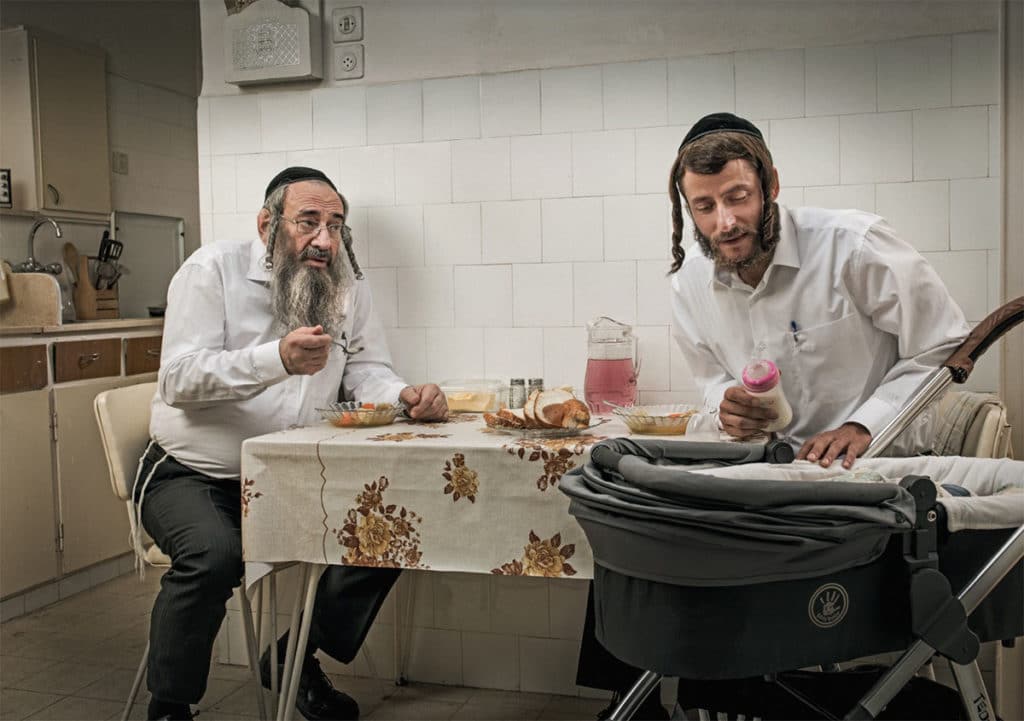
Aloni envisioned the series’ very last scene. “For me, whenever it ends, it should be Akiva and Shulem at the dining table. That’s where it started and that’s where it should end.”
“Shtisel” will premiere on Netflix in spring 2021.