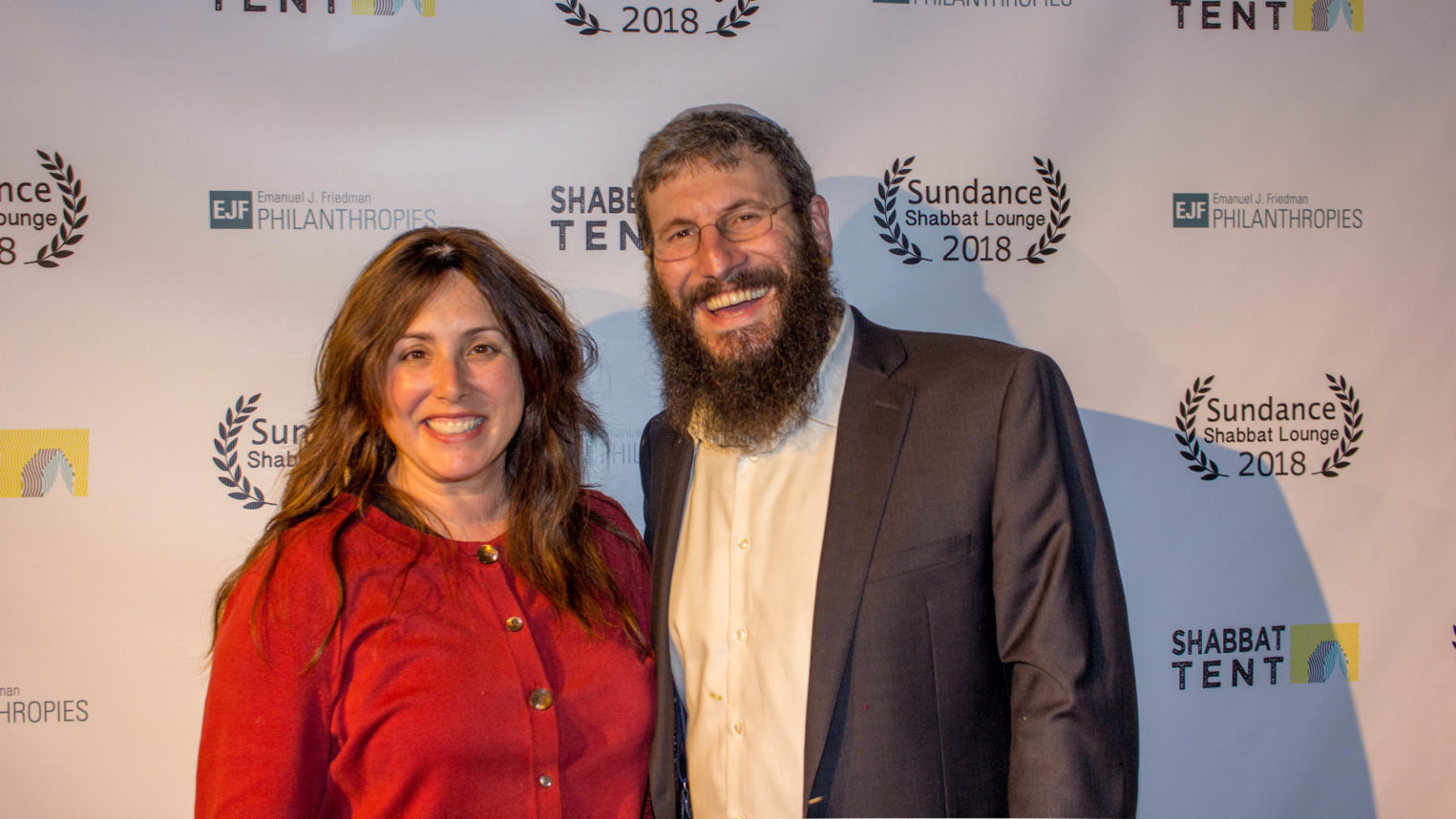
Harris Tulchin, an entertainment, multimedia and intellectual property attorney and author of “The Independent Film Producer’s Survival Guide,” is a member of Reform congregation Beth Shir Shalom in Santa Monica. He is also a regular at the Sundance Film Festival, and on a recent Friday he checked out a Shabbat dinner held at the 2018 festival.
“We’ll never forget our Shabbat at Sundance,” Tulchin said of his experience celebrating Shabbat with Jews and non-Jews at the Wasatch Brew Pub in Park City, Utah on Jan. 19.
The second floor of the two-story brewery served, from Jan. 19-20, as headquarters for the Shabbat programming at the annual film festival, which began on Jan. 18 in Park City. It was put on by Shabbat Tent, an organization that holds Shabbat events at film and music festivals.
The organization, which is run by JConnect, worked with a number of fundraisers and partner organizations in putting on the event, including Emmanuel J. Friedman Philanthropies, the Alevy Family, the Avi Chai Foundation and Suzanne Felson, a San Francisco-based philanthropist. The organization’s driving philosophy is to go to Jews where they are instead of waiting for Jews to come to them.
“How many organizations go out to where the Jewish people are? It’s very easy to say, ‘Come to our place, and we’ll take care of you.’ We go to where you are – film festivals, music festival, college campuses — and it’s meaningful,” Josh Kaplan, president of JConnect, said in an interview. “A lot of these people don’t walk into a synagogue. And we don’t know what kind of spark we will create by going to them.”
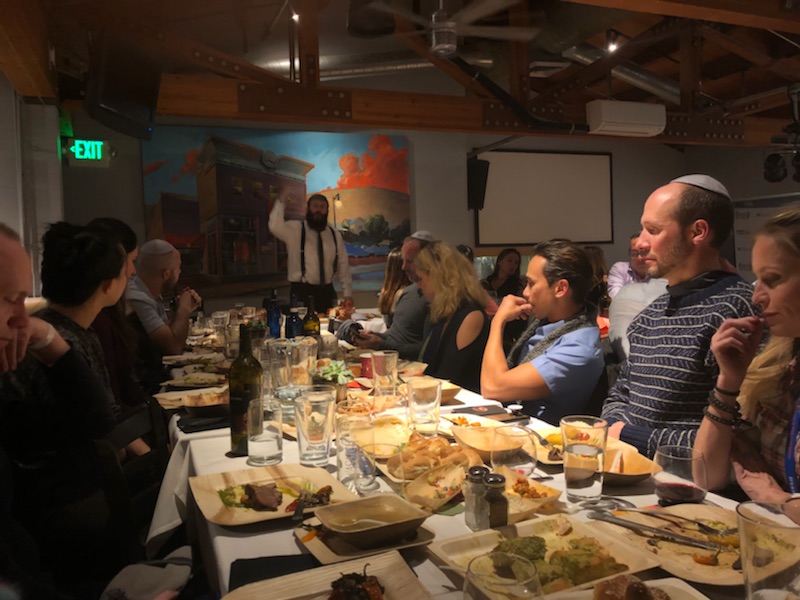
A sign on the wall of the brewery read, “On Shabbat, I reflect on life and see the greatness of the universe around me.” And with this spiritual framework, Rabbi Yonah Bookstein, who leads an Orthodox shul in Los Angeles, the Pico Shul, began the Shabbat dinner.
“Sundance Sameach,” Bookstein said, wishing people a “Happy Sundance.” “Enjoy yourselves. Make friends. Mingle. Go to the bar. Have a beer.”
With the Shabbat dinner drawing a sold out crowd of 85 people, it was a tight squeeze around the table. “There’s so many people here, I’m like shvitzing,” Heather, one of the attendees, said.
Around the table, publicist Javier Garcia talked up his client, film composer Michael Yezerski, whose music appears in the film, “Blindspotting,” which competed in the U.S. Dramatic Competition category.
A lapsed Roman-Catholic, Garcia said he believes in the power of religion to bring people together.
“I am happy to see a community come together and express joy with each other,” he said. “Whether Roman-Catholic, Jewish or what have you, I have always felt like religion is a bond bringing people together.”
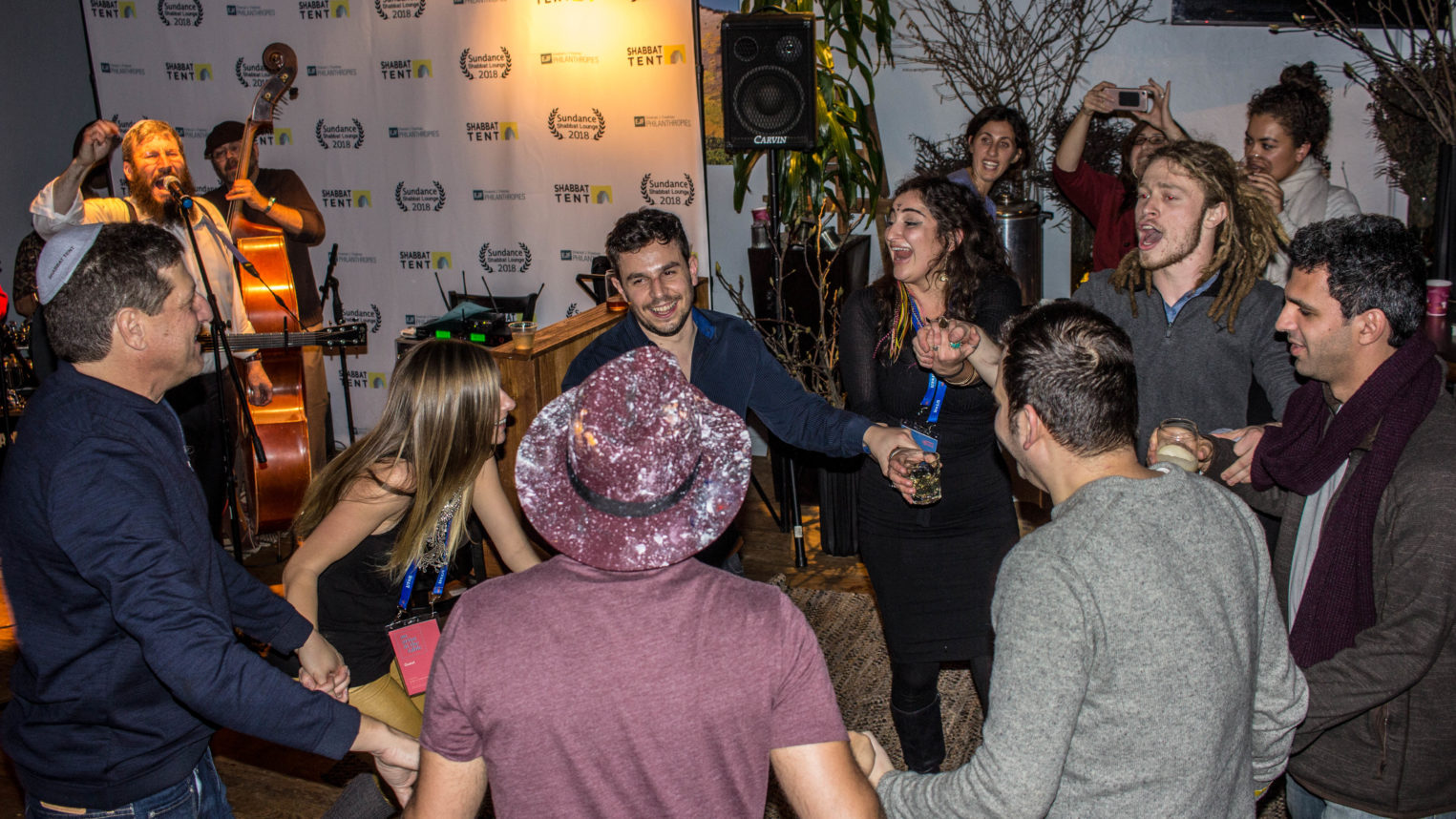
After the dinner, people of all backgrounds and professions came in to mingle and have a drink. Actor, stuntman and producer Duy Beck, who isn’t Jewish, said he admires Judaism.
University of New Hampshire student Jordan Leikin was visiting his family in Park City for the weekend. He heard there was a Shabbat happening at the Sundance festival and felt he had to go. In the end, he wasn’t disappointed.
“I thought it was awesome,” he said after the dinner. “They gave me a huge blessing. I met some great people and had a really good time.”
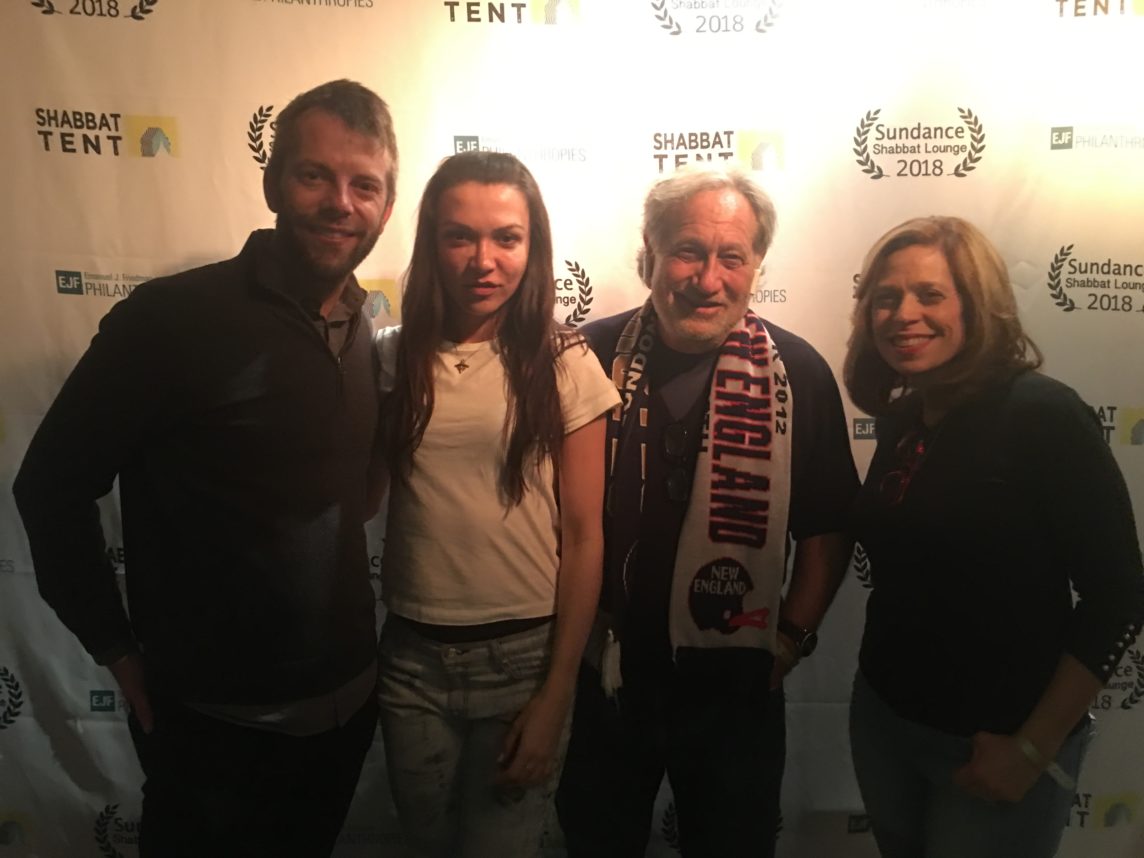
Julie Young, who designed the promotional materials for the event and traveled to Utah from San Francisco to take part, said this was her first time celebrating Shabbat at Sundance. “I think that Shabbat Tent is amazing,” she said.
While Andrea Cannistraci, an entertainment lawyer who is based in New York, has attended more than 17 Sundance festivals, this was her first time celebrating Shabbat at Sundance.
“It’s been very inclusive and uplifting,” she said. “As a non-Jew, I enjoy it.”
The party lasted two days. On Saturday night after Havdalah, rapper Kosha Dillz performed live.
Dillz traveled from Los Angeles to the festival. He told the Journal Sundance is the ultimate spot for hustling and making the connections one needs in the competitive entertainment industry.
“For me it’s like my paid vacation slash ‘who knows what will happen?'” he said. “You can sit at a coffee shop and run into massive stars. You can kind of work it.”
While some might have been wondering why there was a place to celebrate Shabbat at the Sundance festival, Bookstein’s goal was much like that of the filmmaker, to do something that will keep audiences coming back for more.
“We provide this because the whole notion of the Shabbat Tent is providing a low-barrier entry to everyone. We don’t judge people for how they live their life,” he said. “No prerequisites.”