
fbpx

Rosner’s Torah Talk: Parashat Tetzaveh with Rabbi Jack Paskoff

[additional-authors]
March 5, 2020

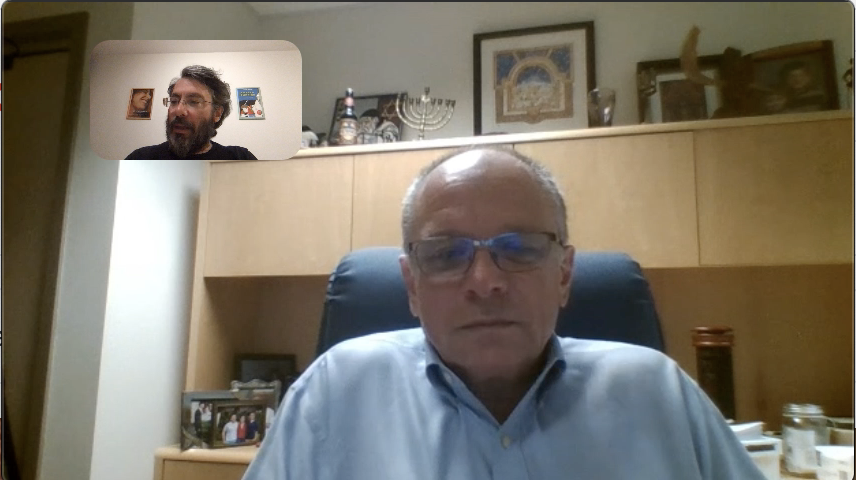
Rabbi Jack Paskoff is our guest this week. He moved to Lancaster, PA in July of 1993, and have been there ever since, serving as the rabbi of Congregation Shaarai Shomayim.

This week’s Torah Portion- Parashat Tetzaveh (Exodus 27:20-30:10) – continues giving us the instructions concerning the tabernacle, focusing on the role of the priesthood. Our discussion examines the meaning of ritual and pomp then and now.


Previous Torah Talks on Tetzaveh

Rabbi Gil Steinlauf

Rabbi Peter Stein

Rabbi Alvan Kaunfer

Rabbi Fred Morgan

Rabbi Mendi Hecht


Did you enjoy this article?
You'll love our roundtable.

Editor's Picks

Latest Articles

A Bisl Torah — All Over Again

Repenting includes examining and admitting our mistakes. Seeking forgiveness. Determining to do better. Being better. Every single day.

Hanging Out at the Jewish American Summit

Among the speakers, Adam Milstein, a real estate investor, philanthropist and co-founder of the fast-growing Impact Forum, urged attendees to frame antisemitism as an American issue and not just a Jewish issue.

A Festive French Roast

One of my favorite things to cook for the Jewish holidays is a beautiful French roast. It’s so very festive and is perfect to feed a hungry crowd.

The Genius of the Marx Brothers

Like the greatest satirists, such as Jonathan Swift and Mark Twain, they chose comedy over accusation to mock the folly of society and add levity to dark times. But their aim was not levity alone.

AKLA Rises

From a Local Experiment to a National Program: AKLA Expands Its Vision for Jewish Teens

Better Kisser Than a Cook

Sometimes love arrives ahead of you, in spite of you. Cooking slowly became a way of being there for the people I love. A wordless language that says: I see you. I hear you. You’re worth the onion-chopping.

Israel’s Brain-Drain Debate Is Asking the Wrong Question

If an experienced professional with rare expertise leaves Israel, the impact cannot be understood simply by adding another person to a brain-drain statistic. The more relevant question is how many people with comparable experience remain, how essential that expertise is and how easily it can be rebuilt.

More news and opinions than at a Shabbat dinner, right in your inbox.