[Islamabad] An appeals court in Karachi, Pakistan, has overturned the murder conviction of the man sentenced to death for masterminding the kidnapping and beheading of US journalist Daniel Pearl in 2002.
Ahmed Omar Saeed Sheikh, a British-Pakistani national condemned to death in July 2002, was instead found guilty only of kidnapping. The charges against three alleged accomplices were also reversed.
One of Sheikh’s lawyers, Khwaja Naveed, told reporters that after having been imprisoned for 18 years, Sheikh could go free in a matter of days. The two justices from Sindh Province’s High Court said prosecutors had failed to successfully argue their case.
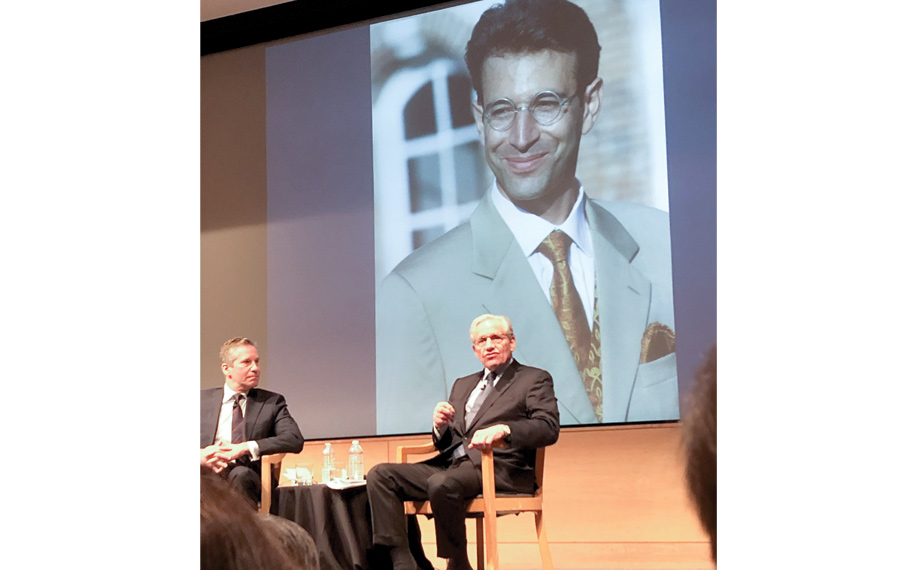
Pearl, a Mumbai-based reporter for the Wall Street Journal, had gone to Pakistan to write a story about armed groups following the 9/11 attacks on New York City and Washington, D.C. He disappeared in Karachi on Jan. 23, 2002, on the way to what he believed would be an interview, and was decapitated by his captors nine days later. The beheading was videotaped.
Justice Agha Muhammed Karim declared that “the prosecution had failed to prove the case against them” for murder. The appeals court ruled that Sheikh should serve seven years in prison for Pearl’s abduction. He has been on death row for 18 years.
Karachi police arrested Sheikh in February 2002. He was held along with the three others, Syed Salman Saqib, Fahad Naseem and Sheikh Aadil.
In June 2002, a counterterrorism court sentenced him to death by hanging. The others each received a 25-year prison sentence. The four filed appeals the following month.
The state also appealed, seeking to convert the 25-year sentences to the death penalty.
Sindh Prosecutor-General Fayaz Ali Shah told The Media Line: “Sheikh will remain in prison because his appeal against the death penalty is still pending at the Supreme Court of Pakistan. [The] provincial prosecution will appeal against the appeals court decision.”
However, Khawaja told the Media Line that Sheikh “has already served more than seven years in prison, so he would be freed” with the others.
“The police could not present concrete evidence during the trial against the accused,” he added. “The only witnesses were policemen.”
Pearl, the Wall Street Journal’s South Asian bureau chief, had been investigating a story about the alleged financing of al-Qaida via Pakistani militants. He was also trying to find links between Pakistani terror groups and Richard Reid, who had attempted to blow up a US airliner with a bomb built into his shoe.
The National Movement for the Restoration of Pakistani Sovereignty had claimed that it was responsible for abducting Pearl, but Pakistani security officials said the kidnappers were members of Lashkar e Jhangvi LeJ, a banned al-Qaida affiliate.
Daniel Bastard, responsible for Asia/Pacific affairs at Reporters Without Borders (RSF), condemned the court’s decision.
“The ruling is a shocking symbol of impunity for crimes of violence against journalists. This is [also] a shocking denial of justice for Daniel Pearl’s family, as well as for reporters in general,” he told The Media Line.
”Although RSF is fundamentally opposed to the death penalty, we deeply regret this morning’s verdict because it lacks coherence,” Bastard added. “While the judges confirm the guilt of Saeed Sheikh, their appeals sentence will likely allow him to go free, along with the three other accused.”
Michael Kugelman, the Asia Program deputy director and Senior Associate for South Asia at the Woodrow Wilson Center in Washington, said the Pearl case altered people’s views of the southwest Asian country.
“The horrific execution of Daniel Pearl, which happened fairly soon after the 9/11 attacks, had a major impact on US public perceptions of Pakistan,” he told The Media Line. ”Nearly 20 years later, it still looms large. It will be interesting to see if the US officially responds to this verdict.”
Scores of Pakistanis expressed concern over the court decision with the hashtag #danielpearl on Twitter.
Moed Pirzada, a leading Pakistani analyst, tweeted: “Very Disappointing Decision! Once again, based on technicalities, truth is defeated in our courts and evil set free; even abduction leading to a gruesome beheading deserved life without parole! Sad Day for Justice.”
Iman Zainab Mazari, Karachi-based lawyer and human-rights activist, said in her tweet: “As a Pakistani, I offer my sincerest apologies to Daniel Pearl’s family and friends. I can imagine their pain, and my heart breaks thinking of it.”