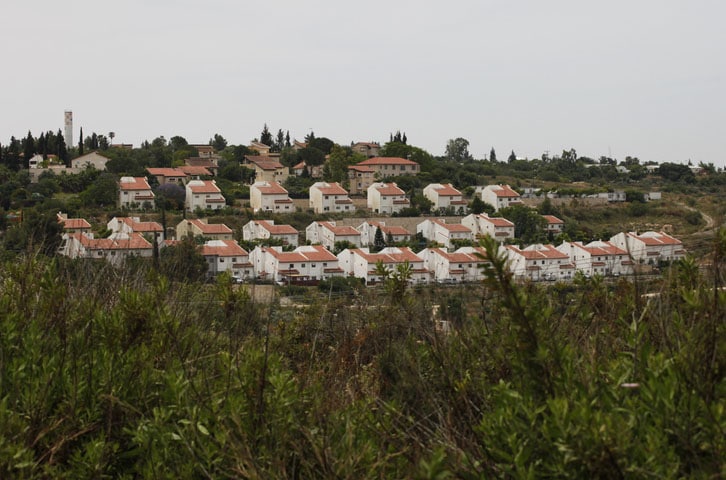
Belgium announced on November 23 that they will be labeling products coming from Israeli settlements in the West Bank and increasing controls on such goods.
The Associated Press (AP) reported that the Belgian foreign office said in a statement that they are simply delineating “between Israel on one hand and the Palestinian territories on the other hand” to comply with European and international law. The European Court of Justice ruled in 2019 that products originating from the settlements should be labeled as such rather than labeled as being “Made in Israel.”
The Israeli Foreign Ministry took umbrage with the announcement, saying in a statement that the move “harms Israelis and Palestinians and is out of step with the government of Israel’s policy that is focused on improving the lives of Palestinians and strengthening the Palestinian Authority and with the improvement of Israeli relations with other European countries.” Deputy Foreign Minister Idan Roll tweeted that he canceled his meeting with the Belgian Foreign Ministry and parliament over the matter.
“The Belgian government’s decision to label products from Judea & Samaria strengthens extremists, does not help promote peace in the region, and shows Belgium as not contributing to regional stability,” he wrote.
I canceled my planned meetings with the Belgian Foreign Ministry and Parliament. The Belgian government's decision to label products from Judea & Samaria strengthens extremists, does not help promote peace in the region, and shows Belgium as not contributing to regional stability
— Idan Roll – עידן רול (@idanroll) November 24, 2021
Palestinian Authority Prime Minister Dr. Mohammad Shtayyeh praised Belgium’s move in a tweet. “We commend Belgium’s decision to start labeling products from illegal Israeli settlements in occupied Palestine as per [international] legitimacy,” he wrote. “It’s critical for the [international] community to confront Israel’s illegal settlements, which erode the two-state solution & the possibility of peace.”
We commend Belgium's decision to start labeling products from illegal Israeli settlements in occupied Palestine as per int’l legitimacy. It’s critical for the int’l community to confront Israel’s illegal settlements, which erode the two-state solution & the possibility of peace.
— Dr. Mohammad Shtayyeh د. محمد اشتية (@DrShtayyeh) November 24, 2021
Representative Ilhan Omar (D-MN) tweeted, “Belgium decision is in line with [ECJ] ruling from two years ago. Now the question is will other EU countries comply with the EU court ruling and uphold international law?”
Belgium decision is in line with @EUCourtPress ruling from two years ago.
Now the question is will other EU countries comply with the EU court ruling and uphold international law? https://t.co/CiwZnW24eF pic.twitter.com/mPD1JcvTPW
— Ilhan Omar (@IlhanMN) November 24, 2021
The American Jewish Committee tweeted, “Belgium’s decision to label Israeli products made in the West Bank as not ‘made in Israel’ puts Israeli and Palestinian livelihoods at risk, emboldens extremists, and undermines the peace process. We strongly oppose this biased move.”
Belgium’s decision to label Israeli products made in the West Bank as not "made in Israel" puts Israeli and Palestinian livelihoods at risk, emboldens extremists, and undermines the peace process.
We strongly oppose this biased move. https://t.co/6FIcA7xzDD
— American Jewish Committee (@AJCGlobal) November 24, 2021
Human rights lawyer Arsen Ostrovsky, who heads the International Legal Forum, tweeted that Belgium’s move is “outrageous” and “racist, discriminatory and entirely counter-productive to peace.” He also replied to Omar’s tweet, stating: “You really never miss an opportunity to reveal your Jew hatred, do you Ilhan?”
The decision by #Belgium to label Jewish products from Judea & Samaria is outrageous. It is also racist, discriminatory and entirely counter-productive to peace.https://t.co/fvTzNY0Egl
— Arsen Ostrovsky (@Ostrov_A) November 24, 2021
You really never miss an opportunity to reveal your Jew hatred, do you Ilhan?
— Arsen Ostrovsky (@Ostrov_A) November 24, 2021
George Mason University Law Professor Eugene Kontorovich, who also heads at the International Law Department at the Kohelet Policy Forum, told The Jerusalem Post that the move “puts a new kind of yellow star solely on Jewish products. Belgium has no rules against doing business in disputed territories anywhere else in the world – because they know that such activity is not illegal under international law. Thus the labeling and lists it is requiring is not about business in occupied territories – it is about business with Jews.”
My take on Belgium’s Israel product labelling rule.. pic.twitter.com/cudJOGVxRU
— Eugene Kontorovich (@EVKontorovich) November 24, 2021