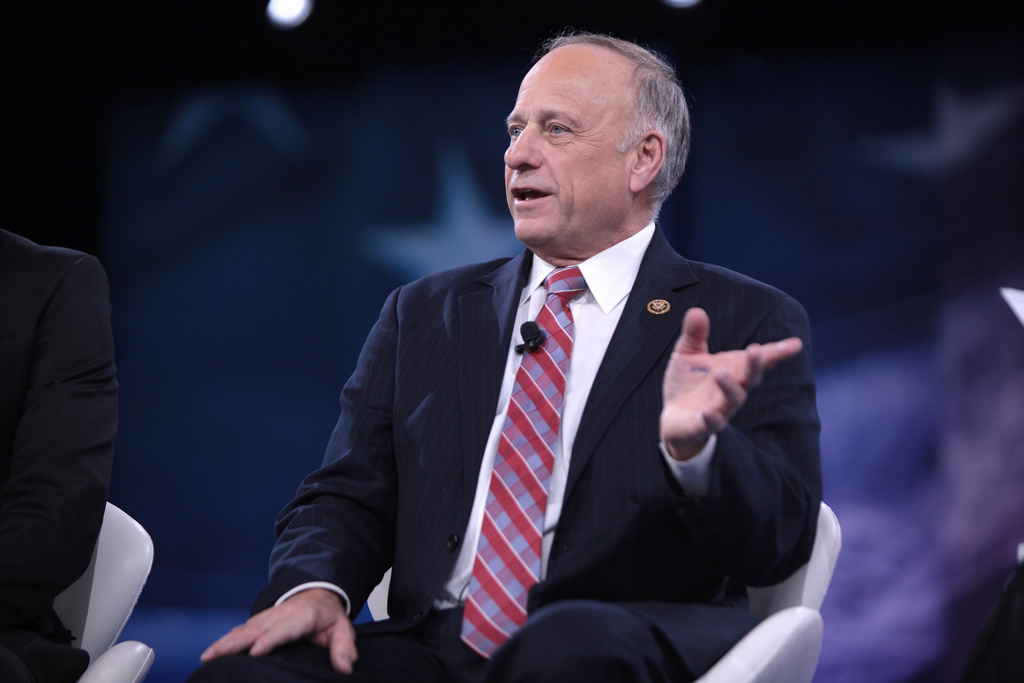
Rep. Steve King (R-Iowa.) is currently under fire for being quoted in The New York Times asking how the term “white supremacist” became “offensive.”
The article, which focused on King’s support for a border wall before President Trump made it his hallmark campaign issue, says that King told them he’s in favor of immigrants who come to the country legally and assimilate into American culture.
The Times then quotes King as saying, “White nationalist, white supremacist, Western civilization — how did that language become offensive? Why did I sit in classes teaching me about the merits of our history and our civilization?”
The reported quote has prompted calls to Congress from the Anti-Defamation League and Journal columnist Ben Shapiro to censure King:
In fact, we called for the House to do this back in November. It’s past time to take action in response to @SteveKingIA’s disturbing pattern of anti-Semitic & racist behavior: https://t.co/gZOJhUN0xH https://t.co/wwa0bPXip2
— ADL (@ADL) January 10, 2019
Congress ought to vote to censure him, and then he ought to be primaried ASAP. https://t.co/W2qRdWvAjj
— Ben Shapiro (@benshapiro) January 10, 2019
Donate to his primary challenger, Randy Feenstra, here. I plan on doing so. https://t.co/0RJIs63svi
— Ben Shapiro (@benshapiro) January 10, 2019
King released a Thursday statement in which he denied that he’s a white supremacist:
My statement on the New York Times article. pic.twitter.com/IjBHgZYgRD
— Steve King (@SteveKingIA) January 10, 2019
King has previously come under fire for endorsing a white nationalist mayoral candidate in Toronto and re-tweeting white nationalist Twitter accounts. He has been in Congress since 2003.