fbpx

Three Swastikas Found on Cornell in Nine Days

[additional-authors]
November 20, 2018
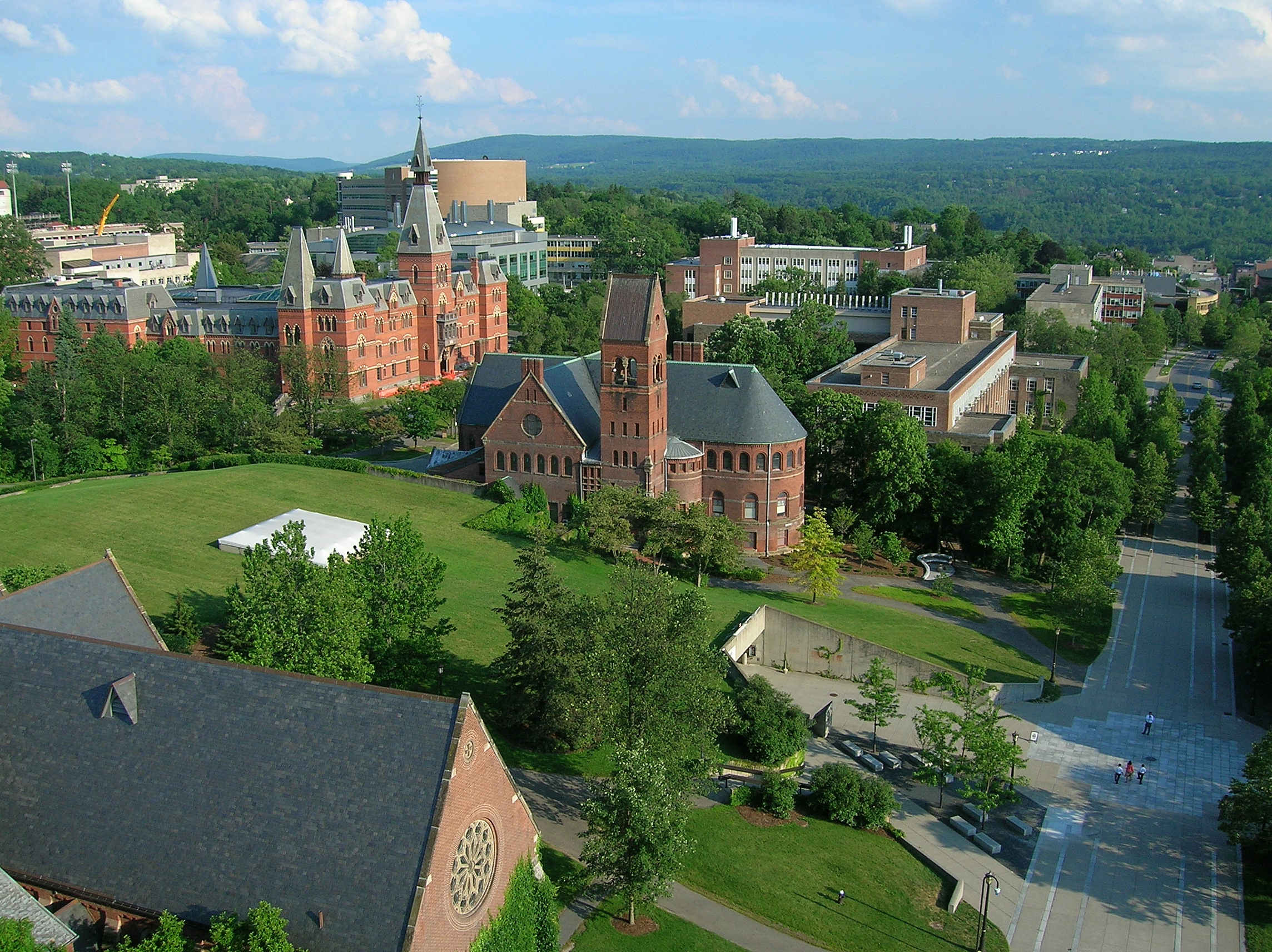
Photo from Wikimedia Commons.

A total of three swastikas have been found on Cornell University’s campus in a span of nine days, according to the Cornell Daily Sun.

The first swastika was found on a whiteboard at Court-Kay-Bauer Hall on Nov. 10; the second was found at Clara Dickson Hall on Nov. 14.

On Monday, the third swastika was found in the snow in front of Mews Hall, close to Appel Commons.

Avi Simon, a Jewish student who first noticed the swastika in the snow, told the Sun, “These are the symbols they [the alt-right] use in my experience, and it means a target toward all people of color, towards Jews, toward members of the LGBTQ community.”

Ryan Lombardi, the vice president for student and campus life at Cornell, expressed “revulsion” at the swastikas in a Tuesday statement.

“I vehemently denounce such acts, which are clearly intended to intimidate members of our community,” Lombardi said. “The swastika has historically been – and continues to be – used as a symbol of intolerance, terror and repression against vulnerable communities.”

Lombardi added that a “support gathering” would be held after Thanksgiving for community members to address the issue.

“I specifically want to acknowledge and affirm our support for the Jewish members of our community who have faced the impact of anti-Semitism nationally and, unfortunately, now locally as well,” Lombardi said. “It is our shared responsibility to denounce such cowardly acts.”

However, the university has been criticized over its response to the swastikas. The Sun argued in a Tuesday editorial that the university’s response to the swastika was too slow, prompting “an increase in confusion and worry among students.”

“While we appreciate the sentiment in VP Ryan Lombardi’s statement that was eventually emailed to students shortly before noon today, Cornell must understand that in this fast-paced world, it must move more quickly and assertively,” the editorial read. “It took five days and a third swastika for a statement to be released. Were the first two swastikas not worthy enough of recognition?”

The editorial added that Lombardi’s statement “said next to nothing about finding those responsible and holding them to account.”

“There was not even a sentence asking anyone with relevant information to come forward to help in the investigation,” the editorial concluded. “Denouncements are fine and good, but unless they are followed by action, they are not worth the digital ink in which they are printed.”

When asked by the Journal about the editorial, a university spokesperson simply pointed to Lombardi’s statement from earlier in the day.


Did you enjoy this article?
You'll love our roundtable.

Editor's Picks

Latest Articles

Post-Passover Pasta and Pizza

What carbs do you miss the most during Passover? Do you go for the sweet stuff, like cookies and cakes, or heartier items like breads and pasta?

Freedom, This Year

There is something deeply cyclical about Judaism and our holidays. We return to the same story—the same words, the same questions—but we are not the same people telling it. And that changes everything.

A Diary Amidst Division and the Fight for Freedom

Emma’s diary represents testimony of an America, and an American Jewish community, torn asunder during America’s strenuous effort to manifest its founding ideal of the equality of all people who were created in the image of God.

More than Names

On Yom HaShoah, we speak of six million who were murdered. But I also remember the nine million who lived. Nine million Jews who got up every morning, took their children to school, and strove every day to survive, because they believed in life.

Gratitude

Gratitude is greatly emphasized in much of Jewish observance, from blessings before and after meals, the celebration of holidays such as Passover, a festival that celebrates liberation from slavery, and in the psalms.

Freedom’s Unfinished Journey

The seder table itself is a model of radical welcome: we are told explicitly to invite the stranger, to make room for those who ask questions and for those who do not yet know how to ask.

Thoughts on Security

For students at Jewish schools, armed guards, security gates, and ID checks are now woven into the rhythm of daily life.

Can Playgrounds Defeat Antisemitism?

The playground in Jerusalem didn’t stop antisemitism, and renovating playgrounds in New York City is not likely to stop it there, either — because antisemitism in America today is not rooted in a lack of slides or swings.

America First and Israel

As Donald Trump continues to struggle to explain his goals there, his backers have begun casting about for scapegoats to blame for the president’s decision to enter the war. Not surprisingly, a growing number of conservative fingers are now pointing at Benjamin Netanyahu.

Defending Israel in an Age of Madness

America’s national derangement poses myriad challenges to those not yet caught up in it. The anomie is daunting enough for the general public — if that term still makes sense in this fragmented age — and it is virtually insurmountable for the defenders of Israel.

More news and opinions than at a Shabbat dinner, right in your inbox.