fbpx

November 20, 2018

Thanksgiving: The After Party

After making hundreds of cakes and pies, pounds of stuffing, zillions of biscuits and rolls and gallons of gravy for customers for Thanksgiving in my cafe, I am extremely grateful to have a four-day weekend when the embassy where I work is closed.

I also usually host Thanksgiving at my house, so when the day after the holiday rolls around, it’s time to relax with my feet up. My tradition most weekends, but particularly during the days after Thanksgiving, is that I don’t cook. Rather, I assemble a few salads and spreads that get better over time as flavors marry. It’s so pleasurable to have a sofa or veranda picnic with friends and family — high-flavor foods you can eat while drinking a Bloody Mary or champagne. It’s made even more delightful when you don’t come back to a messy kitchen and dishes to do.

After Thanksgiving is over, there is something liberating about a casual meal that isn’t made up of leftovers. You have the whole week ahead of you for turkey salad sandwiches (I have a great recipe) but in my house, tradition dictates a break from the leftovers.

My parents and I do something similar each time I visit: We go to the store and we each pick a few of our favorite things. Once home, we don’t even bother to use dishes. We just take our precious finds and throw them onto a cutting board or large plate with only knives or some good crusty bread to use in place of forks. It’s such a fortifying ritual and I try to re-create it as often as I can.

I won’t even be slightly judgmental if you just pick up a few baguettes or fresh pita from your favorite bakery for this lazy extravaganza, but I want to teach you how to make a No-Knead Focaccia that will take you mere moments to put together right before you go to bed after the Thanksgiving meal. All you do is throw the ingredients into a bowl, stir them, cover the bowl and let time work its magic on your counter.

The next morning, just spread the now puffy dough on a baking sheet, cover it in extra virgin olive oil and herbs and watch as it puffs up in your oven. I like to douse it in more olive oil after it comes out of the oven, scatter some fresh basil atop it and once cooled, transfer it to a wooden board surrounded by some fresh and simple salads and dips.

By all means, go for any of your family-favorite dips or salads, but I’ve included a shortcut version of one of my all-time favorite Israeli-Moroccan salads, the flavorful madbucha, also known as a Salade Cuite, a warm salad similar to an Italian tapenade, made with peppers, tomatoes and garlic. Also, a spectacular chickpea salad recipe that takes about five minutes to prepare but somehow manages to be infinitely superior to the sum of its humble ingredients.

You’d be hard pressed to find a punchier, more savory dip than the Bulgarian version of Taramasalata called Ikra, made with caviar or roe and ready in seconds.

If you can motivate yourself to spend a few minutes mingling some flour, water and olive oil, even if it’s midnight Thanksgiving night and you’re tired, you will be rewarded immeasurably the next morning when your kitchen fills with the aroma of a Tuscan farmhouse. And if you’re still in your pajamas at 3 in the afternoon, a bottle of bubbly by your side surrounded by your favorite people or even just one special person, giggling and eating the afternoon away, I think you won’t be able to help but feel the gratitude.

NO-KNEAD FOCACCIA
8 cups all-purpose flour
1/2 teaspoon dry yeast
3 cups room temperature water
1 1/2 tablespoons flaky sea salt, plus more for sprinkling
2 tablespoons extra-virgin olive oil, plus 2 tablespoons for drizzling
1 tablespoon fresh or dried minced herbs, rosemary and thyme
A handful of fresh basil leaves (optional)

In a large glass bowl, mix together the flour, water and yeast with a chopstick or fork until you get a shaggy dough. Add salt and olive oil and stir until a soft dough forms. Oil a piece of plastic wrap, place on top of the bowl and leave on the kitchen counter in a warm place or a turned off oven for 12 hours to rise.

After dough has doubled in size and is very bubbly, preheat oven to 450 F. Using oiled hands, gently lift the dough (it will be sticky) out of the bowl and onto an oiled full sheet pan. Spread it evenly, creating dimples on the entire surface of the dough (don’t worry if you tear it.) Drizzle the top with olive oil, rosemary and thyme (if using) and some extra flaky sea salt and
bake for 20-25 minutes until golden brown on top.

After it has cooled, scatter fresh basil leaves on top and cut into irregular triangular or square pieces. Serves 10.

QUICKIE VERSION OF MADBUCHA (SALADA CUITE)
Usually, this warm salad is made with roasted peppers but this quicker version will get you there without roasting and peeling peppers.
1/4 cup neutral vegetable oil (corn oil is traditional)
2 pounds ripe tomatoes, skins removed, chopped
1/2 pound green bell peppers, seeded and chopped
1/2 pound red peppers, seeded and chopped
2 jalapeno or Cubanelle peppers, seeded and deveined, chopped
4 garlic cloves, sliced thin
1 /4 teaspoon black pepper
1/2 teaspoon paprika
1/2 teaspoon salt (or to taste)

Heat oil in a pan and place tomatoes, peppers, garlic and seasonings into the pan and sauté over low heat, stirring frequently until all liquid has evaporated, about 1 hour. Refrigerate until ready to serve. Serves 6.

CHICKPEA SALAD
2 15-ounce cans garbanzo beans (chickpeas), drained and rinsed
1/2 cup grated Parmesan
2 cloves garlic minced
2 tablespoons fresh parsley, chopped
1 teaspoon grated lemon rind
1/8 cup extra virgin olive oil
1/4 cup freshly squeezed lemon juice
1/4 teaspoon cayenne pepper (optional)
Salt and pepper to taste
Combine all ingredients in a bowl and refrigerate until ready to serve. Serves 6.

IKRA
8 tablespoons smoked (or unsmoked) carp or cod roe
1 tablespoon lemon juice
1/4 cup olive oil (not extra virgin)
1 tablespoon onion, finely grated
Paprika for garnish

Put all ingredients, except paprika in a tall cup that fits your immersion blender head. Put your immersion blender into the cup and pulse for 20 seconds or until all ingredients are well incorporated and spread thickens to a mayonnaise consistency. Thin with a tablespoon of water if too thick.

Serve in a bowl garnished with paprika and a drizzle of olive oil. Serves 6.


Yamit Behar Wood, an Israeli-American food and travel writer, is the executive
chef at the U.S. Embassy in Kampala, Uganda, and founder of the New York Kitchen Catering Co.

Thanksgiving: The After Party Read More »

Living With a New Normal After Woolsey

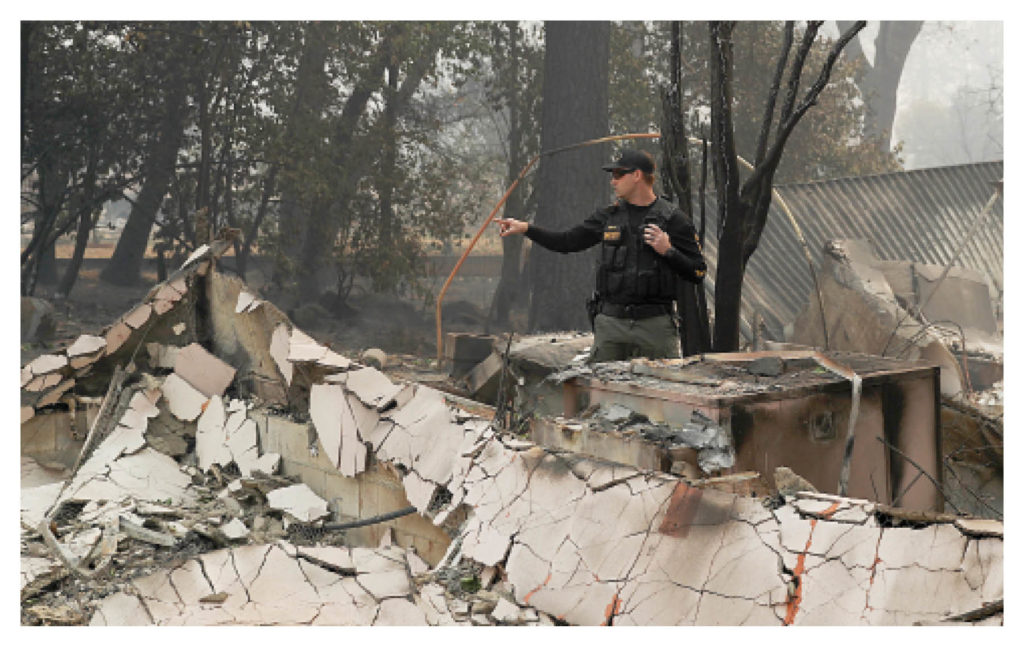
In the aftermath of the Woolsey Fire, the new normal for those who have been able to return home, and actually have a home to return to, hasn’t been easy.

“I really feel like our whole community is walking around in a chronic state of low-level shock,” Oak Park resident Barbara Foster Bietz, whose home miraculously survived the fires, told the Journal. “For us and our community, [the fire came] on the heels of the very local [Borderline] shooting, which was devastating. And that came on the heels of the synagogue shooting [in Pittsburgh], which impacts all of us, but especially the Jewish community. It’s so sad. Everybody says that like a million times a day. So sad. So much loss.”

However, she said seeing so many groups come together has helped the recovery process. “We all feel that need to connect with each other and share our stories,” she said. “Everyone has a harrowing story of how they got out, the close call, the neighbor whose house didn’t make it. The fact that everybody knows someone who knows someone is just a reminder of how small our world really is and how connected we really are.”

“I really feel like our whole community is walking around in a chronic state of low-level shock.”

— Barbara Foster Bietz

Foster Bietz spoke of being one of the lucky ones, with only her backyard being damaged. “There are some spots where several houses in a row were lost, and there are some spots where one house here, one house there [was lost],” she said. “The miracle,” she added, “is that people got out safely, which is something to be grateful for.”

However, Foster Bietz will be hosting at least 26 people for Thanksgiving at her home. “When we were evacuated, my cousin said, ‘Are you okay? You don’t have to [host].’ I said, ‘No, I really want to do it.’”

She said hosting Thanksgiving is an opportunity to “use the time to acknowledge not just what we’re grateful for, but those who do not have a lot to be grateful for. We have to keep them in our thoughts.”

Living With a New Normal After Woolsey Read More »

Jewish Groups Scramble to Aid Camp Fire Evacuees

As the death toll and damage estimates continue to rise from the Camp Fire in Northern California, Jewish organizations are scrambling to respond to the needs of surviving Jews and non-Jews reeling from devastating losses of their homes and possessions, and the deaths of family and friends.

At this point, the damage and loss of life from the deadliest wildfire in California history has been so extensive that the organizations haven’t been able to estimate the level of need they are facing.

For the town of Paradise, which was almost totally destroyed by the fire on Nov. 8-9, for example, assessments are still being collected on how best to assist its residents who lost homes, possessions, family and friends as the fire ripped through the Butte County community and others in the Sierra Nevada.

“We don’t have any accurate information,” said Willie Recht, executive director of the Jewish Federation of the Sacramento Region. “I don’t know how many Jewish families were in Paradise.”

However, Recht added, the lack of intformation won’t deter the federation’s emergency charitable response — for Jews and non-Jews. “The larger community is always there for the Jewish community, so we want to be there for them the best we can,” he said.

The federation has launched a collection, detailed on its website at JewishSac.org, of “practical goods such as new towels, new or gently used clothing in all sizes (including shoes, undergarments, sweatshirts and bras), paper cups, paper plates, paper towels, animal food, new jackets, new coats and bottled water.” It’s also accepting grocery-store and other retail gift cards, and monetary donations can be made through a link on the website.

The array of items being sought was based on requests by evacuees, Recht said.

“These folks lost everything,” he said. “We’re just one part of the effort. The whole community is trying to do what they can to assist the victims.”

Indeed, Jews in Butte County have been extending themselves to their less fortunate neighbors in a variety of ways. Residents outside the fire zone have opened their homes to those in need, some who are away for Thanksgiving have lent their apartments to evacuees.

Members of Congregation Beth Israel, a Reform synagogue in Chico, have been volunteering to assist evacuees at a “pop-up” shelter set up at the nearby Bidwell Presbyterian Church. They also have opened their homes, taking in refugees regardless of religious affiliations, said the congregation’s Rabbi Sara Abrams.

“There is no centralized organization of the shelters,” said Rabbi Sara Abrams of Beth Israel, which has about 100 member families. “We are hoping now that [the Federal Emergency Management Agency] is here, there will be.”

The estimate of Butte County evacuees has ranged from 1,600 to 1,800, Abrams said. Those numbers include several families in Abrams’ congregation, whose residences in Paradise, Butte Canyon and possibly Butte Valley were reduced to ash.

“There is a great outpouring of goodwill here,” Abrams said. “But this is the just the beginning. We’re in it for the long haul.”

Many of the Beth Israel members were limited in their volunteer efforts because of the poor air quality, which became increasingly toxic due to an inversion layer. Some of them had to temporarily relocate to avoid health problems.

“If you have respiratory problems, they will be exacerbated in Chico on a good day,” said Abrams, who has developed a lung condition because of allergens from local crops. “Then you add the fires, and your respiratory problems are off the charts. One of our chief volunteers said she can’t volunteer anymore because of her asthma. She is leaving town for the north coast.”

Although many individual GoFundMe campaigns have been launched, Abrams urged donors to contribute to the North Valley Community Foundation Camp Fire Relief (nvcf.org) and the Tri Counties Bank 2018 Camp Fire Fund (tcbk.com/fire-update). “We are emphasizing giving to organizations that are equitably distributing funds to shelters and evacuees so we can best help those who have the highest need,” she said.

“You’ve got lots of organizations down here helping: Red Cross, medical personnel, and you-and-me folk, like myself and others,” Abrams said. “There are people with extreme needs. There are elderly with very few resources. They were probably living in poverty before this and now have everything taken from them. We are dealing with a very large crisis here.”

Tri Counties Bank, which began its campaign by contributing $25,000, plans to distribute funds through local nonprofit emergency relief agencies directly serving fire victims “with immediate needs.” Those nonprofit organizations include United Way of Northern California, The Salvation Army and Northern Valley Catholic Social Services. At the Journal’s press time, the fund was close to reaching its goal of $350,000. (gofundme.com/tcb-2018-camp-fire-fund).

Meanwhile, Cal State Chico Hillel’s Executive Director Kristy Collins was doing her part by delivering matzo ball soup to displaced friends. Although the university was closed during the fires, the Hillel office remained open to provide a respite for non-Jewish residents hosting evacuees in their homes who needed a quiet place to regroup from care fatigue, Collins said.

In her office, Collins had a box of “N95” respiratory masks for anyone needing one to protect against breathing in dangerous airborne particulates — including Jewish families scheduled to visit campus on college tours. In fact, Collins had just encouraged a father and daughter to visit the university during Thanksgiving week.

“Chico is so special, I didn’t want to say, ‘Don’t come,’” Collins said. “I really want to walk around campus with them. It’s important people still consider Chico for their Jewish families.”


Lisa Klug is a freelance journalist.

Jewish Groups Scramble to Aid Camp Fire Evacuees Read More »

Community Assesses Loss and Pitches In After Fires

Refugees in Their Own City

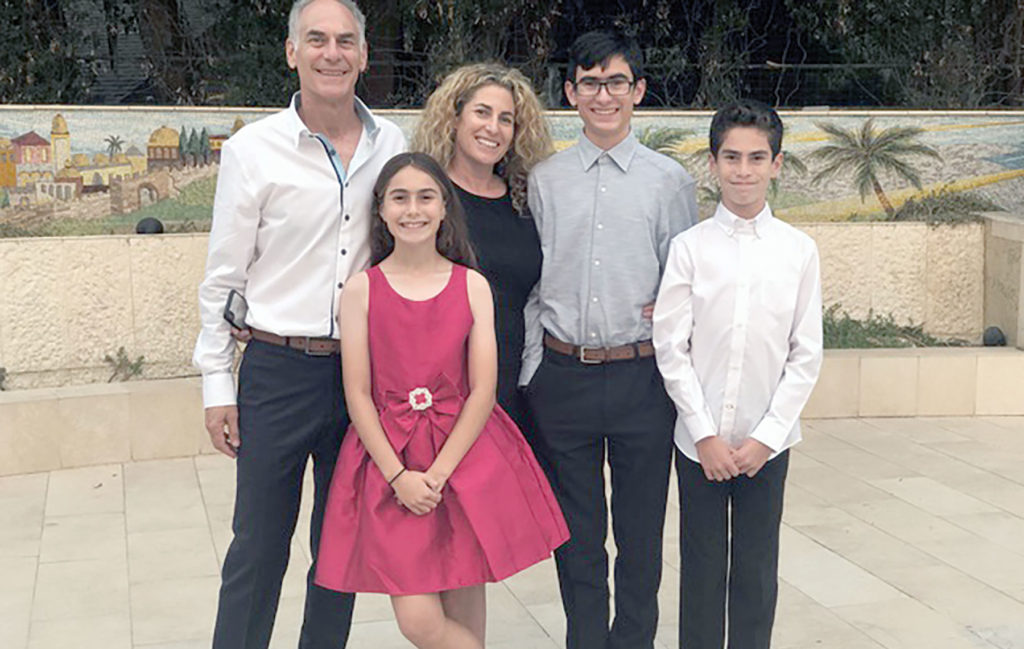
In the wake of the Woolsey fire, the Kletter family evacuated its Malibu home and tried to check into a hotel in Santa Monica. However, all the hotels were already booked, so the family of five, and their dog, eventually found a room in a hotel near LAX.

However, the space was too small for the couple to run their home business from and they moved again to an Airbnb in Marina del Rey. Three nights later, they were forced to pack up yet again and check into another hotel.

The family hoped to be able to return to their home on Nov. 14, however, the mandatory evacuation was still in effect, so they once again checked into another Airbnb, this time in Venice. However, they were forced to leave after only one night there as well.

Two more nights and two different hotels in Santa Monica later, the family — reported on in last week’s Jewish Journal in “Fire Forces Bar Mitzvah Change of Venue” — finally returned home on Nov. 17, eight days after their evacuation.

“It looks like we may be able to return today,” Jeff Kletter said in an email on Nov. 17. “We are going to drive back this afternoon. I’m told it all smells like smoke but it will be good to go home.”

Relief Efforts

Steven Weinberg, an attorney and the board president of Malibu Jewish Center and Synagogue, was one of the lucky ones. His house in Malibu near Zuma Beach was spared from the Woolsey Fire. And thanks to a generator he recently purchased, his home did not lose power.

In a phone interview, Weinberg told the Journal he and his wife had approximately 40 friends who lost their homes. He plans to help out by allowing people who can get a trailer or RV to park on his one-acre property until figuring out a more long-term solution. He also plans to open up his home on Thanksgiving to those who have nowhere else to go.

Weinberg’s generosity was just one example of the ways people have opened up their hearts following the Woolsey Fire.

Debbie Bloom Feldstein, a mother of a ninth-grader at Milken Community Schools and a board member of dog agency A Purposeful Rescue, collected and delivered truckloads of supplies, including food, crates and collars, to help animals suffering from the fire.

“People automatically think of the people that are affected,” she said, “but I automatically think of all the animals that are affected.”

Feldstein’s agency rescued 20 dogs from overburdened shelters around L.A. to create space for animals displaced by the fire.

“Pulling 20 dogs gave the [shelters] a little more room to breathe, because they were overwhelmed by the dogs, cats, birds and bunnies that were coming in from the fire,” she said.

“Even now, things are more settled, but we still have people coming up saying, ‘I want to foster one dog, I want to foster two dogs, I want to foster a bird,’” she said. “It was really an inspirational thing that took place.”

Malibu Rabbi Loses Home, Finds Support 

When Malibu Jewish Center and Synagogue (MJCS) Rabbi Michael Schwartz’s rented home in Malibu burnt down in the Woolsey Fire, he and his family were offered free accommodations at an Airbnb.

And the rabbi, who was concerned about the welfare of his congregants, found himself in the unfamiliar role of being on the receiving end of help. “I’m in the strange situation of being one of the people being cared for at the same time I am one of those trying to care for people,” he said in a phone interview.

Schwartz, his wife and his three children had only just moved into the now destroyed house on Oct. 1. Earlier this year, after Schwartz accepted the senior rabbi position at MJCS, the family relocated from Israel to Los Angeles.

“We lost pretty much everything, all our furniture, all our clothes,” Schwartz said. “Our ketubah (marriage certificate) we forgot to take; quilts for each kid my mom made when they were born. Most painfully, or financially, my wife’s ceramics studio we had just finished setting up,” he said.

Juggling his family’s immediate needs with outreach to his community, he expressed confidence his Malibu congregation would pull together.

“We care about our congregants and we want to make sure everyone is all right and we want to be as reassuring as we can,” he said. “We’ll all work together through this as a community and help one another.”

Community Assesses Loss and Pitches In After Fires Read More »

Local Jewish Leaders Learn About Fires’ Impact in JFN Community Briefing

On Thursday Nov. 15, Jewish community leaders attended an online briefing to learn about the impact of the Woolsey and Hill fires on the greater Los Angeles community. The fires, which have killed several people and are destroying thousands of homes, also severely damaged or destroyed several iconic Southern California Jewish institutions, including Camp Hess Kramer and Gindling Hilltop Camp (both in Malibu and administered by Wilshire Boulevard Temple); the Shalom Institute/Camp JCA Shalom in Malibu; and the Ilan Ramon Day School in Agoura.

The Jewish Funders Network (JFN) convened the briefing to let local leaders and funders know how they and the community- at-large can best assist in recovery efforts. JFN has also collected a list of resources on their website, called “California Fires: How to Help.” Tzivia Schwartz Getzug, JFN’s West Coast director, who moderated the briefing, said she hoped that the virtual gathering would be “the first step in helping you to recover and rebuild.”

“It’s impossible from the outside to understand the devastation on the inside,” said Jay Sanderson, president and CEO of the Jewish Federation of Greater Los Angeles. “From the Federation’s perspective, [we] felt like this is our job: to jump in and become the center of the community and reach out to everyone including my three colleagues on this call and every institution.”

The Federation has opened its Valley offices to the impacted institutions as a home base for their operations as they communicate with their constituents and make plans for recovery; at Federation offices, affected organizations also have access to social workers, lawyers, Jewish Free Loan and the Federation’s real estate professionals organization, which is working with Wilshire Boulevard Temple Camps, the Shalom Institute and the Ilan Ramon School to guide their respective leaderships through recovery-related issues such as insurance matters or how to negotiate with the Federal Emergency Management Agency. They also established a resources hotline that’s available from 8 a.m. to 8 p.m., and in January will bring in people from the Israel Trauma Coalition to speak with students and others affected by the fires. In the interim, 100 percent of funds from the Federation Wildfire Relief Fund will go to those in need.

“We will continue to give everything and anything we can to the individuals and families affected, and everything and anything we can to the camps, the synagogues, the school (Ilan Ramon) and any other institution affected,” Sanderson said. “The devastation is pretty significant and what people who haven’t gone through something like this might not know is that it will take days, weeks, months and years for us to recuperate, and for us to really understand the depth and breadth of the impact of these fires, both physically, institutionally, emotionally and psychologically.”

“It’s not there anymore,” said Bill Kaplan, executive director of Shalom Institute & Camp JCA Shalom, speaking about the camp property where he’s worked for the past 28 years. “That’s basically what happened.” Kaplan said that although camp leadership can’t inspect the site right now because of danger from power lines and sinkholes, photos and aerial footage show the impact of the fire. It looked  “like a bomb hit the whole valley,” he said. The cabin area is “pretty much destroyed,” as is half of the on-site motel. “But pretty much everything else,” he said, “has been completely destroyed.”

The Shalom Institute has “moved into a different mode,” Kaplan said, planning and identifying new locations for some of their summer and year-round programs, while noting that the Shalom Institute’s Shemesh Enterprises program for young adults with special needs already had found a new location. Twenty-nine people who had been living on site — mainly food service or kitchen staff — lost everything and are now displaced.

“We barely got out. We got our animals out and our year-round staff,” Kaplan said.  “There was no loss of life; we just lost this beautiful, magical facility. We’re moving on and trying to handle the trauma. We’re trying to transition knowing that there’s nothing there.”

“Similar to the Shalom Institute, there’s not much left to our camps,” said Doug Lynn, executive director of the Wilshire Boulevard Temple Camps (WBTC). Lynn shared photos of the destruction with briefing attendees, noting that although the iconic Hilltop Menorah survived, Hilltop Camp is “nothing but rubble.” Some foundations and fireplaces survived, but most buildings are damaged or destroyed. At Hess Kramer, while the infirmary and the office still stand, out of the camp’s 95 individual structures, 85 were destroyed.

“The outpouring from the community has been amazing,” Lynn said, noting that the global alumni community has held 17 pop-up events in various places like Arizona, Israel, New York and Northern and Southern California.

“Anywhere where there’s more than two Wilshire alumni or current families, they’ve figured out how to be together in these moments and put their arms around each other and share memories and stories and start to heal. And we’re going to do it,” Lynn said, noting that they’re already looking at sites for next summer. He also said people were “coming out of the woodwork with offers of food, clothing, guest houses, apartments … whatever it takes is what we’re going to do.”

Rabbi Paul Kipnes of Congregation Or Ami in Calabasas, said his staff has been working 19 hours a day for a week; even before the fires, the community already had been reeling from its proximity to the Borderline bar shooting in Thousand Oaks.

“Personally, I’m in PTSD right now,” Kipnes said. “It’s just overwhelming.”

Kipnes confirmed that 80 percent of Or Ami congregants had been evacuated from their homes. Along with volunteers from all over the country, Kipnes has called every congregant twice and reached out to college students who are “a mess” because they’re too far away to help their families. He noted that strategic advice from the Federation has been particularly helpful, and spoke of the challenges to come, especially with rebuilding.

“Even if your insurance is good, in many cases, it just won’t be good enough,” Kipnes  said, pointing out that with the fires likely to leave a toxic mess, “there will be a delta between what insurance covers and what needs to be done. This is going to be a long time to fix up.”

Wilshire Boulevard Temple’s Lynn agreed. “We’re not at all going to be done with this for years to come. [It’s a] long haul and we’re all ready for it but not sure we’re mentally really understanding what that means.”

“We’re literally offering everything we can to move forward,” Sanderson said. “There are a thousand things we’re trying to put into place right now without even anticipating what we don’t know.”

WBTC’s immediate priority is to care for displaced staff and help them find jobs and temporary housing, Lynn said. Kaplan said helping staff and shifting operations, including where to run programs, was the Shalom Institute’s priority as well.

“We’re down but we’re not out,” Kaplan said. “We’re camp people — camp people are going to figure it out, how to move forward.”


For more information about how to help see “California Fires: How to Help,” at the JFunders.org website.

Local Jewish Leaders Learn About Fires’ Impact in JFN Community Briefing Read More »

A Thanksgiving Meal Haggadah

Editor’s note: The Thanksgiving Haggadah has become a Jewish Journal tradition. A lot has happened since it was first published in 2017, but we think the themes, blessings and discussion points of this Haggadah are timeless and as relevant as ever.


Call it the November dilemma.

Every autumn, as we sit down to Thanksgiving meals, a lot of us find ourselves silently pondering the same question: What are we supposed to do?

As Jews, we have our holiday routines: Shabbat dinners with candles, Kiddush wine and ha-Motzi over the challah. On Rosh Hashanah, we have apples and honey. Pesach? There’s a whole manual to tell us when to dip, when to drink, even how we’re supposed to sit.

Then there’s Thanksgiving. We gather to eat — the same people, at the same table, with the same enticing aromas wafting in the kitchen. But we don’t have a script.

Sure, we feast on turkey, argue politics and watch football. But what about the ritual? What about the meaning?

That’s where this Thanksgiving Haggadah comes in. It’s our attempt to help you focus, at least for a few moments, on gratitude, a theme that’s both deeply American and deeply Jewish.

The Passover Haggadah has its four questions. To enhance your Thanksgiving, consider these four, each designed to inspire conversation, storytelling and reflection. Then ponder these four blessings, included to help you carry these ideas into your life.

We hope you’ll find a few minutes between the appetizers and the pumpkin pie to ask, answer, learn and share. And then, after dishes are cleared and the guests scattered again, carry the gratitude into the days and months ahead.

Happy Thanksgiving.


Section 1: Embodying Gratitude

CatLane/Getty Images

When the Biblical Leah gave birth to her first child, she proclaimed, “This time I shall thank the Lord.” (Genesis 29:35) She named him Yehuda — Judah — Hebrew for “thankful.” To be Jewish means to be thankful. The Talmud teaches that a person should find reasons to say 100 blessings each day. When we exercise our hearts to appreciate, and train our eyes to take notice of the goodness all around, we invite in the blessings of wonderment, vitality and joy.

BLESSING: Giving Thanks

Some of Judasim’s oldest texts emphasize the centrality of gratitude: “Give thanks to God for God is good! God’s lovingkindness is eternal.” (Psalm 107:1)  “It is good to thank God and make music to Your name!” (Psalm 92:1). And traditionally, the first prayer we say every morning, Modeh Ani, expresses gratitude for the very act of waking up: “I gratefully thank You God, for You have restored my soul within me with compassion, abundant is Your faithfulness.”

Discuss: How can you embody gratitude?


Section 2: Welcoming Strangers

gremlin/Getty Images

Thanksgiving and Sukkot are both autumn festivals that celebrate the bounty of the harvest. Both celebrate the courage of pilgrims escaping religious persecution and heading for a new land. Both are holidays of hospitality. On Sukkot, we welcome the ushpizin (“exalted guests”). On Thanksgiving, we recall the way the Wampanoag Native Americans welcomed the Puritans, feeding them and teaching them the skills they needed to survive.

BLESSING: Opening the Door


Bruchim ha-baim, Blessed are you who have come here, exalted guests! Just as Abraham and Sarah welcomed angelic guests by preparing a meal with the choicest ingredients, we welcome one another with an abundance of food, warmth and love. As our sages teach, “Welcoming guests is greater than welcoming the Divine Presence.” (Talmud Shabbat 127a) and “To see your face is like seeing the face of God.” (Genesis 33:10)

Discuss: When have you welcomed a stranger —or been a welcomed stranger?


Section 3: Mending Divisions

timsa/Getty Images

It’s hard to imagine a time more divisive than the one we’re living in now. But President Abraham Lincoln proclaimed Thanksgiving as a national holiday in 1863, smack in the middle of the Civil War. Besides encouraging Americans to give thanks even amid difficult times, Lincoln also urged them to offer “humble penitence for our national perverseness and disobedience.” In other words, he meant for Thanksgiving to be a day of both gratitude and repentance.

BLESSING: Bringing Light


The idea that Jews are to be a “Light to the nations” (Isaiah 49:6) shines through the words of Emma Lazurus: “I lift my torch beside the golden door,” and the lyrics of Irving Berlin: “God bless America, land that I love. Stand beside her, and guide her, through the night with the light from above.” May we act in virtue and goodness to bring light to our homes, our communities and our nation. May God’s love ignite our resolve to bring the light of peace to the world.

In the words of the Torah’s priestly blessing: “May God bless you and protect you.
May God’s face shine upon you and be gracious to you. May God reach out to you in tenderness and grant you peace.” (Numbers 6:23-27)

Discuss: What’s one thing you can do to mend our divided world?


Section 4: Mindful Awareness

d3sign/Getty Images

When you have eaten and are satisfied, give thanks to God.” (Deuteronomy 8:10) The word order in this verse is significant: We should eat, be satisfied and then offer blessing. We are often less inclined to pray — or acknowledge the source of what we have — when we are content, when our bellies and our lives are full. It is when we find ourselves hungry and in need that we more readily think to reach out in prayer.

BLESSING: Marking the Moment


The Lakota people have a prayer thanking the mineral, plant, animal, human and spirit nations for sharing the sacred wheel of life. This day we are aware of the intricate weave of our lives and our connection to the changing seasons.

We Jews express gratitude to the God of Life who enables us to reach this beautiful day:

Baruch Atah Adonai, Eloheinu, Melech ha’olam, shehechiyanu v’kiyemanu v’higiyanu laz’man hazeh.

Blessed be God, the Eternal Source of all life, for keeping us alive, for sustaining us, and for bringing us to this joyous season!

Discuss: How can we be mindful even when we feel satisfied? 


Zoë Klein Miles is an author and rabbi at Temple Isaiah in Los Angeles. 

A Thanksgiving Meal Haggadah Read More »

Nov. 23, 2018


Continue reading part 2 of our Thanksgiving edition here:


Nov. 23, 2018 Read More »

Finding Gratitude in Terrible Times

Getting ready for Thanksgiving this year has required some real work. I’m not talking about prepping the turkey and baking pies. Amid all the chaos, vitriol and rage that surrounds us in our political discourse, people in our communities in California and across the U.S. have been severely tested by the worst of natural disasters and acts of hate.

The past month’s litany of events has left us reeling, wondering what could possibly come next.

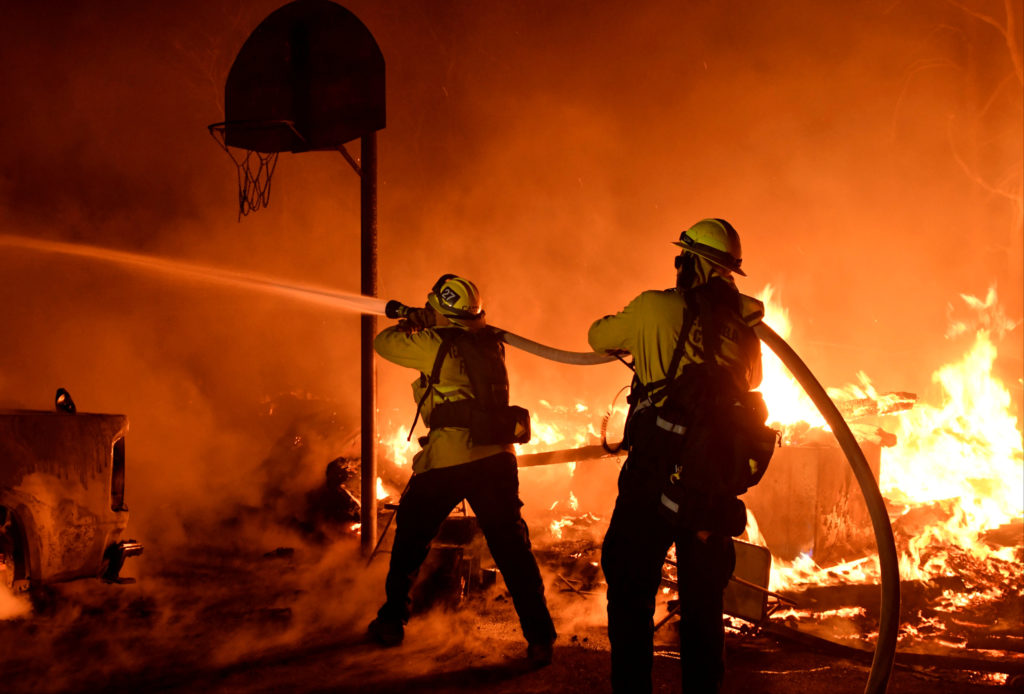
Sandra and Jim, both 87 years old, spent the past couple of weeks sleeping at a friend’s house. Amid the worst wildfires in California history, they and thousands of residents in their community were forced to evacuate their Ventura County homes on Nov. 9. Dozens are confirmed dead and hundreds were still unaccounted for from communities extensively damaged or entirely destroyed by the Camp Fire in the Sierra Nevada foothills of Northern California and the Woolsey Fire that has burned through the Santa Monica Mountains from Point Mugu to Malibu and Calabasas. Those who were able to escape the flames stayed at public facilities, hotels and motels, houses of worship or with relatives or friends. Some will never return to their homes, which are now cinders and ash. The lucky ones whose homes survived, like Sandra and Jim, have discovered that the soot and smoke were so intense that their residences will require extensive work to make them habitable again.

“The kind of effort required for this year’s Thanksgiving is the inner work of affirming courage and hope, of strengthening resilience, and refusing to be defined by rage or deprivation.”

On Nov. 7, the day before the Woolsey Fire broke out, college students Frank and Dennis decided they needed a break. They headed to the Borderline Bar & Grill in Thousand Oaks to enjoy its country music, good drinks and the fun and welcoming atmosphere it was known for. But their anticipated night of dancing and flirting turned into bloody tragedy. A man armed with a handgun illegally modified with an expanded magazine, entered the bar and murdered 12 people, killed himself and left 23 wounded or injured. Frank and Dennis escaped physical harm.

And, of course, there’s more.

• The shooting at Pittsburgh’s Tree of Life synagogue on Shabbat, Oct. 27, that killed 11. The alleged shooter espoused anti-Semitic views on social media.

• The shooting of two African-Americans that same day at a Kroger grocery store in Kentucky by a white man who reportedly tried but failed to enter a nearby Black church moments earlier.

• The shouting of “Heil Hitler” by an audience member at a performance of “Fiddler on the Roof” in Baltimore, which sent people heading for the exits. (The man later apologized, saying he had been drunk at the performance and was “ashamed” for the outburst.)

We have all witnessed the rapid rise of hate crimes, now carried out in the open as racists, anti-Semites, homophobes and sexists seem to believe they can now spew their hatred and impose their terror whenever they choose. During the recent midterm elections, candidates of mainstream political parties publicly advocated racial superiority, religious triumphalism, violence toward women or gays or people with special needs. That’s the new normal. And that is just here in the United States, just in the past few weeks.

Around the world, we are witnessing the alarming rise of extreme nationalist movements, predicated on a fascist notion of pure blood, racial supremacy or sheer intimidation and power. Deliberately organized assaults on entire ethnicities or regions are the daily strategy of Saudi Arabian, Russian and Chinese governments, just to name a few. In Washington, D.C., and from the far corners of the globe, the world seems more vicious, more deadly and more hateful as thousands of children remain forcibly separated from their parents and siblings, as ethnic minorities are subjected to a barrage of violence, deliberate disenfranchisement and explicit terror.

Is it possible that the only thing that unites us now is our sense of being under assault? Of being caricatured and misunderstood? Wherever we locate ourselves on the political spectrum, we find ourselves yelled at, belittled, despised and attacked.

Bad Timing, But the Time Is Now.

Amid all this chaos, vitriol and rage comes Thanksgiving. Of course, there are troubling aspects to its actual history, but the story we tell ourselves of this day is one of reaching across racial and ethnic lines, of an imagined paradise of harmony and shared purpose, of a bountiful meal of local foods and loving families, and above all — of gratitude.

“In giving and receiving love, we solidify our expansive joy and our soul-strengthening connections.”

When President Abraham Lincoln established Thanksgiving as a national holiday, the United States was in a similar state of darkness — riven by a war between those who would maintain a brutal system of racial enslavement even at the price of national union, and those who would oppose them. In the depths of that conflict, the bloodiest war (per capita) in American history, Lincoln understood the need to lift our eyes above the soul-wearying reality that had been forced upon us, and instead to focus our hearts and hopes on what might yet be possible. He drew our attention, prophetic leader that he was, on the gap between God’s vision of what we were called to be and the sorry mendacity of what we had allowed our reality to become. He understood that only by planting our imaginations and our determination in what might be, what must be, could we hope to mobilize the resilience and the courage needed to make that better tomorrow a reality.

The kind of effort required for this year’s Thanksgiving is the inner work of affirming courage and hope, of strengthening resilience, and refusing to be defined by rage or deprivation. The effort that also calls us is the outer work of building community and alliances across communal divides, of modeling a renewed level of civility and compassion (and then demanding that others do so as well), of standing for and with the despised and the marginalized. And then, the capstone to this effort is the determination to live along two simultaneous tracks: to peel back the hardened shell encasing our hearts so we remain open to feeling the pain of others and responding to it, and also cultivating the deep interiority that lets us celebrate our private joys —not as a selfish distraction but as a fountain of renewal and connection. We don’t get a second chance: the time to enjoy this gift of life is now. And the time to give back to others so that they can do the same is — you guessed it — now.

There’s a lot to do, so let’s get started.

The Inner Work

Like everything in creation, we have an interiority — our character, temperament, biology — that requires and demands our attention. And we have an exteriority — the ways we interact with the world around us and the people around us. As we organize ourselves to engage others with compassion, justice and love, we must also attend to our own inner lives. How we do that, and whether we do that, is both a choice and a commitment. We choose to focus our energy and our attention on what we have, not what we lack; on the loves we share, not those denied; on simple joys and the miracle of life itself.

To maintain that focus takes real effort and strength. It isn’t easy to maintain our perspective when all of us could easily tell our life stories as victims, underappreciated and overburdened. Every single one of us could narrate our lives through a prism of deprivation and hurt, and there is more than enough evidence to justify that narrative.

The danger, of course, is that in surrendering to that version of our own story we make it self-fulfilling. All we will notice is what we don’t have, what we can’t do, and that will blind us to all we have, to all we love, to the possibilities still beckoning and luring us. Giving in to a pity party locks us in as victims (not that we aren’t victimized in different ways). But being victimized and telling our story as heroes, as people capable of rising above it to wrest meaning, joy and triumph from the garbage thrown our way is radically different than letting the ways we are victimized turn us into victims. We do not have to choose to be victims.

Think, for a moment, of the example of our people throughout the ages. Despised and persecuted throughout the Medieval period, Jews nonetheless told an exalted story of a people on a mission to proclaim the prophetic voice of spirit, universal harmony, human dignity and holiness to this wounded planet. We might have been poor and assaulted, but we saw ourselves as children of the Most High, and we clung to our Torah as a life raft that could float us above the wreckage of bigotry, ignorance and violence. Jews didn’t ignore the deadly reality of anti-Semitism and hate. But we retained our power to contextualize it. In construing our story as heroes rather than as victims, we made that perspective real for ourselves and our children, and played a disproportionate role in the ongoing struggles for enlightenment, liberty and decency. Our telling made it so.

Even today, we can choose to give in to despair and fear. We can allow the bullies and the bigots to define how the tale is told. But if we do that, they win. Thanksgiving, like Jewish holy moments such as the Sabbath, invite us to narrate on our own terms: think Hanukkah, if you will. Ignorant bigots tried to roll back the clock on pluralism, diversity and religious freedom, yet we refused to give in. That resistance rolled back their hate, as love always does. We told the tale through the prism of our values and our vision until that telling became the meaning we derived from its time, our agenda for the present and the bequest for future generations.

So the inner work of Thanksgiving, this year and every year, is to refuse to let the bigots set the terms, to deny the haters their version of reality. Instead, we gather to celebrate a renewal of freedom, gratitude for life itself, and the chance to sit with those we love, confident that marinating in their love is the first step toward reclaiming a world of justice. Thanksgiving is a dress rehearsal for the inclusive banquet that our work will make possible. It is practice in not hardening our hurts into a self-perpetuating grudge story. The inner work is to celebrate in advance, and then to turn to the outer work of building a world worth celebrating.

The Outer Work

As we insist on seeing ourselves as heroes and our story as greater than just the doleful listing of our wounds; as we focus on the love we are privileged to share, the joys that come our way, and the ways we are able to surpass the expectations of our naysayers; we transition from the inner work to the task that lies beyond: to take that harvest of joy, contentment and love, and to shine it out in the world.

No Jew is every truly alone. Indeed, no human is either. Common to our mammalian stock, we are who we are in companionship with those who have loved and nurtured us and with those whom it is our delight to love and nurture. In giving and receiving love, we solidify our expansive joy and our soul-strengthening connections.

“Precisely because the news is so bleak, precisely because there are dangerous forces of hatred prowling these times, we need to gird ourselves with the shield of community and the sword of justice, which is love embodied.”

Part of the opportunity of this Thanksgiving, set on the backdrop of such bleak vulgarity and self-interested intimidation, is to harness our love to strengthen the ties that make us human and allow us to resist. By feasting and rejoicing with those we love, by taking time during the weekend to volunteer to help those in need, we shine the liberating light of connection and meaning that can come only from relationships. We nurture, we care, we love. And in those acts of decency and
justice, we show ourselves and the world who we are meant to be. Compassion is as compassion does.

Precisely because the news is so bleak, precisely because there are dangerous forces of hatred prowling these times, we need to gird ourselves with the shield of community and the sword of justice, which is love embodied. Each time we stand together and act in harmony, we cause the light to shine that much more brightly, driving the bigots back into their swamps.

And it is not enough — not today, not tomorrow — to define community narrowly. We cannot afford to isolate ourselves behind the moat of family, or even exclusively of the people who look like us or who share our label. In this time when the haters seek to divide us, we are called to redouble our belonging across the divides. Tell the Thanksgiving story as you heard it as a child, but then tell it again from the perspective of a Native American, because we now know they are not outsiders to our story, they are part of our story. Tell the human story from the perspective of the women, the slaves, the LGBT person, the person with special needs, the poor, the rich, the fundamentalist, the worker. The more perspectives we bring to the telling, the more the story glitters, like a multifaceted diamond. Our differences are beautiful; they make us more fully human.

Not only must our telling of the tale encompass the millions, but we must, in this time of division, join hands together beyond our own communal lines. Can we strike up conversations with people we don’t agree with? Can we find common cause working for the shared uplift of each other, and in doing so, realize that we belong far more extensively than we had previously dared hope? If God is one, then so are God’s children. Let’s live the oneness.


Rabbi Bradley Shavit Artson is the Abner and Roslyn Goldstine Dean of the Ziegler School of Rabbinic Studies at American Jewish University, where he is vice president.

Finding Gratitude in Terrible Times Read More »

Last Stop: Defense Minister

Consider the following few names: Moshe Yaalon, Shaul Mofaz, Amir Peretz, Yizhak Mordechai. Do you remember any of these names? All were Israel’s Defense Ministers in the last two decades, all believed that the position will make them contenders for the Prime Minister’s position, all were disappointed. Yaalon is looking for a party to join, Mofaz ended his political career with two seats in the Knesset, Peretz is a midlevel opposition leader, Mordechai was convicted of sexual misconduct and disappeared from the political scene.

In short: Defense Minister is no stepping stone, it is a last stop. Ask Ehud Barak – who had his last political hurrah at Defense (unless tweeting angrily is counted as political career). Or Binyamin Ben Eliezer, bless his soul. He was Defense Minister under Ariel Sharon.

Enter Avigdor Lieberman, who resigned last week from this coveted position, and prompted a political crisis (at the time of writing, the coalition is still holding). What happened to Lieberman? The usual thing. He wanted to become Defense Minister, probably believing that such position will raise his profile and make him a viable candidate to be a future PM. He ended his term injured: Marginalized by a powerful PM, ineffective as a minister, ridiculed by Israelis who still remember his unkept promise to kill Hamas leaders within 24 hours of getting the job. Lieberman resigned when he realized that as minister, he does not call the shots – but is nevertheless criticized for Israel’s true or imaginary failures.

The position of Defense Minister has high profile. Many of Israel’s most important leaders served in this position. David Ben Gurion was both Prime Minister and Defense Minister. Levi Eshkol copied him, until a week before the Six Days War. Moshe Dayan got the glory for 1967, and the shame after the 1973 Yom Kippur War. Shimon Peres was Defense Minister, Yitzhak Rabin was Defense Minister, Ariel Sharon was Defense Minister, Barak – when he was elected as Prime Minister, kept Defense to himself.

“Defense ministers ended up damaging their political career rather than boosting it.”

But in the last decade and a half Defense Ministers are rarely more than a Sancho-Panza to someone else. Ben Eliezer and Mofaz served under Sharon’s long shadow. Yaalon and Lieberman under a strong Netanyahu. They ended up damaging their political career rather thanboosting it. Prime Ministers, fearing competition, used them and got rid of them (Barak, Yaalon), or made them look small (Lieberman), or were too dominant to leave them much room for maneuver (Mofaz). They needed these Ministers as fillers, not as policy makers. To complement this tricky position, the public was rarely satisfied with or wowed by the performance of Defense Ministers.

This development is worthy of discussion as it explains not just the erosion of Defense Ministers’ political clout, but also why Israeli military men no longer have the same political appeal, and no longer dominate the political arena. To be blunt: Defense Ministers were popular, and generals were precious political commodity, when wars were simpler to explain, understand, and win. Rabin and Dayan were the demigods of 1967. Then Dayan stayed, and was burnt by 1973. The Six Days War was easy to explain – great victory. The Yom Kippur War was easy, if inconvenient, to understand – a surprise blow.

As wars become more complicated, the job of Defense Minister gradually lost its glamour. Ben Eliezer and Mofaz had to battle a long and exhausting Intifada with hundreds of civilian casualties. Peretz was partially blamed for the inconclusive Second Lebanon War. And then, there is Gaza. The public wants the Gaza problem solved. The public wants the firing of rockets from Gaza to stop. But it is not that simple to satisfy such demand. Barak was Defense Minister when Israel attacked Gaza in 2008 and 2012. Yaalon was Defense Minister during Protective Edge in 2014. All rounds had sour endings. All rounds were just rounds – a pause on the way to the next round. Netanyahu learned his lesson: Better avoid a round that puts you back where you started. Lieberman felt that he was paying the political price for Netanyahu’s decision.

So he was left with few choices. To have the title of Defense without the authority to defend. To have the job that is supposed to bolster your image of boldness, but makes you seem weak and irrelevant. That’s a bad political deal. How bad? A senior Israeli politician told me last week that under such circumstances it might be better for a politician to be Finance Minister – a traditional cemetery of aspiring politicians. Even Finance Minister. Imagine that.

Last Stop: Defense Minister Read More »

Emily Berg: Creator of the Holy Land in a Box

It was the summer of 2014. By day, missiles targeting Israel’s heartland triggered code-red sirens that sent Emily Berg and her co-workers in Tel Aviv scuttling into bomb shelters. By night, Berg was alone in her apartment with nothing but her thoughts and her neighbor’s dog for company. Her neighbor, like her boyfriend (now husband), Ofir, and 90,000 other reserve soldiers, had been called up to fight.

Berg, not unhappy in her grant-writing job but not especially happy either, found herself with plenty of time to reflect on her future and what she wanted to get out of her life in Israel. Back home in Toronto, her family and friends were being asked to support Israel as voices condemning the Jewish state on the international stage were becoming increasingly louder. One of the ways to combat boycotts, earnest Diaspora Zionists were told, was to buy Israeli products. “Go to your nearest Walmart and pick up a SodaStream!” ads in Jewish newspapers implored.

It occurred to Berg, 32, that Israel had many mom-and-pop businesses boasting incredible products but that unlike SodaStream or Ahava, didn’t have access to global markets. And so Matana was born. Matana (gift), is a subscription box service featuring three to five carefully curated products from a variety of vendors each month, ranging from artisans, farmers and designers. In line with Berg’s own values, many of the products are organic, handcrafted and socially or environmentally conscious. For that reason, Berg makes it her business to personally meet with every vendor.

“I want to be able to carve out a piece of my experiences of this country for other people.”

“I ask myself whether it’s a business I want to be involved with and one that I’m happy supporting,” she said. So if a business touts a social mission but exploits its employees, Matana won’t work with it.

Whether she’s shipping date honey from a kibbutz where silence is a central tenet or handmade baskets woven by African refugee women, the products all have a story to tell.  No less important, then, is the postcard with those stories that accompanies each product.

Jews want to feel connected to Israel, they love being a part of the community, Berg said, and this is a unique conduit to accomplish that. “Instead of buying olive oil imported from Greece or Italy, why not get it from 800-year-old trees in the [Galilee], where families build their own mud huts and where Arab and Jews work together” to bottle it? Berg said.

By Berg’s own admission, her exposure to Israel before making aliyah was limited to tour guides and one-dimensional stories she’d heard growing up. A Birthright trip when she was 18 planted the seeds for her to eventually quit a comfortable life in Toronto – and abort a legal career in the process – to move, but she had no real understanding of Israel and its people. It was only once she started traveling around the country on her own that she encountered the wealth of niche communities the Holy Land has to offer, and eight years on she continues to be surprised.

Six weeks after the birth of her daughter, Berg traveled to Pardes Hanna in the north to meet a potential vendor. She was embarrassed when, mid-meeting, her newborn needed to nurse. At first she felt unprofessional but her hosts — makers of organic cosmetics — immediately put her at ease and the meeting continued as normal as she fed her baby. “It was one of those moments where I felt this couldn’t happen anywhere but here,” she said.

“I want to be able to carve out a piece of my experiences of this country for other people,” she said. “The boxes are a portal. You open them and they contain the smells and textures and stories of a very beautiful and very nuanced country.”

Learn more about Matana here.

Emily Berg: Creator of the Holy Land in a Box Read More »