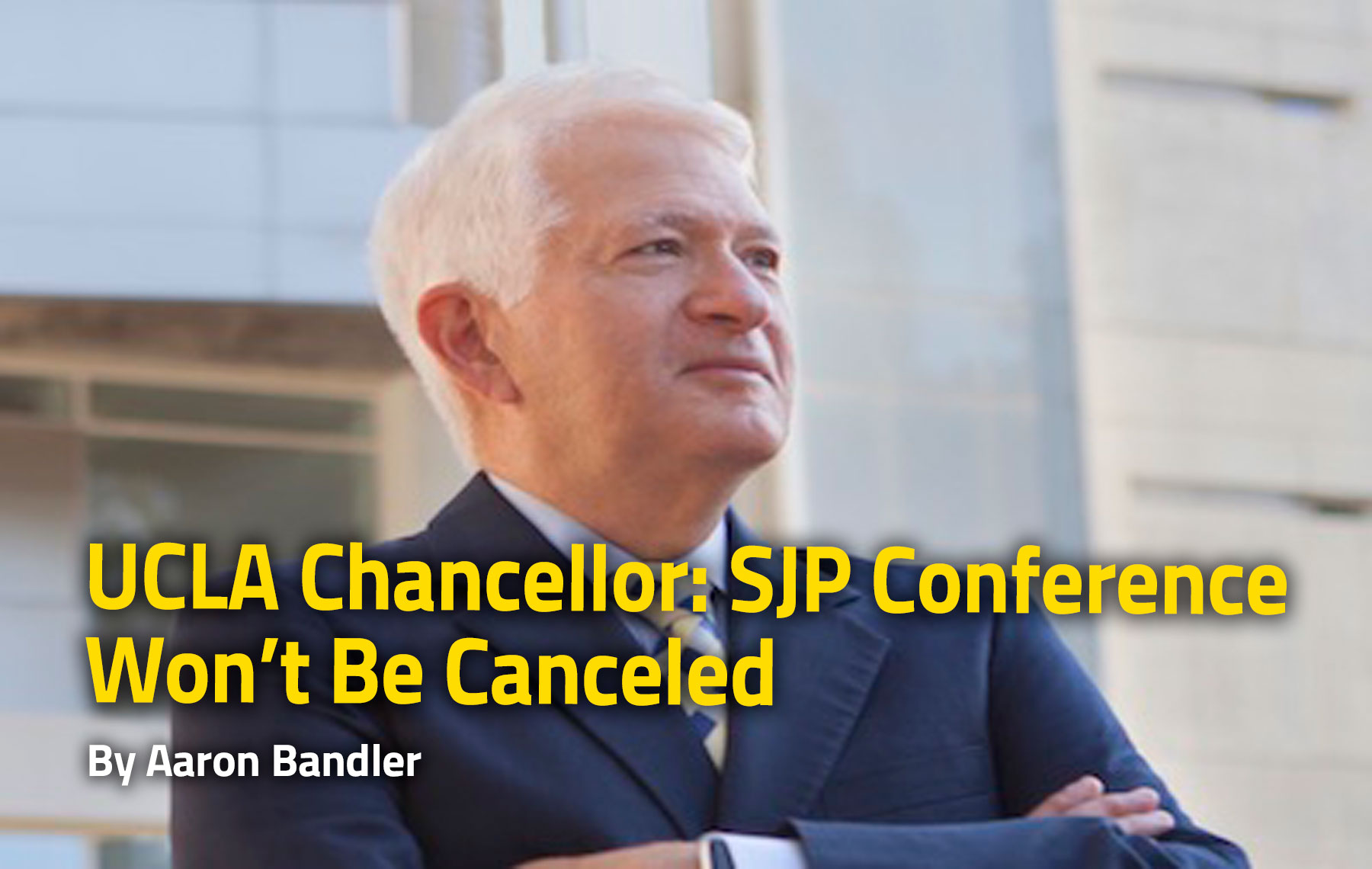
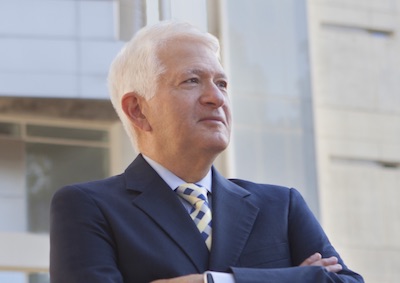
UCLA Chancellor Gene Block announced in a Nov. 12 Los Angeles Times op-ed that the National Students for Justice in Palestine (NSJP) conference on Nov. 16-18 will not be canceled despite sharp criticism from many in the community.
Block explained that even though there are concerns about anti-Semitic statements issued by members of SJP, they are bound by the First Amendment to allow all forms of speech to be spoken on campus.
“Preserving the right to speak about such issues does not validate the content of that speech,” Block wrote. “All too often affording a group their constitutional rights is falsely perceived as an institutional endorsement of their message.”
Block acknowledged that he disagrees with the boycott, divestment and sanctions (BDS) movement that SJP supports, saying that anti-Israel rhetoric can turn “into hostility against the Jewish people.”
“Much of what will be said at that conference may be deeply objectionable — even personally hurtful — to those who believe that a complex conflict is being reduced to a one-sided caricature, or see a double standard that demonizes the world’s only Jewish state while other countries receive less condemnation for dreadful behavior,” Block wrote.
However, Block argued that SJP still has a legal right to host its conference at UCLA, even if they espouse anti-Semitic rhetoric.
On Nov. 6, the Los Angeles City Council unanimously passed a resolution calling on UCLA to cancel the conference. City Councilman Paul Koretz told Block in a letter that he was “shocked and disappointed” that UCLA is allowing the conference to occur.
“Although UCLA has a responsibility to allow freedom of speech, our campuses should never become an environment where students of any origin are harassed, bullied, or prohibited from learning,” Koretz said.
Simon Wiesenthal Center Associate Dean Rabbi Abraham Cooper said in a statement to the Journal that Block “makes the compelling case for why Students for Justice in Palestine should not be allowed to run their national conference at UCLA” but then conflates the First Amendment with the gift of legitimacy from a major American institution.
“SJP students regularly and stridently mouth off against the Jewish State and their supporters on many campuses across America including UCLA. No one has attempted to block their right to be heard on the quad or in the halls of the University,” Cooper said. “But Chancellor Block, by green-lighting their national conference at a UC school, violates the spirit of the UC principles even outlined in the op/ed. What’s next? Antifa and Neo-Nazi conferences?”
Cooper added, “Make no mistake that SJP promotes and endorses violence against the largest Jewish community it the world. There is no compelling reason why UCLA has to provide the space for their national gathering.”
Judea Pearl, chancellor professor of computer science at UCLA, National Academy of Sciences member and Daniel Pearl Foundation president, said in an email to the Journal, “This is ‘viewpoint neutrality’ UCLA style.”
Pearl added: “When xenophobic Milos Yiannopolous requested to speak at UCLA, Chancellor Block wrote (paraphrased): I can’t stop you legally but be aware, you are not exactly welcome on this campus, you are in fact disgusting, your values clash with ours.
“When anti-Semitic-Zionophobic NSJP requested to speak at UCLA, Chancellor Block wrote (paraphrased): I can’t stop you legally, but I won’t stop you even if I could, here’s why, here’s why, here’s why.”
UCLA Hillel Executive Director Aaron Lerner told the Journal in an email that UCLA Hillel “appreciates the Chancellor’s concern.”
“When we first heard about the conference, Hillel immediately sought legal advice,” Lerner said. “Even our attorneys felt that UCLA would have no choice given SJP’s registered student group status. Going forward, however, universities need to clarify whether student groups aligned with hate groups such as Hamas have a legal right to be on campus. They might, but the matter requires further investigation.”
Lerner added, “In the meantime, the Chancellor has made his voice heard, and confirmed his opposition to BDS. That’s a win.”