Stanley Aaron Lebovic, Black is a Color by a survivor’s son (Baltimore: 2011) pp. 119.
When I first began to wrestle with the question of God after the Holocaust, I remember reading one comment that intrigued me and another that infuriated me. One noted rabbi dismissed the struggle by saying “to the believer there are no questions and to the non-believer there are no answers.” Another Jew – a layman and writer—had something much wiser to say: “the revolt of the believer is not that of the renegade.”
Last year, I was in dialogue with Professor David Weiss Halivni, the Columbia University and Jewish Theolgoical Seminary Professor, the Israel prize winner and Talmud luminary who is a child of Sighet, the town that Elie Wiesel made famous, and a survivor of Auschwitz. He recounted the story of his conversation with Moshe Maisels, the renown former editor of the Hebrew language weekly Hadoar. “Tell me something,” Maisels asked, “were you religious before the war?” “Yes” Halvini answered. “And now?” “Yes” again, Halivini answered. “So nothing has changed?”
“Everything has changed,” responded the survivor and Talmudic scholar.
Primo Levi, the sage survivor of Auschwitz, wrote:
“If the Lagers had lasted longer, a new, harsh language would have been born, and only this language could express what it means to toil the whole day in the wind, with the temperature below freezing, wearing only a shirt, underpants, cloth jacket and trousers, and in one’s body nothing but weakness, hunger and the knowledge of the end drawing near.”
I kept thinking of all of these comments as I read Stanley Aaron Lebovic’s beautiful work Black is a Color by a survivor’s son, which combines his artistic drawings with two forms of commentary: words that are in dialogue with his art and its symbolism and an extended theological, philosophical essay that wrestles with God and Jewish history, with Jewish tradition and the existential situation that Jews confronted during the Holocaust.
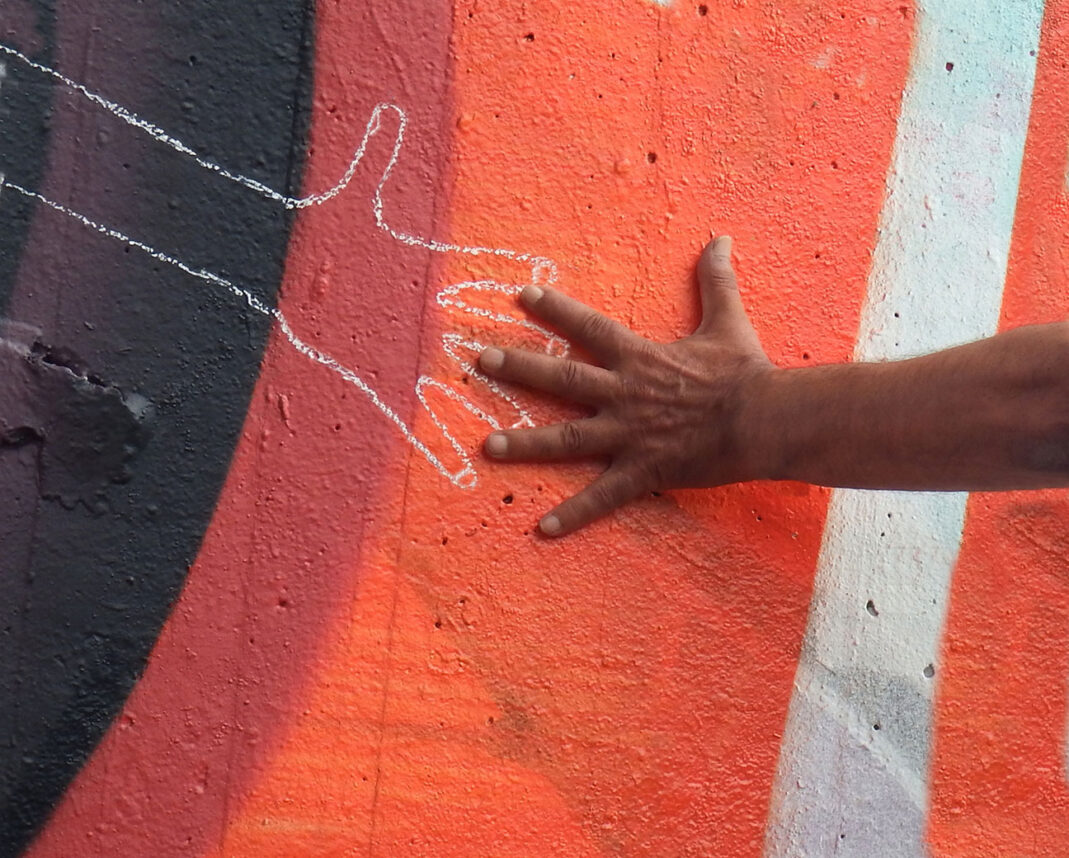
The work is a brutally honest confrontation with the Shoah. Lebovic uses the tradition visually and textually to confront the abyss. As one who has studied that darkness and created in its aftermath, I recognize in Lebovic a kindred soul, one who is struggling with the evil and not finding and resisting simple or comfortable answers. You see it in his art, you witness it in his writing. Lebovic juxtaposes images of the Shoah with images taken from Jewish tradition and elsewhere for considerable impact. On the cover the arms of a young boy wearing Teffilin are held firmly by the arms of a survivor similarly wrapped in barbed wire reaching up. The result is imposing. Elsewhere we see the famed electrified barbed wire fences of Auschwitz as a Wagnerian musical score. Familiar images clash and merge; they force the viewer to see things a new, to consider what has not yet been considered. We see all the iconography of the Shoah, many of the resources visual and otherwise of Jewish tradition to illuminate the darkness. He is telling his own story and not merely doing homage to his father’s past. He emerges from the shadows, a brave and bold Jew.
Like Levi, Lebovic understands that after Auschwitz art must invent a new language to portray the events of the Holocaust; the conventional will no longer work, the acceptable is no longer adequate. He is using a far more traditional artistic vocabulary that Samuel Bak, a survivor of Vilna and the brilliant Boston-based artist for while both explore the language of tradition, Bak feels more free to go in a very different direction and Lebovic wants to retain and to reengage. Both use art as integral to their confrontation with the past and the present. Bak has Lawrence Langer to probe the meaning of his work. The brilliant and demanding literary critic has offered penetrating commentary on Bak’s work that breaks new ground in literature, art and theology. Lebovic does it all himself and the results are deeply troubling, which in the field of Holocaust Studies is another way of saying disquieting, probing and disturbing. The believer will find solace in Lebovic work. He want to remain faithful to the tradition. He uses its tools, images and traditions to deal with the Shoah. The renegade will understand that even if he cannot accept Lebovic’s answers, he must respect his questions.
And like Halivini, Leboic may same the same prayers, observe the same traditions, study the same text and wrestle with the same issues as the greats of the past, but he know that everything has changed – everything.