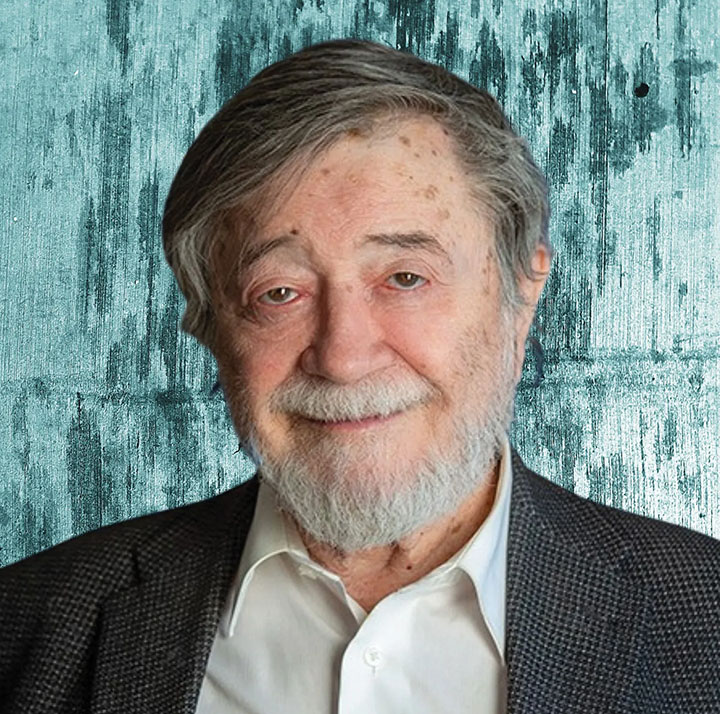
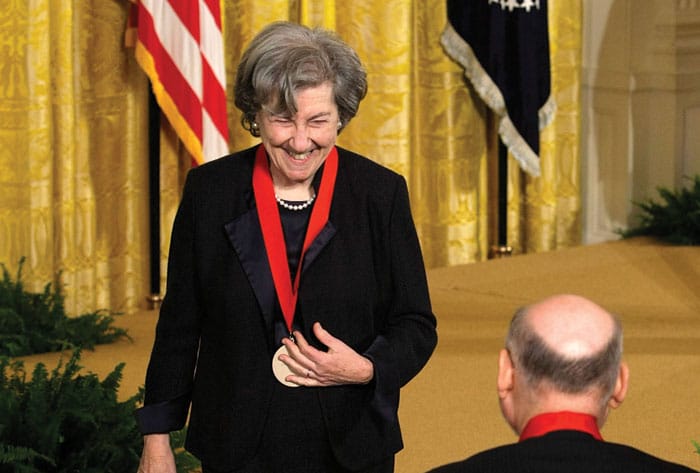
In November of 2019, Ruth Wisse was asked what Jewish college students can do to successfully combat antisemitism on campus. Knowing that she is a staunch Zionist, a former professor of Yiddish literature at Harvard and McGill and a particularly passionate polemicist on the complications (and failures) of contemporary academia, I believed then as I do now there is no better person to answer this question. “Never let the war of words ever be fought against Israel’s nature,” Wisse responded without hesitation. “Let it be fought about why you can’t accept Israel, why you need to single out this tiny people. Try to find Israel on the map…it’s hardly there! Are you really going to tell me these are the people you want to blame?”
When young people need advice on how to stand up to “the mob” on campus, I implore them to heed Professor Wisse’s words: To demand an answer as to why the Jewish people alone are deprived of the right to a country, and also to interrogate their opponent as to how this viewpoint can be twisted to look like progressivism.
Wisse’s answer has served as the north star of my career in my Zionist activism, always reminding me to take the offensive and prosecutorial stance when a debate on whether or not the Jewish state should exist is to be held. When young people need advice on how to stand up to “the mob” on campus, I implore them to heed Professor Wisse’s words: To demand an answer as to why the Jewish people alone are deprived of the right to a country, and also to interrogate their opponent as to how this viewpoint can be twisted to look like progressivism. “Teach them how to defend by attacking” is the motto. Wisse views the world and the Jewish people’s place within it as a lopsided, asymmetric assault on our rights and freedoms disguised as warring tribes on an even playing field. During weeks like this, when antisemitic violence scourges the nation once again, this time in the form of a hostage crisis, it’s a marvel how refreshing it is to hear someone speak of the Jews and our enemies with such politically incorrect truth. Wisse’s latest book, “Free As A Jew: A Personal Memoir of National Self Liberation,” is a review of how her worldview matured and developed — to the benefit of our entire community.
Ruth Wisse has invited readers to view the formulation of her intellectual and Jewish identity amidst the setting of twentieth century Montreal, New York City and Israel.
The memoir stretches far beyond wisdom on how to defend Israel, however. Ruth Wisse has invited readers to view the formulation of her intellectual and Jewish identity amidst the setting of twentieth century Montreal, New York City and Israel. As she advances in her career and navigates obstacles, important literary figures in the Jewish world bloom from every page, from Yiddish poets lecturing and arguing in her parents’ home to Leonard Cohen’s cool aloofness at summer camp. It is indeed an encyclopedia of the men and women who fashioned an art form out of living Jewishly—some easily recognizable to the Jewish ear, others living most predominantly in the memory of scholars and intellectuals. In its vivid characterization of all the brilliant people with whom Wisse has been acquainted, including Elie Wiesel and Norman Podhoretz, we are submerged in the marvelous infrastructure of knowledge Jews have built in North America, shown by our newspapers, our institutions and organizations, and by our strict adherence to the principles of liberal democracy. Indeed, Wisse effectively makes the case that, by way of our tradition of chattering and endless questioning, we Jews represent the strongest foundations of a free society. When Jews are in peril, there is evidence that these foundations have cracked. The manner in which the intellectual spirit of Judaism is described in “Free as A Jew” has inspired me to pursue Judaic studies in the academy like nothing else, though the academy is one among the many institutions Wisse fearlessly takes aim at.
 When Wisse was four years old at the dawn of World War II, her parents managed to flee Eastern Europe to safe haven in Canada. Considering escape eluded so many millions, Wisse acknowledges the psychological implications this daring escape wrought, forcing her to live Jewishly and to defend Jewishness as something that is one with her existence. We never see any indication that this couldn’t be the case. Everything in the life of Ruth Wisse, even if secular in nature, is a salute to her heritage and a commitment to our continuation as a people. Recounting her visit to Israel sometime in the late 50’s, she does not offer a polemic on the country’s then vulnerability or a dazzling description of renewed spirituality. Instead, she recalls a conversation with an elderly shopkeeper in a Jerusalem store who knew that her grandmother Fradl was the most beautiful woman in all of Vilna. The two speak in Yiddish of the burgeoning romance between Fradl and a bookseller in the Old World, and though it fills merely one page of the memoir, to me this is what bolsters the moral clarity of defending the Jewish people as well as Wisse does. Our story is not best punctuated by drama, but rather by the history and culture that surrounds us every day we walk as Jews. To a person so filled with this spirit that they can fashion their own academic courses on Yiddish prose, advocating for our own self-interest in the political realm must come as easily as breathing.
I’m aware that my previous writings make it hard to believe I’d be enamored with Professor Wisse’s work. It’s true, we assuredly disagree on matters including but not limited to draft dodgers, feminism, and Donald Trump. Yet at the same time, I’ve been unsuccessful in finding someone who speaks to my inner Jewish yearning for dignity and confidence as well as her, and still have yet to hear anyone who makes the case for Israel with more conviction. Several years ago, I first read Wisse’s previous works, “If I Am Not For Myself: The Liberal Betrayal of the Jews” (1992) and “Jews and Power” (2007). These books shattered my preconceptions of both the Jewish people and those opposed to us, and although it was uncomfortable to step out of my ideological bubble that had been coddled all my life, it was completely necessary in order to efficiently understand what I would be up against as a public-facing Jew and Zionist critiquing my own side of the spectrum.
We will need a lot more of this strength in the coming years, and Ruth Wisse’s iconoclasm and courage are just the things to get us there. “Rare and precious are the writer-intellectuals and those who lead the Jews without yielding to despair,” she writes. Let mine be a generation who continues that legacy.
Blake Flayton is New Media Director and columnist at the Jewish Journal.