Miketz is almost always read during the week of Chanukah. Is this a coincidence of the calendar or is there something to learn from this juxtaposition?
As Miketz begins, Joseph has spent two years in an Egyptian prison, which is much like the pit he was thrown into by his brothers years ago, a place where he overheard his brother Reuben say: the lad is einenu (nonexisting, forgotten). Joseph must have assumed that his father and brothers had forgotten him. Even the cupbearer, whose dream Joseph interpreted in prison, has forgotten him.
But when Pharaoh needs an interpreter for his dreams, Joseph is remembered suddenly and summoned from the darkness. Not only does Joseph interpret the dream as a prediction, but also he tells Pharaoh what to do in response. Joseph is raised up to become the second most powerful ruler in Egypt. He marries and has two sons, naming his first Menashe: “God has made me forget my hardship and my parents’ home.” To name a child “God has made me forget” is to remember. His second son’s name, Ephraim, “God has made me fertile in the land of my affliction,” is a testimony to coming out of a dark place, and remembering the darkness.
What does this story teach us about Chanukah?
The Itture Torah gives one answer: “Miketz begins with sadness — Joseph’s distress in prison, Jacob’s grief for his lost son, and the suffering of the 11 brothers. But the portion ends with a message of hope and joy; its last words are: ‘You shall go up in peace to your father’ (Genesis 44:17). This hints at the victory of the Maccabees, sons of Mattathias.”
Another answer comes from Sefat Emet: “The real miracle of Chanukah was on account of the light, specifically the discovery of the enlightenment hidden precisely in the darkness and the exile (galut)…. Through the miracle of the light the Jews were able to feel that they were God’s servants despite their living in the exile of the shadow of Greek power. This was precisely the miracle: they experienced a revelation (hitgalut) through the lights of the chanukiyah that they could serve God despite living in the darkness of exile.”
Later in the story, when Joseph reveals himself to his brothers, he says: “It was not you who sent me here; it was God.” All along, despite the darkness of exile, Joseph understood he was serving God.
Chanukah comes at the darkest season of the year, and we make the light, one candle at a time. The Talmud records a debate as to how to kindle the lights. Bet Shammai maintains:On the first day, eight candles are lit and thereafter they are gradually reduced. But Bet Hillel says: On the first day, one is lit and they are progressively increased. Bet Hillel’s practice has become ours, and one of the reasons given is that we always aspire to increase in matters of holiness. We come out of darkness into light.
Maimonides says: “The mitzvah of lighting a Chanukah lamp is a well-loved mitzvah, and one needs to be careful to do it in order to proclaim the miracle and to add praise to God and gratitude for the miracles God did for us” (Laws of Chanukah 4:7).
What is the miracle we are supposed to proclaim?
Is it the miracle of the few against the many — that God helps human beings bring about miraculous rescues from historical oppressors? Or is it the miracle of the courage to be different — that the Maccabees rejected the Hellenized Jewish claim that assimilation was the goal and that Jews should be like everyone else? Or is it the miracle of Jewish continuity? Here we are still, after all these generations, but there are no more Syrian Greeks or ancient Romans or Egyptian taskmasters.
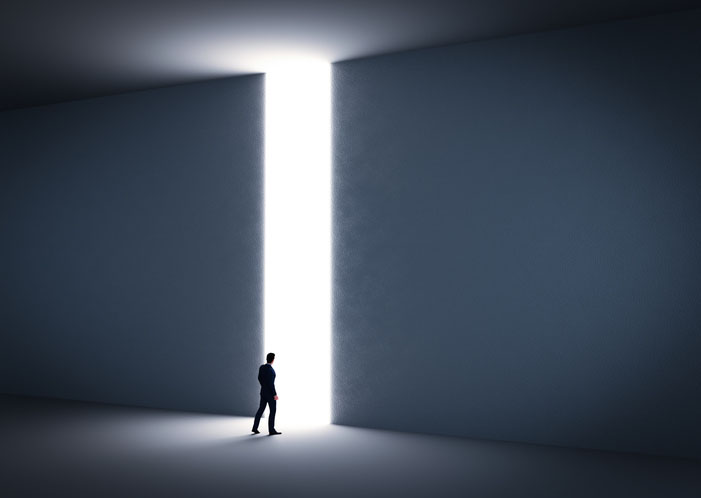
It is all these and more. It is also the miracle we learn from Joseph: the ability to remember light in times of darkness.
My teacher Rabbi David Hartman asked why Chanukah is celebrated for eight days rather than seven. Since there was enough oil for one day, the first day is no miracle. The miracle is that it burned for the seven remaining days. Therefore Chanukah should be a seven-day holiday. But it is eight days. So what is the miracle? The miracle is that our ancestors were willing to light the oil in the first place, even when they couldn’t be sure that they had enough oil, enough strength, to complete the rededication of the Temple.
The miracle was that they lit that first candle. They, like Joseph, made light in the face of darkness, confident that the darkness would eventually end. l
Laura Geller is senior rabbi of Temple Emanuel of Beverly Hills, a Reform congregation.