fbpx

A Bisl Torah — This is Good for Us

Ritual isn’t reserved only for the young or for the old. Let’s make memories, together, with any chance we get.
[additional-authors]
December 9, 2021
Enzo Nguyen@Tercer Ojo Photography/Getty

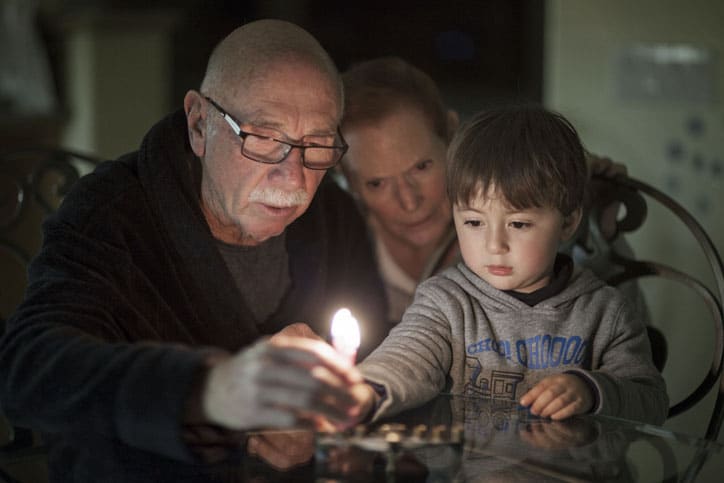
Like many of you, this past weekend I celebrated Hanukkah. But on Sunday, I witnessed my 95-year-old grandmother celebrating Hanukkah with many of her great-grandchildren. We congregated in a park, opened gifts, and shared stories. My Nana watched the next generation of “Guziks” play games, giggle together and enjoy celebrating the holiday. As everyone gathered to leave, each great-grandchild waved goodbye to Nana and wished her a “Happy Hanukkah.” My uncle remarked, “This is good for them.” He meant that it was good for them to make memories with their great-grandmother. And I couldn’t help but think, “Yes, but really, this is good for all of us.”

This is good for all of us. Spending time with those that are younger and older. Creating shared meaning through ritual and tradition. Teaching our children that to be a member of the Jewish community means being part of something bigger than ourselves. Witnessing great-grandchildren celebrate Hanukkah with their great-grandmother reminded me of one of my purposes: to ensure the miracle of our family story continues through the next generation and beyond.

We often think we are creating memories for others. That the tradition of lighting Shabbat candles, going to Shabbat services, or putting on holiday celebrations are for others to connect. That in modeling behavior, we are instilling meaning and faith in our children. This is true. But engaging in tradition is also for us. Rekindling our own faith is something that can happen over and over again.

Creating a home filled with meaning…this is good for all of us. Ritual isn’t reserved only for the young or for the old. Let’s make memories, together, with any chance we get.

Shabbat Shalom


Rabbi Nicole Guzik is a rabbi at Sinai Temple. She can be reached at her Facebook page at Rabbi Nicole Guzik. For more writings, visit Rabbi Guzik’s blog section from Sinai Temple’s website.

Did you enjoy this article?
You'll love our roundtable.

Editor's Picks

Latest Articles

Who Knows?

When future generations tell your story and mine, which parts will look obvious in hindsight? What opportunities will we have leveraged — and decisions made — that define our legacy?

You Heard It Here First, Folks!

For over half a decade, I had seen how the slow drip of antisemitism, carefully enveloped in the language of social justice and human rights, had steadily poisoned people whom I had previously considered perfectly reasonable.

Trump’s Critics Have a Lot Riding on the Iran Conflict

Their assumptions about the attack on Iran are based on a belief in the resilience of an evil terrorist regime, coupled with a conviction that Trump’s belief in the importance of the U.S.-Israel alliance is inherently wrong.

Me Llamo Miguel

With Purim having just passed, I’ve been thinking about how Jews have been disguising ourselves over the years.

The Hope of Return

This moment calls for moral imagination. For solidarity with the Iranian people demanding dignity. For sustained support of those who seek a freer future.

Stranded by War

We are struggling on two fronts: we worry about friends and family, and we are preoccupied with our own “survival” on a trip extended beyond our control.

Love Letters to Israel

Looking around at the tears, laughter, and joy after two years of hell, the show was able to not just touch but nourish our souls.

Neil Sedaka, Brooklyn-Born Hit-Maker, Dies at 86

Neil Sedaka was born March 13, 1939 in Brooklyn, New York, the son of Mac and Eleanor Sedaka. His father was Sephardic and his mother Ashkenazi; Sedaka was a transliteration of the Hebrew “tzedakah.”

Letter to the UC Board of Regents on Fighting Antisemitism

We write as current and former UC faculty, many of us in STEM fields and professional schools, in response to the release of When Faculty Take Sides: How Academic Infrastructure Drives Antisemitism at the University of California.

Shabbat in a Bunker

It turned out that this first round of sirens was a wake-up call, a warning that Israel and America were attacking – so we could expect a different day of rest than all of us had planned.

Community Reacts to U.S.-Israel Attack Against Iran

Though there was uncertainty about what would ensue in the days following, those interviewed by The Journal acknowledged the strikes against the Islamic Republic in Iran constituted a pivotal turning point in the history of the Middle East.

More news and opinions than at a Shabbat dinner, right in your inbox.