fbpx

December 9, 2021

Everybody Loves Changes – A poem for Parsha Vayigash

Do not be afraid of going down to Egypt,
for there I will make you into a great nation.
Genesis 45:3

I don’t like change.
I’m even afraid of the next lines of this poem
because they’re uncertain.

(Phew, we made it!)

I remember not wanting to go to Hebrew school
as I liked it better before, when I didn’t
have to go anywhere.

(Turns out I didn’t have a choice and
now look at me, writing Jewish poems
every week like a zealot.)

I remember not wanting to move into
a different house because what was the point
of taking all your things and moving them
when they were perfectly fine where they were?

(Now I have a view and pretend wood floors
and open space and a dysfunctional jacuzzi
and rooms to spare.)

I remember deciding not go back to that
familiar place I had gone to every week for
a couple of decades. A paycheck was at stake
and hella personal connections.

(I no longer taste crow every day which
suits my spiritual vegetarianism.)

My friend always tells me about how
a door closing is immediately followed by
one opening.

(You just have to get there quick enough
so flies and raccoons don’t walk in.)

Change is Egypt.
Change is forgetting what comes after Egypt.
Change may take forty years.
You might have to build a pyramid.
You might need to pack up your things
a number of times.

Do not turn this thing right around.
You are going exactly where
you should be going.


God Wrestler: a poem for every Torah Portion by Rick LupertLos Angeles poet Rick Lupert created the Poetry Super Highway (an online publication and resource for poets), and hosted the Cobalt Cafe weekly poetry reading for almost 21 years. He’s authored 25 collections of poetry, including “God Wrestler: A Poem for Every Torah Portion“, “I’m a Jew, Are You” (Jewish themed poems) and “Feeding Holy Cats” (Poetry written while a staff member on the first Birthright Israel trip), and most recently “The Tokyo-Van Nuys Express” (Poems written in Japan – Ain’t Got No Press, August 2020) and edited the anthologies “Ekphrastia Gone Wild”, “A Poet’s Haggadah”, and “The Night Goes on All Night.” He writes the daily web comic “Cat and Banana” with fellow Los Angeles poet Brendan Constantine. He’s widely published and reads his poetry wherever they let him.

Everybody Loves Changes – A poem for Parsha Vayigash Read More »

A Bisl Torah — This is Good for Us

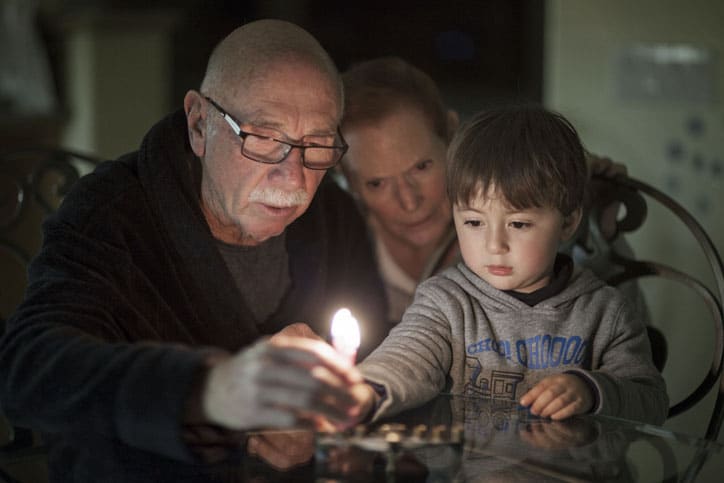
Like many of you, this past weekend I celebrated Hanukkah. But on Sunday, I witnessed my 95-year-old grandmother celebrating Hanukkah with many of her great-grandchildren. We congregated in a park, opened gifts, and shared stories. My Nana watched the next generation of “Guziks” play games, giggle together and enjoy celebrating the holiday. As everyone gathered to leave, each great-grandchild waved goodbye to Nana and wished her a “Happy Hanukkah.” My uncle remarked, “This is good for them.” He meant that it was good for them to make memories with their great-grandmother. And I couldn’t help but think, “Yes, but really, this is good for all of us.”

This is good for all of us. Spending time with those that are younger and older. Creating shared meaning through ritual and tradition. Teaching our children that to be a member of the Jewish community means being part of something bigger than ourselves. Witnessing great-grandchildren celebrate Hanukkah with their great-grandmother reminded me of one of my purposes: to ensure the miracle of our family story continues through the next generation and beyond.

We often think we are creating memories for others. That the tradition of lighting Shabbat candles, going to Shabbat services, or putting on holiday celebrations are for others to connect. That in modeling behavior, we are instilling meaning and faith in our children. This is true. But engaging in tradition is also for us. Rekindling our own faith is something that can happen over and over again.

Creating a home filled with meaning…this is good for all of us. Ritual isn’t reserved only for the young or for the old. Let’s make memories, together, with any chance we get.

Shabbat Shalom


Rabbi Nicole Guzik is a rabbi at Sinai Temple. She can be reached at her Facebook page at Rabbi Nicole Guzik. For more writings, visit Rabbi Guzik’s blog section from Sinai Temple’s website.

A Bisl Torah — This is Good for Us Read More »

ZOA, Iranian Americans for Liberty Call for Biden Admin to End Iran Deal Talks

The Zionist Organization of America (ZOA) and Iranian Americans for Liberty (IAL) issued a joint statement on December 6 urging the Biden administration to end discussions with the Iranian government regarding re-entering the 2015 nuclear deal.

The statement noted that British, French and German diplomats were disappointed and concerned about the Iranians’ proposed changes to the deal at Vienna and that United States Special Representative to Iran Rob Malley and his team have returned to the U.S.

“We are not shocked in the least that the Islamic Republic’s representatives have backtracked on the previously agreed points,” the ZOA and IAL said. “This deception is part of their playbook and we expected this would be the end result. The Islamic Republic has shown the world time and time again they cannot be trusted and that they are not negotiating in good faith.”

They called for Biden “to immediately pivot back to a maximum pressure campaign against the Islamic Republic because strength, not appeasement, is the only language that works with the Mullahs. The State Department must stop placing any level of faith in a terrorist regime that has the blood of Americans, Israelis and others, including the Iranian people on their hands.”

Then-President Donald Trump exited the U.S. from the Iranian nuclear deal in 2018, arguing the deal emboldened Iranian aggression in the Middle East while paving the way for them to obtain a nuclear weapon. His administration engaged in a “maximum pressure campaign” of sanctioning Iran to strongarm them into changing their behavior. Iran has since ramped up their nuclear program; they are currently at a 60% nuclear enrichment purity, just below the 90% threshold necessary to build nuclear weapons, according to The Los Angeles Times.

By contrast, President Joe Biden has advocated for re-entering the deal, which would lessen sanctions on the Iranian government in return for them curbing their nuclear program. “As we continue to believe that a return to compliance with the agreement is the best way forward, that is not an infinite prospect,” Secretary of State Antony Blinken told reporters on December 7, per The Times of Israel. “What we will not allow is for Iran to, in effect, tread water at talks and not come forward with any meaningful and serious propositions for resolving the outstanding issues to returning to compliance while at the same time advancing its program.” He added that he wasn’t optimistic about the prospects of a revived nuclear deal.

Israeli Prime Minister Naftali Bennett said in a December 5 speech to his cabinet that he urges “every country negotiating with Iran in Vienna to take a strong line and make it clear to Iran that they cannot enrich uranium and negotiate at the same time. Iran must begin to pay a price for its violations,” according to the Times.

ZOA, Iranian Americans for Liberty Call for Biden Admin to End Iran Deal Talks Read More »

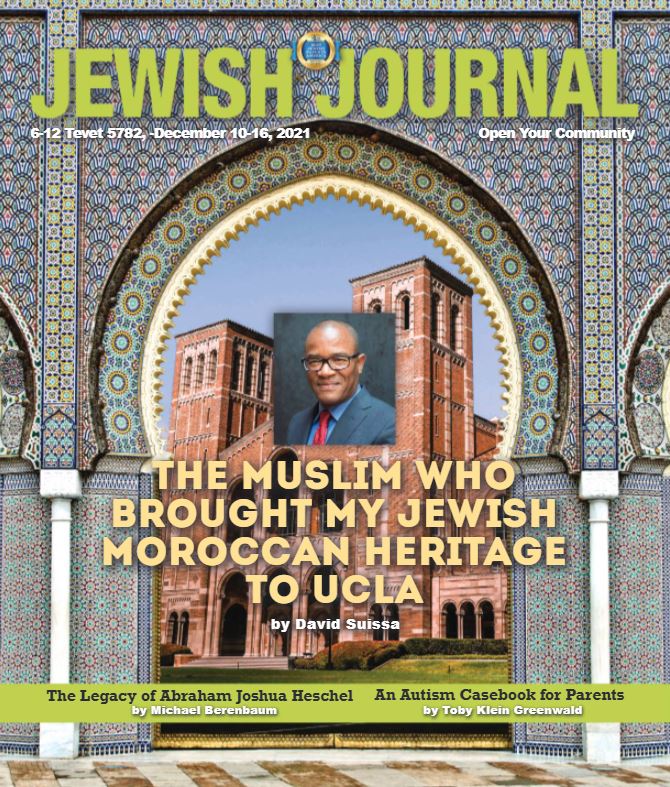
Print Issue: The Muslim Who Brought My Jewish Moroccan Heritage to UCLA | Dec. 10, 2021

CLICK HERE FOR FULLSCREEN VERSION

Print Issue: The Muslim Who Brought My Jewish Moroccan Heritage to UCLA | Dec. 10, 2021 Read More »

For the Full Mel Brooks Memoir Experience, Get the Audiobook

“The only Requirement for a Mel Brooks film is that you come in ready to laugh,” Brooks says in the opening pages of his new memoir, “All About Me!: My Remarkable Life in Show Business.” The same requirement applies to this book as well. 

While the physical book does plenty of justice to the life and career of Brooks, the audiobook adds a hilarious dimension to it. It clocks in at just over 15 hours, which may seem daunting, but it’s worth it. Comedians tend to have a bit of fun reading their own book in the recording studio. It’s that muscle memory kicking in when they’re handed a microphone.

Brooks’ audiobook feels like your Jewish grandparent retelling a polished story that they’ve told many times before because the captive audience always enjoys hearing it. Even if your grandparents didn’t grow up in New York, like so many Jews in the early 20th century, Brooks’ Brooklyn accent will remind you of the grandparent of someone you know sharing a story from years past. 

Brooks has been in show business for 83 of his 95 years, and is a winner of four Emmys, three Grammys, three Tonys and one Oscar—one of only 16 people to have won at least one of each. The audiobook goes through those past 83 years, starting from those street corners where he honed his early comedy talents as a way to fend off bullies.

“I started in 1938 as a street corner comic in Brooklyn, and I’m still doing it, just on well-known street corners.” — Mel Brooks

“I started in 1938 as a street corner comic in Brooklyn, and I’m still doing it, just on well-known street corners,” he says.

He takes the listener to the Borscht Belt, details searching for landmines in World War II, talks about collaborating with Sid Caesar and discusses working on “The 2000-Year-Old Man” with longtime friend Carl Reiner. 

“If you don’t have anyone in your life like Carl Reiner, stop listening to this right now and go find someone!” Brooks scolds the listener with his raspy voice. Reiner passed away in 2020 while Brooks was writing the book. 

His courtship of Anne Bancroft was as Mel Brooks as it gets. They met at a show in 1961; immediately after telling her he loved her, he introduced himself: “I’m Mel Brooks—nobody you’ve ever heard of.”

“Wrong,” Bancroft said. “I got your ‘2000-Year-Old Man’ record with Carl Reiner. It’s great.” They married in 1964 and remained together until her passing in 2005.

Many anecdotes in the audiobook have been shared over time, but “All About Me!” is a comprehensive collection of them. The audiobook is like listening to the greatest hits of the DVD commentary of his films, but with more detail and all in one place. All the hits are in there: “The Producers” film, “Blazing Saddles,” “Young Frankenstein,” “Silent Movie,” “History of the World, Part I” and many others. 

He shares that he was inspired to make “Spaceballs” after celebrating his son Max’s tenth birthday with a “Star Wars” themed party. 

“Science fiction, now there’s a genre I haven’t wrecked yet,” he said to himself after the party. “I destroyed the western in ‘Blazing Saddles,’ I savaged classic horror films in ‘Young Frankenstein,’ I sent up silent films in ‘Silent Movie’ and I had fun with Hitchcock in ‘High Anxiety.’”

Brooks rehashes film dialogue and the history behind each production. He imitates the voices of the characters and sings the parts meant to be sung throughout the audiobook.

As with any life story told by a grandparent, there is a bit of advice and philosophy. Brooks talks about how much pressure he put on himself to make the music just right in his work.

“Music infuses a film with the correct emotion that you need in a scene. You shade your film with the right colors while directing, but music is especially important,” he says. 

In the final chapter, Brooks talks about the coast-to-coast one-man show he did in 2016 and how the thrill of entertaining is never lost on him. 

“I still think the best thing in the world is saying something funny and then having an audience explode with laughter,” he says. “I will never grow tired of that. It’s magical.”

For the Full Mel Brooks Memoir Experience, Get the Audiobook Read More »

Former Talent Agent Now Doing COVID Testing for Hollywood

When the pandemic struck, it shut down Hollywood productions and sent everyone indoors. But as the business started getting back up and running again, executives and producers realized they needed to quickly mobilize to make their sets as safe as possible. And Natan Bogin was ready to step in and help.

Bogin learned that film studios and production companies were sending unvetted people to celebrities’ homes to do COVID-19 tests, which became quite the liability. As a former talent agent for CAA who had also worked with Lawrence Bender and ICM, he was familiar with how the business worked – and people were comfortable with him testing them.

“We understand how they work. We are set up to fully adapt to the speed and geographical challenges of productions.” — Natan Bogin

“Having worked in and [being] part of the Hollywood community for so long, there is a personal connection and trust with the streaming platforms, production companies and various entities hiring us,” he said. “We understand how they work. We are set up to fully adapt to the speed and geographical challenges of productions.”

Bogin, who represented Francis Ford Coppola when he was at CAA, works under Safety First Collective, the COVID-19 testing company he founded this past summer. After taking an intensive course, he became a certified COVID Compliance Officer (CCO) and hired staff members to help him test cast and crewmembers for productions at studios such as Netflix and Paramount. In his experience, Hollywood is taking COVID very seriously. 

“Productions have been exemplary and have endured through incredibly adverse conditions,” he said. “[They’re doing everything from] testing to social distancing to making sure sets are filled with sanitizer, masks and other safety protocols.”

Since starting Safety First Collective, Bogin, a Paris native, has been so busy that he’s expanded globally. His company now serves people on sets all around the world, including different parts of the United States, London, Mexico and Spain. 

“[It’s been] absolutely crazy busy, all over the United States and internationally, with no sign of slowing down,” he said. “Our team works 24/7 and makes sure all our clients’ testing needs are fulfilled.”

When he and his team come in to assist with testing, they attempt to get in and out as fast as possible so that producers can focus on making the content. 

“A film or TV shoot is chaotic and stressful by nature, and the pandemic has added extra layers of safety and protocols, making it very complicated for productions to operate as effectively and quickly as usual,” he said. “We operate extremely quickly, efficiently and get things done. Productions can therefore fully concentrate on making the shoot happen and trust that all testing will be done flawlessly.”

In doing this type of work, Bogin is guided by the Talmudic saying, “whoever saves one life saves the world entire.” 

“It has been an absolute honor and privilege to keep hardworking men, women and children safe during these trying times,” he said. “The Hollywood community as a whole has come together in such beautiful and inspiring times. Being part of this has been an incredible professional, personal and human experience.”

Former Talent Agent Now Doing COVID Testing for Hollywood Read More »

L.A. Native Brings Hope to Patients as a North Carolina Chaplain

Jonah Sanderson, who for four months has served as a chaplain in Gastonia, North Carolina, is not just the only Jewish employee at the small hospital at which he works. He is also the only visible Jew in town. 

After graduating with a bachelor’s and a master’s from the Academy for Jewish Religion, and fielding five different job offers, the Los Angeles native decided to head down to the Deep South to initiate a path of what he called, “Jewish renewal in the South.”

“What I have tried to do is reach patients on a neshama level.”
— Jonah Sanderson

“What I have tried to do is reach patients on a neshama level,” said Sanderson, who is studying to become a Conservative rabbi. “Although prayer in minyanim and kashrut may not be their things, I ask them, ‘When you get sick, you need psychological help or you lose a loved one, where do you turn?’”

Of the few Jews who live in Gastonia, many have intermarried or assimilated. Sanderson, therefore, would like to create a community that tackles the issues that face Jews in the South, including a lack of identity and antisemitism.  

He is no stranger to building Jewish community, as his father, Jay Sanderson, is the CEO and president of The Jewish Federation of Greater Los Angeles (Rabbi Noah Farkas will inherit the role on Jan. 1, 2022).

Although Sanderson said that 20,000 Jews live in nearby Charlotte, only 10,000 of them are affiliated with synagogues.

“Where are the other 10,000?” he said. “The answer is that people are not necessarily looking for synagogues anymore. We should ask them: ‘What aren’t we giving you?’ What we need is real, authentic Judaism that speaks to the heart of each individual.”

He is also passionate about bringing more mental health awareness and resources to the community. After a 31-year-old friend of Sanderson’s tragically took his own life, Sanderson saw that Jewish communities did not speak much about mental illness, and they merely “outsourced people’s needs to Jewish Family Services and to private therapists,” he said. 

While in L.A., he created an organization called Back Engaged Now, which provides mental health training and panels to rabbis of all denominations and enlists licensed mental health professionals to provide weekly check-ups with congregants.

Along with Temple Ner Simcha and Temple Ahavat Shalom, Sanderson created two Shabbat dinners that not only provided meals to 40 Jews, but also connections with mental health resources and psychological counselors as well.  

After sitting at the bedsides of 83 patients who have died from COVID in Gastonia over the last four months, what Sanderson has learned is that it doesn’t matter what faith patients practice. What matters is that they have faith in general. 

One patient he recalled fondly was a 29-year-old COVID patient whose chances for survival were not good. 

“I will never forget coming into the patient’s room and playing Frank Sinatra and Destiny’s Child,” Sanderson said. “We sang ‘Say My Name,’ and we prayed that this patient would make it home. I said a shehecheyanu, made a mi sheberach and I wished this patient well. Thank God, the patient is now home.”

Sometimes, Sanderson brings along Jewish texts and ideas to provide the patients, most of whom are not Jewish, with hope and inspiration. 

“This virus is so horrific that any judgment they might have when I walk in the door goes out the window,” he said. “I come in, and I see patients on ventilators and bypass machines with tubes keeping them alive. They look at me, and they just start to cry. Then I start to cry.”

What Sanderson has taken away from his job is that we really are all children of one God.

“Every way is a way to God as long as that way is non-violent and inclusive,” he said. “I often tell my patients, ‘One more commandment, one more good deed could tip the scales to the world of good. So, what we really want is for you to get better, so that you can get out there and tip the scales to bring redemption.’” 

L.A. Native Brings Hope to Patients as a North Carolina Chaplain Read More »

Long-Term Survivors of HIV/AIDS Speak at Congregation Kol Ami

In observance of the 33rd annual World AIDS Day, on December 1 Congregation Kol Ami hosted six survivors of the disease, including Los Angeles City Councilman Mitch O’Farrell and West Hollywood City Councilman John D’Amico, who related the life-altering effects HIV/AIDS had on them. Their stories were dramatic, intensely personal, tragic and courageous. 

Echoing the early fears of many AIDS survivors back in the day, D’Amico believed his 1988 diagnosis doomed him. “Long before I joined the City Council, I had a history and a future that seemed to collapse into each other,” he said.

“I remember every single face [and] every single friend who was not so fortunate.” -Mitch O’Farrell

O’Farrell said that he came of age as a gay man at the beginning of the AIDS epidemic, in 1981. “Anyone who is my age knows what I am talking about when you can relate to the fact that that shaped who we are,” he said. “As we are lighting the Hanukkah candles, I remember every single face [and] every single friend who was not so fortunate.”

HIV.gov reports that 35 million people worldwide have died of HIV since 1981, and 36.7 million others are living with the disease. 

Keynote speaker Dr. Michael Gottlieb, an immunologist, was the first to identify AIDS as a new syndrome when he was a researcher at UCLA in June 1981. With remarkable precision, he described his first patients by names and traits. “If they walked through the door tonight,” he said, “I would embrace them.” 

Since his young patients had HIV before effective treatment was available, Gottlieb could not understand why they weren’t angry. “I would have been,” he said.

Congregation Kol Ami, founded by LGBTQ activist Rabbi Denise Eger, has been holding a monthly HIV support group for the entire 29 years of the synagogue’s life. “It should be of interest to the community that Jews with HIV who belong to other congregations have to come to Kol Ami for their Jewish support,” she said. 

Long-term survivor Michael Sugar, a retired production manager in the entertainment industry, also spoke at the event. He was diagnosed with HIV in 1985. “That was near the beginning of what became a pandemic,” he said. “It means people like me provided the most kind of information.” 

Sugar and others who tested HIV positive in the mid-’80s faced an imposing handicap. “For most illnesses or diseases, doctors look to the history of the disease and what has worked for different patients,” he said. “But for HIV, since there are no people who have been living with this for longer than 35 to 40 years, there is no lengthier history to look to.”

At the beginning, his doctor told him he had maybe two years to live. 

“You learn to live with what is on your plate,” he said. “You establish a certain balance. The balance gets rocky when you have something new thrown on the plate, so you establish a new way of moving forward with it. The hardest part for me was losing all of my friends. Living through something like [that was like the] Holocaust, or a war.”

Growing up in small-town Pennsylvania, as he puts it, Sugar realized at 12 years old that he was gay. One evening, he was in the living room with his parents watching a movie on television, “That Certain Summer.” 

“Gay characters were portrayed in a positive light,” he said, “and I recognized that is who I am.”

However, Sugar, who moved to Hollywood shortly after graduating from school, kept his sexual preference secret from his family for many years. He was 30 when he decided to reveal his true self at a Thanksgiving dinner.

“I had gone home to have this conversation with my family,” he said. “I told [my parents] I had a boyfriend, and he was family.” 

During dinner, the phone rang and his father answered. He called out, “Michael, it’s for you.” 

It was Sugar’s boyfriend. Nothing else was said until the next morning.

“When I came downstairs, my father casually said to me, ‘Was that your friend calling?’” Sugar said. “I said ‘yes.’ My father said, ‘He seemed very nice, very polite.’ There was a pause. Then he said, ‘Is he Jewish?’”

Sugar’s face still glowed recalling that moment all these years later. “I knew it was going to be okay, that it mattered to my father that my boyfriend was Jewish,” he said. “The answer was ‘Yes.’”

In 1996, six years after disclosing his secret, Sugar went to work as a volunteer at the AIDS Memorial Quilt in Washington, D.C. His 89-year-old father, a Holocaust survivor, drove 100 miles from Pennsylvania to meet his son there.

“I didn’t think he would be able to understand what this meant for me,” Sugar said. “But he did understand. He said something that day to me that probably was the wisest and most loving piece of advice I ever have received. [He] said, ‘Michael, you’re never going to get over this. You’re never going to get over all of this loss. But you’re going to have to learn to live with this so you can go on with your life.’”

Sugar called it “the most beautiful expression of love, support and wisdom.” 

This was the last time he would see his father.

“I have taken his advice to heart,” he said. “There have been times when I discover that grief is not far from the surface. Sometimes a random memory might scratch the surface. But I have managed to live a very, very full life.”

Long-Term Survivors of HIV/AIDS Speak at Congregation Kol Ami Read More »

Hope for Children with Autism

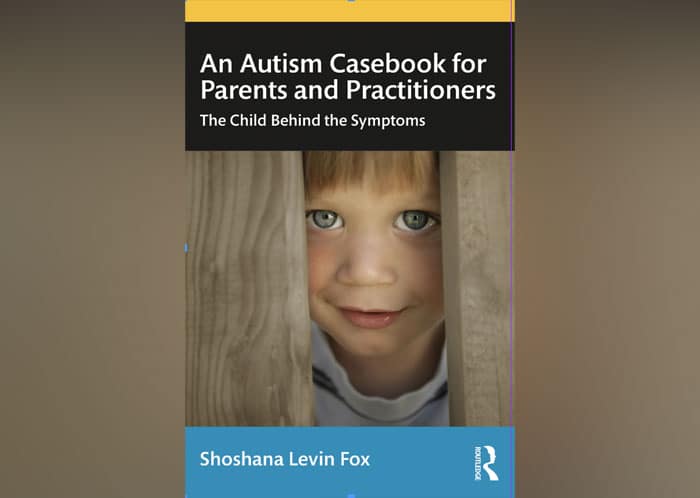
For those interested in the subject, Dr. Shoshana Levin Fox has authored a book, “An Autism Casebook for Parents and Practitioners: The Child Behind the Symptoms,” that will earn their attention. Section I is titled “Children.” These first eight chapters are the stories of Jack, Sasha, Annie and others (children’s names are pseudonyms)—children who came into the Feuerstein Institute after having been diagnosed as autistic. They exited with new hope, not only for themselves, but also for their parents, who were usually devastated by their children’s diagnoses and needed their own emotional propping-up.

The central theme of this book is that autism is grossly over-diagnosed. Levin Fox is a psychologist and play therapist who has worked with children for more than 30 years. In addition to lecturing and giving workshops in North America, Israel and Europe, she worked for 25 years in the prestigious Feuerstein Institute of Jerusalem, founded by the late Sorbonne-educated Professor Reuven Feuerstein, and before that in Vancouver, Canada. Her doctorate is in Counseling Psychology, with a specialty in Play Therapy, from the University of British Columbia.

This book should be read for its critical message to parents who have received an autism diagnosis for their son or daughter: Believe in your child. Talk to your child. Keep looking till you find them the best and most appropriate help and hope. 

I recommend the book, not just for the moving stories of the children who were salvaged from what proved to be inaccurate assessments, and not only for the intriguing descriptions of the practices of the world-renowned Feuerstein Institute, which Dr. Levin Fox combined with the wonders of the DIRFloortime method. This book should be read for its critical message to parents who have received an autism diagnosis for their son or daughter: Believe in your child. Talk to your child. Keep looking till you find them the best and most appropriate help and hope. Don’t let the “experts” get you down, because a true expert will find the formula to lift you, and your child, up.

Most importantly, do not assume that an expert who gave you an assessment of autism, which may feel like an emotional-cognitive death sentence, is right; and even if the assessment is accurate, and the child is truly autistic, that does not mean there is no hope.

This book is not only for parents of children with autistic symptoms; there is a message here for all parents: Even when there is a diagnosis that is less daunting—such as learning disabilities, ADHD, or other emotional, cognitive or developmental challenges—keep shopping until you find the professional who will light the way through the tunnel.

The idea of “plasticity of the brain,” writes Levin Fox, entered mainstream medicine several generations after the professor had intuited and created materials and methods based on that reality. “There were no sacred cows for the Professor,” she writes, and decries the fact that “the diagnosis of autism is used as a sacrosanct truism … I have found that the term ‘autism,’ as it appears commonly in the field, in actuality is being used to describe children who suffer from a vast range of communication difficulties, from extreme shyness to psychotic conditions and just about everything in between.”

It is not clear to her how research studies can be reliable, says Levin Fox, “with the current diagnostic criteria of autism so elastic and with the use of the term so liberal.”

The children whose stories are recounted in this book all made significant, even dramatic, progress. Levin Fox writes that, “Not every child began to speak fluently, to learn at a normative level and to play happily with friends … However, it can be safely and honestly stated that, inspired and mentored by the Professor, my colleagues and I made a huge difference in the lives of hundreds of children originally thought to be autistic.” She sees them, as a team, as having saved many lives.

Feuerstein sought to find the child’s latent strengths and what he called “islets of normalcy.” She explains how “islets of normalcy” are identified and worked with. They include, among other elements, eye contact, human relationships, symbolic play, curiosity, humor and more. “The notion of islets of normalcy helps both parent and practitioner recognize the non-symptomatic behavior [of autism symptoms], the sparks of life and the glimmers of normative functioning within a child’s autistiform presentation.”

One child is five-year-old Jack, whose parents came to the Institute. There, Levin Fox discovered in him an engaging child with a rich imagination. His parents told her that, as he had verbal communication problems, they had taken him to be tested and had been told he was autistic. 

Levin Fox emphasizes that helping the parents to understand their children’s challenges, and not to be fearful and depressed about them, is part of the battle. 

At the Institute Jack thrived, and left the early diagnosis of autism far behind. The details of the process are in a fascinating ten-page chapter.

She also writes about a little girl, Annie, who clearly had developmental difficulties, but, “Each of a child’s tangible, visible symptoms is a world in itself. Like the shoots of a green plant, symptoms have intricate roots.” 

Levin Fox gave the parents tools to work with their daughter and continued to follow her progress. When she met Annie again at the age of six, she wrote, “The sweet, charming, warm, open and communicative child … bore no trace of the detached, imploded, silent, starving two-and-a-half-year-old of years ago.”

Then there is Davie, who had “a longer journey,” and teenaged Joe, who did not make progress to the same extent as some of the other children, but who years later was a happy, functioning adult living in a group setting with other mildly impaired adults. Mikey, who began to improve significantly when his parents began to talk to him, is another example. He still had a long way to go, but, writes Levin Fox, “I learned never to give up on a parent.”

Another child is Max, who had oral dyspraxia, and his lack of speech had been “misunderstood as an autistic avoidance of speech … his story … dramatically illustrates the tragedy of this kind of misdiagnosis.” She cautions that children’s hearing should always be tested; sometimes the non-responsive child is discovered to be simply hearing-impaired.

In Part II, “Theoretical Groundings,” Levin Fox gives the intense and thorough theoretical background to the success stories, which are plentiful. Six more case studies are interwoven in the text to help bring the theory alive. 

This section also describes the fascinating roots of Feuerstein’s methods. He began by working with orphaned children who were traumatized after WWII, decided there were flaws in the standard diagnostic tests, and rather than focusing on performance, he focused on the child’s ability to develop learning processes. 

“Current studies on brain plasticity … scientifically substantiates what [Feuerstein] proposed two generations ago—that brain cells are modifiable and respond to the stimuli of the environment.” For Feuerstein, it was an “I told you so” moment.

“He understood that human beings can change … when the environment anticipates and promotes such change.” The children mentioned here “markedly diminished their autistic-like symptoms … We believed that the potential was there. We sought it. And when we could not see it, we worked hard to elicit it, and even to create new facts on the ground.” The staff saw themselves as warmly interactive mediators.

One of my favorite stories appears in Chapter 15, “A Paradigm Shift,” where Levin Fox describes in great detail the captivating case history of Ben, whom she first met when he was five years old. The end of the chapter, with the sub-heading, “Ben’s Epilogue,” describes a chance meeting, many years later, between Levin Fox and Ben’s parents at the luggage carousel in the arrival area of an airport. “Dr. Shoshana!” they called out, and his mother pulled out her cellphone. “The happy faces of Ben and his wife, holding their newborn son, smiled back at me,” writes Levin Fox. “For Ben, the paradigm-shift had indeed been life-saving.”

I found another word to describe the journeys and the miracles of the children portrayed in this book: life-affirming. 

There’s hope.


Toby Klein Greenwald is an award-winning journalist and theater director, veteran educator and the editor-in-chief of WholeFamily.com.


Hope for Children with Autism Read More »

Wisconsin Rabbi Rallies Jewish Support for Victims of Parade Massacre

A Chabad rabbi in Waukesha, Wisconsin called for healing a community still reeling from the aftermath of the Christmas parade massacre that killed six and wounded over 60. The horror of an SUV intentionally ramming innocent parade marchers on Sunday, Nov. 21 stunned the town just 20 miles west of Milwaukee. 

Following an interfaith vigil the day after the attack, Rabbi Levi Brook knew the people of Waukesha needed more support. So less than 48 hours after the shocking event, he organized another gathering to call for acts of random kindness in their town.

“You want to do something? Let’s meet like we’re doing now. Let’s meet to comfort and encourage one another,” Brook said in his speech to hundreds of mourners in the town square.

He called the gathering “One Community, One Heart,” describing it as a celebration of light over darkness. It involved the lighting of the official town menorah next to a shimmering Christmas tree. 

Chabad of Waukesha-Brookfield was founded only nine years ago. The city of Waukesha itself does not have a sizable Jewish population—the American Jewish Population Project at Brandeis University estimates that Waukesha County and two other small counties bordering Milwaukee have a combined population of 5,800 Jews. Although Milwaukee County has an estimated Jewish population of 17,000, the number of shuls in neighboring Waukesha County can be counted on one hand.

“We’re encouraging people to combat this darkness with acts of random kindness, so Waukesha’s lights shine brightly.” — Rabbi Levi Brook

“We’re heartbroken with the rest of the community,” Brook told the Journal. “Now is the time that we all need each other. Everyone has a natural response, ‘What can we do?’ We’re encouraging people to combat this darkness with acts of random kindness, so Waukesha’s lights shine brightly.”

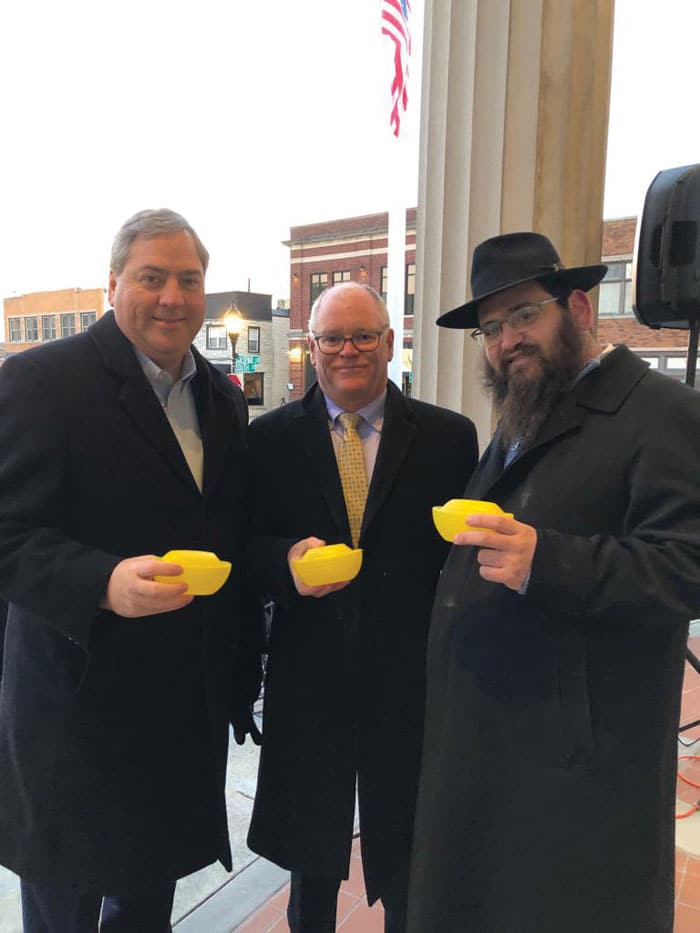
Acts of Random Kindness (ARK), is also the name of a community project that Chabads around the country encourage. At the One Community, One Heart event, everyone received a yellow charity box in the shape of Noah’s Ark so they could collect tzedakah in their offices, homes, businesses and places of worship. Brook said that the purpose of the ARK is to remind people that the response to senseless violence is always kindness.

“The message of the menorah is that every day we increase light—what’s good for today is not good for tomorrow, so tomorrow we have to increase, we have to add more light,” Brook said. “And the more we share the message that the Chanukah candles teach us, and one by one as we educate our friends, our community, our neighbors [and] our children, hopefully such a [tragedy] doesn’t happen again. And that’s our prayer.”

Among the many attendees, Waukesha County Executive Paul Farrow and Waukesha City Mayor Shawn Reilly took charity boxes to spread the message of kindness and support. 

Brook didn’t always live in Wisconsin. He grew up in Brooklyn in a large family and began his rabbinical studies in Los Angeles in 2006. He spent many Fridays at Chabad of Sherman Oaks, or as he told the Journal, “his old stomping ground.” 

Now residing in Waukesha with his family of eight, he leads the small but strong Jewish community and is helping his town continue to heal from sorrow.

“I wanted the Jewish community to show support behind any tragedy that happens in our community,” he said. “We’re all in this together.”

Wisconsin Rabbi Rallies Jewish Support for Victims of Parade Massacre Read More »