fbpx

December 9, 2021

Table for Five: Vayigash

One verse, five voices. Edited by Salvador Litvak, the Accidental Talmudist

So now, please let your servant stay as a slave to my lord instead of the boy, and let the boy go up with his brothers.

-Genesis 44:33


Judy Gruen
Author, The Skeptic and the Rabbi: Falling in Love with Faith

Judah is completing a heartfelt, searing argument to Egypt’s viceroy, imploring him not to enslave Benjamin (over a false charge of theft) but to enslave him instead. Judah invokes the promise he made to their father, Jacob, to protect Benjamin while in Egypt; losing Benjamin would be a death blow to Jacob. 

The viceroy (an unrecognized Joseph) has tested his brothers repeatedly to see if they still harbored the hatred and jealousy that had originally prompted them to sell him into slavery years ago. Joseph’s harshness was particularly aimed at Judah, who had been responsible for selling Joseph in the first place. Would Judah now also be willing to “sell” Joseph’s younger brother, Benjamin, thus ridding the family of both sons of Rachel? Judah’s speech eloquently answers: No. 

Rabbi Jonathan Sacks argues that Joseph subjected his brothers to these tests as a way to lead them through the three stages of teshuva (repentance): confession, expressing remorse, and not repeating the sin when another opportunity arises. In fact, the brothers immediately recognize that their troubles in Egypt spring from the sale of Joseph: “Indeed, we are guilty because of our brother . . . that is why this distress has come upon us. (42:21).” Judah’s commitment to protect Benjamin proves that he will not repeat a previous crime. 

With all three stages of teshuva complete, Joseph can reveal himself to his shocked, guilt-wracked brothers and begin the difficult steps toward reconciliation. 


Rabbi Aryeh Markman
Executive Director Aish LA 

In this one verse, 46 years of mysteries are solved.  Now Jacob understands why God stole the love of his life, Rachel, from the chuppah.   

Let’s explain the scene to understand the completed puzzle. The servant is Judah, the fourth son of Leah, who is emerging as the leader of the twelve tribes. His line is destined for royalty.      

The Lord is Joseph, the first born to Rachel and the eleventh born of the twelve tribes. He rules Egypt second only to Pharaoh.  Joseph is not recognized by his brothers who haven’t seen him for 22 years since they sold him into slavery.  The boy is Benjamin, age 30, Rachel’s second son. He is being framed as a thief by his brother, Joseph, the mysterious and contradictory Viceroy.   

Judah offers himself to replace the innocent Benjamin. In doing so he rectifies the schism that had divided the 12 brothers. But he will serve a life sentence of slavery to Joseph. Why this drama?  Because 46 years before, Benjamin’s mother, Rachel, was commanded by her father, Lavan, to forgo her planned marriage to Jacob so her older sister, Leah, would marry first. Rachel altruistically gave over the secret signs she had concocted with Jacob just for this scenario. Remember they wore veils.   

Now the child of Leah, Judah, steps into the breach 46 years later to sacrifice his freedom for the child of Rachel. Life comes full circle.  And so too with us, eventually all will become clear. Keep the faith!


Ilan Reiner
Architect & Author, Israel History Maps

Does “going up” refer to a change in altitude, or to heading north? Nowadays, we’re used to maps being oriented so that north is up. Hence, “going up” is often synonymous with going north. There’s evidence that also during Biblical times maps showed north as up. Perhaps Judah is referring to actual elevation? Going from the plains of lower Egypt to the mountains of Hebron, where Jacob lived, was literally going uphill. Hence, in this case, the answer to both is affirmative. 

Geography aside, Judah’s also hinting at their emotional wellbeing. There’s no doubt that for Benjamin, who’s about to become a slave, going back home with his brothers would be considered “going up.” As in getting out of a deep pit. 

Beyond all that, when it comes to moving between Egypt and Israel, the Torah is consistent. Going from Israel to Egypt is referred to as “going down.” Going from Egypt to Israel is referred to as “going up.” Surpassing considerations of geography, elevation or emotional wellbeing, the Torah hints to us that any time our Patriarchs go to Israel, they are ascending. They rise above what’s expected of them, and come one step closer to being up and elevated. 

When people move from one country to another, they “relocate” or “migrate.” To this very day, when Jews move to Israel, they make “Aliyah.” They “go up.” They rise. Not necessarily in elevation or geography, but to be exalted in their Promised Land.


David Sacks
Torah Podcaster at LivingwithGod.org 

Do you want to understand Judaism? How it sees the world and how it values the individual? There is Joseph, also known as Yoseph HaTzaddik, the one who never makes a mistake. Then there is his brother Yehuda, the one who makes mistakes but then has the strength to go back and fix them. 

Which one do you think Moshiach, the ultimate Redeemer, descends from? If you were to ask me, I would tell you the one who never makes a mistake. Amazingly, the Torah teaches otherwise. The Messiah descends from Yehuda, the one who makes mistakes but then has the courage to fix them. 

Do you understand the profundity of this? It means that redemption isn’t contingent on perfection. Rather, our redemption finds its source in endless striving. Or, to think of it a different way, the question isn’t will I ever make a mistake? The question is, after I make a mistake, what do I do next? 

I once learned from Rabbi Meir Fund that if you break a vase and put it back together, it never looks as good as it did before it broke. But in the eyes of heaven, if you break a vase and put it back together, it looks even better than it did before it broke.


Dini Coopersmith
Teacher, Trips director, reconnectiontrips.com

This statement of Yehuda’s was the final necessary step before Yosef revealed himself to his brothers. Yosef could not hold back anymore and felt that his mission was accomplished once Yehuda offered to be a slave instead of Binyamin. Why? What was Yosef waiting for? Why the humiliation of the brothers, the trickery, the false accusations? 

Netivot Shalom says that after the 22 years of separation between the tribes, Yosef wanted to ascertain that there would be full unity and reconciliation among the brothers. He was afraid that if there were still strife and dissention, they would not be considered one holy entity upon which the Divine Presence would rest. In order to survive the exile in Mitzrayim (Egypt), and not assimilate and disappear, Yosef knew they needed to be completely one, “the 12 tribes of Israel”, a strong block of people who could then become a nation. 

When people are egocentric and arrogant, they cannot unite with others. They are too busy with their own opinions and self-worth and can’t fully connect with each other. Yosef was causing the brothers to experience utter humility and broken-heartedness, and to lose all sense of self and ego. 

When Yehuda, the leader, the one most likely to have a big ego, was willing to humiliate himself and become an eternal slave, thereby taking full blame and responsibility for the situation, Yosef realized that the family was now sufficiently humble. They were finally worthy of being re-united among themselves and re-connected with God as a holy nation.

Table for Five: Vayigash Read More »

Virginia On My Mind

After nearly two years of the pandemic, doctors like me need a break. Relief arrived in the form of an invitation to visit friends in Washington, D.C. We started the trip with four days in central Virginia. As a long-time Civil War buff, I looked forward to visiting the area’s historic battle sites. Along the way I discovered some lessons about democracy that echo across those hallowed fields.  
Much of the war’s bloodshed occurred in the 100 miles between D.C. and Richmond, the Confederate capital. The blue and gray armies faced off in a seemingly interminable series of battles with the Union angling to capture Richmond, only to be repeatedly repulsed by Robert E. Lee’s Army of Northern Virginia.  

On our way to Washington, my wife and daughter indulged me in a visit to Manassas, near Bull Run Creek, site of the war’s first battle in July of 1861. There on Henry Hill, now home to the Visitor Center, the amateurish forces from North and South, scarcely true armies, faced off against each other with the southern confederates ultimately driving the Union soldiers back to Washington. Suddenly, the nation awakened to realize that the South would not simply fold in the face of Union power. This would be a real war. Yet, no one yet imagined the bloodbaths to follow.  

If we only pay attention, the torrent of blood soaked into Virginia’s soil still cries out to us.

Thirteen months later the armies engaged again near Manassas. My family and I were the only attendees at the afternoon Ranger talk at Brawner’s farm, site of the first day’s combat at the second battle at Bull Run. By then, both side’s forces had evolved into highly professional, deadly armies. The Ranger eerily described the night-time clash. A soldier was killed or wounded on that spot every 10 seconds for two hours. I asked how that compared to the Antietam cornfield, a site I’d visited years ago and a battle that occurred only months later. “At the cornfield,” he responded, “a soldier was killed or wounded every second for four hours.” The mind reels at individual tragedies and destroyed families generated at an industrial rate. Antietam was the bloodiest day in American history, with nearly 23,000 killed or wounded.  

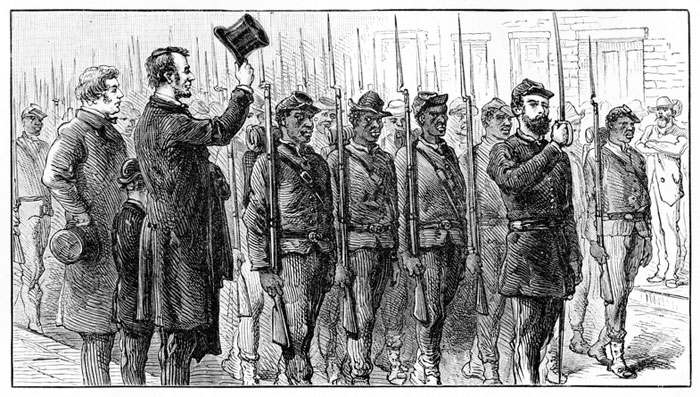
Why would soldiers throw themselves willfully into the very face of death? One might hope that Northerners thought that ending the evil of slavery justified the ultimate sacrifice. Yet Lincoln had not yet issued the Emancipation Proclamation. He had campaigned to limit slavery to existing territory, not to abolish it. As Lincoln later commented, the conflict tested whether government “of the people, by the people and for the people” could endure.  

Contemporary Americans may forget the audacity of the American experiment inaugurated less than a century earlier. Democratic republics were widely viewed with skepticism and their future far from secure. Many American families remembered persecution by old world governments whose authority sprang from brute power or purported divine right. The American system, with its legitimacy drawn from consent of the governed, a peaceful and systematic succession of power and constitutionally limited powers, translated into a safe and secure future for themselves and posterity. The nobility of that experiment and its hope for the future of mankind justified such profound sacrifices.    

What would a soldier at either Bull Run battle, or Antietam, think about an appeal from the President of the United States to a Georgia official to “find” the 11,780 ballots needed to win an election? What might Lincoln say about a Vice President, charged with counting electoral votes, pressured to unilaterally overturn the votes—and the will—of millions of voters?

January 6, 2021 marked our first failure to peacefully transfer power since the South’s secession. Those failing to understand the gravity of that loss and the recent threats to democracy owe themselves a visit to the now hushed battlefields of eastern Virginia. We should understand that the efforts to overturn our election desecrate a national heritage forged by the countless lives lost at Bull Run, Antietam and elsewhere. At Henry Hill and Brawner’s Farm, Lincoln’s words, spoken at Gettysburg, still ring true: It is “for us, the living, to be dedicated to the unfinished work, which they … so nobly advanced.” If we only pay attention, the torrent of blood soaked into Virginia’s soil still cries out to us.


Daniel Stone is Regional Medical Director of Cedars-Sinai Valley Network and a practicing internist and geriatrician with Cedars Sinai Medical Group. The views expressed in this column do not necessarily reflect those of Cedars-Sinai.

Virginia On My Mind Read More »

The Muslim Who Brought My Jewish Heritage to UCLA

The first thing that struck me about Aomar Boum was how he conversed so naturally with my mother in Arabic, as if they had known each other for years. I had heard about Boum and his interest in Moroccan Jews, so I reached out and invited him to our Shabbat table while my mother was visiting from Montreal.

You would think it was a family reunion. My mother’s cuisine reminded him of his own mother’s, and even our Sephardic Shabbat melodies sounded familiar. That night, we bonded as Moroccan “brothers,” and have been ever since. 

That was about five years ago.

A few months later, Boum wrote about his journey in a Jewish Journal column: “Growing up as a practicing Muslim in a Moroccan village, I never could have imagined that I would, one day, do research with the United States Holocaust Memorial Museum on Vichy and Nazi policies in North Africa, or that I would become affiliated with the UCLA Center of Jewish Studies.”

So, what motivated a practicing Muslim to become a world-renowned expert on the Jews of Morocco and help launch the new Moroccan Jewish Studies center at UCLA?

It turns out Boum had more in common with Moroccan Jews than language, cuisine and melodies. He also identified with the “foibles of a minority.”

“I experienced discrimination in my youth,” he wrote in the Journal. “In southern Morocco, where I grew up, race is a factor in determining social and economic status. The Haratine, who have a darker skin color and are seen as socially inferior, farmed lands owned by the local Maraboutic families known as Shurfa (historically light-skinned). For decades, my father served these families as a day laborer. I grew up affected by this.”

The Jews of Morocco have never forgotten how King Mohammed V protected them during World War II, a gratitude I inherited from my parents.

But this kinship with Jews based on a shared minority status was only part of his motivation. Boum was also moved by the deep attachment Moroccan Jews have to their Moroccan heritage, as well as their affection for the monarchy. The Jews of Morocco have never forgotten how King Mohammed V protected them during World War II, a gratitude I inherited from my parents.

Morocco, Casablanca, Mohammed V Square
(Tuul & Bruno Morandi/Getty Images)

Indeed, I got my own taste of this special bond, first growing up in Casablanca and then immersed in the Jewish Moroccan community of Montreal. Over the years, I would listen to family elders wax nostalgic about their cozy lives back in Casablanca, hearing about all the things they missed and the countless stories that stayed fertile in their memories. 

Memory, of course, can make us idealize the past, especially if the present sees us shivering in Canadian winters. But the Jewish attachment to Morocco goes beyond the romance of nostalgia or the beautiful Mediterranean climate. Perhaps above all, the Jews of Morocco recall fondly the intimacy of their Jewish neighborhoods.

That is the soul of their attachment: In Morocco, Jews felt free to live as Jews.

That is the soul of their attachment: In Morocco, Jews felt free to live as Jews.

My parents and their ancestors practiced freely their beloved Jewish traditions and rituals, which was the spiritual glue that held their families and communities together. I remember well the hustle and bustle of Shabbat preparations in our Casablanca neighborhood, the kosher butchers and grocers, the rabbis and Hebrew schools, the many little synagogues, the sheer Jewishness of the atmosphere in a Muslim country.

The fact that Jews historically were not on equal footing with Arabs—we had the status of protected, non-Muslim subjects, known as dhimmis—was more than offset by the freedom to live Jewish lives in a country where the King had our backs.

For many of us, the highlight of that Jewish life was the magical night of Mimouna, when Jewish homes would open their doors with elaborate sweet tables to mark the end of Passover. Notably, it was our Arab neighbors who helped us gather the flour and other ingredients during the last hours of the holiday.

Dan Porges/Getty Images

Our story was not all rosy. I also heard more than a few stories of poverty and hardship. Jews lived in Morocco for centuries, and throughout long periods of co-existence with Arabs there were also incidents of violence and hostility. As regrettable as they were, they didn’t come to define the Jewish story in Morocco. The deep bonds of culture and neighborliness have a way of sweetening both experience and memory.

The echoes of that culture still resonate throughout the Moroccan Jewish Diaspora, especially through language and music. I have memories of Saturday night parties my parents would host in our basement during Montreal winters, and besides the deep-fried delicacies, what I remember most is a Jewish man who would tell jokes only in Arabic—and had the guests in stitches. They might as well have been in Casablanca.

Today, when I attend one of our family weddings or parties, my favorite song is not “Havah Nagila” but “Ya Rayah” or any song with habibi in it. Seriously, when Arab music comes on, Moroccan Jews go crazy. The driving beats and wailing melodies quicken their pulses, transporting them not just to their past but to the dance floor.

It’s the music Moroccan Jews grew up with, but what’s funny is that many of the kids of the new generation who weren’t born in Morocco (like my kids) also love it. Maybe culture has a genetic component.

The Habous — Casablanca, Morocco (Tuul & Bruno Morandi/Getty Images)

It’s true that we’re living at a time of great cultural exchanges, and nowhere is this more apparent than in Los Angeles, where Jews of multiple nationalities have gathered. I have come to love many of the customs of my Ashkenazi brethren, just as they have come to love many of our Sephardic customs.

And yet, with all of that cultural mingling, my Moroccan heritage still has a special pull on me. The melodies I might hear in a mosque, for example, sound more familiar to me than the European-influenced melodies I’ve grown accustomed to in Ashkenazi synagogues. That is the gravitational force of memory; it’s not something we can control.

Two years ago, those memories came alive at a glittering gala in Beverly Hills organized by Em Habanim Sephardic Congregation. The King of Morocco, Mohammed VI, sent a large delegation led by his sister, Princess Lalla Hasnaa, to honor the Moroccan Jews of the Diaspora and celebrate the country’s longstanding respect toward its Jewish community.

Professor Boum, one of the organizers, graciously invited me to say a few words. Looking at the Royal table, I expressed gratitude for the influences on my Judaism. “I grew up with the Judaism of the sun,” I remember telling them. “A Judaism of optimism, of neighborhoods and rituals, of deserts and beaches, of holiness and faith. For all of that, I give much credit to Morocco and to my Moroccan heritage.”

On Sunday, November 14, More than 100 guests gathered for the official launch of the Alan D. Leve Center for Jewish Studies’ new Moroccan Jewish Studies initiative, which Professor Boum will run.

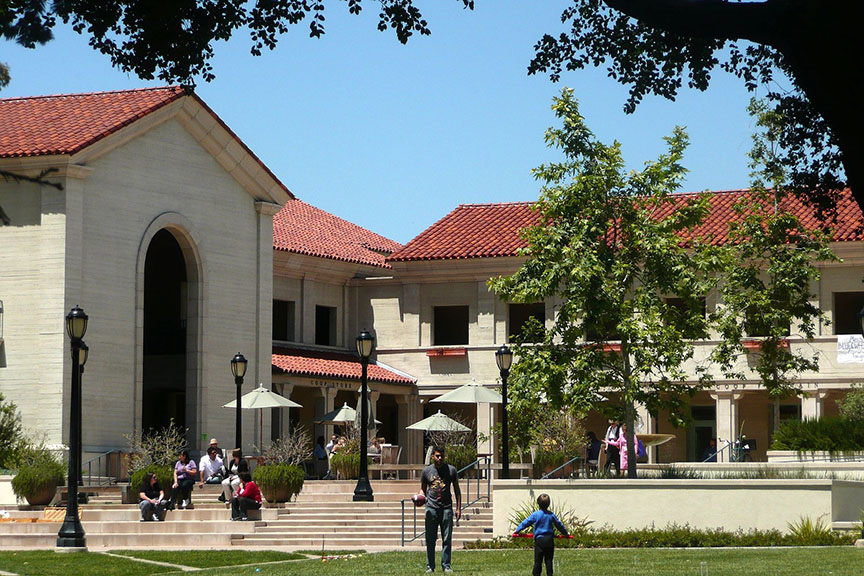
It is this rich heritage that Professor Boum is so familiar with, and has dreamed of bringing to UCLA ever since we first met at that Shabbat dinner. On Sunday, November 14, at an event at the UCLA Fowler Museum called Moroccan Heritage Day, that dream came true. More than 100 guests gathered for the official launch of the Alan D. Leve Center for Jewish Studies’ new Moroccan Jewish Studies initiative, which Professor Boum will run.

In his opening remarks, Chancellor Gene Block noted that “this initiative presents an important opportunity to advance understanding of the cultures and history of Moroccan Jews as well as Jews from North Africa more generally. These histories often do not get the kind of scholarly attention that they deserve, but I am certain that the Leve Center will help address that imbalance and establish itself as a leader in this field.”

He added that “the new Moroccan Jewish Studies initiative will build upon the other vital efforts of the Leve Center, the Amado Program, the UCLA Viterbi Family Program and the Nazarian Center in the areas of Jewish Studies, Sephardic Studies, Mediterranean Jewish Studies, Israel Studies, the study of Hebrew and Yiddish, and more.”

Aomar Boum, Maurice Amado Chair in Sephardic Studies

Professor of History Sarah Abrevaya Stein, who has been heavily involved in this field of study and in the creation of the new initiative, noted that it represents “the culmination of years of teaching undergraduates and graduate students in the social sciences and humanities, of public programming on the Jewish communities of Morocco and North Africa, and of scholarly work—including the production of books, articles, online exhibits, and translations of scholarship in the field into Hebrew, Arabic, and French.”

Many of us in the Moroccan Jewish community of Los Angeles are eager to see the fruits of this new initiative. An interesting question will be: How much emphasis will be placed on the past and how much on the present?

Academia has a natural tendency to look at the past: What is history if not the study of the past? The event on Nov. 14 did just that, with an impressive presentation by McGill University Professor Christopher Silver, entitled, “Etched in Time and Grooves: The Sounds of Moroccan Jewish History.”

Silver’s presentation was followed by an Andalusian music concert with Abderrahim Souiri and Moshe Louk that harked back to the instruments and melodies of our ancestors. Both the presentation and the concert imbued the event with a nostalgic tone, which clearly pleased the Moroccan Jews in the audience. We all felt the power of memory—especially when music is involved, it stirs the spirit.

The Moroccan Jewish story, however, goes beyond its rich and colorful past. It is also a story that is unfolding in the present. New memories are being created, some we never thought possible.

Fifty years from now, I can imagine a history professor giving a presentation about “that pivotal year in 2021 when Morocco normalized relations with the Jewish state of Israel as part of the Abraham Accords.” 

Fifty years from now, I can imagine a history professor giving a presentation about “that pivotal year in 2021 when Morocco normalized relations with the Jewish state of Israel as part of the Abraham Accords.” 

One can’t overstate the historic nature of these accords. The geopolitics of the Middle East and North Africa have been marked for so long by violence and conflict that it’s hard to suspend our skepticism to hear some good news. The Abraham Accords are genuine good news.

Within a few months, direct flights have started between Israel and Morocco; economic, diplomatic and security agreements have been signed and mutual cooperation and even friendship has set in. With the significant number of Israeli Jews who hail from Morocco, this unfolding first draft of history will be fascinating to watch.

From left to right: Aomar Boum, Rabbi Joshua Bittan of Em Habanim and Dr. Richard Stein

Meanwhile, a short distance from the Fowler Museum where we celebrated Moroccan Heritage Day, another unlikely story of Moroccan Jewry is unfolding: A Sephardic rabbi with Moroccan roots, Rabbi Daniel Bouskila, is the spiritual leader of an Ashkenazi synagogue. This is a trailblazing event.

He was chosen, according to the website of the Westwood Village Synagogue, because he is “widely known in the Jewish community for his dynamic lectures, thought-provoking sermons and creative articles on a wide variety of topics.”

This example of embracing a Sephardic leadership voice by the Ashkenazi community, which has perennially dominated the Jewish establishment in America, is a welcome and long overdue development. That will also be fascinating to study and watch.

Singers Abderrahim Souiri and Moshe Louk with the leaders of Em Habanim Sephardic community, including Rabbi Joshua Bittan, Sidney Chriqui and Albert Ifrah

Professor Boum is well aware of these and other developments. When we spoke recently, he went out of his way to tell me how he planned to balance the past with the present: the study of ancient Jewish communities in Morocco with the study of their modern descendants in the Diaspora, both in Los Angeles and elsewhere.

In other words, he told me, the center won’t live in an academic bubble. It will seek the feedback of the community and become a place of active engagement where the past and the present will dance together and be studied, celebrated and discussed.  

A lot of Moroccan Jews I’ve spoken to over the years have told me that Los Angeles, with its desert and ocean climate, reminds them of Casablanca. Similarly, when I see my bustling Pico-Robertson neighborhood preparing for Shabbat and Jewish holidays, it also reminds me of Casablanca, save perhaps for the community oven where Jews would bring their dafina, our version of the Ashkenazi cholent.

Professor Boum has devoted a lifetime to these memories, authoring several books on the subject. In Los Angeles, and at UCLA, he has found an ideal home to bring these books to life and these stories to the world.

From his little village in the south of Morocco to the Westwood village today, this practicing Muslim is as integral to the Moroccan Jewish story as any Moroccan Jew. I’m sure that my mother would love to tell him this—in Arabic.

The Muslim Who Brought My Jewish Heritage to UCLA Read More »

Hagy Belzberg Is Teaching About the Holocaust Through Architecture

In 2010, when architect Hagy Belzberg designed the Holocaust Museum LA (formerly known as Los Angeles Museum of the Holocaust), situated at Pan Pacific Park, he saw that the expanse of the park grounds would provide the perfect canvas upon which the story of the Holocaust could best be told.

“I approached the design of the existing Holocaust Museum with a question: how do you educate people about the Holocaust, most of whom are young students without a Jewish connection, and help them understand such a horrific event that occurred so long ago and in another part of the world?” Belzberg said. “I tried to create an immersive experience.”

“I wanted to express by metaphor and use the public park to illustrate that people can enjoy life in a park, while yards away the atrocity of the Holocaust was occurring, as is depicted in museum artifacts.” — Hagy Belzberg

For example, he said, at the height of the Holocaust, people were enjoying picnics in parks and forests, while not that far away, millions of Jews were being exterminated. “I wanted to express by metaphor and use the public park to illustrate that people can enjoy life in a park, while yards away the atrocity of the Holocaust was occurring, as is depicted in museum artifacts.”

Hagy Belzberg
Photo by Sam Jones

Now, Belzberg is reimagining an expansion of the Holocaust Museum LA. “Museum space is at capacity, particularly during school hours—and requests for student tours and public workshops continue to increase,” Beth Kean, museum CEO said. “As a result, we are forced to turn away schools and tour groups. The expansion will allow the museum to increase visitor capacity to 500,000 by 2030, including 150,000 students.”

Kean described the expansion as featuring outdoor reflective spaces; large galleries and classrooms; a theater for survivor talks, film screenings, concerts, conferences and public programs and a pavilion to house an authentic Nazi-era boxcar, used to transport Jews to the death camps. It will also include a dedicated theater for USC Shoah Foundation’s “Dimensions in Testimony” exhibition that allows visitors to have a virtual conversation with a Holocaust survivor using a holographic capture and voice recognition software. 

The $45 million project has so far raised $22 million, with major lead gifts from Andrea Goldrich Cayton and Melinda Goldrich, daughters of museum founder and survivor Jona Goldrich, to name the new Jona Goldrich Campus. Other significant gifts have come from The Stanley and Joyce Black Family Foundation to name the Boxcar Pavilion, and $8.5 million from the State of California, which will provide a new building with greater space for classrooms, exhibits and public programs. 

The Tel Aviv-born Belzberg, 57, came to L.A. with his family when he was a child. He earned a bachelor’s  degree from Arizona State University and a Master of Architecture with Distinction from Harvard’s Graduate School of Design. During summers he worked as an intern at Frank O. Gehry & Associates, among the most renowned architectural firms in the world. When he finished at Harvard, Gehry offered him a job, but he instead decided to launch his own architectural firm in Santa Monica — Belzberg Architects — which opened its doors in 1997 and has grown to 30 employees. 

Over the years, Belzberg has created a number of notable projects that showcase Jewish causes and Jewish institutions. In addition to the original Holocaust Museum LA and now the expansion, his Jewish-related projects include the USC Shoah Foundation, Ohr HaTorah Synagogue Campus and the BAR Center by the Beach for The Jewish Federation of Greater Los Angeles, with more in the pipeline.

Of all the exhibits Belzberg created at the expanded museum, he resonates most with the Boxcar Pavilion. “Seeing the actual artifact just guts you,” he said. “It’s a somber and ominous moment. Whether one is familiar with the Holocaust or not, it just hits you. The Boxcar Pavilion will allow people to walk around the boxcar and see details up close they never would imagine existed.”

Belzberg anticipates that construction on the museum will start in April 2022 and be completed in approximately 20 months. 

In addition to his Jewish-related projects, his firm puts its mark on all types of architecture including homes, office buildings, hospitals and campuses throughout the U.S., Canada and Mexico. His work has garnered a number of prestigious awards, with the existing Holocaust Museum LA being one of only six projects to receive both the National American Institute of Architects Honor Award for Architecture and the National American Institute of Architects Honor Award for Interior Architecture in the same year.

Additionally, the hardcover book “Investigations, Selected Works by Belzberg Architects,” was recently released and provides a comprehensive chronology of all his firm’s projects, with special emphasis on his most high-profile works.  

It would have been a lost opportunity to not ask Belzberg how the pandemic has impacted building designs, especially offices. On that topic, he had much to say. 

“The idea of buildings that are hermetically-sealed environments are changing to buildings that breathe and are more open and flexible,” he said. “Also, access to technology has played a huge part in how we design for work environments. Before the pandemic, video conferencing was not as prolific. Now it exists in everybody’s home. It allows us to reduce office buildings’ square footage, sometimes with less parking requirements, since working from home has become part of our [new] normal.” 

With many family members in Israel, Belzberg is very connected to the Jewish State and visits often. He defines his Jewish identity as, “Reconstructionist, culturally very connected to my Jewish heritage and Israeli roots.”

When asked what projects he finds most fulfilling, the response came quickly: “Jewish-related projects are my true passion. It’s my inherent identity. Nothing is more satisfying.”

Hagy Belzberg Is Teaching About the Holocaust Through Architecture Read More »

Graphic Novel Shows the Many Lives of Leonard Cohen

Leonard Cohen didn’t have a typical journey for a rock star. Growing up in an Orthodox Jewish home in Canada, he officially started his music career when he was 33 years old, only after working as a poet and novelist and living on the Greek island of Hydra for a number of years. 

Cohen’s dynamic life – as well as the struggles the musician faced – are what intrigued illustrator Philippe Girard and convinced him to put out a new graphic novel about Cohen called, “Leonard Cohen: On a Wire.”

“For someone with such a big aura, he was really relatable. His resilience is what attracted me the most.”— Philippe Gerard

“He was such a man of the people even though he was a big star,” Girard said. “For someone with such a big aura, he was really relatable. His resilience is what attracted me the most.”

The graphic novel starts in 2016, when Cohen died. On the night of his death, he falls to the floor of his Los Angeles home, and contemplates how he is “going to die here, all alone, like a dog.” Outside his window is a bird on a wire, a reference to his 1969 tune in which he sang, “Like a bird on the wire, like a drunk in a midnight choir, I have tried, in my way to be free.”

Philippe Girard / Photo by Beata Zawrzel

The book flashes back to a traumatic scene from Cohen’s childhood in which his dog crawled under the porch to die alone and Cohen discovered his body. It then takes the reader through Cohen’s first career as a writer, and eventually to when he became a professional musician. Along the way, he meets contemporaries like Lou Reed and Nico and has flings with Janis Joplin and Joni Mitchell. At one point, Phil Spector holds a gun to his head. 

Although Cohen was a star, he had his share of setbacks. “Hallelujah” didn’t become a hit until Jeff Buckley recorded it, and in the early 2000s, it came to light that his longtime manager had embezzled more than $5 million from him. Still, it didn’t stop him from touring and writing music; he released his last album two weeks before he died. 

“When he passed away, I thought there would be a book that would come out very quickly and I would be disappointed in it,” said Girard. “But the book wasn’t coming out. I thought maybe I should do it the right way, up to my standards.” 

Girard was a longtime fan of Cohen’s. When he was a teenager, he was visiting his cousin in Montreal, a place where many famous people lived. He imagined that the famous people there wore disguises so they wouldn’t get noticed on the street. The two were taking a walk when Girard’s cousin pointed out that they just passed Leonard Cohen, who was plainly dressed.

“I said ‘He is nothing special,’” said Girard. “Then, I went and bought a record of his.”

The illustrator spent six months researching Cohen’s life. There was so much information that he said he “had to make a choice and decide what to tell and what to leave. Cohen used to say he lived 1,000 lives, and you realize this is true.”

Girard started his graphic novel by drawing a Star of David on a piece of paper. Cohen’s death was in the middle of the star, and each tip of the star would represent one woman, song and object for each decade of the musician’s life. 

Though Girard isn’t Jewish, when he was working on the book, he took a trip to Kraków and visited a concentration camp. 

“Leonard Cohen was with me the whole time,” he said. “When you read about him, you see that [the Holocaust] was an influence, but also a big source of stress on his imagination.”  

Though Cohen practiced Zen Buddhism, he was a proud Jew throughout his life and performed for the Israeli troops during the 1973 Arab-Israeli war. His songs like “Hallelujah” and “You Want It Darker” have Jewish themes; in the latter, he sang, “Hineni, hineni; I’m ready, my Lord.” And “Who By Fire” is based on the “Unetanneh Tokef” prayer.   

Cohen’s raw honesty in his songs, as well as his challenges – which became very public – are what made him so human, and why Girard thought he was a fascinating subject to highlight.

“He was trying to reach out to people,” Girard said. “It’s something I really respect. There is a great humanity about him. I hope people will get interested and read his books and listen to his music.”

Graphic Novel Shows the Many Lives of Leonard Cohen Read More »