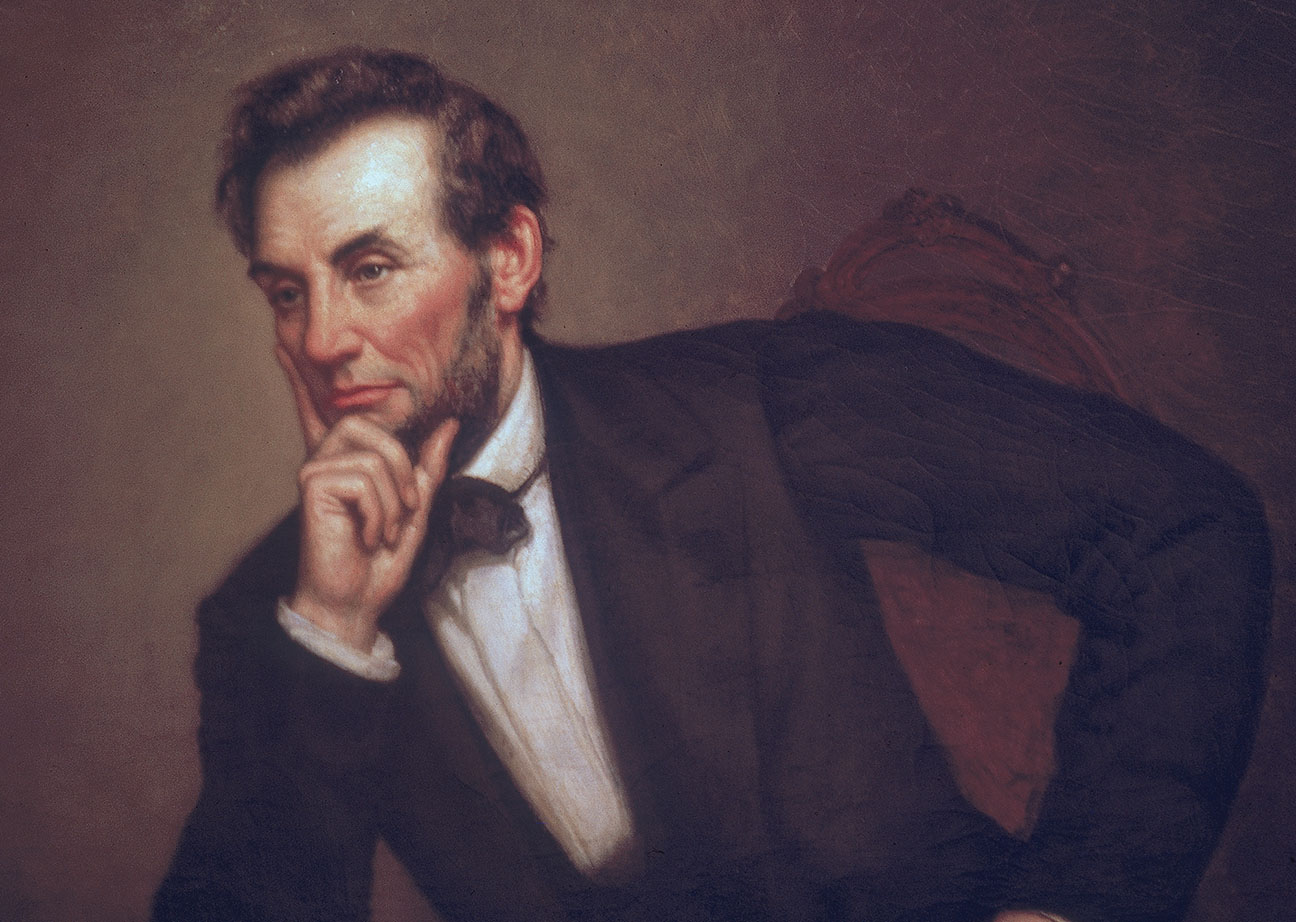
In his 2007 book “Land of Lincoln: Adventures in Abe’s America,” the writer Andrew Ferguson recounts visiting Oscar Esche, the immigrant owner of a Thai restaurant in Chicago’s Albany Park. Ferguson recalls how Mr. Esche stated that he and his wife, grateful for the modest success of their diner, “pay respect to the person who is in charge of the country. And here it is Lincoln’s country. He’s the head man in history. You see him everywhere. Everyone loves him… He helps the poor. He tells everyone that they are equal, that no man is better than any other man. This is very important.”
The Esches even bought a small replica of the statue of the former president that sits in the Lincoln Memorial in D.C. Every day, as an homage, they place before the tiny statue a sampling of their restaurant’s offerings. “Entrée, dessert, appetizer, drinks also. We change the meal every day, so it’s always different. We serve him everything,” Ferguson reports Mr. Esche telling him.
But then Mr. Esche added, “Everything but no pork.”
“Why?” Ferguson inquired.
“We do not want to be disrespectful,” came the reply. “He is Abraham Lincoln, yes? Jewish people, they don’t eat pork.”
While Lincoln was, alas, not Jewish, perhaps Mr. Esche’s mistake is not so surprising. After all, Lincoln cited the Hebrew Bible throughout his life, particularly during challenging moments in our nation’s history.
In one of many such examples, Lincoln turned to the story of the Binding of Isaac, known in Hebrew as the Akedah, to offer comfort to a mother during the Civil War who had experienced unimaginable grief.
He wrote the following to Boston resident Lydia Bixby, who, the president had been told, lost five sons to the ravages of war (it turned out later that only two of her five sons had fallen, still a heartbreaking loss):
“I have been shown in the files of the War Department a statement of the Adjutant General of Massachusetts, that you are the mother of five sons who have died gloriously on the field of battle. I feel how weak and fruitless must be any words of mine which should attempt to beguile you from the grief of a loss so overwhelming. But I cannot refrain from tendering to you the consolation that may be found in the thanks of the Republic they died to save. I pray that our Heavenly Father may assuage the anguish of your bereavement, and leave you only the cherished memory of the loved and lost, and the solemn pride that must be yours, to have laid so costly a sacrifice upon the altar of Freedom.
Yours, very sincerely and respectfully, A. LINCOLN.”
The image of a son being “laid…upon the altar of Freedom,” draws from the Binding of Isaac, described in Genesis’ 22nd chapter. In that episode, the ninth verse describes how, in fulfillment of God’s command, Abraham, the patriarch of the Jewish family, “bound his son Isaac; he laid him on the altar, on top of the wood” — this despite the fear that should Isaac die, Abraham’s story would end with him. Abraham is, at the last moment, told by a heavenly voice to slaughter a ram instead of his cherished son.
President Lincoln, it seems, alluded to that emotionally fraught episode in expressing his wish that “Our Heavenly Father” would offer recuperative strength to the parent who, in this instance, was not able to see her son survive the altar of battle.
Lincoln, like his ancient namesake and Mrs. Bixby, understood what losing one’s child meant to the prospect and promise of one’s future. Lincoln’s beloved son Willie had died of typhoid fever two years earlier, on Feb. 20, 1862. As Adam Gopnick has put it, Lincoln believed in a “God who is the stenographic name for the absolute mystery of being alive and watching men [and women] suffer while still holding in mind ideals that ennoble the suffering and in some way make sense of it.”
In overcoming his own tragedy and offering consolation to Bixby, Lincoln charted a path forward for the bruised but unbowed American spirit. So it was that his usage of the biblical image of the Binding of Isaac has echoed through the ages.
The line “the solemn pride that must be yours to have laid so costly a sacrifice upon the altar of freedom” is inscribed in the National Memorial Cemetery of the Pacific in Hawaii.
In the 1998 movie “Saving Private Ryan,” the letter to Bixby is read by a general to his officers before giving the order to rescue Private James Francis Ryan, after Ryan’s three brothers had died in battle. The film thus draws a parallel between the forces of Nazi fascism against which America fought in WWII and the battle against slavery which Bixby’s boys had waged roughly a century earlier.
And, marking the tenth anniversary of the Sept. 11 attacks, on Sept. 11, 2011, former U.S. President George W. Bush read the Bixby letter during the memorial ceremony at the World Trade Center site.
Though Lincoln himself was not Jewish, his words of support drawn from the faith of history’s first Jew continue to serve as a chord of comfort in the American consciousness.
Rabbi Dr. Stuart Halpern is Senior Adviser to the Provost of Yeshiva University and Deputy Director of Y.U.’s Straus Center for Torah and Western Thought. His books include the newly released “Jewish Roots of American Liberty,” “The Promise of Liberty: A Passover Haggada,” “Esther in America,” “Gleanings: Reflections on Ruth” and “Proclaim Liberty Throughout the Land: The Hebrew Bible in the United States.”