A few weeks ago, I conducted an experiment: I counted the number of times I apologized in one day.
I said sorry to the mother in yoga pants at Starbucks when I reached past her to grab a straw. Sorry to the high-heeled shopper, laden with H&M bags, when we dived for the same seat on the subway (I let her have it). I even said sorry to the bookstore clerk when I asked him to point me toward the bathroom. The first tally: 17.
Apologizing once per waking hour seems like a lot. And as Yom Kippur, the Day of Atonement, approaches, I’m starting to re-examine my mea culpas and whether they are all necessary. Does the woman waiting behind me at the print shop really expect me to apologize for finishing a big copy job I started before she walked in? Probably not. So why do I feel compelled to say it? And what do all of these apologies say about me?
Compulsive apologizing is mostly a female phenomenon, studies have shown. “If you hear somebody saying ‘I’m sorry’ over and over again, I would say 90 percent of the time it’s a woman,” Linda Sapadin, psychologist and author of “Master Your Fears: How to Triumph Over Your Worries and Get on With Your Life,” told me. “Apologizing greases the wheels of relationships. But there are people who say ‘I’m sorry’ with such frequency that it just pops out of their mouths. It’s not even thought through.”
There are three main reasons why people over-apologize, according to Jennifer Thomas, co-author of “When Sorry Isn’t Enough: Making Things Right With Those You Love.” The first is when — reality check — you really do keep screwing up. Another reason is conflict avoidance, when you apologize just to end a tense situation even if you don’t think you’re to blame. The third cause is low self-esteem, because you feel like things are always your fault.
I’ll admit it: I’ve never been super confident when it comes to articulating what I want. I hate being on the receiving end of sighs, huffs and side-eyes. It feels safer, somehow, to slip a harmless “sorry” into a request than to risk offending anyone or feeling like a bother.
Turns out, this impulse has been hardwired into women over generations of social subservience. People in positions of authority tend to use different speech patterns from those who aren’t in power, said Linda Carli, a social psychologist and co-author of “Through the Labyrinth: The Truth About How Women Become Leaders.” In previous generations, women were relegated to support roles in society and were expected to adopt meek mannerisms — such as courteous speech and modest body language — in the presence of men. The consequences still linger in communication today. “Women are generally expected to be more polite, restrained and agreeable than men, and they get penalized when they don’t behave that way,” Carli explained.
And that’s not all. Now that women inhabit more visible positions in society, they face extra pressure to prove themselves competitive with their male counterparts. As a result, Carli told me, women may feel deeply compelled to apologize for their shortcomings — real or perceived — in a way that men are not.
Yet, that could do more harm than good in personal relationships, at work and in everyday social interactions. According to Sapadin: “What you’re doing is showing that you’re in a one-down position. It’s weak speech. It shows that you can be taken advantage of, that you’re not sure of yourself.” My constant apologies to my employers, then — “Sorry, I have one more question!” — subtly convey the sense that I don’t value myself and that they shouldn’t either.
Plus, undermining my self-worth isn’t the only way over-apologizing creates a bad impression. “Others may start to not value your apologies because you offer them at times when it’s not warranted,” Thomas said. “It gets to feel like your apologies aren’t honest.”
That assessment hurts. But maybe there is something dishonest — intentional or not — in my compulsive apologizing. It’s not just a desire to be polite; it’s a deep-rooted need to be liked. And ironically, it might be compromising my integrity in an unlikable way.
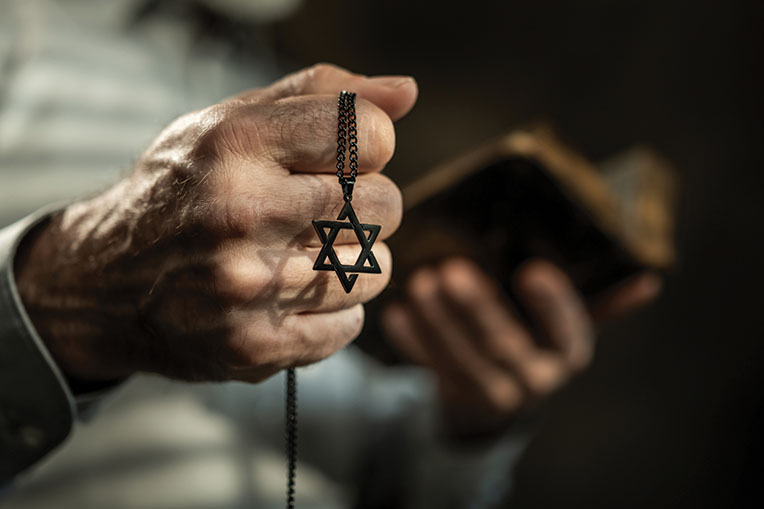
On Yom Kippur, we are urged to own up to our faults and ask for forgiveness. But if we habitually own up to faults that aren’t our own, it waters down the potency of an otherwise meaningful act. Too many apologies could be just as damaging as too few. Maybe cutting out the extraneous expressions of guilt could imbue the genuine ones with more significance.
So I’m going to perform another experiment. This High Holy Days season, as I seek pardon from people I may have hurt, I’m going to think carefully before the word “sorry” leaves my lips. I will gladly apologize for any wrongs I’ve committed but bite my tongue when the impulse arises as a social tic. Not calling my mom more? That warrants an apology. Stepping in line at the grocery store at the same time as a family of four? Not as much.
This time of year is a window to reflect on mistakes and pursue teshuvah, to return to the best version of our beings. Here is my pledge to behave more authentically with others, and in doing so, be more authentically myself.