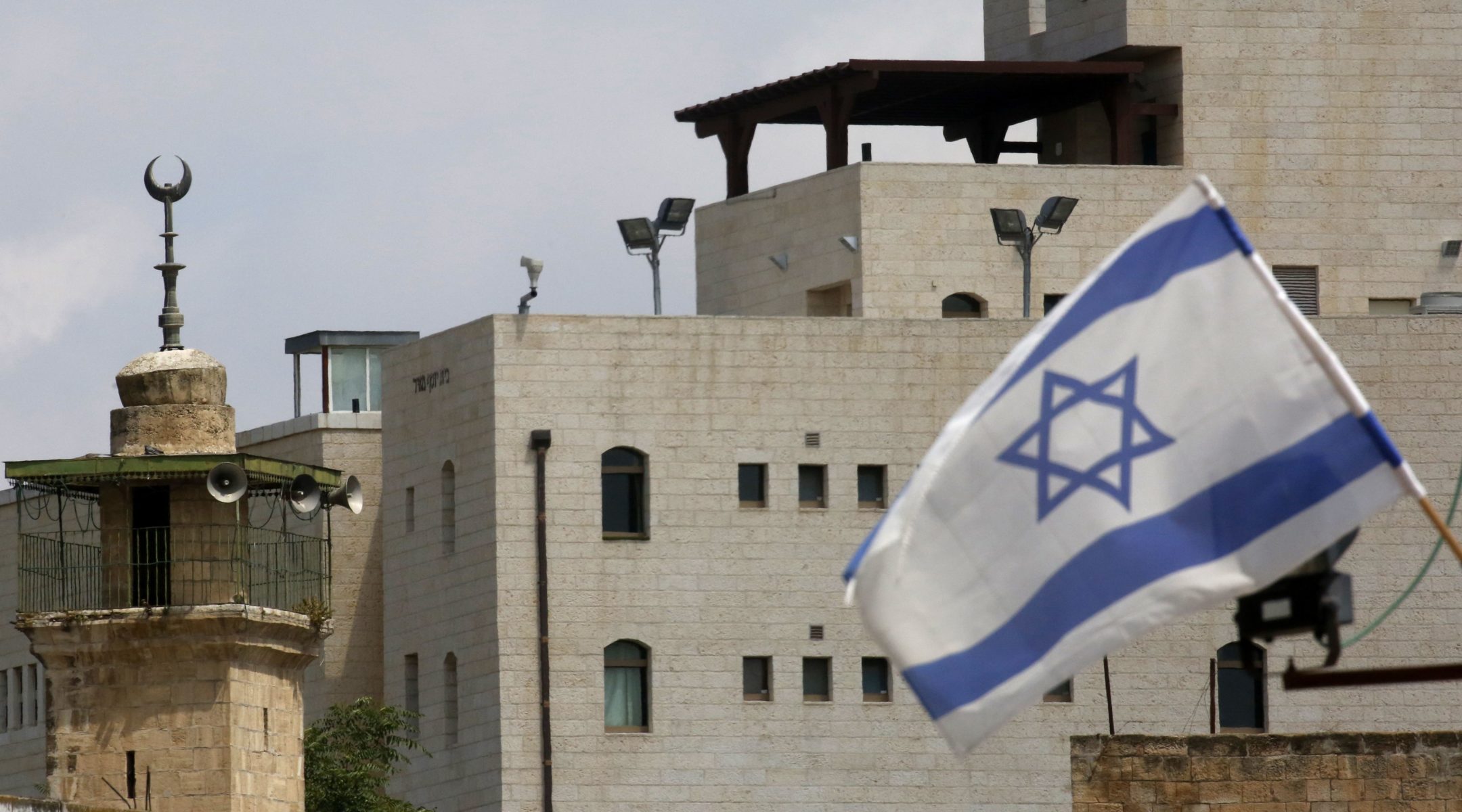
Israel plans to annex areas in Judea and Samaria this summer — if it reaches an understanding with President Donald Trump’s administration. Annexation is a controversial subject, and if Israel makes such a move, a debate is to be expected. Here are six aspects of the debate:
Moral or practical
There are two reasons to support or oppose annexation. There are value-based reasons, such as “Judea belongs to the Jewish people” or “annexation leads to immoral apartheid.” There are policy-based reasons, such as “controlling Samaria is essential to Israel’s security” or “annexing the Jordan Valley will destabilize Jordan.” It is important to differentiate between these arguments.
Moral arguments
Which of the following two arguments is stronger? 1. Jews have a right to live in Judea. 2. Palestinians have a right to political expression.
The answers aren’t easy. First, because these two statements are not mutually exclusive. Not in the moral sense. It’s possible to agree with both statements. Second, because it’s not clear what constitutes a “stronger” argument. In many cases, the real question is this: If these two statements are mutually exclusive (namely, you must choose between letting Jews live in Judea and letting Palestinians have political rights), which would you choose? The answer is: That depends on your value system.
Practical arguments
Practically, these two not mutually exclusive moral arguments become mutually exclusive options. We assume that Jews will not be able to live safely in Judea under non-Israeli rule. We also assume that if Israel annexes the West Bank, the Palestinians won’t be able to express their nationality. So we must choose between two imperfect options. First, we must decide which goal is more important (value-based), then decide which policy makes it more likely that we will achieve our main goal.
Multiple priorities
Most of us want more than one thing. We want Israel to have as much land as possible but not to have to fight constant wars. We want what’s best for the Palestinians, but not if it means an end to the Jewish homeland. We want to be just but we also want to be safe, and we believe that the safety of Jews is a moral imperative. To consider annexation without losing sight of our real priorities is tricky. It is simple only for those who see the world in black and white (“Judea belongs to the Jews;” “This is occupation and a moral travesty”).
The strongest arguments
From an Israeli viewpoint, the strongest arguments for and against annexation aren’t moral, they are practical. That’s because Israelis (and Palestinians) live in this territory. For us, this is not some theoretical question of values. It is a practical question of policy.
The best argument for annexation is that many Israelis want the territory, and Israel might have an opportunity to acquire it.
The best argument against annexation is if Israel acquires the territory, then Israel might turn into a binational state and lose the Jewish majority.
Risk assessment
Morality aside, the question of annexation is one of risk assessment.
Is it feasible to annex the territory (many Israelis want) without having to pay the ultimate price (one state)?
Moral questions
We can’t push morality aside. It is important to ensure that Israel does not commit a moral crime as it strives to achieve its political goals. But who defines a moral crime? If it’s the Palestinians, the whole Zionist project is a moral crime. If it’s the United Nations, remember that Cuba and Saudi Arabia are on its Human Rights Council. If it’s American Jews, they don’t have skin in the game and hence couldn’t reasonably balance their moral sensitivities and Israel’s needs. It’s easy to agree that a decision to annex must include a moral component. But this hardly means that such an agreement is likely to lead everyone to the same conclusion.
Shmuel Rosner is The Jewish Journal’s senior political editor.