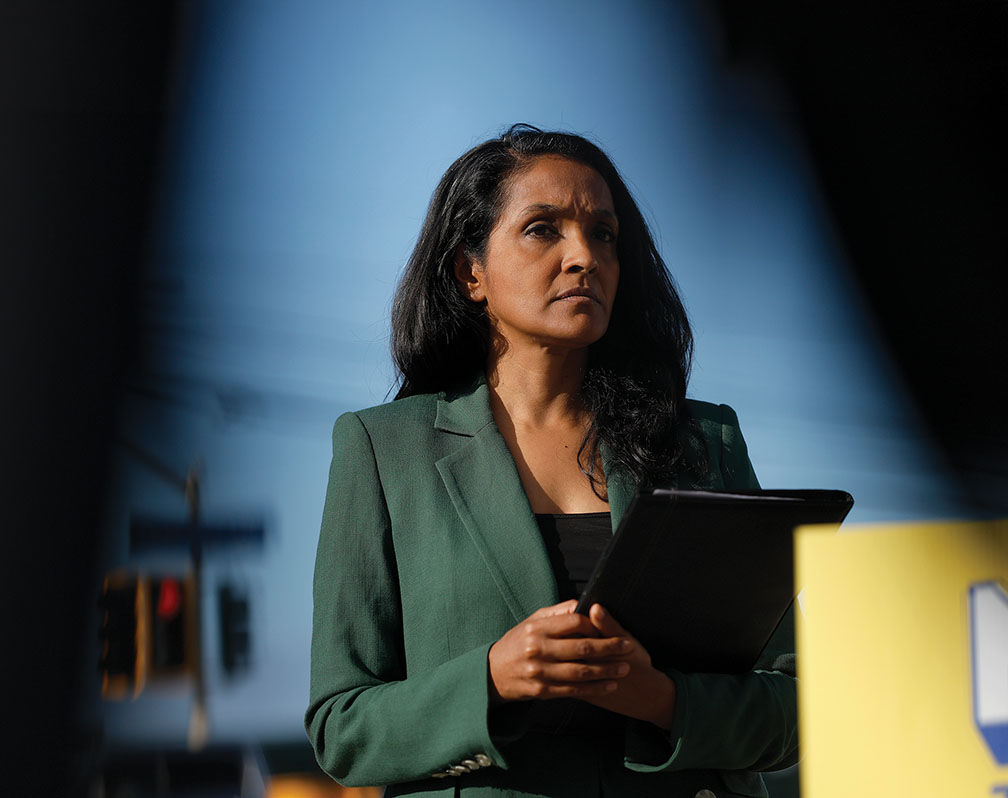
In 2012, Anna Varsanyi was married in an Orthodox Jewish ceremony conducted through Israel’s Chief Rabbinate.
Two years later, the Hungarian immigrant has made a life in Israel, settling with her husband in the central city of Modiin and working a desk job in a hospital. She is weeks away from having her first child.
But the baby won’t be Jewish, according to the State of Israel.
Varsanyi, 30, is the victim of an unusual bureaucratic mix-up.
Israel abounds with immigrants who are considered Jewish by the state but not by the Orthodox Chief Rabbinate under its stricter qualifications. Varsanyi is the rare case in which the opposite is true.
Born to a Jewish mother, Varsanyi meets the Chief Rabbinate’s standards for who is a Jew. But Israel claims Varsanyi isn’t Jewish because her mother converted to Christianity.
Varsanyi says her mother is Jewish and it was her great-grandmother who converted — in 1930.
“It’s like they tell you, ‘Come, make aliyah, you’re Jewish, you’re one of us,’” Varsanyi said, using the Hebrew word for immigration to Israel. “But when you’re already here, they say ‘You’re second-class, you’re not one of us. So you might as well leave.’ ”
Born under Hungary’s Communist regime to a Jewish mother and a non-Jewish father, Varsanyi grew up barely aware of her Jewish heritage. But a growing interest in her Jewish roots led her to study Yiddish literature and culture at university and to register for a 10-day Birthright Israel trip. Next came a year abroad at the University of Haifa, where she met her Israeli future husband. After a stint working for the Jewish Agency for Israel in Budapest, she immigrated in 2011.
Varsanyi gained citizenship under the Law of Return, which requires only one Jewish grandparent for an immigrant for automatic citizenship. Varsanyi’s maternal grandfather was unambiguously Jewish.
But when Israel’s Interior Ministry saw a document concerning her great-grandmother’s conversion, they refused to register her as Jewish, claiming she was raised Christian. To be recognized as Jewish, the ministry told Varsanyi, she needed to convert.
Except Varsanyi can’t convert because she is already Jewish according to Jewish law, which doesn’t recognize conversions to other religions. The chief rabbinates of both Israel and Hungary consider Varsanyi, her mother, her grandmother and her great-grandmother to be Jewish.
“It’s hard to imagine anybody more committed to the Jewish people than someone like Anna,” said Rabbi Seth Farber, the founder of Itim, an Israeli organization that guides people with religious status issues through Israeli bureaucracy. “They’re simply not looking at the facts. This woman’s basic rights are being violated, and those of her unborn child are being violated.”
At first, the Interior Ministry’s decision had little effect. Varsanyi already had citizenship and was married, the two areas in which issues of personal religious status are most likely to cause problems.
But last year she began petitioning the ministry for a change in status, worried that her future children would not have their marriages recognized by the government.
“I think it’s ridiculous,” Varsanyi said. “Why would they force me to convert when I’m Jewish? If I didn’t have principles or problems I’d say let them win. But I wouldn’t be able to face myself.”
The ministry has rebuffed her requests, claiming that her mother converted from Judaism before she was born. Varsanyi says this is not true, that it was her great-grandmother who converted.
The ministry also has refused to rely on the Chief Rabbinate’s recognition of Varsanyi as Jewish, despite a 2012 law allowing it to do so. Interior Ministry spokeswoman Sabine Haddad told JTA that the ministry has asked the rabbinical court that declared Varsanyi Jewish for an explanation but has yet to receive a response.
After several rejections, Varsanyi has come to feel like the ministry’s employees “don’t give a crap.” She said she once met with a ministry official, who after reading her papers said, “I don’t know what you want because you’re not Jewish.”
“It was traumatic — I almost cried,” she said. “Like, ‘Welcome to Israel: You’re not a Jew.’ ”