fbpx

October 22, 2026

AJU Reopens Ziegler School Admissions, Seeks to Reimagine Rabbinic Education

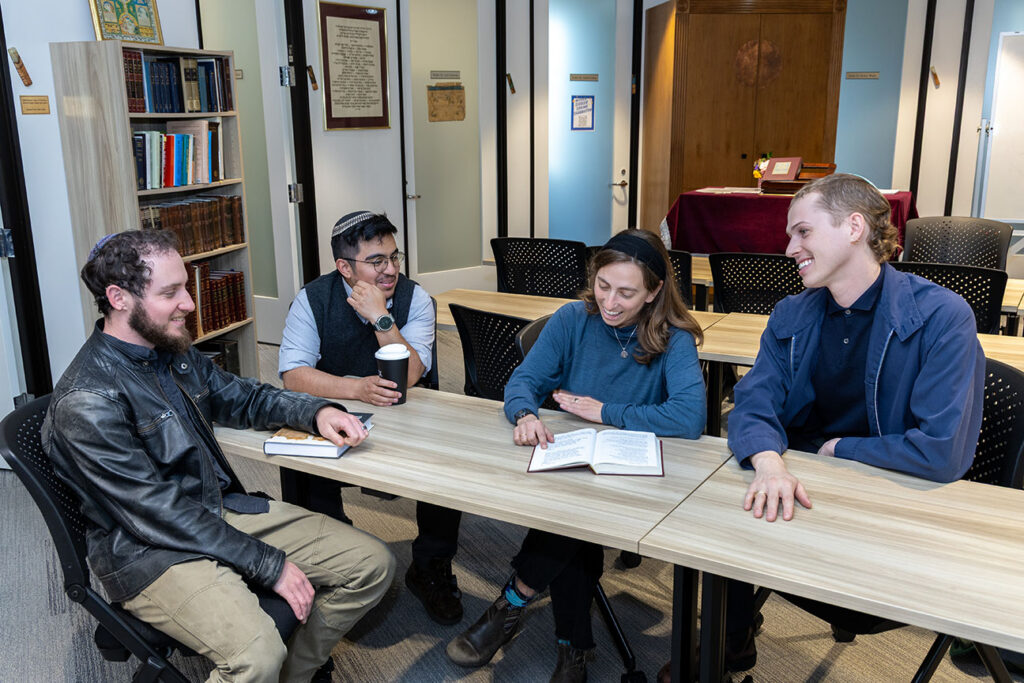
American Jewish University has reopened admissions at its Ziegler School of Rabbinic Studies for fall 2027, following a yearlong pause during which the university reviewed how it prepares rabbis for the changing demands of Jewish communal leadership.

Founded in 1996, AJU’s Ziegler School of Rabbinic Studies trains rabbis for the Conservative movement and Jewish communities across the country and beyond.

“We are reopening the admissions process for Ziegler because we believe deeply in the importance of exceptional rabbis and in the role they will play in building the Jewish future,” Jay Sanderson, president and CEO of American Jewish University, told the Journal. “The world has changed, the role of the rabbi has changed, and rabbinic education must change with it. Our goal is to reimagine what rabbinic education can be.”

As AJU rethinks how it trains rabbis, the university says Ziegler will remain grounded in Jewish learning and committed to Israel as the homeland of the Jewish people.

“We’re prioritizing students who see Israel as the center of the Jewish experience,” Sanderson said. “To be an effective Jewish leader you have to understand Israel’s essential role in our story.”

“The reopening of admissions marks an important moment for the Ziegler School and for the future of rabbinic education,” said Rabbi Cheryl Peretz, interim dean of the Ziegler School of Rabbinic Studies. “We remain committed to deep Jewish learning, spiritual growth, rigorous preparation, and individual mentoring, while ensuring our future rabbis are equipped to meet the evolving needs of Jewish communities. We look forward to welcoming a new cohort of students.”
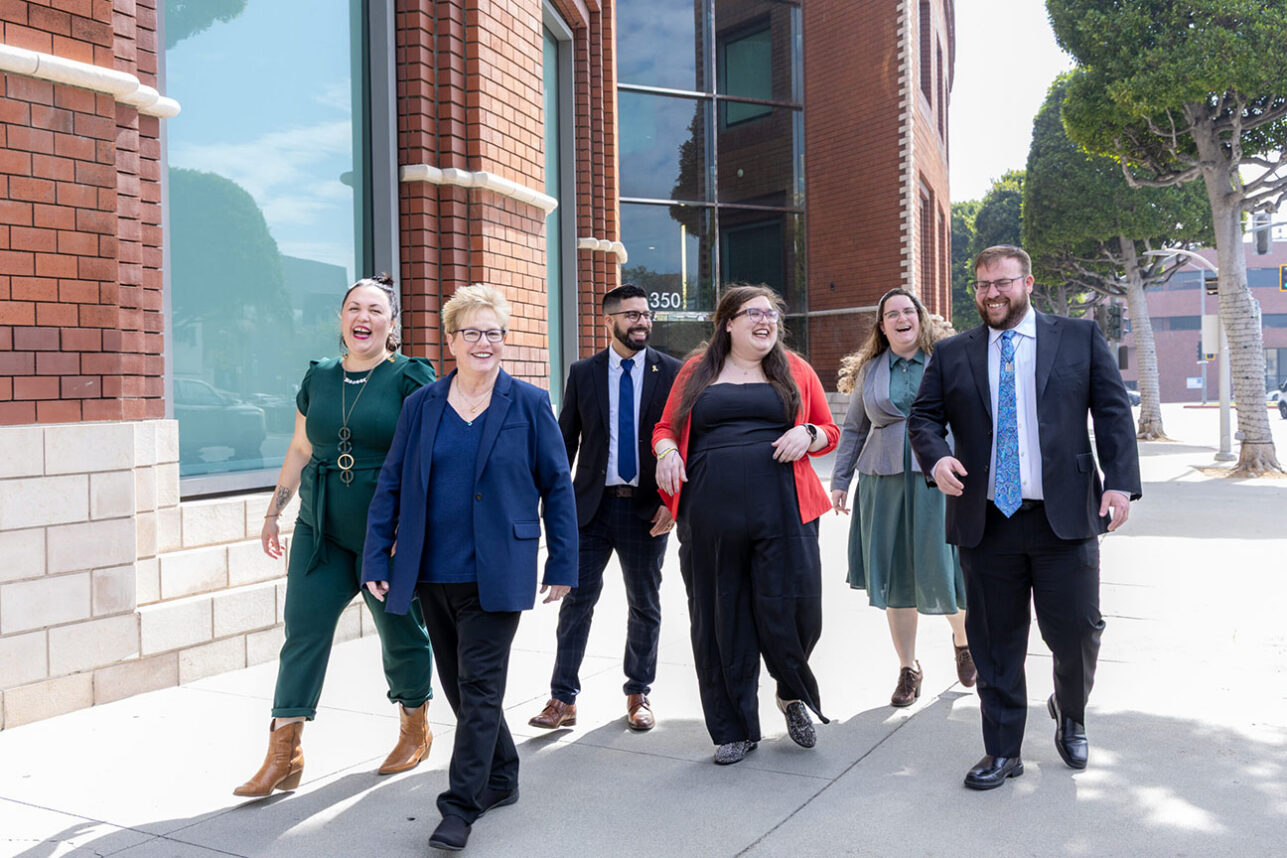
Over the past year, AJU commissioned an independent review examining both the Ziegler School and the broader landscape of rabbinic education. The review process included interviews with students, faculty, administrators, alumni, lay leaders and Jewish communal leaders. AJU also engaged with the research of Atra: Center for Rabbinic Innovation and consulted with major stakeholders in rabbinic education, including leaders of the Conservative movement.

“Today’s rabbis are expected not only to be rooted in Jewish text and tradition as teachers and spiritual leaders, but also institution builders, fundraisers, managers, communicators, community organizers, and conflict navigators,” Sanderson said. “They are increasingly called upon to lead in a world shaped by rapidly evolving technology and profound global challenges.”

At the same time, the seminary’s curriculum will expand to include training and coursework in artificial intelligence, business management, fundraising, critical thinking, communication and conflict resolution, alongside traditional Jewish studies.

“We are exploring the opportunity of offering two degrees,” Sanderson said. These plans, he said, are under development.

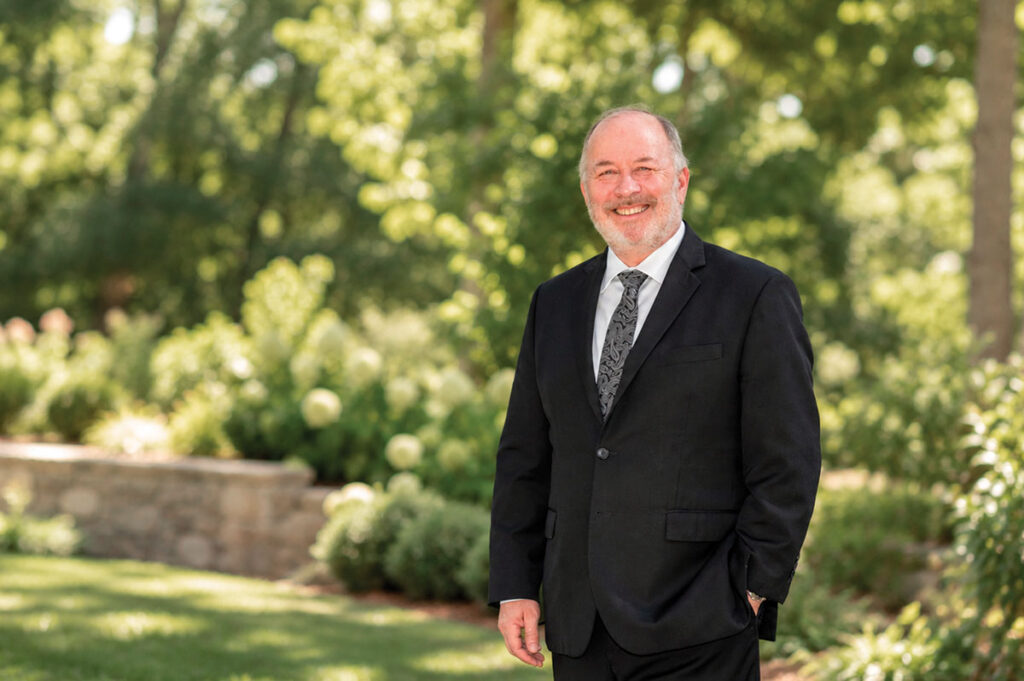
AJU has also brought in Rabbi Stewart Vogel, emeritus rabbi of Hamakom in West Hills, to help recruit students to the school. A respected leader within the Conservative movement, Vogel was named the Ziegler School’s senior advisor for recruitment, admissions and rabbinic innovation. He will be seeking out students who understand that career paths for non-Orthodox rabbis today aren’t limited to congregational roles.

“The Jewish future needs rabbis who understand that leadership extends far beyond the pulpit,” Vogel told the Journal. “We are looking for dedicated individuals who see the rabbinate as an all-encompassing commitment to serving others. They must be deeply grounded in Jewish learning and tradition, but also willing to think creatively, embrace change and help build the institutions and communities Jewish life will need in the years ahead.”

Ziegler is seeking candidates with strong academic records, demonstrated leadership potential, intellectual curiosity, personal character and a commitment to building Jewish community.

Ziegler’s plans come amid broader concerns about the future of the non-Orthodox rabbinate, as seminaries face declining enrollment and the field contends with an aging workforce. A 2025 study by Atra: Center for Rabbinic Innovation, titled “From Calling to Career: Mapping the Current State and Future of Rabbinic Leadership,” examined challenges facing the rabbinic profession.

The Ziegler reopening reflects AJU’s broader goal of helping create a sustainable pipeline of future rabbis. The focus, Sanderson said, will be on quality rather than quantity.

“The measure of rabbinic education cannot simply be enrollment numbers,” he said. “It must be the impact of the rabbis we educate, the communities they build, the people they inspire and the Jewish future they help create.”

AJU Reopens Ziegler School Admissions, Seeks to Reimagine Rabbinic Education Read More »

Show Us How It’s Done – A poem for Parsha Lech Lecha

And all the people of his household, those born in his house and those bought with money from foreigners, were circumcised with him. ~ Genesis 17:27

This is not the party I want to be at.
Truthfully, I wasn’t invited, but they
made me the guest of honor anyway.

No one talked with me about it since.
They didn’t say, you were a real champ
or even apologize.

I’d imagine the booze was great
and someone had a nice payday for
showing up with the right equipment.

I’d like to look them up and thank them
for their expertise and what I assume
was a steady hand. At this point, they

likely took this memory to their grave.
We threw the same party for our son.
A friendly stranger did the honors.

I hear it’s hygienic, though our incentive
was Biblical. Abraham did it when he
was old enough to remember.

Now that guy was a champ – showing us
how covenants were done. You can’t really
show anyone anymore –

not without permission, and no one
wants to ask, or talk about it, or
have this memory at all.


Rick Lupert, a poet, songleader and graphic designer, is the author of 30 books including “Begin the Beget” and “God Wrestler: A Poem for Every Torah Portion.” Visit him at www.JewishPoetry.net

Show Us How It’s Done – A poem for Parsha Lech Lecha Read More »

Weinberg: The Secret German Life of a Jewish Last Name

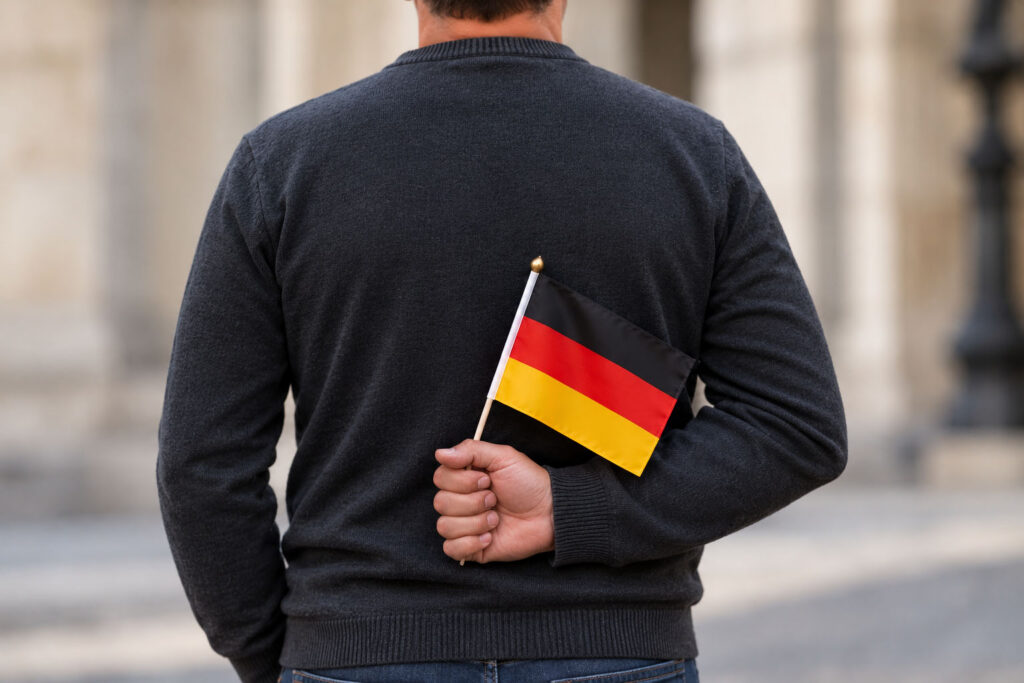
For the first twenty-three years of my life or so, I had no idea what my last name meant, and I certainly didn’t know that it was a German word. And if I’d never begun learning German, I might still not be privy to this fascinating piece of information. In fact, after I’d learned my first 500 German words, I quickly realized that nearly all of my childhood Jewish friends had these funny German words as last names. Schwartz, Goldstein, Steinberg, Weissman, Stern, Nussbaum, Goldberg. I’m a little disturbed when I think of how many still haven’t been informed that their last names are the most German of all German words.

I never really liked the sound of my last name—not as a child, not as a teenager, not even as an adult. Too often had my friends ridiculed me by speaking out my name in an extended manner and nasally tone—Weeeiiiinbeeerrrg! And so, I was relieved when I discovered later in life that my name is actually a word that one connects with nature, with Provence, with Dionysian festivals. Still, this realization came too late. How much more confident, charming, daredevilish, and lordly I would be if I’d grown up with the last name “Vineyard” instead of “Weinberg.”

It isn’t exactly a coincidence that American Jews generally don’t know that at some point the German language slithered its way into their last names. In the 20th century, Germany went to war against the entire world—twice! Accordingly, Germany left a bad taste in the mouths of Americans—particularly Jewish Americans—which continues until this day, albeit with less pungency. Beethoven’s anthem that “Alle Menschen werden Brüder” (all people will be brothers) and Angela Merkel’s cry of “Wir schaffen das!” (we can do it!) have still not yet sufficed to neutralize the taste. We did not read a single German author in school. In college, my Jewish friends studied abroad in nearly every European country—Spain, Italy, France, England, Scotland—but never Germany. Growing up, my parents refused to own a German car, and if it so happened that one of my friends’ parents had one, my dad occasionally made a comment under his breath.

And so, when I decided to do my PhD in German, it hardly rolled off the tongue when my friends and extended family and most of all my parents’ friends asked me what I’d been up to. I consoled myself with the thought that at least my grandparents hadn’t lived long enough to witness my enrollment.

Now, it’s not like anyone assaulted me when I told them about my doctoral studies. To be honest, they remained relatively neutral, sometimes even seeming interested. But I’m not naïve. I knew what lay behind those cold eyes and steely smiles. They said: “Sounds interesting!” But they thought: “You decided of your own free will to study the language of the people who murdered six million of us?” They said: “What’s your area of specialization?” But they thought: “How can you look in the mirror?” They said: “You should come sometime for Shabbos dinner!” But surely they thought: “I wonder how many times he’s read Mein Kampf.”

To avoid condemnation, I first tried to avoid the word “German.” If people asked me what I was doing these days, I said “getting my PhD.” If they followed up and asked in which subject, I simply said “literature.” If they asked what kind of literature, I said “European.” Only if they followed up again with “which country?” did I finally cough up the unwort.

This approach tended to backfire, as it caused people to think that I was hiding something—which, in fact, I was. So, I developed a new strategy. Instead of saying I was doing my PhD in German, I said I was doing it in German-Jewish studies. Yet, this tactic bred a new round of unwanted questions. What does Judaism have to do with Germany? I explained that there were many world-famous German Jews, some of whom you have even heard of, like Albert Einstein, and Sigmund Freud, and Franz Kafka. I thought Einstein was Swiss. And wasn’t Freud Austrian? Kafka was from Czechoslovakia! Right, but they all wrote in German, I answered. They don’t speak German in Czechoslovakia!

Instead of saying I was doing my PhD in German, I said I was doing it in German-Jewish studies.

Once the schande had been silently acknowledged by both sides, the conversation took its course. That’s when my interlocutor often found the opportunity to hurl a few passive-aggressive barbs at Germany. But German is such an ugly language. They always sound so angry! They think this way about German because they’ve only experienced it via documentaries on the Nazis. Indeed, Hitler was always yelling.

In fact, German is rather soft, even melodic. True, German can sound a bit rough, particularly when it is early in the morning, and from my bed I overhear the conversation of two construction workers on the street outside about how to best drill a hole into the sidewalk. But if a German reads aloud the description of falling snow in Adalbert Stifter’s Bergkristall, it is as though an angel from heaven has descended upon us. I kept these thoughts to myself, however.

The worst one was—is—when they say: Do you think the Holocaust will happen again? Because I think it will.

What?

History repeats itself, they say, with more self-confidence than Nostradamus. All of the warning signs are there.

I shake my head. Germany might be moving to the far right, but not even Alice Weidel is talking about taking back the Sudetenland. I don’t get it. Do these soothsayers really think that three Jewish hipsters, who escaped from the “fascism” of Israel for the “green pastures” of Berlin, will be yanked out of a craft beer pub in Kreuzberg and then dragged past a vegan cupcake shop and an iPhone screen repair stand on the way to a newly renovated Dachau?

It is, however, only a matter of time, maybe in a generation, maybe two, before the mark of Cain—now just a scab—will have entirely disappeared from the German forehead. After all, France is today associated with baguettes first, berets second, and the warmongering of Napoleon one-hundred-and-seventy-third. Perhaps then will little Benjie discover, far earlier than I could have, that his last name actually means “sugar mountain.”


Steven Weinberg holds a PhD in German literature and a JD, and lives in Berlin, where he works at the Centrum Judaicum. He is completing a memoir, “A Jew is Back in Germany,” and hosted the podcast “The Schrift: Ancient Jewish Wisdom for Modern Times.”

Weinberg: The Secret German Life of a Jewish Last Name Read More »

The Anti-Zionist Agenda at the Heart of UC Ethnic Studies

A UC Merced professor of History and Critical Race and Ethnic Studies is calling for the “dezionization” of the University of California, explicitly comparing his project to the “denazification” of postwar Germany.

In an extraordinary essay published this week on the UC Ethnic Studies Faculty Council’s Substack, with the Council itself sharing the byline, Council member Sean Malloy proposes severing university relationships with organizations that support Jewish students, including Hillel, rejecting donations from foundations and individuals that support Israel and restricting individual faculty research with Israeli-linked entities. He also calls for establishing a new “University Committee on Dezionization,” independent of UC’s administration and Regents that is empowered to implement changes. Indeed, Malloy questions whether university leaders he considers complicit in Zionism should be allowed to continue governing UC, declaring that “a major overhaul of the governance of the UC system” is “part of the point.”

Most disturbingly, he declares that any group working toward the dezionization of the university must “explicitly commit to anti-Zionism as a core principle. Anti-Zionism can and should be a litmus test in this respect.”

Malloy maintains that he is targeting Zionism, not Jews. He even acknowledges that some students, faculty, and staff might “feel uncomfortable” in a “dezionized” UC, comparing their discomfort to what some might feel at a university embracing diversity and scientific inquiry rather than “white supremacy and religious doctrine.” But when Jewish campus organizations are singled out for exclusion because of their relationship with Israel, and when equal treatment for independent pro-Israel student groups is called into question, the implications are deeply troubling, not only for Jewish students and faculty but for the entire university community.

What makes this manifesto particularly alarming is not simply its extremism. It is that the academic movement from which it emerges is deeply embedded in the University of California itself.

The intellectual foundations of this movement are evident in the work of Christine Hong, a UC Santa Cruz professor and co-founder and co-chair of the UC Ethnic Studies Faculty Council. Hong recently guest-edited “Zionism from the Standpoint of Ethnic Studies,” a special issue of the Journal for the Critical Study of Zionism described as “elucidating the fight for critical ethnic studies in California as a key site of anti-imperialist, anti-Zionist struggle.” Eight of the issue’s contributors, including Malloy, are UC ethnic studies faculty from campuses throughout the state, five of them members of the Council’s leadership team. The Council itself authored one of the pieces.

In her introductory essay, Hong rejects the idea that ethnic studies is primarily about promoting multicultural understanding. The “first principle of ethnic studies was Third World anti-imperialism,” she writes, tracing the discipline to the revolutionary struggles of the 1960s. Critical ethnic studies “takes justice as its method,” requiring scholars not merely to study and critique imperialism, but to condemn it. And because Hong portrays Zionism as inherently colonial, exclusionary, and genocidal, opposition to Zionism becomes not a position to be examined and debated, but an integral part of the discipline’s academic mission.

Nor does Hong separate political activism from classroom instruction. She approvingly recounts how the political commitments developed in a San Francisco State ethnic studies classroom contributed to the Gaza encampment and a student-led divestment campaign. Hong quotes the professor’s declaration that the encampment was “not separable from the ethnic studies classroom,” but rather an extension of ethnic studies pedagogy.

Hong is hardly alone in defining the discipline this way. The national Critical Ethnic Studies journal describes the field as “an urgent political education project,” while the Critical Ethnic Studies Association’s mission statement explicitly links scholarship, institution-building, and political activism.

This is the fundamental problem with the conception of ethnic studies advanced by Hong and other influential practitioners at the University of California and beyond: Political commitments are not simply subjects for scholarly examination. They are built into the discipline’s understanding of legitimate scholarship and teaching. The classroom becomes an instrument for advancing political causes rather than a place where those causes are freely examined and debated.

The UC Ethnic Studies Faculty Council has translated that academic philosophy into organized political action. Just nine days after Hamas’s October 7 attack, the Council demanded that UC administrators retract their characterization of the attack as terrorism and instead “uplift the Palestinian freedom struggle.” In May 2024, it issued a statement titled “The University Is Ours! All Out for the Encampments!” demanding a UC-wide academic boycott of Israeli academic institutions.

The Council’s political campaigns and Malloy’s chilling plan to “dezionize” UC expose the consequences of the conception of ethnic studies advanced by Hong and other leading practitioners, which makes anti-Zionist political struggle part of the discipline’s academic mission. The university itself becomes the object of that struggle, with Malloy proposing to enlist its authority and resources to eliminate Zionism from campus life, academic relationships, and ultimately its own governance.

UC must not wait for that vision to become reality. A problem rooted in the academic mission of university departments cannot be solved simply by reining in the political activities of individual professors. Departments that make political warfare their mission have no business wielding the power and authority of a public university.

The Anti-Zionist Agenda at the Heart of UC Ethnic Studies Read More »

The Beauty of the Slow and Steady

There is a story my daughter loves called “King David and Akavish the Spider,” based on the tale of the spider who saved David’s life by hiding him from King Saul’s soldiers. The message, of course, is that even a small and seemingly insignificant arachnid can have a powerful impact on the course of history.

As adults, we are taught to forget these stories, taught to believe that change comes in the heavy tread of the elephant or the powerful roar of the lion. At its core, we come to believe the story of King David and the spider is just a fable: a nice message, but one that won’t bear out in real life.

But as the world changes and expands — as figures of influence grow even larger than life, and movements even louder than before — perhaps it’s worth taking a look at the concept of micro-impact. What could our lives look like if we embraced the infinitesimal as infinite?

Our sages tell a number of stories like King David’s. One midrash relates: “The Rabbis say: Even matters that you consider superfluous in the world, like flies, fleas, and gnats, they, too, are included in the creation of the world, and through all of them the Holy One blessed be He executes His missions — even by means of a serpent, even by means of a gnat, even by means of a frog.”

The gnat is an interesting motif. The death of Titus, the Roman general who sought the destruction of the Second Temple, comes at the hands (feet?) of a gnat that “picked at his brain” for years. In a notable juxtaposition, this story comes shortly after the tale of Rabbi Tzadok, who fell ill and recovered by a sort of feeding therapy that increased his intake and restored his ability to eat by “allowing his stomach to broaden little by little.” Little by little: Both life and death are created through these repetitions of the slow and steady, the incremental.

In Shemot, God tells the people they will be helped in conquering the land — not through grand miracles as came before, though they should remember these grand miracles and trust God, but on a path cleared by hornets to chase out the nations living there. Not all at once, says God. This time, it will be slowly, slowly, me’at, me’at.

Incremental change. The smallest of creatures. Even here is God.

One of the more interesting Gemaras on these hornets, about which there is quite a lot of Talmudic discussion, is a claim made by Rav Pappa. “There were two hornets,” he is recorded as saying. “One was the hornet of Moses, which helped conquer the eastern side of the Jordan, and one was the hornet of Joshua. The hornet of Moses did not cross the Jordan, but the hornet of Joshua did cross.”

In the time of Moses, the miracles were magnificent: split seas and unnatural plagues. Yet even the miracle of his hornet was short-lived. No, it is the miracles of Joshua’s time, of the Jewish people’s continuing, that are worth looking at. And they come at the hands of hornets that slowly, slowly, drive change.

So where does that leave us?

Here we are. The world around us is distracting, all-encompassing. We refer to our influencers and politicians as if they are gods and demons, treating them as the arbiters of the world’s movement. We begin to use the word “influence” to mean large-scale change rather than the slow shifting of small parts. We start to lose faith in the spiritual leaders who keep their worlds small: Why do they not want more for their pulpits? We ask if a quiet life is worth living. We may even shudder as we read the eulogies of people who have lived these quiet lives.

We refer to our influencers and politicians as if they are gods and demons, treating them as the arbiters of the world’s movement.

And we lose faith in the slow processes, too. “There will never be any peace activism or movement in Israel again,” an acquaintance told me recently. “It’s over.”

Over? Even as people on the ground are doing this work day in and out, quietly, slowly, little by little? Change is not impossible. The Earth itself moves incrementally each day, so steadily we don’t feel it, and by the end of the year, it has made a full revolution around the sun. If the Earth moves like this, so can we.

In the way of the hornet and the gnat. In the way of King David’s spider. Me’at, me’at. Le’at, le’at. Little by little. Slowly.


Ruthie Hollander is the Director of Community & Youth Programming at Congregation Kehilath Jeshurun on Manhattan’s Upper East Side. Outside of work, you’ll find her raising two beautiful daughters with her husband, developing ideas for Jewish continuity and culture, and thinking about the stories no one is telling.

The Beauty of the Slow and Steady Read More »

Ziegler School Welcomes Prominent Rabbi, O.C. Federation Names CEO, Pico-Robertson Cleanup

American Jewish University (AJU) has appointed Rabbi Stewart Vogel as senior advisor for recruitment, admissions and rabbinic Innovation at the Ziegler School of Rabbinic Studies.

As Ziegler reopens admissions for the 2027–28 academic year and advances a reimagined approach to rabbinic education, Vogel will play a central role in identifying, recruiting and cultivating candidates who view the rabbinate as a calling to serve the Jewish people. He will also help advance innovation in rabbinic education, drawing on decades of experience in congregational leadership, institutional transformation and Jewish communal life.

“The rabbinate is changing, and rabbinic education must change with it,” AJU President and CEO Jay Sanderson said. “Today’s rabbis are spiritual leaders, educators, organizational leaders and community builders. They need to understand finance, fundraising, technology and the realities of running complex organizations while remaining deeply grounded in Jewish tradition. Rabbi Vogel understands both the demands of this work and the opportunities ahead. His leadership will help us recruit extraordinary individuals prepared to shape the Jewish future.”

“The Jewish future needs rabbis who understand that leadership extends far beyond the pulpit,” said Vogel. “We are looking for dedicated individuals who see the rabbinate as an all-encompassing commitment to serving others. They must be deeply grounded in Jewish learning and tradition, but also willing to think creatively, embrace change and help build the institutions and communities Jewish life will need in the years ahead.”

Vogel will work closely with AJU’s leadership to strengthen recruitment and admissions, deepen relationships with Jewish communal leaders and identify individuals with the intellectual depth, leadership potential and commitment to service necessary to succeed in an evolving rabbinate.

“As we reopen admissions and prepare to welcome a new cohort of students, Rabbi Vogel will play an essential role in shaping Ziegler’s future,” Rabbi Cheryl Peretz, interim dean of the Ziegler School, said. “He brings decades of rabbinic leadership, deep relationships across the Jewish community and a willingness to challenge conventional thinking.”

A respected national leader in the Conservative movement, Vogel is the immediate past president of the Rabbinical Assembly and rabbi emeritus of Hamakom, the congregation formed through the merger of Temple Aliyah and Shomrei Torah Synagogue. 

Vogel also brings longstanding ties to AJU, having studied at its predecessor institution, the University of Judaism, and served in educational and leadership roles at Brandeis-Bardin, Brandeis Camp Institute and Camp Alonim.


Jewish Federation of Orange County CEO Stephanie Epstein. Courtesy of O.C. Federation

Stephanie Epstein was named CEO of Jewish Federation of Orange County, effective Oct. 12.

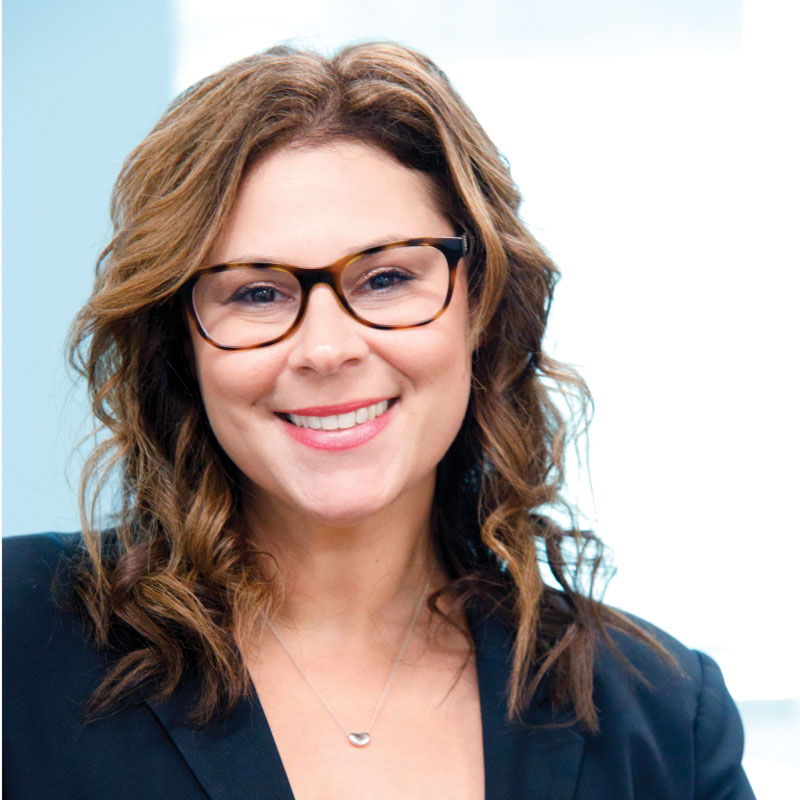
Epstein is a 13-year O.C. Federation veteran who rose from Shalom Family associate to chief operating officer and acting CEO before her appointment.

“Throughout her tenure, she has touched and influenced every aspect of our organization. Along the way, she has been at our simchas and beside us in our hardest moments,” Jewish Federation of Orange County Board Chair Patty Seyburn said in a statement announcing Epstein’s appointment. “Stephanie knows our congregations, our schools, our communal organizations, our community partners, and so many of our families by name. She understands what we worry about at night and what makes us proud.”

Epstein’s appointment follows what the O.C. Federation describes as a “thorough, national search,” and engaged Federation board members, donors, clergy, community partners and staff in the process.

Seyburn added, “On a personal note, I have never met anyone more connected and committed to bringing joy and purpose to the Orange County Jewish community. I am excited for her to lead us into the Jewish Federation’s next phase – one of ambition, inspiration and collaboration, addressing our challenges with ruach and compassion.”


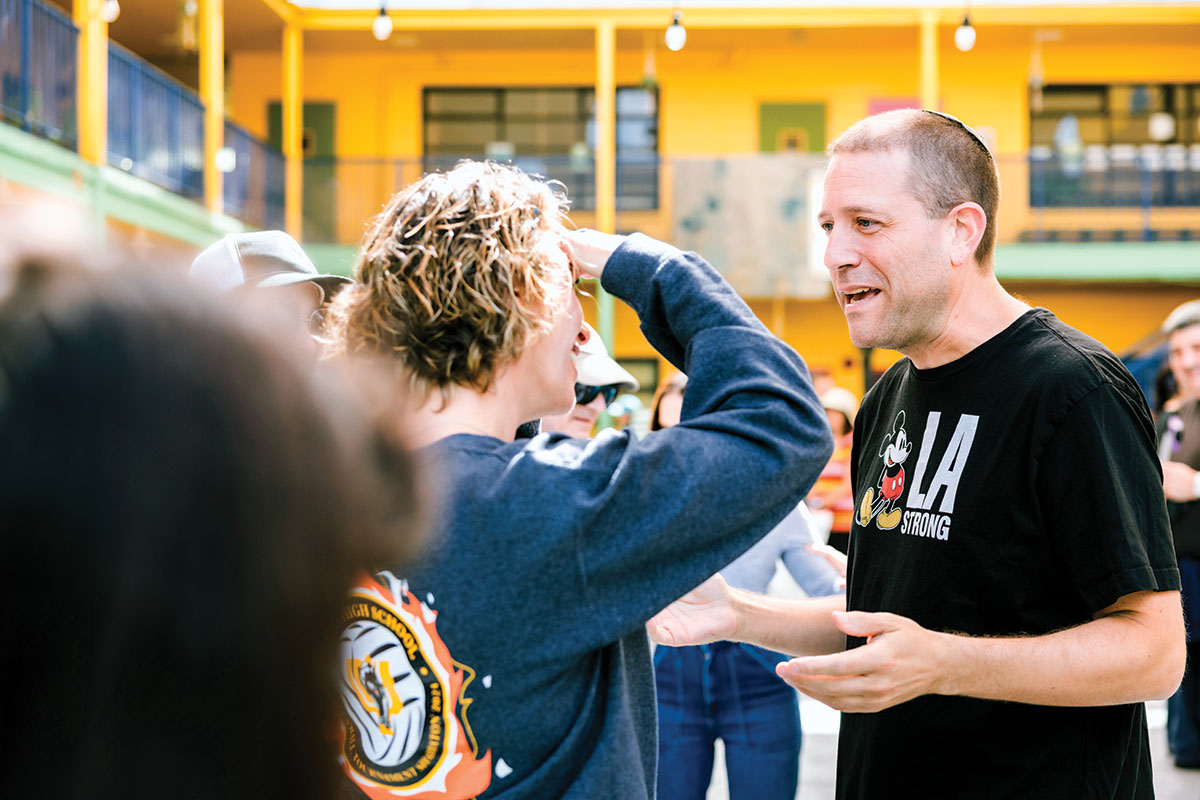
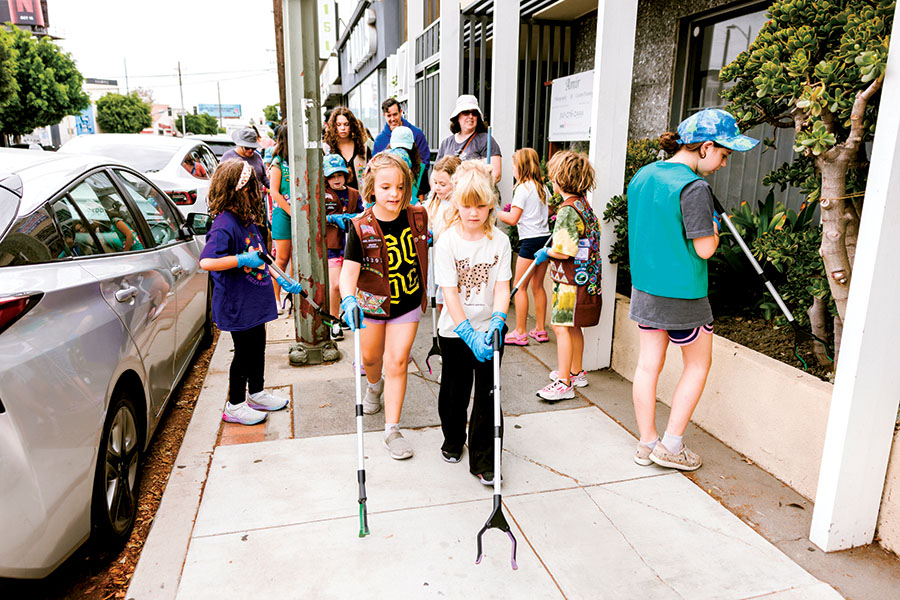
Community leader Boaz Hepner (right) turns out to the Pico-Robertson neighborhood cleanup. Hepner, who lives in Pico-Robertson, was one of the organizers of the event. Photo by Kathy DeNinno Photography

The annual Pico-Robertson neighborhood cleanup was held on Oct. 11, drawing nearly 200 volunteers who came out on a Sunday to pitch in and lend a hand while beautifying their community.

According to Pico-Robertson resident and community leader Boaz Hepner, a nurse and an organizer of the event, volunteers removed 4,000-5,000 pounds of trash. Among the participants were 12 synagogues, seven schools, four restaurants that prepared food for volunteers and four offices of local politicians.

Volunteers of all ages turn out to help clean the Pico-Robertson neighborhood. Photo by Kathy DeNinno Photography

People of all ages turned out. And, judging by the smiling faces of those who stepped up and volunteered, the day was a resounding success, one that showed the power of community coming together and the strength, Hepner said, of “civic pride.”

Participating organizations included Jewish Federation Los Angeles and the office of L.A. City Councilmember Katy Yaroslavsky. 

Next year’s cleanup is scheduled for Oct. 31, 2027.

Ziegler School Welcomes Prominent Rabbi, O.C. Federation Names CEO, Pico-Robertson Cleanup Read More »

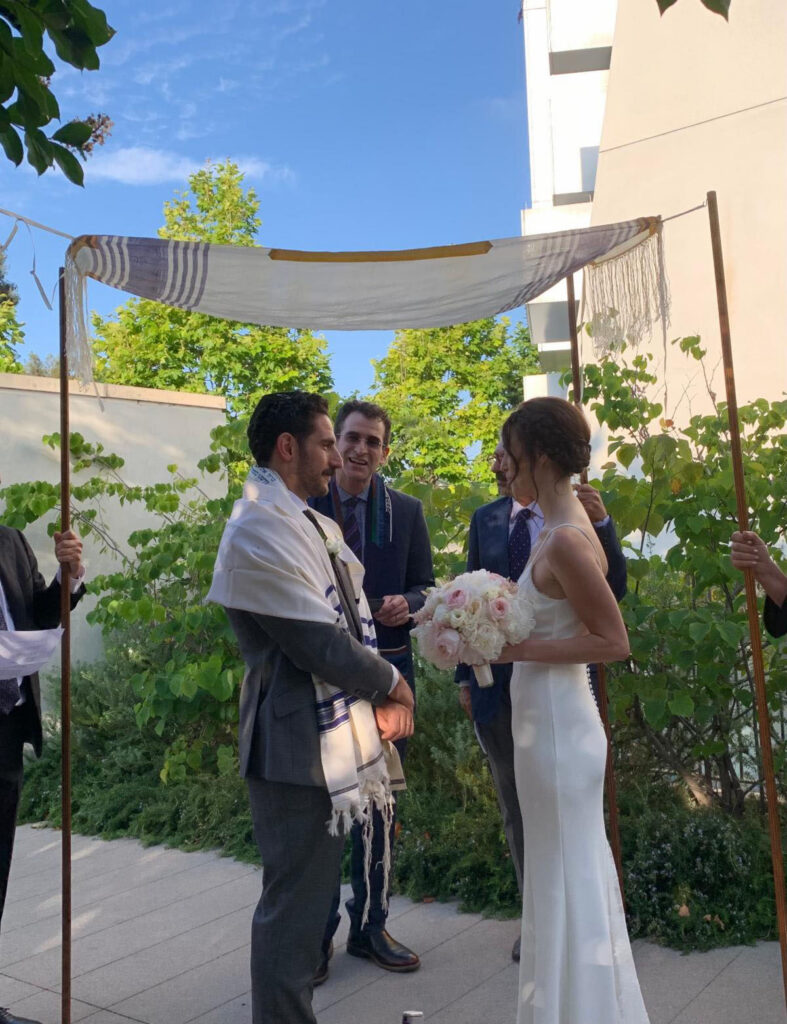
A Moment in Time: Beyond the Chuppah

Dear all,

I recently officiated at my 175th wedding since beginning my tenure at Temple Akiba 20 years ago.

Curious, I looked back at my records. Each wedding brought back memories of couples, families, beautiful settings, and occasionally unexpected adventures.

The year with the most weddings was 2008, when I officiated at 23. Many LGBTQ couples were eager to marry before California voters decided whether to take away that right.

The year with the fewest was 2020, when COVID brought so much of life to a standstill.

But the numbers only tell part of the story.

I often ask couples, “Why is it important to you to be married by a rabbi or cantor?” After all, these days, anyone can ask a friend to officiate.

The answers have been wonderfully varied.

“Being connected to the Jewish community matters to us.”

“A friend can officiate our wedding. But a rabbi and a community can help us build our marriage.”

“After October 7, I felt an even greater need to support Jewish institutions.”

“You’ve been there for every important moment in our family’s life.”

And, of course, there’s always something like: “My cousin’s best friend’s aunt knew someone who recommended another rabbi, but she wasn’t available, so I Googled you!”

I’ll take it!

What moves me most is that a wedding is not simply a celebration of two people finding each other. It is a statement of the life they hope to build. Standing beneath the chuppah, they invite Jewish tradition, community, and generations into that life.

A wedding lasts a moment in time. A marriage is built over a lifetime.

I have been privileged to stand with 175 couples at the beginning of a new chapter. But the greater honor is being part of a community that can accompany them through the chapters that follow.

The chuppah eventually comes down. But the relationships, the commitments, and the community endure.

And that is worth celebrating.

With love and Shalom,

Rabbi Zachary R. Shapiro

A Moment in Time: Beyond the Chuppah Read More »

A Bisl Torah ~ The Company You Keep

When Abraham is told to journey to an unknown land, God tells him that in doing so, his name will be great.

The Talmud explains this phrase through association. Abraham’s name will be great by being associated with God. The greatness will continue as God is also paired with the patriarchs, Isaac and Jacob. We mistakenly assume that only our own actions matter. But the Torah teaches that we are judged by association with others, certainly the company we keep.

God didn’t choose to be named as the God of Noah or God of Adam and Eve. God carefully selected Abraham to represent the Jewish faith. While we can be inclusive of others, we should also be selective with whom we spend precious time. Does this person share our values? Does this person positively amplify my reputation? How does this person make my own name great? And what am I doing to help shape theirs?

Greatness does not mean popular. Greatness does not mean rising above at the expense of others. Greatness means being a light and bringing goodness to environments where there is dire need. Greatness is using our faith as a model of peace. Greatness is speaking up even when it’s hard.

Does the company we keep enable our name to be a blessing? Are we doing enough to make our name as great as God intends?

Shabbat Shalom


Rabbi Nicole Guzik is senior rabbi at Sinai Temple. She can be reached at her Facebook page at Rabbi Nicole Guzik or on Instagram @rabbiguzik. For more writings, visit Rabbi Guzik’s blog section from Sinai Temple’s website.

A Bisl Torah ~ The Company You Keep Read More »

Because We Can

Joshua’s ban of looting Jericho was flauted by an Israelite who refused to be controlled;
“We can,” said Achan, leading to his death, as havoc forced the fate of Israel to unfold.

A.I. is for perpetual improvement a false ideal
which most of us abandon only once we die,
a process in which obviously we’ve failed to heal,
the crime of false ideals turned by our death into a corpus delicti.

Recursive self-improvement is not the main motive for A.I.;
mankind is motivated to create it because it can,
though it will create disasters, a prediction on which we should all rely,
“we cannot” is the reason why we can’t control it with a ban.

Just like the ban on property in Jericho which Joshua imposed,
such a ban would be like the walls of Jericho decomposed.

In “History Raises Its Eyebrows at the Week in AI,” WSJ, 10/15/26, Peggy Noonan writes:
What was artificial intelligence created to do? It can find cures and solve math problems. It may cause catastrophe and widespread loss of life. But what was it invented to do? What was its originating purpose?
The question is always met by silence. It’s “the next step.” It’s been the dream of science fiction for a century.
Here is part of the answer. I was in Kansas on an early summer morning 20 years ago. A soft breeze, a gathering warmth. I got into my host’s car. He jacked up the air conditioning and hit the gas. Outside, balmy and natural, inside things turned freezing. I asked, “Why do Americans do this, blast up the AC when a summer day feels good?” He thought. “Because we can.”
So with AI: Because we can. We’ll dream up the benefits (which are real) and later concede the risk (AI agents may hack into the electric grid serving Chicago in an operation so deep, broad and confounding it won’t be fully up and back for months).
Our society, our country, never decided to “do” AI. History will be perplexed by this. Something so big, so epochal, and people had no say? There was no vote, no debate. Some people started to do it and raise capital, and we shrugged. “It’s the next step.” As Sam Altman said early on, electricity, computers, the internet—now this. Americans always take the next step.

Bans of what mankind can do rarely succeed, except in generating punishment for their violation. The account of Achan ignoring the ban on property in Jericho is recorded in chapter 7 of the book of Joshua. When the Israelites conquered the fortified city of Jericho, God placed a strict decree of ḥērem (a sacred ban) over the city. Everything was “devoted to destruction”—all citizens were to be eliminated, and all silver, gold, bronze, and iron were strictly consecrated to the Lord’s treasury. Personal plundering was absolutely banned, to avoid bringing disaster upon the camp of Israel. Driven by covetousness, Achan (from the tribe of Judah) willfully ignored this divine command and secretly stole several valuable items. The only significant result of the ban which he violated was the death sentence on him which was the collateral damage caused by it.


Gershon Hepner is a poet who has written over 25,000 poems on subjects ranging from music to literature, politics to Torah. He grew up in England and moved to Los Angeles in 1976. Using his varied interests and experiences, he has authored dozens of papers in medical and academic journals, and authored “Legal Friction: Law, Narrative, and Identity Politics in Biblical Israel.” He can be reached at gershonhepner@gmail.com.

Because We Can Read More »

Print Issue: The View From Israel | October 23, 2026

CLICK HERE FOR FULLSCREEN VERSION

Print Issue: The View From Israel | October 23, 2026 Read More »