fbpx

August 6, 2025

‘Old Isaiah’ and Proud Patriotic Judaism

“Comfort, comfort my people,” God instructed the ancient prophet Isaiah in the 40th chapter of his biblical book, words that begin this Shabbat’s haftarah. This prophetic portion, read annually as Jews emerge from the morose period of mourning known as the Three Weeks, offers a vision of recovery, redemption and flourishing. As American Jews in particular seek to navigate both the annually-commemorated period of sadness and the anxiety-inducing current wave of antisemitism, they might find particular comfort in considering why an early 20th-century Jewish figure was, in admiration, called “Isaiah” by none other than the President of the United States.

As the legal scholar Jeffrey Rosen notes in his “Louis D. Brandeis: American Prophet,” Franklin Delano Roosevelt called the first Jewish Supreme Court justice, who served from 1916 to 1939, “old Isaiah” to aides or “my dear Isaiah” in letters between the two men until Brandeis’ death in 1941.

FDR’s habit of calling Brandeis by the prophetic nickname was due in part to the judge’s appearance. “Brandeis’ wife and others compared him to Lincoln,” Rosen writes, “with his imposing height, high cheekbones, and bright grey-blue eyes … he did indeed resemble an ascetic Old Testament prophet.” Of course the appellation fit, Rosen writes, due to Brandeis’ “deep ethical sense, rooted in his burning determination to protect individual liberty and economic opportunity,” a dedication to both loyalty to his people and “a universal aspiration for the moral improvement of all free men and women,” in the spirit of the ancient Israelite seer’s lifelong commitment to righteousness and justice.

Brandeis came to the cause of Jewish national aspiration in his 50s, after his unaffiliated upbringing in Louisville, Kentucky. But his efforts, inspired by his uncle, an Orthodox Jew and proud American who was one of three Jewish delegates who voted to nominate Abraham Lincoln at the Republican convention of 1860, proved invaluable. As the president of the World Zionist Organization, Nahum Goldmann, recounted, “If it had not been for [Brandeis’] influence on [President] Wilson, who in turn influenced the British government, the Balfour Declaration would probably never have been issued.” Jacob de Haas, Herzl’s American secretary, noted that “the most consistent contribution to American Jewish history in the twentieth century has been that of Louis Dembitz Brandeis.”

Brandeis’ work on behalf of Zionism, he firmly stated, was not to the detriment of his American patriotism. In fact, it constituted part and parcel of it. “Let no American imagine that Zionism is inconsistent with Patriotism …” he thundered in an April 25, 1915 speech. “A man is a better citizen of the United States for being also a loyal citizen of his state, and of his city; for being loyal to his family, and to his profession or trade; for being loyal to his college or his lodge. … Every American Jew who aids in advancing the Jewish settlement in Palestine … will likewise be a better man and a better American for doing so.”

Today’s American Jews who pair dedication to Jewish peoplehood with proud faith in the American project are echoing the call of Brandeis, who himself embodied Isaiah’s call for societal flourishing.

In his biography, Rosen cites a moving letter Judge Brandeis composed for his daughter Susan on her 26th birthday, in 1919. “You have been happily born into an age ripe for change; and your own horror of injustice properly beckons you to actively take part in effecting it … Be not impatient of time spent in educating yourself for the task, nor of the slowness of that education of others which must precede real progress. Patience is as necessary as persistence and the undeviating aim. This sounds fearfully solemn and must not be permitted to mar the day which should be full of joy and sunshine; but I can never think of your future without this vision of a noble, useful and significant life.”

As the contemporary American Jewish community exhibits both patience and persistence in navigating today’s challenges, we realize our moment, too, is ripe for change. Let us, therefore, take comfort from Old Isaiah Brandeis’ words. Our dedication to doing our part to ensure a safe and secure Israel and a thriving United States remains undeviating, as we continue to draw inspiration from both the ancient prophet and the late Jewish American patriot.


Rabbi Dr. Stuart Halpern is Senior Adviser to the Provost of Yeshiva University and Deputy Director of Y.U.’s Straus Center for Torah and Western Thought. His books include “The Promise of Liberty: A Passover Haggada,” which examines the Exodus story’s impact on the United States, “Esther in America,” “Gleanings: Reflections on Ruth” and “Proclaim Liberty Throughout the Land: The Hebrew Bible in the United States.”

‘Old Isaiah’ and Proud Patriotic Judaism Read More »

Restoring Zionist Values

“It was the first night of Pesach. I was a secular kibbutznik for whom the exodus from Egypt didn’t mean all that much. And yet there I was, nearly alone in the sky, defending the nation’s airspace. A strange feeling overtook me — a sense of awe I had no words to describe.”

Israeli Air Force Major Shay Kallach, 43, recalled the night 20 years ago that his Israeli identity met his Jewish identity. As a young F-16 pilot, one of his first intercept missions involved scrambling toward an Egyptian civilian airliner headed toward Israeli airspace. The plane had crossed the 80-mile line, and his mission was to divert it.

“Suddenly, I felt like I was part of a historical chain that stretched back to ancient times. It was the ultimate realization of the Zionist dream: protecting the skies of Israel on a holiday centered around Jewish freedom. I did not yet grasp the full meaning of ‘2,000 years of exile,’ but at that moment, I felt it ending — with undeniable force. It wasn’t an abstract idea. It was a solid fact. I saw myself, a ninth generation Israeli, embodying the aspirations of all previous generations.”

Upon landing the F-16, Kallach said he had a new awareness for his Jewish heritage and felt compelled to explore what that meant to him. “I had to figure out my identity again; my roots, my heritage, my tradition,” he said. The young pilot then decided to study at Yeshivat Eli, embarking on a spiritual and ideological journey. 

Twenty years later he founded Netzach Israel, a grassroots movement focused on restoring Zionist values and bringing hope back to the country. Netzach means eternity in Hebrew: “The eternity of the people of Israel.” 

Identity struggle

Kallach attributed his lack of connection to Judaism prior to this experience as an inherent part of Israeli culture. Most secular Israelis feel deeply connected not to Judaism or Zionism but to leftist ideology. “Secular Jews were the role models for the country, but as a kibbutznik, I felt like Zionism was stolen from me in a way,” Kallach said. 

Kallach said this identity struggle runs deep throughout Israeli society, and leftist groups have taken advantage of this divide.

Kallach described two looming threats: “The global progressive movement, which is sweeping through Western culture and seeks to erase our identity, and the widening rift between the general public and entrenched elites who dominate Israel’s security, judicial, economic and academic spheres.”

Kallach said that these may appear to be two fronts, but they are driven by one worldview: “that the very existence of the State of Israel as a Jewish state is a moral injustice that needs to be undone.” Leftist ideology and the ruling elites will continue to undermine Israel’s Jewish identity — until it is transformed into “a state of all its nationalities,” Kallach said.

But a Zionist backlash is already happening. “There are people … who want to lead with values, to correct this break from our identity dating back 4,000 years.”

Zionist Values

Netash Israel was born “as a barrier to block the tide, a movement of renewal committed to safeguarding the promise that has emerged in the wake of the war.” 

It’s both a moral and intellectual revolution: reviving identity, inspiring courage, and restoring national spirit as well as the freedom to speak the truth: “where our future is grounded in both timeless identity and renewed nationhood.”

“The struggle we face today is between the Jewish state and the state for the Jews,” Kallach said. “We have a destiny and a mission to reestablish a sovereign nation in Zion. This is beyond Herzl’s vision of a ‘safe shelter’ for Jews — it is our destiny as a people to be a light unto the nations.”

Kallach believes that Israel has emerged from the war with Iran not merely as a regional power — but as a moral and spiritual beacon. “Our strength does not lie in numbers but in spirit: the valor of our soldiers, the resilience of our civilians, our resolve, and our sacrifices.” 

“The stage is now set to answer a fundamental question: what is the purpose of the State of Israel?”

Israeli society is already undergoing a shift in consciousness: Post-Oct 7, Gen Z Israelis are discovering both Judaism and Zionism. “You see young IDF soldiers with their tzitzit out, even though they don’t even know what it is. This is symbolic of a greater movement that is happening right now.”

Through 40 local chapters throughout the country, with the goal of reaching 150 by 2026, Netzach is working to reinvigorate the foundational principles and hope that he believes are essential to Israel’s continued strength and unity. The movement focuses on bridging divides within Israeli society and reinforcing the ideological foundations that underpin the Jewish state, essentially strengthening Israel’s national character from within.

“If I could sum up the leftist perspective in one sentence, it would be, ‘From the river to the sea, we will have peace and love and be free.’ The only way to mitigate that belief is by regaining our tradition, regaining our roots, and regaining our identity.”

Netzach Israel “seeks to bring dignity to our nation, to bring confidence to the people and to restore freedom of speech and thought back to the citizens,” Kallach said. 

Ultimately, Kallach’s goal for Netzach Israel — and for the entire nation — is clear: to restart the Jewish state. “Our mission is to save the Jewish state, not the state of the Jews, and there’s a difference. We need to change our mindset and make sure that we can never eradicate Jewish identity from the Jewish state.” 

This transformation will eventually impact the education system, the universities, the media, the judiciary, and even the army. “It is no coincidence that people are already demanding we establish a party — they’re yearning to see a fundamental transformation of the political landscape.”

And of course one hopes — prays — that this new movement will eventually influence Jews in the Diaspora, so that the term anti-Zionist Jew returns to being an oxymoron. Leftist Jews who refused to condemn Hamas after Oct. 7 led directly to a pro-Hamas candidate for mayor of NYC — and to the NYPD now having to carry assault rifles to protect synagogues.

Our sacred identity as a people — an eternal nation — should have been taught in every synagogue after the Holocaust. The diaspora too needs a restart—both to stop the now incessant attempts to erase our identity and to renourish our eternal light.


Karen Lehrman Bloch is editor in chief of White Rose Magazine.

Restoring Zionist Values Read More »

Ending the Roller Coaster Ride

I adore roller coasters – the initial gradual climb leading higher and higher; the rapid descent; the exhilarating feeling as you return to where it all began. 

But as Jews have discovered in recent years, when it comes to Israel and antisemitism, living a roller coaster life is something quite different. The climbs are scarier, the descents unbearable and any trust that we will safely exit has been brought into question.

For me, the roller coaster ride started in 2023 with a brazen attempt by the Netanyahu government to centralize power under the guise of “judicial reform.” While the ensuing protests shattered any notion of a united populace in Israel and in the Diaspora, it was gratifying to see that large numbers were unwilling to just stand by and allow it to happen. 

Then came Oct. 7. I still can’t understand how Israeli leaders were so unprepared in light of months of clues foreshadowing impending disaster. But it was not the time to criticize the government when the nation was fighting for its very survival. And then the stunning successes in the wars against Hezbollah and Iran offered hope for a lasting peace. 

Alas, that optimism has faded, and we are forced to deal with constant reminders of the devastation in Gaza that seems to a watching world as if it will never end. Of course, Hamas clearly cares nothing about the people of Gaza. They seem to take equal pleasure in creating “martyrs” in front of a global audience as they do in killing Jews. Yet a tone-deaf Netanyahu, and images flooding the media, play right into their hands.

While the biased reporting from the likes of CNN and The New York Times makes me sick, it is irrefutable that there is extraordinary suffering in Gaza and that even our friends and allies are turning against us as a result. Let’s not forget that we were raised to repair the world. 

It isn’t easy for me to publicly critique the words and actions of Israeli leaders. I’ve always believed that complaining about Israeli policies should be the exclusive purview of those who reside there. But if you love Israel as I do with all my heart, I don’t see any alternative to calling out Netanyahu when he is fostering chaos and division at home and abroad.

It wasn’t that long ago that an Israeli official informed me that he had seen a file stating that I was the most pro-Israel university president in America. He told me that Israeli leaders were mystified that when the student governments at a number of prominent U.S. universities voted in favor of Boycott, Divestment and Sanctions policies, most of those schools had a muted response. The file noted that when it happened in 2015 at Northwestern, while I was its president, Northwestern’s deans and vice presidents accompanied me to Israel, their mission being to generate alliances with as many universities and research centers as possible. And they did exactly that.

I remain proudly pro-Israel, but it is clear to me that Israeli leaders have clumsily mismanaged the Gazan end-game, failing to offer a road map toward a more secure region.  

I’m reminded of the story about two men standing on oppositive sides of a raging river. One shouts out to the other, “Can I help you get across?” The second man replies: “No thanks, I am already here.”

Netanyahu and his partners have crossed that metaphorical river, with apparently no interest in returning to a place and a time where Israel was rightly seen by many as a democratic beacon for the world to emulate. 

I continue to wear my IDF yarmulke each Shabbat. It is a sign of respect for those who serve so bravely, not for the government officials who have failed them.

Will we ever disembark from this roller coaster of hope and despair? While it is undeniable that Hamas is the biggest obstacle to peace, can Netanyahu finally forge a hostage deal, a ceasefire and a day-after plan? I pray that there will be some progress by the time this column appears in print, but am skeptical following months of unfulfilled optimism.

If Jewish history has taught us anything, it is that we must neither abandon our hope for a just future, nor underestimate the amount of hard work needed to bring it about. 

Still, if Jewish history has taught us anything, it is that we must neither abandon our hope for a just future, nor underestimate the amount of hard work needed to bring it about. 


Morton Schapiro served for more than 22 years as President of Northwestern University and Williams College, where he was also Professor of Economics.

Ending the Roller Coaster Ride Read More »

Rewarding Terror Only Fuels More Bloodshed

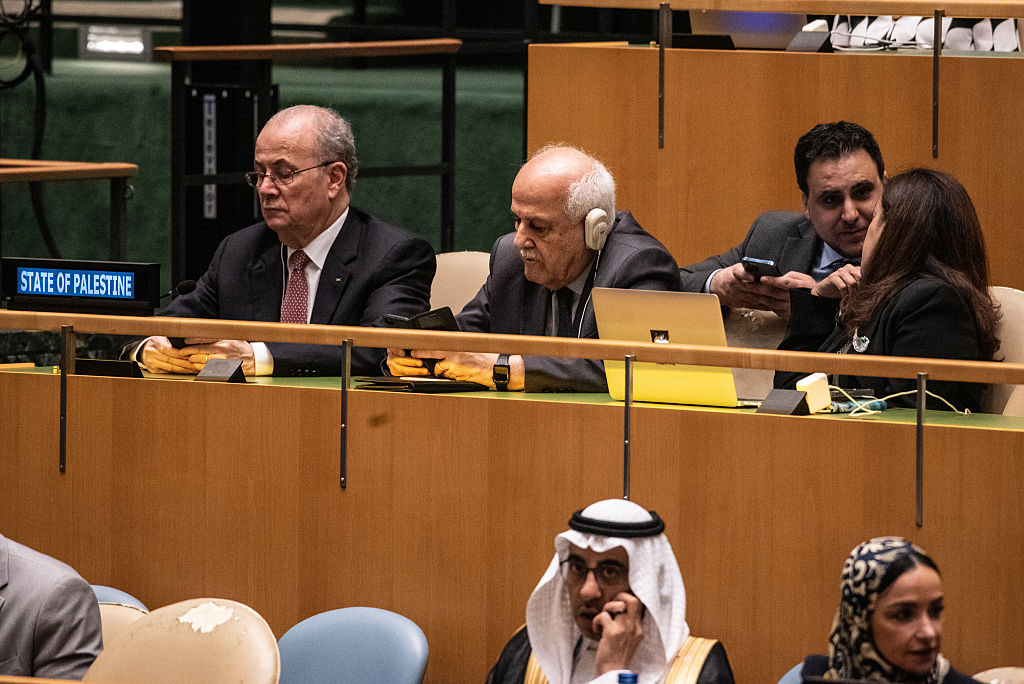
By legitimizing a Palestinian state at the United Nations, the United Kingdom and other European powers risk emboldening terror, prolonging conflict and making the recovery of Israel’s hostages harder. That’s the stark warning delivered by Emily Damari—an Israeli-British citizen and survivor of 471 days in Hamas captivity—directly to Britain’s Prime Minister Keir Starmer.

“This move does not advance peace—it risks rewarding terror. It sends a dangerous message: that violence earns legitimacy,” she wrote on X. “By legitimizing a state entity while Hamas still controls Gaza and continues its campaign of terror, you are not promoting a solution; you are prolonging the conflict. Recognition under these conditions emboldens extremists and undermines any hope for genuine peace. Shame on you.”

Damari posed a damning question to Starmer on Instagram. “Prime Minister Starmer is not standing on the right side of history. Had he been in power during World War II, would he have advocated recognition for Nazi control of occupied countries like Holland, France or Poland?” she asked, adding, “This is not diplomacy—it is a moral failure.

Damari’s remarks echo growing concern within Israel over Europe’s accelerating push to recognize a Palestinian state—regardless of Hamas’ continued hold on Gaza, its refusal to release hostages, or its unrepentant calls for Israel’s destruction.

Starmer’s proposal to vote for recognition of Palestinian statehood at the United Nations, alongside calls for a ceasefire, was met with outrage from Israel’s Hostages and Missing Families Forum. The group warned that this diplomatic pressure only aids Hamas by weakening Israel’s negotiating leverage.

Foreign Minister Gideon Sa’ar put it bluntly: “If a terrorist organization embraces you, you’ve ended up in the wrong place.”

France is leading the charge for a U.N. vote in September, with President Emmanuel Macron reportedly working behind the scenes to build majority support for Palestinian statehood. But critics point out that the timing—while Israeli troops are still engaged in combat and dozens of hostages remain in captivity—is deeply troubling.

The humanitarian narrative is crumbling under scrutiny. The New York Times recently retracted a widely circulated image of a starving Gaza child, which had fueled outrage abroad. Meanwhile, Israel, Egypt, and Saudi Arabia are facilitating massive humanitarian airdrops and aid deliveries. Hundreds of trucks of food and supplies continue to cross into Gaza. But Hamas diverts much of this aid for military use or internal control, undermining relief efforts.

Calls for Palestinian statehood aren’t new. Yet history is clear: when Egypt occupied Gaza and Jordan ruled the West Bank (Judea and Samaria), no Palestinian state was proposed. Since 1948, Israel has offered statehood on at least ten occasions. Each time, Palestinian leadership—from the PLO to Hamas—rejected peace in favor of armed struggle.

Even after the failed Oslo Accords and the bloodshed of the Second Intifada, Israel unilaterally withdrew from Gaza in 2005, dismantling 21 communities and evacuating 9,000 Israelis. Greenhouses and infrastructure were left intact, intended to form the backbone of a future Palestinian economy. Instead, Gaza became a launchpad for terror—armed, financed, and entrenched by Iran.

The world never asked Hamas—or even the Palestinian Authority—the basic questions: Will the future Palestinian state be democratic? Demilitarized? Will it stop indoctrinating children to hate Jews? Will it protect women and minorities? Will it cease paying stipends to terrorists?

Today, Macron and Starmer move forward with recognition efforts without demanding a single concession in return. No promise to end incitement, no guarantee to release hostages, no commitment to rewrite textbooks or dismantle terror tunnels.

In 1988, several Eastern European states recognized a Palestinian state on paper. In 2014, Sweden joined. In 2024, Spain and Ireland followed. The result? No peace—only further violence. Recognition without reform is not diplomacy. It’s appeasement.

Israel has made painful concessions in pursuit of peace. What it cannot accept—and what no democracy should accept—is legitimizing a terror state that rejects coexistence and seeks its destruction.

If the West truly wants peace, it must demand accountability, not reward brutality. 


Dr. Fiamma Nirenstein is an Italian-Israeli journalist, author, and senior research fellow at the Jerusalem Center for Public Affairs.

Rewarding Terror Only Fuels More Bloodshed Read More »

The War Israel Can’t Win

Israel has won its war against Hamas in Gaza. But for a number of reasons — practical, political and polemical — Hamas has won its war against Israel in the eyes of the rest of the world.

Most global observers would never admit a Hamas victory, let alone that they have helped facilitate it. They strongly condemn the Oct. 7 terrorist attacks and kidnappings, and they demand the release of the remaining hostages and call for Hamas to disarm and end its rule in Gaza. (Even the 22 members of the Arab League all signed a declaration last week endorsing each of these goals.) But the outrage that much of the international community has directed at Israel for the deteriorating humanitarian situation in Gaza has caused the Jewish state’s already sub-optimal international reputation to plummet even further to near-pariah status.

The overwhelming irony, of course, is that when measured strictly in military terms, Israel’s armed forces have achieved decisive victories in their defeat of Hamas.  Most of Hamas’ organized battalions have been dismantled — reports estimate that up to 23 of 24 battalions are gone — and roughly half of their fighters have been killed or captured. Nearly all of its rocket stockpiles have been destroyed, their leaders have been killed and the organization’s remnants now control only about 20% of Gaza territory.

The overwhelming irony, of course, is that when measured strictly in military terms, Israel’s armed forces have achieved decisive victories in their defeat of Hamas.  

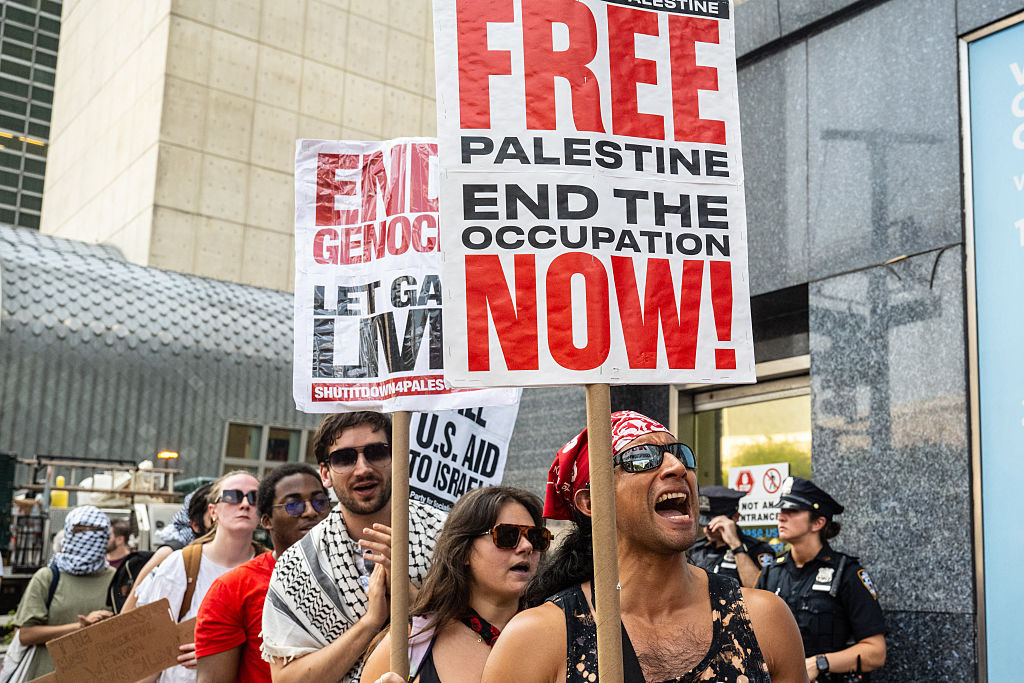
But the price that Israel has paid for its success on the battlefield is even more staggering. Britain, France, Canada and Australia have all taken steps toward supporting the establishment of a Palestinian state. More than three-quarters of the United Nations’ member countries have now taken this position, reflecting a dramatic drop in public support for Israel across much of the planet. Nowhere has this shift been more noticeable than here in the U.S., where recent polling conclusively demonstrates how fast and how far Americans’ attitudes toward Israel have fallen.

Last month’s Gallup poll was the latest in a series of increasingly discouraging surveys of how voters in this country regard Israel’s conduct regarding the war in Gaza. Less than one-third of respondents now support Israeli military action there, with an all-time high of 60% who now state their opposition. Feelings toward Prime Minister Benjamin Netanyahu are just as dismal, as 52% of Americans now view Netanyahu unfavorably, roughly double the level of disapproval toward him just five years ago.

This particular poll did not measure broader public opinion toward Israel, but other recent surveys have demonstrated that more than half of U.S. respondents have an unfavorable view of the Jewish state. For context, this compares with 42% disapproval in 2022 before the current war began and roughly 20% disapproval (with 72% approval) during the previous Gaza war in 2014. But even then, evidence of partisan and generational splits had already emerged, as left-leaning voters and young people voiced their unhappiness with Israel in growing numbers.

Not surprisingly, those divisions have exploded during the current conflict. Currently, less than 10% of Democrats and of 18-34 year-olds approve of Israel’s military action in Gaza. The unhappy result is that, despite the best efforts of establishment political leaders in both parties, historical bipartisan support for the Jewish state in this country has essentially disappeared. The widespread opposition among Generation Z suggests that the long-term challenges will be even greater.

This is exactly what Hamas hoped for when they first launched their attacks. It has been evident for most of Israel’s history that their most brutal opponents have always been willing to sacrifice children, the elderly and other innocents to achieve their goals. But it also stands to reason that Hamas’ original leaders understood their own fate too, that they would need to forfeit their own lives in order to achieve just this type of victory. 

There will always be more terrorists to take the place of the suicidalists who preceded them. But a nation’s reputation is much more difficult to rebuild. Once the shooting is over, we will then face the equally formidable task of rehabilitating Israel in the eyes of a hostile world.


Dan Schnur is the U.S. Politics Editor for the Jewish Journal. He teaches courses in politics, communications, and leadership at UC Berkeley, USC and Pepperdine. He hosts the monthly webinar “The Dan Schnur Political Report” for the Los Angeles World Affairs Council & Town Hall. Follow Dan’s work at www.danschnurpolitics.com.

The War Israel Can’t Win Read More »