fbpx

June 12, 2025

Sephardic Torah from the Holy Land | “You Shall Love Truth and Peace”

Sometimes we just have to let our great thinkers do the talking. Sometimes we just need to read, hear and listen to their words. So this week I present Rabbi Uziel – Israel’s first Sephardic Chief Rabbi, an outstanding leader, halakhic scholar and philosopher, and my personal rabbinic role model – in his own words. Written in 1951, two years before he passed away, Rabbi Uziel’s essay You Shall Love Truth and Peace reflects Rabbi Uziel’s unifying vision for Israel. Here are highlights from his essay:

“The pillars of truth and peace are sorely needed in the State of Israel, for only truth and peace can create an atmosphere of pleasantness and tranquility throughout our land. Each one of us must internalize the values of truth and peace. Doing so will foster a true love for the State of Israel, and a genuine desire for its ever important internal peace. This internal peace within our country can ultimately lead to an external peace, guiding us towards peace initiatives with other nations.

Let us clothe ourselves with an elevated devotion and love for one another, as commanded by the Torah, ‘You shall love your neighbor as yourself’(Leviticus 19:18).

Let us accept and welcome all immigrants to our land, irrespective of their ethnic community or country of origin. Let us accept them from a place of genuine love, as we are commanded: ‘The stranger who resides with you shall be to you as one of your citizens, you shall love him as yourself, for you were strangers in the land of Egypt’ (Leviticus 19:34).

Let us conduct ourselves in the paths of true peace, respecting each other’s opinions and feelings, as well as respecting the differences of opinion amongst the different factions in our country. Let us remove all language of hatred, animosity and provocation from our midst, so that we may fulfill amongst ourselves that which our enlightened scholar Maimonides commanded us: “Accept the truth from whatever source it comes”. Let us remember the enlightened deeds of our rabbis – Shammai and Hillel – who behaved with love and respect towards one another. Despite their tremendous differences, they respected each other’s opinions, fulfilling the verse ‘You shall love truth and peace.’ (Zechariah 8:19).

May God, the King of Peace, bless us with peace, and may we merit to see the fulfillment of the great prophetic vision for world peace: ‘And they shall beat their swords into plowshares, and their spears into pruning hooks; nation shall not take up sword against nation, they shall never again know war’ (Isaiah 2:4).”

In these troubling times of war, terrorism, and global anti-Semitism, along with deep internal strife in Israel, Rabbi Uziel’s unifying vision for Israel and the Jewish people is the need of the hour.

Shabbat Shalom


Rabbi Daniel Bouskila is the international director of the Sephardic Educational Center.

Sephardic Torah from the Holy Land | “You Shall Love Truth and Peace” Read More »

Rabbis of LA | Rabbi Schatz’s Career Path Started with Her Bat Mitzvah

When Sinai Temple hired Sherre Hirsch as its first woman rabbi, it was seen as a way to attract more women to shul.  Its impact can still be felt more than 25 years later.

Take, for example, Temple Beth Am’s Rabbi Rebecca Schatz. She grew up at Sinai Temple when there were no female rabbis there. Both of her parents worked at Sinai, so she was there as a student and very integrated into the shul community. When it came time for her bat mitzvah, Sinai had just hired Hirsch. “I was really taken with learning Torah with a female rabbi, which I never had done before,” she said. Not only that, the experience of being able “to learn with someone who was young, vibrant and excited about Torah” really moved her.

Schatz was quick to add that she meant no disrespect to the men she had been learning with; they were solid, too, she said. But it felt “so exciting” to suddenly start learning with someone who looked like her. It was an eye-opener that females could be rabbis,” Schatz said. It was a great feeling “to see myself in somebody who was teaching Torah. Really nice to be able to speak to a woman about Torah. Nothing that we learned was specifically feminine. It was just nice to be able to see myself for the first time in someone doing this work.” She is sure the experience affected her career choice “Yes I was young,” she said, “but at that point I thought I would be interested in becoming a rabbi.”

She acknowledges that she took a somewhat circuitous path before Rabbinical School. Judaism, though, always was a dominant part of her narrative.

She attended Milken Community High School, where music was a big part of her life. Her father, Dale Schatz, is a teacher, cantor and professional musician. Rebecca, oldest of the four Schatz children, sings and plays violin. 

“I was musical in lots of ways,” she said. “In high school I studied it seriously with a teacher, Kelly Shepard, who became my mentor and a close family friend.” His picture is prominent on a wall of her Beth Am office. 

Since Shepard was an alumnus of Indiana University she decided to study there. “As my mentor, I was excited to do what he had done,” Rabbi Schatz said. “I got into the Music School, which then was the best in the country.”

She earned her Bachelor’s in choral music education at Indiana. She minored in Hebrew, but music was her focus. As an undergrad, she started a Jewish a capella group, Hooshir. Their first performance was for President Bush’s Hanukkah party. 

She is not someone who needs to be in the spotlight or thrives on performing as an individual, she said. “My degree was in conducting and music education. I wasn’t a vocal performance major. I found myself teaching and in ensembles. This is how I like it – to be the educator or within the ensemble.” Although as a rabbi, she sings all the time by herself, she much prefers “when people want to sing with me.”

What finally turned her to the rabbinate? “In college, my music was very much connected to my Judaism. I became quite religious my last two years at Indiana University.”

That led to her next choice, getting her Master’s at American Jewish University. “My first day in the Master’s program at AJU,” she said, “Rabbi Bradley Shavit Artson, dean of the Ziegler School, taught a text study. It clicked for me that I wanted to become a rabbi after I got my Master’s.”

Last month she celebrated her eighth anniversary at a job she had dreamed about. “What turned me on to the rabbinate,” she said, “was the learning and the ability to teach text, to learn more about people and their interest in Judaism.”

Becoming a pulpit rabbi did not appeal to her until she drew an internship at Temple Beth Am in 2013. Next came an internship in Northern California where she ended up being the rabbi for two years after graduation. It felt good to her, and it happened in a way that could not have been planned.

She next took an internship at Peninsula Sinai Congregation, in the Bay Area, which didn’t ring any bells for her. However, the senior rabbi, Corey Helfand, had discovered an impressive young girl when he was visiting Camp Ramah in Ojai. But Schatz didn’t want to be a pulpit rabbi. She preferred using her Master’s in Education in a school teaching choir. To prove she didn’t want to be a pulpit rabbi, she recalls, “I decided to take internships in the pulpit. Instead, it proved to me it was what I wanted.”

Since starting full-time at Beth Am in 2019, she has seen it as a creative hub to try out new ideas. 

Growing up, she imagined a pulpit rabbi’s life was sitting in an office all week writing sermons, then getting up on a bimah and delivering. “I didn’t realize so much of a pulpit rabbi’s life is engaging in meetings with people, doing tons of lifecycle events, helping people through the happiest and toughest times of their lives, and doing a lot of teaching,” she said with a smile.

Fast Takes with Rabbi Schatz 

Jewish Journal: Your next career goal?

Rabbi Schatz: A major goal is to allow everyone to feel comfortable in Judaism.

J.J.: The moment each week you anticipate most?

R.S.: As soon as Shabbat starts and being able to reflect on the week.

J.J.: Your favorite American vacation spot?

R.S.: Laguna Beach where my family has a home. I go there to find peace and calm.

Rabbis of LA | Rabbi Schatz’s Career Path Started with Her Bat Mitzvah Read More »

Hollywood Film Producer and Philanthropist Peter Samuelson on ‘Finding Happy’

Peter Samuelson is a Hollywood veteran. He produced and executive produced 25 films over 25 years including “Revenge of the Nerds,” “Arlington Road,” and “The Libertine.”  During this time, he also founded five charities. Now, he’s  released an inspirational book for young adults – as well as their parents and teachers – about his life and work and the importance of following your passion while making a difference in this world. 

“Finding Happy: A User’s Guide to Your Life with Lessons from Mine” (Regalo Press) is filled with stories about Samuelson’s adventures, like climbing down a hundred-foot pipe shaft at 3 a.m. to rescue a kitten, with no plan for how to climb back up, and doing daredevil filmmaking in Asia and Africa. He writes about how to seize the day, when to take risks, and how to find your own “secret sauce” in life. The book also offers practical help in three dozen situations that challenge Gen Zers and Millennials. 

The Journal sat down with Samuelson, who also serves as a mentor for young adults, to discuss his new work and what readers can learn from it. The interview has been edited for clarity and space.

Jewish Journal (JJ): Why did you decide to write this book?

Peter Samuelson (PS): Some things are beshert. In 1999, I founded First Star as my third nonprofit charity. I realized only 6% of American foster kids go to college, a fraction of the over half of all 12th graders who do so. I met with the Chancellor of UCLA, Gene Block, a wonderful man. I proposed that he allow me to house, educate and encourage high school-aged foster kids in the middle of his campus for a four-year period, with a curriculum [that was] one-third academic, one-third life skills and the other third a sense of belonging: new brothers and sisters for those deprived of their own and reliable grown-ups for the first time in their lives. First Star is now enormously successful, with 12 academies across the country. I’ve [also] done a lot of mentoring. Hundreds of young adults, mostly teenagers, some in their early 20s. About two years ago, I realized that I had pattern recognition helping young adults. 

My career as a film producer has taught me that even though every film is different, the producer’s toolkit is the same and you get better recognizing similar challenges. So it is with mentoring. I decided that I could make a list and that these could be chapter headings in a self-help book for all young people, especially those who are underprivileged. What is a good risk? What is a bad risk? How can you tell the difference? How do you find love? How ambitious should you be? How can you deal with a bully? How do you get organized? 

JJ: How does it tie into your Jewish values?

PS: I am immensely proud of being Jewish and what that means. Maimonides tells us that the top level of the soul, the N’shuma, is not something you own, but almost like a membership society of those who seek to make the world a better place. If you grasp tikkun olam, tzedakah, and exert yourself, Maimonides points out that you will meet extraordinary people who feel the same way. He says two meeting for the first time will feel as though they’ve known each other 1000 years, and say, “Hineini, here I am. What shall we do?” Through founding and running my seven philanthropies in between producing two dozen motion pictures, I am blessed by these N’shuma people, who help me push big boulders up hills. I certainly couldn’t have done it without them.

JJ: What do you think makes people really happy? Is it giving back? Is it finding meaning?

PS: When you help other people, you do find your own happiness. It does not have to be religious. I teach a class to cohorts of 10th grade foster kids called Random Acts of Kindness and Pay it Forward. In the first 90 minutes, I ask them to imagine they are walking down the sidewalk and see an old lady lying face down in rags, fast asleep. Do they A) stop and carefully put $1 under her arm? Or B) wake her up and give her the dollar? Or C) look the other way, and walk on by? This leads to a conversation about the Golden Rule of 170 world religions, whose scriptures tell their adherents that the humane values of social justice require them to right wrongs. Tzedek is a core value in Judaism, and I tell my gentile friends that the chosen people were not chosen to have privileges or space lasers, but rather to serve. It’s an obligation, but not a chore. It is where we find a great proportion of our happiness and many things to make us proud.


JJ: Why is it important to give back, especially in today’s world?

PS: In the class, I ask whether an atheist could still feel compassion and empathy and want to help. “Of course,” say most of the kids. This leads to a conversation about the Second Law of Thermodynamics, which tells us that in any closed system, which could be the motor in your car, a family or a planet, unless we apply energy, if left alone, the whole thing will decay, collapse and end in random chaos. If you don’t oil the engine, it will seize up. If you don’t nurture your family, you won’t have one. And if we don’t take care of our planet, we will have huge amounts of migration that will be unstoppable and change everything around us as people seek to live somewhere sustainable. It is important for each of us to fix things to the greatest extent possible, not just because that makes us happy, but also because entropy, the random chaos that will otherwise ensue, is all around us. Life is a team sport, and I’m proud to help lead so many teams of great importance.  

Hollywood Film Producer and Philanthropist Peter Samuelson on ‘Finding Happy’ Read More »

A Memoir for Fathers, Sons, and Anyone Trying to Break the Cycle

If you think you need to be a Trekkie to care about Adam Nimoy’s memoir “The Most Human,” you don’t. You also don’t need to be Jewish, sober or estranged from your father. 

Adam’s father was Leonard Nimoy. Yes, that Leonard Nimoy — Mister Spock to the millions of “Star Trek” fans. But in “The Most Human,” Adam describes his father, who passed away in 2015 at age 83, as a hard man to love, and even harder to get love from. Adam’s book is a patient, painful reckoning with cycles of trauma, addiction, estrangement and reconciliation. Even if you’re just someone trying to figure out how to forgive a parent without forgetting what they did — this book lands like a long exhale after holding your breath for too many years.

If you’re browsing for a Father’s Day gift, this one is for anyone staring down family patterns and wondering if it’s too late to change. Nimoy’s story doesn’t offer easy resolutions, but it does offer something better: the tools and conversation examples to start again. “Everybody who reads this says that they didn’t know that side of Leonard, they got to know him a little bit better,” Adam said. “He’s this iconic character, and this book brings more of his personality as a dad into focus.” 

The book begins in a synagogue on Yom Kippur. Adam recalls sitting in the back row as his father was called to the bimah to chant the story of Jonah. The moment is brief but revealing. Jonah, the prophet who runs from his calling and winds up in the belly of a whale, becomes a spiritual mirror for Adam: a man who spent years hiding behind pot smoke and emotional avoidance. “I knew something about that,” Adam writes, noting how long it took him to stop fleeing from the discomfort of family, responsibility and reconciliation.

When asked what he learned from writing the book, Adam said that he gained a lot more empathy for his father. As the son of Russian Jewish immigrants growing up in Boston, Leonard was raised to feel desperate to survive. He came to Hollywood with no money, little support and no major connections. His parents were angry that he wanted to become an actor.

The echoes of Leonard’s career never disappear. Adam sees performance everywhere: in the classroom, in the director’s chair, even at Comic-Con and Star Trek events. But Spock, too, was shaped by Leonard’s past — as the child of immigrants, as the outsider, as the person trying to belong without betraying himself.

“There was a lot of conflict with him,” Adam said. “He was very difficult to deal with. And I say we didn’t have the tools to deal with any of the conflicts so that when issues would arise between us, it never went well.”

The book is filled with raw moments: childhood memories where Leonard is in the room, but not present; a six-page letter from Leonard to Adam that easily could have torpedoed anyone’s relationship for life; and stinging moments like the time that Adam sent his father an old production still from his father’s role as Tevye in “Fiddler on the Roof.” 

“My dad wrote me an email in response thanking me for the [‘Fiddler on the Roof’] photograph and also wishing me a Happy Father’s Day, and then informing me that he believed that ‘unconditional love was a fantasy.’”

For a story that takes place primarily in Hollywood, there’s little celebrity name-dropping. Rather, it’s a book about looking back and naming what-happened. And what happened, often, was silence. Adam said that when he shares his story anonymously at 12-step meetings, people are inspired to try to reach out to a parent or a sibling. 

“Acceptance is not approval,” Adam said. “Accepting my dad for who he was doesn’t mean I approve of everything he did. It’s just that I accept him for who he is.”

Adam said he learned to give his father some slack. That slack becomes the book’s spiritual arc. And it’s grounded — literally — in Jewish time and Jewish space. Shabbat dinners become the first step back into the relationship. Adam starts attending services at Beit T’Shuvah, a synagogue and addiction recovery center on Venice Boulevard. “The cycle of dysfunction is not new, but how to break the cycle is really what the objective is,” Adam said.

Recovery concepts like “detachment with love” and “living amends” are central to the story arc. Where Leonard once denied affection, Adam gave it. Where his father shut down, Adam leaned in and tried to become someone his own children, Maddie and Jonah, could trust.

Adam writes that the dysfunction between fathers and sons didn’t start in the Nimoy house. It started with Abraham and Isaac. With Jacob and Esau. With Joseph and his brothers. The question isn’t so much whether pain will travel down the family tree, the question is whether someone, anyone, will do the hard work of pruning it back. Throughout the book, Torah references stretch beyond the patriarchs. Jonah and the whale gets pulled in as a tale of finally stopping to listen in the midst of chaos. T’shuvah (“the process of returning”), l’dor v’dor (“from generation to generation), and tikkun olam (“repairing the world”) are all featured along Adam’s journey. 

Adam’s late mother, Sandra Zober, also looms large in the book, culminating with her final days spent bedridden, pill-dependent and fiercely opinionated as ever.

Anyone who’s ever stared down a closed door and wondered if knocking one more time would matter will find this book enjoyable. It’s well-written, the audiobook is everything an author should strive to do when reading their memoir — you can really hear in Adam’s voice what he’s feeling. Parents who struggle to show up emotionally will find this book relatable, and kids who are tired of waiting will find it to be a gateway to healing those bonds. 

Adam shares his story not from a Hollywood high horse as the offspring of a world-worshiped cultural icon, but as the bearer of something much harder to gift: emotional clarity, spiritual honesty and the exact kind of story you should hand your father on Sunday, if only to say: “I see you. I read this I’m trying, too.”

If you’re looking for a memoir about reconciling with a complicated parent, this is one of the most emotionally grounded and engaging that I’ve read. This would make a meaningful gift for anyone in recovery, or anyone trying to make peace with family history. Readers interested in spiritual memoirs, Jewish reflection or family repair will find something familiar and worthwhile here.

A Memoir for Fathers, Sons, and Anyone Trying to Break the Cycle Read More »

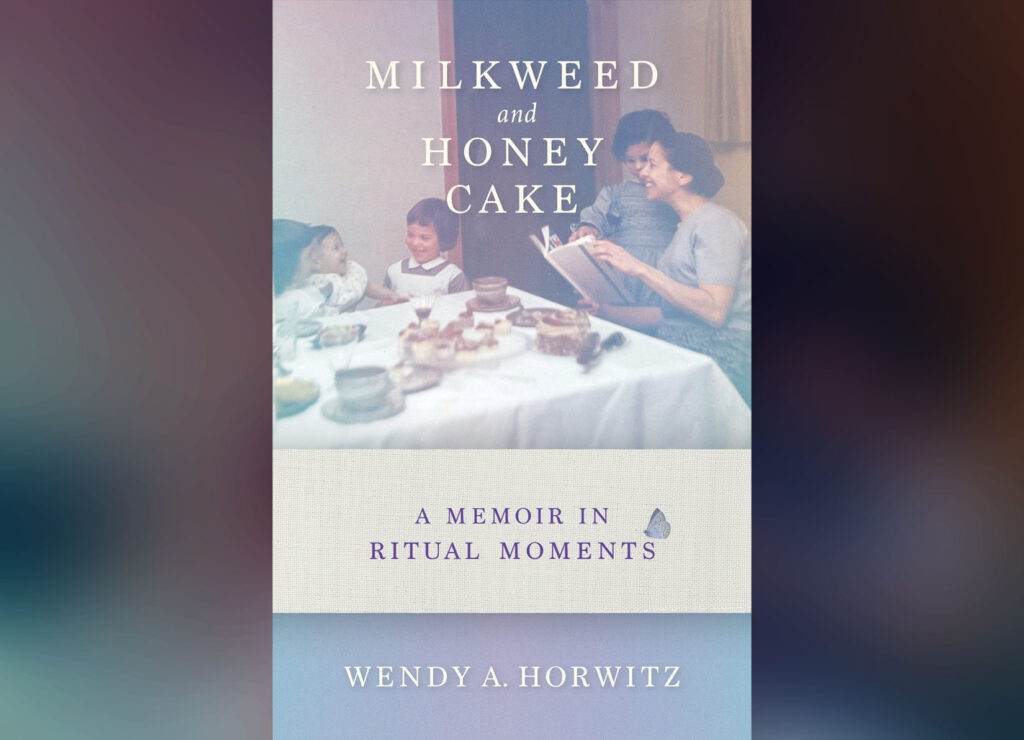
A Memoir in Ritual Moments

The author is a trained psychologist who teaches writing to would-be physicians and college students, and it shows. Her insights into herself and the human condition are masterful; her writing lyrical. One comes away from this book uncertain as to whether Horwitz is more fascinated with telling her own story or describing the many different rituals which she uses both to reveal and to conceal her story. What else is one to expect from a psychologist?

Readers should know that Horwitz is the younger sister of my former student and former sister-in-law whom I have not seen since she was a young woman decades ago. Still the familial relationship, however former, however lapsed, makes it difficult for me to write of her with any measure of formality. So she is Wendy to me.

Her depiction of ritual and her defense of ritual will appeal to believers but perhaps, more importantly, to non-believers or to “occasional” believers who struggle between moments of faith and lingering doubts. Her interest in advancing the conversation regarding ritual “is engaging in the ritual not necessarily in service of religious belief but also to create beauty, solace, celebration, and community.” She is adamant and most persuasive by demonstrating that one can find meaning through rituals without giving up one’s identity or ideals. She also shows how religious participation enhanced her own sense of identity and strengthened her conviction, not a bad insight for someone who portrays herself as a non-believing, not quite traditional, certainly not halachic, but deeply affirming Jew.

One can read this book on many levels. It is a COVID memoir. It describes the haunting reality we lived through, the isolation, the loneliness, the loss of community, the inability to interact with others and to participate in events so routine that we forgot how meaningful they were. It is also a memoir of liberation after COVID, getting out of the house, hugging those we love, having guests for the holidays, or the stage in between, when life was still dangerous but not deadly, going to synagogue even while it was being held in a tent, sitting masked together with one’s community but apart from one’s neighbor with rabbi and cantor behind plexiglass shields.

One marvels at her imaginative use of rituals and her emphasis on when rituals are missing. One of her children graduated during COVID and like my younger son missed the pomp and ceremony, the procession and the celebrations that marks such a milestone. So, Wendy improvised for what her child missed when high school graduation was held in the parking lot, for what her niece missed when medical school was concluded but not solemnized. Wendy depiction of the joy, the smiles and the appreciation reminds us all that if we can’t have everything, we can and must at least do something.

One can read this memoir as a creative use of Jewish rituals. What is one to do with flowers sent by a former lover, who does not quite know that he is a former lover? Wendy thinks of Tashlich and goes down to the stream casting the flowers out one by one, day by day, purging so one can begin anew. The Rabbis never imagined Tashlich – the ceremony held on the first day of Rosh Hashanah, casting one’s sin’s symbolically into the waters as crumbs of bread — but Wendy did. What does one do with a Ketubah, an artistic remnant of a failed marriage? The rabbi suggested it be buried. Wendy packed it into a case in the attic, a case that resembled a small coffin. She bemoans the lost opportunity to ritualize the “get,” the religious divorce as the ritual did not quite work for a modern woman, who could not view herself as property to be purchased and then freed. There was no ritual as to what to do with her engagement ring. Selling it does not quite capture both the joyous and bitter memories associated with it. Her work is a challenge to invent a new ritual or improve the old to mark important milestone of dissolution.

She can understand when rituals work brilliantly and when they heal. Her depiction of the rituals of mourning and Kaddish are an example. Anninut, the period between death and burial, burial, shiva and shloshim, the 11 months of Kaddish and the Yahrzeit. Anyone who has gone through such a loss and ritually consecrated it will find her writing moving and most familiar.

She appreciates the opportunities lost, a post-college trip to South America finds her without a seder. The community was not inviting – Jews should always welcome the stranger, especially on Passover —  Ritz crackers, which she knows are chametz, cheap wine, and Dayenu will just not do. One misses families and songs, a familiar ritual. The next year’s seder is all the more important, the recollection last decades into adulthood. Medical students receive a white coat when they move from the classroom to actually dealing with patients. Psychologists receive nothing as they see their first client before them.

Rituals can not only be formal religious rites, but their adornment. Polishing the silver; setting the table; using the recipes passed on from generation to generation, especially in the handwriting of the first to commit the oral tradition to writing; and the aroma of the foods so familiar that waft through the house. Her detailed description triggered for me the memory of the first year after my mother’s death, returning home on Rosh Hashanah eve and finding something amiss, but unable to understand what it was — the distinct smell of my mother’s brisket, not quite captured in my wife’s superb cooking.

Wendy is firmly grounded in Jewish memories, surprisingly so for this traditional reviewer, who remembers her childhood home as more secular, less ethnic. Her rootedness enhances her appreciation of other rituals. Buying challah on Friday empowers her to notice those who buy bread from the same bakery for the traditional family dinner after church or to appreciate more exotic rituals from her world travels.

Milkweed and Honey Cake is a work to be savored; its flavor lingers long after finishing the work. It makes you notice what she notices and may have a particular audience in those who do not quite appreciate the rituals that endow our life with meaning.


Michael Berenbaum is director of the Sigi Ziering Institute and a professor of Jewish Studies at American Jewish University.

A Memoir in Ritual Moments Read More »

Malibu-based Shalom Institute, Devastated by 2018 Fires, Marks New Beginning

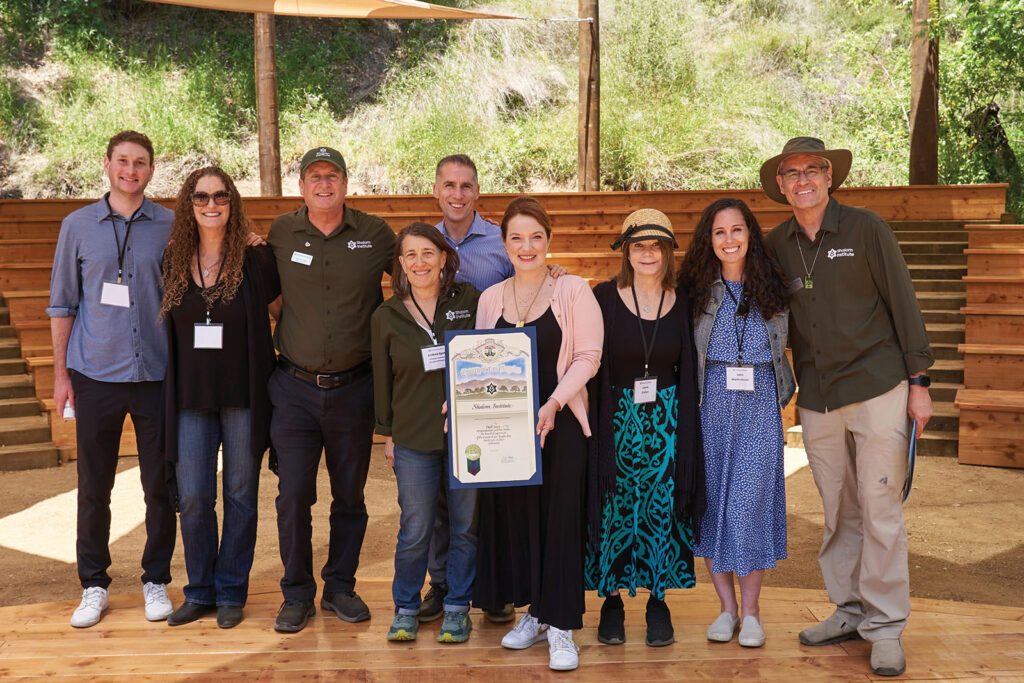
Last month, the Shalom Institute, which operates a popular overnight summer camp that was destroyed in the 2018 Woolsey Fire, marked a new beginning during a hopeful event for its camp community.

On May 18, Shalom Institute dedicated the following new spaces on its Alan D. Leve Campus in the Malibu mountains: its Annette M. Leve Amphitheater; Spatz Wunderlich Family Ropes Course and Adventure Center; and the Kaplan Family Nature Grove. 

“These new facilities represent more than just buildings — they are places where community connections will flourish for generations to come,” Shalom Institute CEO Rabbi Bill Kaplan said. “From the ashes of the Woolsey Fire, we are creating vibrant spaces that will enhance community in meaningful ways.”

Last month’s event, “Ashes to Blossoms: Rebuilding a Jewish Community Gem,” coincided with the organization’s multiyear rebuilding process, which includes a multi-phase $90 million capital campaign to relaunch Shalom Institute’s Malibu campus. It was held nearly seven years since the Shalom Institute was destroyed in the Woolsey Fire of 2018.

The campus rebuild is happening in three phrases. To date, the organization has raised 82% of the funds it needs to complete phase-one, a $55 million campaign that paves the way for Camp JCA Shalom — Shalom Institute’s overnight summer camp for kids in grades 2-12 — to return to its Malibu campus. Since 2019, Camp JCA Shalom has operated from rental sites. 

To date, Shalom Institute has raised $45 million of its $55 million goal, according to the Shalom Institute website.

At the recent event, attendees enjoyed a kosher brunch, participated in a campus rebuild tour and experienced camp through ziplining, a ropes course, nature hike and crafts. Among the stops on the tour were the campus’ Retreat Center and Aquatics Center, which are currently undergoing construction. 

Those in attendance included donors and community leaders, including LA County Supervisor Lindsey Horvath, Jewish Community Foundation of Los Angeles CEO Rabbi Aaron Lerner and Shalom Institute Capital Campaign Chair Larry Cohen.

“Community is the heartbeat of our campus,” Cohen said. “We are curating a space that brings people together, fostering meaningful connections and a profound sense of belonging. Through shared experiences, this will be a place where individuals from all walks of life can thrive as part of a vibrant community.”

Under Lerner’s leadership, the Jewish Community Foundation of Los Angeles has supported the Shalom Institute’s capital campaign. The Shalom Institute was among the Foundation’s 2023 Next Stage Grants recipients. The grant provides up to $300,000 and aims to strengthen the internal operations of local Jewish nonprofits. 

“With the Next Stage grant, we’re helping to ensure this sacred space, rebuilt from the ashes of the Woolsey Fire, and it’s hard to imagine sitting here that this space was ashes,” Lerner said during the gathering in Malibu.

Jewish Community Foundation of Los Angeles CEO Rabbi Aaron Lerner speaks during the May 18 “Ashes to Blossoms” event. Courtesy of Shalom Institute

According to the Shalom Institute, additional philanthropic supporters have included Harold Grinspoon Foundation, the Harry and Jeanette Weinberg Foundation, Foundation for Jewish Camp and Jewish Federation Los Angeles.

Powered entirely by solar energy, the amphitheater was designed to accommodate more than 500 people and will host performances, lectures, gatherings and cultural events. The ropes course and adventure center, meanwhile, features three zip lines, a “skypark” and climbing wall and has elements accessible for group challenges and individuals with diverse abilities.

According to the Shalom Institute website, construction is in progress on an aquatics center and the Harry and Jeanette Weinberg Village, while facilities “in development” include a dining hall, eco village and conference and arts center. 

As to when Shalom Institute programs will return to its Malibu campus, Natalie Shapiro, the marketing and communications manager at Shalom Institute, told The Journal no specific date has been set.

“We are focused on the campaign goal, the excitement of the spaces that have been built, like the amphitheater, and construction in progress, without identifying a move-back date yet,” Shapiro said.

Established 74 years ago, Shalom Institute is a camp, conference and retreat center in Southern California. Along with Camp JCA Shalom, Shalom Institute programs include Camp Gesher, the only camp in North America for campers from Russian-speaking families; Sherut L’Olam, which build advocacy skills in teens; and Shemesh Farms, an employer of adults with neuro and physically diverse abilities.

Malibu-based Shalom Institute, Devastated by 2018 Fires, Marks New Beginning Read More »

Simms/Mann Foundation Honors 40 Nurses at Museum of Tolerance

At the Museum of Tolerance’s Peltz Theater on May 28, 40 nurses from around the Los Angeles area were each honored with a $10,000 award. It was part of the Off the Chart initiative — an annual recognition created by the Simms/Mann Family Foundation to show appreciation for nurses.

Since 2023, the Simms/Mann Family Foundation has honored 120 nurses from four major Los Angeles-area health systems: Cedars-Sinai, City of Hope, UCLA Health and Keck Medicine of USC. “Our partnership with the health systems goes beyond selection of the honorees,” Victoria Mann Simms said. “The Off The Chart campaign will continue to tell the stories of the nurses as we seek to motivate others to invest in nurses and nursing. Our goal is to move nurses from invisible to invaluable.”

The recipients do not apply, and in many cases, are unaware of the award’s existence. They are identified through a confidential nomination and selection process conducted within each of the four health systems. The foundation says that at least 50 staff members from across the spectrum of hospital roles help identify nurses who reflect Off The Chart qualities — including action, originality and leadership potential. The $10,000 comes with no strings attached — the nurses can do what they want with it. 

The impetus for the Off the Chart awards began during the COVID-19 pandemic, after co-founder Victoria Mann Simms visited hospitals and was struck by the emotional and professional toll on nurses. She made a phone call to nurse economist Shawna Butler and asked, “Can’t we do something?” The Simms/Mann Family Foundation, established nearly 30 years ago by Mann Simms and her husband Ronald A. Simms, is focused on relationship-building across the healthcare landscape.

“Nurses are not receiving the massive investments needed to address the shortage of nursing care,” Mann Simms said. “We also hope to encourage nurses to grow in the profession and their careers by empowering them to recognize their unique and individual strengths and exceptional work, advocate for themselves and each other, and become leaders.”

A panel discussion featured Mann Simms, foundation Executive Director Rachel Barchie, UCLA Health President Johnese Spisso and Butler. They discussed how the industry has changed since the COVID-19 pandemic and projected shortages of nurses.

Spisso spoke about how, during the pandemic, even well-intentioned wellness programs frequently languished because exhausted staff simply couldn’t participate. “We were trying to do additional things for wellness and we were offering yoga and meditation,” Spisso said. “And people were like, I just need to go home and rest. We don’t have time to do the wellness thing.”

Simms cited data from the International Council of Nurses projecting that by 2027, nearly 900,000 registered nurses will leave the workforce — almost one-fifth of the current 4.5 million. Over a third of nurses are planning to leave the profession in the next five years.

The Journal spoke with one of the recipients of the inaugural awards in 2023, Lindsay Brant, a nurse working in pediatric hematology and oncology at UCLA Health. Brant didn’t become a nurse until age 40, pivoting from working as a sculptor after her mother was severely injured in an accident.

“I witnessed my mom being taken care of by nurses — it was just like one person after the next, one nurse after the next was more intelligent, more compassionate, more interesting than the next. And I was like, ‘oh, I can do that.’” Brant added that it’s “really special to know that you made enough of an impact on someone’s life,” and that “staff took the time to write a nomination for you.”

Rachelle Levy, an Israeli-American and 2025 recipient of the award, said that it feels more like a gift than anything else. “I was in complete shock when I found out,” Levy told The Journal. “We have absolutely no idea who nominated us, it’s just people that recognize the work that we do, which is really incredible and moving.” Levy works as a pediatric acute care nurse practitioner in hematology and oncology at City of Hope.

Levy also told The Journal how much it meant to be Jewish and to be honored at the Museum of Tolerance — out of all the available theaters and stages in Los Angeles. “I just got chills, it’s absolutely huge,” Levy said, holding back tears, with both of her parents in attendance. “With the awards being at the Museum of Tolerance, it speaks volumes. There are a lot of levels and connections between what us nurses do and what the museum stands for — which is ultimately seeing vulnerable individuals, and giving complete full care with equality across the board.”

In lieu of naming each recipient of the award, the night concluded with an energetic nursing-themed performance by poet Sekou Andrews. From A to Z, he recited a list of healthcare specialties and invited recipients in those fields to stand up and be recognized. As they stood, Andrews launched into a series of alliterative salutes.

When Andrews got to the letter D, he told specialists in dermatology, data, and disaster planning to stand up. With Justin Timberlake’s “Can’t Stop The Feeling” playing on the PA, Andrews called them “diligent, devoted self-directed leaders dedicated to helping us deal during devastation and desperation … describe their caregiving? Dope! Now hit me with the E’s!”

Simms/Mann Foundation Honors 40 Nurses at Museum of Tolerance Read More »

In Praise of Shredded Beef Pastel

One night, on our recent trip to Jerusalem, Neil and I wandered over to Mahane Yehuda. The bustling, vibrant food stalls of the Shuk were closed, but the nightlife was already buzzing. The bars were open, the music blared and the narrow alleyways were filled with crowds of people and a happy energy. After walking through the busy Shuk, we stepped away from the crowds and began exploring the quieter streets nearby.

We stumbled upon Ishtabach, a small, unassuming spot with a large glowing wood burning clay oven in the front. But they weren’t selling pizzas and the restaurant wasn’t Italian.

Inside, people were sharing big platters of dough filled with meat. Kind of like open calzones, but with a definite Middle Eastern twist.

We waited outside in the chilly Jerusalem air until a table opened up inside. The space was tiny with green-tiled walls and six rough hewn wooden tables and a counter with stools. Hanging on the wall was a photo of an old woman, clearly someone’s grandmother and possibly the inspiration behind the food. The place felt warm, homey and full of life.

The chefs were busy, placing brisket, chicken, asado, vegetables and breads on the rotating floor of the oven. Mesmerized, I watched the food spin around and around until each dish reached golden perfection and the chefs pulled it out with wide wooden paddles. It was hypnotic.

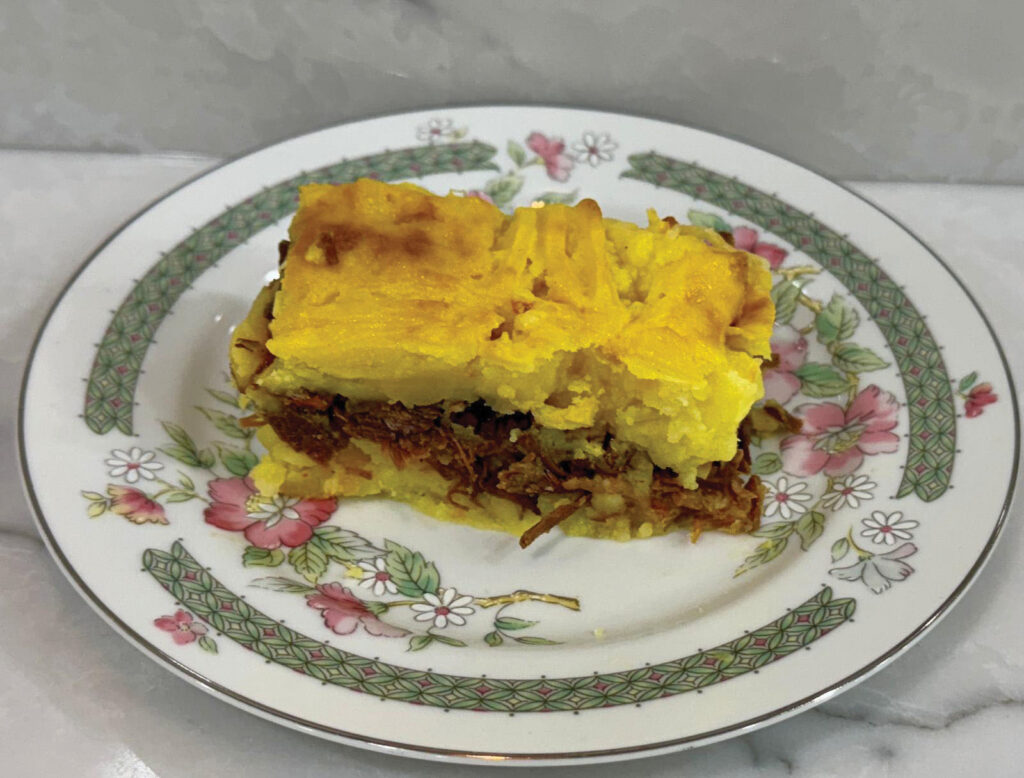
Craving a simple meal, I ordered the shepherd’s pie. When the waitress placed it in front of me, it immediately reminded me of pastel (the Moroccan version of shepherd’s pie and my favorite dish to cook and eat on Shabbat). I laughed and told her, this looks like pastel and she agreed. Ishtabach’s version — creamy mashed potatoes, atop richly spiced and tender shredded beef — was incredible and it hit every nostalgic note.

I was supposed to share with Neil, but after tasting it, I changed my mind and ate the whole thing.

I was so full, I could barely move. But that is the beauty of Jerusalem, you walk everywhere. By now the Shuk had been transformed into a street party, with young people dancing, drinking, laughing. We found an open bakery and bought a few boxes of cookies. In our beautiful room at the Sephardic House Hotel, we brewed some hot tea. We sampled a few of the cookies (the Moroccan fennel cookies were our favorite) and we ended the night full and content. I felt completely at peace, deeply grateful for the food, for the experience, for being in Israel.

This last Friday, after dreaming about that pastel, I decided to try making it for Shabbat. I took out my trusted Instant Pot, which always guarantees perfectly tender beef. I added the ingredients and while it began heating, I started peeling potatoes.

Then I heard a strange beep. The screen of the Instapot read: Burning Caution. I’d never seen that before. Worse, I noticed that the pressure valve was missing. Gone. I panicked.

While we were away, we had remodeled our kitchen. Everything had been packed up and moved around. I searched everywhere. Nothing.

The meat had already started cooking, and there was no turning back. So I did what I had to do, I transferred the meat to a large soup pot on the stove and kept going. The meat simmered slowly for two hours, until it was fork tender and falling apart.

I used a beef cheek, which is a bit pricey, but is so rich and flavorful that you don’t need much. The dish, with its base layer of mashed potatoes, middle layer of savory beef and topping of creamy mash, is more about depth than quantity.

The resulting pastel was beautiful and deeply comforting, just like the one I ate in Jerusalem. There may not have been the spinning oven and the bustling crowds outside, but the spirit of that night emanated in my kitchen.

That’s the amazing thing about travel—you never know which meal will stay with you, or which experience will make it into your life for good.

—Rachel

Every time I travel to Israel, I stop at a magical store that is steps away from the Shuk HaCarmel in Tel Aviv. It’s dark and a little bit dusty. It’s filled with rugs and furniture, Moroccan lanterns and embroidered cushions from India. I always find a couple of small tchotchkes to buy, souvenirs to remind me of Israel. The last time I was there, I bought a small wooden frame with the word “Yishtabach” in Hebrew letters. It’s a powerful word that means “may He be praised.” It sits as inspiration on the windowsill of my kitchen.

As Sephardic Spice Girls, I find that we post many recipes that are suited for Shabbat and Jewish holidays. Cooking for Shabbat feels like it is my service to family and friends. My way of bringing holiness and spirituality to everyday living.

Two Shabbats ago, Alan and I had a wonderful group of friends gathered around our dining room table for lunch. I felt so privileged to have my friends and family enjoying the fruits of my labor — roast beef, caramelized chicken, roasted veggies, salads and yes, a classic shepherds pie.

There is nothing better in the world than a fabulous, old fashioned meat and potatoes dish like shepherds pie.

—Sharon

Shredded Beef Pastel (Potato Meat Pie)

Meat Filling

2 tablespoons olive oil

1 onion, finely chopped

2 pounds beef (cheek, brisket or chuck)

1 teaspoon salt

1 teaspoon white pepper

1 teaspoon cumin

1 teaspoon coriander

1 tablespoon sweet paprika

1 bay leaf

1 cup water

1 14oz can crushed tomatoes

1 cup chopped cilantro

2 tablespoons olive oil

2 onions, thinly sliced

Mashed Potato

8-10 large Yukon gold potatoes, peeled and chopped

2 Tbsp salt (for boiling water)

1 Tbsp turmeric

Salt, to taste

½ tsp white pepper

2 egg yolks

Juice of 1 lemon

1 Tbsp olive oil

1 beaten egg (for egg wash)

• In a large pot, warm the oil over medium heat, then add the first onion and sauté for 2 minutes. Add the beef and brown on both sides. Stir in all the spices, bay leaf and cilantro. Add the water and crushed tomatoes and stir well. Cover the pot and simmer on low heat for 2 hours or until fork tender.

• In a frying pan, heat remaining olive oil over medium heat, then add onions, and sauté until golden brown. Set aside. •Remove the bay leaf from the meat, then set aside. When meat is at room temperature, shred it into thin pieces. Add the sautéed onion and mix well.

• Place the potatoes in a large pot filled with cold salted water and turmeric. Cook over medium low heat until the potatoes are fork tender, about 35 to 45 minutes. Drain the potatoes, making sure to reserve ½  cup of the cooking liquid. Add the salt, pepper, yolks, lemon juice and oil. Mash the potatoes and if the mash is too dry, add a bit of the reserved liquid. Split the mashed potato into two equal portions.  

• Grease the bottom of an oven proof baking dish. Layer one portion of the mashed potato evenly on the bottom. Layer the meat mixture. Spread second portion of mashed potato evenly on top and brush with egg yolk. Use a fork to etch a decorative pattern on the potatoes.

• Preheat the oven to 400 °F. Bake pastel for 50 to 60 minutes until the top is golden brown.

Allow the pastel to rest for a few minutes before slicing.

Serve warm.


Sharon Gomperts and Rachel Emquies Sheff have been friends since high school. The Sephardic Spice Girls project has grown from their collaboration on events for the Sephardic Educational Center in Jerusalem. Follow them
on Instagram @sephardicspicegirls and on Facebook at Sephardic Spice SEC Food. Website sephardicspicegirls.com/full-recipes.

In Praise of Shredded Beef Pastel Read More »

Author Dawn Lerman Cooks Up — and Shares — Memories for Father’s Day

For author Dawn Lerman, food memories of her father are an everyday occurrence. 

Lerman’s book, “My Fat Dad: A Memoir of Food, Love and Family with Recipes,” is a celebration of her “rock star” ad man dad. Al Lerman was responsible for iconic slogans such as “Soup is Good Food,” “Coke is it“ and “Leggo my Eggo.“ It’s no wonder food was central to her upbringing, and food memories abound.

“My dad felt that to create a good slogan, you needed to believe in the products you were selling,” Dawn Lerman, a board-certified nutrition expert, told The Journal. Her father was obese when she was growing up; 450 pounds at his heaviest. “He was always the best customer for the food and drinks he advertised, testing them excessively — especially when they were super sugary or super salty.”

Al Lerman’s weight would go up and down like an elevator, depending on what fad diet he was on or what ad campaign he was working on. By the age of 8, Lerman made it her business to learn the rules of every new diet fad, so she could cook up any of his favorites and transform them with a healthy twist. “My dad nicknamed me the kitchen magician,” she said. “We were the dynamic duo of slogans and nutrition; it was our super power.”

Even though Al passed away a few years ago, Dawn still hears his witty banter whenever she is in the kitchen. “Dawn, you know what would make the world a better place?” he would say. She knew the answer, “A world without calories.”

His mantra still inspires her recipes.

Some of their favorites, paired with Al’s slogans, are below. Follow @DawnLerman on Instagram – and check out her Taste Buds with Deb episode – for more.

Note: All recipes and photos are from Dawn Lerman’s daughter, Sofia Vaccaro. The kitchen bond continues to the next generation.

“Soup is Good Food”

While my dad was a superstar in the boardroom, his weight was a little more daunting, often becoming problematic for his Madison Avenue ad image. It was highly suggested that to move up in the ranks and to work on high-profile accounts, like Kentucky Fried Chicken, my dad would need to lose an extreme amount of weight. Terrified of losing his job, he believed that if he did not eat and only drank, he would lose weight, no matter what he was sipping.

My dad lost a great deal of weight within the first couple of weeks of his liquid diet, even though he often dumped scoops of ice cream and chocolate powder into many of the shakes. When I told my grandmother Beauty, who was my lifeline when my family moved to NYC from Chicago when I was nine, she suggested blending a bowl of vegetables with V-8. Juice to make a fiber-filled soup. Beauty’s easy gazpacho became the staples in the 28-day plan helping my dad trim down and feel good in a bathing suit.

Dad’s Favorite Low Calorie Blender Gazpacho Soup

Photos by Sofia Vaccaro

Yield: 2 servings

16 ounces V-8 vegetable juice

3/4 cup peeled and chopped cucumber

1/8 cup green pepper

1/8 cup chopped onion

1/2 tomato, seeded and chopped

1/2 Tbsp chopped garlic

1/2 tsp lemon juice

Salt and pepper to taste

Optional: hot sauce/cayenne pepper, which helps give a kick of flavor while boosting your metabolism

Place all the ingredients in a blender and puree. Cover and chill for at least one hour.

“Leggo My Eggo” 

My dad was never a morning person. No matter how many alarm clocks he set, nothing could ever wake him. My dad said that when he slept, his best ideas came to him, including some of the award-winning slogans for the campaigns he created, like Taster’s Choice Coffee. But as much as he enjoyed sleeping, he loved eating. 

Every Sunday, my sister and I would make him a scrumptious breakfast in bed and straighten his wall of shirts that were stacked in every corner of our brownstone, representing each new weight. Figuring out what to prepare depended on the diet du jour and the number on the big chalkboard above the scale in our bathroom that showed his current weight. My dad weighed himself every morning and every night, carefully displaying every victory and every setback in white chalk. But on Father’s Day, I always wanted to make something special, something that conjured fond memories from his past so we could create lasting memories together.

This waffle will create all the sweetness without all the calories.

High Protein, Low-Calorie Waffles

Yield: 2 servings

1 mashed banana

1 Tbsp milk or skim milk

2 scoops of protein powder of choice

1/2 cup egg whites, beaten until stiff

Cooking spray for the waffle iron

Fresh berries for garnish

Mash the bananas and add the milk. Then stir in the protein powder and egg whites. Make sure you beat the egg whites separately until stiff, then fold them in. Spray the waffle iron with cooking spray and pour the batter onto the heated iron. Cook according to the waffle iron’s instructions until golden brown. Serve with fresh fruit.

“Chocolate is the Closest Thing to Cupid’s Arrow.”

These brownies are more like fudge than cake. My father called them magic brownies, because they use zero flour, only garbanzo beans. They are so good for you, they can double as a healthy snack or breakfast.

Magic Brownies

1-1/2 cup grain sweetened chocolate chips

2 cups cooked or canned chickpeas (garbanzo beans), drained and rinsed

4 eggs

3/4 cup agave nectar or maple syrup 

1/2 tsp baking powder

1 tsp vanilla


Preheat the oven to 350°F. Grease a baking pan.

In a double boiler, melt the chocolate chips.

In a high-speed blender (such as a Vita Mix) or food processor, combine beans and egg.

Add agave, baking powder, vanilla and melted chocolate. Process until smooth.

Pour mixture into the pan. 

Bake for 35 to 45 minutes or until muffins test done. Allow to cool for 30 minutes before removing from the pan.

Enjoy!

And Happy Father’s Day!

Author Dawn Lerman Cooks Up — and Shares — Memories for Father’s Day Read More »

Table for Five: Beha’alotcha

One verse, five voices. Edited by Nina Litvak and Salvador Litvak, the Accidental Talmudist

The people were looking to complain, and it was evil in the ears of the Lord. The Lord heard and His anger flared, and a fire from the Lord burned among them, consuming the extremes of the camp.

– Num. 11:1


Niva Taylor

Freelance Writer

As Am Yisrael begins its journeys into the desolate wilderness, the people’s faith in Hashem seems to waver. Leaving Sinai’s rarefied atmosphere behind, the nation finds various and sundry reasons to complain, with the brazen intent, according to Rashi, that their gripes reach the “ears” of their Creator, Master and Liberator Himself. 

What we are witnessing here is the stuff of a real relationship, which requires the forbearance to endure the vicissitudes of life. This relationship has sustained us as a nation, and as individuals, through the ups and downs of our uniquely Jewish journey. Our bond with Hashem remains deeply relevant — and deeply real — to this day. 

But how can mere mortals, with our physical limitations, forge an authentic relationship with the Divine? Perhaps the word “ears” in our parsha can answer this question. According to Maimonides’ 13 Principles of Faith, Hashem has no body or likeness. So why would the Torah use anthropomorphisms when describing Him? Maimonides relates that they are metaphorical. Personifications of G-d are not to be taken literally.

Why speak in allegories? Because the relationship each of us builds with Hashem will be the most significant, lasting bond we will ever forge. In order for us to truly connect with G-d, Rabbi Avigdor Miller said, He must be a concrete reality in our lives. He cannot be an abstraction. Hashem wants to connect with us. The anthropomorphisms in the Torah are an invitation to get to know Him in language we can understand.  


Rabbi Shmuel Reichman 

Best Selling Author, International Speaker and Business Coach

What is shalom? Simply translated, the Hebrew word shalom means “peace.” But the deeper meaning of shalom is “harmony and balance.” True shalom is when different, perhaps even contradictory, components, are able to interconnect, harmonize and unite in a way that transcends the sum of their parts.

This is the spiritual concept of tiferes — the harmony of opposites. Tiferes is linked to the word pe’er, which means beauty; both words share the same shoresh. What exactly makes something beautiful? When you watch the sun set along the beach, for example, the sight is undeniably beautiful. What, though, makes this scene so beautiful? Is it the sun, the water, the different colors, or the reflection of the sun on the water? In truth, there is no one thing that makes something beautiful. True beauty is the result of many contrasting pieces melting together into a harmonious oneness. Beauty results when different colors, shapes, ideas, and sounds melt into a single connected body, forming an indescribable transcendent fusion. Fascinatingly, this is why a doctor is called a rofei, a word comprised of the same letters as the words pe’er and tiferes. A doctor’s job is to balance all the different forces of the body — to create homeostasis and harmony.

And that is why Hashem is the ultimate healer; Hashem is the ultimate source of balance, harmony, and truth. May we all be inspired to embody the most wholistic truth, where all the pieces of our lives synthesize into a single, holistic picture.


Rabbi Yoni Dahlen

Spiritual Leader, Congregation Shaarey Zedek, Southfield, Michigan

The Talmud in Tractate Sofrim (6:2), offers a remarkable comment on these opening words, “The people were looking to complain …” 

This tractate, which deals with the proper way to write a Torah scroll says, “The scribe must leave a prescribed space at the opening of the section which begins And the people were looking to complain; [and not only] at its beginning [but also] at its end, because it is a book on its own.”

It is a book on its own! 

Indeed, the human proclivity for kvetching is a book in and of itself. It certainly encapsulates the essence of our ancestors’ journey through the wilderness, but it also serves as a challenge to us as individuals. 

If we were asked, at the end of a busy day, to write down all the different moments we remember, what percentage of our recall would be positive? Reflections of gratitude and appreciation? 

If we are being honest, most of us would be forced to admit that our minds go first and foremost to our frustrations; a meeting that went too long, getting caught in traffic, a bad meal. It would be a book in and of itself! 

Our task as Jews is to attune our hearts to everyday blessings, to will ourselves to write a different kind of book, one that emphasizes the good. 

With practice, we can change the way we see, and we can fill books with our gratitude, our love, and our hope.


Michael Milgraum 

Psychologist and Author

On the phrase, “the people were looking to complain,” Rashi says that they were looking for a pretext, an excuse, to turn away from Hashem. This incident brings to light three essential elements of human experience: 1) suffering, 2) complaining and 3) turning towards or away from Hashem. 

Suffering is often unavoidable, due to our inability to control all events that happen to us, and our understandable emotional reactions to such adverse events. But complaining — that is, deliberately focusing on and emphasizing the negative aspects of our experience, is entirely up to us. As Viktor Frankl eloquently demonstrated in “Man’s Search for Meaning,” even amidst the greatest suffering, there is always something positive, hopeful, and meaningful to be found. This awareness of the positive can take the form of reminding ourselves of the blessings that still accompany us or may be found in the choice to act with dignity, compassion, courage and integrity, even in the face of suffering. 

Just as Rashi says that the complaining was a pretext to turn away from Hashem, we should be aware that our own complaining often distances us from Hashem. Although it is sometimes hard to see, it is an article of our faith that every experience Hashem gives us is for our good, either to protect and sustain us or to challenge us, in order to cause us to grow and to polish our soul. Realizing this turns us towards Him; active complaining sadly builds a wall between us and Him. 


Rivkah Slonim

Education Director at the Rohr Chabad Center at Binghamton University 

The incident of the “complainers” is the first in a disheartening litany of sins that follow. At the end of this parsha we read of Miriam speaking ill of her brother, Moshe. In parsha Shlach we learn of the meraglim, the scouts who discouraged the Jews from following God into the Promised Land. And in parsha Korach we read of the mutiny against Moshe launched by Korach and his assemblage. 

The Lubavitcher Rebbe draws our attention to the fact that mention of this sin is found in the Parsha of Beha’alotcha which means, ”when you will [ascend to] light the Menorah. Rashi puzzles this terminology as there are more conventional ways to say “when you will kindle.” Taken literally, Beha’alotcha means when you will raise. Rashi teaches that the term Beha’alotcha alludes to Aaron 1) alighting unto a step to kindle the Menorah, and 2) holding the fire to the wick until it rises up and burns steadily on its own. The Torah clearly implies ascendance.

The inclusion of the “complainers” saga in this parsha comes to teach, says the Rebbe, that even when Jews sin, it is a prelude to their ascending higher. It is a descent for the purpose of ascent; a segue into the level of ba’al teshuva which transcends the spiritual service of even a completely righteous individual. In inimitable fashion, the Rebbe points out one more important nuance: the Torah says k’misoninim, “as complainers.” For in truth — at their core — a Jew is never a sinner.

Table for Five: Beha’alotcha Read More »