fbpx

June 12, 2025

Marcus Freed Has a Loose Screw in His Head — And He Calls It a Blessing

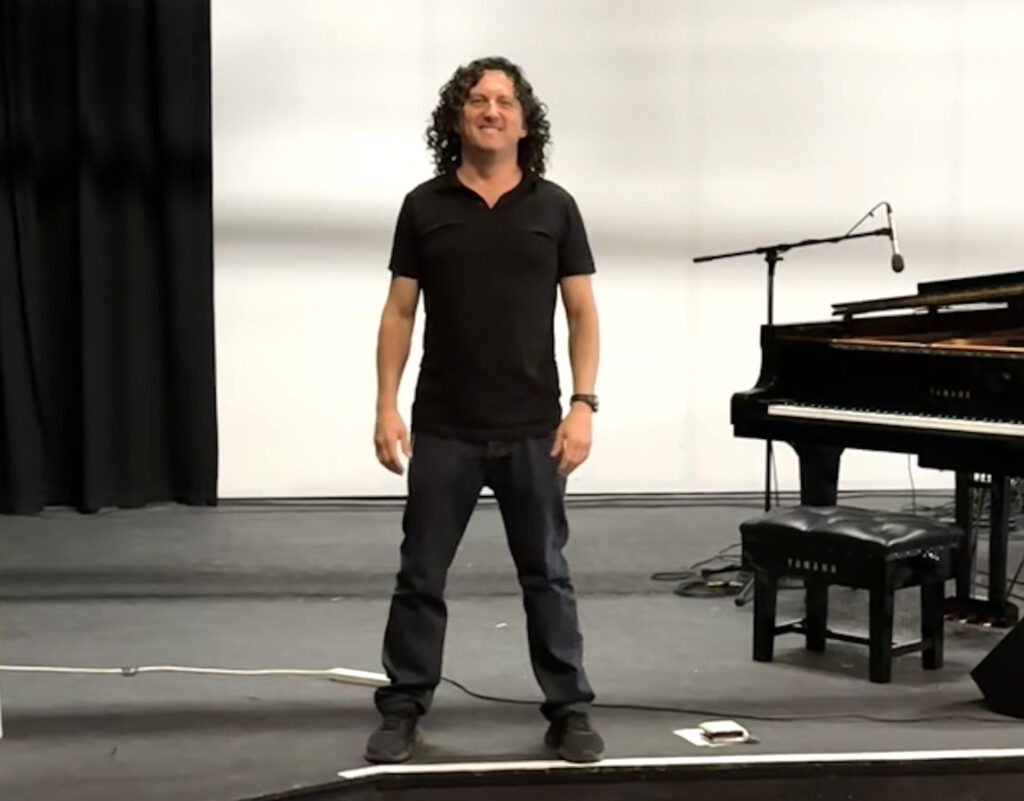
Marcus Freed has a remarkable ability to find the good in even the most traumatic experiences — including surviving a hit-and-run that left him hospitalized with a brain injury.
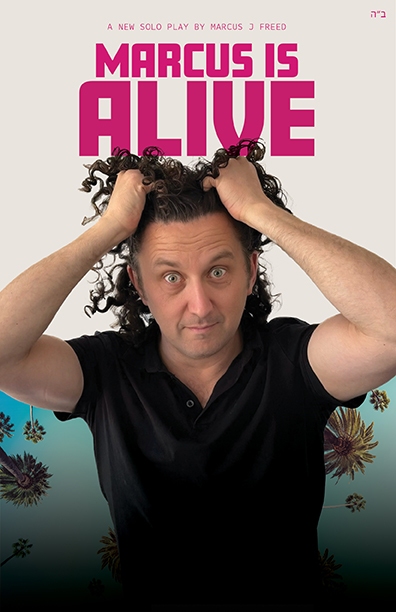
Seven-and-a-half years later, the British-born actor, educator and author recounts the ordeal in his one-man show, “Marcus is Alive,” now playing at The Hobgoblin Playhouse as part of the Hollywood Fringe Festival.

On Nov. 3, 2017, Freed was on his way to a Shabbat dinner when he was struck by a car on Olympic Blvd in Beverly Hills. The driver, who called himself Jonathan, vanished without offering any identification. Freed lost consciousness and woke up in Cedars-Sinai hospital, where he learned he had suffered a brain injury. Four days after surgery, he had a brain hemorrhage and underwent a second operation. His recovery took months.

While most would respond with anger or despair, Freed insists the experience was a blessing — which is a central theme in his play. Talking to The Jewish Journal, he explained how he reached that conclusion:

“As a result of the driver who hit me disappearing soon after the accident, it took on a profound journey to learn to release and forgive him. As a result of the miraculous crowdfunding campaign, it helped save my life and helped me stay in America because the medical and recovery bills were so massive.  I saw an outpouring of love that I never knew existed. It was almost as if I gone to my own funeral, seeing who would’ve come along and what they would’ve said.”

Freed said that because of the way everything happened, it profoundly changed the way he looks at life in terms of being in a state of continual gratitude.

“The doctors also said that what happened to me was a medical miracle — there are people who had less of an impact but ended up brain-damaged, or physically disabled for life in other ways or dead. So whatever happens, I feel like I have won in that sense.”

“The doctors said that what happened to me was a medical miracle — there are people who had less of an impact but ended up brain-damaged, or physically disabled for life in other ways or dead. So whatever happens, I feel like I have won in that sense.”

Before the accident, Freed was a busy actor, teacher and writer. He taught Kabbalah classes and authored several books, including “The Kosher Sutras: The Jewish Way in Yoga & Meditation” and “The Kabbalah Sutras: 49 Steps to Enlightenment.” He had also written, developed and performed his one-man shows in 18 countries, and acted in television, film, theater and corporate videos.

It took him years to return to the stage, yet he harbors no resentment over how abruptly his life was interrupted. After the events of Oct. 7 in Israel, he felt a deep need to help. Last September, he flew to Israel and assisted wounded soldiers across the country. The experience left him physically and emotionally drained, and he eventually returned to London.

“I felt a bump on the side of my head and felt a screw had gotten lose and fallen out,” he said. “I had to go and see a neurosurgeon in London and she found out I had actually two screws that had fallen out and were under the skin.”

After he had the screws tightened back in place, he went to recuperate at his parents’ house in London. His father was gravely ill, and the visit gave him the chance to spend precious time with him during the final months of his life, until his passing in January this year. Freed believes it’s all connected — had it not been for his accident, he may never have had that time with his father or the many blessings that followed, including the creation of his one-man play.

The show opened to a sell-out crowd on June 8.At the end of the show, a woman approached him and said that she herself was a victim of a hit and run which resulted in a spinal injury. She said that Freed perspective on the accident had helped her.

Others in the audience found the play deeply inspiring. Freed’s optimism and outlook on life — his ability to see the good in everything, even the difficult and painful moments — is both uplifting and contagious.

When asked whether he sees himself as lucky or unlucky because of the accident, Freed didn’t hesitate — he considers himself lucky.

“The Talmud teaches us that we should bless both the good and the bad, because ultimately everything is good. The Torah teaches that within every curse there is a blessing, and the more we are thankful for that blessing, the more the barucha [blessing] is revealed. Hamlet said, ‘Nothing is good or bad but thinking makes it so.’”

Billed as “Fleabag meets Fiddler on the Roof,” the play is a raw, witty and heartfelt account of Freed’s hit-and-run accident, two emergency brain surgeries, six failed marriage proposals, a psychic investigator and how he became a wayward rabbi. It ultimately asks the big questions: Why is Marcus still alive — and why are any of us here?

“Marcus Is Alive” will have two more performances in LA, on Sunday, June 22 and Thursday, June 26 at 7 p.m. Following his LA run, Freed will spend the summer in Scotland, performing at the Edinburgh Festival.

Performances of “Marcus is Alive” are at The Hobgoblin Playhouse, 6440 Santa Monica Blvd., For tickets, visit https://www.hollywoodfringe.org/projects/12051?tab=tickets, or call (323) 591-4849.

Marcus Freed Has a Loose Screw in His Head — And He Calls It a Blessing Read More »

“Chutzpah”: The Story of a Haredi, Queer Role Model

I was recently invited to give a talk, drawn from my book “Women of Valor,” about “off-the-derech” memoirs—stories of people, primarily women, who left their Orthodox Jewish communities and wrote about their experiences. I focused on the element of sexuality that comes to the fore in these memoirs. After the talk, two attendees approached me. She wore a turban, he a kippah. We debated the merits of the film adaptation of Naomi Alderman’s “Disobedience” and discussed Buttmitzvah, a queer Jewish club party held in London once a year (bless their hearts, they invited this middle-aged mom to join them next time around!). Mostly, they wanted to tell me how excited they were about a book I had mentioned in passing, one that was, in many ways, not so different from the off-the-derech memoirs I had been showcasing, but with a crucial difference. It was about a woman, a Haredi lesbian, who didn’t leave; she stayed. At the time, the memoir had not yet hit bookstores, but these two young, queer, Orthodox attendees couldn’t wait to read it.

The memoir is called “Chutzpah,” and the author is Yehudis Fletcher. I had known fragments of Fletcher’s life story before cracking open her memoir. She has been a speaker and an advocate. Years ago, I heard her give a talk at a Limmud festival, and later, I interviewed her about her organization, Nahamu, that she founded with Eve Sacks, the daughter-in-law of the former chief rabbi, to challenge extremism. But the various pieces came together in a memoir that covers much of her life, with a focus on two issues that proved to be challenges to the Haredi family and community in which she was raised, a community in which sexual matters are often silenced: that she was sexually abused, and that she is a lesbian.

Fletcher grew up in Glasgow, a city with a small Jewish and smaller Haredi community. Her father was a rabbi there. When her parents decided to uproot and move to Israel, she struggled to fit in. Alone, she was sent to a school in Manchester, where she boarded with a Haredi scholar named Todros Grynhaus and his family. At the age of 15, Fletcher was abused by Grynhaus. She was not his only victim. Years later, thanks to her testimony, he was imprisoned.

To say that Fletcher’s family was less than supportive when they became aware of the abuse she suffered, and later when she spoke to the police and in court, seems an understatement. Her family worried about her reputation (who would want her for a wife?). Her mother participated in the victim-blaming, asking why she hadn’t locked her door. Of course, a memoir is only one person’s version of history; perhaps her family members saw or remember it all differently. But a general lack of support for someone who fails to look the same, think the same, and act the same, and especially for one who speaks out, is a theme in the book. When Fletcher, after two failed marriages to men, came out as a lesbian, rejoicing in her first chosen romantic relationship, her family seemed to prefer estrangement to acceptance.

Fletcher’s desperate desire for her family’s love is hard to read. But over the course of the narrative she slowly transforms from a needy woman repeatedly struck down for not keeping to her place to a woman who comes to own her sexuality. She takes to the internet to find out about the world around her. She enrolls in a university program to educate herself. She fights to keep her children in Jewish schools. We see how she develops a voice and makes herself known. The reason the people who came to my talk were excited for her memoir is because she has, repeatedly, put herself out there. This memoir will continue that work, and, like many writers of off-the-derech narratives, Fletcher writes for those beyond her community, translating Jewish terms and explaining rituals. “The timing of the sabbath—shabbos, to us—is determined by dusk,” she says, for example, first proffering the “you” version, then the “us.”

Yet this is not an off-the-derech tale. “None of this has ever been about leaving Judaism behind,” she writes. When Fletcher says “G-d wasn’t a belief system, He was the rhythm to our home, our lives,” she is not only talking about her childhood. She still feels this way. Compare that to Shulem Deen, who poignantly wrote: “Losing your faith is not like realizing that you got an arithmetic problem wrong. It is more like discovering your entire mathematical system is flawed, that every calculation you’ve ever made was incorrect.” No matter that Fletcher discovers that she won’t suffer divine retribution for not ritually washing before a meal, or wearing pants, or singing, or driving (something women in her community are banned from doing). Over and over, Fletcher tells us: “My belief in G-d’s existence was never in question.” She adds, “In fact, it was because of my belief in Him that I worked so hard to find the truth behind all the rules that stood between us.” She concludes that many of the rules in Haredi culture are man-made, not dictated by God at all.

“G-d wasn’t a belief system, He was the rhythm to our home, our lives.”

Maureen Kender, a Jewish educator, once said, “I’m not threatening to leave. I’m threatening to stay.” It’s a philosophy that Rabbi Miriam Lorie, the UK’s first woman in an Orthodox rabbinic leadership role assumed as her own, and it’s one that Fletcher does, too. By staying, she might make those who are dedicated to their (man-made) rules angry; but for others, crucially, she is a role model.


Karen Skinazi, Ph.D. is Associate Professor of Literature and Culture and the director of Liberal Arts at the University of Bristol (UK) and the author of “Women of Valor: Orthodox Jewish Troll Fighters, Crime Writers, and Rock Stars in Contemporary Literature and Culture.”

“Chutzpah”: The Story of a Haredi, Queer Role Model Read More »

Israel Hits Iran Nuclear Facilities in Overnight Airstrikes

Israel launched a series of targeted airstrikes early Friday morning against military and nuclear facilities in Iran. The Israel Defense Forces (IDF) confirmed the attack was aimed at halting Tehran’s ability to develop a nuclear weapon and described the operation as a “preemptive and precise” strike. Iranian state media reports that Maj. Gen. Hossein Salami, the head of Islamic Revolutionary Guard Corps (IRGC) was killed, as well as two top nuclear scientists, Mohammad Mehdi Tehranchi and Fereydoun Abbasi. Civilian  casualties were also reported.

“We have struck at the heart of Iran’s nuclear enrichment and weaponization programs,” said Israel Prime Minister Benjamin Netanyahu. “We targeted Iran’s primary enrichment facility in Natanz. We also targeted leading nuclear scientists involved in Iran’s nuclear weapons project. Additionally, we struck at Iran’s ballistic missile program. Last year, Iran launched 300 ballistic missiles at Israel. Each missile carries a ton of explosives, threatening the lives of hundreds. Soon, those missiles could carry nuclear warheads, putting not hundreds, but millions at risk. Iran is preparing to produce tens of thousands of these missiles within three years.”

The Jerusalem Post reported that Israeli military officials said dozens of Israeli aircraft participated in the first wave of attacks, striking nuclear facilities, missile sites, command centers, and other strategic military targets across Iran. The IDF said Iran had recently reached a critical threshold, possessing enough enriched uranium to produce up to 15 nuclear weapons within days.

Just after 6:00 pm Pacific Time, IDF Spokesperson Brig. Gen. Effie Defrin issued a video statement on X:

“For years, the Iranian regime has called for the destruction of the state of Israel planning and advancing concrete military plans to do so. Over the past few months, intelligence has shown that Iran is closer than ever to obtaining a nuclear weapon. This morning, the IDF began preemptive and precise strikes, targeting the Iranian nuclear program in order to prevent the Iranian regime’s ability to build the nuclear bomb in the immediate time frame. We have no choice. We are operating against an imminent and existential threat. We cannot allow the Iranian regime to obtain a nuclear weapon that would be a danger to Israel and the entire world. This operation is for a right to exist here, for a future and for our children’s future. The state of Israel has the right and obligation to operate in order to protect its people, and will continue to do so. The IDF conducted significant preparations for this operation. We are well prepared, both in defense and offense, to defend ourselves. The IDF will continue to defend the state of Israel.”

We have no choice. We are operating against an imminent and existential threat. We cannot allow the Iranian regime to obtain a nuclear weapon that would be a danger to Israel and the entire world. This operation is for a right to exist here, for a future and for our children’s future.” – IDF Spokesperson Brig. Gen. Effie Defrin

As of publication, Iran has not yet launched a formal retaliation, but Israeli defense officials continue to warn of possible missile barrages or proxy strikes across the region.

The Wall Street Journal reported that Israeli Defense Minister Israel Katz declared a state of emergency across the country and warned of “an immediate threat” of missile and drone retaliation from Iran. Sirens and emergency phone alerts woke residents in Jerusalem just after 3 a.m. local time. Israel’s Home Front Command also banned educational activities, public gatherings and nonessential work.

The Islamic Republic News Agency confirmed hearing multiple explosions across Tehran, particularly in northeastern districts. Al Jazeera reported that between six to nine blasts were reported from various parts of the city.

Israel codenamed the operation “Rising Lion.”

“I assure the civilized world: we will not let the world’s most dangerous regime obtain the world’s most dangerous weapons,” Netanyahu said in an address.

Netanyahu added, “We defend our Arab neighbors, who have also suffered from Iran’s campaign of chaos and carnage. Our actions against Iran’s proxy Hezbollah led to the formation of a new government in Lebanon and the collapse of Assad’s murderous regime in Syria. The people of those nations now have a chance at a better future.”

U.S. President Trump said on Truth Social just before 2:30 p.m. Pacific time, “We remain committed to a Diplomatic Resolution to the Iran Nuclear Issue! My entire Administration has been directed to negotiate with Iran. They could be a Great Country, but they first must completely give up hopes of obtaining a Nuclear Weapon. Thank you for your attention to this matter!”

U.S. Secretary of State Marco Rubio insisted that the U.S. was not involved in strikes against Iran.

“Israel advised us that they believe this action was necessary for its self-defense,” Rubio said. “President Trump and the Administration have taken all necessary steps to protect our forces and remain in close contact with our regional partners. Let me be clear: Iran should not target U.S. interests or personnel.”

The U.S. State Department warned Americans in Israel and the broader Middle East to remain cautious and stay alert due to the “complex and rapidly changing” security environment.

Earlier this week, the International Atomic Energy Agency (IAEA), voted to declare that Iran “isn’t complying with its nuclear obligations.” Nineteen of the 35 member nations found Iran in violation, a first since 2005.  Last week, IAEA criticized Iran’s “general lack of co-operation” and said “it had enough uranium enriched to 60% purity, near weapons grade, to potentially make nine nuclear bombs.”

In response to the IAEA findings, the Iranian Foreign Ministry and the Atomic Energy Organization of Iran said in a statement, “The Islamic Republic of Iran has no choice but to respond to this political resolution.”

Prior to Israel’s airstrikes, U.S. Envoy Steve Witkoff was scheduled to meet with Iranian Foreign Minister Abbas Araghchi scheduled on Sunday in Muscat, Oman to discuss a nuclear proposal.

About 9,000 Jews are estimated to still be living in Iran.


This is a developing story.

Israel Hits Iran Nuclear Facilities in Overnight Airstrikes Read More »

Israel Launches Major Strike on Iran, Warns of Imminent Missile Threat

The Israeli Air Force has launched a large-scale preemptive strike on Iranian nuclear and military sites overnight, prompting emergency alerts across Israel. Sirens wailed in multiple regions as the IDF Home Front Command warned of a possible “heavy missile attack from the east” in the coming hours.

“All educational activities, public gatherings, and nonessential workplaces are to cease immediately,” the military announced, citing an emergency order. “The public is required to follow the guidelines published on the official Home Front Command channel.”

Tzvika Tessler, a senior Home Front Command official, told Channel 12 that Israel could face “a significant attack from the east,” adding that Iran possesses thousands of long-range missiles capable of reaching “anywhere in the country.” He stressed that “far-reaching warnings” will be issued as needed.

The attack comes as part of an Israeli military campaign targeting dozens of suspected Iranian nuclear facilities and other strategic sites. Defense Minister Israel Katz has declared a nationwide state of emergency.

While Iran has not yet launched a retaliatory strike, Israel’s leadership is bracing for a large-scale response. Air defense systems have been put on high alert, and emergency protocols are being activated across the country.

Israel Launches Major Strike on Iran, Warns of Imminent Missile Threat Read More »

Less Is More – A poem for Parsha Beha’alotcha

Moses cried out to God, saying, “Please, God, please heal her!” ~ Numbers 12:13

I always tell them less is more –
the poets at the microphone
the rabbis at their pulpits
the book writers with their
many, many pages.

I always tell them less is more –
though I wonder how that applies
to my bank account, my supply
of snack foods, my disappearing hair.

I always tell them less is more –
not in comedy, of course.
Extend the bit, into the ground.
My comedy lives in the ground
where jokes crawl like worms.

I always tell them less is more –
terms and conditions, white space
in design (have I told you my fantasy
of turning in a blank sheet of paper
and committing to it being
my finest work?)

I always tell them less is more –
but the tendency is to take up
all the given space, to fill it and
rush through it so every word
ever thought by people-kind
gets its due.

I always tell them less is more –
the simplest melodies fill up
the entire heart. Like Moses
who could have said the whole Torah
but instead gave four words –
please, God, heal her.

You’re not going to take me seriously
if this poem reaches a second page.
And Moses cried heal Miriam… Sometimes
the fewest words say the biggest things.


Rick Lupert, a poet, songleader and graphic designer, is the author of 29 books including “God Wrestler: A Poem for Every Torah Portion.” Visit him at www.JewishPoetry.net

Less Is More – A poem for Parsha Beha’alotcha Read More »

Jewish Democrats Will Bash Israel But Never Their Own Party

I hear it all the time from progressive Jewish critics of Israel: Self-criticism is a great Jewish value. It’s not just our right to criticize Israel, it’s our obligation!

No kidding. Of course self-criticism is a great virtue, Jewish or otherwise. How can we hope to grow without it?

My problem is that these proud, smug, self-righteous proponents of criticizing Israel seem to clam up when it comes to criticizing their political party. When their beloved Democrats mess up, these loyal comrades suddenly go silent. It’s as if they’ve morphed into those primal Zionists they love to caricature—you know, those “Israel can do no wrong” diehards who don’t have the guts to publicly bash their own side.

The main argument among Zionist diehards for holding one’s fire has been a reluctance to give ammunition to one’s enemies. Progressive Jewish critics of Israel scoff at that notion—self-criticism is too valuable, they argue, even if our enemies can use it against us.

But when the enemy is Donald Trump or Republicans, everything changes. Hypocrisy unleashes its foul stench: Well, you know, we may not like what our side is doing, but God forbid we should ever help those Republican bigots.

High-brow one moment, primitive the next.

Ask yourself: When is the last time you read an op-ed in a mainstream publication from a Jewish leftist activist, commentator or rabbi criticizing the Democratic party? You won’t find too many. And yet, these are the very same Jewish voices who routinely and with relish publicly bash Israel in the name of that great Jewish value of “self-criticism.”

When one of my Democratic Jewish friends expresses exasperation to stuff coming out of their party—like “defund the police,” open borders or the abandonment of the working class—I will occasionally ask them to write an op-ed for The Journal. I’m still waiting.

After all, why should they criticize their party in public and suffer the wrath of their comrades? That’s only good for Israel, when they never have to pay a price.

If they stopped being so blindly partisan, they’d realize that what their party needs right now is precisely some courageous self-criticism– you know, like the kind they routinely dish out for their Jewish state.

Their blindness is hurting their party, which is in deep trouble.

“Six months after President Trump swept the battleground states, the Democratic Party is still sifting through the wreckage,” Shane Goldmacher wrote recently in The New York Times. “Its standing has plunged to startling new lows — 27 percent approval in a recent NBC News poll, the weakest in surveys dating to 1990 — after a defeat that felt like both a political and cultural rejection.”

With President Trump on a power-grabbing rampage that is sucking up most of the media oxygen, it’s tempting for Dems to stay on easy street and bash Trump all day long. After all, any detour that would criticize their own party would only divert attention from their favorite blood sport: bashing the man who they believe is destroying democracy.

That narrow focus has made Dems lose sight of what they must do to regain power. Bashing Trump is not enough; Democrats can’t afford to become the party that only says no.

It’s one thing, for example, to condemn Trump’s heavy-handed use of federal troops to quell the anti-ICE unrests, but what are Democrats proposing as an alternative? Do they realize the country has moved closer to Republicans on the immigration issue? A CBS News poll conducted before the protests revealed that 54% of respondents approve of Trump’s deportation program.

Even after Trump sent federal troops to Los Angeles, Newsweek reported that the president “has notched a significant victory over Democrats, with polling showing him outperforming his rivals on one of the most contentious issues: immigration. On the broader question of trust, Republicans now lead Democrats on immigration by 6 points in CBS and CNN polling and 19 in the latest Ipsos survey.”

The country has moved since the peak woke days of the George Floyd protests, but the Democrats seem to be standing still as the party of the elites, the party of snobs. How will that put them back in the White House?

Nothing good can happen for Democrats until they do the honest and public soul-searching and self-accounting they abhor. Jewish Democrats who are so good at public self-criticism for Israel must do the same for their party.

If it’s a great Jewish value for Israel, why should it not be a great Jewish value for Democrats?

I’m waiting for the op-eds.

Jewish Democrats Will Bash Israel But Never Their Own Party Read More »

Molly Bloom and her Jealous Jewish Husband, Leopold

Had Molly ended her soliloquy not with a “yes”
but with a “maybe,” would she still have been as worthy
of our esteem, or would she thereby have become far less
heroic, doubting Thomasina, down-to-earthy?

Would Leopold have loved her more if she had never cheated,
exclaiming always “yes, yes!” whenever she would do so,
with love chains binding, while most amorously heated,
lovers with a spirit praised by Jean Jacques Rousseau?

I ask, post-scriptum, whether Molly was a quoter
of Numbers 5’s verse twenty-two two words, “amen, amen,”
repeated by the jealous husband’s wife who is a sotah,
banned by a priest foreshadowing Ulysses’s literary laymen.

Concerning whether Joyce was as aware of the connection
in Ulysses of Molly to the sotah here’s my daring guess:
one reason not to deny it was deliberate is the detection
in it of many Hebrew texts, suggesting yes, yes, yes, yes.


Leopold Bloom is obsessed with jealousy regarding his wife Molly, who he is sure is going to commit adultery with her lover, Blazes Boylan.
This obsession makes Molly a sotah, like the one described in Numbers whose words are blotted out.  Num. 5:22-23 states:

כב  וּבָאוּ הַמַּיִם הַמְאָרְרִים הָאֵלֶּה, בְּמֵעַיִךְ, לַצְבּוֹת בֶּטֶן, וְלַנְפִּל יָרֵךְ; וְאָמְרָה הָאִשָּׁה, אָמֵן אָמֵן. 22 and this water that causeth the curse shall go into thy bowels, and make thy belly to swell, and thy thigh to fall away’; and the woman shall say: ‘Amen, Amen.’.

כג  וְכָתַב אֶת-הָאָלֹת הָאֵלֶּה, הַכֹּהֵן–בַּסֵּפֶר; וּמָחָה, אֶל-מֵי הַמָּרִים. 23 And the priest shall write these curses in a scroll, and he shall blot them out into the water of bitterness. .

These curses must be erased in bitter waters, foreshadowing for Joyce not only the bitterness of Leopold Bloom but of James Joyce himself, who, like the sotah, was for a time forced to swallow his story when it was banned as being impermissibly pornographic.

Bloom’s wife Molly Bloom resembles an ecstatic sotah in Numbers 5. Molly’s last, repeated, final words “yes…yes…” echo the sotah’s repeated “amen, amen,” creating for “Ulysses” an inclusion, since the book begins, as James Lichtenberg points out in a letter in the 7/1/22 TLS, with a famous thematic scene in Dublin’s Martello tower. There, Buck (“Baruch”) Mulligan, performs a blasphemous “shaving” mass.  Like Satan, he mocks God, or here, religion. The Baruch to whom Joyce alludes is, of course, the excommunicated Baruch Spinoza. It can be noted that baruch is the first word of any blessing in Hebrew: “Blessed be …” while each blessing ends with “amen.”

Meanwhile, Bloom’s suspicious obsession is analogous to the charge that the husband of the sotah makes about his wife, which leads to a command that he write his curses on a document (Num. 5:22-23).

Ironically, Sotah 9:9 states that Rabbi Yohanan ben Zakai abolished the sotah ritual:

. מִשֶּׁרַבּוּ הַמְנָאֲפִים, פָּסְקוּ הַמַּיִם הַמָּרִים, וְרַבָּן יוֹחָנָן בֶּן זַכַּאי הִפְסִיקָן, שֶׁנֶּאֱמַר (הושע ד) לֹא אֶפְקוֹד עַל בְּנוֹתֵיכֶם כִּי תִזְנֶינָה וְעַל כַּלּוֹתֵיכֶם כִּי תְנָאַפְנָה כִּי הֵם וְגוֹ’.:
From the time when adulterers proliferated, the performance of the ritual of the bitter waters was nullified; they would not administer the bitter waters to the sota. And it was Rabbi Yoḥanan ben Zakkai who nullified it, as it is stated: “I will not punish your daughters when they commit harlotry, nor your daughters-in-law when they commit adultery; for they consort with lewd women” (Hosea 4:14), meaning that when the husbands are adulterers, the wives are not punished for their own adultery.

Bloom himself was hardly pure, either as a Jew or a husband.

The book of “Ulysses” begins with the static word “stately,” beginning with the letter “s”, and ends with the steamy sounds of “s” in “yes”, used more than 80 times in the final chapter and three at the very end.  This provides an inclusion for the entire book of “Ulysses,” with the repetition of “yes” by Molly in the final chapter of “Ulysses” corroborating Leopold Bloom’s suspicion and also suggesting the end of any blessing’s words “amen, amen” repeated twice by the sotah in Num. 5:23.

The character of Leopold Bloom was inspired by a lapsed-Jewish Triestine friend of James Joyce, an industrialist called Italo Svevo whose original name was Aron Hector Schmitz.   He was a highly esteemed writer whose statue graces the city of Trieste.

Endnote corroborated, Gershon and Linda Hepner.


Gershon Hepner is a poet who has written over 25,000 poems on subjects ranging from music to literature, politics to Torah. He grew up in England and moved to Los Angeles in 1976. Using his varied interests and experiences, he has authored dozens of papers in medical and academic journals, and authored “Legal Friction: Law, Narrative, and Identity Politics in Biblical Israel.” He can be reached at gershonhepner@gmail.com.

Molly Bloom and her Jealous Jewish Husband, Leopold Read More »

”There Shall be One Law for the Citizen and the Stranger”

Dear all,

With the demonstrations and protests shaking the core of Los Angeles, I have been thinking deeply about a value in Judaism that appears four times in Torah:

1) “There shall be one law for the native and for the stranger that lives among you” (Exodus 12:49)

2) “You shall have one law for the foreigner and for the native born” (Leviticus 24:22)

3) “There shall be one law for you, whether stranger or citizen of the country” (Numbers 9:14).

4) “There shall be one law for you and for the resident stranger … You and the stranger shall be alike before Adonai.” (Numbers 15;15).

Unfortunately, we are witnessing the opposite:

Fear.
Terror.
Uncertainty.
Callousness.

I am not anti ICE.

But let’s be clear: this is not an issue about immigration controls.

This is about instilling fear in so many families across our region and across our country. This is about masked officers taking away people in unmarked vehicles. This is about intimidating the elderly and the sick. This is not about safety and security.

The Board of Rabbis of Southern California (representing Reform, Conservative, Reconstructionist, Orthodox, and other denominations of Judaism) created an incredible statement (linked here) with the following message:

“The Board of Rabbis of Southern California stands with all those striving to create a peaceful and compassionate society. Together, we pray for peace and civility in our civic institutions and across Los Angeles. May the One who makes peace in the heavens help us to restore peace to our beloved city.”

Together – citizen and visitor, card holders and undocumented – we join at this moment in time to act with peace, demand better of our country, and restore civility in our region.

With love and shalom,

Rabbi Zach Shapiro

”There Shall be One Law for the Citizen and the Stranger” Read More »

A Bisl Torah — Raising Mensches

Our middle son just graduated elementary school. Whether we are watching high schoolers go to college, sitting at weddings, experiencing the birth of grandchildren or nieces and nephews, or witnessing our own milestones,  many of us are going through ceremonies and additionally, reflection.

The lyrics of Fiddler on the Roof’s “Sunrise Sunset” pulls on our hearts:

Is this the little girl I carried?
Is this the little boy at play?
I don’t remember growing older
When did they?

When did she get to be a beauty?
When did he grow to be so tall?
Wasn’t it yesterday that they were small?

Sunrise, sunset
Sunrise, sunset
Swiftly flow the days
Seedlings turn overnight to sunflowers
Blossoming even as they gaze

While we may not be able to pinpoint exactly when our children grew older, we can take this moment to remind ourselves that mensches develop when we choose to instill particular values. And that development is one that continues no matter our age. Micah 6:8 reads, “You have been told, O mortal, what is good, and what God requires of you: Only to do justice, and to love goodness, and to walk modestly with your God.”

According to the prophet, seedlings have a better chance to turn into sunflowers when they are taught how to be courageous, speak out when needed, be a messenger of loving-kindness and ultimately, sow seeds of faith.

As we transition from and to major milestones—for ourselves and for our children, let us not forget the human beings we hope to become and the human beings we are trying to raise. God expects much from creation; may we expect the same from ourselves.

And perhaps, even a little more.

Shabbat Shalom


Rabbi Nicole Guzik is senior rabbi at Sinai Temple. She can be reached at her Facebook page at Rabbi Nicole Guzik or on Instagram @rabbiguzik. For more writings, visit Rabbi Guzik’s blog section from Sinai Temple’s website.

A Bisl Torah — Raising Mensches Read More »

Print Issue: Are Progressives Being Manipulated Into Hating Jews? | June 13, 2025

CLICK HERE FOR FULLSCREEN VERSION

Print Issue: Are Progressives Being Manipulated Into Hating Jews? | June 13, 2025 Read More »