fbpx

March 19, 2025

Remi Haik: Self-Care, A Three-Second Solution and Tahini and Date Bliss Balls

Nutrition coach and naturopath Remi Haik believes that self-care is the key to healthy living.

Haik grew up in the 1990s, when fashion TV arrived and the beauty standard was women needed to be skinny.

“It led me into a cycle of a lot of crazy diets,” Haik told the Journal. “It led me down a path of not liking my body.”

Haik struggled for many years before creating a healthy relationship with food, something that developed over time.

“When I stopped focusing on the food and started focusing on self-love,” she said it made all the difference. “Once I started to feel so good with myself, accepting myself, validating my own self, I noticed that … food is not that big of a deal.”

She added, “I can eat a cake, I can eat a cookie, I can eat whatever I want, and … I still love myself.”

Haik grew up in Israel, where, she said, the kitchen was the most loving room in the house.

“It’s some sort of love language to feed our loved ones: to cook food and to eat together,” she said. “Not only [do] we share this experience, but we also are giving and receiving [food].”

One of her favorite recipes is energy tahini and dates balls. That recipe is below. They’re simple to make – perfect for busy people – and give you a burst of energy when you need it. But there’s another reason Haik loves them.

“I teach seminars that are rooted in Jewish ancient wisdom, and I feel like the more I teach …  I feel more connected,” she said. “Dates, for example, are a very well known food in the Middle East … so, whenever I eat dates [and also hummus], I feel … I feel like I’m back home;  I feel connected to that identity.”

Since Haik believes self-care leads to a healthy life, she suggests finding one or two things to do each day that make you feel rejuvenated.

For instance, Haik wakes up before her husband, so she has time for herself to meditate and journal in the morning.

“It’s a time that just fuels me up,” she said. “I see a difference on days that I don’t do that.”

Other things you can do is go out for a 10-minute walk or simply take your time when doing a routine like putting on makeup.

“When you’re getting ready,  don’t do it in a rush,” she said. “If it makes you feel good,  take your time, enjoy it, give it, give it back to yourself.”

While many people have trouble putting their own needs first, it’s an essential step.

“As human beings, we love each other and we want to help other people,” she said. “However, these people will not be taken care of if you’re not going to take care of yourself. … We were brought up to think that self care is selfish, which is the complete opposite.”

If you are stressed during the day and need a quick reset, Haik says all you have to do is breathe.

“Literally stop for three seconds, whatever you’re doing, and breathe,” she said. “If you want, you can put one hand on your chest – on your heart – [and] one hand on your stomach … inhale, exhale.”

Doing this, even for a few seconds, reduces your stress hormones. You will immediately start feeling calmer.

“When I started implementing these things, I had reminders on my phone … three times a day  it said, ‘breathe,’” Haik said. She continued the reminders until it became a habit.

Something else to do regularly, whether it’s once a day or once a week, is take a moment to think about how you’re feeling while eating. You can even invite the people in your life to join you in this practice.

“A lot of the time, when we’re going on a journey like that, [the] people [in our lives] have no idea what we’re doing,” Haik said.  “All of a sudden, [if] I’m just sitting, looking at my food, it might be a little strange to my husband.”

Instead, she gives him a heads up, and invites him to join her.

Both of us will benefit from that and it’s easier to implement,” Haik said.

Learn more at RemiHaik.com and follow @remihaik on Instagram.

For the full conversation, go to JewishJournal.com/podcasts, and check out the latest episode of Taste Buds with Deb.

For the full conversation, listen to the podcast:

Watch the interview:

Tahini and Date Bliss Balls

from Remi Haik Weinberg

A no-bake, high-energy snack inspired by Jewish wisdom—sweet, nourishing, and full of purpose!

Ingredients

1 cup pitted Medjool dates (soft and juicy)

½ cup tahini (sesame paste)

½ cup almonds or walnuts (or a mix, finely chopped or blended)

¼ cup shredded coconut (unsweetened) + extra for rolling

1 tsp cinnamon (symbolizing warmth & tradition)

½ tsp cardamom (optional, but adds depth & a Middle Eastern touch)

1 tsp vanilla extract (optional for sweetness)

Pinch of sea salt (to balance flavors)

Instructions

Soften the dates – If they’re not soft, soak them in warm water for 10 minutes, then drain.

Blend – In a food processor, blend dates, tahini, and nuts until a sticky dough forms. 

Add flavors – Mix in cinnamon, cardamom, vanilla, and salt. Blend again until smooth.

Shape – Roll the mixture into small balls (about 1 inch in diameter).

Coat – Roll in shredded coconut for texture and extra flavor.

Chill – Refrigerate for at least 30 minutes to firm up.

Enjoy! A perfect pre-workout snack, afternoon energy boost or Shabbat treat.

Storage: Keep in an airtight container in the fridge for up to a week or freeze for longer.


Debra Eckerling is a writer for the Jewish Journal and the host of “Taste Buds with Deb.Subscribe on YouTube or your favorite podcast platform. Email Debra: tastebuds@jewishjournal.com.

Remi Haik: Self-Care, A Three-Second Solution and Tahini and Date Bliss Balls Read More »

Campus Watch March 19, 2025

DOJ: Brown University Prof Deported After Attending Hezbollah Leader’s Funeral

The Department of Justice claimed that a recently deported assistant professor at Brown University’s medical school had attended Hezbollah leader Hassan Nasrallah’s funeral and had photos and videos on her phone that were sympathetic toward top Hezbollah leaders.

According to Politico, which obtained a court filing, Rasha Alawieh, 34, admitted to attending Nasrallah’s funeral and that she admired him from a religious standpoint, not a political one. Alawieh also purportedly had a picture of Iranian Supreme Leader Ayatollah Ali Khamenei on her phone; she told immigration officers that too was because of his religious teachings, not politics. A federal judge demanded that she stay until a hearing on March 17, but she was already deported to Lebanon; the government claimed that they were not aware of the order, reported CBS News. The hearing was postponed after Alawieh’s attorneys withdrew from the case and she now has a new legal team.

The Department of Homeland Security announced in a March 17 post on X, “A visa is a privilege not a right—glorifying and supporting terrorists who kill Americans is grounds for visa issuance to be denied. This is commonsense security.”

“Free Palestine” Graffiti on UMich Provost’s Home

University of Michigan Provost Laurie McCauley’s house was vandalized with graffiti stating “Free Palestine” over the weekend.

The Detroit Free Press reported that “Divest” and “No Honor in Genocide” were also spray-painted on McCauley’s house and that an object was thrown into a window. No one was injured. Police believe the vandalism likely occurred sometime between 9 pm March 15 and 8 am March 16. Police are investigating the incident and the university is assisting in the investigation.

Columbia Expels, Suspends Students Involved in Occupation of Hamilton Hall

Columbia University announced on March 13 that myriad students have been suspended and expelled from campus after occupying Hamilton Hall in April 2024.

The sanctions, according to the university’s announcement, includes “multi-year suspensions, temporary degree revocations, and expulsions.” The university did not specify how many students were sanctioned; The College Fix noted that some reports state that 22 students were sanctioned. “Columbia is committed to enforcing the University’s Rules and Policies and improving our disciplinary processes,” the announcement concluded.

As previously reported in Campus Watch, anti-Israel protesters broke windows, barricaded the doors with tables and unfurled signs saying “intifada” and “Gaza Calls, Columbia Falls” in response to the university suspending students in the encampment who refused to obey dispersal orders. A facilities worker claimed the protesters held him hostage inside the building.

Columbia Hillel Executive Director Brian Cohen said in a statement that the university’s sanctions against the students are “an important first step in righting the wrongs of the past year and a half.”

Columbia Student’s Visa Revoked

The Department of Homeland Security (DHS) announced on March 14 that it has revoked the visa for Columbia University student Ranjani Srinivasan on the ground that she supports Hamas.

According to DHS, Srinivasan is a citizen of India and had been in the United States on an F-1 student visa as a doctoral student at Columbia, studying Urban Planning. “Srinivasan was involved in activities supporting Hamas, a terrorist organization,” DHS said. “The Department of Homeland Security has obtained video footage of her using the CBP [Customs and Border Patrol] Home App to self-deport on March 11.” According to the Washington Free Beacon, the app is “the Trump administration’s newly transformed version of the Biden-era ‘CBP One’ app that aims to streamline the self-deportation of illegal immigrants.”

“It is a privilege to be granted a visa to live and study in the United States of America. When you advocate for violence and terrorism that privilege should be revoked, and you should not be in this country,” DHS Secretary Kristi Noem said in a statement. “I am glad to see one of the Columbia University terrorist sympathizers use the CBP Home app to self-deport.”

Though DHS did not specify Srinivasan’s activities that allegedly supported Hamas, the Free Beacon noted that Srinivasan signed a Dec. 2023 letter called “Palestinian Liberation Is Our Collective Liberation” that stated in part: “Our heartbreak and sense of professional responsibility compel us to speak plainly about genocide as we see it unfolding. We grieve the loss of lives in Palestine and Israel, which impacts all caught in the present cycle of settler colonial violence perpetrated by the governments of Israel, the United States, and many other powers at a distance. Our solidarity with the anticolonial liberation movement in Palestine is consistent with our solidarity with all those who experience racism, particularly structural racism.”

Campus Watch March 19, 2025 Read More »

To Build and to Be Built: Crafting Resilience After the Fires

When Beth Abrams lost her Pacific Palisades home of 20 years in the Palisades fire, she lost the things that reflect her “journey through life,” she says. Gone are irreplaceable heirlooms, family photos, her father’s tallis, a kiddush cup gifted to Abrams at her bat mitzvah, and the priceless Judaica her children crafted in preschool. A committed knitter, Abrams also lost her collection of luxurious yarns and 25 years of painstakingly handknit creations. What’s more, among the ashes lies the last pieces of childhood art linking Beth to the memory of her son Jackson, who died from brain cancer when he was just 8 years old. Abrams is tired of hearing well-meaning people say “they’re just things.” 

Nevertheless, Abrams and her family, like so many who were displaced and devastated by their losses, are glad to be alive, and a number of them are crafting paths forward in a deeply Jewish way: through their art.

Knitting her life together again

Abrams, a Pacific Palisades native and avid knitter, is among this group. “Knitting has always served so many purposes for me,” she says. She first set out to master the skill after the loss of her son, Jackson, to cancer in 2008. “It’s a coping mechanism, a type of meditation, and a way to satisfy the creative part of my brain,” she explains. The best friend who taught Abrams the craft continues to be a beacon of hope. “She came to my rescue after the fire, bringing me so many clothes and knitting supplies,” Abrams says. 

In the wake of this new tragedy, Abrams has once again found solace in pairs of needles and balls of wool.  “It is a way of starting to get some normalcy back in my life — it’s comforting, no matter where I am. One of the first things I did after the fire was accept a lovely gift from a company called Clinton Hill Cashmere. Its owner sent me everything I needed to make a sweater. I didn’t start the project until a couple of weeks after the fire, but once I did, the familiarity made me feel a lot better. And other yarn shops in the area have also offered discounts and presents,” she says. The various knitting communities to which Abrams belongs have buoyed her spirits as well. “People I know and even those I didn’t have reached out with words of comfort and so many generous gifts. I was blown away by the support,” she says. 

Community-wide caring

Abrams is painfully aware that the inferno impacted countless people besides her family. “The fires wiped out other homes, schools, the gas stations, the grocery store — everything,” she says. She points to small businesses in the wider community that have also been generous with donations. Zibby Owens, owner of Zibby’s Bookshop, opened her Santa Monica store to distribute donations to those in need, and has started a campaign to rebuild four school libraries in Pacific Palisades. Artisan-based gift shop JHome, founded by Chabad of Malibu in December 2020, has turned an adjacent space into a “free store” where evacuees and those who lost their homes can come and get necessities at no cost. 

Michelle Geft, an artisan and educator who creates jewelry and educational resources for JHome, feels even more strongly connected with the store and her crafting following the fires. “From the moment JHome first opened, my work has had a place on its shelves, and it’s been an honor to be part of its journey. It is such a blessing to have a platform to share my creative outlets,” she says. Geft often incorporates a line from the Torah or Hebrew words in her jewelry, as a way of expressing her faith and giving her a feeling of connection to her community, “offering comfort and strength amid uncertainty.”

Geft, like Abrams, was affected by the disaster, although thankfully to a lesser extent. “The fires forced us to evacuate our home for two weeks. We were fortunate that our neighborhood was ultimately spared, but even after we were allowed to return, we remained without power for quite some time. It was an incredibly stressful and uncertain period,” she said. Much as Abrams turned to knitting to regain her Zen, Geft has found resilience in her jewelry-making and calligraphy. “I made sure to take some of my jewelry with me so I could continue working, even while displaced,” she recalls, and credits making art with helping her ”to relax and stay grounded during challenging times.” She looks forward to the thrill of seeing people buy her wares again soon. “There’s a special kind of joy in watching someone pick up a piece of jewelry or an educational resource I’ve created, and seeing their face light up with recognition or appreciation,” she says. 

The designer of JHome, Limor Pinz, experienced her own ordeal during the wildfires. An accomplished ceramicist, she almost lost her home and studio, both of which were situated just 40 feet from the fire line. Miraculously, however, they were spared. “This was a very traumatizing and stressful time for some of my friends and our community,” she says. And yet, her crafting continues to bring her joy, and she has used her works to spark some happiness in those who have lost so much: She has donated some Judaica items to a friend who lost everything. “My fellow artists have been affected by the fire to different degrees,” she says. “They’re giving back to the community in every way possible.” 

These stories of resilience are built upon deep Jewish roots, calling to mind the words of the late Rabbi Lord Jonathan Sacks, of blessed memory who wrote, 

“The early Zionists had a phrase: Livnot U’Lehibanot. To build and to be built.  The more you build the stronger you become – the more you yourself are built.” 


Tanya Singer leads Beautifully Jewish, a creative community that celebrates and enriches Jewish life. She also runs the Simchat Torah Challenge, a Jewish communal project inspiring thousands to read the weekly Torah portion. Singer has written for Tablet Magazine, Jewish Telegraphic Agency, The New York Post, Vogue Knitting Magazine, , Modern Daily Knitting  and Kveller.

To Build and to Be Built: Crafting Resilience After the Fires Read More »

Dara Horn’s Unexpected Passover Guide

The author of “People Love Dead Jews” is a big fan of a deceased goat. 

Dara Horn, the acclaimed novelist whose provocatively titled nonfiction collection of essays was the timeliest book of the last five years, is back, this time with lighter fare. 

“One Little Goat,” released under the Norton Young Readers imprint, is a whimsical and surrealist graphic novel featuring the hero of everyone’s favorite capstone ditty at the Passover seder, Cha Gadya. Spoiler alert — though the animal dies in the song’s second stanza (it was the cat who did it), the story, illustrated in retro R. Crumb-style black-and-white by Theo Ellsworth, finds him very much alive.

Horn has often spoken at public events about the extensively elaborate seders she cultivates in her family’s home, well beyond your typical Ten Plagues finger puppets. No wonder that “One Little Goat” is a treasure-trove of humor and history reflective of a gifted storyteller with a Harvard PhD, who’s also a mom who knows how to keep children from dozing off as the seder night drags on.

Fittingly, the tale begins with the narrator, a young boy, quipping “If you’ve ever been to a Passover seder you know that they feel like they last forever.” Cut to a second panel where a cobwebbed skeleton with overgrown hair continues “… but you are stuck at that table for a very long time.”

After all, before dinner is even served, attendees debate and discuss “a hundred-page, thousand-year-old book about something that happened 3,000 years ago” (as a tagline for the Haggadah, one would be hard-pressed to top that. Though from a marketing perspective, it lacks pizzazz).

To keep the kids awake, of course, countless parents remind their youngsters that if they stay up until the end of the proceedings and find the afikomen, that broken piece of matzah, they get a prize and the festive meal can finally conclude. Alas, the boy gets stuck at a literally endless seder with his multigenerational family after his baby sister chucks the afikomen into a black hole somewhere in the space-time continuum before anyone can stop her. So the characters fast forward as the inescapable seder slogs interminably. Beards lengthen exponentially and just-announced pregnancies are at full term by the next panel.

Thankfully a cheap goat — bought for the low, low price of two zuzim — shows up, and offers to help our hero rescue the missing half-slice. He takes the young man and the reader on a journey through Festivals of Freedom observed through the vagaries of Jewish history, teaching about the holiday’s rituals and eternal relevance all along the way. 

There’s the celebration, if one can call it that, in a hidden basement in the Warsaw Ghetto in 1943.

There’s Passover in Minsk in 1981, where one character helpfully notes “Jewish holidays were actually illegal there” — to which the hero can’t help reply, “Seriously?”

In 1990 New York, a Mohawked aunt proclaims, “Modern slavery is corporate greed!” 

The goat-guided tour then goes backwards, stopping for a quick visit but every few centuries. In Vienna in 1896, a man named Sigmund’s absence at the holiday table is noted by his mother (“he never calls, he never writes…”). The medieval illustrated Haggadah manuscript known as the “Bird’s Head Haggadah” makes an appearance, as does the 16th-century Portuguese Jewish philanthropist Doña Gracia Nasi and the Talmudic sages Rav and Shmuel. And of course, there’s Invisible Immortal Prophet Elijah lending a helpful hand as the tale nears its conclusion — and the scolding great-grandmother telling everyone else they’re “doing it all wrong.”

Throughout the pages of “One Little Goat,” Passover’s timeless resonance is powerfully conveyed — after all, we are still fighting the pharaohs of our age.  

The holiday’s profound spiritual messages are movingly articulated by the comic book’s many characters in ways that will engage both those who have never before attended a seder and those of traditional observance.

The holiday’s profound spiritual messages are movingly articulated by the comic book’s many characters in ways that will engage both those who have never before attended a seder and those of traditional observance. In the end, readers will be left searching not for a missing bit of matzah but with a hunger for further exploration of the miracle that is Jewish history as a whole. As Don Isaac Abarbanel tells his unexpected visitors, “There’s room for everyone in this story. Let all who are hungry come and eat.”


Rabbi Dr. Stuart Halpern is Senior Adviser to the Provost of Yeshiva University and Deputy Director of Y.U.’s Straus Center for Torah and Western Thought. His books include “The Promise of Liberty: A Passover Haggada,” which examines the Exodus story’s impact on the United States, “Esther in America,” “Gleanings: Reflections on Ruth” and “Proclaim Liberty Throughout the Land: The Hebrew Bible in the United States.”

Dara Horn’s Unexpected Passover Guide Read More »

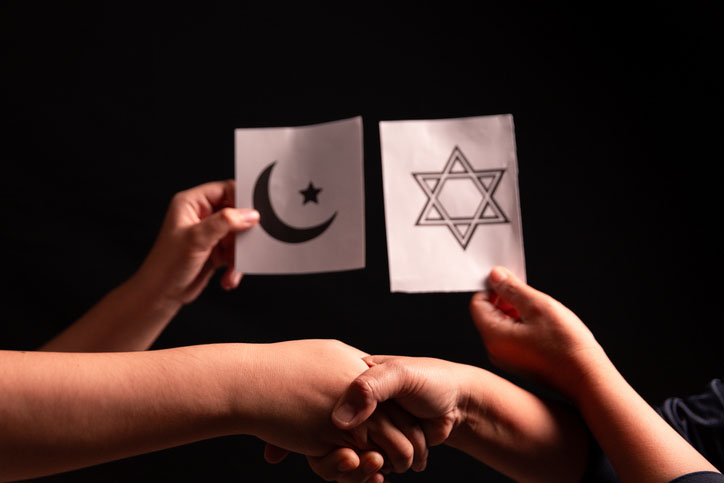
Pious Muslims and Orthodox Jews Have Much in Common

Imagine ancient history. 

The time is Oct. 6, 2023, and someone has come forward with a book in which two highly trained and distinguished sociologists, one an Orthodox Jew and the other an observant Muslim, explore how both of these traditions navigated their engagement with American culture and civilization. And the more they explain their own community, the more they and their readers can see both the parallels and the differences, the pace of the immigrant experience, the nature of leadership, and the reality of daily life in American society for observant Muslims and observant Jews. Undistracted by politics – remember pre-Oct. 7, 2023 — they are speaking to each other, learning from one another, and yet each remaining faithful to his own tradition.

Long the leading sociologist of Orthodox Judaism, Samuel Heilman, a distinguished professor emeritus at the CUNY Graduate Center and his younger colleague Muchait Bilici, an associate professor the CUNY Graduate Center have done just that. Each writes unapologetically, with pride and understanding of their own community, at home with its customs, well learned in its ways, believers in its teachings, and deeply enmeshed in its traditions. They are not seeking to convert the other. They are not playing a game of one-upmanship. They are who they are, and through engagement have come to see that they share much in common.

As they explore what it is like to be an Orthodox Jew and an observant Muslim in America, they explain their own tradition in a language that makes members of the other religious tradition capable of understanding the other so the book serves as a wonderful introduction to Muslims of what it means to be an Orthodox Jew and to Orthodox — and many non-Orthodox Jews fully at home in Jewish tradition such as this reviewer —  of what it means to be an observant Muslim in the United States.

The question is not the quality of what they wrote. Their writing is fluid, traditions are explained in terms that are nuanced, they deftly bridge between “insider language” and “outsider languages.”

The question is whether at this moment when the events of contemporary history are tearing us apart, at a time when the barricades are drawn and we want to build the walls higher, whether we can read what draws us together. Though they command the social scientific languages of sociologists, they don’t indulge in or lose the reader in technical jargon.

The arrangement of the work is clear. The chapter titles tell it all. Heilman writes first, his younger colleague second. Law: Halacha and Sharia; Diet: Kosher and Halal; Identity: Yarmulke and Hijab; Preachers; rabbi and imam; Study: Yeshiva and Madrasa; Prayer: Synagogue and Mosque; Prejudice: Antisemitism, and Islamophobia. The conclusion: family resemblances yet, as we know from Cain and Abel and the book of Genesis onwards, as all of us who live in families know there are tensions within the family that have to be negotiated.

Let’s pay attention to some parallels. The reader may choose to insert synagogue or mosque, Imam or Rabbi:

Immigration to the United States was opposed by traditional ______ overseas as a threat to religious observances. Freedom of religion, hallmark of the American experience, threatened the power of the ______.

 Many small _______ operate without a ______ relying on volunteers.

Most _______ were originally trained in the immigrant’s native land but as the immigrant generation increasingly made America  their home, they wanted locally trained _______ fluent in English as their native tongue fearing that the foreign-born _______ could not speak to the American- born generation. 

The participation of women in leadership has made considerable inroads in the life of the ______. Women are clamoring and whether the ________ like it or not they are succeeding in their efforts for greater participation.

Women leading services in -________ for the first time was a revolution. Will it or when will it become commonplace in the _______?

Women as _______ was a revolution. Will it too become commonplace?

There are clear differences. Orthodox Jewish men wear yarmulke visible to all. The type of yarmulke they wear speaks volumes about who they are to insiders. When I was studying at the most liberal Orthodox yeshiva on New York’s prestigious Upper East Side in the early 1960s we were taught the yalmulke was “an indoor garment. Hats were to be worn outdoors. That changed within the decade. Part of the freedom and security that Jews enjoyed beginning in the 1960s was the comfort in wearing the yarmulke outside instead of a hat. Many are now wondering if for safety’s sake they should again return to a hat.

For observant Muslims, it is the woman’s head cover, the hijab, that marks her identity as an observant Muslim. The type of hijab signifies much to the insider, much less to those unfamiliar with Muslim identity. Both Orthodox Jewish women and observant Muslim women have expectations of modesty. The degree of observance often reflects the nature of the modesty required.

Both communities face prejudice, antisemitism and Islamophobia are ripe and increasing. The more visible yarmulke-wearing Jewish man, especially with a beard and a kaftan, is more vulnerable than other Jews. So too, observant Muslim women, the more covered, the more they are subject to hate. Both are accused of dual loyalty, one of genocide, the other of terrorism.

“Following Similar Paths” allows Jews and Muslims to understand themselves and each other. It is a worthy contribution at any time, especially at this time. Its significance may well come to the fore at another time.


Michael Berenbaum is director of the Sigi Ziering Institute and a professor of Jewish Studies at American Jewish University.

Pious Muslims and Orthodox Jews Have Much in Common Read More »

Generations of Love and Loss in Zeeva Bukai’s “The Anatomy of Exile”

In 2014, Dorit Rabinyan, an established Israeli author, published a novel entitled “Gader Haya.” Well before the book was translated into over 20 languages, including in English as “All the Rivers” (2017), it gained international acclaim by being dramatically barred from the Israeli school curriculum. The Ministry of Education argued that “intimate relations between Jews and non-Jews”—specifically, the main characters of the novel are Israeli Jewish and Palestinian Muslim—“are seen by large portions of society as a threat on the separate identities.” For including a romantic relationship between a Palestinian and a Jew (a not uncommon theme in 1980s and ’90s Israeli cinema, incidentally), Rabinyan was called an enemy of the state and compared to Hamas. The backlash was immediate; people across Israel supported Rabinyan and soon players around the globe took up the gauntlet. Angela Merkel, Germany’s chancellor, even wrote her fan mail.

Like Rabinyan, Zeeva Bukai is interested in the star-crossed love between Palestinian Muslims and Israeli Jews. And like Rabinyan, Bukai often seems more critical of the “self” than the “other”: in both of their novels, the Palestinian men are almost too kind, too handsome, too sensitive to seem real. They are poets, artists, dreamers. But Bukai is so invested in imagining the impact of the Palestinian-Israeli conflict within the domestic confines of a romantic relationship, she tells the story twice in her beautifully written, riveting debut novel, “The Anatomy of Exile.” Each version of this story has elements of Rabinyan’s: One has a similarly tragic end (I won’t spoil it), and the other asks if the conflict is relevant in the melting pot of America.

To be clear, though, Bukai is not merely repeating Rabinyan’s formula. While using romance allows her to investigate issues of identity, nationality, religion and ethnicity, and to challenge Jewish readers to think about their prejudices against Palestinians and Muslims, it is not the only tool in Bukai’s box. In fact, Bukai’s greatest skill lies in her ability to probe the inner life of her protagonist, Tamar, and Tamar’s marriage to Salim. Tamar is the center of her family and the center of the novel. She is a character I felt I knew well, perhaps, in part, because I saw my mother in her. Like Salim, my Mizrahi father seemed to make many of our family’s decisions unilaterally, worked too hard, and had a bad temper. And like Tamar, my Ashkenazi mother, daughter of Polish parents, tried to please and smooth over, to make nice. But my mother never lived in Israel in the first decades of the state, when the divide between Ashkenazi and Mizrahi separated power and privilege on one side, and discrimination on the other. Bukai portrays her heroine, Tamar, as laden with guilt, struggling to understand and keep happy her Syrian Jewish husband who resents her comfortable status in Israel.

By keeping close to Tamar’s consciousness, Bukai shows us the “Arab Jew” Salim through the more familiar Ashkenazi character. Tamar doesn’t speak Arabic, and although she loves Salim and his sister, Hadas, she finds them both “unknowable, distant, hidden from her”; moreover, when Salim and Hadas speak to each other in Arabic, Tamar “felt like a foreigner, alien in her body, in her country.” She even makes the mistake, when she thinks Salim’s logic is faulty, superstitious, of asking “What are we, Arabs now?” only to have him remind her “You forget, I’m an Arab.” If Tamar feels she is the foreigner with Salim, Salim sees himself as a foreigner, an outsider, in Israel as he was in Syria. In Damascus they’d called him “yahudi maloun, a dirty Jew, and in Israel, aravi masriach, a stinking Arab.” Still, he is the one who can understand what’s going on in Six-Day War, broadcast on Radio Cairo, translating for the rest. Later, in New York, he is the one who understands, linguistically and culturally, the Palestinian family that moves into their building. The Palestinian father, in fact, functions as Salim’s double: same height, same language, same tastes, same patriarchal attitudes, same “touch of tyranny.”

“The Anatomy of Exile” is a hard read in the climate of war…

“The Anatomy of Exile” is a hard read in the climate of war, in the early days of which even Rabinyan, interviewed by “The New York Times,” declared that her “compassion is somehow paralyzed.” And yet, perhaps it’s the most important time to read a novel like this one, to consider all the kinds of loss involved in this never-ending conflict. “The Anatomy of Exile” begins just after the Six-Day War and ends soon after the Yom Kippur war, but the narrative also takes us back to the younger years of the state, to Tamar and Salim’s courtship. The courtship takes place on Kafr Ma’an, a fictional Palestinian village that, over the course of the novel, disappears under the growing campus of Tel Aviv University. This land, which is put to poetry by a character in the novel—and to prose by the author—stands out as a harrowing image of loss.

The village is likely based on Al-Shaykh Muwannis, a citrus-growing community that was abandoned in March, 1948, due to intimidation by the Hagganah. Once in Israeli hands, it was given over to the influx of North African Jewish migrants before it was emptied altogether, razed. In the novel, Salim and Hadas live there after arriving from Syria, and at night, the Palestinians who fled their land come back to pick fruit, to touch the soil that was once their soil. Tamar, visiting, hears them and asks Hadas what they’re saying. “Remember this sweetness,” Hadas translates. But remember is all they could do, for, “Come dawn,” Bukai writes, “they disappeared like ghosts in the morning fog.”


Karen Skinazi, Ph.D. is Associate Professor of Literature and Culture and the director of Liberal Arts at the University of Bristol (UK) and the author of “Women of Valor: Orthodox Jewish Troll Fighters, Crime Writers, and Rock Stars in Contemporary Literature and Culture.”

Generations of Love and Loss in Zeeva Bukai’s “The Anatomy of Exile” Read More »

Two Holidays, Two Religions, One Hope

Sheikh Abbas Zakhour cuts a striking pose in his sharp black suit and crisp white shirt as the sun sets over the old city of Akko. Abbas has Clooney-esque looks, making it easy to imagine him in whatever movie eventually gets made about his storied life. As we cross the city square hardly anyone passes without greeting him. Jews and Arabs alike talking like old friends.

As Ramadan fasting ends for the day, Sheikh Abbas takes us to the Akko Police Station where the chief of police hosts Muslim and Jewish officers for the breaking of the fast known as the Iftar meal. There we meet more religious leaders from non-Muslim communities as the fast is broken together.

In the winding streets of old Akko, Sheikh Abbas’ family await our arrival with an enormous Iftar spread. Around the table, sit two religious Zionist rabbis, which includes Director of Israeli mediation organization, Mosaica, Rabbi Daniel Roth. There are three sheikhs, several secular Zionist Jews, and four generations of a religious Muslim family. We indulge in homemade spiced lamb and stuffed grape leaves. Their warm welcome isn’t for show—it’s how this Israeli Arab family shares life with its Jewish neighbors.

Conversation turns to the evergreen topic of how Jews and Muslims can live in peaceful coexistence in Israel and around the world. A masterclass of difficult, but positive engagement unfolds as they meander deeper into the complexity of divided societies. The proof of coexistence is before my eyes—rabbis and sheikhs deliberating with trust and respect, in Hebrew, in an Arab home, in a mixed Israeli city.

Back in Tel Aviv, I wonder how Purim will be celebrated this year. Dancing clowns and human bananas don’t fit well with the pall of war. Yet the tradition of dressing up in costume honors Esther, the biblical Jewish Queen of Susa, Persia, who outwits her enemy Haman through her impeccable guise. Haman met his match some 2,500 years ago. It’s Hamas now.

I visit an exuberant family of early West Bank settlers who today have ten children and countless grandchildren. As kids run around with rabbit makeup and tutus, the adults sing loudly to a lone saxophone. The grandparents are pioneers, their children professionals with secular training; their grandchildren a diverse cross section of modern Israel, including an LGBTQ couple. Together they sing and dance to melodies, designed to drown out Haman’s memory.

That evening we made Kiddush at Shabbat with Pauker wine from Kibbutz Nir Oz. We do so in honor of vintner Gideon Pauker who was murdered on October 7th. We also celebrate the recent release of Gadi Mozes from Gaza. Mozes worked in the winery with Pauker. Three weeks ago, it was doubtful the 80-year-old would survive his harrowing experience. Today he is working to build the future of Nir Oz.

As the sun went down Saturday evening, I was at Hostage Square with the thousands of Israelis who turn out every week to call for the release of those still held in Gaza. There are no Purim costumes there, just a bright yellow sea of “Bring them Home.” A potent reminder that the ‘Haman’ of our time is not yet defeated.

That evening, I ended the day talking with a bat, a leopard, and Madonna. A group of young professional friends had gathered to celebrate Purim quietly together. There was friendship, food, and laughter. Conversations were also tinged with moments of sadness. They are a generation of Israelis that has to raise their kids with a loving smile, then put on their own masks everyday, and go to work, just to make our future possible.

In this time of heightened fear, we must recognize that maintaining our Jewish identity while building bridges with our neighbors creates a strong and necessary foundation for survival and hope. Esther’s commitment to her people, combined with the relationships she had beyond her faith, saved the Jews. I glimpsed this same alchemy today. The rabbis and sheikhs conversing, the settler family embracing diversity in their home, the freed hostages advocating and rebuilding, the young professionals pushing through—these aren’t contradictions, these are the glimmers of hope we cling to.

And thankfully, clowns and human bananas were still seen walking the streets of Tel Aviv.


Stephen D. Smith is CEO of Memory Workers and Executive Director Emeritus of USC Shoah Foundation. 

Two Holidays, Two Religions, One Hope Read More »

My Journey Back to Israel

My first trip to Israel in 1977 was life-changing. I had come to learn in a yeshiva, but the experience ignited something much deeper. The land, the history, and the spiritual depth of Israel sparked a passion that I would carry with me for the rest of my life. Although I settled in Los Angeles the following year to work with Rabbi Shlomo (Schwartie) Schwartz on college campuses, that first trip to the Holy Land planted the seed for a future I never could have predicted—one that would eventually lead me to make Israel my home.

In 1984, I took a significant step in my personal and professional journey by founding Jews for Judaism. It was in response to a growing threat: the rise of cults and missionary groups, particularly “Jews for Jesus,” which were aggressively targeting Jews for conversion. These groups, by distorting the Bible and masquerading Christianity in the guise of Judaism, were convincing Jewish individuals to abandon their faith. I knew something had to be done to reconnect Jews with their heritage and their families. Through Jews for Judaism, I set out to counter these efforts by providing educational resources and counseling for those at risk of being led astray.

Over the next forty years, I traveled extensively, speaking to communities around the world, offering spiritual guidance, and helping individuals regain their connection to Judaism. This was a profound source of fulfillment. However, the work I had undertaken was not without its challenges. While successful in many cases, assimilation, intermarriage, and the allure of “Messianic Judaism” made me feel as if I were David fighting Goliath. But we pressed on.

Then, as the internet and social media revolutionized communication, a new wave of challenges emerged. Missionaries, who had operated on street corners and college campuses, quickly adapted to the digital age. They were no longer speaking with one hundred people a day; now, they could reach thousands every hour, infiltrating Jewish homes and dormitory rooms with their persuasive messages. This era of digital outreach required a new approach.

I worked tirelessly to ensure that Jews for Judaism had an internet presence. We launched a highly acclaimed website, created hundreds of YouTube videos, and produced downloadable materials in multiple languages to spread our message worldwide. Nevertheless, well-funded missionaries inundated social media with their deceptive propaganda.

Most disturbing was the explosion of missionary activities targeting Israeli Jews. The tip of the iceberg was the Hebrew ads on Egged buses and preaching on the streets of Tel Aviv and Jerusalem. Now, according to a Jerusalem Post article, “Jews for Jesus” has sixty staff members operating in Israel. Along with numerous other missionary Christian groups, they flood the internet with testimonials of Israelis who have accepted Jesus. 

Shockingly, Israeli Channel 2 News claims that more than 20,000 Israelis identify themselves as “messianic Jews” who accept Christian theology in the guise of Judaism. How is this possible?

The missionary challenge in Israel is particularly subtle and it takes advantage of an Israeli society that is highly segmented: one extremely religious and the other secular, sometimes even anti-religious. Additionally, many Israelis have little exposure to Christian theology and see Evangelical Christians as friends who support Israel politically and financially. 

The missionaries’ success made it clear: Jews for Judaism needed to expand its activities in Israel. I therefore decided to move to Israel—not just as a personal choice, but as a commitment to the mission that had shaped my life for over four decades.

Moving to Israel is a natural next step in this journey. It’s not just about the land; it’s about being at the forefront of the ongoing battle to preserve Jewish identity. I am here to continue the work that began in 1984. I am providing counseling and education, and I am using social media to spread a positive, spiritual, and uplifting message about Judaism and its timeless values that have sustained our people for millennia. 

Israel, for me, is not just a place to live—it’s a place to inspire and to ensure that the future of Judaism is as vibrant as the past that has shaped it.


Rabbi Bentzion Kravitz can be reached at info@jewsforjudaism.org

My Journey Back to Israel Read More »

Should We Watch Hostage Reunion Videos?

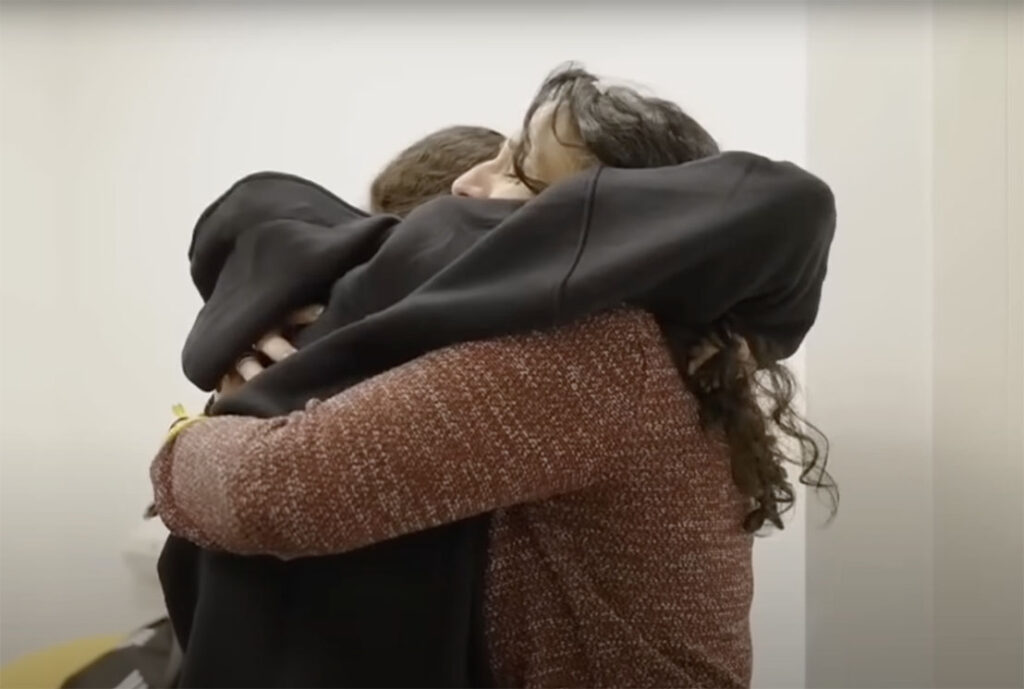
We’ve all watched the videos and have been deeply moved by the sight of newly released Israeli hostages rushing into the arms of their mothers, fathers, wives, siblings. Our hearts and tears overflow seeing these reunions. We are profoundly grateful they are finally safe, prisoners no more. We pray they will heal physically and psychologically from their captivity in hell. 

On Jan. 19 of this year, Romi Gonen, Emily Damari and Doron Steinbrecher were reunited with their mothers before meeting up with the rest of their families. Crying so hard she could barely get the words out, a severely injured Romi spoke to her father via FaceTime, saying, “Abba, I returned alive!” 

On one hand, these incredibly emotional reunions are intimate private moments, yet they have been shared with the entire world. I can’t be the only one who is simultaneously moved by them while also feeling a bit like a voyeur. Shouldn’t these men and women have the right to a little privacy during these life-changing moments? When they hug and kiss their closest loved ones for the first time in months, or well over a year? These are nothing less than scenes of rebirth, a fervently prayed-for second chance at life.  

Judaism puts a premium on privacy, of keeping a separation between public and private spheres. When we uncover what is meant to be private, we dilute its power. This is one reason for the laws of tzniut, awkwardly translated as modesty but more accurately meaning discretion. It’s connected most often with women’s clothing, but tzniut applies to men and women, not only regarding how we dress, but how we speak and behave.  

While our ancestors traveled in the desert after leaving Egypt, their tents were organized to ensure a maximum of family privacy: no one’s tent entrance directly faced another person’s tent entrance. In today’s video-centric, oversharing society, it’s easy to lose sight of the value in keeping private moments private. That’s why I felt conflicted about watching these hostage reunion videos. These moments don’t belong to me. 

Or do they? For a year and a half, we have felt anguish for our brothers and sisters killed or taken hostage by terrorists. We have experienced déjà vu that we were again victims of Holocaust-era atrocities, including seeing gaunt and half-starved survivors rising from their shackles in dark tunnels. Never again was happening again. Can any of us ever forget the look of shock and horror on the face of Shiri Bibas, holding onto her two babies, Ariel and Kfir, as they were dragged away by murderous thugs? We will carry these images forever. 

On Oct. 7, 2023, we became one people as never before. At unimaginable cost, we became one family, political and religious divisions cast aside. With our hearts broken yet determined to continue to choose life, every family of every hostage became our family. Every family of a fallen or injured IDF soldier became our family. We cried for them, prayed for them, campaigned for them, posted their photos on our social media feeds, reminded the world about them, wore their names on our necklaces, named children after the fallen. Personally, I wrote articles about inspiring people such as war widow Hadas Lowenstern, organizations offering social, logistical, financial and emotional support to displaced Israelis and others in need, about learning to tie tzitzit (very inexpertly) for the IDF, and more. Nothing felt like enough, but each action made me feel like I was taking some responsibility, as family members need to do.

Seeing these precious, and yes, intimate moments is a balm to our bruised souls. It is a way for us to share in these agonizingly long overdue moments of victory while giving us more strength for the fight still ahead. 

I still like I’m a bit of a snoop while I watch these reunion videos, but I decided it’s okay to watch them, because I’m part of the family, too. Seeing these precious, and yes, intimate moments is a balm to our bruised souls. It is a way for us to share in these agonizingly long overdue moments of victory while giving us more strength for the fight still ahead. 

May all remaining hostages be released immediately and may God protect our people and our land.


Judy Gruen is the author of “Bylines and Blessings,” “The Skeptic and the Rabbi,” and other books. She is also a book editor and writing coach.  

Should We Watch Hostage Reunion Videos? Read More »

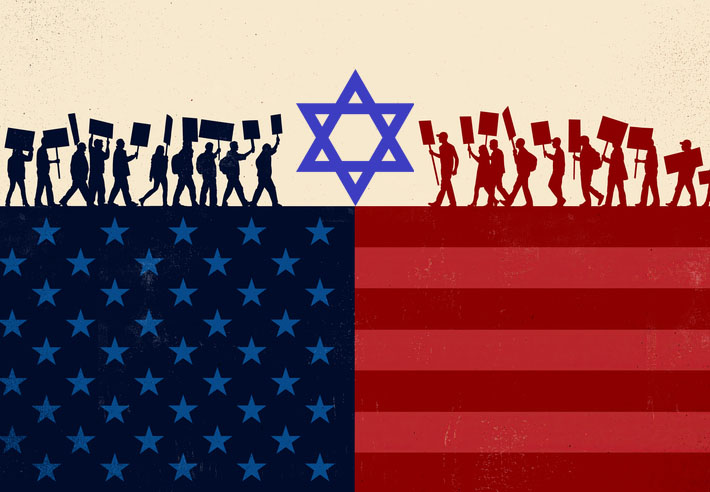
Hate From Both Sides

Over the four years of Joe Biden’s presidency, we devoted a significant amount of time and attention to the growing animosity toward Israel on the political left. The challenges became even more apparent after Oct. 7, as increasing numbers of Democratic politicians and progressive activists aggressively spoke out against the Jewish state and its people. Biden himself was the target of angry criticism from those in his own party for his continued allegiance to Israel, and Kamala Harris struggled throughout her abbreviated campaign to address the issue in a way that reassured her party’s base. 

Weeks after Donald Trump’s return to the Oval Office, we are now receiving frequent and unsettling reminders that neither of our major political parties has a monopoly on anti-Zionism or antisemitism. But just as the anti-Israel voices in the Democratic Party were especially relevant during Biden’s time in the White House, the return of a Republican president means that those same repulsive sentiments will have increased influence in his administration. In both cases, we see a president exerting minimal effort to push back against these forces from within their own party. It does not appear that Trump will be any more successful than his predecessor in neutralizing them.

Case in point: Michael DiMino IV was recently confirmed as Trump’s deputy assistant secretary of state for the Middle East, an odd position for someone who has been quoted saying that the U.S. does not have any critical interests in the Middle East. DiMino has also stated that “vital or existential threats” in the region are “best characterized as minimal to nonexistent,” and that the U.S. role in the region has not provided any benefits. He is on record describing Iran’s missile attack on Israel last year as “fairly moderate” and suggesting that it was not designed to cause real damage.

New Pentagon spokesperson Kingsley Wilson has compared the murders of Israeli infants on October 7 to abortion and repeatedly opposed sending U.S. military aid to Israel during the Gaza war. She argues against American involvement in the Middle East by saying this country should not get involved in “foreign ethnic conflicts” and has posted that “Israel can fight its own wars.” Wilson has a history of antisemitic comments as well, including supportive references to the far-right “great replacement theory” and fierce attacks against lynching victim Leo Frank, a Jewish man wrongly convicted of raping and murdering a child in the early 20th century.

But even Trump’s administration appeared to have hit a breaking point this month when they rescinded a job offer to anti-Israel commentator Daniel Davis, who had been offered the position of deputy director of national intelligence before it was discovered that Davis had suggested that Israel was partially responsible for the Oct. 7 Hamas murders and kidnappings. Davis had described the terrorists’ assault as a “convenient” excuse to justify Israel’s “wanton destruction” in Gaza and criticized U.S. support for Israel’s response to the attacks as a “strategic and moral mistake” and as a “stain on our character as a nation.” 

Fierce bipartisan opposition on Capitol Hill killed Davis’ nomination, but Trump’s allies have been much more circumspect when asked about Elon Musk’s and Steve Bannon’s flirtations with Nazi-related imagery and statements in their public appearances and social media postings. Trump has not bothered to criticize either of his confidantes for their occasional use of pro-Nazi symbolism. 

Biden and Trump have both been stalwart supporters of Israel. But both have been unable and too often unwilling to combat the unavoidable anti-Zionist and antisemitic tendencies in their own parties. It’s disappointing when a president of either party can’t — or won’t — stand up to ethnic hatred and bigotry among his own supporters.  

It’s even more unfortunate when far too many American Jews turn a blind eye to such ugly zealotry when it’s voiced by members of their own party. 

But they’re not the only ones who are willing to engage in such situational outrage: it’s even more unfortunate when far too many American Jews turn a blind eye to such ugly zealotry when it’s voiced by members of their own party. Biden and Trump are merely politicians, for whom the next election is the only thing that matters. The rest of us should know better.


Dan Schnur is the U.S. Politics Editor for the Jewish Journal. He teaches courses in politics, communications, and leadership at UC Berkeley, USC and Pepperdine. He hosts the monthly webinar “The Dan Schnur Political Report” for the Los Angeles World Affairs Council & Town Hall. Follow Dan’s work at www.danschnurpolitics.com.

Hate From Both Sides Read More »