fbpx

March 5, 2025

Berkowitz Bros: “The Writer,” Food Legacy and Whitefish Salad

The Berkowitz Brothers — Max and Ben — are an award-winning producing and writing duo (NotABillionaire.com); they also have a strong family ties to food. They grew up in the family fish business, where that food connection remains a constant.

The brothers, who live on opposite coasts — Ben in San Francisco, Max in Boston — talk to each other on the phone about 18 hours a day. Which is how the idea for their latest project, the graphic novel, “The Writer,” came about.

“Max and I were talking … about this troubling trend that we saw in comic book movies,” Ben told the Journal. “Characters, who identified as Jewish on the page, as soon as they made the jump to TV or film, their Jewish identity was getting sidelined.”

They found a way to change that.

“With the rising tide of antisemitism, we have to do our part and make a difference,” he said. “So we came up with a story where there was no way any studio could remove Jewish identity from it, because it was all Jewish.”

The Bros. quickly drafted a presentation and then cold-called their friend actor Josh Gad, and he “got it” right away. (“He knows every Jewish folktale,” Max said.)

They teamed up to create a graphic novel that celebrates Jewish folklore, mythology and the Jews who built the comic book industry.

“The Writer,” illustrated by Marvel and DC Comics legend Ariel Olivetti (who they pitched via Instagram DM), is a four-issue series, to be published as a trade paperback on April 22. The supernatural adventure comic — in the vein of an Indiana Jones story — follows Stan Siegel, a comic book writer whose life unravels when the fantastical worlds that he writes about start bleeding into reality.

“We also added a lot of our family stories into this as well, and what we grew up with, because it all takes place in Boston and Brookline, Massachusetts,” Max said. “We put our mom into the story; it’s literally Josh Gad’s character’s mom.”

Added Ben, “Our mother’s character, Liz, in the book, is constantly pushing food on the characters.”

There’s a Jewish deli in it, based off of Zaftigs, their favorite in Brookline. Plus, lots of coffee, another family favorite. Their whole family drinks about eight to ten cups a day.

“For us, food has always been the connector, bringing people from walks of life [together],” Ben said. “When our dad helped build out the family restaurant business … it was made to bring people [together] to enjoy just good, simple fish dishes.”

Originally a fish market, their grandmother had the idea to put out tables and chairs, and also cook for people.

“One of the first customers was Julia Child’s assistant [who] raved about it to Julia,” Ben said. “It was the only fish she ever bought for her show.”

While food is not solely a Jewish thing, it does come up in conversations a lot.

“Our dad has like six meals a day,” Max said. “He has a breakfast before his breakfast, then he has a snack after breakfast, lunch, snack, dinner, always dessert; it’s just constant food. We’re always talking about it.”

Breakfast, specifically a deli breakfast, is the family favorite meal.

“Growing up our father would always make us the best whitefish salad,” Max said. The recipe is below.

The brothers “admit” to a controversial bagel practice: they shell out their bagels

“You can just put so much more in there,” Max said. “Chive cream cheese, then your salmon and your capers and then your whitefish salad on top, and create this beautiful bagel.”

Whether your family business is fish or creating content, you need to navigate what’s most important for work and your home life.

“At the end of the day, what kind of solved most any argument was a great meal,” Ben said. “If anything, it stops people from talking because their mouths were too full of food.”

It’s a great way for everyone to take a breath and sit down.

“I think that’s why Shabbat is so important; we’re supposed to turn off, eat a good meal and reconnect and reevaluate what we enjoyed about the week,” Ben said. “And that’s why food brings us joy.”

Learn more at www.NABvid.com and follow @BerkowitzBros and @TheWriterComic on Instagram..

For the full conversation, go to JewishJournal.com/podcasts, and check out the latest episode of Taste Buds with Deb.

For the full conversation, listen to the podcast:

Marc’s Famous Whitefish Salad Recipe

Father Marc Berkowitz with his White Fish Salad

1 1/2 lbs smoked chub: front-cut with bone in
3 scallions, chop up the green parts
2 1/2 tablespoons of light mayonnaise (we use Hellmann’s/Best Foods)
1 lemon for juice and garnish

Carefully peel the meat from the skin of the smoked chub, and remove all bones.

Using a fork, break up the fish in large flakes. Mix with clean hands.

Add the scallions. Mix.

Add the mayo – just enough to bind the salad. Mix.

Cut open the lemon and squeeze it in. Mix.

Garnish with the cut lemon rind.

Enjoy it while it lasts.


Debra Eckerling is a writer for the Jewish Journal and the host of “Taste Buds with Deb.Subscribe on YouTube or your favorite podcast platform. Email Debra: tastebuds@jewishjournal.com.

Berkowitz Bros: “The Writer,” Food Legacy and Whitefish Salad Read More »

Increasing in Joy

In the month of Adar we are called to increase in joy. The call comes to us—an echo of an ancient celebration recorded in an old scroll folded up like a letter and addressed to the future, where it finds us, here and now, just a week after Shiri, Ariel and Kfir were buried in the ground.

Joy feels distant. Indeed, even sorrow feels distant. Instead, a cold anger. An incapacity to feel. In the scroll, God turns grief into gladness. For us, God has turned hearts of flesh into stones.

Yet still, we hear Adar’s call, and feel history’s echo, and obey the scroll’s commanding authority. Just as plants wither and bloom in accordance with the cycle of seasons, so too do we align ourselves with the inscrutable logic of sacred time.

So what will we make of joy this year? And what will joy make of us?

Will we eat and drink and be merry? Will we accept the cosmic dare to laugh at the absurd unfolding of Jewish history? To swerve and swagger and jeer with our God, Whose name does not even appear once in the scroll?

Because He is hiding. Or perhaps because He is not there.

Because life is a game of hide and seek. Or perhaps because life is just a game of seek, seek, seek.

Will we practice a defiant joy—a shrill demonstrative joy broadcast loudly and furiously so that the whole world will see and hear? Will we force ourselves to smile, because not smiling would mean that in the end Haman was victorious?

Or will we instead focus on the joy of others—baking cookies for our neighbors and making donations to the poor in accordance with Purim’s commandments, holding all that can be held of the heavy burdens on those trudging through this moment beside us.

Will we drink ourselves into a stupor? As it is written, on Purim, we are commanded to drink until we can no longer distinguish between the scroll’s hero—Mordechai—and its villain—Haman.

But what exactly is being commanded here? Is the heart of the commandment drunkenness—with the inability to distinguish Mordechai and Haman mentioned solely because it is an effective test to see if one is sufficiently inebriated?

Or is the softening of our moral judgements the heart of the commandment, with alcohol consumption mentioned solely because it is an effective way to accomplish this goal?

And if it is the latter, why exactly are we asked to give back the gift of moral discernment—the one we stole from Eden, the one that makes us “just a little lower than the angels.”

Can I willingly erase the line between Mordechai and Haman—even for a day?

This is the bewildering, audacious, radical task that Purim puts before us.

And we are to do it with a smile on our faces.

Who am I to resist?

Only a Jew like all those who came before and who have, for countless generations, opened up this letter from the past and tried, in the month of Adar, to encounter joy where it may be found—in love, in laughter, in friendship, in family, in defiance, and in absurdity. In the flow of tears where we thought tears had dried up. In the softness of winter mornings and the comfort of winter nights. In the wisdom of ancient scrolls and the unyielding presence of our hidden God.

Increasing in Joy Read More »

How the LA Jewish Community Held Me Up While My Home Burned Down

On January 7, raging wildfires destroyed thousands of structures in Los Angeles, including my home in Pacific Palisades. It is a story of utter devastation. But for my family, it is also a story of love, generosity and kindness.

My parents and I moved to Pacific Palisades from Texas when I was 14 years old. The Palisades are where I graduated high school. Where I met my husband of 23 years. Where we built our family business. Where we were raising our four children. On Tuesday, January 7, the day we received orders to evacuate our home, I drove to Pico-Robertson to pick up my daughter from YULA and my two little boys from their school (our eldest son is in yeshiva in Israel). I drove my usual daily commute, not knowing this would be the last time I would ever see my home.

The next 24 hours were filled with hope and prayers, disbelief and shock as we waited for news of our home. On Wednesday afternoon, we found out that our home, my parents’ home and the homes of many friends had been completely destroyed. It was the end of a chapter in my life. But also the beginning of how the Los Angeles Jewish community held me up when my home burned down.

As soon as we evacuated, we were inundated with calls, texts and emails from family and friends, near and far. Our children’s schools contacted us and then they spread the word. Soon, people started showing up at our new doorstep with bags of clothes, toys for the little ones and food to feed an army. There were heartfelt hugs from friends that let us know how willing they were to carry part of our burden.

Some people literally took the clothes off their backs. My 16-year-old daughter received a steady stream of visits from her classmates at YULA High School. Both her closest friends and girls that had only passed her in the halls, everyone showed up for her. When my daughter opened one bag of clothes delivered by a classmate, she said, “Mom, I saw my friend wearing this sweater last week!”

On Thursday, the day after we heard that our home and all our belongings had become ashes, another YULA family showed up with a car trunk full of bags from a Target shopping spree. I had tried going to the store, but found it so hard to make even simple decisions at that time. This family did it for me. They fulfilled basic needs I didn’t even remember, like buying me a hairbrush since I no longer owned one. They bought me soft pajamas, so I could stop sleeping in the clothes that I was wearing when we evacuated.

On Friday, my husband and I began going through the maze of what rebuilding our home would entail. Then we received a call from Rabbi Arye Sufrin, Head of School at YULA. He’d been working behind the scenes to connect us with resources we didn’t even know existed. He reassured us that YULA would be a place of solace for our daughter and for us. He showed us that we hadn’t just enrolled in a high school, but that we had been embraced by a community.

By Friday evening, I was overwhelmed by emotions, mourning my own losses and those of so many dear friends. I arrived at the Shabbat table and sat down for what felt like the first time in days. That’s when I noticed the table set with a beautiful bouquet of flowers and a delicious home-cooked meal — both delivered earlier that day by different YULA staff members. That scene cut through my emotions and allowed me to notice the beauty that exists in our lives — the beauty of that Shabbat table, of my family safely gathered together, of the people who showed up when we didn’t expect them, yet at precisely the time we needed them most.

I can tell countless more stories of the outpouring of love and support from the community over the following weeks, like the stranger at the bank who handed me a $20 bill when he overhead me explain to the teller that our home burned down. Or my friends who insisted on setting up a meal train that I didn’t realize how much I would come to lean on. Or the family who anonymously planned a magical birthday party for my youngest son when he turned six years old, just three weeks after our home burned down.

I’m grateful to Hashem for surrounding me with amazing friends and family who showed up for us and keep showing up throughout this journey to rebuild our lives. And I will always remember the way the LA Jewish community stepped in, before I even knew what support I needed. A Jewish community that took care of our family in such a beautiful way that my tears of sadness turned into tears of gratitude.


Nicole Zendehdel is a proud wife and mother of four, born and raised in Los Angeles. She and her husband Arjang Abraham Zendehdel run the personal development organization Dreamality Education & Coaching.

How the LA Jewish Community Held Me Up While My Home Burned Down Read More »

Jewish Anti-Zionists?

The emergence of the modern State of Israel is one of the wonders of world history. After nearly 2,000 years of dispersion, the Jewish people has reclaimed their historic homeland. We feel the power and joy of the Psalmist’s words: “When the Lord turned back the captivity of Zion we were as in a dream.”  We are experiencing the fulfillment of centuries of Jewish dreams.

Israel has created a vibrant democracy. With a tiny population of around 10 million people (20% of whom are not Jewish) it has become a world leader in science, technology, medicine, agriculture and more. It has developed a remarkable military to defend its citizens from intractable enemies. It is ranked among the happiest and most creative countries in the world.

Yet, amazingly, some Jews have not shared the profound gratitude for the Jewish return to Zion. Not only have they not embraced Zionism, but they have been vocal and active opponents of the State of Israel.

Some of the Jewish anti-Zionists are found among Haredi Jews. Others are found among far left-wing Jews who buy into the anti-Zionist preachments of the “radical left.” Yet others are highly idealistic Jews who focus on Israel’s real or imagined faults and don’t want themselves to be associated with those faults.

Although the Jewish critics of Israel are diverse, they seem to have one thing in common. They insist that the Jewish state be inhumanly perfect.

The Haredi opponents will only be content with a miraculous establishment of Jewish sovereignty in Messianic times. They see modern Israel as the creation of a secular movement led in large measure by nonreligious Jews. For such Haredim, a Jewish state will always be illegitimate until God sends us the Messiah and when all Jews become thoroughly observant of Torah to the satisfaction of Haredi rabbis.

To “left wing” and “idealistic” opponents, a Jewish state will never be satisfactory as long as Jews have to wage wars, kill enemies, rule over non-Jews, engage in political infighting, deal with social inequalities etc.  For them, these are unseemly things that must not exist among Jews. Yes, all other nations have these issues, often to a far greater degree than Israel; but all other nations are not expected to be perfect. Only Israel is supposed to be above all negative features of modern statehood.

Rabbi Abraham Isaac Kook (1865-1935) noted that “the great idealists seek an order so noble, so firm and pure, beyond what may be found in the world of reality, and thus they destroy what has been fashioned in conformity to the norms of the world.”  Such people, through their unrealistic religiosity or idealism, in fact are part of what Rav Kook called “the world of chaos” rather than “the world of order.”  Misguided idealism is destructive. Insisting that Jews be “angels” rather than real human beings is also a form of antisemitism.

Already in the 19th century, Rabbi Yehuda Alkalai (1798-1878) lamented that rabbis of his time opposed resettlement of Jews in Israel until Messianic times. He rebuked those “who say with full mouth that Jerusalem was only created for the sake of Torah study. While their intention is acceptable, their deeds are unacceptable. It is impossible to conduct life in this world as though it were the world-to-come, where there is no need to eat or drink.”

The reality is that Israel is composed of actual human beings living under challenging conditions.  Israel has to deal with Iran, Hamas, Hezbollah, Houthis and others who seek its destruction. It has to deal with terrorism, anti-Israel attitudes in the Arab world and beyond, economic boycotts and sanctions. Israeli society is faced with rivalries between political left and right, religious and nonreligious, Sephardic and Ashkenazic, rich and poor … and more. Yes, Israel is a real country with real problems; Israelis are human beings who must make decisions that often involve unpleasantness. We are not living in Messianic times.  

The future of Israel and the Jewish People will be secured by those who share the dream of a Jewish homeland that strives to be a “light unto the nations.”  The goal is to make Israel as great as humanly possible.

For Jewish critics to demand the impossible is not only unrealistic: it is dangerous and self-destructive.


Rabbi Marc D. Angel is Director of the Institute for Jewish Ideas and Ideals, jewishideas.org, and rabbi emeritus of the historic Spanish and Portuguese Synagogue of New York City.

Jewish Anti-Zionists? Read More »

An Honor to Be a Jew

I recently called my best friend, crying about the Bibas family. 

“I know, it’s so hard,” she said. 

“It seems like the world hates us,” I responded. 

“I was born a Jew,” she told me. “I don’t understand why you would choose to be a Jew with everything that comes with it. It’s amazing, but it’s so hard.” 

I told her, “Yes, being Jewish has its tough moments, especially now. But when I wasn’t Jewish, the tough moment was all the time. I was spiritually empty. I didn’t have a happy life. I would much rather have a meaningful life with tough moments sometimes. I was so dehydrated, and I didn’t even know it. The Torah was my water.” 

She said, “Wow, I never thought of it that way.”

Before I was Jewish, I was depressed and anxious most days. I thought, “What am I living for?” I was an atheist with no God to turn to. The weight of the world was on my shoulders, and mine alone. 

If I failed, it was my fault. When I achieved success – which I did! I had good grades! And amazing internships! And my whole life ahead of me! –  it still didn’t make me truly happy. I would go to concerts and parties and have fun with my friends, but once the moment was over, I’d feel empty inside once again. 

With Judaism, with God, my life is completely different now. I experience true joy and fulfillment. The world is no longer on my shoulders. I am able to see the bigger picture. Even if I don’t know what’s unfolding, I trust God has a plan. I’ll admit, it’s been a little bit harder to trust lately with everything that’s happening, but I still try. It’s much better than the alternative.

In my former life, when I was in darkness, I was all alone. Now, if I am feeling down, I have an entire Jewish community who are there for me. This was especially crucial these past few weeks, when the news coming out of Israel has been so bleak.  

In my former life, when I was in darkness, I was all alone. Now, if I am feeling down, I have an entire Jewish community who are there for me.

Comparing my life today, and my life before I converted, I follow a lot of “rules” as an observant Jew. I can’t eat at certain restaurants or use my phone on Shabbat. I have to give up seeing my favorite bands in concert if they’re playing on a Friday night or not go to family celebrations if they’re on a Jewish holiday. It’s not always easy. 

However, what I gained by converting to Judaism is a much more meaningful life. I can always make it work. If I believe in Hashem, if I step it up for Him, He steps it up for me. If I go beyond my comfort zone, I see Him more in my life.

If you are a Jew by birth and struggling, here’s the truth: Being Jewish is a gift. It’s an honor. You have a special mission to spread light and help people inside and outside of the Jewish community. You are here to spread the word of God and make people realize we are not alone; we always have Him to rely on. 

It’s time to fight the darkness. Go to a Chabad house for Friday night dinner. Volunteer at a soup kitchen. Walk a dog at a shelter. Give a friend in need a call. Visit a senior citizen in a nursing home. Stand up and declare yourself a proud Jew. 

We are in a difficult moment, but it will pass – sooner, if we step it up. 

With our actions, we can speed up our healing. With our actions, we can bring about peace and spread love. And with our actions, we can – truly – save the world.

What an honor. 


Kylie Ora Lobell is an award-winning writer and Community Editor of the Jewish Journal. You can find Kylie on X @KylieOraLobell or Instagram @KylieOraWriter.

An Honor to Be a Jew Read More »

Girls’ Night Out, Costco Edition

My friend Laura invited me for a girls’ night out with our mutual friend Esther. When she told me the destination, I hesitated. It was a place of dark temptation for me, a place I hadn’t dared visit for years.  

“Come on,” Laura said, teasingly. “You know you want to.”

“I’ll drive,” I said, and picked up my girlfriends after dinner. Esther was practically bouncing on her seat. “I’m so excited!” she said.

I was too, though I feared falling off the wagon. After 20 minutes we had arrived and were standing outside the car, looking at the bright, beckoning entrance. Esther raised her arms and asked, “Do I hear a battle cry?” 

“Hoo-yah!” shouted Laura, who has a relative in the military and knows these things.

The three of us marched together for Girls Night Out into the surging crowds within Costco. My friends steered their oversized carts, hunting for bargains while I stood in line for my new membership card. I was minutes away from the privilege of buying shampoos, bottles of ibuprofen, and industrial-sized boxes of cereal, all in triplicate.  

As empty nesters, we needed very little in bulk, except for dark roast coffee pods and chocolate chips. Yet Costco was already selling shmura matzah and grape juice for Pesach at unbeatable prices. They’d sell out in a flash. The woman at the membership desk welcomed me back into the Costco family, and urged me to upgrade to the executive level, so I could also get discounts on travel, optical, pharmacy and even cars. “Do you need a new car?” she asked, pointing to a digital screen displaying handsome cars with burly tires.  

I declined the offer, took my card, and searched for my friends, but was waylaid by a display of cool-looking bread machines. As a salesman praised its features, I realized this bread machine lookalike was actually a countertop composting machine. It would take all my food scraps, coffee grounds, and eggshells and make them into … dirt! The fact that I continued to listen to anything he said after using the word “compost” proved that I had already fallen into that dangerous consumer trance that had resulted in my husband getting a restraining order against me from coming within 400 feet of any Costco. For years, I had only driven by the store, feeling wistful but chastened.  

Laura pulled me away. “We’re here for Pesach bargains, remember?” I nodded slowly, pushing my cart in an aisle as wide as an airline runway. We found Esther examining a display of organic cotton sheets, but then she had to talk me away from a $400 inflatable family lounge pool. If only so many retail stores didn’t keep closing, I wouldn’t be so captivated by seeing real stuff in real life. I also like seeing the real people who shop for real things, except for the ones who shop in their pajamas and the ones who’ve pierced their nostrils with big honking rings, like bulls. What were they thinking? I’m always tempted to ask.

It was too cold to stay in the produce department for very long, and anyway, what would I do with a four-pound bag of peeled garlic? I quickly tossed a box of cremini mushrooms, a jumbo bag of broccoli (visualizing many quiches in my future), cocktail cucumbers, mini peppers, and strawberries in my vast cart 

As kosher consumers, we searched for kosher symbols throughout the bakery section, and Laura was determined to find hamantaschen rumored to be there. She triumphantly found them, and I was relieved that most everything else wasn’t kosher. Those beautiful croissants were the size of my hubcaps. Must have been at least 450 calories each.  

We scored with the matzah and the grape juice. Those bottles are so huge that from now till Pesach I’ll use them as free weights. 

We scored with the matzah and the grape juice. Those bottles are so huge that from now till Pesach I’ll use them as free weights. On the way toward the check out, I resisted Ghirardelli cake mixes, an aquarium-sized bucket of pretzels, and a three-pack moisturizer with collagen. 

Our Girls Night Out was a success, and I’m planning to go back soon. In barely one circuit of the store I tallied more than 3,000 steps, and still arrived home without a composting machine or an inflatable pool.


Judy Gruen is the author of “Bylines and Blessings,” “The Skeptic and the Rabbi,” and other books. She is also a book editor and writing coach.  

Girls’ Night Out, Costco Edition Read More »

America Pulls Back

Even before watching Donald Trump, Volodymyr Zelensky and J.D. Vance go toe-to-toe-to-toe in the Oval Office, it was already becoming clear that the long-standing U.S. relationship with Europe was undergoing dramatic changes. So the question arises whether America’s involvement in other parts of the world will be affected by the growing rupture between our country and our age-old Atlantic allies.

Trump and Zelensky will ultimately make a deal, because they both need one. Zelensky’s conciliatory social media postings in the days after the White House blowup suggest that he recognizes the benefits of not pushing Trump even further into Vladmir Putin’s arms. And Trump has promised the American people that he will end the Russia-Ukraine war, which will be much more difficult without Zelensky’s cooperation.

But the question of what will become of America’s relationship with Europe is much more difficult to predict. And it’s even harder to guess what this means for the West’s future dealings with China, North Korea, Iran …  and Israel. We will learn in the months ahead whether Europe can provide Ukraine with the economic and military support it needs to stand up to Putin without the U.S. by its side. But whether they are successful or not, leaders across the continent are already making it clear that they anticipate that this new era will be much different for all involved.

The question of what will become of America’s relationship with Europe is much more difficult to predict. And it’s even harder to guess what this means for the West’s future dealings with China, North Korea, Iran… and Israel. 

The incoming German leader, Friedrich Merz, has already called for Europe’s “independence from the USA.” Kaja Kallas, the European Union’s top diplomat, was even more stark, saying shortly after the Trump-Zelensky fracas that “Today it became clear that the free world needs a new leader. It’s up to us, Europeans, to take this challenge.”

Both statements reflected a growing realization that Europe has no choice but to proceed without the United States. And while the leaders of Great Britain, France and other longtime partners have indicated that they still plan to work closely with Trump on many issues of overlapping interest, their public statements also make it clear that the decades of extremely close cooperation toward shared goals are at least on hold. A future U.S. president could decide to rebuild these bridges, but the post-WWII assumptions of mutual reliance and trust may never be rebuilt.

U.S. dealings with China are also likely to be impacted by this shift. The Chinese military has escalated military exercises in recent weeks, raising questions as to whether they see Trump’s move away from Ukraine as reflecting a similarly diminished commitment to Taiwan. Many Americans who have criticized the U.S. role in Ukraine point to Asia as a higher priority. But while China’s leaders would not relish increased American involvement on the Pacific Rim, they realize that it’s entirely possible that these calls for a pivot to the East may just be an excuse for broader disengagement and a U.S. retreat from the world stage altogether. The Chinese appear ready to test that theory.

American presidents of both parties have historically relied on international alliances to confront global troublemakers like Iran and North Korea. But it’s impossible to predict how — and whether — Europe will respond the next time the U.S. asks for help.

Nowhere should this question loom larger than in Israel. In the short term, Trump’s relationship with Benjamin Netanyahu and the commitment of his evangelical loyalists all but guarantee his continued strong support for the Jewish state. But the United States has always expended immense amounts of time, energy and political capital to keep Western Europe on board too. If ties between America and Europe continue to weaken, there’s no way of knowing whether the Europeans will be nearly as willing to commit themselves to future involvement in the Middle East.

NATO was founded in 1949, less than one year after Israel’s independence. In other words, the modern Jewish state has never been forced to navigate a global landscape in which the U.S. was not in a position to orchestrate broad international backing for Israel’s safety and security. The post-Gaza landscape might not be an ideal time to find out what that diminished American influence might mean.


Dan Schnur is the U.S. Politics Editor for the Jewish Journal. He teaches courses in politics, communications, and leadership at UC Berkeley, USC and Pepperdine. He hosts the monthly webinar “The Dan Schnur Political Report” for the Los Angeles World Affairs Council & Town Hall. Follow Dan’s work at www.danschnurpolitics.com.

America Pulls Back Read More »

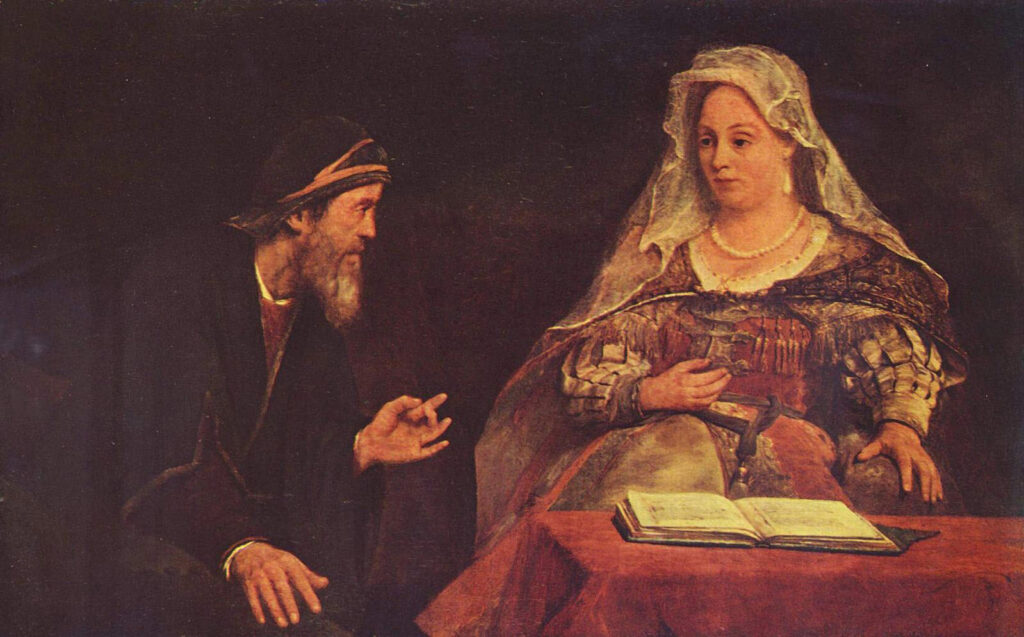
This Purim, Esther and Mordechai Would Like to Have a Word with You

In anticipation of writing this year’s Purim column, I realized that I am hopelessly ambivalent about Purim 5785. Last year was difficult enough. But considering the unimaginable pain that collective Jewry, and especially Israelis, have faced in the past few weeks in particular, we can hardly be blamed for wanting to sit this Purim out. 

But stepping back would entirely miss the point of this special holiday. After all, Purim is a ritualized observance of a time when vicious antisemites were annihilated, and Jews were saved and redeemed through a hidden miracle. Between pager mishaps in Lebanon that destroyed Jew-haters, and miraculously empty buses filled with explosives in Israel, that sounds like the essence of Purim to me. 

Each year, I ask myself what I could write about Purim that I have not written before. That includes many past lamentations over the fact that hamantaschen does not have to be the de facto Purim treat, because, until the mid-20th century, half of world Jewry had never even heard of it. And that includes Iranian Jews, who live in the same land as the Purim story took place!

Recently, I began paying closer attention to the multitude of Jews that exist in the world (me included). So many types of Jews: the Trump lovers, and the ones who wouldn’t hesitate to run over Trump in a semi-lit alley. The observant Jews, and the ones who still don’t believe that oatmeal constitutes chametz during Passover. The Oct. 8 Jews, and the ones who would be more interested in touring a Libyan prison than setting foot in Israel.

Twenty-five hundred years ago, when G-d saved the Jewish people from genocide in the ancient Persian provinces, He must have done so because He saw something in us that was worth saving. Also, He had promised us that we would one day become a great nation (and that there would be no more Noah-style floods). For over 3,000 years, we’ve gently reminded G-d of the age-old kindergartener proverb: No takesies backsies.

Twenty-five hundred years ago, when G-d saved the Jewish people from genocide in the ancient Persian provinces, He must have done so because He saw something in us that was worth saving.

When Mordechai famously informed Esther that if she did not save her people, salvation would arrive nevertheless, and that perhaps she had been born to lead at such a moment, he must have seen something worthy in his fellow Jews. It made me wonder whether Jews in 2025/5785 could look our ancient Mordechai and Queen Esther in the eyes and truthfully answer a few questions. 

This is not to say that Jews today (or ever) need to prove they are worthy — worthy of life, safety, freedom and basic human dignity. We are worthy because we are here; we are not here because we are worthy. A Jew’s basic worth requires no justification. It does not have to be earned.

Still, I often wonder if we have squandered what Esther and Mordechai begged and fought for, and Jews around the world died to preserve. If the heroes of our sacred Purim Megillah could visit us today, here is what they might ask:

Question #1: Do you stop to recognize the ongoing miracles that G-d has provided for the Jewish people?

On Thursday, February 20, three public buses exploded in Bat Yam and Holon, in central Israel. Bomb disposal units found at least two other devices, still unexploded, as well as other suspicious objects. The bombs were set to rip through the public transport vehicles at 9 a.m. Friday morning, just in time for rush hour. Instead, a vigilant young woman reported one of the devices to a bus driver, the vehicles were emptied, and they mistakenly exploded at 9 p.m. Hamas was believed to bear responsibility.

This was one of the greatest miracles in the last several decades of Israeli history. On the same dark day that we learned that Hamas had murdered Shiri, Ariel and Kfir Bibas, and 84-year-old Oded Lifshitz, scores of Israelis could have been mass-murdered on or near many buses. 

Did most Jews worldwide even know about this unbelievable miracle? Did most of the ones who knew even bat an eye? And did those who immediately recognized the miracle and thanked G-d return to their normal, hectic lives a few minutes after, including many Israelis themselves?

Miracles are like good weather; when they occur, we seldom notice. It is only in their absence that we finally realize their precious impact on our lives. The Jews who were saved in the Persian provinces during the time of Esther and Mordechai consecrated their miracle by proclaiming fast days and Purim observance each year. Over two millennia later, we still consecrate this miracle.  

Miracles are like good weather; when they occur, we seldom notice. 

Question #2: Did you distance yourself from your people and your eternal homeland, but to no avail?

Want to grasp the imminent fate that has befallen nearly all Jews who, throughout history, have walked away from their own and tried to win the hearts of their enemies, from ancient Egypt to today’s Israel-loathing Jews? Perhaps this fatalistic pattern can be encapsulated in a recent Facebook post in which someone wrote the words of a famous Jewish actor who declared that he had been told what he claimed were lies about the Jewish state. The post features his photo and his words: “As a Jewish person, I was fed a huge amount of lies about Israel my whole life.”

One would think that such an admission would satiate our enemies, that it would placate those who have long thought that millions of Jewish children were brainwashed about their own history and connection to the land of Israel. Now this was their preferred Jew. They could have adorned his head with a crown of shrapnel from Hezbollah. 

Not exactly. 

The top comment in response to that post came from someone named Mohamed, who wrote to the Jewish actor, “OK man. Now go to Poland please.”

And there you have it. 

On February 21, the day we learned that Hamas choked Ariel Bibas — four years old when he was kidnapped — and his baby brother, Kfir, who was only 10 months old — to death,  there were still Jews around the world, especially in America, who did not know, or who knew, but went about their lives because their Jewish identity probably ranked eleventh on their Top Ten List of Self-Identification, most likely falling somewhere after their preference for tacos over pizza. 

That night, they joined co-workers and friends at happy hour, dinner, movies and other activities. No one demanded that they remain home and mourn. But it would have been nice if they had acted remotely stoic while at work (or at the bar or the restaurant). Perhaps someone would have asked them if something was wrong. Perhaps they would have said that because they are Jewish, even in name, on that day, they were not okay. 

Question #3: Do you carve out time to discover what it really means to be a Jew?

If only I had experienced even one day of formal Jewish education as a child, I wouldn’t have been left with the Jewish knowledge of a second grader in my early 20s. I did not know who I was. Worse, I could hardly explain myself to others. 

One of the reasons I am often in awe of converts to Judaism is that unlike those who were born Jewish, converts took the time and effort to learn what it means to be a Jew. Sometimes it seems that we spend more time settling on what we are going to watch on streaming services than learning anything related to Judaism. In fact, a 2024 survey of 2,000 Americans who subscribe to streaming services found that, on average, we spend 110 hours per year scrolling and searching for something to watch.  

If I had invested 110 hours in learning Hebrew, I could have yelled back at every Israeli cab driver, motorist, pedestrian, shawarma stall line cook, waiter, busboy, and government coalition member by now. Instead, I spent that time deciding whether to watch “Twins” or “Sixteen Candles” on Netflix. I don’t know how I will ever explain that one to Esther or Mordechai.


Tabby Refael is an award-winning writer, speaker and weekly columnist for The Jewish Journal of Greater Los Angeles. Follow her on X and Instagram @TabbyRefael.

This Purim, Esther and Mordechai Would Like to Have a Word with You Read More »