fbpx

November 14, 2024

Things Done on Highway 61 – Thoughts on Torah Portion Vayeira


Highway 61

Things Done on Highway 61 (Shabbat Vayeira 2024)

Rabbi Mordecai Finley


 (adapted from earlier versions)

Highway 61 runs from the city of Wyoming in Minnesota, down in to New Orleans. It also runs through a desolate region where the rivers of dread and destiny merge.


It is the road where, according to Bob Dylan’s reading of Genesis 22, God wanted the killing of Abe’s son done, a road from which there was nowhere to run.  Those lyrics were planted in my unconscious when I was a kid. Hearing the song, I imagined a shadowy father on a bleak road confronted by a bent God coming out of rainstorm, a God bent on murder. I could not see the son. Something terrible was going to happen that no one wanted, maybe not even the God who demanded it. The archetypal idea of “Highway 61” took root.


I found myself using this idea of “Highway 61” to describe events where something deep was happening, from the tragic to the surreal, and unknown parts of us would be called up to handle the unbearable reality.


I have officiated at many funerals, some gut wrenching and awful. Good people gone way before their time or at exactly the wrong time. Disease, accidents, murders, suicides. I have seen the bereaved utterly stranded, trying make sense of something that defies meaning. I’ve seen people work through the depths of grief, climbing up the sheer rockface from hell, just off a a wretched stretch of Highway 61.


I feel Highway 61 when I help a person whom I am counseling see that they have to make the decision – what kind of person do they want to become? It is no longer about the argument, or the past, or who is to blame – there is an existential moment right now, “Who are you to become?” There is no more guidance. We are alone in determing the future of our life’s meaning. In the deep, tortured and reflective moment that follows, I can almost hear the wind whistle on Highway 61. Turn back, or go forward.


I think of the God of the Bible, realizing again that he has gone too far. Staring speechless at what Abraham is about to do. Abraham is having an out of body experience – “Am I really going to do this?”  Isaac, both bewildered but somehow knowing the truth – “If this is who my father is and this is who my father’s God is, I want out of here. Go ahead.”


A dreadful silence on Highway 61. An angel shows up, just in time, but far too late. Snaps them all out of the trauma that has frozen them in time. Brings them to their senses. The knife clatters to the ground. Abraham cannot speak. God turns away, in shame. The angel unties Isaac, who asks, “What just happened?” and the angel says, “I’ll explain later, but it’s not over.” They all walk their different ways down roads that turn off from Highway 61, fairly sure that they, or someone they know, will be back soon.


The angel turns to us the readers and says, “We’re not done on Highway 61.”


Rabbi Mordecai Finley

Things Done on Highway 61 – Thoughts on Torah Portion Vayeira Read More »

Life’s Roadblocks Are a Blessing

It was the fall of 2010. I was sitting on the train, going back to my college in Westchester, New York and crying my eyes out. I was halfway through my internship at “The Daily Show with Jon Stewart,” and I was not doing well.

I’d spend all day transcribing boring tapes of politicians giving speeches. I’d run errands and carry heavy groceries up the stairs and cut bagels for unappreciative writers who wouldn’t even acknowledge my existence. I’d try to connect with my fellow interns, but to no avail. They were all Ivy Leaguers, and I was a state school student. I felt like I wasn’t supposed to be at this internship, that I was totally out of place and the reason I didn’t fit in was because I was a failure.

I’d dreamed of working at “The Daily Show,” and was elated when I found out I snagged one of 10 internship positions. After all, 1,000 students had applied, 100 were interviewed and 10 were chosen. I thought it was fate that I landed there. I was going to excel in my role, get hired as a writer or producer and be on my way to career success.

The opposite happened. At my internship, I felt lost and lonely and out of place. It wasn’t the right environment for me – but I blamed myself. I thought, “What am I going to do now after I graduate?” I knew I’d screwed up.

Back then, I was an atheist, and I couldn’t see any upside to the situation. My failure haunted me – until I started believing in God and eventually converting to Judaism.

Through my conversion classes, I learned that things happen because God sets them in motion that way. Yes, we have free will and have to put in our efforts, but ultimately, God is there to guide us and put us on the best path possible.

Although I couldn’t see it at the time of my internship, I so clearly see it now: God put up a roadblock so that I could have the life I do. And boy, am I glad He did.

I shudder at the thought of what would have happened had I excelled in television. I probably never would have become a believer again, let alone an observant Jew. As a workaholic, I would have pushed myself to my limit and put my career above everything else. I might have succeeded professionally, or I might have burnt out and failed later on. My soul would have been screaming out for help, but I wouldn’t have heard it.

My trust in God has grown immensely over the years, and I can usually see that when a roadblock occurs, it’s good for me. Sometimes, I don’t know why I face certain challenges, but I still trust that God knows what He is doing.

For instance, if I get stuck in traffic, I think, “I wasn’t supposed to arrive on time for some reason. Maybe God is helping me avoid an accident.” Or, if my bank account is running low, I say, “God wants me to trust in Him that the money will be there soon. He’s just testing me. And I won’t fail this time.”

Like clockwork, I see that when I accept what’s happening, life goes more smoothly for me. I also try my best to decipher the message and ask myself, “What path does God want me to take instead?”

I’m not saying that you shouldn’t feel hurt or angry or upset when roadblocks happen. It’s good to process your feelings and talk about them with loved ones and a therapist and get the help you need.

But at the same time, you can’t ruminate on the roadblocks forever. You can’t live life with regrets. Try to learn from them and move on to a brighter future ahead.

Thank God I “failed” at my internship all those years ago. And thank God I can see His beautiful, perfect handiwork in my life now.


Kylie Ora Lobell is an award-winning writer and Community Editor of the Jewish Journal. You can find Kylie on X @KylieOraLobell or Instagram @KylieOraWriter.

Life’s Roadblocks Are a Blessing Read More »

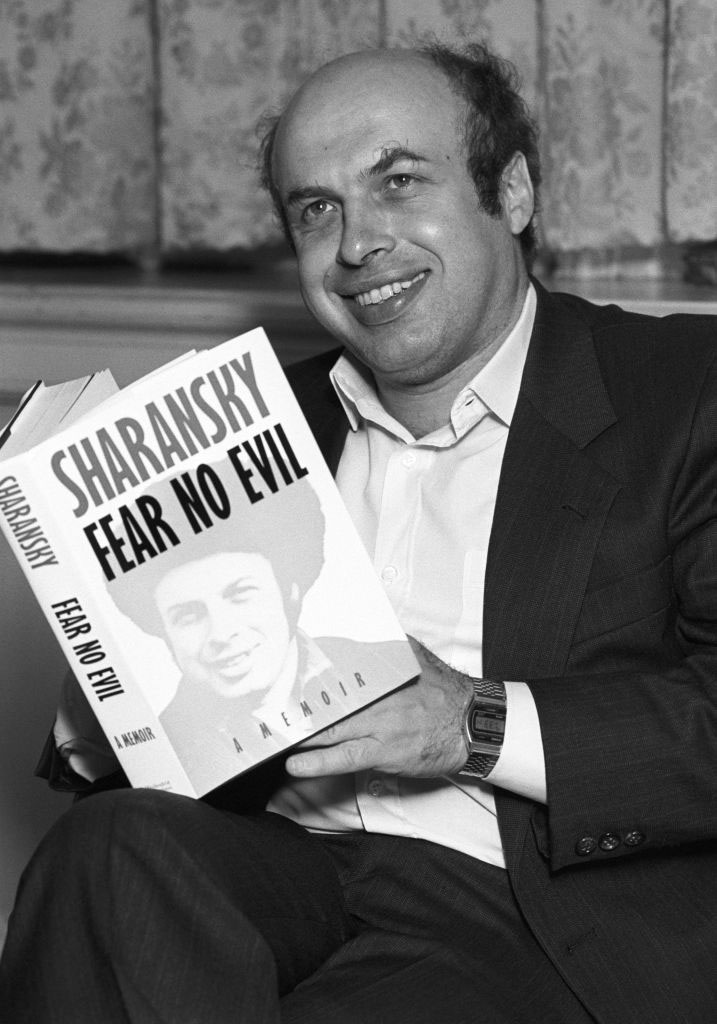
Natan Sharansky Then and Now

1953

On Purim, told that Stalin died,
Natan, aged five, learned “Be safe – learn to look mournful
when antisemites who’re like Stalin die or lied,
and don’t make comments that are scornful!”

1986

The KGB told him to walk a line that’s straight,
instead of which he zigged and then he zagged,
but never changed his not ungainly gait,
or let his mouth by Reds be gagged.


On 11/7/24, Natan Sharansky, interviewed by Rabbi Abraham Cooper at The Museum of Tolerance, said that when his father told the five-year-old Natan about the death of Stalin he added that while should be extremely happy about Stalin’s death he should look as mournful as all his teachers and schoolfriends would be. Sharansky added that this is how he managed to survive in the gulag for many, many years.

Steven Erlanger in the NYT, February 2, 2005, discussed Natan Sharansky’s book “The Case for Democracy: The Power of Freedom to Overcome Tyranny & Terror”:

 Mr. Sharansky’s collaborator on the book, Ron Dermer, is amused by the new attention. “For years Sharansky has been almost a broken record in Israeli political discourse,” he said. “But now people are finally listening, for some reason. He hoped for some echo in the United States to the book. But that the president should be one of the first Americans to read it is something we couldn’t ever expect.” The difference now, Mr. Dermer surmised, is the impact of Sept. 11, 2001. The attack by Al Qaeda provoked a realization that “the status quo is no longer good enough,” he said. What connects Mr. Bush and Mr. Sharansky, he said, was “deep faith in the universality of freedom and its transformative power.” When he was freed, in an exchange of prisoners with the United States, Mr. Sharansky walked to freedom alone across the Glienicke Bridge, from East Germany to the west. He was ordered to walk straight across; a refusenik to the end, he zigzagged. He is zigzagging still.

Natan Sharansky left the Soviet Union on February 11, 1986, following a straight line, called the Glienicke Bridge.

On 2/13/16 The Times of Israel published this article by his daughter, Rachel Sharansky Danziger:

Thirty years ago today, my father, Natan Sharansky, crossed a bridge.

The bridge was Glienicke Bridge, of Steven Spielberg’s “Bridge of Spies” fame. When my father walked onto it he was a prisoner in the Soviet block, though a free man in spirit. He found freedom on the day he stopped hiding his opinions. He earned freedom as he fought for his right to be a Jew in Israel, and for his fellow Russians’ human rights. He preserved it as the KGB imprisoned his body, trying and failing to force him to recant.

After nine years of imprisonment, my father stepped off Glienicke Bridge, and became a free man in body as well.


Gershon Hepner is a poet who has written over 25,000 poems on subjects ranging from music to literature, politics to Torah. He grew up in England and moved to Los Angeles in 1976. Using his varied interests and experiences, he has authored dozens of papers in medical and academic journals, and authored “Legal Friction: Law, Narrative, and Identity Politics in Biblical Israel.” He can be reached at gershonhepner@gmail.com.

Natan Sharansky Then and Now Read More »

A Moment in Time: “We Don’t Visit Israel. We RETURN to Israel”

Dear all,

That awesome feeling of approaching Israel always engraves itself as a special moment in time. The arrival into Ben Gurion airport over Tel Aviv evokes emotions that are often overwhelming.

I serve on the Board of Governors for the Hebrew Union College – Jewish Institute of Religion (HUC-JIR). HUC-JIR prepares leaders in Reform Judaism, including Rabbis and Cantors, Educators and Executive Directors. The Board is here for the Ordination of the Israeli Rabbinic Program (training Reform Rabbis to serve progressive Judaism in Israel).

The mood in Israel is complicated. On the one hand, it’s heavy. Tourism is almost non-existent. The airport was a ghost town. Posters are up everywhere to bring the hostages home.

On the other, people are working their jobs, walking on the beach, and sitting in cafe’s. I got a haircut from the guy I’ve been going to for over thirty years whenever I am there.

And the two realities come together each day. Ron and I were walking in the marketplace when an air raid siren went off, and we had to duck into a shelter. Indeed, missiles from Lebanon made their way to Tel Aviv. Ten minutes later, we were back walking in the marketplace.

This is just how life is.

Israelis all want to know my thoughts on the recent US elections. They want to know how things are on college campuses. They want to know when we will be returning next. They want to know that they are not alone.

For two thousand years, whenever Jews have gone to Israel, we have never spoken about how we visit. Rather, we speak about our return. This is the land of our ancestors.

This is our extraordinary, invigorating, spiritual, complicated land. We pray for a path forward where ALL people in the region can live in safety and freedom. And we deepen our commitment for a Jewish homeland so that our children and grand-children have a place to which they can return – even if they are here for the first time.

With love and shalom,

Rabbi Zach Shapiro

A Moment in Time: “We Don’t Visit Israel. We RETURN to Israel” Read More »

A Bisl Torah~Stars and Sand

In this moment in time, it is difficult to imagine enduring much more. October 7th pummeled the heart of the Jewish people. Over the course of the year, we are no longer shocked by daily incidents of antisemitism. Pogroms in Amsterdam; terror threats in Thailand;  desecration of Jewish businesses in Pico-Robertson. Jew-hatred exists everywhere and publicly showcasing our Judaism has become an act of courage and resistance.

One can’t help but be a little tired.

Tired of the hatred. Tired of the tragedies. Tired from navigating a world in which being Jewish shouldn’t have to be so hard.

But the Torah gives us the guidance we need. Beresheet 22:17 reads, “I will bestow My blessing upon you and make your descendants as numerous as the stars of heaven and the sands on the seashore; and your descendants shall seize the gates of their foes.” The Kli Yakar, a Torah commentary by Rabbi Shlomo Ephraim ben Aaron Luntschitz, explains that sometimes, the Jewish people are referred to as the stars in the sky and sometimes, the sands on the seashore. He teaches that when we experience moments of greatness and glory, we will feel like the stars in the sky. Numerous, bright, expansive.

But, he cautions, we will also face moments of distress, disappointment, and fear. In those moments, we must remember that we are like the sand on the seashore. It feels as if waves of hatred, isolation, anger, and prejudice are never ending. Crushing waves from an ocean in which there is no finality. But, says Kli Yakar, the Jewish people are referenced as sands on the seashore for a specific reason. Sands break impending waves. Even as other nations throughout time sought to destroy our spirit, grain by grain, like sand on a beach, we broke the waves seeking our demise.

Sometimes, we are like stars in the sky and sometimes, we are like sand on the seashore. Perhaps the challenge is trying to be both. Shining brightly even through the face of terror. Spreading light even while we break down evil outside our doors.

God’s blessing to Abraham remains as true as it did thousands of years ago. May we continue to be as numerous as the stars in the sky and the sands on the seashore. Nothing will stop us from illuminating the heavens and bringing light to the darkest ends of the earth.

Shabbat Shalom


Rabbi Nicole Guzik is senior rabbi at Sinai Temple. She can be reached at her Facebook page at Rabbi Nicole Guzik or on Instagram @rabbiguzik. For more writings, visit Rabbi Guzik’s blog section from Sinai Temple’s website.

A Bisl Torah~Stars and Sand Read More »

Passing Grade – a poem for Vayera

For now that you have passed this test, I know that you fear God—since you did not withhold your son, your only one, from Me. ~ Genesis 22:12

In the film Star Trek V: The Final Frontier
(and already you know this poem is gonna be good)
after a whole lot of plot and special effects

Captain Kirk and the crew find themselves
in front of God. I put God in italics because
Kirk is suspicious and quickly wonders
why God needs a spaceship to be rescued.

In the Biblical sense, Kirk has passed this test
by questioning, just like Abraham did
at Sodom and Gomorrah.

But perhaps at this mountain, soon to be
the centerpiece of our whole history,
Abraham didn’t score an A+ on this test.

When told to sacrifice his own son
it may have been a trick question?
What kind of God needs that level of adoration?

If I were given that test, I would have said no –
a passing grade in my book.
(I hope you’re reading this, son. You’re safe

from any suspect divine requests.)
I think Abraham, a known arguer,
should have argued.

Sometimes we need to read between
the lines of the text on our oldest papers
so we can all live long and prosper.


Rick Lupert, a poet, songleader and graphic designer, is the author of 28 books including “God Wrestler: A Poem for Every Torah Portion.” Visit him at www.JewishPoetry.net

Passing Grade – a poem for Vayera Read More »

Sephardic Torah from the Holy Land | Abraham our Leader

Our tradition calls him Avraham Avinu – Abraham our Patriarch. But more than just being “our patriarch,” Abraham was our very first leader. What kind of leader was Abraham?

Initially he was unknown to the world. He only had God’s endorsement. Who was Abraham, and why was he chosen by God to become the leader of a new nation?

For ten generations, humanity lacked direction, vision or purpose. For ten generations, the world was without an effective leader. According to Pirkei Avot, it took God ten generations to patiently search for a leader on earth.

What did God want in a leader?

I think of the colorful magnet hanging on my refrigerator. It reads:

“RISK more than others think is safe.

CARE more than others think is wise.

DREAM more than others expect is practical.

EXPECT more than others think is possible.

Bold leaders take risks, sensitive leaders show care for others, visionary leaders never stop dreaming, and strong leaders have high expectations for achievement. Abraham’s career as a leader embodied all of these traits. His leadership was about bringing light to a world that was filled with darkness. He met with kings, participated in wars, brokered peace treaties and built economic strength for his community.

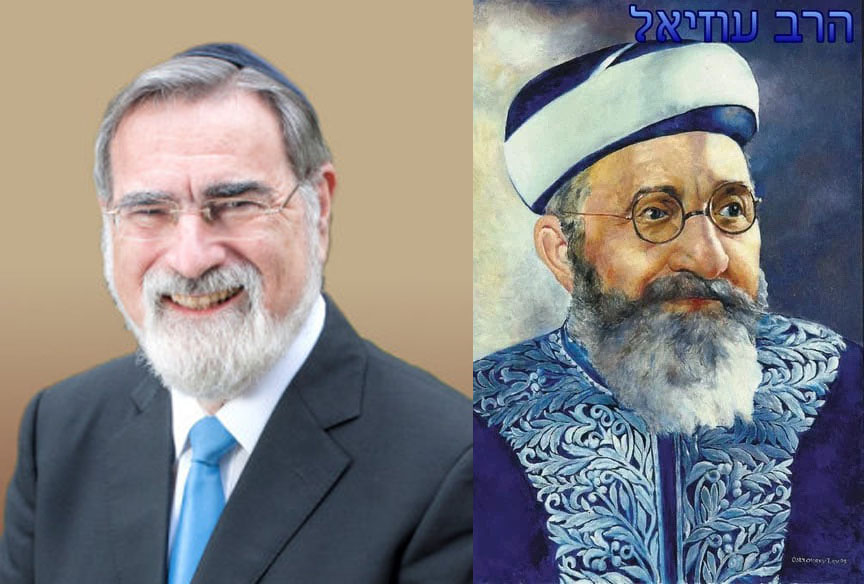
In his book Lessons in Leadership, Rabbi Jonathan Sacks – a briliant rabbinic leader – comments that “Abraham is without a doubt the most influential person who ever lived,” with Jews, Christians and Muslims all claiming him as their spiritual ancestor.

“Yet he ruled no empire, commanded no great army, performed no miracles, and proclaimed no prophecy,” continues Rabbi Sacks. “He is the supreme example in all of history of influence without power.

Why was Abraham so influential?

In his book Hegyonei Uziel, Rabbi Benzion Uziel – also a brilliant rabbinic leader – remarks: “Abraham’s mannerisms towards his fellow human beings were rooted in dignity, grace and humility. It is because of his respect and open heart towards people that Abraham was such an influential and successful leader.”

Abraham, Rabbi Sacks, Rabbi Uziel. Leaders – and role models – for all generations.

Shabbat Shalom


Rabbi Daniel Bouskila is the international director of the Sephardic Educational Center.

Sephardic Torah from the Holy Land | Abraham our Leader Read More »

My Tour of Jewish Pico

A few months after October 7, a giant mural took up residence on the wall that abuts the parking lot of my local grocery store. I never thought I would see Israeli flags in my neighborhood of Birmingham, England, but there they were. On the left of the mural, the artist painted a white strip adorned with two Israeli flags.

Of course, this was no depiction of Zionist pride. Between the two flags, in all caps, you can read the words painted in blood red: “ISRAEL GENOCIDE.” To the right of this message is another flag, the same one you see hanging from almost every streetlamp, café, and household window where I live—a Palestinian flag. Several stories high, it takes up most of the wall.

Arriving in Los Angeles the other day, I was greeted with Israeli flags. But they couldn’t have been more different from the ones in my neighborhood. Here, the blue-and-white flags flutter over rooftops of cars, adorn the windows of restaurants, soften an expletive by replacing the letters between F and K in a sticker damning Hamas. If there are words adorning these flags, they are “Am Yisrael Chai,” or, in Hebrew, “Be’yachad nenatzeach” [Together, we will win]. And the connection to Israel comes out in other ways. I walked by a bright yellow Ferrari with “Free the hostages” painted in a matching color across the windshield. Trees were tied with wide, unmissable, similarly hued shiny ribbons, and not just to evoke the old-timey song. The yellow ribbons embraced KIDNAPPED posters, one after the next, images of hostages in Gaza waiting to be released.
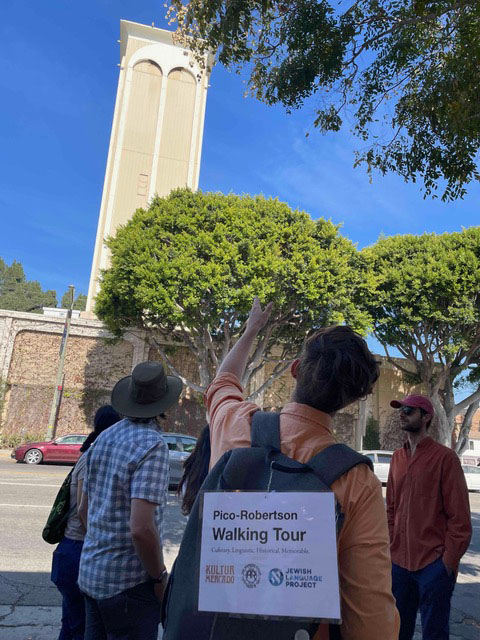
But, taking the Jewish Linguistic and Culinary Walking Tour of Pico-Robertson Sunday morning, I quickly discovered that Zionist pride is only one marker of the neighborhood’s loud and proud Jewish community.

We began at Factor’s Famous Deli, a landmark restaurant that has graced its current location since 1948. Though traditionally Eastern European Jewish in cuisine, choc-a-bloc with sable and whitefish, matzo ball soup, and hot pastrami, its non-kosher status turned out to be pretty unusual for the neighborhood, where kosher restaurant after kosher restaurant (Persian, Chinese, sushi, milchig, trendy) line Pico Boulevard.

As we waited for participants to arrive, we nibbled on the deli’s divine rugelach, which are made by the baker from the now-closed Beverlywood Bakery (I couldn’t determine which I liked more, the raspberry or chocolate chip, so I had to alternate between the two several times). Meanwhile, Sarah Bunin Benor, who runs The Jewish Language Project, asked if we knew the meaning of the word “rugelach.” As I greedily shoved another chocolate chip pastry (the decided favorite) into my mouth, I realized I had no idea. She explained. The word can be broken down into three parts: “rog,” a corner in Yiddish; “el,” indicating a diminutive; “ach,” meaning plural (like “shtetlach”). I made a mental note to remember the etymology and also to take many of these delicious little rolled corners home with me!
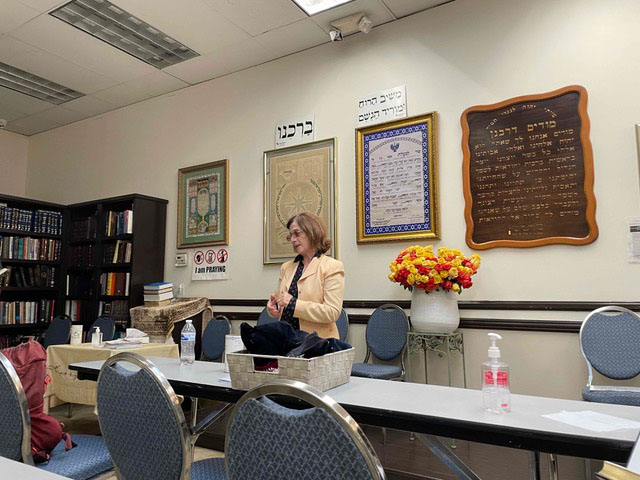
Although Sarah, a professor of Jewish Studies and Linguistics at Hebrew Union College, helped with some of the word definitions and linguistically versatile signage, the tour was primarily led by Alan Niku, a Persian-American filmmaker, and Aaron Castillo-White, the executive director of Kultur Mercado. Alan, who grew up as part of the only Persian Jewish family in San Luis Obispo, told us he used to make pilgrimages to Pico as a kid, eating, for instance, at Kolah Farangi, a Persian-Chinese fusion restaurant fronted by the Yiddish sign “Glatt,” Hebrew “Kasher,” and the name in Farsi and English. “Farangi,” we learned, refers to the old word “Franks,” which has been extended to mean “foreigner” at large. A kolah is a hat. It’s not clear why the restaurant is called “foreigner’s hat,” but I’m told it’s tasty!

Alan was also familiar with every synagogue, big and small, in the vicinity. In the Jewish Chronicle, there used to be a columnist called “The Secret Shulgoer.” She went, anonymously, from shul to shul around the United Kingdom and reviewed grand synagogues and tiny shtiebels, rating them on the flow of their service, the moistness of their honey cake, their friendliness to toddlers (she brought her daughter along to test the waters). Alan could play the same role in Los Angeles!—though given Pico’s growing non-Ashkenazi context, perhaps he ought to be called the Covert Kenissa Congregant.

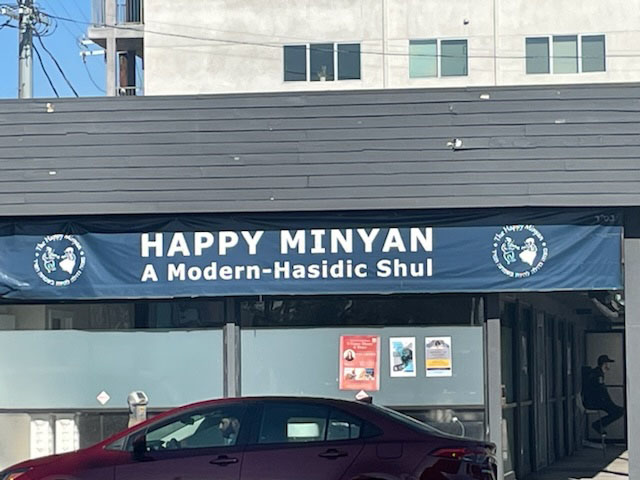
Whether you’re a shulgoer or kenissa congregant, the options along Pico seem unlimited. You can attend the “Happy Minyan,” a “Modern Hasidic Shul,” and sing the tunes of Shlomo Carlebach. You can go to the three-story Chabad Bais Chaya Mushka Campus, a replica of Brooklyn’s 770, which has several options (mostly Sephardic). Chabad also has Bais Bezalel and CPY: Chabad Persian Youth Center. We passed Pico Shul, and The Community Shul, and Adas Torah (black hat yeshivish), and B’nai David-Judea (liberal “open” Orthodox), and Shuvah Israel Torah Center (a big Sephardic mix), and countless others.
Along the way, we discovered urban mythology—like the claim that the oil tower, with architecture resembling the tablets of the Torah, was called “Moshe’s Oil” (there is an actual synagogue called Ohel Moshe down the road, and we visited it!). In reality called Cardiff Tower, this active oil well site, established by Occidental Petroleum at the corner of West Pico and South Doheny Drive in 1966, was built to fit with the Orthodox Jewish neighborhood’s style. Only when you realize that not a single window appears on the structure might you start to wonder what the synagogue-like building could really be. Apparently, someone once scaled the tower and topped it with a menorah!

We also discovered evidence of the neighborhood’s incredibly diverse Jewish communities. Take the sign still taped to a pole for “Esrog Express,” promising Sukkot sets for “Mehudar Ashkenaz, Sefardi, Israeli, and Moroccan” traditions. Who knew there were so many options??

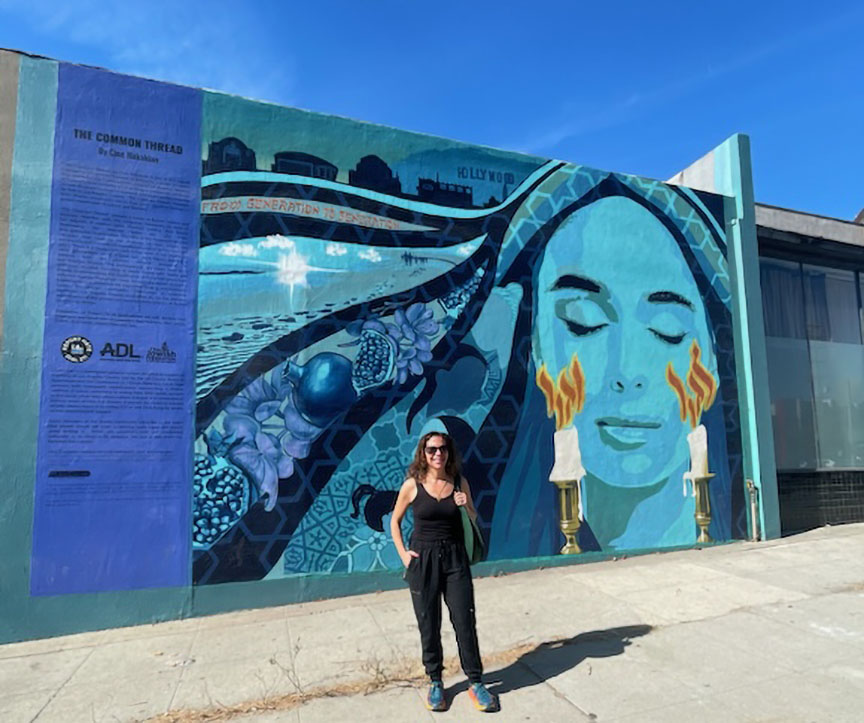
And although the pain of October 7 is everywhere—the first names of the American hostages (Judith, Sagui, Omer, Gadi, Itai, Edan, Keith, and Hersh z”l) in the windows of Factor’s, the large painted “Bring them home” dog tag in the windows of Bibi’s Bakery—so too is the joy of Jewish life on Pico Boulevard. A vibrant mural called “The Common Thread” by local Iranian-Jewish artist Cloe Hakakian depicts a woman’s face, eyes closed in prayer, before Shabbat candles; the candle’s flames spell “le’dor va’dor,” in Hebrew, with the translation, “From generation to generation,” written in Hebraicized English font. The woman wears a headscarf, and woven into its fabric are diverse figures and Jewish symbols; beyond her, we see the Hollywood hills.
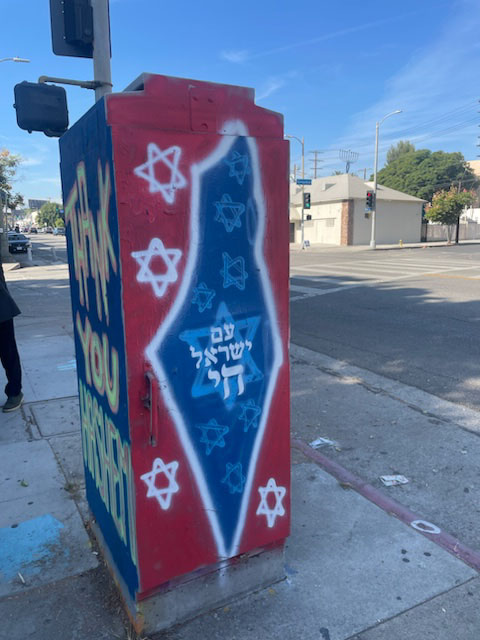
Electrical boxes have been covered in graffiti, mostly in Hebrew: a thank you to God (“Hashem” unusually spelled out in Hebrew); a map of Israel with the Hebrew words “am Yisrael chai”; a bilingual sign offering the slightly different “love more” in English and “ahavat chinam” [free love] in Hebrew; the Hebrew transliterated “Bitachon” [security] followed by “Trust in G-d”; the line from the Torah, “ve’ahavta le’ra’echa kamocha,” that commands us to love our neighbors as ourselves.

As we ate Pico Café’s fried Yemenite malawach; as we walked by clothing stores that sold “Japparel” and restaurants that served “sandwichim”; as we passed Elat Market (which Persian Jews pronounce Ee-lat, not Eilat), where Alan told us it would be too difficult for our group of 22 to enter (“very sharp elbows,” another tour participant whispered in my ear) but snacked on its sweet, dense chickpea cookies; as we sat in Kenisa-ye Ohel Moshe and listened to  Shahnaz Yousefnejadian, a woman from Sanandaj, Iranian Kurdistan, speak to us in her native Hulaula, the neo-Aramaic dialect she is documenting in a dictionary-in-progress; as we were served a beautiful multi-course meal at Kabob by Faraj (I’d consumed too many rugelach and barely had room for the beef, chicken, and tofu kabobs, salads, and rich soups), I marveled at the Jewish universe contained on a handful of blocks in sunny Los Angeles.


Karen Skinazi, Ph.D. is Associate Professor of Literature and Culture and the director of Liberal Arts at the University of Bristol (UK) and the author of “Women of Valor: Orthodox Jewish Troll Fighters, Crime Writers, and Rock Stars in Contemporary Literature and Culture.”


My Tour of Jewish Pico Read More »

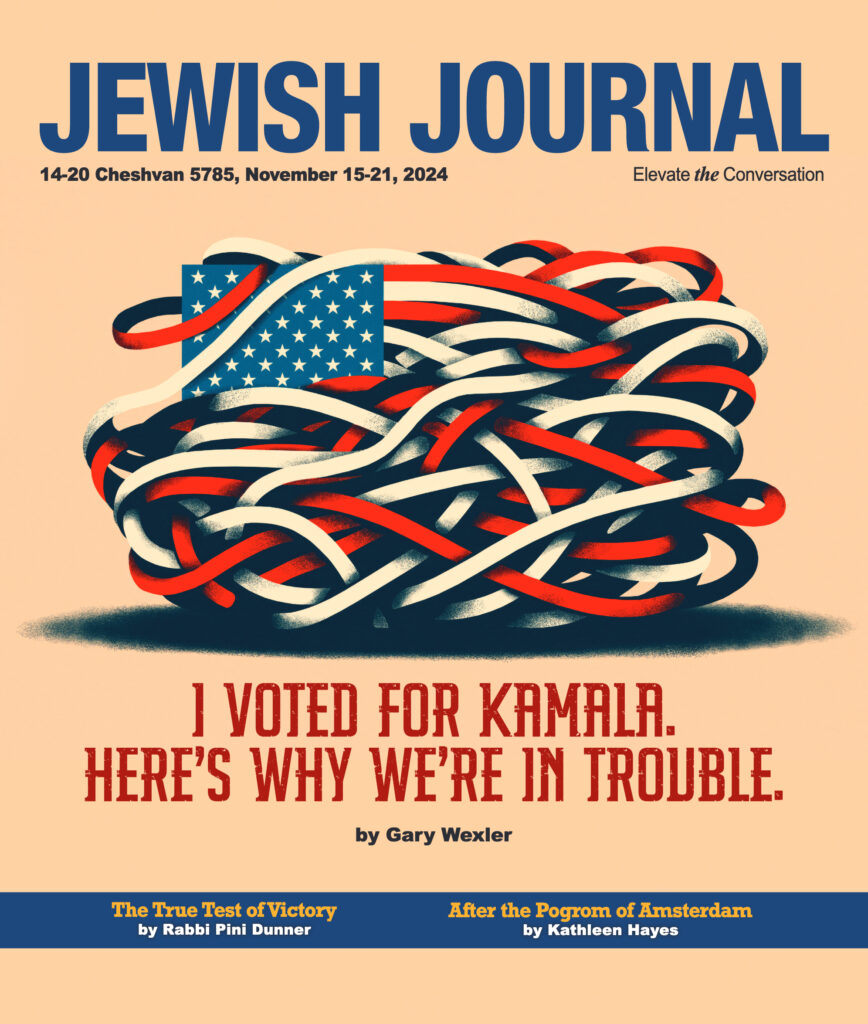
Print Issue: I Voted for Kamala. Here’s Why We’re in Trouble. | Nov 15, 2024

CLICK HERE FOR FULLSCREEN VERSION

Print Issue: I Voted for Kamala. Here’s Why We’re in Trouble. | Nov 15, 2024 Read More »

Israeli Eurovision Star Eden Golan Performs at Milken East Campus

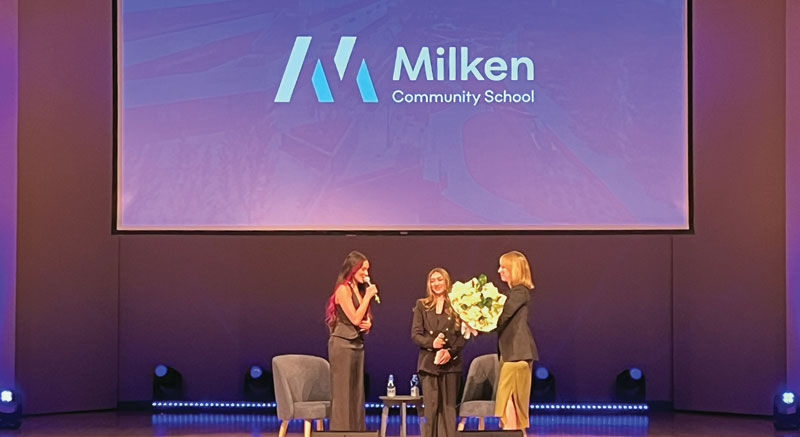
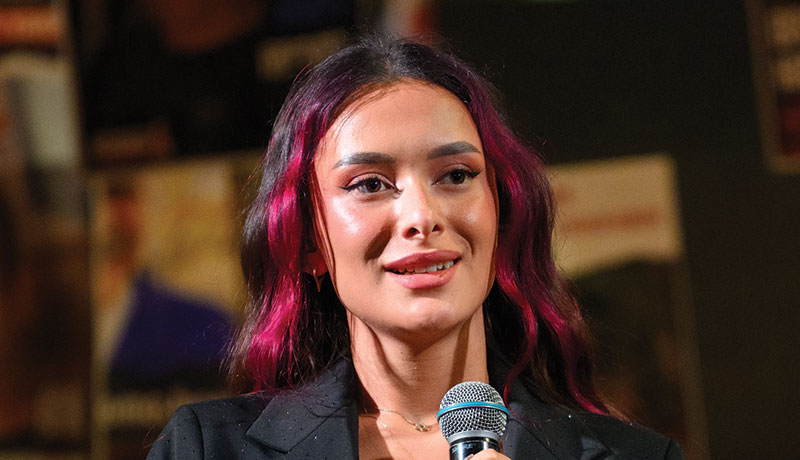
Earlier this year, when Israeli singer Eden Golan performed at Eurovision,”she was forced to sing over a chorus of boos from anti-Zionists in the crowd who opposed her participation in the song contest because of their opposition toward Israel’s war in Gaza. When Golan appeared at Milken East Campus for a powerful three-song concert performance on Nov. 4, the reception was decidedly more friendly and welcoming.

At the Milken East Campus, in fact, there was nothing but love and adoration for the young singer. 

Taking the stage at the Gindi Auditorium around 7:30 p.m., before a sold-out crowd of Milken Community School supporters, alumni and community members, Golan kicked off her three-song set with a cover of “Rise Up,” an inspirational ballad by artist Andra Day.

She then debuted her recently released single, “Older,” which she explained was about the way experiences such as those endured by Israelis over the past year force one to grow up far too quickly. Indeed, the song combines introspective lyrics — “Got the whole world on my shoulders,” she croons. “Could you carry it with me?” — with a dancefloor-ready beat.

She concluded the set with “Hurricane,” the song she sang at Eurovision and easily her most well-known number. Encouraging everyone in the dimly lit auditorium to stand up and sing along if they knew the words, Golan proved that the soaring vocal range and the ability to simultaneously convey poise and vulnerability seen at Eurovision was no fluke. Golan, 21, has been singing since the age of nine. She was raised in Russia, where she experienced minor antisemitism, before her family relocated to Israel. Singing had always been a creative outlet, she said.

Eden Golan, speaks at Hostage Square on May 18th, 2024 (Photo by Alexi J. Rosenfeld/Getty Images)

Her early days in the music industry included a stint in a girl pop group. Not too long ago, a successful appearance on Israeli show “HaKokhav Haba” (Hebrew for “Rising Star”) led to her selection for Eurovision. Even before she appeared on Eurovision, there was controversy. She had originally submitted a song called “October Rain” — a direct reference to the Oct. 7 attack — but the European Broadcasting Union, which operates Eurovision, deemed the song too political. Golan and her team quickly rewrote the lyrics and titled it “Hurricane.” 

At Eurovision, with Golan as Israel’s representative, Israel finished second in the audience vote and fifth place overall. The singer overcame an arguably biased panel of judges as well as anti-Israel peers to prove that talent transcends politics.

At Milken, after her performance, Golan sat down for a half-hour Q &A with Milken Community School student Ella Lax, from the class of 2026. The onstage discussion was wide-ranging and underscored why Golan has endeared herself to the pro-Israel Jewish community while being appreciated by music lovers worldwide.

A few highlights:

• On what it was like to be confronted with boos during her recent Eurovision appearance: “It felt amazing,” Golan said. “I would go on that stage being booed at and perform a million more times if I had to.”

• On her love for Israel: “Even with everything that’s happening, every time I’m back from a flight, I land in Israel and I’m like, ‘It’s so good to be home.’ Like, it’s just something about that place.”

Earlier this year, when Israeli singer Eden Golan performed at Eurovision,”she was forced to sing over a chorus of boos from anti-Zionists in the crowd who opposed her participation in the song contest because of their opposition toward Israel’s war in Gaza.

• On appearing at Hostage Square in Tel Aviv alongside families of hostages: “It was my first performance I did after Eurovision, and it was a very important moment for me.”

Milken Head of School Sarah Shulkind also participated in the evening. At the beginning of the night, she explained the concert was not just an opportunity for the local community to see one of Israel’s brightest music stars — it was also the inaugural event at Milken East Campus. The Jewish high school and middle school purchased the site from American Jewish University this year, and it plans to continue holding programming for the community at the campus.

Israeli Eurovision Star Eden Golan Performs at Milken East Campus Read More »