fbpx

June 26, 2024

A Tribute to Legendary KTLA Reporter Sam Rubin

Many of you welcomed my uncle, legendary KTLA entertainment reporter Sam Rubin, into your homes each morning. He was a man of deep goodness, passion, and humor, a master of red carpets, foremost fan of Apple Pan treats, and renowned for his Disney’s “Guardians of the Galaxy: Mission Breakout” screams and optimal frosting distribution cupcake consumption methods. 

Since learning of my uncle’s passing, I’ve found myself in one memory again and again: I’m 7 or 8 years old, sitting next to my uncle in his car. It’s the middle of the night and we’re the only car on the road and I feel like we’re the only people in the world. Talking together. Free and joyful, yet safe, every possibility ahead of us. The windows are down and the night air hits our faces as my uncle and I speed along Pico Blvd.

That’s the experience I most associate with my uncle. And I know he made so many others feel the same way. He was talking with you or asking a question, full attention, and you felt like you were the only person in the world. He was looking at the camera but speaking to your soul. There was chaos in your life, in your day, but for those moments when you were with Sam Rubin, you were safe, life was fun, his joy was contagious, and anything was possible.

This nighttime ride though was a real memory or perhaps an amalgam of them. I drove like this with my uncle many times during the formative years of my childhood. When Pressman Academy had those parent-teacher conference and teacher in-service days, I wouldn’t sleep in. Instead, my mom would wake me at 3:00 a.m. and she’d help me get ready and dressed in my one fancy suit, and then her younger brother, my uncle, KTLA’s Sam Rubin, would pull up to the house and I’d hop in.

Hours after last call, hours before sunrise, we’d speed across town: Pico to Rimpau to 3rd to Van Ness. We’d pull into KTLA. Every visit was magical. Often, I’d join him on air. So many wonderful childhood memories I owe to my Uncle Sammy. I was so proud to be his nephew. I still am.

From my preschool graduation to my rabbinical school ordination, he cheered me on. During his toast at Charlene and my wedding, he explained that his first car had a vanity license plate “Andy’s Unc.” And he was exactly the kind of fun-loving, encouraging, invested, talented, genuine, wisdom sharing, deeply loving, present, curious and passionate uncle that you would expect. He was the same person on camera as off.

Sam was fascinated with my work as a congregational rabbi, and the more I think about it, the more I realize how much he taught me by example: Sam served a devoted congregation made up of daily, weekly, and even those once-or-twice-a-year high holy live-from-the-red-carpet viewers, all of whom rightly looked to him for insight and inspiration. He used his rich experience, genuine curiosity, passion for the material, and unparalleled talent to translate Hollywood scandal, celebrity, and cinema, into meaningful wisdom. He asked deep questions, built enduring relationships, and earned trust. Through his kindness and joy, his passion and optimism, his humor and his belief in the goodness and dignity of all people, until demonstrated otherwise, he enriched and elevated the lives of those who opened their hearts and screens to his smile and words.  

Sam wouldn’t call himself a religious man, but in truth, he understood our heritage and what it meant to be Jewish. He regularly hosted Shabbat meals, hosted Richard Lewis for Passover, and he sent my cousins to Jewish day schools. During his last week of life he wrote about the distressing increase in anti-Jewish hate since Oct. 7, writing “I feel like my mother felt as an 11-year-old girl in Germany. I can’t quite take in that it is all happening …” He stood up against antisemitism in Hollywood from Mel Gibson to Kanye. When an otherwise talented actor suggested that Jews control Hollywood, with indignation and wit, Sam turned to the camera: “A quick sidebar: If Hollywood were really truly run by Jews, entirely for their own benefit, Shouldn’t I be doing better?”

When an otherwise talented actor suggested that Jews control Hollywood, with indignation and wit, Sam turned to the camera: “A quick sidebar: If Hollywood were really, truly run by Jews, entirely for their own benefit, Shouldn’t I be doing better?”

A few years ago, my wife and I joined Sam’s family in Israel. I remember standing with him at my cousin’s bat mitzvah. Work and junkets had taken him all over the world, but he told me nowhere meant as much, nothing was as special as seeing his daughter chant from that sacred Torah scroll overlooking the walls of Jerusalem.

Just weeks after he passed, that cousin graduated from de Toledo High School. In addition to wearing a cap and gown, each graduate wore a tallit with tzitzit that had been tied by their parents at a program earlier in the year. Because that program took place before my uncle’s unexpected passing, in a very physical way, my cousin was wearing her dad and as we celebrated her.We felt my uncle’s alarming absence and spiritual presence with us.

Wishing comfort to all for whom Sam Rubin was a presence in your lives. May the soul of Shmuel ben Tuvia v’Chana, of Sam Rubin be bound up in the bond life eternal.


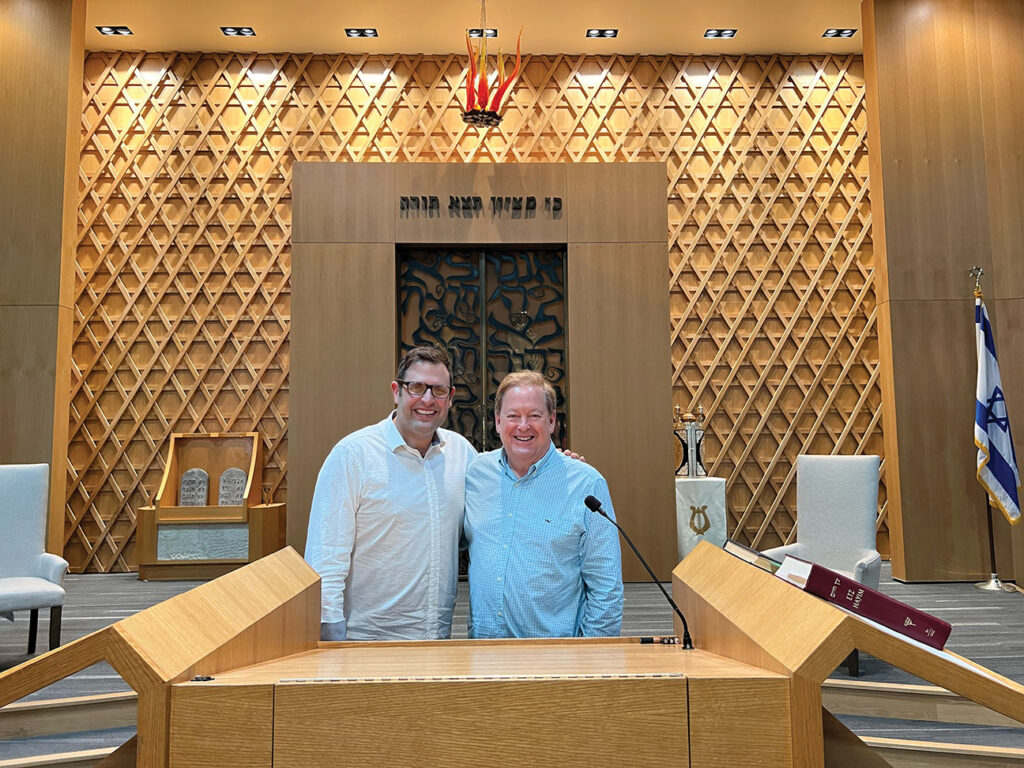
Rabbi Andy Green is the Senior Rabbi at Congregation Or Tzion in Scottsdale, AZ. He is the proud nephew of Sam Rubin z”l

A Tribute to Legendary KTLA Reporter Sam Rubin Read More »

Campus Watch June 26, 2024

Columbia Puts Three Admins on Leave After Text Messages Denigrating Antisemitism Panel Come to Light

Columbia University has placed three administrators on leave after text messages emerged showing them denigrating members of an antisemitism panel.

The New York Times, citing a report from the Washington Free Beacon, described how the administrators sent texts alleging that the panelists “were taking full advantage of this moment” because of “huge fundraising potential” and sent vomit emoji after linking to a piece by Columbia Rabbi Yonah Hain titled “Sounding the Alarm.” Other text messages featured them saying it was “difficult to listen to” and “LMAO” (laughing my a—off) about what the Times described as “a sarcastic message” regarding Columbia/Barnard Hillel Executive Director Brian Cohen.

Rep. Virginia Foxx (R-N.C.) has given the university a deadline to provide the text messages to the House Committee on Education & the Workforce that she chairs by June 26. 

Jewish Woman, Husband Attacked by People Shouting “Free Palestine” at NYC Elementary School Graduation

A Jewish woman and her husband alleged that they were attacked by a family who spoke Arabic and shouted “Free Palestine” and “Death to Israel” at them, the New York Post reported.

Lana, the Jewish woman, told the Post that they were taking pictures with their two kids in the after of PS 682 Brooklyn’s graduation cermony; the pictures were being taken in front of a school banner. A boy who waved a Palestinian flag as he walked across the commencement stage attempted to push the family away from the banner. “We told them there was space for both families,” Lana said. “An older man turned to us and said ‘Free Palestine!’ for no reason. My husband told him this was not the time or place for that but the man cursed at him in Arabic, and shouted, ‘Free Palestine, Gaza is Ours, Death to Israel.’” Her husband, Johan, told the Post that he was hit in the head after he demanded the older man back away and that a “scuffle” ensued in which a group of people held him down he was put in a “chokehold.” Lana claimed that she began recording the incident when “a woman from the group came up from behind me, pulled me by the hair, and knocked me down on the ground, shouting, ‘I will kill you.’”

A spokesman for the city’s Department of Education told the Post, “Initial reports we have received from multiple witnesses indicate that both families engaged in aggressive behavior, but we are still investigating the matter and are simultaneously engaging with families as we work towards a resolution.” Lana told the Post that “my husband was trying to deescalate the situation” and accused the department of ‘trying to sweep it under the rug to avoid further scrutiny of this heinous antisemitic act.”

Columbia SJP Calls for Release of Suspect Accused of Arson Attacks at UC Berkeley

Columbia’s Student for Justice in Palestine (SJP) chapter shared a statement from Columbia Apartheid Divest on Instagram June 23 calling for the release of the man suspected of firebombing of a police vehicle and three acts of arson on UC Berkeley’s campus.

The suspect, Casey Robert Goonan, was arrested on June 17 on several felony charges, including possessing and using a destructive devices and arson. His bail was initially set at $1 million but reduced to $450,000. The statement shared by Columbia SJP  demanded to “Free Casey.”  “The fires on UC campuses have been in direct response to the university’s violent police repression of their own students,” the statement read, per Campus Reform. “The spark ignited on US campuses during the intifada of the last few months cannot be quelled, and further repression will only continue to transform these sparks into flames. The flames are small gestures that display the discontent of everyday people and the seriousness of their purpose: to end the genocide, liberate Palestine from the zionist [sic.] occupation, and topple all institutions profiting from colonial, racial capitalism.”

Survey: 72% of Americans Call for Punishing Members of Anti-Israel Encampments

A recent survey found that 72% of American believes that those involved in anti-Israel encampments on college campuses should be punished by their respective universities.

The survey, conducted by the Foundation for Individual Rights and Expression (FIRE) NORC at the University of Chicago, found that 18% of those in the 72% camp supported expelling the students involved, according to The College Fix. Sixty-two percent also said that the encampments didn’t affect how they felt about the Palestinians in the Gaza Strip.

“Public colleges and universities can usually ban encampments without violating the First Amendment, so long as the ban serves a reasonable purpose, enforcement is consistent and viewpoint-neutral, and students maintain other avenues for expressing themselves,” FIRE Director of Campus Rights Advocacy Lindsie Rank told the Fix.

Campus Watch June 26, 2024 Read More »

Discovering Old Truths

The reaction of many Jews to the horrific times in which we find ourselves calls to mind the “Christopher Columbus problem” – conflating what’s new to us with what’s actually new.

Has the world really changed since Oct. 7, or have a number of enduring truths suddenly become all too evident?  I propose that it is the latter.

Here are a dozen examples:

1) Many hold Israel to a very different standard than any other nation.  Countries that kill gays, subjugate women, slaughter minority populations and murder dissidents will often get a pass.  But any failure – real or imagined – related to the Jewish State draws disproportionate outrage.

2) Universities will call out any inkling of racism, misogyny, homophobia, and the like on their campuses, but when it comes to antisemitism, “free speech” rules the day.  Can you guess what the response would be if pro-lifers set up a right-to-life encampment on the college green?  Would that also be considered an acceptable exercise of free speech?

Universities will call out any inkling of racism, misogyny, homophobia, and the like on their campuses, but when it comes to antisemitism, “free speech” rules the day.  

3) Some of our presumed “allies” love us when we support their causes with our time and money, but when we need them most, their silence is deafening.  Let’s never forget.  In the immortal words of Pete Townshend, “I’ll get on my knees and pray we don’t get fooled again.”

4) The pride that older Jews feel for our ancient homeland isn’t necessarily replicated by the younger generation.  We need more programs like Birthright that expose them to the reality of Israel, not the alleged oppressor state that “progressives” are so eager to condemn.

5) Some of our most ardent friends – personally and politically – are non-Jews.  Without those righteous gentiles, we would be in an even more precarious situation than we currently face.  Don’t take them for granted.  Let them know what they mean to us.

6) Jewish organizations – Hillels, synagogues, community centers – are places of revitalization and hope. They rely on our generosity.  Without it, they might not be there when we need them most.

7) Jew-haters will always find a reason to despise us.  We are weak and vulnerable yet control the world’s politics and economics; we are both ruthless capitalists and communist agitators; we are lesser because we are not really white and at the same time privileged oppressors.  To them, what we say or do doesn’t matter.  

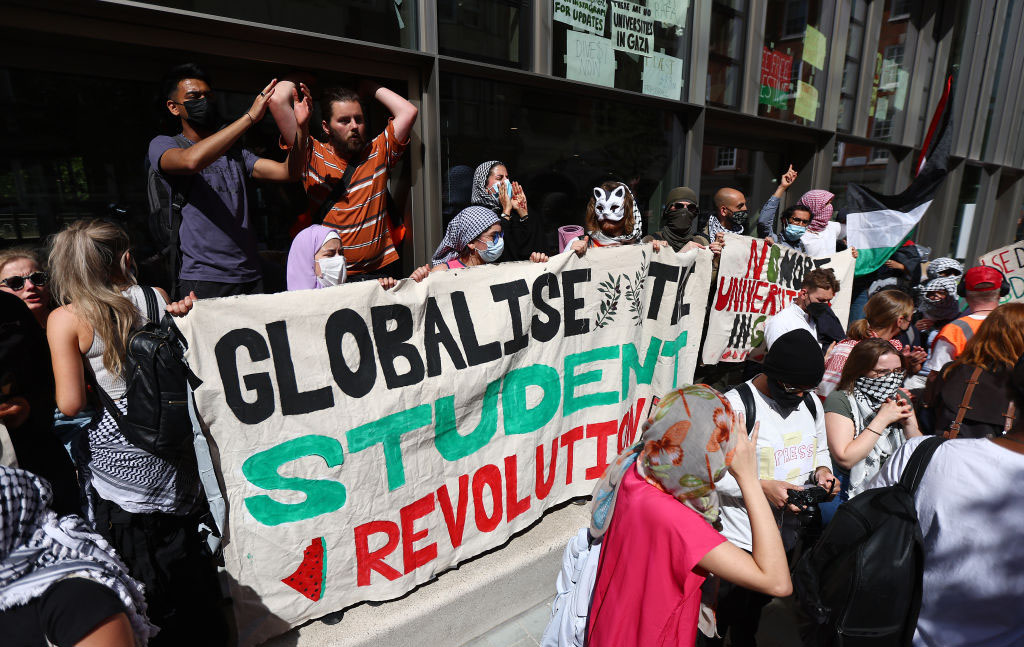
8) Jews who lend their names to the effort to delegitimize Israel embolden its sworn enemies.  These “useful idiots” (Vladimir Lenin’s evocative term) naively ignore the fact that they are at least indirectly supporting a plan not just to wipe Israel off the map, but to kill all Jews everywhere.  What do they think “globalize the intifada” means?

9) The number of people in leadership positions far exceeds the number of genuine leaders.  Too many of them are more interested in doing what is expedient, than in doing what is morally right.  The failure of universities in particular to hold students, faculty, and staff responsible for their words and actions constitutes an utter abdication of their duty to educate.

10) We might justifiably abhor some of the policies of the current Israeli government, but not the nation it leads.  Governments come and go, but we must never turn our backs on our forever homeland.

11) There is a limit to the usefulness of our attempts to engage in civil discourse.  Choose your spots with great care.  Some people pretend that they want to learn from you, but they only want to vilify that which you hold most dear.

12) If we don’t promote our own mental and physical health, we will not be able to help others.  Our adversaries relish sending us down the rabbit hole of self-destruction.  It is OK to turn off the news, to stop watching videos of atrocities and of the rabid mob, and to rejoice in our family, friends, and faith.  

None of this is new.  These truths were as real before the massacre and its terrible aftermath as they are today.  If they seem surprising, it is because we didn’t focus enough on them in the past.  If there is a silver lining to all this misery, it is that our eyes are now wide open to the realities that have long beset us.


Morton Schapiro is the former president of Williams College and Northwestern University.  His most recent book (with Gary Saul Morson) is “Minds Wide Shut:  How the New Fundamentalisms Divide Us.”

Discovering Old Truths Read More »

Even When There Aren’t Second Chances, There Are Second Chances

A while ago I gave a Shabbat sermon on “second chances.” I thought it was a fitting message for Parsha Beha’alotcha, which includes the section about Pesach Sheni, the replacement Passover sacrifice. It tells of a group of people who were ritually impure on Pesach and could not offer the sacrifice. Upset by this prospect, they petitioned Moses; the response was that they could offer a replacement Passover sacrifice, the Pesach Sheni, a month later on the 14th of Iyar. 

The Pesach Sheni sacrifice is a true second chance and it seemed like the perfect message for that Shabbat, on which we were celebrating a bar mitzvah. At the conclusion of the sermon I turned to the young man and said: “You must understand that even as you take your first steps forward as an adult, the secret to life is that there are always second chances.”

Unfortunately, my sermon didn’t tell the entire story. 

Yes, the idea of second chances is central to Judaism. The Sixth Lubavitcher Rebbe, Rabbi Yosef Yitzchak Schneersohn, wrote that “the point of Pesach Sheni is that nothing is ever a lost cause, one can always repair themselves, even those who are distant, even those who are impure … they too can repair themselves.” Repentance is a foundation of Judaism, and the theme of the high holidays; redemption is the theme of Jewish history. Rabbi Akiva, the hero of the Mishnah, was an ignorant shepherd at age 40. Judaism loves second chances. 

But there aren’t always second chances. 

Hidden in the origin story of the Pesach Sheni are difficult tragedies. The people who petitioned Moses were ritually impure because they had been in contact with a dead body. Rabbi Akiva explains they had been attending to the bodies of Nadav and Avihu, Aaron’s sons who were struck dead by God while bringing an offering in the sanctuary. Nadav and Avihu didn’t have a second chance.    

Second chances are less common than we’d like to believe. Pesach is about a people achieving freedom after 400 years of slavery; the last generation went free, but many prior generations died in slavery. They too didn’t get a second chance.

The message of second chances may be perfect for a 13-year-old boy, but it doesn’t sound the same to his grandparents. 

It is here that the Pesach Sheni offers another perspective on what a second chance means.

Time seems to jump around in this section of the Torah. (Bamidbar 9:1-14.) The Pesach Sheni narrative takes place during the first month of the second year, while a much earlier passage (1:1) takes place in the second month of the second year. This leads the Talmud to conclude “there is no chronological order in the Torah.” Sometimes events in the Torah are recorded out of order. (It should be pointed out that this passage is the only unquestioned instance of the Torah breaking with a sequential timeline, and according to the Ramban, the only such instance.) 

Furthermore, the date for the Pesach Sheni is strange. Why doesn’t it occur a week after Pesach, at the earliest possible opportunity for the people to purify themselves? Instead, Pesach Sheni comes a full month later, on the 14th day of Iyar. It is as if there is an imaginary leap year, and somehow Pesach gets to repeat itself.

Taken together, these elements tell us about a conception of time that is non-linear, an idea that Rabbi Joseph B. Soloveitchik has explored in multiple essays and lectures. He explains that time can be seen purely from the perspective of physics, fragmented and finite, and that what exists in any one moment disappears immediately. 

But as part of the human experience, time takes on very different qualities. In our minds, the past and future are ever-present realities; our attitudes toward our past, and what we dream for in the future, define who we are right now. From this perspective, the past is still alive, and the future is already born. 

Rabbi Soloveitchik uses this idea to explain the concept of repentance. The past can be a harsh tyrant, with old mistakes holding one in bondage to a life lived in a deterministic nightmare. With repentance, one changes the present by imagining a better future; similarly, by regretting the mistakes of the past and being motivated by those failures, one’s identity is transformed. 

Rabbi Soloveitchik extends the concept of nonlinear time to history, in what he calls “unitive time consciousness.” In Judaism, the dream of the future Messianic future is ever-present, and occupies many of the prayers. The past is reexperienced on days like Pesach and Tisha b’Av. The words of the sages who are long gone are studied every day, and “there can be no death … among the company of the sages of tradition.” Past, present, and future are all part of everyday reality; and “in the midst of a fleeting moment, one can experience an ever-enduring eternity.”

The time-shifting associated with the Pesach Sheni offers a profound lesson. Second chances are only possible if one sees time from the perspective of eternity. 

Rabbi Yose HaGelili differs with Rabbi Akiva and says that the people who petitioned Moses were impure because they had been carrying Joseph’s coffin. Joseph was the first Jewish exile to Egypt, and before his death, he asked for his bones to be returned to Israel for burial. This is Joseph’s second chance, returning home with his descendants after a long and bitter sojourn. Second chances are not just for the living, because we see history through the lens of eternity. 

The second chance you get may not be your own. The generations enslaved could only connect to redemption through their dreams; ultimately, those dreams were lived out by their descendants. But that final redemption belongs to all previous generations as well.  

The second chance you get may not be your own. The generations enslaved could only connect to redemption through their dreams; ultimately, those dreams were lived out by their descendants.

Eight months of war has left our community exhausted. There is the war against Israel, conducted by a depraved axis of fanatics and sadists; and then there is the war against the Jews, with antisemites hiding behind masks, both literal and rhetorical. 

It is easy to retreat into a type of myopia that sees all of reality from the perspective of the present. The future seems more bitter, because we now have a better imagination for horror and destruction. The glory days of the past mock us, and the promises of dreamers long gone feel like salt poured on fresh wounds. 

It is here that we need to remember second chances. We need to search for traces of eternity, and listen for rumors of redemption.

I am not a mystic, but Jewish history has a certain way of surprising rationalists. When looking back at the tragedies and triumphs of the past, there are times when you see second chances played out over decades and centuries. Steven Pressfield, in his book “The Lion’s Gate: On the Front Lines of the Six Day War,” writes the following of June 7, 1967, the day Israeli troops reached the Western Wall:

The first Israeli soldier to reach the Western Wall was Sergeant Dov Gruner.

This Dov Gruner was not the first to bear that name. The original Dov Gruner, after whom ours was named, had been a fighter for the Irgun Zvai Leumi, the underground paramilitary organization that fought the British during the Mandate days, before Israel achieved statehood.

English soldiers captured this first Dov Gruner and put him on trial for participating in an assault on the police station at Ramat Gan. He was sentenced to death by hanging … Gruner refused to defend himself, standing on the principle that to do so would be to acknowledge the legitimacy of the British court.

Dov was hanged at Acre prison on April 16, 1947. As it chanced, his brother’s wife had recently given birth to a son, whom they had named Dov.

This boy grew up to be our Dov.

Moshe Stempel (the deputy commander of that Battalion) was asked once by a journalist, “Why did you pick Dov Gruner to be first to the Wall?”

“I did not pick him,” Stempel replied. “History did.”

Or, if I may put it in other words: History gave Dov Gruner a second chance. 

Even when there aren’t second chances, there are second chances.


Rabbi Chaim Steinmetz is the Senior Rabbi of Congregation Kehilath Jeshurun in New York.

Even When There Aren’t Second Chances, There Are Second Chances Read More »

Don’t Be Reactive – Be Proactive

Every day, when I go online, I see so much anger. 

Since Oct. 7, the Jewish community and Israel have faced a barrage of hate from people all around the world, and much of it appears on social media and in the news.

When we see this negative content, our heart beats faster, our cheeks turn red and we our breathing becomes more shallow. We immediately share it to our feed, writing a comment about how livid we are. Others view it, feel the same and share it as well. 

In this moment, we’re in one angry, reactive bubble – one that may not be furthering the conversation or making any sort of uplifting change in the world. 

But it doesn’t have to be this way. 

I’m not saying that we must stop reposting this content. When we share and spread information, we can learn more about an issue and gain a further understanding of it. We can help others do the same. 

However, I think that there is a better way of going about it: By being proactive instead of reactive. 

If you see a news article or a social media post that makes you angry, take a pause before posting and think: What value can other people get out of this if I share it? What difference could it make? Is it worth spreading this, or should I just ignore it? If I’m sharing it, does that mean I’m giving it steam, and perhaps even making the problem worse? 

If you see a news article or a social media post that makes you angry, take a pause before posting and think: What value can other people get out of this if I share it? What difference could it make?

You also have to consider how a post could make others feel. Is this going to make my fellow Jews feel depressed? More upset? More anxious? Remember: We already feel like the world has turned against us, and the last thing we need is to see more negativity. It wouldn’t be constructive. 

If you want to do something that’s more productive, thankfully, there are so many ways you can help out the Jewish community and Israel at this time. 

Here’s an example: If a politician says something antisemitic, write to that politician’s office expressing your dismay, and encourage people to vote for their opponent in the upcoming election. You may want to volunteer with the opponent’s campaign or run for local government yourself.

If someone rips down hostage posters in your city, put up new ones, or write a column for your newspaper about why those posters should be there in the first place. Show people your point of view.

If an ignorant college student writes something unintelligent on their sign at an anti-Israel protest, put up a funny joke alongside of it or the laughing emoji. Laughter is a fantastic way to respond to this craziness; a good sense of humor has kept the Jewish people alive throughout the generations. 

If someone attacks a Jew and people need help finding the suspect, you should absolutely share it and tell others to do the same – especially if it happened in your town. But also, make sure you and members of your community have a solid relationship with local law enforcement and take the necessary steps to protect yourself. 

And of course, in a time when antisemitism is on the rise, I encourage you to be a proud Jew. Step away from your phone on Shabbat, take a 25-hour break from the news and social media, have meals with friends, go to synagogue, take a walk in nature and connect to Hashem. Connect to your soul. Connect with who you really are. It’s not some angry and anxious person. It’s not someone who should be hunched over, staring at their device every single second of every single day. You are a beautiful being who is intrinsically connected to Hashem, the source of all love. 

Don’t give into the anger-inducing times we live in. Instead, be the person that says, “No.” Be a proactive Jew and figure out how to make a real, lasting, positive impact on the world. 

You will surely inspire others to break the cycle and do the same.


Kylie Ora Lobell is the Community Editor of the Jewish Journal. You can find Kylie on X @KylieOraLobell or Instagram @KylieOraWriter.

Don’t Be Reactive – Be Proactive Read More »

Not a Beautiful Day in the Neighborhood

On Shabbos, Rabbi Muskin, my rabbi, told the congregation about a demonstration outside the Orthodox Synagogue Adas Torah that was happening on Sunday. He said it was vital that we Jews go, so I went. Adas Torah is on Pico Blvd in the heart of Pico Robertson, my Jewish neighborhood — the neighborhood I love, with the Jewish people I love living next to. There would be a real estate exhibit at Adas, where you could buy an apartment or house in Israel. This event made the antisemites very distraught.

So hundreds showed up, many with their faces covered. If you weren’t there, take my word for it. They were jumping, howling, hooting and wishing that Jews would die. The lovely tune “From The River to The Sea,” which sounds like a Sinatra song, was blooming. The last time someone wished me dead over an apartment was when I outbid a guy for a 300-square-foot studio on the Upper East Side in Manhattan.

Standing in the middle of the protesters, I noticed that God always seems to give insane people the loudest voices. People on the Kingda Ka roller coaster at Six Flags don’t shriek, squeal, and scream half as much as these Jew-haters. They were so loud I thought my tinnitus had been cured.

I was also upset, but for different reasons. When I found out what an apartment in Israel cost, the sticker shock depressed me. Then I thought maybe if I worked harder, with God’s help, maybe one day. The other side, the antisemite side, was also agitated because they believed all the land in Israel belonged to them. Any Jew buying property was, in their view, buying their land. If that were true, I could see how this would be unpleasant. But it’s not true.

I could not believe what I witnessed in my lovely, peaceful Jewish neighborhood, which has more shuls than most neighborhoods in Israel. I was seeing people who, if they ever get their way, want to put an end to all Jews and civilization as we know it. If it weren’t for the police presence, there would have been dead Jews and others all over Pico Blvd.

Many of the antisemites did not seem like they were doing this for religious reasons. They weren’t fighting for Islam and the Koran; their fight was with Jews and with America. If you hate the Jews, you also hate America. Someone I knew said, “Hey, Mark, do some jokes and make them laugh.” I hugged him, put my head on his shoulder, and said, “My heart is broken.”

I saw Rabbi Abe Cooper from the Museum of Tolerance, who said, “Hug the man behind you. The man is Mexican and is converting to Judaism.” I turned and said, “I heard you are converting.” He smiled and said, “God bless Israel.” We hugged each other. Rabbi Cooper said it looked like a Jewish woman might be getting into trouble, so we walked over to ensure she was alright.

I saw two Jewish boys, maybe 12-14 years old, pinch a Palestinian woman’s behind. I yelled, “Don’t do that. It’s wrong.” They ran off. After showing my ID, I was permitted to enter the exhibit. It had only about 10 people sitting and talking to the salespeople. One was a couple that I knew. I told the salesperson, “Whatever they want, put it on my bill. Put two apartments on my bill.” They laughed. It’s much easier for me to get a laugh from my fellow Jews than from enraged masked antisemites.

My wife and four other family members live in the neighborhood. I worry about them and the protection at the Jewish schools and restaurants. I worry about friends who dress outwardly like Jews.

About an hour after getting there. I had to leave because I had a gig with Jay Leno at The Comedy and Magic Club in Hermosa Beach that night. I went there with my wife Nancy, Judy Gruen, and her husband, Jeff. It was Judy’s birthday. They asked me if I could tell jokes after such a harrowing afternoon. The answer is yes. I killed them.

But when Jay and I kill, we hope they leave feeling better.

Am Yisrael Chai.


Mark Schiff is a comedian, actor and writer, and hosts, along with Danny Lobell, the ‘We Think It’s Funny’ podcast. His new book is “Why Not? Lessons on Comedy, Courage and Chutzpah.”

Not a Beautiful Day in the Neighborhood Read More »

Justice Needed at USC

Back in the 1980s, when indictments against federal government officials were still a novelty, a man by the name of Ray Donovan resigned his position as Secretary of Labor after being charged with larceny and fraud in connection with a New York construction project. More than two years after leaving office in shame and humiliation, Donovan was ultimately acquitted, at which point he asked a famous question: “Which office do I go to to get my reputation back?”

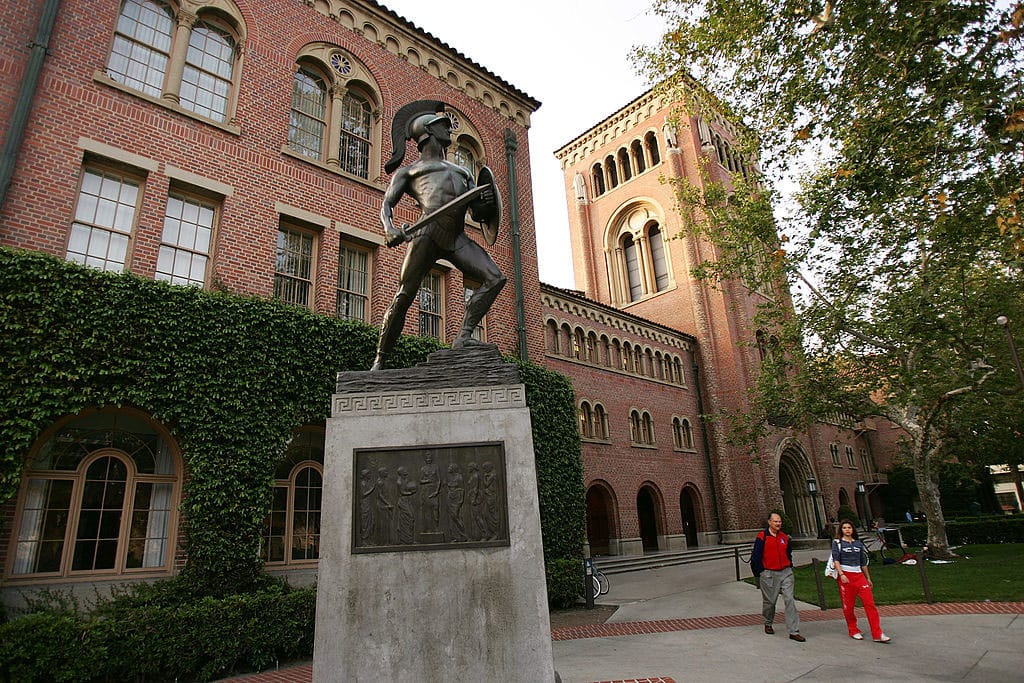
John Strauss, a USC economics professor who believes — with some justification — that Hamas members are murderers, can now ask the same question. Readers of columns like this one are probably already familiar with Strauss’ ordeal. But as a reminder:

Last November, a few weeks after Hamas terrorists had murdered more than 1,200 Israelis, Professor Strauss walked past an on-campus protest after his class. In response to a protester who had taunted him for his support of Israel, Strauss replied:

“Hamas are murderers. That’s all they are. Everyone should be killed, and I hope they all are killed.”

A deceptively edited version of that statement, which omitted the reference to Hamas and included only the final sentence, quickly went viral, along with claims that Strauss had been referring to all Palestinians rather only the members of the terrorist organization that he specifically referenced.

The ensuing uproar caused the university to panic, and Strauss was quickly placed on administrative leave and barred from campus. The leave was rescinded a few days later, but he was not permitted on campus — even to teach — until the ban was lifted the day after fall semester had ended. But the investigation and threat of disciplinary action continued for months, before USC quietly exonerated Strauss last week, dismissing the complaints that the protesters had filed against him. The decision was made public by the Academic Freedom Alliance, a nonprofit organization that provides support for faculty members involved in free speech controversies. The university did not confirm or deny the decision in response to media inquiries, citing confidentiality protocols.

Strauss is now free to continue his academic career, but only after more than half a year of living under a cloud of suspicion, facing innumerable invective-laden emails and other hateful correspondence from his detractors, and confronting the realization that no matter how much more he accomplishes in his already exemplary academic career, this episode may overshadow a lifetime of intellectual and instructional success and achievement. To paraphrase Raymond Donovan, which office does Joseph Strauss go to get his reputation back?

USC has no such office. But they can and should apologize to a respected faculty number whose life was turned upside down this year for no good reason. Even a belated apology would be the right thing, not just for Strauss himself but to let faculty and students know that their rights – and reputations – will be protected from similarly unwarranted attack in the future.

USC is not the only university to struggle in this current highly-charged climate. The Anti-Defamation League’s recent Campus Antisemitism Report Card gave the Trojans a “C.” (By way of comparison, UCLA received a failing grade, as did Northwestern and Michigan. Stanford, Berkeley and Columbia all got “D’s.”) USC received credit for convening and accepting the recommendations of an Advisory Committee on Jewish Life more than a year before the Hamas attacks, and for hosting a regional summit on antisemitism in higher education shortly after the Gaza war began. But the ADL report also noted the university’s mishandling of the forced resignation of a student government leader in 2020 who stepped down under unrelenting attacks for her pro-Israel activism, in addition to its blunders in reaction to this year’s on-campus discord.

USC’s leaders cannot erase the damage that has been caused over the last seven months of John Strauss’ life. But they do owe him an apology, which is already long overdue.

USC’s leaders cannot erase the damage that has been caused over the last seven months of John Strauss’ life. But they do owe him an apology, which is already long overdue.

(Note: I am an adjunct instructor at USC’s Annenberg School for Communications. I have not written anything in this column different from what I would write about any other college or university.)


Dan Schnur is the U.S. Politics Editor for the Jewish Journal. He teaches courses in politics, communications, and leadership at UC Berkeley, USC and Pepperdine. He hosts the monthly webinar “The Dan Schnur Political Report” for the Los Angeles World Affairs Council & Town Hall. Follow Dan’s work at www.danschnurpolitics.com.

Justice Needed at USC Read More »

Who’s Afraid of the Big, Bad Jew? No One, Apparently

Last week, a man approached the entrance of a West Los Angeles synagogue, spread a Muslim prayer rug on the cement, and began to pray. 

No one was hurt. No one was heckled. And security personnel asked him to leave the premises. As it turns out, it was not the first time he had laid a Muslim prayer rug at the synagogue entrance and started to pray. 

Now let’s imagine that last week, a black-hatted Orthodox Jew had stood at the entrance of a mosque in Paris and began wrapping Tefillin (phylacteries). I admit that the question is a nonstarter. It’s hard to imagine the outcome of that scenario because I suspect there isn’t a Jew in the world who would stand outside a mosque in Paris, in today’s climate of open rage and violence against Jews, and dare to wrap Tefillin. Before anyone could have laid a hand on him, his own mother would have killed him. 

Nearly 20 years ago, an Israeli diplomat shared a story with me that I will never forget: A European filmmaker had made a film that portrayed Jews quite negatively. When filming wrapped, a journalist asked him why he had portrayed the Jewish character, and not a Christian, Muslim, or any other character so negatively. The director warned the journalist that what he was about to say was off-the-record and, in a nutshell, responded that he wasn’t afraid of any Jews coming after him to break his bones. No one, he said, is really afraid of Jews, but he was certainly afraid of others. 

The film was made at roughly the same time that Theo van Gogh, a Dutch film director, was murdered in Amsterdam by a Dutch-Moroccan Islamist named Mohammed Bouyeri. Van Gogh had directed a short film written by Ayaan Hirsi Ali, the famous Somali writer who has written extensively on how women suffer gender apartheid in Muslim and Arab countries, and who has survived assassination plots. 

Since 1948, Jews have lived in an age of interesting optics, to say the least. Only three years after the image of the skeletal, helpless, uniform-clad Jew of the concentration camps became sadly synonymous with the modern Jewish experience, another Jewish image emerged: that of the strong, spirited, and most importantly, armed Jew of the Israel Defense Forces. He, too, was in a uniform, but those infamous uniform stripes had now been replaced by an unforgettable olive green, and a healthy, sun-kissed, olive-colored tan, to boot. 

I don’t live in Israel, home of the IDF, but I have long suspected that for many reasons, no one is afraid of Jews (unless they are IDF soldiers or, in early April, accountants with bad news). That suspicion was confirmed this week, when all hell broke loose in my Pico-Robertson neighborhood in L.A. because an out-of-control, antisemitic mob was allowed to take over the streets outside of a synagogue, threatening people with baseball bats and assaulting Jews.

Why did the rage-filled mob gather outside an L.A. synagogue on a warm, otherwise quiet Sunday afternoon? On the surface, it was there to shut down an Israeli real estate fair.

“Come and meet representatives of housing projects in all the best Anglo neighborhoods in Israel,” promised an ad publicizing the event at the synagogue. “Get the most updated info from the experts so that you can make your move!” 

Naturally, the rage-filled mobs, for whom everything is weaponized when it comes to Israel, misread the ad and pounced. In response to the event, a flier for the protest read, “Stand against settler expansion at Sunday’s real estate event selling homes to ‘build Anglo neighborhoods’ in Palestine.”

I am the first to admit that the wording on the ad was short-sighted. But let’s review what happened: Israel-hating leftists, the worst purveyors of now-inescapable race politics, immediately believed that the event was an attempt to create white neighborhoods in Israel (for them, Palestine). But anyone who is remotely familiar with Israel knows that an “Anglo neighborhood” in the country is one in which it is easier to live as an American, British, South African or anyone else whose primary language is English, and who needs a little extra help acclimating to Israeli culture. 

The most ironic part of that painfully terrifying mob was that the screaming, keffiyeh-clad throngs of Israel-and-Jew-haters was probably unaware that the event they were protesting was a response to antisemitism itself. It’s not a stretch to speculate that most of the Jews in L.A. who are planning their “move” to Israel today are doing so because they no longer feel safe in America. 

When I heard police helicopters and received many disturbing images or videos on my phone from the protest, I felt as though I was back in post-revolutionary Iran. I was home, with the doors locked, and as I heard rumors that the protesters were beginning to enter the residential areas, which house a large, local Jewish population, I stared down at the paring knife in my hand and realized that it was probably my only means of self-defense. That, and the heavy, beloved hami melon (“kharbozeh” in Persian) I was attempting to stress-eat in response to the fact that in 2024, local law enforcement allowed Jew-haters to pour into a Jewish neighborhood and wreak fear and havoc.

Earlier, I had mentioned that on the surface, this week’s Pico Boulevard balagan seemed like a protest. But there’s much more to it than that. Just as they did at Columbia or UCLA (in cities that are home to the country’s first and second-largest Jewish communities, respectively), these people were testing the waters. Could they enter one of L.A.’s most visible and populated Jewish neighborhoods and terrorize Jews? The answer was a horrifying “Yes.”  

Just as they did at Columbia or UCLA, these people were testing the waters. Could they enter one of L.A.’s most visible and populated Jewish neighborhoods and terrorize Jews? The answer was a horrifying “Yes.” 

For the sake of imagination, would hundreds of angry Jews be able to gather outside of a large mosque in Dearborn, Michigan, block the entrance, scream genocidal chants against Muslims, and return home in perfect peace and safety? The answer may be found in the response of London’s Jewish community to the 100,000+ pro-Hamas protesters that filled that city’s streets this year: Those Jews stayed home, locked the doors and let the havoc-wreaking storm pass. 

This year, most notably, there have been times in which Jews have fought back, and that includes counter-protesters in L.A. this week. But in general, we are not often feared. And perhaps, at times, that’s a good thing. 

The kind, local Jewish woman who works with inner-city youth and oversees the distribution of hundreds of meals for the poor should not be feared; the wise, open-minded rabbi who works tirelessly with interfaith groups and interfaith leaders to ensure peace and respect between people of different faiths should not be feared; the brilliant, young, Jewish musical genius who will become the youngest maestro of a generation should not be feared; and even the IDF, which warns Palestinian civilians with thousands of leaflets and announcements of impending strikes against terrorists, should only be feared if someone has collaborated with terrorists, or terrorized Israelis. 

Perhaps outside of Israel, no one fears Jews. Perhaps that is part of a predestined plan. The people who comprise a “Light unto the Nations” must elicit just that: Light. And wisdom, radiant kindness, and unshakeable, sometimes maddening, faith. 

And a few firearms and hami melons might be of some help, too.


Tabby Refael is an award-winning writer, speaker and weekly columnist for The Jewish Journal of Greater Los Angeles. Follow her on X and Instagram @TabbyRefael.

Who’s Afraid of the Big, Bad Jew? No One, Apparently Read More »