fbpx

April 4, 2024

Prince of Truth

In the aftermath of Oct. 7, the deadliest day in Israel’s history and the worst massacre of the Jews since the Holocaust, the mainstream media quickly turned on the world’s only Jewish state. From false headlines about the al-Ahli Hospital bombing to articles about Israel’s alleged genocide of the Palestinians, the campaign against the country was strong and unrelenting. 

Social media wasn’t much better: When Jews posted about Israel or Judaism, they’d face a barrage of hate, seeing antisemitic messages, posts about Jews being “baby killers” and Palestinian flags in their comment sections.  

The Jewish people were suffering. Not only had they experienced a devastating tragedy, but it seemed as if at best, nobody cared, and at worst, people were actively hating Jews in one of their lowest moments.  

Jews around the world thought: Are we completely alone in this? Is anyone going to say something? Will anyone stand up for us?
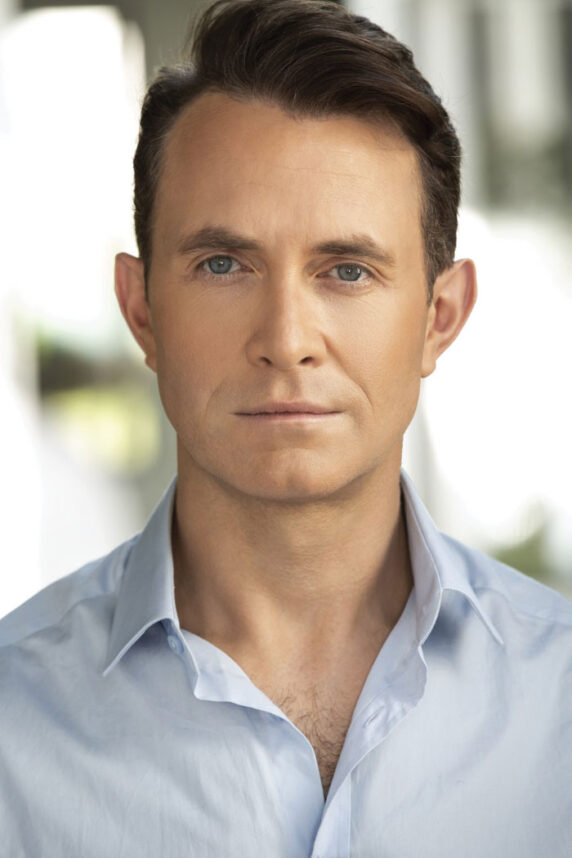
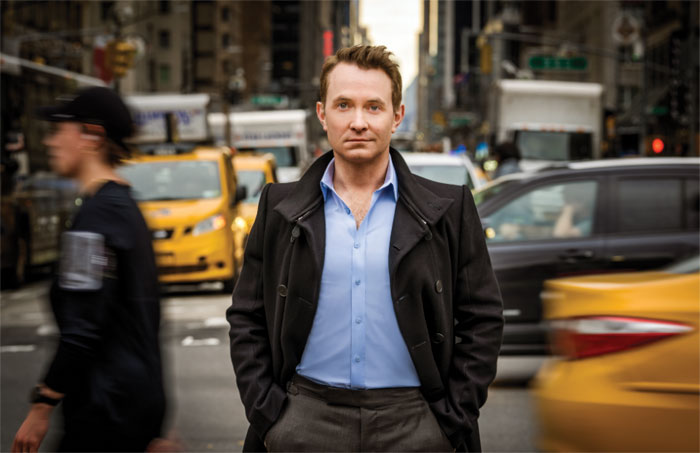
And then, Douglas Murray appeared. This articulate British journalist – who isn’t Jewish – debated pro-Palestinian and extremist commentators, visited Israel to cover the war and show the truth of what happened, and defended it to his fellow journalists, who were far from balanced or accurate. 

Murray explained the facts in a way that many Jews couldn’t, in a time when they were dealing with the emotions surrounding Oct. 7 and the tragedies that followed. He said what Jews were thinking – but couldn’t always express – in clear English. 

Finally, someone had spoken up. But why?

“I have covered most of the wars in Israel since 2006, and I’ve seen how badly Israel is defamed and slandered,” Murray told the Journal. “I knew it would happen after Oct. 7. I wanted to do whatever I could to push back against those lies. That’s the one thing that compels me: the way in which people get away with spreading untruths. Sometimes they lie about relative details, and sometimes they lie about absolutely everything.”

Murray’s entire career has been focused on seeking and spreading the truth. Though many in the Jewish community only became familiar with his work after Oct. 7, Murray has been a well-known figure in the media for decades. 

Murray’s entire career has been focused on seeking and spreading the truth. Though many in the Jewish community only became familiar with his work after Oct. 7, Murray has been a well-known figure in the media for decades. 

The journalist and author, who writes for the New York Post, The Wall Street Journal and The Spectator, has also released bestselling books, including “The War on the West: How to Prevail in the Age of Unreason” and “The Strange Death of Europe: Immigration, Identity, Islam.” In all his work, he goes against prevailing progressive messaging to show how far-left policies are contributing to massive cultural decline in the West. 

After Oct. 7 Murray commented on Israel extensively, writing in the New York Post on Oct. 12: “On Sunday, just 24 hours after the atrocities, Hamas terrorists were still killing Jews in Israel. And radical extremists were gathering in Times Square to celebrate their actions. I went over to Times Square to see that ‘pro-Palestine’ rally. But it wasn’t ‘pro-Palestine.’ It was just pro-massacre.”

Murray flew to Israel to report on the destruction first-hand. He said his first reaction when he saw the sites of the massacre was “horror. It’s hard to really understand the sheer horror and scale of what happened until you go there. When I first saw the footage of Hamas terrorists with RPGs on the main street in Sderot – a place I’ve been many times – I realized this is something very different.”

While reporting from Israel for TalkTV, Murray not only saw the devastation; he also witnessed how Israelis were staying strong despite the monumental tragedy and challenges they were facing. “There is a resilience and strength and fortitude of the people,” he said. “I spoke to many first responders from the seventh, and they are remarkable people who have made their country so proud. There is this resilience in the nation as a whole. They believe, ‘We must win.’”

Following his reporting in Israel and Gaza, Murray went on talk shows to defend the Jewish state, becoming a favorite among the Jewish community, where his messages were spread far and wide. He debated anti-Israel commentators on “Piers Morgan Uncensored,” going head-to-head with the likes of Palestinian National Initiative leader Mustafa Barghouti and Cenk Uygur of The Young Turks, who falsely accused Israel of genocide. 

After Uygur called Murray a “monster” who didn’t care about the Palestinians, Murray snapped back, “You say I don’t care about the death of Palestinian children. Yes, I do care. I care very deeply about it. But I also know that the responsibility for their deaths lies on Hamas, which has misgoverned their society for the last 16 years and now has been leading the country into being in a war with Israel. So, yes, it’s on Hamas.” 

The video got over 2 million hits. 


In a March 21 video that went viral, Murray sat down with journalist Jane Dutton of South Africa’s “Eyewitness News,” who claimed that what was happening in Gaza was genocide. Murray countered back, “I don’t think at all that what’s happening in Gaza is genocide. I think it’s an unbelievable smear against Israel.” Dutton pushed further, saying that the smear on Israel is “self-inflicted.” Murray asked her if she believed Ukraine was committing genocide, and she said no, asking him if he thought Russia was committing genocide against the Ukrainians.

“Russia’s committing a war of hostile aggression, for sure, although it doesn’t seem to be attempting to eradicate the Ukrainian population as a whole, which is, of course, what genocide is,” he said. Dutton retorted, “Which is what Israel seems to be doing.” 

Murray asked her, “Why would Israel be committing genocide in Gaza?” and then explained, “If you start a war, which is what Hamas did on the seventh of October … there are repercussions. There are repercussions to Russia starting a war against Ukraine. Russia’s lost a lot of troops. There are repercussions for Hamas starting a war against Israel.” 

The conversation continued when Dutton falsely claimed that Israel was illegally occupying Gaza, and that the war started because of Israeli settlements in Judea and Samaria. “You just did it again,” Murray said. “You threw in a false fact. We are not where we are today because of settlements in the West Bank that are disputed. That’s not why Hamas broke out of Gaza on the seventh of October and massacred people they hate. It’s not because of the West Bank … They did it, by their own admission, because they wanted to massacre every Jew they could get their hands on, and Hamas has said they will do it again and again … So don’t distract from the crime of Hamas. Don’t do that.”

Dutton is just one of many journalists who has chosen to ignore facts, instantly side against Israel and spew lies to the public. From the outside, it looks like Israel’s supporters are losing the information war, as there seems to be an endless wave of fake reports about the country, always putting it in a negative light. 

But Murray, who has been in a similar fight for years against progressivism in the West, is convinced he is making a difference. To him, there is a reason to keep fighting.

“My view is that 1,000 lies can be corrected by one truth. Obviously social media is testing my theory in real time, but I still believe it.” 

“I think I make a lot of headway,” he said. “My view is that 1,000 lies can be corrected by one truth. Obviously social media is testing my theory in real time, but I still believe it. Whenever I’m in a debate with someone who is fervently anti-Israel, I tend to find that audiences appreciate you introducing new facts or little known or unknown facts to the debate. They appreciate that people are pushing back against this. Is there a percentage of the population who simply won’t listen? Absolutely. But the majority of the public is still available. They do listen. And it’s to them that I speak.”

When it comes to Israel, Murray said there are people who “absorb the mainstream media each night, and then they call for the killing to stop and think it’s being done by Israel. In such moments, it’s very important that a voice speaks up and gives courage to others to speak up as well. I have a favorite quote: ‘All I have is a voice to undo the folded lie.’”

Sometimes the lies and criticism come from the Jewish community itself, like when Senator Chuck Schumer (D-N.Y.) spoke up against the Israeli government, or Bernie Sanders (I-Vt.) demanded “No more money to Netanyahu’s war machine to kill Palestinian children.” Why does Murray think this is happening?

“Chuck Schumer, whom I respect, is probably playing a domestic political game in the U.S.,” Murray said. “He’s an intelligent man, and he must know that every Israeli leader would be doing the same thing as Netanyahu [in the aftermath of Oct. 7]. If America had thousands of citizens taken hostage – relative to its size – and tens of thousands murdered in one day, America would be doing much more than Israel is doing, and Schumer knows that. I think it’s about a domestic political game playing out in America, which I regret, because this issue is above politics.”

As a staunch defender of the West and its values, Murray is compelled to support Israel because, as he said, it’s on the front line of the civilized world, defending the West. “Israel has recognizable ethics and culture,” he said. “It’s different, as all countries are, but it’s part of us.” What baffles him – and many others – is the fact that Westerners in America and Britain are supporting every country in the Middle East except for Israel.

“Israel is the one country in which Americans could live in the Middle East. I’ve spent enough time in other countries to know this difference. A lot of people don’t. Israel is a core part of the West. When people ask me, ‘Why do you support Israel?’ I say, ‘Why would you support every other country but Israel?’”

“Israel is the one country in which Americans could live in the Middle East,” he said. “I’ve spent enough time in other countries to know this difference. A lot of people don’t. Israel is a core part of the West. When people ask me, ‘Why do you support Israel?’ I say, ‘Why would you support every other country but Israel?’” 

If Israel is a front line of the West, then why is Western media so anti-Israel? Murray believes that, in part, “it’s a numbers game,” he said. “There are 1.6 billion Muslims and under 20 million Jews, so advertising revenues play a part. There is also the fact that Israel has this disadvantage of being a relatively comfortable war zone to report from, so it’s a deep paradox. It’s not like reporting from Syria or Yemen; there are very few brave journalists who have made it into these war zones. There is also this ridiculous thing where, ‘If it’s Jews, it’s news.’” 

Murray has seen the large-scale demonstrations against Israel and Jews, with tens of thousands marching in the street in his native England, as well as hostage posters ripped down and extremists spewing antisemitic, anti-West rhetoric. In February, protesters projected their genocidal slogan, “From the river to the sea” on Big Ben, and the U.K. reported that 2023 was the worst year for antisemitism since 1984, when it initially started recording the data. 

Even though it seems bleak in Britain, with many Jews there wondering if they should leave, Murray is optimistic that his country can be saved from antisemitism and progressivism because the majority of people don’t buy into it. “I’ve done everything I can and will continue to do so,” he said. “Most people do not go along with those extremists. I have great trust in the British people, whom I believe have been pushed down more and more, but have not disappeared.” 

Murray also empathizes with British Jews, who have felt unsafe living there, especially post-Oct. 7. “I believe my Jewish friends when they say they can’t come into London on a Saturday [because of the protests],” he said. “We should listen to Jews when they say, ‘I am not safe.’ It’s a remarkable thing how few people seem to have sympathy for that. If any other minority said that, I think we’d speak up and say something, and I don’t think we’d doubt their testimony.”

While much of the world is gaslighting the Jewish people, Murray is validating them. Since Oct. 7, he’s been invited to speak at Jewish events and dealing with cancelations and mobs for supporting Israel. He was set to speak at a fundraiser at the Apollo Theatre in London for IDF-drafted students, but the event was canceled by the venue and relocated to a synagogue. Afterwards, he posted on X, “Wonderful event to a capacity audience in London. Shame on the Apollo Theatre for bowing to the mob. But London’s Jews will not be intimidated and neither will I.”

Protesters recently tried to disrupt a speaking event Murray held in Sydney, Australia, chanting, “Douglas Murray, you can’t hide, you’re supporting genocide.” When Murray went on Sky News to comment on what happened, he said, “First of all, I don’t feel like I’m hiding … I think that’s kind of a waste of a day, not least because I could not hear them … It’s really pathetic.”

“That isolation is terrible, for the Jewish people and so many who care about Israel and see there is this lack of empathy.”

Murray’s courage to stand up against the mob, to call out their lies, is a breath of fresh air that empowers the Jewish people and makes them feel like they have a friend in this fight. The fact that he is being embraced by Jews is “wonderful and deeply touching,” he said. “It saddens me that Jews feel alone and without allies. I think that’s a terrible thing. I spoke to one person in Tel Aviv who said they were there for the #MeToo and BLM movement, but none of those people were there for them since Oct. 7. Maybe it’ll never be reciprocated. That isolation is terrible, for the Jewish people and so many who care about Israel and see there is this lack of empathy.”

However, by using his voice, Murray knows he is strengthening the Jewish people. And he is proud of it. He said, “If I can, in any way, give people comfort or solace, that pleases me more than anything.”


Kylie Ora Lobell is the Community Editor of the Jewish Journal. 

Prince of Truth Read More »

Sweet Silan Memories: A Juicy Roast Beef

As a Jew of Babylonian descent, for me Pesach is synonymous with Silan, a deliciously dark brown glistening date honey. This caramelized syrup is combined with crushed walnuts to use as charoset. (Charoset represents the mortar the Jews used to make bricks when enslaved by the Ancient Egyptians.)

As a Jew of Babylonian descent, for me Pesach is synonymous with Silan, a deliciously dark brown glistening date honey. 

In Iraqit, the Judeo-Arabic spoken by Iraqi Jews, charoset is referred to as “ha’lek.” For me, there is no sweeter Pesach memory than my grandmother’s crystal bowls filled with freshly crushed walnuts and homemade Silan. To this day, my favorite part of the seder is spooning a layer of this date charoset onto matzo and then making Korech, the Hillel sandwich with matzo, charoset and romaine lettuce. Not just because by that point in the seder, I’m starving. But because Silan is just that mesmerizingly sweet and addictive. 

During my childhood in Australia, my great-uncle Nuri and his wife Auntie Tina would spend days preparing the dates, cooking them and squeezing them through cheesecloth to separate the juice from the pulp. Then that juice would be slowly simmered in a huge pot until it was a perfect thick syrup. Before Pesach, they would proudly present my grandparents and close family and friends with a big glass bottle of Silan. 

When we moved to America, my mother and father started making their own Silan and sharing it with family. My cousin Sarah Sassoon, author of the children’s book “Shoham’s Bangle,” has also embraced making Silan for her family and friends in Israel. 

True confession — I’ve never tried my hand at the lengthy and labor-intensive process of making Silan. I’m perfectly satisfied with the organic, no sugar added jars of Silan from Israel. 

With the mass aliyah of the early 1950’s, Iraqi Jews brought Silan to Israel. Just like amba (pickled mango), that other unique Iraqi staple, Silan has become a prized ingredient of the Israeli kitchen. Silan works brilliantly as a marinade for chicken, beef and lamb, as a sweetener in salad dressings, desserts and smoothies, and drizzled over fruit, yogurt and granolas. Iraqi Jews also mix Silan with tahini paste to make “rashi,” a peanut butter-like treat that my father particularly loved to spread on fresh pita. 

—Sharon 

Recently, Sharon and I were discussing our menus for Pesach. We agreed that roasting a piece of beef was the easiest way to please a crowd. 

For the English, it’s a classic Sunday roast. For the French, it’s rosbif. For the Jews, it’s a Shabbat roast. For the Sephardic Jews I grew up with, it’s called Roti and it’s almost always eaten for Friday night dinner or festive holiday meals. 

Roti translates to roast. Roti is always made with red wine and onions. Sometimes it will be made with potatoes and other times with lots of mushrooms and it was always part of the dinner menu. 

I love to make a nice French roast, adding Dijon mustard as a foil to the red wine and sweet onions. For the holidays, I add prunes, which lend the meat a sweet and tangy flavor. 

But this week, we share Sharon’s special recipe for chuck roast with a homemade Silan barbecue sauce. 

Chuck is an overlooked, inexpensive cut of meat that works perfectly for Shabbat and Jewish holidays, when dishes often spend extended time in the oven before being served. This recipe cooks low and slow with lots of potatoes and onions in a delicious sauce made with organic tomato paste, Silan, brown sugar, red wine vinegar and smoky paprika. 

Save the extra barbecue sauce in the fridge and use it as a marinade for chicken or mix with kosher for Passover mayonnaise to make your own Western sauce for hamburgers. 

We promise that this recipe guarantees the most tender, juicy roast beef. You will love the simplicity of the recipe. Your family and friends will love the results. 

—Rachel

Bon Appetit! Awafi! 

—Rachel and Sharon 

Silan Barbecue Chuck Roast

1 3-4 lb chuck roast
3 Tbsp avocado or olive oil
10 medium Yukon gold potatoes, washed and chopped in quarters
2 tsp kosher salt
1 tsp ground black pepper
2 red or yellow onions, sliced
10 cloves garlic, coarsely chopped
2 cups chicken broth or water
3/4 cup Silan barbecue sauce

• Preheat oven to 300°F.
• Place brisket in a large oven-proof baking dish.
• Drizzle oil over the brisket.
• Arrange potatoes around the brisket and sprinkle with kosher salt.
• Add onions and garlic on top of the potatoes, then pour chicken broth over the vegetables.
• Spoon the sauce over the brisket.
• Cover tightly and roast in the oven, about 3 hours until fork tender.
• Remove baking dish from the oven and let cool.
• Remove meat from the dish and carve into thin slices.
• Pour juices over the meat, cover tightly and return to oven to reheat 30 to 40 minutes before serving.

Silan Barbecue Sauce

1 6oz can organic tomato paste
One cup brown sugar
1 cup organic Silan
1/2 cup red wine vinegar
1 Tbsp smoked paprika
1 Tbsp garlic powder
1 Tbsp onion powder
2 tsp salt
1 tsp freshly ground black pepper

• In a medium bowl, whisk together tomato paste, brown sugar and Silan.
• Add red wine vinegar and stir well.
• Add paprika, garlic powder, onion powder, salt and pepper and combine.
•Store in a tightly sealed jar in the refrigerator.


Sharon Gomperts and Rachel Emquies Sheff have been friends since high school. The Sephardic Spice Girls project has grown from their collaboration on events for the Sephardic Educational Center in Jerusalem. Follow them on Instagram @sephardicspicegirls and on Facebook at Sephardic Spice SEC Food. Website sephardicspicegirls.com/full-recipes.

Sweet Silan Memories: A Juicy Roast Beef Read More »

Campus Watch April 4, 2024

Two Harvard Law Student Gov’t Members Resign Following Passage of BDS Resolution

Two members of the Harvard Law School Student Government announced that they are stepping down from their positions after the student government passed a resolution calling for the law school to divest from Israel.

The student government passed the resolution by a vote of 12 in favor, three against and three abstentions, The Daily Wire reported on March 31. The two student government members that resigned wrote in an open letter that the student government of “rushing” it through a secret ballot at an emergency meeting that prevented the campus community from having a chance to weigh in on the resolution. A subsequent meeting was held to discuss these procedural concerns, and the resolution’s passage was upheld.

The Harvard Law Jewish Association said in a statement posted to social media, “By passing this resolution, student government asks the campus and the world to assume that those who have any connection to Israel are villainous. This resolution is beyond just procedurally and substantively offensive: it is antisemitic.”

Anti-Israel Protesters Disrupt UMich Honors Event

Dozens of anti-Israel protesters reportedly disrupted a March 24 event at the University of Michigan honoring students’ academic achievements.

According to Jewish Insider (JI), the protesters launched chants during the Honors Convocation event accusing University President Santa Ono of “funding genocide.” The university subsequently ended the event early. 

Ono said in a statement on March 26, “I am proud of our university’s history of protest. But none of us should be proud of what happened on Sunday. We all must understand that, while protest is valued and protected, disruptions are not. One group’s right to protest does not supersede the right of others to participate in a joyous event. The protesters’ intrusion on one of the university’s most important academic traditions was unacceptable. It was not in keeping with our student code and our longstanding policy on freedom of speech and artistic expression. It was painful for everyone who had gathered – and especially so for members of our Jewish community.” Regarding potential disciplinary measures against those involved in the disruption, Ono said: “The university cannot share that kind of information, but declining to discuss a particular case does not imply that disciplinary action did not or will not occur.”

NC High School Teacher Absent After Removing Palestinian Flag from Classroom

A teacher at a Riverside High School in Durham, N.C. has been absent from the school after she complied with the school’s request to take down a Palestinian flag that was hanging up in her classroom.

The flag was noticed after math teacher Kayla Thompson won the Pirate Hero of the Month Award on March 17, which the Riverside PTA gives to “a Riverside teacher, coach, or staff member who has gone above and beyond to support our community,” The Raleigh News & Observer reported. The school honored Thompson for winning the award by posting a photo of her on their website; the Palestinian flag could be seen in the background of the photo, sparking outrage online. Thompson agreed to the school’s request on March 19 to take down the flag, but has not been back on campus since. The school declined to comment to the News & Observer on whether or not Thompson left on her own accord.

Myriad students held a walkout and protest on campus March 22 regarding how Thompson has been treated.

Pro-Palestinian Protesters Arrested, Suspended After Holding Sit-In at Vanderbilt Building

More than two dozen pro-Palestinian protesters who staged a sit-in at a Vanderbilt University administration building on March 25 were arrested or suspended.

According to reports, around 30 protesters rushed Kirkland Hall, where Chancellor Daniel Diermeier has his office, and held a sit-in for nearly 24 hours over the university removing a Boycott, Divestment and Sanctions (BDS) ballot initiative. Three students were arrested for allegedly pushing a community service officer and faculty member; a fourth, who was protesting outside the building, was arrested for allegedly breaking a window. The university gave the rest of the students involved in the sit-in interim suspensions.

In a March 27 email sent to community members, Diermeier wrote that “dozens of peaceful demonstrations have occurred over the past several months. In consideration of safety and the university’s normal operations, we, as a matter of policy, define time, place and manner limitations. The university will take action when our policies are violated, the safety of our campus is jeopardized and when people intimidate or injure members of our community.”

Campus Watch April 4, 2024 Read More »

Table for Five: Shemini

One verse, five voices. Edited by Nina Litvak and Salvador Litvak, the Accidental Talmudist

Among all [creatures] that are in the water, you may eat these:
Any [of the creatures] in the water that has fins and scales, those you may eat, whether [it lives] in the waters, in the seas or in the rivers.

– Lev. 11:9


Rabbi Dr. Janet Madden
Malibu Jewish Center and Synagogue

Petrarch advises that we should read a text “within its context.” To apply this precept to our verse is to consider how the book of Torah in which it appears, so beautifully named in Hebrew as Sefer Vayikra — the Book of Divine Calling — invites us to draw near to the Holy, offering avenues that include the mindful practice of sacred eating. 

From the trees of Gan Eden to the post-flood expansion of the human diet to include meat to the lamb and matzah that prepare us for liberation to the manna that sustains us in the desert, instructions as to what humans may eat are woven throughout Torah. They come to a crescendo in this book. “Shemini” (“Eight” — the number of new beginnings) calls us to a new opportunity to choose holiness through discernment in relation to our consumption of creatures living in the transformative medium of water. 

Fish hold a special place in Judaism. The first Divine speech is directed to fish, blessing them for fertility. Fish are widely-used Jewish protective symbols. Their eyes never close, replicating the omnipresent protective Divine gaze. Torah teaches: In consuming these creatures, keep your eyes open. Don’t indiscriminately take and eat. Empower yourself to pay attention, distinguish, and employ self-restraint and self-regulation. There are many food choices from what is permissible and in choosing holiness, we literally make ourselves holy through conscious, holy consumption. What we consume matters because we matter.


Rabbi Abraham Lieberman
Judaic Studies, Shalhevet HS

It is interesting to note that the Torah in describing the signs that determine which types of fish are kosher does not name any species, as it does with most of the kosher or unkosher animals. It only points out the requirement of scales and fins. Adam assigns names to animals and fowl (Genesis 2:20), yet we don’t see Adam naming any kind or type of fish. This led to a disagreement amongst the Rabbis (Tosafot Hullin 66b-Kol) if Adam did or did not give names to fish. In several Rabbinic sources (Breishit Rabbah 97, Brachot 61b), the Jewish People are compared to fish. The Prophet Habakkuk (1:14) states: You have made mankind like the fish of the sea … that have no ruler .“ The purpose of scales is to provide protection and locomotion while fins are primarily used for direction and balance. The vastness of the oceans gives the fish the freedom of choice to move in this huge space with unlimited options to reach its wilful position. We as a people move in our large world with freedom of choice, at times nameless as individuals, and only as a member of the whole. Many large predatory forces lurk in our world, yet our scales, namely our actions and our fins, our Torah, give us the direction to reach our potential and our intended destination.


Rabbi Avraham Greenstein
AJRCA Professor of Hebrew

The Mei HaShiloach interprets the fins and scales mentioned in this verse as corresponding to the Hebrew letters Zayin and Ayin. In resembling a blade, the fin corresponds to Zayin, a letter that can mean sword or weapon. Similarly, each scale can be seen as resembling an eye, the shape and literal meaning of the letter Ayin. In this manner, the scales of a kosher fish represent the watchful eye of divine providence, whereas its fins represent the sword of divine protection. Read together, the letters Ayin and Zayin spell out “oz” (the Hebrew word for “might”), as if to emphasize the power and might of God’s attentive guardianship. When we are attentive to note whether a fish has fins and scales, and when we guard our mouths to only consume foods that nourish us spiritually as much as physically, we evoke powerful divine attentiveness and safe keeping. In a related fashion, the scales of a kosher fish can be said to act much like the scales of an armored garment, and the fish’s unblinking eyes can remind us of the unblinking watchfulness of our divine guardian. 

Rabbinic literature describes a fish’s fins as the wings with which it flies through the water. We can learn from the fish how to move unencumbered through the often dense substance of our lives. When we strengthen the wings of our holiest desires, we can navigate easier through the seas of our troubles and find ourselves less encumbered by the world around us. 


Rabbi Pinchas Winston
Thirtysix.org

How shellfish can you get? According to the Torah, for a Jew, not at all. But as much as the Torah exhorts selflessness, that is not what we are talking about here. Or isn’t it? We know that what you eat affects your physical being, but what about your spiritual being? According to the Talmud, absolutely. Something that is not kosher weakens a person’s spiritual “immune” system, making them more susceptible to negative character traits. The difference may not be perceptible because the expectations of secular society are less than the Torah’s when it comes to character development. But since God wants us to constantly become spiritually greater people so we can live in the “image of God” in which we were created, what we eat makes a difference. How? It’s kabbalistic, but the short version is that there are positive spiritual forces in Creation that help us spiritually, and negative ones that tend to make us “grow” in the wrong direction. Kashrus tells us which foods are more closely associated with the negative spiritual forces, so if there are no kashrus issues from the start, then the food is “pure.” If something begins as treif but can be made kosher, like a cow, then it is only partially spiritually impure. If something cannot be made kosher at all then it is very much associated with spiritual impurity and dangerous to spiritual health. Why is there a difference between one species and another? It’s a good question … but for another time. 


Rabbi Cheryl Peretz
Associate Dean, Ziegler School, AJU

Well before Jews were eating matzah ball soup, lox and bagels and/or tasty noodle kugel, the Torah established our Jewish relationship to food and food preparation with details of what could be eaten and what was to be avoided altogether. This chapter in Leviticus, one of two major sources for kashrut (see also Deuteronomy 14), outlines laws regarding animals from which meat can be eaten and this commandment to eat only those fish that have fins and scales. 

It is easy to think that perhaps the Torah is redundant in its statement since the Talmud tells us that a fish that has scales also has fins. Practically, this means that we need only identify organisms that have scales and can ignore the portion of the rule about fins. To live out our Jewish ritual, we need to know the categories and we need to know how to clean the fish. 

In my own daily observance of kashrut, I do think about the fish I can eat. Equally, I seek deeper meaning in the reasons for these commandments. I listen hoping to hear God’s call to holiness (said twice in this chapter), a separation for sanctity. I think about the reminder of the reverence for life of all creatures. I wear the observance as a badge of outward marker of Jewish identity. And, I stand together with Jews of yesterday, today and tomorrow in solidarity and collective living.

 And, then, I dig in to salmon, tuna, tilapia, and other fish.

Table for Five: Shemini Read More »

A Letter to a Future Historian: How Will You Write Our Story?

Dear future historian,

One day you will be compelled to answer why, in just one day, 10,000 Jews in the Diaspora demanded the reinstatement of Eylon Levy, the official Israeli spokesperson, during one of the darkest moments in Israel’s history. If you, dear historian, channel the likes of Wilhelm Marr, Henry Ford or Fyodor Dostoevsky, men who feverishly answered the ‘Jewish Question’ by calling Jews a “foreign tribe” intent on taking over “Germandom” or the “Russian soul,” the answer would seamlessly yield a geriatric cliché that Jews are agents of another nation, a fifth column.          

If, however, you should be stirred to look at what was happening to Diaspora Jews in the months after Oct. 7, 2023, you will find some disturbing data. Indeed, after the largest massacre committed against the Jewish people since the Holocaust — a massacre of Jews on their own soil! — antisemitism in the United States is up 337%. And if you want to examine closer where this virulent antisemitism resides, the weigh station of American campuses will await you — with more than 700 percent increase in antisemitic incidents on campus since the Hamas attack, including physical assault, death threats, intimidation, bullying, and vandalism — along the road of antisemitism in America.

Undeniably, you will also come across some impassioned testimonies from Jewish students who experience antisemitism while walking to class or even in the classroom, where their professors call Israel illegitimate by labeling the country a settler-colonial state. You will examine countless testimonies to U.S. congressmen and -women delivered by Jewish students who attended elite American universities. From Harvard University, you will come across the testimony of Shabbos Kestenbaum, who shared “two years of personal experiences with a racial ideology … that views Jews as an annoyance at best.” From Noah Rubin of the University of Pennsylvania, you will learn that “the antisemitism we are seeing at UPenn did not start on Oct. 7, but since Oct. 7, it has certainly accelerated. Jewish students continue to experience harassment, threats, and even violence on our campus.” From Rubin’s testimony, you will also sense the terror that Jewish students feel when they walk across campus to the chants of “[T]here is only one solution, Intifada revolution! Intifada! Intifada! Long live the Intifada!”

And if you follow the trail of these cries, you will come upon Jewish high school students who are experiencing unprecedented levels of Jew-hatred in their schools. Teachers cancel classes in solidarity with Hamas, a terrorist organization, for a Gaza walk-out. And if you listen, historian, closer, you will hear the broken heart of a Jewish high school student who decided to remain in the classroom alone and not partake in the demonization of his people. There he sits, his heart pounding, wondering whether his sitting out will affect his grade and chances to get into the college where he will face the same alienation and demonization.

And if you will look to the streets of the United States and Europe, you will find chants of “Gas the Jews” and “F— the Jews, rape their daughters, and free Palestine.” You will find that while there are many Jews who chose to boldly double down on their Jewishness, there are thousands of others who chose to tuck their Star of David necklaces inside their shirts or graver yet, take them off.

And in the halls of countless city council meetings, historian, you will find pro-Hamas groups mobilizing, at times even coming to these meetings with dolls drenched in red paint to signify babies’ blood, urging city council members to pass resolutions demanding a ceasefire. I would hope, dear historian, that you will be able to see this for what it is: blood libel, one of the oldest accusations waged against the Jewish people. For this lie, the Jewish people paid with their lives.

In fending off lies and brutal accusations of being baby killers and enacting a genocide on a people who set off the war by breaking into a sovereign country and murdering, raping, and kidnapping innocent civilians, Levy took on the behemoth role of fighting the latest variant of antisemitism: anti-Zionism.

But if you are aware that this age-old hatred is one of the most durable hatred precisely because it has the ability to evolve and mutate, then you will understand that the Jewish people’s insistence on reinstating Eylon Levy is because, in being the spokesperson for the Israeli government during a trying time for the Jewish people, Levy became the spokesperson for us Jews in the Diaspora. In fending off lies and brutal accusations of being baby killers and enacting a genocide on a people who set off the war by breaking into a sovereign country and murdering, raping, and kidnapping innocent civilians, Levy took on the behemoth role of fighting the latest variant of antisemitism: anti-Zionism.

And so, historian, when one day you will be presented with the many testimonies, letters from beleaguered parents begging the school administrators to stop using the classroom to spread anti-Jewish bigotry by comparing Israel to Nazi Germany or accusing Jews of stealing land in their classrooms, and photos of a record number of American Jews, nearly 300,000, who attended an Israel solidarity rally in Washington, D.C., in the aftermath of the Oct. 7 massacre, please read these actions of the Jewish people in the Diaspora in the context of what it means to be a Jew. 

Please understand that by standing with Israel, we Jews in the Diaspora stand for our Jewish selves. Please understand that by extending our steadfast support for Levy, we inadvertently signal that anti-Zionism is antisemitism, for why else would we care so much to have a spokesperson who, with such passion and determination, staves off invectives hurled our way?

One day, as you sit to write about this moment, dear historian, think about how you will tell our story, for our story is inextricably linked to the story of humanity. To borrow from the late luminary Rabbi Jonathan Sacks, “in our uniqueness lies our universality.” Further still, though we are a particular people and antisemitism is a particular form of hatred, its existence is an alarm bell that goes off to signal a moral decay in a civilization. Or as Arthur Miller voiced through his character Phillip Gellburg in his 1994 play, “Broken Glass,” “Don’t you understand, when the last Jew dies, the light of the world will go out!” 

Do write about us fairly, do render our light with verisimilitude, and perhaps most importantly, describe those who wish to extinguish us accurately for in extinguishing us, they destroy humanity.


Naya Lekht received her Ph.D. in Russian Literature and wrote her dissertation on Holocaust literature in the Soviet Union. Naya is currently the Education Editor for White Rose Magazine and a Research Fellow for the Institute for Institute for the Study of Global Antisemitism and Policy. 

A Letter to a Future Historian: How Will You Write Our Story? Read More »

Liz Claman: A Proud Jew at Fox Business

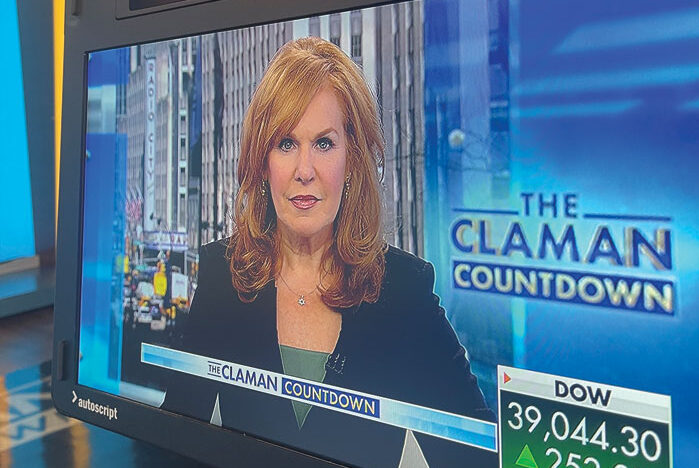
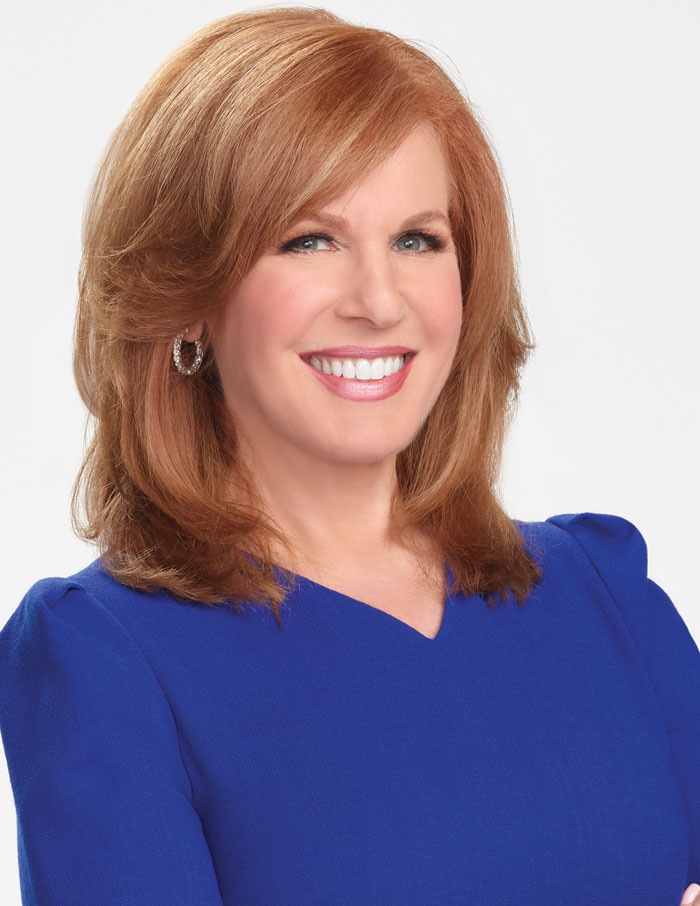
The number one business news anchorwoman in America, Liz Claman, also happens to be a Jew – and a proud one at that. 

On her Fox Business show, “The Claman Countdown,” she covers the chaos of the last hour on Wall Street while wearing her Star of David necklace. The Los Angeles native, who went to Beverly Hills High School, is more dedicated than ever to standing up for her people. “I am a proud Jew, and I only became prouder after Oct. 7,” she said. “I am so fired up now. If you’re going to attack the Jews, you’ve got to go through me.”

Claman, an industry veteran who was recently inducted into the Syndeo Institute at The Cable Center’s Cable Hall of Fame, started her career in 1985 an intern at CBS in Los Angeles. “I picked reporters’ brains and asked to sit over their shoulder and see what they do in the newsroom,” she said. “That was my first introduction to broadcast TV.”

When she graduated from college, she snagged a job as an overnight production assistant at CBS. She’d come in at four in the morning, take a station car and drive around Hollywood and Vine – which was not a safe neighborhood back then – and pick up 500 newspapers. She’d then deliver them to all the reporters and executives in the CBS building. “I was in it to win it,” she said. “I was happy to do anything to get into the news industry.”
When Claman wanted to move up and become an anchor, she couldn’t find anything in L.A., and was told to go to the Midwest. She applied for jobs all over, but only received rejections. So, she tried a new tactic: She looked at the cities in the Midwest alphabetically and picked Columbus, Ohio. She learned everything she could about the city, such as why the mayor was fighting with the police chief and other local politics, bought a plane ticket with her savings, showed up to the station and said she needed an interview.

“They said, ‘Sure, we’ll speak to anyone for 10 minutes,” she said. “I stretched that to three years and seven months.”

From there, Claman made it to Cleveland, then Boston and eventually CNBC, where she hosted the show “Cover to Cover” and co-anchored “Market Watch.”  CNBC had launched a search “to find people who were smart enough to pick up the stock market and also connected well with audiences,” she said. “I knew nothing about the market, but out of all the tapes, they picked mine.”

Following a nine-year run at CNBC, Claman went over to Fox Business, where she’s been at the anchor desk for 16 years and is the only Jewish anchor on the Fox Business channel.

“I have never felt so good working at a place as I do at Fox when it comes to being Jewish,” she said. “They understood the value of me and my voice, especially after Oct. 7. I feel like I’m living on another planet when I see how some networks cover what happened on Oct. 7 and after, and how Fox covers it. Our network has poured more resources into covering Israel than all the other networks combined, I could bet you money on that. In a time when the industry is cost-cutting, Fox realized how important this story is for democracy, the future of the Middle East, for Israel and for humanity.”

Claman grew up going to a Hebrew school where the teachers were Holocaust survivors with their numbers tattooed to their arms.

Claman grew up going to a Hebrew school where the teachers were Holocaust survivors with their numbers tattooed to their arms, and she heard about her family and the Jewish people’s history through her late father, Dr. Morris Claman, a world-renowned urologist at UCLA School of Medicine. “My father taught me so much about the Holocaust that I was hyper aware about the horror my teachers suffered,” she said. “He also raised us to understand we may be living in this golden town of Beverly Hills, but we had to remember all those who came before us and the sacrifices they made. It has really guided me.” 

Claman attended Temple Beth Am and was bat mitzvahed when Rabbi Jacob Pressman was there. When Benjamin Netanyahu visited California and met with Governor Jerry Brown about water technology in 2014, the anchor asked Fox Business if she could go. They agreed, and she got to interview the Prime Minister.

“When I approached Bibi, I said, ‘Shalom,’ and he started speaking to me in Hebrew.’ I said, ‘I don’t speak Hebrew,’ and he said, ‘I know, all those years of Hebrew school and you don’t speak Hebrew,’” she said, laughing. 

While the Jews have been through many struggles throughout their history, it gives Claman hope that the community will come out victorious now – as it always has. “Even after the Holocaust, we weren’t victims,” she said. “We stood tall, and we turned Israel into the miracle it is today.”  

Along with continuing to speak the truth at work and beyond, Claman’s goal is to instill in her children the same sense of Jewish pride that she has. “I want to be a good mother and raise children who understand the importance of their heritage,” she said. “I tell them they are part of a chain that extends back thousands of years. Don’t break that link.”

Liz Claman: A Proud Jew at Fox Business Read More »

Solidarity Shines at 2024 FIDF Young Leadership LA Gala

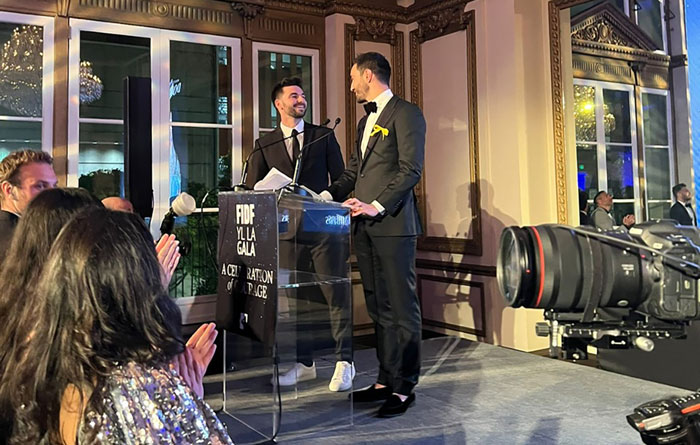
On Saturday evening, March 9, over 800 Friends of the IDF (FIDF), young professionals and Israel Defense Forces (IDF) supporters gathered at the Alexandria Ballrooms in Downtown L.A. for the 2024 FIDF Young Leadership L.A. Gala. Just outside the historical building, which was donated by the owners, the Shomof family, there were hundreds of pro-Palestinian and anti-Israel demonstrators. It was the night before the Oscar ceremony and several groups started their demonstrations early, carrying banners reading, “No awards during a genocide.”

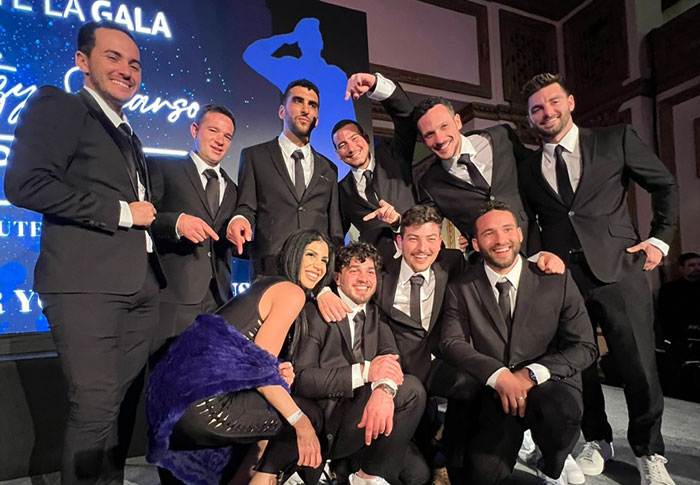
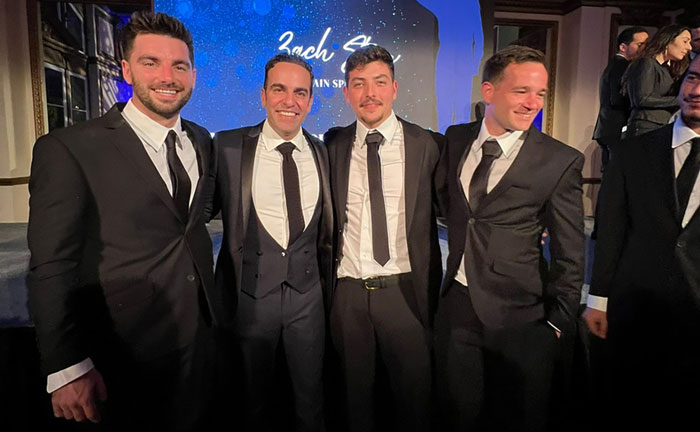
The front glass doors were blocked with black curtains to prevent the mob outside from seeing inside. Some streets were blocked to traffic and guests were rushed by police officers into a side door of the ballroom until things quieted down. Inside the ballroom, over 800 guests gathered to show support for Israel and the brave Israeli soldiers. Among them were FIDF Young Leadership Gala committee and board members, Master Sergeants Dorel M. and Eli W., former lone soldiers from Los Angeles who immediately returned to service after Oct. 7 and IDF reservist and Nova Music Festival survivor, Yarin Levin.

Dorel, 28, was born in L.A. to Israeli parents and chose to enlist in the IDF when he turned 18. He served as a paratrooper for three years and then returned to Los Angeles, where he works in real estate. When the war broke out, he went back to Israel and joined his unit. After four months in reserve, he arranged for eight friends from his unit to come to L.A. for the gala event and to give lectures at Jewish schools around town. Gal M., Dorel’s father, took them on some hikes and showed them around town. In an interview with the Journal, he said: “Like any parent, I hardly slept during the time he was in Khan Yunis, Gaza, but I knew he did what he had to do and [I] supported him fully.”

“It goes to show that we stand with Israel and even though we are physically far away, our hearts are there.” – Dorel M.

“To see the Los Angeles community that I grew up in come together to honor the brave soldiers of the IDF is very special to me,” Dorel said. “It goes to show that we stand with Israel and even though we are physically far away, our hearts are there.” 

Eli W. and Dorel M.
Courtesy of Gal M.

He then proceeded to call all his friends from his unit to join him on stage. The young men, all dressed in matching suits, shirts and ties, jumped on stage and received a round of applause from the audience. 

When reflecting on his time serving, Eli W. remarked, “serving during this war has been an honor of a lifetime. Leaving the front lines is difficult knowing that the hostages are still there. Nevertheless, I’m so proud to take on the same mission in a different capacity. My involvement with FIDF allows me to support and celebrate my brothers and sisters still fighting in Israel with my fellow brothers and sisters in the U.S.”

The gala served as a powerful demonstration of solidarity with the thousands of IDF soldiers on the frontlines, risking their lives to restore security in Israel after the massacre on Oct. 7, and the ongoing attacks by Hamas and Hezbollah. The event provided the L.A. community with a platform to show support for Israel’s soldiers during their greatest time of need. The evening, featuring a special DJ performance by DJ Shalos,  who performed at the Nova Festival and survived the terrorist attack, was held in honor and memory of the lives tragically lost on and since Oct. 7, and served as a moving testament that “we will dance again.”

Dorel M., left, with his unit friends Courtesy of Gal M.

The black-tie event was chaired by FIDF Young Leadership board President Franky Ruzin and co-chaired by FIDF Young Leadership Executive Board Members, Leeor Braude, Chantly Geoulla, Shmuly Goldsmith, Shardae Hanookai, Gity Kogan, Yitzy Pearson, Robert Roig and Jimmy Shomof. The event MC was comedian Dan Ahdoot, an actor on Netflix’s “Cobra Kai.”

Among the speakers at the event was social media influencer, singer, songwriter, actress and dancer Montana Tucker and Noa Cochva, a reserve soldier and Miss Israel 2021 who made the decision to swap her Miss Universe Israel sash for an IDF uniform and to rejoin her unit after Oct. 7. “I’m honored to be standing here not as Miss Israel, but as a proud Israeli. My life and the lives of all Israelis after October 7, will never be the same,” she said.

Proceeds from the event will go towards lifesaving medical supplies such as ambulances, plasma, medical devices and field hospitals, as well as hygiene kits and aid for the thousands of bereaved families who are suffering the loss of a loved one. As the IDF’s official partner, FIDF is the fastest and most direct way to support IDF soldiers. The emergency campaign for Israel raised so far more than $73 million. The funds will be used by the IDF to meet their most urgent requests for its soldiers.

Solidarity Shines at 2024 FIDF Young Leadership LA Gala Read More »

Our Elders Had It Easy

From today’s perspective, the past seems oh so simple.  If you wanted to select a password for your computer that you might actually remember, all you had to do was use the word “incorrect.”  That way if you messed it up, you would immediately receive a message reminding you that “Your password is incorrect.”

Now you need to write down at least a dozen characters, complete with an upper-case and a lower-case letter, some numbers, and a symbol or two.  And if that isn’t challenging enough, you better have your phone nearby for multi-factor authentication.

These are undoubtedly complicated and trying times, and it is human nature to think of the past with a certain amount of nostalgia.  And even if you don’t, members of the younger generation are eager to tell us how easy we had it compared to them.

I remember feeling that way when I was growing up.  Life had a predictability for my parents and grandparents that it never had for me.  For the most part, they spent their lives within a few miles of where they were living when they were barely out of their teenage years.  And they worked in the same jobs their entire careers.  For me, it was move after move, pinballing from coast to coast, and employer after employer.  On top of that, I thought I had it so tough being raised in the shadow of the Cuban Missile Crisis while in elementary school, and the Vietnam war while in high school and college.

Woe is me …

My father watched friends die while fighting at their side during World War II. But my parents and grandparents never complained about their lives. They left the complaining to me.  

It was only later that I realized how easy my life was compared with those who came before me. One grandfather migrated to the U.S. from what is currently Poland, all alone at the ripe old age of 20; the other suffered the agony of living in a family beset by mental illness.  My father watched friends die while fighting at their side during World War II.  But my parents and grandparents never complained about their lives.  They left the complaining to me.  

And now it’s payback time.  My three kids are certain it was a cakewalk growing up in the analog age, though I’m not so sure they get what it was like typing on those early word processors (much less on manual typewriters), using land lines, and threading paper into fax machines and printers.  Were dinosaurs still roaming the earth when we relied on the Yellow Pages to figure out where to shop, the Thomas Guide to get across town, and AAA TripTiks to get across the country?  One of my daughters once came home from third grade and asked me if there was paper when I was her age.  I told her “No, we just wrote on the walls of our caves.”  I’m pretty sure she believed me.  While today’s technology has certainly improved our lives in many ways, I’m nostalgic for the day when you didn’t need an engineering degree from MIT to turn on your TV.

The attitude that earlier generations had it easy presumably went way back, perhaps even to the biblical era.  I wonder if Jacob used to complain that while all Grandpa Abe had to worry about was how he could get his son to the top of some mountain in the land of Moriah, he had to grapple with how he would reconcile with his estranged brother Esau.  Or if Joseph, dealing with all the pressure associated with his position as Chief Operating Officer of the Land of Egypt, envied his saba Isaac, whose greatest challenge was figuring out which son was which.

As I stare into the eyes of my six-month-old granddaughter, I imagine that before very long she will think that she is growing up during the most difficult moment in human history, with climate change affecting our everyday lives, AI changing the workplace in unknown ways, and even more troubling, war and antisemitism wreaking havoc on everything we hold dear.

How easy, she’ll think, Grandpa Moshe had it.  All he had to worry about is what the topic of his next column would be.

You know what?  She may have a point.


Morton Schapiro is the former president of Williams College and Northwestern University.  His most recent book (with Gary Saul Morson) is “Minds Wide Shut:  How the New Fundamentalisms Divide Us.”

Our Elders Had It Easy Read More »

PJ Library Podcast Network Passes One Million Downloads

In march, “PJ library presents” achieved the one million download milestone. The award-winning podcast network for kids – with a Jewish twist – launched three years ago as an audio extension of the family-oriented Jewish nonprofit; PJ Library is one of the largest free book programs in the world. 

“We first started talking about podcasts and audio content for kids in 2018,” Alli Thresher, PJ Library’s director of digital content, told the Journal. Thresher heads the PJ Library creative team that produces the shows. 

“We did some experimenting, tried a few pilots and launched our very first show, ‘Have I Got a Story For You!’ in June 2019,” they said. “We did a lot of learning, data gathering and planning, and in 2021 we launched two more shows, officially becoming a network featuring stories for kids of various ages.”

In the preschool-focused “Afternoons with Mimi,” a wise and beloved grandmother bakes special treats and snuggles up with her young grandchildren to share fairy tales and the sacred stories of Judaism in her warm and kid-friendly way. For older kids, ages 6 to 12, “Beyond the Bookcase” features a pair of intrepid siblings named Micah and Miri, who spirit off on magical and often mysterious adventures. Both series, winners of prestigious Parents’ Choice and NAPPA Awards, have just wrapped their 10-episode third seasons.

“Many parents and grandparents have told us that the moments that Mimi and Kiddo share in ‘Afternoons With Mimi’ feel so much like memories pulled from their own lives,” Thresher said. 

“‘Beyond the Bookcase’ is an exciting adventure narrative that features familiar fairytale characters and also stories and folklore from the diversity of the Jewish experience and people.” 

To celebrate the audio milestone, PJ Library Presents is launching Passover episodes of “Afternoons with Mimi” and “Beyond the Bookcase.”  

In “Beyond the Bookcase”’s “Chasing Joha Through Passover” kids will learn about Passover traditions from around the world, while “Story for Another Time Passover in Mashal” follows Auntie PJ and Elijah as they seder-hop through the enchanting and fictional land of Mashal. “Afternoons with Mimi” will launch a Passover-themed playlist full of stories for young children, including a re-airing of the original “The Passover Pirate.”

PJ Library Presents recently launched “Radio Chitaika,” which features classic Jewish stories presented in Russian (with bonus episodes in Ukrainian). With more than one million people in the US speaking Russian and Ukrainian, this program seeks to serve families speaking their native languages at home. Stories include the picture book-based “The Suitcase,” “The Fabulous Tale of Fish and Chips,” “The Sabbath Lion” and “Until the Blueberries Grow,” adapted and translated folk tales “The Miracle Bread” and “The Lost Chickens” and more.  

“‘Radio Chitaika’ offers a special listening experience for Russian and Ukrainian speaking families in the Jewish Diaspora,” Thresher said. “And ‘Have I Got a Story For You!’s’ archive still holds our original episodes reimagining Jewish folk tales as well as a special mini-series for kids getting ready for a b-mitzvah experience.”

They add, “We’re so excited to keep doing the work to bring more and more stories to families all over the world.”

Thresher hopes kids and their families feel joy from these shows. 

“For Jewish kids listening, we love knowing that they might see themselves in the characters,” they said. “For non-Jewish families enjoying the stories, we hope the episodes inspire them to learn more about Jewish culture, values and holidays.”

Over 18 years PJ Library has provided Jewish families with free high-quality children’s books and other resources that foster a deeper connection with Jewish life. 

Over 18 years PJ Library has provided Jewish families with free high-quality children’s books and other resources that foster a deeper connection with Jewish life. This global program, available in 40 countries, has provided 50 million books to kids ages 0-12.

“We’re thrilled to cross this incredible podcast benchmark with PJ Library Presents,” Alex Zablotsky, executive director of PJ Library, said. “We hear over and over how families love complementing their treasured print books with audio stories, and the PJ Library Presents podcasts give us another creative, screen-free way of connecting with kids and sharing stories that celebrate Jewish values and culture.”

For more information, and tons of free activities, go to PJLibrary.org.

PJ Library Podcast Network Passes One Million Downloads Read More »

Kosha Dillz and Or Mash Team Up for ‘Watermelon’

Rami Even-esh, aka Kosha Dillz is known for jumping on what’s happening in the news and making funny, catchy rap songs that are full of Jewish pride. In his latest video, “Watermelon“ (“Avatiach),” he collaborates with comedian and rapper Or Mash to create one of his most popular songs yet.

The song is about the watermelon emoji that pro-Palestinian protesters are putting in their bios; it symbolizes the Palestinian flag. The lyrics, which are in English and Hebrew, go, “How come everywhere that I go, all these people put the avatiach in their bio? Met this cute guy and he said, ‘I wanna see ya’ then he asked me, ‘Hey, what’s the deal with avatiach?’” 

In the video, directed by comedian Menachem Silverstein, Mash and Kosha Dillz are in Pizza World, a kosher pizzeria in L.A., and on Malibu Beach, poking fun at antisemites and the watermelon trend.

“I felt the time spent making serious songs has passed.”
– Kosha Dillz

“I felt the time spent making serious songs has passed,” said Kosha Dillz. “We have all lost our minds a few times with this war.” 

Mash added, “I saw a number of mean posts targeted at Jewish people that had a watermelon emoji and the hook of the song ‘avatiah avatiah’ started playing in my ears. It was during a Shabbat dinner in New York Kosha Dillz hosted. Kosha and I got in the studio and had the best time working on it. We thought, even If it brings one smile at a dark time, it’s worth it.”

Kosha Dillz’s family is from Qiryat Tivon, a small town in the north of Israel by Haifa, while Mash’s ancestors have lived in Jerusalem since the 19th century; she grew up in Tel Aviv and Ra’anana and came to L.A. to work in comedy. Since then, she has appeared on “Wild ‘N Out” and performs at clubs around town. Kosha Dillz, who was also on “Wild ‘N Out,” has a large social media presence, and has gotten millions of views on his videos showing his debates with pro-Palestinian protesters.

Though Kosha Dillz has made more serious music since October 7 like “Bring the Family Home” and “Ceasefire,” he wanted to show his silly side with “Watermelon” this time around. 

“Watermelon is a breath of fresh air from all the bad news we get,” he said. “Sometimes we just need a bop.”

Now, Kosha Dillz is putting out more music, planning to release an EP in May and going on a tour of the United States. He makes sure that his music is relatable and inspiring to the Jewish people, no matter their background.

“I make music that is for me,” he said. “I am Israeli. I am Jewish. I am awesome. I am lonely. I am depressed. I am also wholesome. I am angry. I am dumb. I am intelligent. I am a documenter of history.  I am documenting this moment and others. I know a lot about antisemitism and Jewishness around the globe. I know Jews all across the spectrum. We all deserve to vibe together and connect. Ultimately, that is what I want to do.”

For Or, putting out a funny and lighthearted song helps her fulfill her mission in life, which is to do good in this world and make people laugh. 

“My name ‘Or’ means light, and there’s a Jewish saying: Even a little bit of light can take a lot of the darkness away,” she said. “The other day I sat at a restaurant when a young Jewish woman approached me and said the ‘Avatiah’ song brought light to her day and a much-needed laugh during these challenging times. That’s when I knew the song did what it was supposed to.”

Kosha Dillz and Or Mash Team Up for ‘Watermelon’ Read More »