UPDATE (3/14, 11 A.M.): The clergy from HaMakom provided the following statement regarding the allegations that a Muslim worship group renting space on the HaMakom campus held an event there promoting anti-Israel views:
“We have had a longstanding relationship with the mosque who was going to use our facility. It was supposed to be for the purpose of worship only. We had no idea that they invited an anti-Zionist speaker to speak. We never would have permitted his presence at the synagogue. We do not believe that he shared any anti-Zionist sentiments in his speech that night. They were focusing on the first night of Ramadan [which began the evening of March 10]. Sunday night after hearing that he had spoken, we revoked our agreement with the mosque.”
An internal dispute at HaMakom, a Woodland Hills-based synagogue, over the congregation’s decision to rent out space on its campus to the Islamic Society of West Valley (ISWV), has led to the resignation of the synagogue’s co-presidents as well as to the appointment of an interim president.
According to an email sent out on March 10 and signed by the synagogue’s leadership, the synagogue terminated its rental agreement with ISWV after it came to light that the organization held an event on March 10 at HaMakom’s campus that featured a speaker who spoke “out against Israel and its rightful actions to defend its people.”
The speaker, according to the email, was Hussam Ayloush. Ayloush’s professional title is not stated in the email, but he is listed online as the chief executive officer of Council on American-Islamic Relations (CAIR-CA).
The email — signed by HaMakom Co-Presidents Ellen Cervantes and Debbie Strom as well as the congregation’s Co-Senior Rabbis Richard Camras and Stewart Vogel along with Executive Director Aliza Goland — suggests the decision to rent out space to ISWV was initially met with a mixed reaction in the community.
“Some of you have been very supportive of the decision as another important step in building bridges with an Islamic community … We have equally heard from many of our members who are outraged at the decision we made,” the statement said. “We were naively under the impression that this would be another step in making closer connections to those who wish to reach out in understanding and fellowship.”
Ultimately, after the event with Ayloush, HaMakom made the decision to “immediately terminate its rental agreement” with ISWV.
“We cannot give audience to comments that denigrate Israel’s right to protect itself after Oct. 7,” the synagogue’s letter said.
In the wake of the controversy, HaMakom has named Paula Russell as its interim president. Russell will “guide us through this period of organizational reflection and change,” a statement on the HaMakom website says.
A parent from HaMakom (Hebrew for “The Place”) who spoke with the Journal criticized the initial decision of the synagogue to provide space to ISWV.
“We felt that in light of what was going on in the world, it was wholly inappropriate,” the individual, who declined to be named, told the Journal, adding that Ayloush was an “extremist speaker.”
The individual also said there were photographs of Oct. 7 hostages on the hallway walls of the synagogue. According to the congregant, the synagogue covered up the images in preparation for the ISWV event on its campus.
According to HaMakom’s leadership, however, the coverings placed over the hostage photos were not supposed to go up in the end but were mistakenly still put up by the synagogue’s custodial staff. The coverings were removed the night of the event, HaMakom’s leadership said.
“Covering up the posters does not reflect Richard or my values, nor the values of our synagogue,” Rabbi Vogel said in a statement, referring also to his co-senior rabbi, Rabbi Richard Camras. “We regret the pain that we have caused the Jewish community, and in particular the Israeli community.”
An image provided to the Journal from the event shows a table with pamphlets, which appear to be titled “10 Things You Need to Know about the Oct. 7 Massacre.” According to the synagogue, these were booklets published by pro-Israel group StandWithUs that were mistakenly perceived by some members of HaMakom to be anti-Israel literature.
“We had squelched this rumor with our community,” Vogel told the Journal.
The letter from HaMakom described ISWV as an “Islamic community we have been in dialogue with for six years.”
HaMakom is the result of two merged congregations, Shomrei Torah Synagogue and Temple Aliyah. It primarily serves, according to its website, Jews of the W. San Fernando and Conejo Valleys and operates a synagogue, early childhood center and a religious school.
As a result of the merger, the community has a north campus and a south campus. A statement on the synagogue’s website refers to the “the potential sale of our south campus.”
On March 12, HaMakom convened two town halls to address the current situation, according to a statement provided to the Journal and co-signed by Co-Senior Rabbis Vogel and Camras. One town hall was held for the general membership of the community, and one was held for the congregation’s Early Childhood Center families.
“These forums provided an essential opportunity for open dialogue, allowing us to share updates, address community concerns directly, and listen to the valuable feedback of our members,” Vogel and Camras said in the joint statement. “The insights gained from these discussions are critical as we chart our path forward.”
Editor’s note: This article includes revisions to reflect updated information.
Over 60 musical acts are boycotting this year’s South By Southwest (SXSW) festival in Austin, Texas over the event’s official sponsorship by the U.S. Army.
Many announced their abrupt cancellations on social media, citing anti-war sentiment and solidarity with Palestinians in Gaza.
Most of the artists who have pulled out of SXSW shared similar grievances about not wanting to have any connection to something paid for by the U.S. Army, citing their partnerships with American defense contractors and the United States government’s support for Israel in the war against Hamas.
Republican Governor of Texas Greg Abbott posted to X, “Bands pull out of SXSW over U.S. Army sponsorship. Bye. Don’t come back. Austin remains the HQ for the Army Futures Command. San Antonio is Military City USA. We are proud of the U.S. military in Texas. If you don’t like it, don’t come here.”
In a statement, the festival officials said “SXSW does not agree with Governor Abbott. We are an organization that welcomes diverse viewpoints. Music is the soul of SXSW, and it has long been our legacy.”
They also defended their military sponsorship, saying “the Army’s sponsorship is part of our commitment to bring forward ideas that shape our world.”
The statement did not make any direct references to Israelis or Palestinians: “We have and will continue to support human rights for all. The situation in the Middle East is tragic, and it illuminates the heightened importance of standing together against injustice.”
The nine-day festival began on Friday, March 8th, and was marked with pro-Palestinian protests outside the city’s convention center where many of the events take place; other major sponsors of this year’s event include Volkswagen, The Austin Chronicle, Porsche, C4 Energy and Delta Airlines.
SXSW is one of the premiere annual showcases of music, film, comedy and trends in tech. It was founded in 1987 but has experienced exponential hype and publicity in the social media era. In 2013, they had over 32,000 attendees. In 2018, 161,000 came to Austin for the festival. Last year’s festival had over 300,000 attendees, including 3,000 speakers and performers, and over 2,300 media from around the world.
The 2023 festival brought in a reported $381 million to the economy of Austin, the second-most populated capital city in the U.S.
While the boycotts could be a monetary and reputational hit for SXSW, some of the artists boycotting, many of whom traveled from abroad to perform, said they will be playing “unofficial showcases” in Austin, that are not associated with the festival. Squirrel Flower, an indie folk singer/songwriter from Boston, is one of the acts that cancelled their appearance. They wrote to their 19,500+ followers, “There are many ways SXSW is harmful to working musicians, but I am pulling out specifically because of the fact that SXSW is platforming defense contractors including Raytheon subsidiaries as well as the U.S. Army, a main sponsor of the festival. The IDF has now killed at least 1 in every 75 inhabitants of Gaza, including 12,300 children. The International Court of Justice has ruled that this plausibly amounts to genocide.”
Here’s a list of a few of the more than 60 scheduled performers who are boycotting SXSW this year and what they said:
Kneecap: A hip-hop trio from Belfast, Northern Ireland made the announcement to the over 135,000 followers of their Instagram profile.. In a four-part post, Kneecap wrote “It is done in solidary with the people of Palestine and to highlight the unacceptable deep links the festival has to weapons companies and the U.S. Military who at this very moment are enabling a genocide and famine against at rapped population.” They continued “that the organizers of the SXSW have taken the decision to mix the arts with the military an weapons companies is unforgivable, that they have done so as we witness a genocide facilitated by the U.S. military and its contractors is depraved.”
Scowl: A hardcore punk band from Santa Cruz, California wrote to their 91,600+ Instagram followers, “we came to this decision in protest of the U.S. Army’s sponsorship of SXSW. As well as the involvement of RTX (formerly Raytheon), Collins Aerospace, and BAE Systems whom have direct ties to the manufacturing and supplying of weapons used against the Palestinians.”
Gel: A punk band from New Jersey, responded to Texas Republican Governor Greg Abbott’s “Bye. Don’t come back” post with “bro is so mad at us.”
Mamalarky: The Austin-based rock band wrote to their 10,500+ Instagram followers, “In remembering the 30,000+ Palestinians, many of whom having lost their lives to American weapons, in remembering active military member Aaron Bushnell who was moved to self immolate in protest of this ongoing genocide — this is a very easy decision to make.”
Rachel Chinouriri: The English singer-songwriter wrote to their 83,000+ Instagram followers, “on the official SXSW website and scheduling for the event, I was horrified to see things such as ‘army inspired yoga’ and ‘army functional fitness’ as some activities you can take part in at SXSW.”
“This has been a strong topic of conversation here at SXSW and there are two prevailing schools of thought,” Bruce Ravid, of the artist management and radio host company Go Deep Music, said. Ravid has traveled from Los Angeles to SXSW over 20 times. “The official conference stance is that they support artists having political beliefs and they are okay with the fact that a number of them have backed out. Most of these artists are up-and-coming and could really have used the exposure so this is a big decision for them. It’s tough on showcase organizers because they suddenly have empty slots to fill and are scouring the lists for available bands that can play. As one show organizer was telling me last night, he would be in favor of artists playing their shows, but feeling free to discuss the issue if they would like during their sets.”
The Journal spoke with an Austin resident (who didn’t want their name published) who has attended the last 13 SXSW festivals. He spoke about what he’s noticed so far this year.
“It’s bigger than last year, I don’t have a badge so I don’t go to official shows,” he said. “Most artists are still playing day shows so the boycott hasn’t affected me at all. I think 2017 was peak SXSW — more sponsors, more top talent. It’s back to being mostly smaller bands for music at least.”
In much of the West, the focus on Israeli hostages in Gaza has revolved primarily around the campaign to bring them home. But while their return home is the end of the story for many of us, for the returnees, it marks the beginning of a long, unimaginable process of recovery.
Dr. Efrat Bron-Harlev (Photo credit: Schneider Spokesperson)
Treating an adult who returned from Hamas captivity is one thing. But what about the children? I spoke to Dr. Efrat Bron-Harlev, director of Schneider Children’s Medical Center in Petah Tikva, which received 19 children freed from captivity in Gaza. In our conversation, which has been edited for length and clarity, we discussed how Efrat and her staff prepared for the unprecedented scenario of treating released child hostages, those first few days of freedom, and the hope she holds for the children going forward.
What did a normal work week look like for you before October 7?
Every week in a hospital is different. There is no such thing as a normal week. As with any pediatric hospital, we have a work plan for each of our wards. Our hospital has everything in the pediatric world, from our emergency department and general pediatric wards, to neurosurgery, severe trauma patients, organ transplantation and cardiac operations.
The special thing about Israel is that because this is a public system, any Israeli is entitled by law to receive medical services everywhere, and when children come to our hospital from throughout Israel, I always say it’s an above and beyond hospital because children are above and beyond. All children come here. It doesn’t matter if they’re Jews, Arabs, ultra-Orthodox Jews, secular Jews, Muslims, Christians, whatever. And we say that we speak the language of the children, so our everyday work is to look at children as children and not as children with a disease, and to treat them as children.
Moving to October 7, at what point did you decide you wanted to take in kids who were going to be released from captivity in Gaza?
On October 7 I woke up at home and I understood that there was missile fire from the south. We turned on the TV immediately, and saw that this is definitely not just another event of missiles being shot. At 7:05, I understood that we at the hospital should be prepared for a completely different situation, and by 8:00 I was already at the hospital. By 10:00 my staff were at the hospital, preparing to move around two-thirds of the hospital to fortified areas or to areas that are more secure.
By the end of October 7, when we understood that this is the most horrific day we’ve ever had, we still did not understand how horrific it was for the children. It took a few days before we had the full picture.
There were hardly any injured children. The injured children went to Soroka [Medical Center in Be’er Sheva] and were treated very well, but we expected to receive more children here at Schneider, and we didn’t. Not even one. When we tried to figure out why that is, we understood there were three possibilities: either children were evacuated and they’re fine, or children were butchered there, and did not arrive anywhere because they were dead … And the third group of children … were children who were kidnapped.
Photo credit: Schneider Spokesperson
We understood that on one hand, we had to continue taking care of the children we had before October 7. The world does not stop; you have to continue taking care of very ill children, and we should continue doing whatever we can to make sure that the children that arrive here regularly receive their medical care in a secure area.
But there is one group of children—the children who were kidnapped. We should prepare to receive them once they’re back. We started planning for that to happen very early, in the middle of October.
I think the first reason we did it is for us to feel as caregivers that we are doing something, because the feeling of not being able to do anything is terrible. Being in a hospital anywhere, but especially in Israel, you really want to make sure you are doing something for someone. Second, we were sure that it would not take a lot of time [for them to return]. I mean, who would keep very young children as hostages for such a long time? Who would do that? So we had that optimistic thought that it would not take a long time before they’re back.
By [late October] we were completely ready … The main problem for us was to understand their emotional condition. And for that, like always in medicine, we went to the literature to look for professional information, but we could hardly find anything in professional journals. There were almost no papers written, or no professional literature written about children who are in captivity and war who come back from such a place. We had to figure out from our knowledge in different areas in psychology and psychiatry of traumatic events for children, what [to do and how to do it].
Before you received the first children released from captivity, how were you and your staff feeling? Did you have any expectations?
First of all, we had great hope that they would come quickly, and it didn’t happen.
Photo credit: Schneider Spokesperson
We had daily meetings with very high ranked officers in the IDF. We were working with them, and every day I asked, “So, when are they coming?” It took about a month from the time we started planning until they actually started coming. Through that period, it was very tough on us emotionally … And we kept it very secret, so we had a very small, very multi-disciplinary staff. But still, a very precise choice of who we decided to bring into this. But it was very tough — to keep it secret, but also to think about it daily, of what they’re going through there.
We knew there were children there from the age of less than a year, until 18, and everything in between. Thirty-eight children we knew nothing about, and we were waiting and waiting for them.
Most of the people at Schneider did not know anything about it … It was kept like a top secret operation until the last minute.
Tell me about the moment the first child hostages arrived.
Part of our protocol was to make sure that from the first minute the helicopter lands at the hospital, they will not have even one second where they don’t feel secure, safe, and they don’t know what’s going to happen.
I am a pediatric ICU physician, and my deputy is an emergency department physician. So we know how to look at someone and tell if they’re okay — meaning they’re conscious, they’re breathing, they can walk, they’re too weak, they’re too anxious.
So we decided we would go to the helicopter and escort them from the minute the helicopter landed until we got to the ward. On the way, some other staff members would meet and escort us with them.
I went to the first helicopter. The helicopter shut down the engine; it became very silent. And then I said to the mother and the children in that first helicopter, “Hi, my name is Efrat. I’m the director of the hospital. I’m a physician. Welcome to Schneider. You are in Petah Tikvah. We will take care of you. Welcome home.”
It was amazing to see that they were not crying; they were not laughing. They were hardly talking. They said, “Okay,” and “Where are we going?” [They] asked very minor questions, but you could not see any emotion in them. It was like shadows of children, shadows of people, and not people. It was very tough. You don’t expect that kind of first impression. I expected them to cry or be very anxious, but it was like nothing … a blank person.
It was like shadows of children, shadows of people, and not people. It was very tough.
After that were different moments of making sure they felt very secure, that they knew exactly where we were going, what would happen. And then for them to be able to make choices, which is another thing they did not have while they were in Gaza. They could not choose anything, not even if they could stand up, if they could talk, if they could look out the window. Nothing.
In the end, had you prepared everything you needed for the kids? Is there anything you’d do differently?
We were very well prepared, and one of the reasons is that in our preparation, we understood that we needed to be very flexible. Whatever we prepared, we were ready to change if needed.
For example, we were afraid of refeeding syndrome. If someone does not eat for a long time, or eats very little for a long time, you have to make sure that when you refeed that person, you don’t overfeed them. You give them certain types of food that they should eat. You would not give such a person a big steak as the first thing to eat, or very oily things, because that might be dangerous for such a person. So we knew we had to make sure they ate the right food, good food, food they like.
But it’s also the emotional aspect of their dreaming of eating schnitzel and mashed potatoes or kneidlach soup. One boy wanted kneidlach soup. That was his dream. That was something he said: “I was thinking only of one thing that I want to eat: kneidlach soup.” We didn’t have kneidlach soup, but within half an hour we got it.
Going back to flexibility. It’s not only what you plan for. It’s planning what you don’t plan for.
Photo credit: Schneider Spokesperson
We set up the rooms and beds in a certain manner so we knew who from the family that was not in captivity would want to stay with the children, or the mother, or even the grandmother we had here. But then the families came a few hours before the arrival and said, “No, we think we want one more room”; “Can we put up a bed that is together with the other bed?”; “She doesn’t like red, do you think you might have a sweatshirt that is green?”
It sounds more like a hotel, but it’s medicine. We … were so exact in anything these returnees needed, and it didn’t matter if they were three, 13 or 78. We got them exactly what they needed — medically, physically and emotionally.
This is the major thing we did correctly — being very, very flexible, and first, making them trust us, giving them back the feeling of trust. The second most important thing was to give them the feeling of being at home. The third was giving them the opportunity to choose whatever they wanted.
There was a lot of footage on social media of reunions between returned hostages and their families. On one hand, the entire Jewish world, and even parts of the non-Jewish world wanted to see those reunions. On the other hand, these people needed their privacy, especially after what they’d been through. How did you manage that?
First of all, the ward that they were in was completely private. From the first minute they landed there was cover — nobody could see them as they were going from the helicopter and entering the hospital by bus. Then there was a very secret entry directly to the ward, so nobody could see or talk to them.
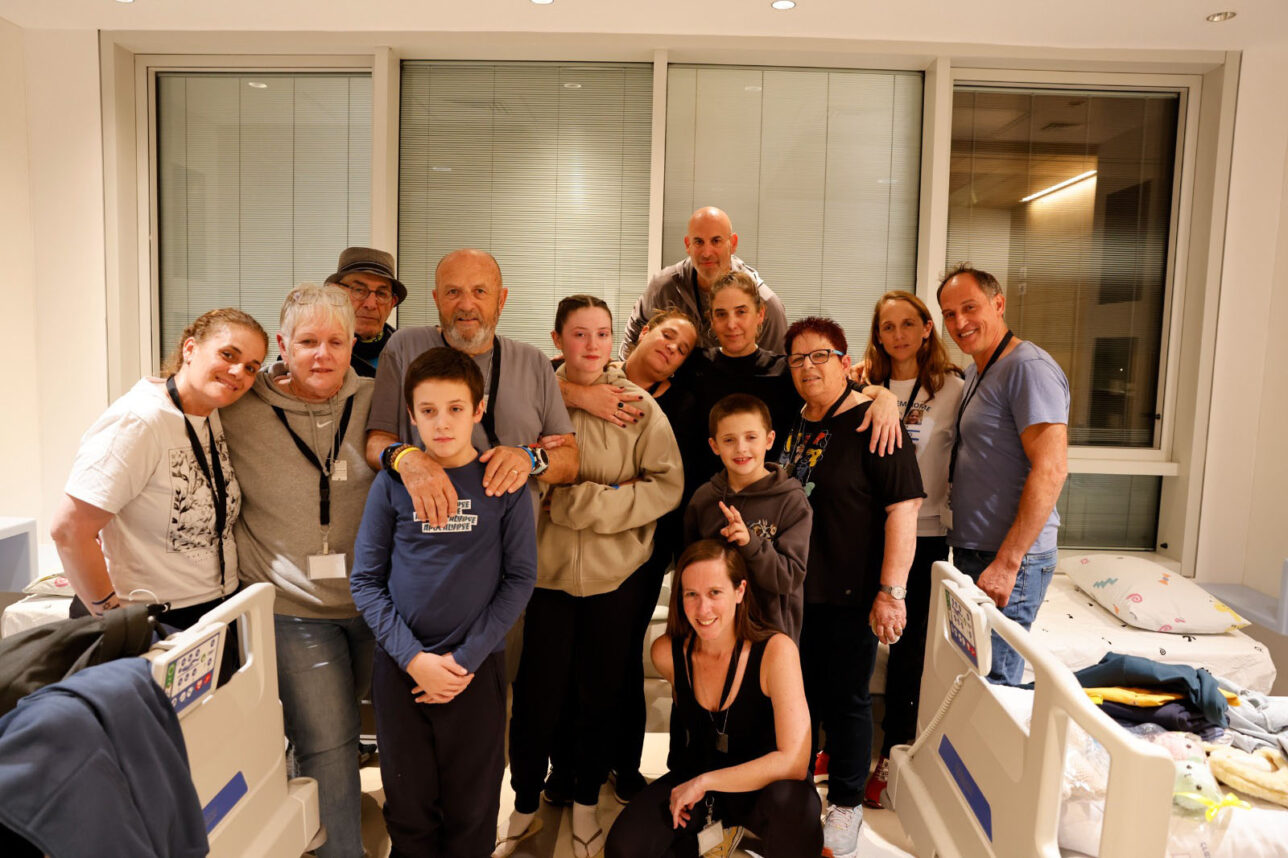
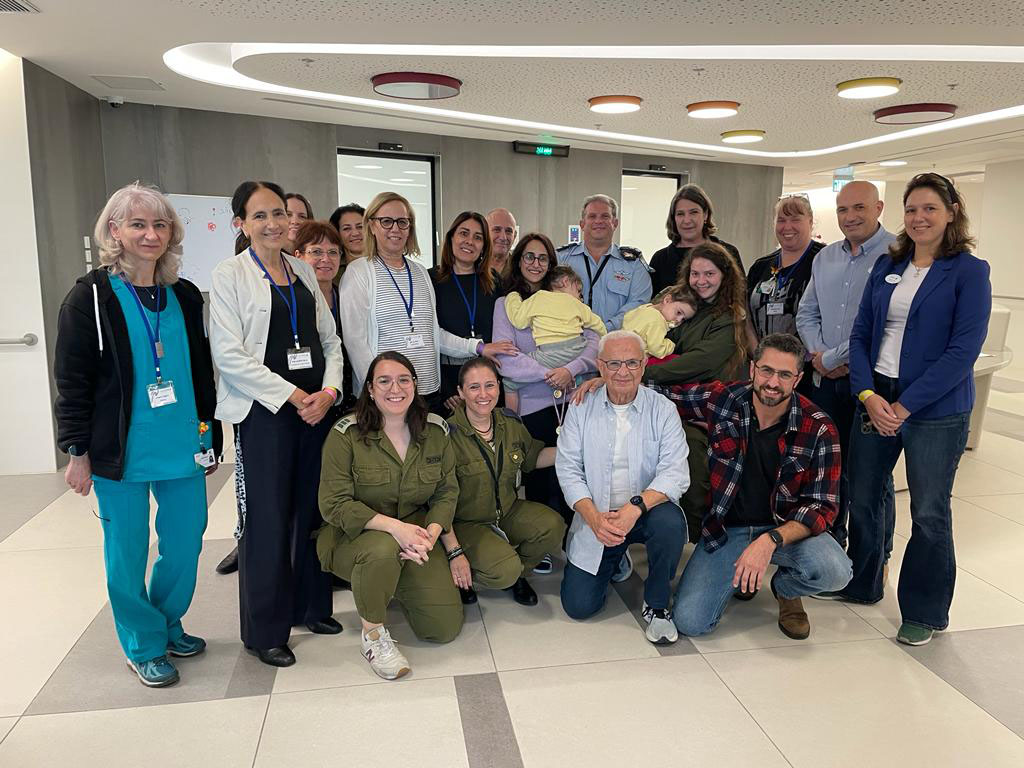
In the ward we only let in the very small professional team from Schneider and the IDF officers who were allowed in … We had different areas for guarding these wards, so that nobody who should not be in could go in. Even family members — before they arrived, the officers escorting the families asked, “Who do you want to be inside in the first minute?” After they were in, we let other people in if they wanted them.
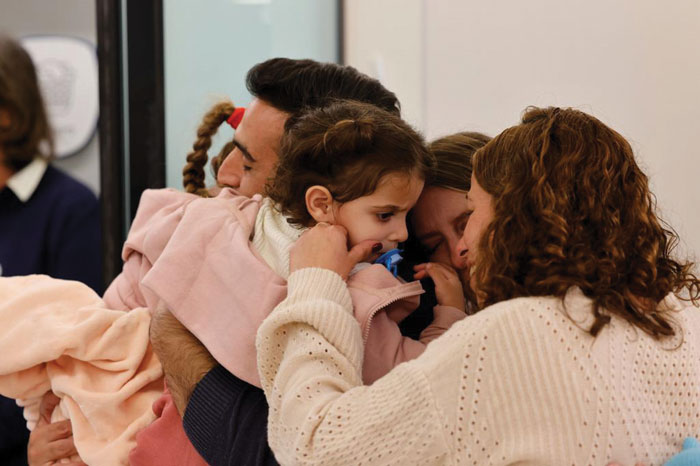
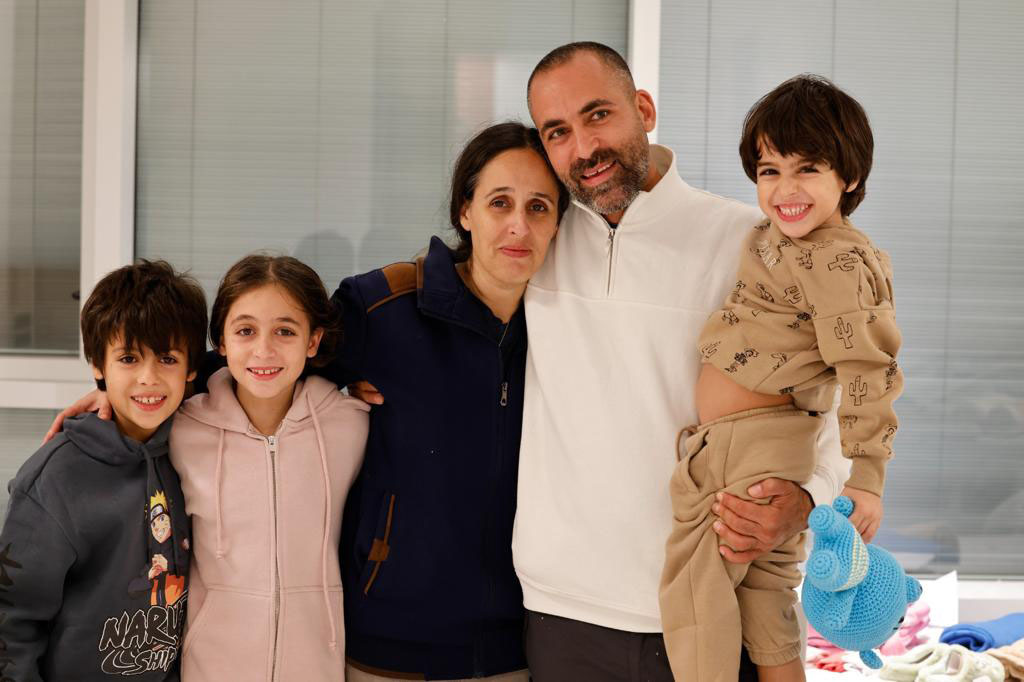
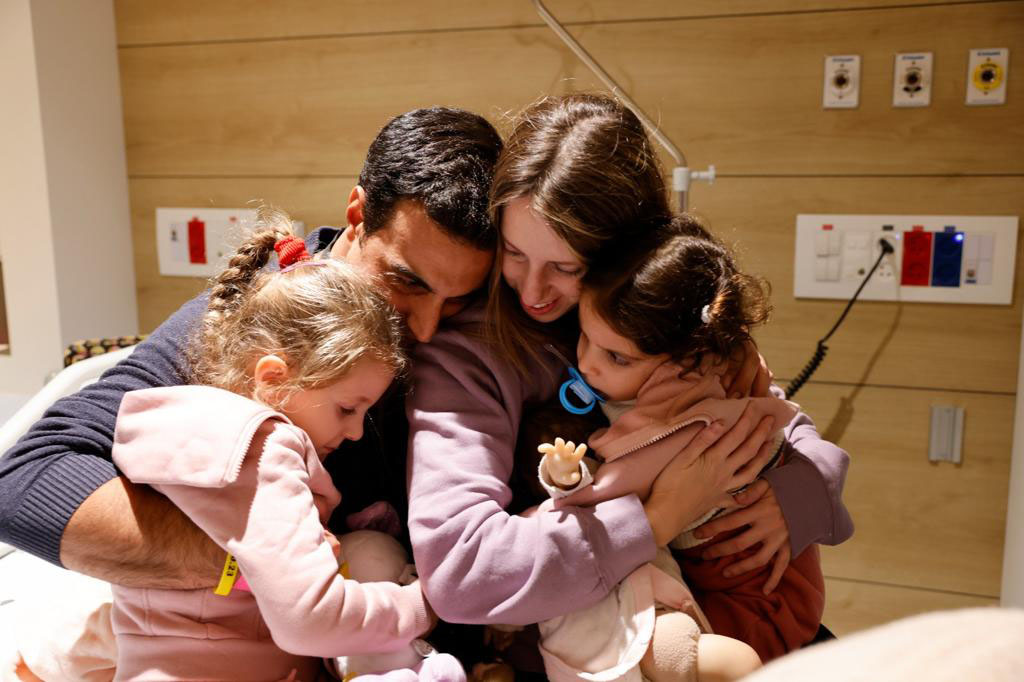
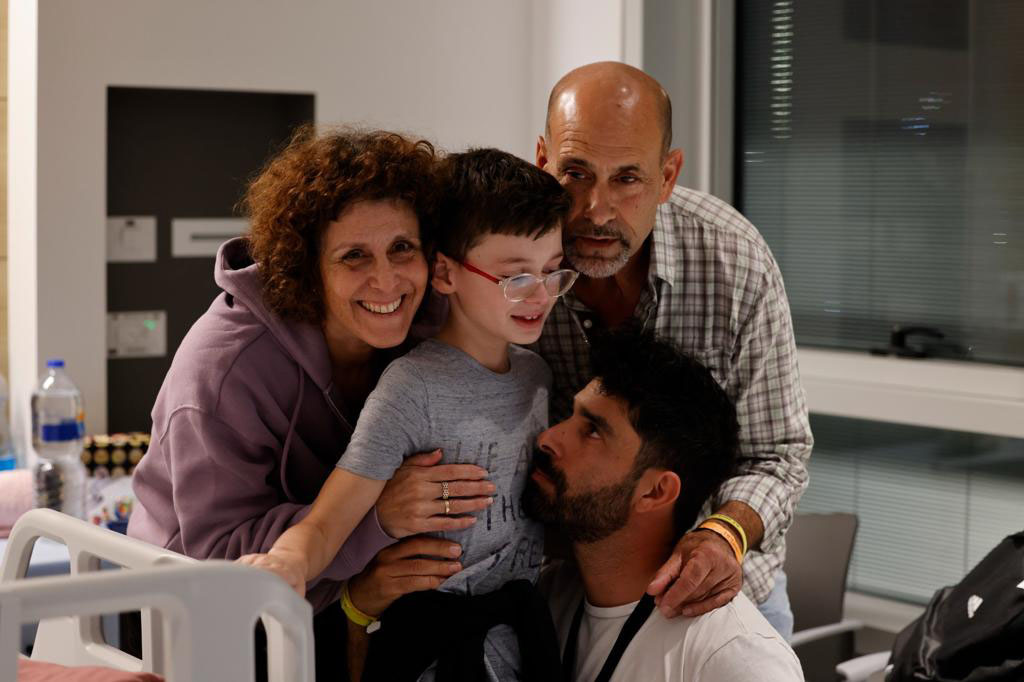
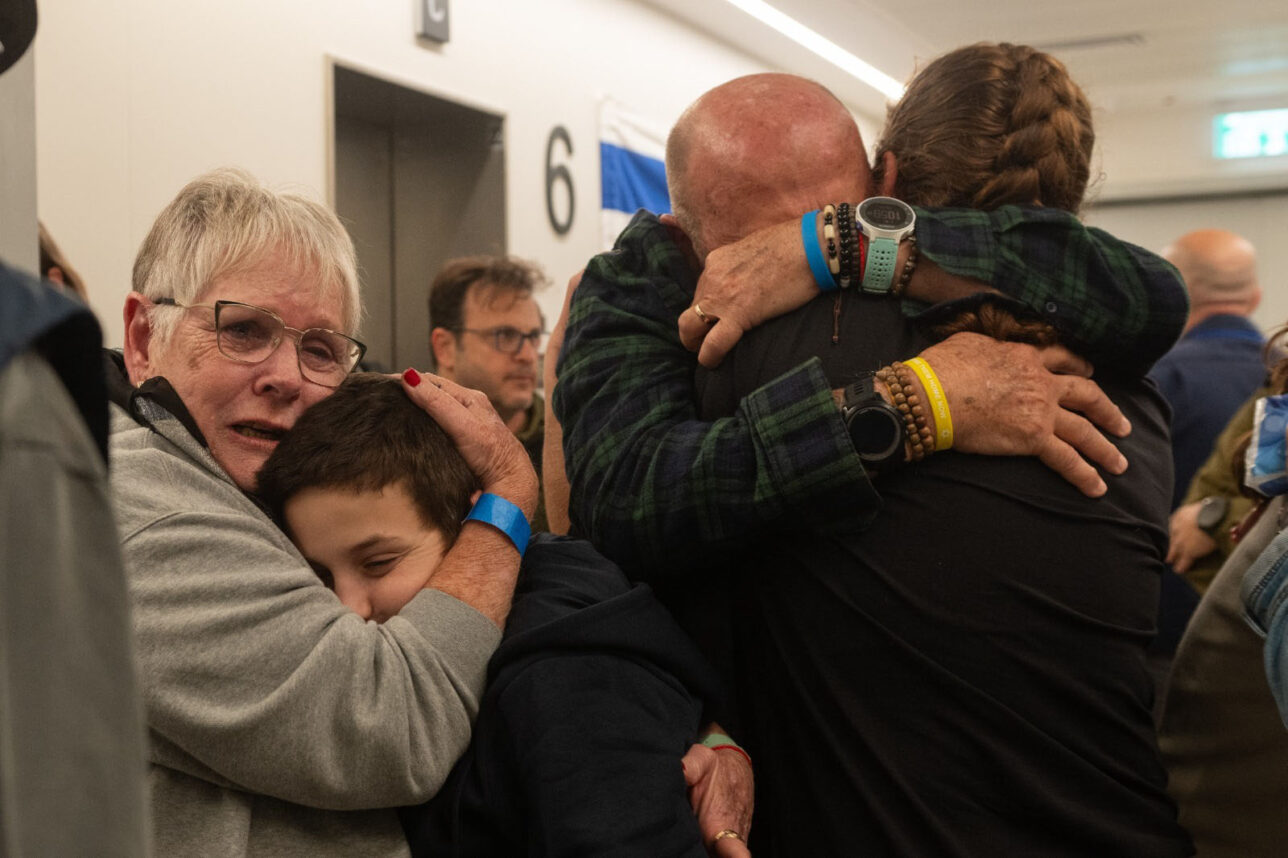
There were no journalists, no photographs, unless it was the one photographer who took all the photographs you see. We could not tell a family not to photograph, and some of them did take photos and put them on social media. Every photo from our spokesperson was first released with the family. We did not release any photos that the family did not agree to be released. There’s this very short video of [9-year-old] Ohad [Munder] running to his father in the corridor. A very special moment. It was released, I think, two days after he arrived, only after the whole family saw it and agreed to it.
How was the first night in the hospital for the children and their families?
Our protocol was to see they’re okay: walking on their feet, talking, even though they were very pale and skinny. There were some wounds, but not serious. So we said, if they look fine, and they’ve been there [Gaza] for 50, 52, 54 days, they can wait another 12 hours until we check them, until we draw blood, until we do some X-rays. Once we saw they were physically okay, we just let them be.
They went into their rooms. On every door there was a sign stating the family that was there. They usually had more than one room. They went into the rooms, took a shower, got dressed, got all the lice out — there was a lot of lice. Our nursing staff was there to help them. If they wanted to eat, there was great food, and our dietician was there to tell them what they should and shouldn’t eat.
Most of the families, once they came back, went into the rooms, and the corridor was very, very quiet. Almost nobody went out into the corridor that first night. Not only because they were tired, but also they just wanted to be by themselves.
Photo credit: Schneider Spokesperson
The next morning, they started waking up, opening the doors, and stepping outside of the room very carefully. We even heard some of the children asking, “May we step outside of the room?” Imagine that, they don’t even understand that they can do whatever they want now. “Can I open the cupboard drawer?” Questions that you just don’t believe.
By the second day, they were inviting friends, playing in the play areas according to their ages, sitting in the different seating corners we made, drinking coffee and hot chocolate. We heard the normal voices of children: laughing, shouting, getting mad, getting happy. Just returning back to their childhood.
Of course, [now] we know a lot about many of these children. They’re definitely not fine. They’re not back to what they were on October 6. But they improve every day. They cope with the new situation. Some of their families are not full families. Some fathers are still in captivity. Some fathers are dead. Some brothers are dead. Or sisters. Grandmothers. Most of those families are not as they were on October 6.
How were those first few days for you and the staff?
Our lives are not the same. Our lives are not the same since October 7 as Israelis. I have four sons. One is in Australia, but the other three are fighters. So we each have our own family to worry about. But the children here are also our family. Not only these children, but all the other children who we were taking care of before October 7 and through this whole war. These children and their families, like other families we treat, become our family too. But these families are in a different state, and for us, to treat them was a great privilege. As I said, we were expecting and hoping that we could really take care of these people.
I think we all feel extremely privileged to have been in such a situation where we treated 26 returnees: 19 children, six mothers and one grandmother. We hope to treat more, but sadly, the two Bibas brothers did not come back. Hopefully they will. We still have some hope that they will. And they are in our hearts. We think about them. We talk about them, and we hope that all the other captive adults and children will come back as soon as possible.
I’m guessing that this varies depending on the age of the child, but to what extent did they understand what they’d just gone through?
It depends on the age. But it is very obvious that even the youngest ones we had, who were three and four-years-old, completely understood that they went through something very, very, very bad and big. By the way they speak, by what they ask, by their memories from the 7th of October and what was after that in Gaza, you understand that they definitely understand.
Did they know what happened on October 7?
It depends. They had very different things happening to them in Gaza. Some of them knew more. Some of them even listened to the news once in a while. Some of them knew what was going on on October 7, because it took a few hours until they were in Gaza, and some of them knew little.
But they all knew there was a war, because they were constantly under attack from the Israeli Air Force. They heard a lot of bombing around them, and you hear them saying that on one hand, they were kind of happy that they were not forgotten, even though they were told by their captors that there is no more Israel; nobody’s looking for them; they don’t have a family anymore; they will stay there forever. That’s mostly what we heard from the teenagers.
So on one hand, they were very happy that there was a war. It made them feel that we were fighting for them. But on the other hand, they were very, very scared that they would be killed in one of these attacks. And now we hear from the families who still have family members in Gaza, that this is the most frightening thing for them — that they will die in the war. And this is why they need to come back very, very quickly — those who are still alive.
Did the kids speak much about their captivity?
Yes. They spoke a lot about it.
One of them said about one of her captors: “You know, he really loved me. He really liked me a lot.” She’s like five years old. She was talking to one of the teachers [in the hospital], and the teacher asked how she knew that he liked her. She said, “Because he always gave me a little more pita to eat, and he said he’s giving it to me because I am such a nice girl. And he gave me a piece of paper I can draw on.”
For a child like that to go through 50 days in captivity, but still have an easier experience is because children are usually so optimistic. They find the very basic things in life that make them feel okay. Even though they’re closed in a room — they cannot cry, they cannot laugh, they cannot talk, they must whisper. But even in this condition they can find some good things to hold on to, so they stay optimistic.
I think the teenagers had a less easy time believing they would come back to Israel. But I think when we saw them, at that moment in time when they just came back, they couldn’t believe that they were back. I think they were very happy to come back. But since then, I think they’ve had a pretty hard time getting their lives back together.
Can you talk about what it’s been like for them?
Photo credit: Schneider Spokesperson
We don’t see them very often, but it’s from what we hear in our outreach to caregivers in the community. You have to remember that most of them, if not all of them, don’t even have a home to go back to. They came back, they live in a hotel or something similar. They don’t go back to school. They don’t have a regular daily pattern to return to. The war is still on. They found out about many of their friends who were either killed, or some family members who are still captive. Like all of us, they cannot go back to normal life, and we know that the most important thing for children who undergo such a traumatic event is to try to get back as soon as possible to some normal life, but there’s no normal life for them to go back to.
When they were at Schneider, did the kids or their mothers do or say anything that shocked or surprised you?
One of the girls who came back — she’s a really lovely girl. She’s 14. She was there [in Gaza] most of the time by herself. A 14-year-old girl. Just imagine that. She came back, and she was told that her brother was killed. And even though she was very sad about that, in those few days she was at Schneider, she asked for some of her girlfriends to come visit her. Three or four girls came on the second or third day after she returned, and they made a short TikTok video with them dancing. So for the first minute you’re saying, “Wow, she’s really not okay if she’s making this TikTok video and dancing. She just came back. She was all alone. Her brother was killed.” This is completely abnormal behavior.
And then you think again, and you understand that this is completely normal behavior for a 14-year-old child who was there almost by herself for 52 days. And besides being very, very sad and anxious, she also just wants to be happy and to dance. And I think that minute when she was with her friends, dancing and posting it on TikTok, it’s like, “I want to get back to my normal life,” which is great, actually. It surprised me, and I would say even worried me — not only me, the staff — but a minute after that we realized that this is really right. This is okay. It’s good.
Do you have hope that they’ll be able to recover well?
Yes, I think they have a very high chance of being okay … because they’re children and they’ve been treated from the minute they got here. By giving children the right tools for how to cope with different situations, if they use these tools in the right way, and if we help them use these tools in the right way, they probably will be very strong adults, maybe even stronger. I’m not suggesting this to anyone in order to be strong. But if it already happened, and if they find the right way to cope, I think they might grow up to be very strong people because of it … I definitely think it can happen.
Is there anything else you want to say to Diaspora Jewry or to the non-Jewish world?
A hospital in Israel, especially a pediatric hospital, is a hospital that we call above and beyond, because children are above anything — religion, belief, war, enemies. Children are above and beyond because children are innocent bystanders, and children are the future of the world.
Photo credit: Schneider Spokesperson
So our culture at Schneider is to treat any child and to think about how we can treat more children. During the Ukraine war, we brought in some children. We made a great effort for them to come here, because we felt that we should help. But this is the first time that I, as a physician and director of a pediatric hospital in Israel, felt that something went so wrong in people’s minds on October 7 that they would treat children in a way that I would never believe anyone could.
To hurt them, to torture them, to kill them, to take them into captivity. It’s something that completely changed how I see adults. I could never believe this would happen. So for me to continue and believe that children are above and beyond everything, and that, even though this happened, we should still see all children as children that we should treat, because they are the future of the world — I think this is our way to beat evil.
Josh Feldman is an Australian writer who focuses primarily on Israeli and Jewish issues. Twitter/X: @joshrfeldman
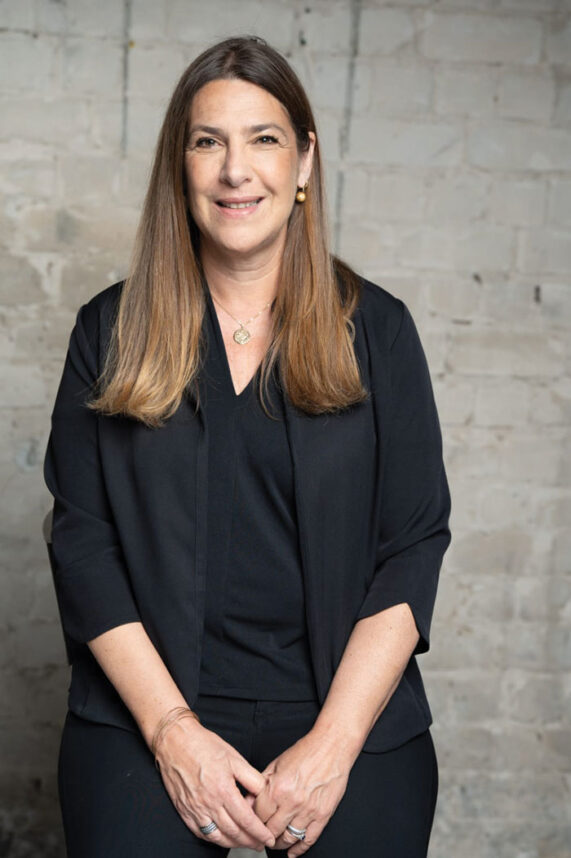
Having only become executive director of the Sandra Caplan Community Beit Din in January, Deborah Schmidt cannot say whether there is a typical convert to Judaism.
Instead, the former attorney alludes to a Midrash that holds “we all stood at Sinai, all Jewish souls. Some Jewish souls might have gotten lost along the way.
Over time and circumstances, we can bring them back to the Jewish people.”
Schmidt’s job is not to bring back those who may have strayed but to overseeconversion candidates’ official final steps.
As her predecessor Muriel Dance explained, “The Beit Din is not about teaching a candidate one more thing. It is an opportunity to find out what called these people to our tradition.”
An irony — or coincidence — of Schmidt’s leadership is that she need look no further than a family photo for so-called typical conversion case.
Take her sister-in-law, who is Japanese. She met Schmidt’s brother in Bali when he was on holiday. He lived in Mitzpe Ramon, two hours south of Be’er Sheva.
“She made her way there and became part of the Jewish people in Israel,” Schmidt said proudly.
“You might ask, ‘How does a woman from Japan find a home within Judaism?’”
The born Jew marveled at the sight of a new Jew, her relative. Schmidt happened to be in Israel at the time. “I witnessed her immersion in the mikveh,” she said. “For her, it was absolutely transformative. She finally had found her home.”
The erstwhile attorney believes “every single step along my journey has prepared me.”
Schmidt’s new position is not the fulfillment of a longtime dream. But the skills she brings to leadership of the Sandra Caplan Community Beit Din — administration, organization, pastoral, bringing people together – were deemed ideal for Dance’s successor.
The Beit Din is the only pluralistic standing rabbinic court for conversion in the world. It was named for the late wife of the founding donor, George Caplan, who wanted to ensure “there is a place to embrace seekers of Judaism,” Rabbi Jerrold Goldstein, one of the Beit Din’s founders, in 2002. Since then, the Beit Din has welcomed more than 800 new Jews.
From her professional experience, Schmidt, a mother of four daughters, understands a prospective convert’s curiosity and apprehension at entering a new form of life.
For complex reasons, there came time for a career change. “I had been doing law for a long time,” she said, “and then in 2008 there was the financial meltdown. I also had personal issues in my family that prompted me to think about doing something more human-faced. And I did it.”
What new responsibility has the new leader been anticipating most? Without hesitation, “meeting candidates and hearing their stories. The other part of starting this position is my chaplaincy work.”
Schmidt returned to the classroom in 2011 and graduated from the Academy of Jewish Religion, California, in 2014 with a chaplaincy degree. In the decade since, she has served as chaplain at Cedars-Sinai, Beit T’Shuvah treatment center, at jails and in hospice.
She chose chaplaincy as a new career because she was seeking “something that was more people-facing but wasn’t law. It was really hard. Every organization I spoke to said, ‘You can do our legal work.’ I’m, like, ‘No, I don’t want that.’”
Schmidt’s route from law to chaplaincy to the Beit Din seems to have been relatively smooth.
She explained that Muriel Dance has been a mentor for years. “In chaplaincy school, I did clinical pastoral education unit at Skirball Hospice where she was my supervisor. I got to know her, and we have had a relationship since 2012.”
Periodically, they checked in on each other. Last year when Dance was preparing to retire, she let Schmidt know.
“She thought I would be a good fit,” said the new executive director. “When she announced her retirement, I applied and went through the process.”
Schmidt said it wasn’t that all career roads led to the Beit Din. “But I believe my accumulation of skills and knowledge have culminated in this,” she said with a smile.
Without hesitation, she described the most appealing portion of this latest new scenario in her professional life.
“Meeting the candidates, listening to their stories, holding space for them in the holy journey they are taking,” Schmidt said.
Having been trained in numerous professional avenues, she confidently reaches a conclusion that she is ideally suited for her newest calling.
“I am really a listener.” – Deborah Schmidt
“I am really a listener,” she said. “Chaplaincy essentially is being present, holding space, listening to someone’s story because it is theirs to tell, theirs to live and for me to hold space.”
Through no coincidence, she identifies these as the same skills she brought to chaplaincy, to being with sick people at the end of lives.
Throughout her legal career, Schmidt had both hands on the wheel. Here, she is to sit back and listen. Does that suggest she is loosening her grip?
She won’t be taking he hands off the steering wheel because there is another dimension to her duties.
“Part of my role is to make sure we have the dayanim (rabbaim) for the Beit Din, that we are organized and have everyone’s conversion records,” said Schmidt.
Once she was offered her new position, a change washed over her. She noticed what she calls New Jews everywhere, those who may look different from Jews she and other lifelong Jews grew up with. “Our community is so much richer because of their participation,” she said.She maintains the community piece enables people to inquire about Judaism without being scared of being overwhelmed.
Schmidt and many others grew up being taught “traditionally you are supposed to turn the convert away.”
But remember, she said, “we have stories in the Talmud of many, many people who were New Jews.”
“The immigrant story is truly everyone’s story,” Susan Morgenstern, director of The Braid’s latest production, “Yearning to Breathe Free,” told the Journal.
This Salon show, premiering March 17 at the Skirball, weaves together true stories from Jewish immigrants across the globe — Ukraine, China, Iran, Chile, Egypt, Turkey and Israel — and takes the audience into the experience of leaving one’s home for a new land.
“Many of us have a profound patriotism and love of this country that’s been hard to express in this complicated world,” Morgenstern said. “Since almost all of us have an immigrant story somewhere in our background, telling these stories shines a light on our various ancestors’ quest for ‘home,’ with all of its hope, optimism, hardship and struggle.”
“We think about those who came as refugees after the Shoah, but rarely do we consider those Jews whose story has a different narrative.“–Ronda Spinak
“When most of us think of immigration, especially if we are Ashkenazi, we think Ellis Island,” Ronda Spinak, The Braid’s artistic director and literary curator of the production, told the Journal. “We think about those who came as refugees after the Shoah, but rarely do we consider those Jews whose story has a different narrative.
“And more than this, children of these immigrants are making up a new Jewish generation,” she said. “They want to pass on their identity in an often interfaith or mixed culture household, but how do they do that? What are the challenges they face? These are the new Jews.”
For 16 years, The Braid’s Salon Theatre has shared powerful and heartfelt true stories, brought to life by professional actors. “Yearning to Breathe Free” continues this tradition.
In his story, André Aciman, who wrote “Call Me by Your Name” and “Out of Egypt,” reveals the ironic pain of celebrating a seder while he and his family are being forced out of their home in Egypt. Aciman and his Sephardic Jewish family immigrated to Italy before coming to America.
“I want people to remember or learn about Sephardic Jews living in a highly precarious Egypt from which they were ultimately either expelled post-1956 or, if they had any foresight, from which they decided to flee,” Aciman told the Journal. “One may not lament the past, but the past is inscribed in some submerged portion of our identity and it always bobs up at the most unlikely moments.
“In my case, it might be the wonderful sense of sunlight on one’s skin, or the smell of particular foods in one’s grandmother’s kitchen, or the accent of people speaking French with a Levantine accent,” he said.
“Yearning to Breathe Free,” filled with funny and poignant stories and songs, also shares stories from memoirists Esther Amini (“Concealed”) and Haideh Herbert-Aynehchi (“Neither the Head nor the Tail of the Onion”); songwriter Mike Himelstein; novelist Bárbara Mujica; playwright and performer Danielle Levsky; screenwriter and director Odin Ozdil; and Farnoush Amiri, journalist for the Associated Press and other outlets. Vanessa Bloom, Los Angeles community leader for The LUNAR Collective; Natalya Bogopolskaya, an LAUSD school psychologist; Emiliana Guereca, founder of the Los Angeles Women’s March; and Aharon Zagayer, who was born in Baghdad, Iraq, fled to Israel with his family and immigrated to the U.S. in the 1970s, also contributed stories.
In one tale, two Chilean parents struggle to learn strange new Jewish customs when their daughter marries an Orthodox American man. In another, an adoptee from China discovers surprising inspiration in a nearby bridge that connects her own story with that of her Jewish grandparents from the Balkans. Guereca’s story tells of her experience coming to the United States as an undocumented child from Mexico. “It delves into the challenges I faced navigating the citizenship process, even with amnesty in place,” she told the Journal. “It’s a journey that sheds light on a child’s difficulties while striving to find her way through bureaucratic hurdles and legal complexities, as well as the importance of support systems and family and community solidarity in times of adversity.” Guereca hopes the show will inspire audiences to embrace their own narratives and find strength in their cultural heritage. Natalya Bogopolskaya, a Russian-speaking Soviet Jew from Ukraine who came to America at age seven, hopes “Yearning to Breathe Free” will highlight how the Jewish experience is not just one story. “We may have some things in common but we also bring a unique background to the whole community,” Bogopolskaya told the Journal. “And I think that part of the story is evolving – it’s happening currently and will continue to happen with every future generation who continues to identify as Jewish.”
The cast is as ethnically diverse as the writers, and includes Kimberly Green, Heidi Mendez, Roxana Rastegar and Marcelo Tubert.
“Ronda and I considered a number of actors who identify strongly with their own personal immigrant origin stories,” Morgenstern said. “And the variety of writers’ voices in the material Ronda curated so beautifully would require actors who are particularly skilled at language, able to paint visceral pictures using the writers’ words. The four of them weave a beautiful tapestry together of stories from around the world.”
While The Braid shows are entertaining, they also illuminate the challenges and struggles of what it means to be Jewish in America today.
“Being an immigrant or a child of an immigrant in 2024 brings its own set of hurdles,” Spinak said. “Understanding this, makes for a more empathic and unified people.”
“In the present moment, the word “immigration” stirs up so many feelings and controversies,” Morgenstern said. “As we all sit in an audience together, hearing these stories, let’s remember what we all share, how much we have in common, how much we all want family and love and light in our lives. Let’s breathe freely. Together.”
“Yearning to Breathe Free” will be performed in person in Los Angeles and live on Zoom from March 17 to April 7. It will also be performed in the Bay Area on April 13 and 14. For details and tickets, go to the-braid.org/breathefree.
“It’s not worth it for the district to make anything public,” a school board trustee said when asked about biased and factually inaccurate lessons about Jews taught by teachers in more than one high school at Sequoia Union High School District, in the San Francisco Bay Area.
Yes, in the heart of Silicon Valley, where the “misinformation” police are out on the prowl so everyone can feel like they “belong,” antisemitic propaganda is repeatedly condoned in the classrooms, and the suffering of Jewish students is despicably ignored.“It’s not worth it” seems to be the sentiment of so many these days not yet negatively impacted by the status quo, having failed to learn from history.
I first learned about the banalities of evil from my grandpa Srul, a Holocaust survivor who watched his Romanian neighbors convince themselves that violence is justifiable when it is for a “greater good” actually characterized by evil. Barbarism was deemed defensible then, just like the horrors of Oct. 7 are being legitimized today. Yesterday’s Nazis have become today’s “freedom fighters,” as activist teachers rewrite history for the next generation of Jew haters. Those who learn history, of course, concede that it only starts with the Jews, and what we are seeing today is an attack on classical liberal values: those that ended slavery, gave women the right to vote and legalized gay marriage. Western Civilization is now defined as “white supremacy,” as postmodernism ushers in Medievalism 2.0.
In the midst of World War II, my family found themselves under the Soviet Communist regime. My aunt was sent to Siberia simply because her husband was an entrepreneur and was thus reflexively considered a capitalist pig.Jews in general were best unseen and unheard if they wanted to avoid being “sent away.” The best compliment my parents would get was, “You are good people — too bad you are Jews.”
My parents wanted more for me than to have my Jewish identity erased and be brainwashed. They wanted me to experience dignity as a human being, to experience freedom of speech and expression of my religion. They wanted all that was impossible living in Ukraine at that time.They knew they had no choice but to somehow get out.
We lived stateless in Italy for almost a year as refugees, waiting for a country to accept us. Some of my family ended up in Australia, some in Canada, some in Israel.Meanwhile, my aunt — a brutally traumatized woman after 14 years in the gulags — my parents, grandparents and I ended up in San Francisco.My parents’ struggle was palpable in those early years, trying to learn English while working two jobs each.
Growing up as a relatively poor immigrant in San Francisco, I did not judge others according to their privilege, and didn’t need sympathy or victim status to feel better about myself.I needed empowerment, which I was grateful to receive from a quality public school education, of the sort that is virtually nonexistent today.
Inertia in our schools and throughout our education system has stifled meaningful solutions. All kids suffer as a result.And parents who take the time to review curricula and raise valid concerns are dismissed.
In today’s California public schools, ideological dogma is prioritized over reading, writing and math. The virtue-signaling equity agenda systematically adopted by school districts across California is focusing on variables that appear to have very little impact on improving outcomes. “Mainstreaming” or “streamlining” are new terms used for the common practice of lumping students of all levels and needs in the same classroom. “Diversity” is achieved at the expense of meeting each individual child where they are. Everyone suffers, but the state’s DEI scores look good. Silicon Valley has become ground zero for garbage data, cherry-picked to push a predetermined narrative. No transparency. No accountability. No actual leadership. Inertia in our schools and throughout our education system has stifled meaningful solutions. All kids suffer as a result.And parents who take the time to review curricula and raise valid concerns are dismissed.
What passes for high school education these days is appalling. This year, a week-long high school assignment entailed drawing an “identity flower,” where each petal was colored and described — like one would do in elementary school. Cartoons are regularly brought in as supplementary educational materials to push the “counternarrative,” a new term for rewriting history.
As unbelievable as it sounds, my freshman daughter came home with one homework assignment called “Designing Race” and another called “Race Sorting,” while a student in a parallel Ethnic Studies class was told to stand in front of the room while other students took turns guessing her race. Discipline is doled out by arbitrary intersectionality criteria that only the teacher gets to define. Some teens are shamed while others glorified, simply based on their immutable skin color.
The oppressor/oppressed power lens has been woven into subjects from English to Science. Now even Math isn’t spared: My daughter’s geometry class spent an entire lesson discussing ableism and the Paralympics, while fundamental math concepts were overlooked. Last year, my other daughter spent multiple weeks in her junior year Advanced Placement U.S. History class on “trans heroes” in the American Revolution, while the Holocaust and even WWII were glossed over.
It seems parents don’t matter. Four months after teachers presented students with factually incorrect and biased material in the classroom, the school has neglected to notify parents of impacted students, nor have they corrected the discriminatory materials that the students were forced to learn.
Why do you ask? Because ”It’s not worth it for the district to make anything public.”
Diana Blum is a concerned mom of two students in the Sequoia Union High School District.
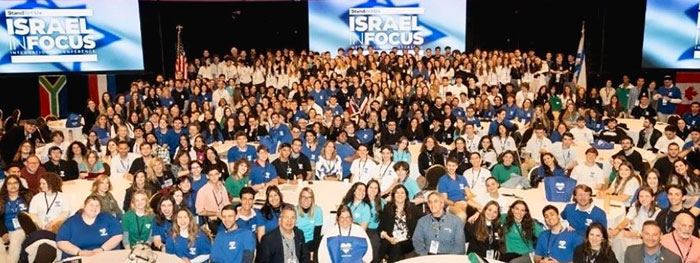
Actress Debra Messing and comedian and actor Brett Gelman were among the speakers who highlighted the StandWithUs “Israel In Focus” International Conference at the Hilton Los Angeles Airport hotel from Mar 1-3.
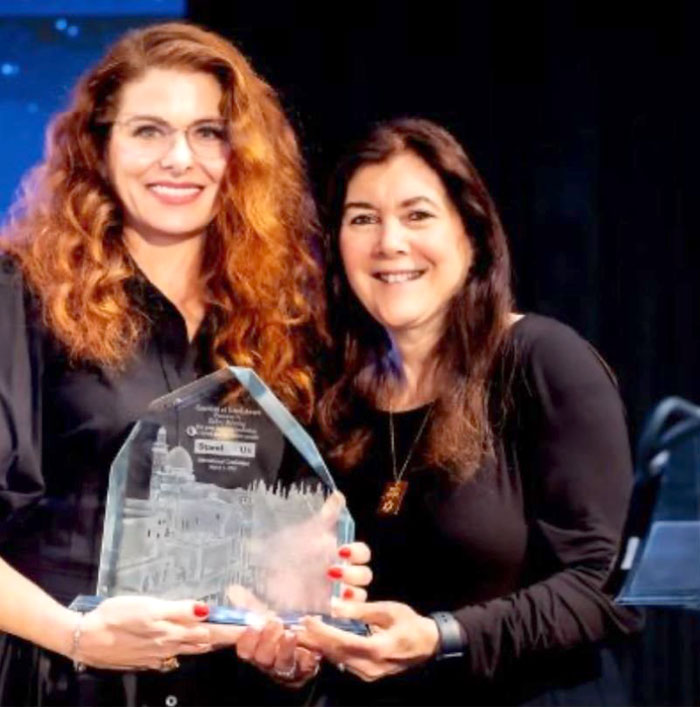
Around 500 students and community members attended the conference. Messing received the “Guardian of Israel” award from StandWithUs CEO and Co-Founder Roz Rothstein during the second evening’s plenary; Rothstein thanked Messing for her “inspiring leadership.” Messing called the award a “beautiful honor.”
“I was taught it was our obligation as Jews in the Diaspora to protect Israel.”– Debra Messing
The “Will & Grace” star said that the Oct. 7 massacre “shook me to my core” and that it was “unthinkable” that the next day there were “people on the street celebrating Hamas and blaming Israel.” Messing decided to visit Israel after realizing how “alone Israel must feel … I was taught it was our obligation as Jews in the Diaspora to protect Israel,” she added.
Messing receives SWU’s “Guardian of Israel” award. Photo courtesy of StandWithUs
Her trip to Israel was “transformative,” as she heard stories from Oct. 7 survivors and Israel Defense Force (IDF) soldiers that “made the horror and the trauma feel very real.” But Messing didn’t expect that when she returned home there would be riots and calls for genocide against Jews on college campuses “and the world was silent.”
“So-called social justice activists have been brainwashed and Jewish students do not feel safe,” she said. Messing called for dismantling the “colonialist apartheid narrative” against Israel and for educating people about antisemitism, how anti-Zionism is racism and the truth about Israel.
“We must help create spaces where difficult conversations can be had with open hearts and a focus on the humanity of all people—the exact mission of StandWithUs,” Messing said. “We can transform darkness into light.”
Earlier that evening, Gelman spoke with his fiancé Ari Dayan and StandWithUs Israel Executive Director Michael Dickson. Gelman, who stars in the hit Netflix series “Stranger Things,” recounted visiting Israel after Oct. 7 and visiting some of the sites of the massacre, including Kibbutzim Kfar Aza and Be’eri. He described the sites as “absolute carnage. You could still smell the bodies … It was just so shocking that somebody could perform such evil as they did there,” Gelman said.
He also saw “the lives that people left behind” such as laundry in their washing machine, a peace poster, a Bob Marley poster, or an air freshener. “The humanity of that would come through which would make it even more horrific what you were looking at,” Gelman added.
Since speaking out against the atrocities of Oct. 7, Gelman has had to deal with trolls online who insult his appearance and even threaten his life. In fact, a couple of bookstores recently pulled out his scheduled appearances to promote his forthcoming book “The Terrifying Realm of the Possible: Nearly True Stories” due to “protester intimidation.” “These people are idiots,” Gelman said. “Very violent scary idiots.” He told the conference attendees, “I don’t know how you’re on a campus right now” and wished he could “come and guard all of you.”
A lot of the people that Gelman works with in the entertainment industry “have been very supportive,” but beyond that “you just don’t know,” and in Gelman’s view that’s “just as bad as knowing they’re not supportive.”
John Ondrasik, who performs under the stage name “Five for Fighting,” similarly lamented to conference attendees how “deathly silent” the music industry has been regarding the Oct. 7 massacre. Ondrasik released a new single in January titled “OK” that speaks out against Oct. 7, antisemitism and support for terror — and those who remain silent on the issue. “One doesn’t have to be Jewish to condemn the evil that is Hamas,” Ondrasik told conference attendees, contending that one just has to be a human with a brain and a heart.
Ondrasik recalled how after the 9/11 terror attacks, former Beatles legend Paul McCartney organized a concert in Madison Square Garden. “There needs to be one of those for this moment,” Ondrasik declared. “We’re going to do that.” He concluded his speech by giving attendees his phone number and offered to help those dealing with hate. “We’re in this together and I choose you,” Ondrasik said.
Day one of the conference began with a group of 30-40 pro-Palestinian protesters outside the hotel from 8 to 11:30 a.m. The protesters held signs with anti-Israel slogans: “StandWithUs Stands With Genocide,” “End the Siege on Gaza Now,” and “Defunding Israel Lies.” They chanted slogans, including “Zionists go back home, Palestine is ours alone.”
At the beginning of the conference, StandWithUs’ Michael Dickson said, “Right now a hate group that celebrated the genocidal atrocities of Oct. 7 is outside protesting this conference.” Behind him was an image of an Instagram post from Palestinian Youth Movement that stated, “Long live Palestinian resistance” next to a picture of Israel followed by a promotion of a Oct. 9 rally. “What these extremists don’t realize is that they’ve inspired generous supporters of StandWithUs to step up for all of us,” Dickson continued. “Starting now, for every minute this hate group spends, generous donors have committed that StandWithUs will receive at least 1,000 more dollars to support the work that all of us are doing around the world.” He declared “We will not be intimidated” and “No amount of hate will stop us. The people of Israel live. Am Yisrael Chai.”
The conference also featured Oct. 7 survivors as speakers, including Sagi Gabay (who survived the Nova festival massacre) and Aviv Nachmias, whose brother Itay —who served in the IDF’s special forces — was killed defending his town from Hamas terrorists on Oct. 7. Students also discussed how difficult life has been on campus for them following Oct. 7. One student who spoke was Tessa Veksler, the student body president at UC Santa Barbara who was targeted with hateful signage at the university’s Multicultural Center. “The more people tell you that you don’t belong, you must take a stand to show them that you are not going anywhere,” she told attendees.
Other speakers included Consul General of Israel to the Pacific Southwest Israel Bachar and Judea Pearl, chancellor professor of computer science at UCLA, National Academy of Sciences member and Daniel Pearl Foundation president.
The conference concluded with Rothstein asking attendees to share their highlights from the conference; students lauded the “unity” at the conference as well as the knowledge they gained and were inspired to “bring the spirit of this entire room” to their campuses.
“We’re doing this together, we’re growing together, we’re co-inspiring people together and we will continue to do that because we’re not going anywhere,” Rothstein told attendees. “Am Yisrael Chai.”.
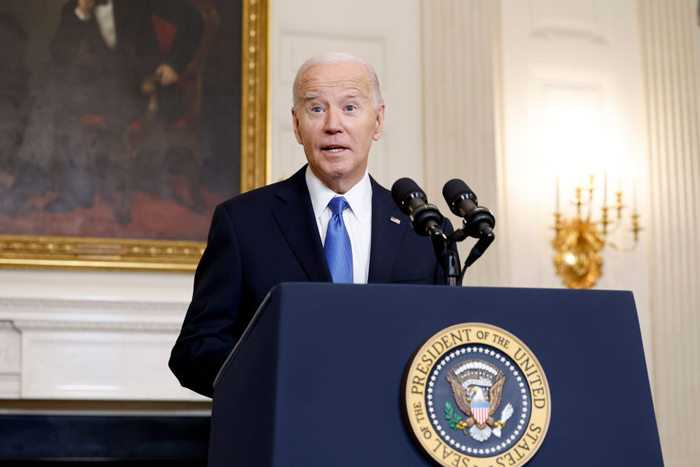
Let us begin with a harsh statement: President Joe Biden is hurting Israel’s efforts to win the war. He may be doing it for a good reason. He may be doing it for a bad reason. Perhaps he is sincerely concerned about the humanitarian situation in Gaza. Maybe his new tone has more to do with politics in America. One way or another — he harms the Israeli war effort. Biden makes it difficult for Israel to move to the next phase of fighting. Biden also raises the hopes of Israel’s enemies that the war will soon be over. In fact, that’s the more serious problem: It is quite possible that Biden is the reason for the hardening of Hamas’ positions in the hostage negotiations. He might be the reason why Hezbollah doesn’t hold its fire.
Let’s continue with a statement of frustration: Many Israelis are angry at Biden. That would be a natural response to his comments. But there is no benefit in being angry with the President of the United States. He does not work for Israel, and does not depend on its sympathy. Israel must deal with Biden with patience and wisdom, not anger. It has to try to understand what he wants. Biden says — and so does his vice president — that the U.S. still supports the main goals of the war. The U.S. continues to believe that Hamas rule in Gaza is unthinkable, and continues to demand that the hostages be returned. So one must ask: How does the U.S. propose to achieve these goals? Biden says that the price cannot be another “30,000 dead.” So, we know what he doesn’t want. But what does he want?
The Israelis are not dumb. Americans may be sold on the idea of winning the war in other ways but Israelis hear Biden and get a clear picture: His unwavering support has weakened. And he wasn’t even talking about winning the war. He was talking about dealing with Israel’s “trauma,” as if the issue is Israel’s psychological need for healing, and not a strategic need for victory.
Now let’s move on to a statement of principle: This is not the first time that the American government has tried to distinguish between the “Israeli government” and the “Israeli public.” Israelis, even those who do not support the Israeli government, must reject such sentiment. For good and bad, the Israeli government is the representative of the Israeli public. And the truth is that when it comes to the war effort, the Israeli government faithfully represents what the majority of the public wants. Yes, such paradoxes exist: the public doesn’t trust PM Netanyahu but it does support the war. And no – Senator Sanders – the IDF is not “Netanyahu’s war machine,” it is Israel’s army, supported by the public, manned by the public. If American leaders no longer want to support the war, that’s their choice, but let’s not let them pretend that it’s “Netanyahu” they disagree with, because its not him – it’s all of us, including those who vehemently oppose Netanyahu’s right-wing government.
Was Biden right to argue that Netanyahu does Israel more harm than good? Maybe. But if we sideline Netanyahu and replace him with Lapid, or Bennett, or Gantz, or Lieberman, or Israel Katz, or Yoav Galant — the Israeli war aim and war strategy will not change. Each of these individuals believes that Israel should enter Rafah. Each of these individuals believes that the IDF makes a reasonable effort to avoid harming innocents. Each of these individuals believes that Israel has no choice but to continue the fighting.
Therefore, it is possible to accept the claim that Netanyahu is “hurting Israel,” and at the same time disagree with the claim that the Israeli government does not represent the Israeli public. Israel is a democracy, and the Prime Minister of Israel represents the Israeli public. By the way, as far as we know, Biden represents the American people with an approval rating in America not much higher than Netanyahu’s approval rating in Israel.
If the Israeli public assumes that replacing Netanyahu means accepting U.S. demands, which means giving up victory, Netanyahu will not be weakened by Biden’s statements, he will be strengthened.
So, if Biden wants to hint that replacing Netanyahu will be good for them, he can do that. But in this case, his strategy is flawed. If the Israeli public assumes that replacing Netanyahu means accepting U.S. demands, which means giving up victory, Netanyahu will not be weakened by Biden’s statements, he will be strengthened. If Biden wants to help Israelis decide that Netanyahu should be pushed out of office, he needs to convince them that under another PM Israel’s chances of winning the war will be higher — not lower.
Something I wrote in Hebrew
Forty-five Israelis were killed in a Lag Baomer celebration on Mount Meron in 2021. Here’s what I wrote about the damning final report of the investigative committee about this incident:
Israel is not the first country to allow small groups within it to establish a kind of autonomy for themselves. The advantages are clear: Who has the power to deal with these strange people, who have strange customs and strange demands and strange language and strange clothes? Let them manage themselves, and we — the state — will handle them through proxies. But the disadvantages outweigh the advantages, especially when it comes to a group that is not small and is not marginal, and does not conduct itself in a low profile on the periphery of social reality. The state allowed the ultra-Orthodox leadership to establish a space free from supervision, and the result is noticeable. Careless, promiscuous, Byzantine management.
A week’s numbers
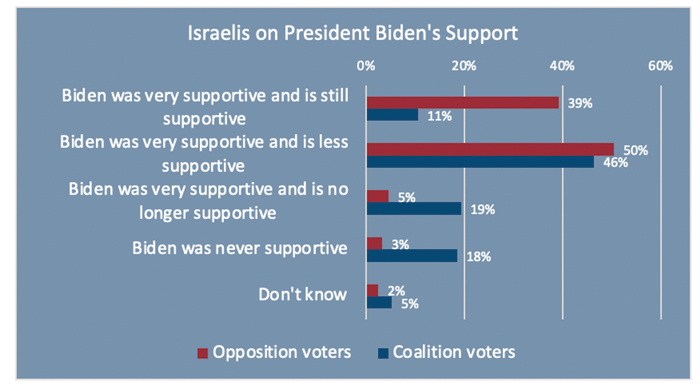
A JPPI survey found that Israelis by and large agree: President Biden is not supportive of Israel’s war effort as he was at the outset of the war.
A reader’s response:
Edith Rosenblum writes: “Shmuel, why are you writing so much about the Haredim?” My response: Because it’s important. The future of Israel depends on its ability to deal with this challenge.
Shmuel Rosner is senior political editor. For more analysis of Israeli and international politics, visit Rosner’s Domain at jewishjournal.com/rosnersdomain.
Even those Marvel fanatics that may have skipped occasional episodes of “Loki” and the latest Dr. Strange sequel can’t help but notice the Multiverse is where the action is. From the rave reviews received by the animated “Spider-Man: Across the Spider-Verse” to a rumored upcoming cameo by Taylor Swift in Ryan Reynolds’ soon-to-be-released “Deadpool & Wolverine,” the interconnected web of alternate realities and tweaked timelines seems to offer endless creative possibilities for our beloved cast of heroic characters. In the Multiverse, familiar faces possess new powers and even new names, the dead are revived, and characters who hadn’t yet crossed paths in canonical continuity find themselves teaming up to tackle the bad guys.
It might come as a surprise to the most devoted comic book and cinematic aficionados then, that millennia before Kevin Feige and Co. dreamed up Marvel’s Multiverse, the ancient rabbis cast Mordecai of the Megillah of Esther in a strikingly similar context.
For those in need of a refresher, Mordecai was the cousin of Esther. Finding themselves in Shushan in ancient Persia in the fifth century BCE, the two hid their Judaism. Esther unintentionally won King Ahasuerus’ search for a queen to swap in for the disgraced and dethroned Vashti. As sovereign, Esther obeyed Mordecai’s advice not to reveal the faith of her fathers while festooned with the trappings of the palace. Her cousin, in the meantime, was publicly outed as a Jew when he refused to prostrate himself before the nefarious vizier Haman.
Twenty-five-hundred-year-old spoiler alert: Mordecai and Esther eventually foiled Haman’s plot to destroy their coreligionists. The pair’s renewed sense of pride in Jewish peoplehood has inspired generations ever since.
Though the biblical verses paint Mordecai as a sagely and determined government official and Persian-Jewish communal leader, the rabbinic tradition sensed in him a multiplicity of possibilities.
The Mishnah in Tractate Shekalim lists Mordecai among the Temple in Jerusalem’s ritual officials. By doing so, the rabbis subtly offered a post-credit scene to the Scroll read on Purim. In this new timeline, Mordecai made it back home to Judea after his adventures in Haman-hanging. Though the regular story leaves the Shushanite Jews led by him and Esther seemingly entrenched in the Persian bureaucratic machine, Mishnaic Multiverse Mordecai lives happily ever after, triumphantly returned to the God-given homeland of the Jewish people.
Not stopping there, the rabbis ascribe to Mordecai linguistic abilities that even Earth’s Mightiest Heroes don’t possess — the ability to speak 70 languages. Picking up on a passing reference in the books of Ezra and Nehemia to a “Mordecai Bilshan,” the rabbis depict Mordecai as a master of leshonot, the Hebrew word for dialects. His wisdom in utilizing his semantic superpowers, in this iteration, earned him the additional name Petachya, “He Who Opens [Understanding] on Behalf of God.”
This Mordecai/Petachya lived for hundreds of years, until the time of the Maccabees, the rabbis record in the Talmudic Tractate Menachot. Though some later interpreters, including Tosafot, doubted the plausibility of this miraculous longevity, the renowned sage Rashi, perhaps tantalized by the possibility of a Hanukkah-Purim blockbuster, believed it to be so. Teaming up with those hearty Hasmoneans undoubtedly led to adventures whose stories have yet to be fully told.
By positioning Mordecai in this multitudinous manner, the Jewish sages were offering lasting lessons in leadership far beyond your typical silver screen and comic shelf fare.
Wherever you find yourself, keep your sights set on the ultimate destination, the rabbis were reminding us by placing Mordecai back in the Holy Land’s spiritual embrace. Using whatever political cache you possess to protect your brethren in exile is undoubtable a worthy endeavor. Yet it shouldn’t distract from the ultimate national-religious goal of inhabiting and thriving in God’s country. After all, it is Jerusalem’s flourishing that will pave the path for theworld’s redemption.
Mordecai’s ability to speak dozens of languages was a reminder that to guide people you should aim for interacting with a plurality of voices. Groupthink and echo-chambers have left humanity with a failed tower in Babel and today’s brought-to-you-by-social-media tinderbox of polarization. To help lift others toward shared purpose, it is crucial to address the mosaic of voices within and beyond one’s natural community. As the late Rabbi Lord Jonathan Sacks observed after giving a speech to 2,000 leaders from all the world’s faiths at the Millennium Peace Summit in the United Nations in August 2000, “The miracle of monotheism is that Unity in Heaven creates diversity on earth, and God asks us (with obvious conditions) to respect that diversity.”
Lastly, Mordecai’s potential overlap with the mighty Maccabees is a reminder that any superhero worthy of his or her cape has a keen sense of the throughline of courage threading generations. Today’s Jewish heroes and heroines embody their people’s inner essence when they are driven not by the sages of TikTok nor swayed by the titans of Twitter but when their influences are the openness of Abraham, the humility of Moses, the kindness of Ruth, the passion of David, the courage of Esther, and the steeled determination of Matityahu. As Natan Sharansky wrote, recalling how a small copy of Psalms gave him the fortitude to survive Soviet prison, “King David now appeared before me not as a fabled hero or as a mystical superman but as a live, indomitable soul.” Legends are made by appreciating the strivings, struggles and contributions of those who have come before us.
When reading once more at Purim of Mordecai’s adventures in the Megillah, then, one would be forgiven for allowing one’s mind to wander into the Multiverse. After all, as the Jewish tradition has long understood, creativity and imagination have long forged our most courageous of champions.
When reading once more at Purim of Mordecai’s adventures in the Megillah, then, one would be forgiven for allowing one’s mind to wander into the Multiverse. After all, as the Jewish tradition has long understood, creativity and imagination have long forged our most courageous of champions.
Rabbi Dr. Stuart Halpern is Senior Adviser to the Provost of Yeshiva University and Deputy Director of Y.U.’s Straus Center for Torah and Western Thought. His books include “The Promise of Liberty: A Passover Haggada,” which examines the Exodus story’s impact on the United States, “Esther in America,” “Gleanings: Reflections on Ruth” and “Proclaim Liberty Throughout the Land: The Hebrew Bible in the United States.”
I often fail to meet my personal goals for Torah study. This is irrational, because I love the feeling of centeredness, reassurance, and inspiration I get from it. And so, recently I joined the new cycle of Nach Yomi through the Orthodox Union’s Women’s Initiative to try to achieve a new personal best. Nach Yomi (a cousin of the famous Daf Yomi) is a daily chapter-by-chapter audio lesson of all nineteen books of the Prophets (Naviim) and Writings (Ketuvim), a two-year guided tour of Jewish history. It’s an impressive achievement for anyone who completes it.
This cycle began shortly after the Gaza war broke out, adding poignancy to the narrative.
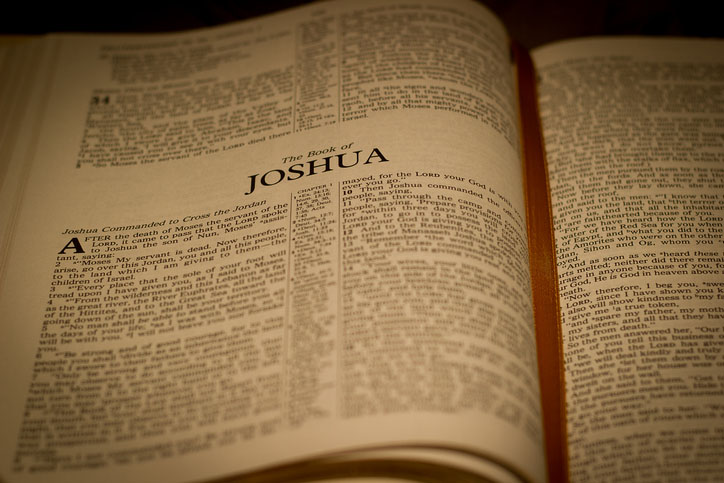
This cycle began shortly after the Gaza war broke out, adding poignancy to the narrative. Moses had recently died. God told Joshua to be hazak v’amatz (strong and courageous) as he led our people into the Promised Land. The phrase is used four times, a sure indication that conquering and settling the land would be tough going.
The Book of Joshua was taught by Rebbetzin Dr. Adina Shmidman, director of the OU’s Women’s Initiative, who launched the program. “I saw this as an opportunity to create a sorority of sisters in learning,” she said. “I wanted to showcase the remarkable talent we have among women who are proficient in the texts and had a passion to teach. I wanted to give them a mic.”
More than 10,000 women signed up to receive the daily learning emails in the last cycle, and about 1,500 completed it. Shmidman is proud of the diversity of the participants: From extremely knowledgeable to newbies; girls as young as 10 to women in their 90s; women living in Switzerland, Mexico, France, South Africa, England, Australia and Brazil.
One letter she received said, “Growing up in the former Soviet Union, I had no clue our heritage was so rich and deep! All I knew was that Jews are filthy and dirty, and nobody wanted to be friends with them. Well, decades later, and I’m now older than Rabbi Akiva (when he started), but I guess it’s never too late to get educated … Thank you for doing this.”
As I listened to the classes, I shook my head in wonder: How are we still battling for full control of the land we were given more than 3,000 years ago? Why must we still battle the corrupt court of world opinion? The Book of Joshua is one of transition and transmission, Shmidman observed: from Moses to Joshua; from dependence on God for everything, including our food, to real life when we had to begin to do the hard work of fighting our battles and settling the land.
There is drama: Joshua holds up the sun, the walls of Jericho fall, the daughters of Tzelafchad insist on their fair share of land inheritance; the harlot Rahav hides the Jews from the Canaanites who seek to kill them, and is rewarded by the privilege of marrying Joshua himself. The tribes each get their apportioned land according to God’s instructions. The tribes bury the bones of Joseph that they brought out of Egypt, in Shechem, where his sale into slavery had been plotted and carried out — a final act of restitution.
Shmidman’s teaching was uplifted by the four missions to Israel she participated in since Oct. 7, while she was preparing classes. This shone through when she often referenced the rawness and pain of the war she felt through the eyes of people she met. But she also pointed to bright spots, such as the surge in unity and interest among secular Israelis in taking on mitzvot and study.
The first women’s Nach Yomi cycle began right before COVID, when the whole world was spinning out of control. “Studying Nach created a sense of security and stability then. Now that feeling is even stronger. We’ve been gifted a holy text that gives us legitimacy and affirmation that this history and destiny are ours. At a time when this is being questioned in such a traumatic and dramatic way, it’s profound to be able to hold it.”
Are the Jewish people now writing the next chapter of Nach, when God’s promise of ultimate redemption will be fulfilled?Shmidman believes the answer is yes. “We’re part of a movement, and studying affects our destiny. It’s all divine choreography.”
Judy Gruen is the author of “Bylines and Blessings,” “The Skeptic and the Rabbi,” and other books