Matisyahu sat on a white plastic chair, underneath a set of string lights, his feet planted on the dirt below him. Wrapped in an Israeli flag on a cold night in Israel, he sang with a guitarist accompanying him.
Sometimes I lay under the moon And thank God I’m breathin’ Then I pray, “Don’t take me soon ‘Cause I am here for a reason”
The Golani Brigade soldiers sang along with Matisyahu at the army base; they’d just come back from fighting, and he was there to uplift their spirits.
“I felt so humbled to perform for them,” Matisyahu said. “It was a real privilege and a beautiful experience for me.”
The Jewish singer had come to Israel on a trip put together by the Maccabee Task Force, an organization that fights antisemitism and anti-Zionism on college campuses. It had been five years since Matisyahu was in Israel, but it was time to go back and bear witness to the destruction, offering hope during a seemingly hopeless time. His son Laivy Miller, who is 18 years old and studying in yeshiva, put the idea into his head.
“He told me that after Oct. 7, when he came back to the United States for a little bit, he felt alone in the world,” Matisyahu said. “Being in Israel, he felt connected. That’s the gist of what everyone else was telling me and what I was seeing on social media. I decided to go.”
Reconnecting With His People
Matisyahu, born Matthew Paul Miller, burst onto the music scene in 2005 with the Top 40 hit “King Without a Crown.” Appearing on stage with a black, long beard and tzitzit, he called himself a Hasidic reggae singer. He prayed daily, attended synagogue, and wouldn’t perform on Shabbat. He was a star in the mainstream, as well as among Orthodox Jews, who appreciated the singer spreading a positive view of Orthodox Jews in popular culture.
Then, in 2011, Matisyahu announced that he’d shaved his beard and left Orthodox Judaism, writing, “At a certain point I felt the need to submit to a higher level of religiosity … to move away from my intuition and to accept an ultimate truth. I felt that in order to become a good person I needed rules — lots of them — or else I would somehow fall apart. I am reclaiming myself. Trusting my goodness and my divine mission.”
For over a decade, Matisyahu, a Grammy-nominated artist, focused on looking inward, on making music that was self-reflective. Though he’d taken a step back from religious Judaism, he kept the Jewish people close to his heart.
In 2015, he stood up to festival organizers in Spain, who, bowing to BDS pressure, told him he needed to sign a letter saying he supported a Palestinian state and wouldn’t bring up Israeli politics while performing. He refused, and eventually the festival was forced to apologize to him and let him play.
That same year, he played a concert in Jerusalem during a rise of stabbing attacks, stating at a press conference that it’s important for “American Jews like myself to come to Israel no matter what’s happening here.”
When Oct. 7 hit, Matisyahu felt that pull to lean into his Judaism again, to be there for his people in their time of dire need.
“After Oct. 7, it’s not religious per se, but there is this strange pull back to being Jewish and feeling Jewish, of wanting to be connected to other Jews and Israel and speaking out about what’s happening and writing songs about it.”
“Before Oct. 7, my focus had become less Jewish and more about my life and my music, my ups and downs, struggles, joy, pain, love and loss, which are all part of the human experience,” he said. “Initially, my music was very rooted in my Jewish experience, living as a Hasidic Jew and all of that. After Oct. 7, it’s not religious per se, but there is this strange pull back to being Jewish and feeling Jewish, of wanting to be connected to other Jews and Israel and speaking out about what’s happening and writing songs about it.”
Matisyahu jumped on social media, posting his support for Israel and videos of himself lighting Hanukkah candles with his daughter, putting up a mezuzah and donning tefillin. He went on Jewish podcasts and performed at Columbia University, in an event organized by the pro-Israel group Israel on Campus Coalition, as well as at the ICC’s Geller Fellowship Retreat in early January. About a week later, he traveled to Israel, posting a photo of himself in front of an El Al plane and captioning it “Jerusalem if I forget you … 100 days. We won’t forget you. #bringthemhomenow.”
Inspiring Those in Israel
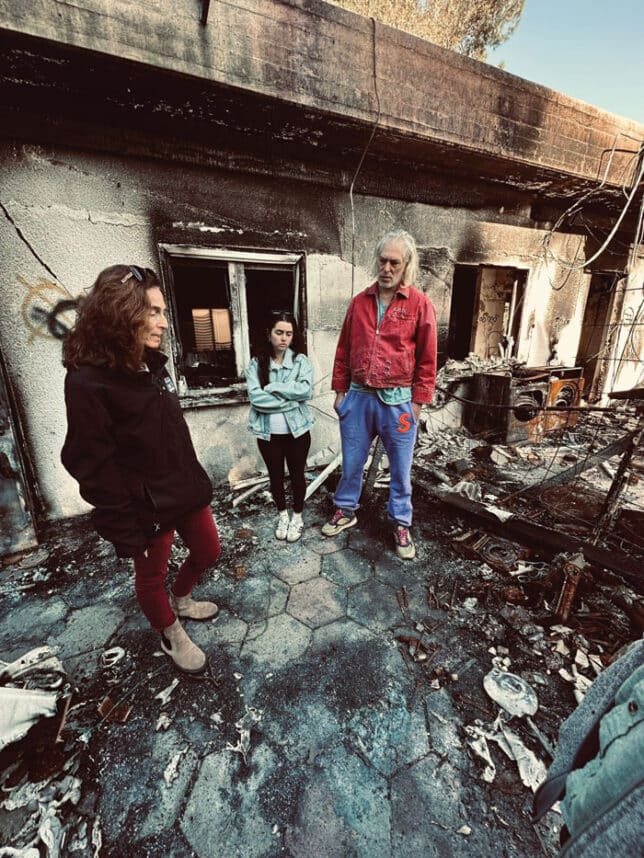
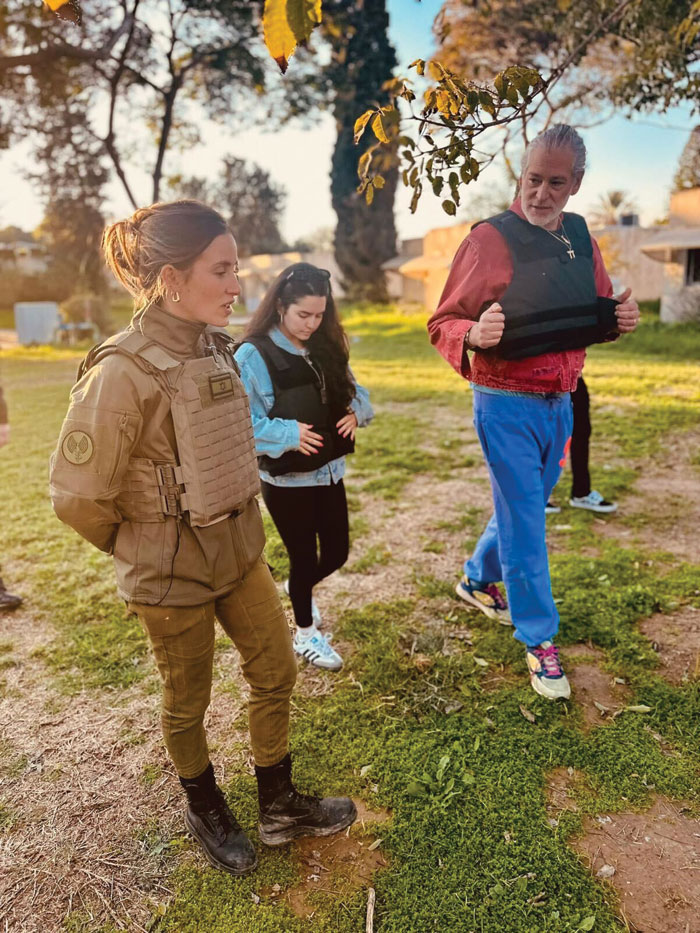
As soon as Matisyahu landed, he went to the sites where the Nova, Kibbutz Nir Oz and Kibbutz Kfar Aza massacres occurred. He posted photos of the destruction on his Instagram, writing, “The Holocaust happened again here in my lifetime. To all of the Jews around the world who are afraid to speak up, it’s time to wake up or it will be too late.”
He talked to the families of the hostages and spoke with Nova survivors, hearing their stories.
“All of it was very intense,” he said. “The survivors played music for me.”
The singer filmed much of his experience for a music video he’s making for his new song, “Ascent,” which is about antisemitism. It includes footage of the Nova victims with yahrzeit candles behind them.
The singer filmed much of his experience for a music video he’s making for his new song, “Ascent,” which is about antisemitism. It includes footage of the Nova victims with yahrzeit candles behind them.
“I wrote the song after that Kanye stuff was going on,” Matisyahu said. “The video has all of this footage not only from Nova, but also antisemitism throughout the years. It’ll be a very powerful piece.”
When he was with the Golani soldiers and performed his song, “Live Like a Warrior,” he said he thought about the physical component, which was right in front of him.
“When I sing ‘Live Like a Warrior,’ I’m talking to fans who may have gone through different struggles, like anything from physical health issues to abuse to their own demons,” he said. “But singing for the soldiers and saying, ‘You’re a warrior,’ it’s very literal. It was an honor to be able to sing those words and perform for them.”
From there, Matisyahu played a few concerts in Israel and watched Laivy, also a musician, perform his first show in Tel Aviv. He surprised his son, showing up on stage and singing a duet with him.
“My son is in his yeshiva, and it’s good for him,” the proud father said. “He and his friends have community and support. His fans were singing his songs and I watched how he commanded the stage. It was super emotional for me.”
The singer also did a duet with Netta at a sold-out show in Tel Aviv to benefit the hostages through Bring Them Home Now and visited Hostages Square, where he spotted a yellow chair that represented the hostages’ absence.
In preparation for the Feb. 2 release of his new EP, “Hold The Fire,” and his accompanying 34-city U.S. tour, Matisyahu is thinking about how he’ll incorporate messages about Israel into his shows.
“I’m going to have a yellow chair shipped from Israel and put it on stage with a sign about the hostages and wanting to bring them home,” he said. “That’s to start. I might say a few words or prayers. The tone of the music will be different. I’m going to play ‘Ascent’ every night, which is not something I normally do. I never perform the same song every night. Not even the hits. Everyone will leave my show – if they’re feeling human beings – knowing what is going on with me.”
Photo by Shlomo Weprin
Urging Others to Speak Up
Since Oct. 7, Matisyahu has been frustrated by the lack of outcry for Israeli victims. He’s especially disappointed in his fellow Jewish artists who have stayed silent.
“It’s fascinating there aren’t more Jewish artists who have spoken out,” he said. “I know a lot of them, and they are proud to be Jewish even if they aren’t Matisyahu or known for being Jewish, they are proud Jews. None of those people will speak out.”
Matisyahu specifically calls out Jewish artists because he believes they have a responsibility to say something.
Matisyahu specifically calls out Jewish artists because he believes they have a responsibility to say something, unlike bigger artists who aren’t Jewish.
“They won’t speak up and it’s sad and unfortunate, but I don’t necessarily blame them because I see them as ignorant and victims of this society we live in right now that’s convinced them that the Jewish people and Israelis are perpetrators,” he said. “For those people, it’s really sad and unfortunate, and it sucks for us, but for the Jewish people that have been to Israel and know the land and people and have a connection with it and aren’t using their voices, I assume they’re scared. That is frightening because it feels like Nazi Germany.”
Instead of being scared, Matisyahu has proudly immersed himself in Jewish and Israel advocacy. “When it comes to me or my wife or people we know, when we’re under attack, our instinct is to fight and stand up for ourselves,” he said. “Especially when it comes to antisemitism, it just hits us a certain way.”
He reflected on the larger Jewish community in America, who he said are “just in the world. There are a lot of Jews who aren’t part of a synagogue or some kind of Jewish group and they’re probably thinking, ‘Will I risk my career for this?’ For someone who has a connection, it’s an immediate gut reaction like, ‘They’re coming after me.’ Maybe they are so disconnected they don’t feel like people are coming after them.’”
Along with his plans to be vocal about Israel at his concerts, Matisyahu has been ignoring the hateful comments he receives on social media.
Along with his plans to be vocal about Israel at his concerts, Matisyahu has been ignoring the hateful comments he receives on social media, like people who say, “Isn’t Israel committing genocide right now?” and “Go back to New York where you’re really from and leave the Palestinians alone,” as they posted on his recent photos.
Photo by Shlomo Weprin
“I don’t read the comments, so I have no idea what they’re posting,” he said. “I keep them open so people can say what they want. I read one comment at the very beginning of all of this and it was so horrific. It was the worst thing I’d ever read. The way we live, when people make a public comment, they have sch an ego they don’t want to go back on it. I want to leave the comments on and see who is who. After this, I’ll have no problem cleaning house and getting rid of anyone who has any degree of antisemitism in them.”
Matisyahu sees it as his duty to protect his people, to give them strength during a time when they need it the most. He is also standing up because he’s a father; his oldest is 18, and his youngest is 2, from his second marriage.
“My 18-year-old is in Israel because it’s his choice, but I’m allowing him and encouraging him to be there,” he said. “I have a 4-year-old, and [my wife and I] try not to turn on the news or be on our phones when she’s around, but she’s definitely picking up on some things. We explained to her that we had to go to Israel for a week and that our people were fighting for their lives. Hopefully, she’s starting to think about that now when she thinks of Israel so she will have some sense of who we are and what’s important.”
Keeping Hope Alive
“Fireproof,” the first song on “Hold the Fire,” is about perseverance and gratitude to God, especially in times of trouble.
While he wrote it with his own life in mind, now the song takes on an entirely new meaning post-Oct. 7. He sings:
For the pain that made me And the love that saved me When I was lost in my solitude Found my gratitude Every fire I walked through Through the flames I could hear you Rise up brand new, yeah, yeah Now I’m fireproof, fireproof
Before Matisyahu went on his trip to Israel, he felt hopeless. But now, after witnessing the resilience of the people there, his perspective has shifted.
“I have this feeling of hope,” he said. “The hopelessness came from having to explain and teach the entire world about our history and antisemitism, and that felt very difficult. In Israel, I met people and felt connected and saw the resilience and attitude they have towards each other, the land and towards God. That felt very divine. While I’ve stayed away from those concepts and ideas for some time, the trip definitely reconnected me not just with the history of the Jewish people, but the dignity and Godliness of our people. We can rise above the hatred of the world, and not just survive it, but transform it.”
Kylie Ora Lobell is the Community Editor of the Jewish Journal.
On Jan. 29, a dessert reception at Pat’s Restaurant honored husband and wife Paul and Faye Jeser, who collectively have dedicated more than 100 years to working for the Jewish community.
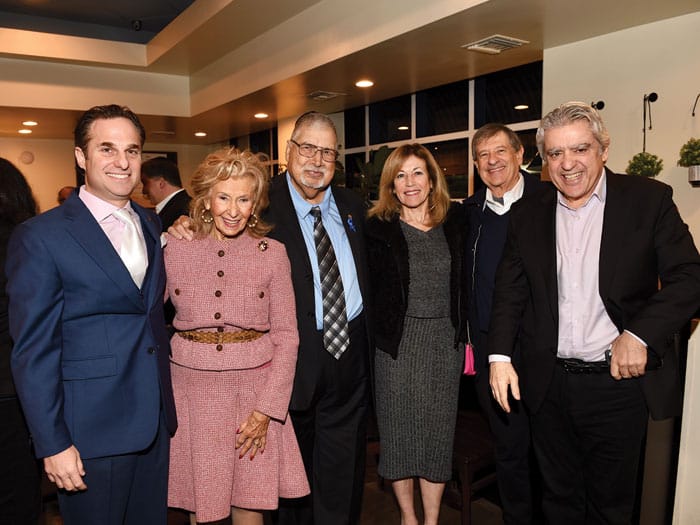
From left: Barak Raviv, Gitta Nagel, Paul Jeser, Ilana and Dr. Shlomo Melmed and David Suissa attend an event honoring Paul and Faye Jeser. Courtesy of Robert Lurie, Photographer.
Guests at the event, which was organized by American Committee for Shaare Zedek Medical Center, included former Los Angeles Mayor Antonio Villaraigosa; local philanthropists Gitta Nagel and Barak Raviv; Larry Platt; Journal Publisher and Editor-in-Chief David Suissa; the Simon Wiesenthal Center’s Rabbi Marvin Hier and Rabbi Abraham Cooper; and community leader Sam Yebri. Members of the Jeser family, including Paul and Faye’s children and grandchildren, were also in attendance.
“You are a workhorse—dedicated to the cause, and you do it with a smile,” Nagel said in remarks directed at Paul.
Paul recently retired as the national director of major gifts and the director of the western region of the American Committee for the Shaare Zedek Medical Center in Jerusalem. Having worked on behalf of Jewish community organizations since 1972, he also led Jewish Federations in Lewiston, Maine, and in Orlando, Florida. He also worked for CLAL, Jewish National Fund-USA and American Friends of Hebrew University.
Faye, an accomplished musician, taught secular and Judaic music in JCCs and Hebrew day schools in Orlando, Englewood and Los Angeles. She has also produced and directed many well-known musicals.
Former L.A. Mayor Antonio Villaraigosa spoke of his time traveling to Israel with Paul Jeser to see the work of Shaare Zedek Medical Center. Photo by Ryan Torok
The evening had the loose, intimate feel of a family get-together. The Jesers’ grown children offered memorable words about their parents’ unwavering dedication to their lifelong work and the ways in which they’ve passed on that passion to the next generation. Their peers, including Suissa and Villaraigosa, spoke of the impact their support for the Jewish world—for Israel, in particular—has had in Los Angeles and beyond.
The evening concluded with a toast to all the husband and wife had accomplished on behalf of the community and the State of Israel.
Shaare Zedek Medical Center—its name comes from the Hebrew for “gates of righteousness”—opened in Israel in 1902. American Committee for Shaare Zedek Medical Center (ACSZ), which raises funds and awareness for the Jerusalem-based hospital, has operated since 1949. Paul served as the director of ACSZ’s western region since 2002.
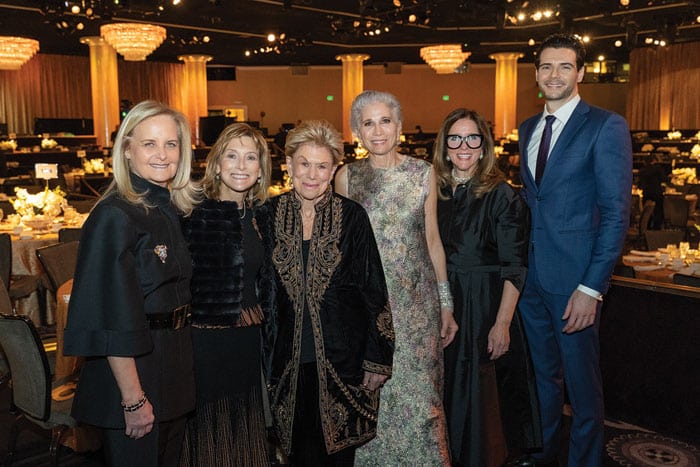
From left: Lynn Bider; Lisi Teller; Board President Annette Shapiro; Board Member and honoree Lynn Shapiro; Board Chair Emeritus Janice Kamenir-Reznik; and Executive Director Sergio Rizzo-Fontanesi. Photo by Ben Shani Creative
Jewish rehabilitation organization Beit T’Shuvah held its fundraising gala at the Beverly Hilton on Jan. 28.
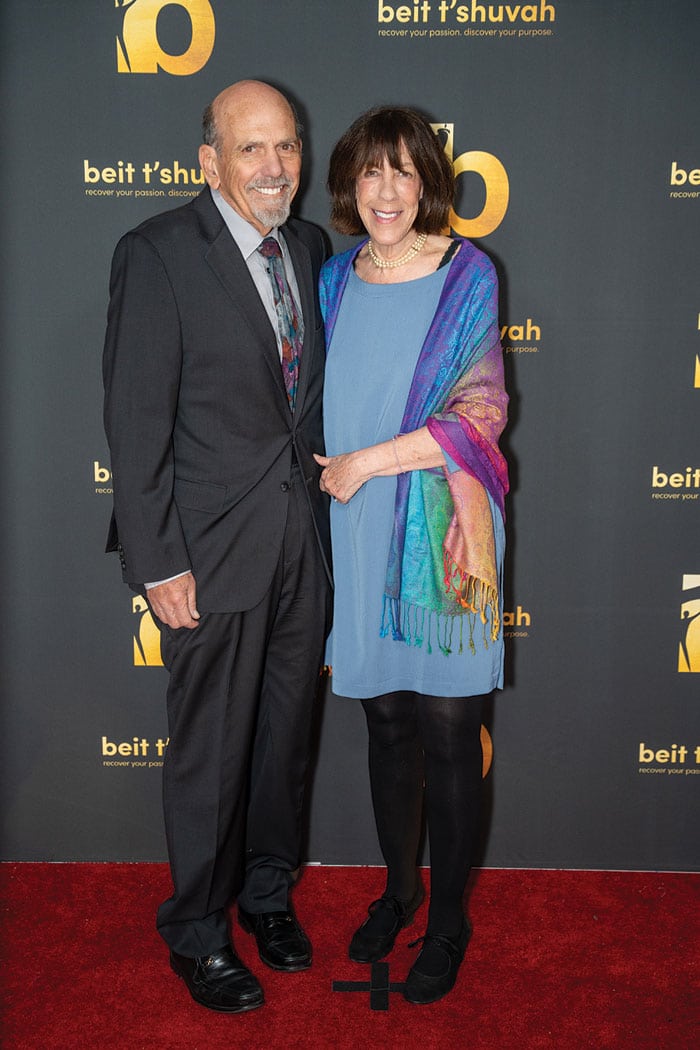
BTS Chair Emeritus and honoree Paul Bergman and board member Andrea Sossin-Bergman. Photo by Ben Shani Creative
The celebratory event raised nearly $2 million to provide the best possible care for Beit T’Shuvah residents as well as scholarship opportunities for those who cannot afford treatment.
Attendees included Beit T’Shuvah Board Chair Keith Elkins; Board Chair Emeritus Paul Bergman, who was named a recipient of the T’Shuvah Award; L.A. County Supervisor Lindsey Horvath and the Journal’s David Suissa.
Beit T’Shuvah, an addiction treatment center, describes itself as rooted in the spiritual principles of Judaism, authenticity and transparency. The organization provides innovative approaches to integrated care in a community setting. Through Congregation Beit T’Shuvah, it also offers weekly Friday night and Saturday morning services as well as High Holiday services and holiday celebrations.
Students at Academy of the Arts in Redondo Beach— a leading Jewish day school in the South Bay — celebrate the 100th day of school.
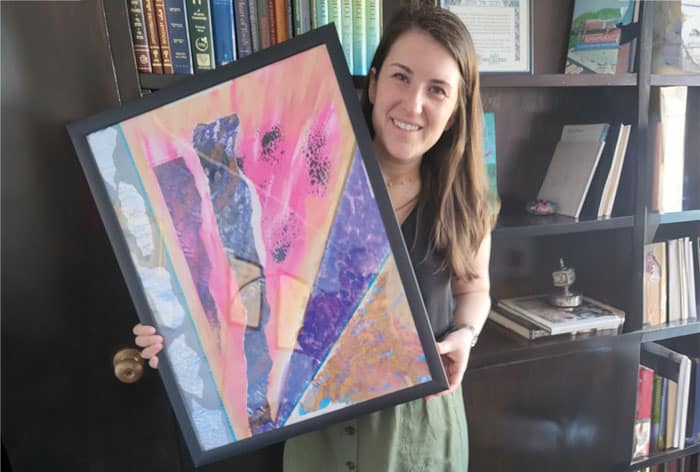
Even though Rabbi Liora Alban has only been ordained for four years, her career is already a work of art. The office of the associate rabbi at Temple Emanuel of Beverly Hills is decorated with creative art.
Rabbi Alban believes in building community through art. After all, her rabbinic thesis centered on Jewish visual art. In her first year at Temple Emanuel, she has regularly sought imaginative ways to weave art into her rabbinate. While talking to the Journal, she pointed out a proud community project on a nearby wall. “Take this Tu b’Shevat painting,” she said. “We study a little text on Tu b’Shevat, what it is, and then we all made this tree painting – together – step-by-step. I led it.”
As director of Temple Emanuel’s Religious School, she has 70 students in grades K through 12. “It was important to me to bring in an art specialist, and we did,” the rabbi said. “Maya is an amazing young woman who grew up at the day school here. She comes once a month. Two weeks ago we did paper-folding activity where the kids got to make their version of a flower pot or a tree for Tu b’Shevat. She does all sorts of creative things, using tactile learning, using art, using different mediums.” The school kids instantly connected with the specialist. They have so much fun, they want her to come back every week.
“When I was a kid,” she said, “that was how I most liked to learn, through art, through tactile learning, through the creative.”
Many students see the specialist’s visits as a break. They don’t yet realize is that doing art is a way of accessing learning, a way of synthesizing the learning kids have done, a way of taking what they are learning in class and producing something out of it.
The rabbi would also like to bring art to their parents. “The challenge,” she said, “is that a lot of adults get very afraid of art. Many who come to my adult learning classes will say ‘Oh, I would love to come, but art is not my thing. I will come to your next class.’”
Next never quite happens. But, she said, “the same people who demur at joining an art class gladly will come to an adult learning session when they are looking at texts or listening to music.” She is mystified by people being cowed by visual art.
As an art teacher, she learned early that people — mainly adults — get afraid around art. “They think they are not good. They don’t come to a class because they think they are not talented enough. They have not done art since they were in pre-school.” But she discovered that when people come together to make art, they relax. They connect with each other. Talking while they are painting, they have fun with it. In a parallel sense, they build community while they are learning. “They don’t realize,” said the rabbi, “it is real art.”
There never has been doubt in Rabbi Alban’s mind about who shaped her life. “I have enjoyed art my whole life,” Alban said. “When I was a kid, my grandmother placed me at the table and gave me my first set of watercolor pencils. My earliest memories are of sitting at my grandmother’s kitchen table, drawing with her.It appealed to me immediately. I found it so relaxing. She really cultivated that part of me. She paid for my first art classes at Temple Ahavat Shalom in Northridge.”The rabbi’s grandmother did not live to see her star student grow and mature; she died when Liora was eight years old.
Rabbi Alban is currently doing a fellowship with the Jewish Studio Project, a Jewish art studio in Berkeley. Participating in an in-person retreat, all of them made pieces together. She loved it.
Was it difficult to settle on a career path between art and the rabbinate?
“A little bit,” said Rabbi Alban. “I had wanted to be a rabbi since I was a teenager.” The thing about the rabbinate, she said, “was that it provided a very clear path. I knew what I had to do. Five years of rabbinical school, then I would be a rabbi. In my senior year at Berkeley, I really enjoyed art history, but it was not as much of a clear path.”
Growing up at Temple Ahavat Shalom, “I just loved everything there about my Jewish community,” said Rabbi Alban.
In preparing for her bat mitzvah, a sudden realization occurred. “Wow!” she said to herself. “I can’t believe the rabbi and cantor get paid to spend their time at the Temple. I could do that, too, and make my life at the place I love being most. That thought at age 12 or 13 “kind of stuck with me. It was so natural. I could be a rabbi who utilizes art.” And so she has. “My parents are really proud.”
Fast Takes with Rabbi Alban
Jewish Journal: The most enjoyable book you have read outside of Judaism?
Rabbi Alban: “The Seven Husbands of Evelyn Hugo,” by Taylor Jenkins Reid.
J.J.: Something you always wanted to do but never have?
Rabbi Alban: Go to Bali, Indonesia. But I am doing that this year.
J.J.: Your favorite spare time activity?
Rabbi Alban: I like going to all types of museums, I like going on hikes with my husband Daniel and our dog Rexy, and spending time with friends and family.
I am in possession of three passports. I was born in Petach Tikva, Israel. I grew up in Sydney, Australia. My family moved to Los Angeles when I was in high school. That’s a lot of moving around. And we haven’t even factored in my family’s Iraqi/Babylonian heritage!
My home is in Los Angeles, where I live with my husband and our youngest daughter Shevy. My son and daughter in law live around the corner. We are very blessed to have our extended family around us. We have a wonderful life in Los Angeles. America is a beacon of light in the world. But there is always a piece of my heart in Israel.
When the war broke out, Alan and I promised Alexandra, our middle daughter, that we would visit her in the winter. So we are here, in this beautiful country.
When the war broke out, Alan and I promised Alexandra, our middle daughter, that we would visit her in the winter. So we are here, in this beautiful country.
It’s a young country, painstakingly built, brick by brick on the ancient stones of our biblical home. It’s a warm country filled with mothers and fathers who love their children with a crazy intensity. It’s a brash country filled with loud, impatient Israelis who will give you their heart and soul in times of trouble.
When our friends Udi and Michal Schiff found out that we would be visiting, they told us that we had to join them for a special barbecue on Thursday night. My nephew Yosef Yitzchak and I met Alan at Ben Gurion Airport and we drove to Jerusalem to pick up Alexandra and Roni Schiff. The five of us drove South, towards the Nachal Oz military base. Alan was tired, so he asked me to drive. It was dark and it was pouring rain. Closer to the base, the steel tread of the tanks had left deep grooves in the road and the tires made alarming noises.
All of a sudden, I see a massive tank parked in the middle of the road. I protest that I can drive no further, but my passengers urge me to drive around.
On one side of the base is a thick wall, dividing Israel from Gaza. The sky over Gaza is a thick black, with occasional bursts of white light accompanied by a loud boom. On our side of the wall were many soldiers gathered in an area covered with canvas sails and littered with calisthenics equipment (donated by the Los Angeles FIDF).
When I saw these beautiful men and women in their army greens, I couldn’t help myself and the tears started pouring down my cheeks. A few of the soldiers noticed that I was crying and so sweetly asked “At be’seder?” (Are you okay?)
I was not really okay. I was heartbroken for the loss of lives, for the families ripped apart, for the parents who lost sons and for the sons and daughters who lost fathers. I was frustrated by the seemingly never ending pain inflicted by the enemies of the Jewish people.
Then Udi broke my heart again. He took us into the room where the tatzpaniyot (female border observers) were sitting on the morning of October 7th. They were suffocated when Hamas terrorists threw a gas grenade into the room. Then they set the place on fire. Two girls and a boy managed to escape the inferno, but 21 female soldiers lost their lives.
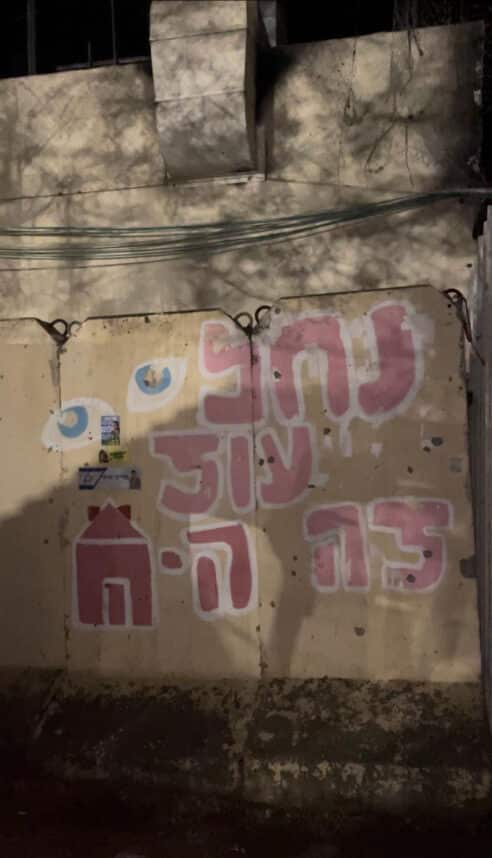
This was painted on the wall outside the observation room where the girls were killed. It says “Nachal Oz is home.”
We returned to the barbecue, happy to see our soldiers enjoying themselves in a brief respite from the war in Gaza.
Organized by Yaniv Mateles, this core group of 25 friends from Givat Shmuel have been feeding the soldiers ever since the war began. This “Tzevet Esh Givat Shmuel” (Fire Squad) brings their own grills and coals, marinated meats and salatim (dips and veggies). They chop Israeli salad and each family brings an “interesting” homemade salad.
I don’t think I’ve ever tasted better “Al ha’esh” (literally, on the fire). The Arayes (ground beef barbecued in half a pita) were juicy and perfectly spiced. The chicken skewers were moist and flavorful. The chicken liver melted in my mouth.
For dessert, the soldiers were treated to American style s’mores made with pink and white marshmallows, home made chocolate chip cookies and lots of cakes. And then the soldiers and the grill-masters began to dance to lively Israeli music.
Besides Nachal Oz, this dedicated group of people have fed our soldiers at Re’im, Or’im, Erez, Nachshonim, Yesod Ha’maaleh, Magen Alumim and Be’eri. They plan to continue grilling as long as the soldiers continue to serve.
—Sharon
This week, Sharon and I share a a skillet chicken recipe that tastes like home. While this dish makes for a warm and comforting weeknight meal served over rice, it is special enough to serve as part of your Shabbat menu. Like many of our favorite recipes, this one calls for sautéed onions, fresh garlic, tomatoes and celery. The spices include turmeric, paprika, Aleppo pepper and that classic American spice rub Old Bay Seasoning. Slow cooking means that the chicken falls off the bone and the potatoes are soft and creamy.
We are so honored when readers tells us that our chicken recipes are on heavy rotation in their kitchens. We’re pretty confident that you’re going to love this chicken recipe too!
We pray that the soldiers can return to their normal lives and that all the hostages come home in peace.
—Rachel
Classic Skillet Chicken
1/3 cup extra virgin olive oil
2 medium onions, sliced
8 garlic cloves, finely chopped
2 tsp sweet paprika
2 tsp turmeric
2 medium tomatoes, chopped
1 celery heart, 1 inch dice
4 Yukon gold potatoes, 2 inch dice
1 tsp kosher salt
1 whole chicken cut into 10 pieces, plus 6 wings
1 tsp Aleppo pepper
2 tsp Old Bay Seasoning
2 cups chicken stock or water.
In a large skillet, warm oil over medium heat. Add the onion and sauté for about 5 minutes, until softened.
Add the garlic and continue to sauté.
Add paprika and turmeric and stir well.
Add the celery and sauté for 3 minutes.
Add the potatoes and sprinkle the salt directly on the potatoes.
Add the chicken skin side down and sauté for 5 minutes. Flip the chicken and sprinkle the skin with the Aleppo pepper and Old Bay seasoning.
Pour the chicken stock around the edges of the skillet.
Bring the liquid to a boil, then cover the skillet.
Reduce heat to medium low and allow to simmer for 1 hour.
To achieve a perfect golden brown color, place uncovered skillet in an oven preheated to 450°F for 15-20 minutes.
Rachel Sheff and Sharon Gomperts have been friends since high school. They love cooking and sharing recipes. They have collaborated on Sephardic Educational Center projects and community cooking classes. Follow them on Instagram @sephardicspicegirls and on Facebook at Sephardic Spice SEC Food.
The Lunar Collective is all about cultivating connection, belonging and visibility for Asian American Jews.
Lunar New Year is a multi-day celebration, observed across many Asian countries, starting this year ion Feb. 10. Each has their own cultural variations and practices. To get in the spirit of their “bonus” New Years, two LUNAR Collective members – one Chinese, one Vietnamese – share their favorite kosher Asian recipes.
“It’s a Chinese tradition to enjoy long noodles for Lunar New Year, as they symbolize longevity,” David Chiu, a Chinese-American Jew and a Los Angeles community leader of The LUNAR Collective, told the Journal.
“At the LUNAR Collective, normally Jewish holidays are what offer us the opportunities to bring people together,” he said. “It’s cool to also have an Asian holiday, which presents this opportunity, and to invite people outside LUNAR to share the table with us.”
During the Pandemic, Chiu was cooking three meals a day and started experimenting to make things more interesting. As a result, he explains, his lo mein ventured off the beaten path.
“My key ingredient is a yam to which I add purple carrots and purple cabbage for visual interest,” he said. “I love the flavor combination of noodles and yam; it’s very earthy and hearty.”
He adds, “Chinese cooking has been around for over five millennia; I’m sure I’m not the first person to add yams to my lo mein!”
David Chiu’s Lo Mein Noodles
You can buy lo mein noodles online or at an Asian grocery store like 99 Ranch Market. My dad says you can substitute spaghetti and many people do, but I like the softer texture of lo mein noodles.
I usually make this in my iron skillet over medium-high heat, although a wok over high heat is more traditional.
7 oz (half a box) of Lo Mein Noodles
Half a yam, roughly chopped into cubes
3 large leaves of purple cabbage, sliced into strips
2 purple carrots, sliced
A third of a large yellow onion, sliced
3 teaspoons of minced garlic
6 oz (usually a third of a pack) of Firm Tofu, cubed
1 Jalapeno, sliced (optional)
Dash of white pepper (if too spicy, use black pepper)
1 Tbsp of soy sauce (adjust to taste)
1 Tbsp of fish sauce (adjust to taste)
1 Tbsp of hoisin sauce (adjust to taste)
Peanut oil
1 Tbsp of toasted sesame oil (adjust to taste)
Boil and drain the Lo Mein Noodles separately according to the instructions on the box. Set aside (or cook simultaneously with what you’re making in your skillet).
Heat a skillet (or wok) on medium-high heat until it is hot, then pour enough peanut oil to coat the bottom of the pan. Toss in the chopped yam and sliced carrots and stir fry until soft but not yet browning.
Add the sliced purple cabbage, sliced yellow onion, minced garlic and jalapeno. Stir fry for a couple minutes until the cabbage is softened and the onion, garlic, yams, and carrots are just starting to brown.
Add the cubes of firm tofu and keep stir-frying for another 2-3 minutes or until tofu is cooked. Reduce heat to low.
Add another tablespoon of peanut oil and stir around enough cover to coat the ingredients and recoat the bottom of the pan, then add the cooked lo mein noodles. Add the soy sauce, fish sauce, hoisin sauce, and white pepper. Stir fry the noodles until they’re mixed with the ingredients and some of the noodles are becoming just ever so slightly crispy.
Remove from heat. Add toasted sesame oil and toss until the noodles and other ingredients are lightly coated with it.
Plate and serve. Serves 2.
Ray Kachatorian/Getty Images
Leila Chomski is a 22-year-old modern-orthodox half-Vietnamese Jewish Asian woman.
“When I was an Orthodox Jewish Asian kid eating kosher Asian food at local restaurants, I couldn’t help but feel that the food didn’t taste that great or wasn’t authentic,” Chomski told the Journal. “From one restaurant to another the food looked very similar and tasted oily and processed.”
Chomski thinks she would have grown up thinking all Asian food tasted bad if it wasn’t for her mom’s spring rolls.
“They put all the local Chinese restaurants to shame with their savory fresh chicken flavor, crunchy texture and hearty, tasty filling,” she said. “My orthodox friends would come over and practically beg for a taste; my mom happily obliged.”
Chomski calls her recipe a symbol of expressing Judaism in the way in which you are comfortable. It’s kosher and Asian, and “a way of celebrating myself,” she said. “Like the spring rolls, the more I explore my Asian heritage, the more I feel able to balance my two identities without sacrificing either one.”
Leila Chomski’s Kosher Vietnamese Spring Rolls
You should be able to find all ingredients at a kosher supermarket, thus making the recipe kosher certified.
1 lb ground chicken
2 Tbsp soy sauce
2 Tbsp sugar
1 tsp salt
½ cup shredded carrots
1 package rice paper
Mix together ground chicken, soy sauce, sugar, salt and vegetables.
Wet rice paper by laying it between damp towels. This allows you to wet multiple sheets at the same time.
Extract a sheet of rice paper, add a handful of the ground chicken mixture – you may want to wear gloves – and roll it in the rice paper, folding on either side. Fry it for five minutes on each side.
Serve with soy sauce.
One verse, five voices. Edited by Nina Litvak and Salvador Litvak, the Accidental Talmudist
Distance yourself from a false word; do not execute the innocent or the righteous, for I shall not exonerate the wicked.
– Ex. 23:7
Aliza Lipkin Writer and educator, Maaleh Adumim, Israel
Fake news is one of the biggest problems facing society today. It has become increasingly common for false information to spread like wildfire. Nowadays, misinformation and blatant lies go unchallenged, gain acceptance, and cause a chain of unfortunate events to unfold. Little white lies pave the way to more egregious untruths that quickly decay the foundation on which our society stands. It is for this very reason that immediately following the Torah’s warning to distance oneself from lies, the Torah states do not kill a truly innocent person.
One need only watch “Judgement at Nuremberg” to understand how false words can lead to the death of not just one righteous man but to the genocide of millions of people.
It is frightening to witness the devastating power blatant lies can unleash. The bitter irony that South Africa can accuse Israel of perpetrating a supposed genocide while she is defending her people from an actual documented genocidal regime whose slogan calls for genocide is absurd! A verdict condemning Israel would be the tragic cause of countless more needless deaths.
The future of the world only stands a chance if the conscience of the court will abide by the laws of truth and acquit Israel of these false charges. If not, may God quickly fulfill His promise that “He will not vindicate an evil person.” This statement is an eternal warning from God to the judicial system and all involved that they will indeed be held accountable for their deceitful verdict.
Words are like swords! They can assassinate a person’s character, shatter a child’s confidence or stigmatize an entire nation, race, religion etc. They can embolden feeble minds and they can be weaponized to justify the most egregious behavior. History, especially Jewish history, is replete with virulent rants and nefarious conspiracy theories that fomented the disenchanted masses into armies of hate and violence.
At a time when false narratives and hateful agendas are bubbling to the surface, the destructive power of speech is on full display.
It’s fascinating that the creation of the world happened thru speech. “Let there be light,” etc. The question is, why did G-d, as it were, speak the world into existence? Could he not have simply willed it into existence? What message was G-d imparting to humanity through this creation model?
Perhaps G-d was teaching that speech creates reality. That the spoken word can manipulate peoples’ minds and perpetuate primitive perceptions so that regular people could contemplate “the execution of the innocent or the righteous”! The Holocaust stands as an eternal and compelling monument to this potential reality.
But my friends, if words can animate false narratives and unleash violence they can also be exquisite vehicles for awareness, sensitivity and solidarity. Emphatic, unapologetic speech that is also constructive and respectful may not always change a person’s mind but maybe, just maybe, it can open a person’s mind. The world that our words create is in our hands, or better said, in our mouths. Am Yisroel Chai!
A beautiful aspect of Torah is how one verse can be interpreted countless ways and has relevance to many different situations. This is especially true regarding our verse. On a simple level, it illustrates how much Judaism values life.
The Talmud states, “There is no truth in this world,” implying that it is hard to always tell the truth in life. We must do our best to distance ourselves from lies. “Distance from a false word” implies distancing oneself from those who speak lies and gossip. This behavior may cause “false rumors,” which can lead to symbolic execution of someone’s reputation. In extreme cases this may lead to death of the “innocent and righteous.”
Our verse warns judges to not create destruction (moral, financial, etc) through incorrect judgments. Such judges cause spiritual destruction, since our realm influences the unseen higher realms. A judge must stay clear of anything which could create the impression that he has dealings with something corrupt. A judge must be careful with their statements so that a liar cannot exploit their words for his own nefarious purposes.
The Torah acknowledges instances where we cannot convict the guilty.
We are assured that if a guilty person escapes human justice, he will not escape divine justice. Hashem will see to it that the wicked will not wind up being considered as “righteous.” Distance from lies is also a warning to be vigilant against heresy, and things that distance us from Hashem.
Rabbi Rebecca Schatz Associate Rabbi, Temple Beth Am
This verse starts off with a curious subject. Is it “midvar-sheker” meaning the words of a lie (dibur) or, from the object (davar) of the lie, that we should distance ourself? The first supposes that Torah encourages us to distance ourselves from untrue words, as if the words themselves become toxic. The second tells us to avoid untruthful materiality. However, Sforno reads this as our responsibility, not the lie or the liar’s. As the judge needing to be careful with their own words so they would not be twisted or misused in a dishonest way.
We live in a world where misinformation is everywhere: News outlets, social media, voices of power in the government, and entertainment that we hear, watch or read. How can we be sure what is honest and therefore distance ourselves from the rest? Building trust. We must seek out nobler relationships, trustworthy sources, and honest behavior.
To convince another of our perception of truth feels like watching a movie and knowing the plot, but the characters don’t yet know what’s coming. And instead of trying to fix the unknown, we distance ourselves and let their story unravel. We distance ourselves, not for lack of care, but for protection of self and relationship with others and ultimately with truth. One day, through rebuilt trust, maybe we will engage in shared honest narrative and they will distance themselves from the toxicity. But until then, may we all have the courage to distance ourselves from lies and hold truth as a powerful value.
Rabbi Chaim Singer-Frankes Multifaith Chaplain & Spiritual Care Guide, Kaiser Panorama City
Did you ever wonder why Torah bluntly mandates us to do one thing, where in other places we are cautioned to avoid another? There is one straightforward conclusion; because it is basic human nature to do the opposite of what is right and good. Alas, this is our tendency. And what are the consequences of taking the wrong course? Torah is the needle on our compass, pointing sincerely to the best path.
Our verse conveys a maxim regarding the colossal power of words. A three-letter root comprising the Hebrew letters dalet, vet and reish, denotes seeming opposites. These three letters can be understood to mean “word” or “speech.” They can also spell “thing” “matter” or “occurrence.” Within our verse is the kernel of an immense truth; that words, apparently ephemeral and impermanent, really manifest as substantial entities. Herein, Torah implores us to see that words can be real, hard, and supremely consequential. Is a word uttered and forgotten? We hope so. As a schoolkid tormented by bullies, my mother lovingly toiled to console me, “don’t pay attention, they’re just words.” Just as words can inspire, they also hurt like bricks and a lie has real impact, a matter of power and leverage. We dismiss the consequence and gravity of words at our peril for they both determine the fate of the innocent and reveal the intent of the selfish. In Proverbs 18:21, Ha’Melekh Shlomo goads us with a supreme measure of wisdom, “death and life are in the power of the tongue.”
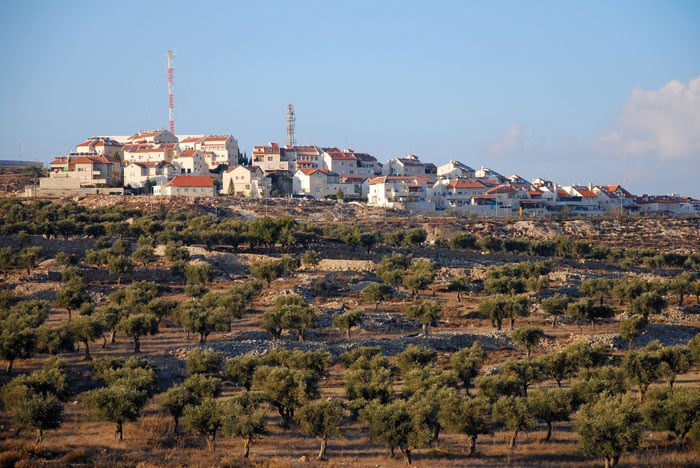
The White House issued an executive order targeting Israeli settlers who have– allegedly – attacked Palestinians in the West Bank.
Israeli banks responded the way banks respond to such developments. At least one of the four Israeli settlers blacklisted by the U.S. claimed on Sunday that his bank account has been frozen.
Members of the Israeli right responded the way right-wingers respond to such developments: Crying foul and flexing their muscles, as if in defiance of foreign intervention.
Members of the Israeli left responded the way left-wingers respond to such developments: Telling everybody “we told you so.”
It is a statement by the U.S. that no matter what Israel is saying, the administration is under the impression that settler violence against Palestinians in the West Bank is rising.
This executive action impacts just a few Israelis but is worthy of attention for several reasons: It is a statement by the U.S. that no matter what Israel is saying, the administration is under the impression that settler violence against Palestinians in the West Bank is rising. That’s a factual question for which the U.S. decided it has an answer, but that many Israelis are still not sure about. More than one Israeli reporter concluded that the reports concerning settler violence are greatly exaggerated, and that many Israelis suspect are manipulation by activists whose goal is to smear Israel and complicate its diplomatic situation. I wish I could tell you which of the two versions is closer to the truth, but I can’t. I am far from being confident that settler claims, journalistic claims, official Israeli claims, activists’ claims and the administrations’ conclusions can be trusted. Most of these seem to be either ideologically motivated or rest on less than solid ground.
So the U.S. decided to make its move even though the facts are not as clear as we’d like them to be. What does this mean? It means a lot – it means that the U.S. administration does not trust Israel to investigate, report, persecute and prevent settler violence against Palestinians. Now – that’s a dramatic statement. Israel is a country of laws, and its judiciary is known to be independent and effective. On the other hand, Israel’s police is currently supervised by a politician that no American official would meet with, and Israel’s coalition is controlled by parties whose tolerance of settler illegal activity is well documented.
The Biden administration, by issuing its executive order, basically told Israel: The era of trust yet verify is over. We are now in the era of mistrust. The dynamic is reversed: The administration will no longer chase after evidence until there’s certainty of wrongdoing. The administration will issue an order, and Israel is invited to chase U.S. officials if they have proof that no wrongdoing had taken place.
All this is happening when the U.S. and Israel seem to be having trouble agreeing on certain things. The U.S. – to its credit, still states that Hamas must be eliminated as a ruler of Gaza. Less to its credit is the fact that actions speak lauder than words, and the U.S. seems to lose its patience with the actions without which Hamas elimination is merely rhetoric. True, it is always a delicate balance to strike, between having patience and getting bogged down in unwinnable wars. True, like many Israelis, the administration has reasons to suspect that the Israeli government isn’t the most competent one can get. And yet, the linking of settler policy to war policy, as the Biden administration does, is less than elegant.
That Israelis on the right are angry is no surprise. It’s their objectives and their friends the administration is after. That they argue against U.S. action as if it is immoral or too invasive is ridiculous. For years Israel pleaded with consecutive administrations to enact exactly those actions against people and countries Israel deemed problematic. Obviously, when Israel becomes the target of such action it becomes uncomfortable. But that’s the way the U.S. operates in the world, and if anyone thought that Israel would be spared sanction no matter what it does – they were as naive as, well, as an American.
The glee from Israelis on the left is also far from being a surprise. Settler activity, and especially the indifferent bravado of settler loners nicknamed hilltop youth, had become an annoyance, and is seen as a manifestation of the extremity of Israel’s current government. That they praise U.S. action, of feel it is justified, even though the evidence on which it is based seems slim, is testimony to their level of frustration. An Israeli should not be pleased when the administration is changing its policy in a way that makes Israel look like a pariah state. Today it’s settlers, tomorrow, who knows. Precedents such as this are tricky. And one doesn’t have to be a settler-promoter to get nervous when the U.S. government decided to target Israelis without presenting any proof of their guilt of an offense.
Something I wrote in Hebrew
How do Israelis think about the “warmth” of the opposing political camp?
What is a warm person? It is not certain that there is a clear answer here that will help us understand what it is, but there is certainly an answer that corresponds with images and political positions. The members of the camp that is more religious, Sephardic, suspicious of foreigners, have large families — the camp that has more people who live in the periphery, and that has on average less education and income – these are the ones who have the image of “warmer” Israelis. Now we will return to another question: Is “warmth” a positive quality? If you look back at what I have written so far, this question can be answered at least two ways.
A week’s numbers
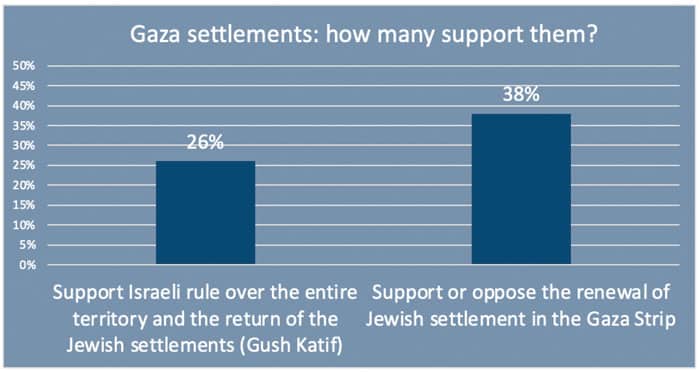
The way a question is framed can have great impact on answers. The second question (Ch.12 survey) is more precise, and hence it is probably a third of Israelis who support Gaza settlements, and not a quarter.
A reader’s response:
Micah Satler asks: “Do you think Netanyahu refuses to bring the hostages back because of political considerations?” My answer: Netanyahu did not yet see a deal to which he can respond by a yes or a no. So – no.
Shmuel Rosner is senior political editor. For more analysis of Israeli and international politics, visit Rosner’s Domain at jewishjournal.com/rosnersdomain.
Thousands of people gathered that fateful autumn day, for a peaceful music festival. They came from all around the world, representing every religion. And as you already know, the Nova festival was ambushed, slaughtered, raped, and more on October 7th. But what happens to the survivors, those who actually managed to stay alive? Is it at all likely they don’t have significant trauma and PTSD, nor even Survivor’s Guilt? Can they regain their trust and autonomy, and even find that spark that they had while celebrating the music prior to the attack?
This endeavor is incredible, and I’m in awe of two of my sisters-in-law Karin and Rikki for creating it. They’ve teamed up with numerous social workers and psychologists from Israel and America, to create a healthy, safe retreat, where those survivors gather and have a healing reunion. It’s a huge undertaking, and their security is of paramount importance. As you can imagine, if they are greeted by angry protesters or violence, this could cause more harm than good. So it needs to be done not only with security, but with extreme discretion of the timing and location.
What I can tell you is that it’s arranged and happening. It will be a week-long retreat. It’s open for any/all of the thousands of survivors from Nova to apply to join for free, with about 110 being screened by therapists who decided who should go, and I will not be disclosing more details than that until after it happens. At that point the press can safely report on all of it.
Karin and Rikki, who you will see on the website, have already helped raise over 80% of the money, from private efforts, but to help get them the rest of the way to cover the costs, please go to this link, read more, and consider a donation or at least sharing. Please note they are partnering with Artists 4 Israel (thank you Craig Dershowitz and Yaara Segal among others!), the non-profit that credits ME with helping bring into circulation their pro-Israel version of the IN THIS HOUSE WE BELIEVE signs. (They also put up the hostage mural in Culver City). In order to ensure this one time huge event has nonprofit status, your donation link will take you to the Artists 4 Israel website, where you would earmark the donation as for “Orot”.
The photo this week is fittingly of my sister-in-law Rikki, with my brother Zachary, and their son Amitai, visiting Israel in 2013.
On that note, it’s time for my latest Chosen Links…
ARTICLES/THREADS:
1. I really value my new and yet old friendship with Sarah Tuttle-Singer. She went to school with Adi and my brother-in-law Adam. I’m aware that she’s part of LA’s past, but I’ve only known her as an American expatriate writing about her new Israeli homeland. And even though we have never met in person, she has given me a warm embrace, and encouragement in my writing, and educational endeavors. We speak about our children and exchange photos. And we worry about our lives as Jews, and write about it in our own creative ways. Although it isn’t one, I read this piece as if it was a poem. Of course I feel close to Sarah without ever actually meeting her. I’m Jewish:
2a. That tragic building that collapsed last week, where one IDF unit lost a whopping 21 soldiers in a day? What happens to the rest of the unit? They obviously are expected to “soldier on”, but does anyone really expect their brain, heart or soul to not feel broken?
There are so many tragedies during this, and any war, but if you forget to look after the mental health of those left behind, you are ignoring a large percentage of the injured population. My dear cousin Micki Lavin-Pell is using her trauma therapy training, and helping not only the soldiers as described here, but the families of those left behind:
3. “In this two-part report, the U.S… documents how successive occupants of the Kremlin have exploited antisemitism for disinformation and propaganda purposes.” It gives multiple examples of antisemitic tactics being weaponized by Russia, and also provides a history lesson into past mistreatments of Jews.
This is extremely important research being released by the State Department. I strongly suggest you read this summary of their findings:
4. Salo Aizenberg from Honest Reporting, does yet another great service for everyone, by laying out the latest evidence that the Gaza death and injury tolls are bogus. First we knew they were being calculated by Hamas itself, with their Gaza Ministry of Health. Then it turned out that as of November, they are receiving all of their numbers from their own media reports. Not hospitals, but the media, which has no freedom of press under Hamas. And now, it turns out, that they have an even more unbelievable counting method. Should I give you a minute to guess? A Google form, for anyone to enter the info! In a country where almost everyone is a fighter or a human shield, and you are incentivized for numerous reasons to inflate the death toll…. Google. It’s almost funny.
Let’s do a logic puzzle for anyone who doesn’t see the fallacy in this method. Depressingly, vaccines are obviously a highly divisive issue, right? Imagine if all of the people in America could just enter data from deaths and injuries from a vaccine, and it required no verification from hospitals or anyone. (We do have a system to report numbers called VAERS, but they go through a verification process after, since all deaths are reported in hospitals and/or morgues). You don’t think the numbers would be inflated to an exponential degree, due to those with anti-vaccine sentiments? Trust me, there are far more in Gaza with anti-Israel sentiments than there are those in America who are anti-vaxx. So you do the easy logic puzzle. Just wow. Google. Western media, please stop reporting the numbers at anywhere close to face value:
5. This article is an incredible rundown, with great details and several examples of evidence, to the rot that has been festering inside the UNRWA. Supposedly an unbiased Palestinian refugee arm of the UN, Eitan Fischberger uncovered a HUGE story when he found the Telegram group of UNRWA teachers celebrating and assisting Hamas. He then looped in Hillel Neuer (the author of this article) and his UN Watch, which blew the lid off of this story, after their intense investigation into thousands of Telegram messages.
It goes so much further than supporting the terrorism, and more than indoctrinating the schools with Israel hatred. “UNRWA employees have held Israeli hostages captive in their homes, using UNRWA facilities to move them from place to place…UNRWA facilities are routinely used to conceal weapons…UNRWA resources have been used to build and supply Hamas attack tunnels, many of which are constructed underneath UNRWA facilities.” Trust me, I’m just giving you the tip of the iceberg, read this exposé:
6a. I love John Spencer’s work. He’s not Jewish, has no allegiance to Israel, he’s simply an American expert at combat. Here he gives piece after piece of evidence, how Israel is not only fighting a necessary war, but that they are taking UNPRECEDENTED measures to PREVENT harm to civilians.
“Use of real phone calls (19,734) to civilians in the combat areas, SMS texts (64,399) and pre-recorded calls (almost 6 million) to civilians to provide instructions on evacuations. No military has never done this in urban warfare history.” That’s just one of MANY examples he gives. Great thread:
6b. “To be clear, I am outraged by the civilian casualties in Gaza. But it’s crucial to direct that outrage at the right target. And that target is Hamas.” There’s no need to read both, this is basically John Spencer putting his thread into article form:
7a. Most of what Fern Reiss brings up here about UNRWA is discussed in other threads this week, but she still has such a great ability of putting all of the facts together into clear, quick hits, making this a great resource on the topic. With bursts of her Israel caustic humor “Maybe next time the world installs an aid organization we should entrench one without terrorist ties, just for novelty’s sake.”
7b. Fern gives insight into how the country is feeling, and it’s a dizzying up and down, over and over of highs and lows. When discussing Lebanon, “It’s looking increasingly likely that we will be in a war with Lebanon, soon. It won’t be fun, to put it mildly. Lebanon has many, many more missiles than Hamas, including very large and nasty ones. They are saying everyone should stock food and water…With bombs that can take out not just buildings, but entire neighborhoods. Pretty sure our shelters aren’t equipped for that.” Worrying indeed:
7c. Fern explains what makes hoping for a 2-state solution, as being pushed yet again, is not something she nor most Israelis can believe anymore. “Never mind that most of Gaza still supports Hamas. (Maybe you can’t believe polls of displaced people.) Never mind that most of the West Bank and East Jerusalem Palestinians also overwhelmingly still support Hamas. (Maybe they just don’t understand what they’re voting for..)” she tries to justify having this sort of peace, and just can’t find a way:
8a. Seth Frantzman brings up the Iranian strategy of attack and demand ceasefire. He explains this is what Hamas and Hezbollah do, but it all stems from Iran, and people still haven’t caught on. “Just waiting on the Houthis to do this, you realize that when their attacks finally cause casualties, the next day they will say “we have paused operations” and any attacks on them are “escalation” and “risk a wider war.” If you aren’t following Seth, you really should. He provides great insight:
8b. Seth writes this thread about the human rights agencies that continue to back Hamas with whatever they do. “You can also see how some suddenly embrace the Houthis the second they began targeting ships. They will shout about “no war in Yemen” but never seem to condemn Houthis for attacks. It’s transparent and systematic.” It’s a one-sided bias so obvious, that it’s almost laughable that it’s so widely ignored:
9a. Brianna Wu has been a great voice on the liberal side. I’ve seen her and several others I share, accused of being awful by the pro-Israel and the pro-Palestinian side. Each claims she is being too one-sided. Usually that’s a sign of trying to see and discuss things fairly, and that’s why I don’t just share views from one camp myself. I avoid the extremes, and I believe that there will always be reasonable views that don’t align with my own, and they are worth hearing so we don’t exist in our own echo chambers.
Here Brianna says she’s hopeful for a new deal for a ceasefire, but is highly skeptical it can work:
9b. Nice little thread from Brianna Wu, stating how ridiculous the sweeping statements are online that Hamas isn’t a terrorist organizations, and that Israel is.
9c. Brianna speaks up against Hamas supporters making death threats on the internet. Specifically Eve Barlow and Antony Blinken for standing behind Israel.
10. Lahav Harkov writes a top notch article about how the world knows but doesn’t know, and admits but is also in denial, about how Qatar plays both sides. They are both culpable to the actions of, and largely a solution to Hamas. Regarding a call to force them into forcing Hamas to return the hostages, “Only when the Qataris understand that their existence is on the line will they pressure Hamas, and then the hostages will come back by the busload. Why would Hamas do that for Qatar? Because Qatar is their lifeline. If there’s no Qatar, there’s no Hamas…The answer to the hostage problem, the end of the war, global terrorism is to stop the Al-Thani family (the ruling family of Qatar)”.
Heads up, there will be a pop-up that looks like a huge paywall, but it isn’t. Just x out of that pop-up in the upper right corner to keep reading this article:
11a. This is truly awful. Mike Freer, the Tory Member of Parliament for Finchley and Golders Green, has written a letter of resignation at the upcoming election. Why? Because of death threats to his family, arson to his office, and more. This is a proud, married, gay politician, who has a history of vocal support for Israel and Jews. After October 7, the intimidation and threats increased exponentially. When asked directly in the interview, he agreed this was most certainly related to antisemitism and his support for Israel.
The tweet by Darren Grimes is followed by a brief video interview between Freer and Douglas Murray:
11b. This article from just a month earlier, gives details on how bad things had gotten for him, though at that point in time he didn’t think he was going anywhere. Hannah Gillott reports:
12. Tabby Refael pours out her heart, as she does oh so well, and explains that she doesn’t see how to go back to writing about more trivial things, since October 7th. “Writing about people and issues that have nothing to do with the massacre, the rape, the hostages and the current war may run the risk of appearing tone-deaf, to say nothing of a sense of turning our backs on Israel, whether perceived or real.” She speaks to journalists Etgar Lefkovits and Sarah Tuttle-Singer, who help give her perspective:
13. I really like the semantic and linguistic way Marisa Douenias analyzes antisemitism, in this 2-part series. It’s main theme is “how social identity impacts antisemitism”. It teaches the theory, so you’ll get a nice lesson that climaxes with this important takeaway, “from a social science perspective, what starts with the Jews most certainly won’t end with the Jews, as social identity necessitates the continual forming of out-groups to maintain individual self-esteem”. Like I said, a totally different form of analysis:
14a. I had the honor of having a long conversation with Ahmed Fouad Alkhatib on the phone this week. We may come from different backgrounds, with different attitudes about the need for, and/or the methods of the IDF, but I’m incredibly impressed by Ahmed. I can’t imagine being in his shoes, and don’t even WANT to imagine such a thing. He lost literally dozens of family members in Gaza, and the fact that he’s not exclusively lashing out at Israel for doing so, but putting a massive amount of blame and hatred on Hamas, shows the magnitude of how much he bridged the gap between our “two sides”.
I’m honestly in awe of him for his constant struggle to see this complicated situation clearly, in spite of the tragedies to his family AND the hatred he receives online from both sides. Thank you my new friend, I wish everyone was as open-minded and resilient. Here he writes an important thread about how lousy the pro-Palestinian Western allies are, who continue to support Hamas and deny the truth of their heinous crimes:
14b. As a direct response in polite discourse to Ahmed, Ariel Sterman continues the interesting thread. “Westerners NEED to believe that October 7th didn’t happen for the story to fit into their Western Ideological Frameworks that pit the Palestinians as the underdog/victim and therefore always in the right.” Ariel then provides a somewhat interesting graphic, that takes you through the psychological stages of DABDA, as it plays out within the anti-Israel framework:
15. A boycott gone wrong! Jewish owned restaurants were targeted with posters for boycotts. They were so sloppy that they accidentally included a Palestinian owned restaurant! The Jewish community’s response? Encourage people to support that Palestinian restaurant. I love seeing when we rise above:
16. Barak Ravid reports on this new potential push from the US to recognize a state of Palestine. This appears to be changing the old policy of Palestinian statehood being dependent on Israel and the Palestinians having direct agreement.
But it’s hard to know what’s real. “A White House National Security Council spokesperson said it “has been long-standing U.S. policy that any recognition of a Palestinian state must come through direct negotiations between the parties rather than through unilateral recognition at the UN. That policy has not changed.” Who knows. But it’s hard to see this being a good idea if it’s real, until a Palestinian governmental body that’s not radicalized is in place:
17. Thomas Friedman, of the NY Times, as usual, doesn’t talk to Israelis about what’s practical, he just pushes the peace agenda with blinders on. Judea Pearl, who I had the pleasure of talking to last week, claps back with this response:
18. Yaari Cohen shares an article from The Independent , written by Tara Cobham, into this thread. The reason I’m preferring to share it here, is that I think it reads better without the triggering photos.
19. Shai Davidai has been a one-man Rambo at Columbia University, up against all odds; he continues to show what he’s seeing there. And it ain’t pretty. Here is his latest thread, showing videos and photos of protests that involve the usual screams for intifada, kicking out all of the Zionists in the school, and that Hamas is justified. I don’t understand his resilience, but I certainly applaud it:
20. I’ve been craving more of a deep dive into what TikTok is doing to contribute to antisemitism. The masses of people who are being influenced by it are innumerable. Times of Israel just released an article discussing it. “Identifying and removing content that promotes hate is notoriously difficult. “The question is: To what degree are they capable of removing content? That’s an open question, and they may not be able to. One of the biggest concerns about social media is that the technology has outpaced our ability to control it in a responsible way.” Will we ever get it under better control?
21. Shai Bazak gives a fascinating, comprehensive interview with Sari Makover-Belikov about the past, present and future of Israeli politics. So much ground is covered, as he used to be an advisor to Netanyahu, many elections ago. Among things said here, he feels Bibi made a huge mistake not owning the responsibility for October 7, says it’s inevitable that there will be new elections very soon, and says that the relationship with the United States is more important than most Israelis let on.
“People who say, ‘Who needs the Americans, we can manage very well without them,’ do not understand at all the meaning of the alliance with the United States…They send us hundreds of airplanes full of ammunition and spare parts. They put all the weight of their influence on the heads of the countries that are hostile to Israel, they exercise their right of veto in the UN and prevent other countries from attacking us…Without the United States, our military power, to put it carefully, would be infinitely smaller. it’s not just ammunition, developments, intelligence and critical collaborations. It is also standing by our side in international processes.” There was so much here that it was hard for me to choose just those passages:
22. Hussain Abdul-Hussain posts about how badly the state of Israel would fail if it was taken over as Palestine. Dave Weisberger, a career expert in market trading and algorithms, chimes in and further answers from an economic perspective. “Without oil money, Israel has built water desalination, innovative food & energy production, construction & transit infrastructure & the 2nd largest tech hub in the world to create a vibrant economy with high living standards (including for 2 million Muslim citizens).” Absolutely:
23. Tamer Masudin is an Bedouin Israeli Arab, who speaks up about Israel. He simplifies what’s happened so far since October 7, for the many who keep twisting the narrative:
24. Thane Rosenbaum is consistently in my Chosen Links, because his writing is always, in my opinion, relevant, to the point, and reasonable. He writes about the Israeli identity being connected to the service every Israeli gives to the country, usually via the IDF. “In the 1950s, images of Israeli women in uniform confounded the bland domesticity of Eisenhower’s placid America. American women were discovering how all those dazzlingly new kitchen appliances worked; Israeli sabras were toting Uzi submachine guns when not planting olive trees and orange groves.”
25. Dan Schnur gives us reason to pause and remember the voting record of the “temporary” replacement of Diane Feinstein. Laphonza Butler has had a few opportunities to affect policy on Israel since October 7, and it hasn’t been pretty. “Butler was one of a handful of Senators to announce their support for making U.S. military aid to Israel conditional on Israel’s willingness to adhere to American preferences on how to prosecute the war in Gaza…Butler has also voted for a less popular bill that, if passed, would have required the Biden Administration to launch an investigation into alleged human rights violations by Israel.” While she isn’t in “Squad” level territory yet, with her Israel rhetoric, it isn’t that far off unfortunately:
1. This is cool for more reasons than you can guess. Yes it’s awesome that Ahmad4ISRL, a former member of Hamas, was having a lovely dinner with an Israeli family. And this video from comedian Ben Gleib is a wonderful testament to that. But what’s extra special is who personally sent me this video. Ahmad messaged me, because on Shabbat day my own family had the pleasure of hosting him ourselves. Surreal but true, and he is amazing. Will write about that more fully another day:
2. This is not a typical share from me, a speech from a Rabbi, but this is no ordinary speech, nor just any Rabbi. This is the Chief Rabbi of South Africa giving an impassioned, and rousing speech, about the injustice of the farcical ICJ trial and verdict. It reminds me of the iconic (fictional) speech at the end of Independence Day, when the president says, “We will not go quietly into the night! We will not vanish without a fight! We’re going to live on! We’re going to survive!”
Chief Rabbi Warren Goldstein explains how the Jewish community was supportive of the efforts to end segregation there, and contribute disproportionately to the infrastructure of their country. He insists that most South Africans are not fairly represented by this case, and that there are suspicious things that will come to light about their country receiving money from suspicious foreign interests. Specifically that ICJ application was started after Iran gave them money in exchange for clearing debts. As I said, far more than your usual speech by a religious authority:
3. Daniel-Ryan Spaulding putting up with the intolerance online, and reiterating all the times he’s said that getting rid of Hamas is good for Israel AND the Palestinians:
4. Biggah, aka @Wyzewurdz74 (on Instagram) continues to stand up against anti-Israel hatred, and be a strong voice of calm explanation. He’s sick of the black and people of color community being exploited by the pro-Palestinian movement, when we should clearly be on the same side, since Israel is the one “side” that actually fights for social justice:
5. Jake Tapper interviews Marcus Sheff about not only the prevalence of antisemitic and anti Israel material taught by UNRWA to Palestinians, but the resulting impact of it. It’s not just history that’s taught with bias and hatred, it’s literally every subject from math to science. How can you NOT grow up hating Israel, it’s built into your subconscious:
7. UNRWA explained excellently by Dani Buller. The UNHCR already exists to actually help refugees around the world, but for some reason the UN feels that the Palestinians need their own separate organization just for them. The number of refugees goes down over the years everywhere else, as it should. But Palestinians are seen as refugees even as they have citizenship in other countries. He uses the famous Hadid family as a prime example of the ridiculousness of this setup:
8a. Hillel Neuer from UN Watch, gets interviewed by Jake Tapper about the UNRWA scandal that Neuer helped break. These two men talking, have both made huge impacts on getting the truth out there, the last few months. Jake’s big question for Hillel is about what would happen if UNRWA was ended right now. He brings up repeated critiques from Jordan, which Hillel pokes holes in. Can’t go wrong watching these two discuss:
8b. Here Hillel gives another good interview on the topic, this time with Bianna Golodryga. No need to watch both as there’s lots of redundancy, but it’s another good one:
8c. Want to watch the actual testimony that Hillel gave this week? It’s not particularly long, and he does a great job. A big takeaway is that the underlying message of UNRWA, is to ensure that the Palestinians never accept that 1948 happened. They are always refugees, always fighting for their land that Israel wrongly occupied. That’s their theme:
Holy cow, I knew this was going to be a nice pro-Israel interview, but I had no clue how amazing it would be! Nate/Nathaniel Buzolic is a good looking, young, Christian actor, who I used to watch on the silly show Vampire Diaries. He’s interviewed by Australian TV about his Israel advocacy, and he knows the facts and how to communicate them as well or better than most talking heads for the Middle East.
He has visited Israel DOZENS of times. He grew up in a largely Muslim community of Australia, and naturally had a very negative view of Israel most of his life. He talks about the Jewish communities he met in Australia and Israel. He talks about the kibbutzim, the hostages, Hamas, the terror tunnels, and a great history of Jews being attacked in Israel before they were even in power. I’m so impressed by this young, Christian actor, who’s not afraid to take on the hatred he’s getting from the pro Palestinian movement as a result:
1. This is quite funny. Roi Harel puts on this ridiculous sketch, pretending to be Hamas. As always just watch and enjoy; humor is always best without explanation:
5. Hanan Isakson recently filmed the IDF version of the Friends theme song. This time he creatively got soldiers to do the changing of the guard at Buckingham Palace:
1. This is almost in my humor section, but since it’s unintentional dark comedy, I’ll put it here. This antisemitic, conspiracy theory driven person, has revealed a truly sinister proof that we Jews really DO control the world: JEWISH ENCYCLOPEDIAS!
That’s right, the world famous Encyclopedia Judaica is a large book that only Jews know about. Uh oh!
Life is about learning when to cry, and when to just give up and laugh:
2. I like what the ADL did here. They took the completely tepid statement by the UN, which was more than they had said in months, and showed how much it was still lacking:
3. Aviva Klompas has been a strong voice for information throughout the war, and here I see for the first time a photo of Emily Hand holding up her own poster, that was torn down from so many thoughtless haters:
4. Khaled Hassan points out that all it takes to troll him, and try to discredit him, is someone announcing that he converted and is now a Jew. Yep, it’s a bad word:
I’m starting to excitedly binge the most recent season of Rick And Morty, but first I stumbled across an adult-animation show on Amazon Prime, and it was glorious. Hazbin Hotel makes no sense, and shouldn’t work, but it does SO well. The animation feels incongruous to the content. It feels like you’re watching an old fashioned kid’s cartoon, with a rudimentary style, including old-fashioned voice talents, but the plot is about the Princess of Hell trying to get redemption for damned souls, and Rated R content. Oh, and did I mention it’s a musical? Really damn good.
My sister-in-law Rikki, with my brother Zachary, and their son Amitai, visiting Israel in 2013.
Boaz Hepner works as a Registered Nurse in Saint John’s Health Center. He moonlights as a columnist, where his focuses are on health, and Israel, including his Chosen Links section of the Journal. He is a Pico/Robertson native, and lives here with his wife Adi, and children Natalia and Liam. He can be found with his family enjoying his passions: his multitude of friends, movies, poker and traveling.