
fbpx

February 8, 2024

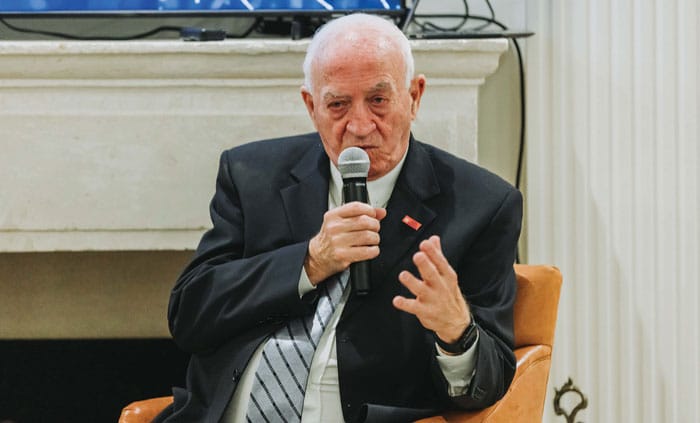
Poker Champion Daniel Negreanu on His Support of Israel

If you are a fan of poker, and boy have I been for decades, you certainly know Daniel Negreanu. He has won 6 WSOP bracelets, amassed over $50 million in live tournaments, and was inducted into the Poker Hall of Fame in 2014. Also known as “Kid Poker”, Negreanu is one of the most respected and well-liked people in the gaming community.

Hailing from Toronto, Canada, Daniel was born to Romanian parents, speaking English and Romanian fluently as a result. Although he’s not Jewish, Daniel proudly says that he studied the complex Middle East geopolitics well before the events of October 7. He has made impressive statements and posts explaining his staunch support of Israel, and warns of the dangers of rampant antisemitism — all in the face of the usual swaths of online hatred.

Here’s an example of a recent thread, where he’s reacting to some anti-Israel messages in the poker community:

Robbie Strazynski, founder and writer for CardPlayer Lifestyle, told me, “Daniel is an angel. And the Jewish people are extremely lucky to have his support. He has always, since day one, been super generous with his time, and incredibly kind to me, an observant Jew living in Israel.” (Full disclosure, Robbie is an old friend of mine).

Honestly, I’m a huge fan, and it thrills me to not only call him an ally, but be able to talk to him on the phone for this interview, thanks to mutual friend and poker pro Ronnie Bardah:

Why were you interested in this topic, knowing that most people are advised to avoid it by their agents and managers?

Before it was a hot topic on October 7th, I put a lot of time and research into trying to understand the conflict from both perspectives. One of the most valuable assets I found was Rudy Rochman. He sits with Palestinian activists, and tries to find common ground, and really make a difference. He goes to colleges, and tries to have conversations, while people are name-calling and yelling at him. I find his work fascinating.

I find it important, because what I see in the world is that the Middle East is a powder keg. Sides are chosen, and as we see today, it leads to much bigger problems. I really want to understand the history, even if others don’t, and I feel like I did with the time I put in.

What’s it like regarding other poker players you interact with on this topic?

That’s the blessing. The people my age and in my circle…everyone agrees with my point of view for the most part, with very little pushback. There is a faction of poker players who for many years have been part of what you call the Progressive movement. They’re the ones who make microaggressions seem like the most evil things in the world. There’s a guy named Justin Bonomo. I feel like his brain has been broken for many years going down that sort of path. Too far down the Progressive rabbit hole. It’s not surprising that in this conflict he only sees “white, wealthy, backed by military power, and oppressor” when he views Israel. This means he will never see “poor, brown, innocents, or oppressed”, no matter the color of an Israeli’s skin, or the number of times a day that an Israeli family hides in their bomb shelter. When you look at it through the lens of oppressor and oppressed, automatically the oppressor is evil, and morally bankrupt. The oppressed are the righteous, regardless of what they do or how it plays out. And we’re seeing a glaring example of that play out tragically before our eyes.

What politics do you identify with?

I’ve always been a classic Obama/Bill Maher liberal. I don’t feel like I connect with the extremes on either side, because they’re just both crazy for different reasons.

Does Bonomo poke the bear when he sees you in person?

No, we focus on just doing our jobs, which is poker. And I’ve learned not to engage with him at all directly, because there’s no point. I tell these people on Twitter that yell at me, “you know this is pointless, it’s worse than pointless in fact. It’s a waste of both of our time. You’re gonna go through your list of whatever propaganda you’ve found. You’re not gonna convince me; I’m not gonna convince you. And then it’s gonna be a back and forth that ends nowhere. So let’s just cut to the chase and not do it.” But sometimes I do get sucked into these arguments.

You’re either on the side of good or evil. There’s not much gray left in this world. People just think they’re right and you’re wrong these days.

It’s honestly quite easy to parse through those who are not worth talking to. It’s typically when they just keep using buzzwords, like “genocide” and “apartheid” without having any understanding of the reality of Israel. The fact that over 20% of the population is Arab for example. That’s a pretty horrible way to commit an apartheid! In addition to that, it’s a pretty ineffective genocide when the population you’re committing it on has doubled! So when I hear those buzzwords, I know that person is too far gone to even discuss it with.

Why are you so interested in Israel specifically, rather than any other region of the world?

I guess it just saddens me that people don’t see the reality of the region. There’s one sliver of a population where democracy is king, where gay people can walk freely, you can practice any religion that you want, women have full rights…And they’re surrounded by nations so different from that. It was shocking for me to see Progressives, and how opposed to Israel they are. They support the very people that would literally drag them through the streets on a bike, and throw them off a roof, in so many cases. I imagine that in that moment, right before they would be killed, they would be crying and praying that the IDF would save them. It’s very easy for those in Western culture to make rash judgments, and make them fit their paradigms.

I saw a tweet that I’ll botch, “We’ve lost touch with war and what it looks like.” It’s very easy for us to say “let’s just be pacifists, and not have war.” So what’s actually realistic? Ukraine shouldn’t fight back because innocent people will die? Innocent people will die in every war. War is tragic. Yet when they cite the numbers that come directly from the Hamas Ministry of Health, they treat them like the Word of God. “80,000 children are dead, and only 4 were Hamas!” Gee, I wonder where they got that from. Every single victim is a child or a completely innocent journalist.

After Israel managed to kill a recent Hamas leader, the first comment  online cracked me up, “Per the Hamas Ministry of Health, he was a 12 year old female journalist”.

(LAUGHING)

Do you have any kids?

Not that I know of!

Does this topic come up with your wife?

She knows I’m passionate about it, but when we’re together, we try avoid sad topics, because she’s highly empathetic with all deaths really affecting her. Occasionally things do rile me up, and I’ll share with her anyway.

I’m well aware that my efforts online are not gonna change anything. If you see what’s happening on TikTok especially to the younger generations, they’re completely becoming brainwashed, and it’s so dangerous. It’s a whole generation of people who are being fed info directly from a Chinese-run company, allied with Russia, who’s allied with Iran, whose right arm is Hezbollah and Hamas. The whole algorithm and content are teaching these kids. So many of these kids are chanting slogans, and don’t even know what they’re saying. “From the river to the sea, Palestine will be free!” It’s catchy, even a cool tune, but do you even know what it means? No.

Regarding TikTok, plenty of research has been done, where you look at the numbers of pro-Israel people versus Pro-Palestine, and Pro-Israel is dwarfed about 9-1 there. It’s horrible.

Who are the Jewish people in your life?

Ronnie Bardah and Robbie Strazynski are Jewish friends. There’s (Israeli poker pro) Eli Elezra. I grew up in Toronto with 2 Israeli guys named Regev and Oren. Our families were close, and we have been ever since. They taught me some Hebrew in fact, including a bunch of bad words, and even a song.

(He then sings me a song fully in Hebrew about famous “crybaby” poker player Phil Hellmuth, starting with “Phil Hellmuth Ben Zonah” which requires no translation for anyone who’s taken remedial Hebrew.)

Is this your first time in a Jewish publication?

Robbie has written about me, and also I know the song about Phil Hellmuth has gone viral in Israel, because I’ve sung it before for people on camera, and they love it.

Have you visited Israel?

No, it’s one of the top 5 countries I most want and need to visit.

With your poker lifestyle do you have a crazy sleep schedule?

I sleep 8 hours every night like a baby, and wake up at 10am.

Do you miss out on any of the best games as a result?

I don’t really play cash games anymore; I’ve got money. I just play tournaments because I enjoy them. Poker is for joy, not income at this point. I honestly find cash games boring.

I can’t believe I’m saying this, but I have to go because I have to finish my weekly “Chosen Links” before I go to sleep tonight. So I’m going to be an idiot and hang up on one of my poker idols!

Lilah tov!

Follow Daniel here:

Twitter/X – https://x.com/RealKidPoker

Facebook – https://www.facebook.com/DNegsPoker

Instagram – https://www.instagram.com/dnegspoker/


Boaz Hepner works as a Registered Nurse in Saint John’s Health Center. He moonlights as a columnist, where his focuses are on health, and Israel, including his Chosen Links section of the Journal. He is a Pico/Robertson native, and lives here with his wife Adi, and children Natalia and Liam. He can be found with his family enjoying his passions: his multitude of friends, movies, poker and traveling.

Poker Champion Daniel Negreanu on His Support of Israel Read More »
Micha Koubi, Former IDF Special Forces Member, Lectures on Hamas

In a recent interview with the Jewish Journal, Micha Koubi, a former Shabak (Israel Security Agency) member, provided insights into Yahya Sinwar, the leader of Hamas and the mastermind of the Oct. 7 massacre. Koubi was born in 1945 in Tiberias to a family who arrived in Israel from North Africa in the late 18th century. He also served in the IDF’s elite special forces, Sayeret Matkal, which earned him the Medal of Distinguished Service for his involvement in complex and dangerous operations.

During his time with the Shabak, Koubi played a crucial role as the primary interrogator and analyst of Sinwar. This experience led him to express anger over Sinwar’s release in the Shalit deal in 2011, and to warn of the potential consequences of such a deal. He is now actively opposing the release of terrorists in exchange for hostages, emphasizing the gravity of such decisions in light of the chilling promise Sinwar fulfilled over 30 years after his release from the Israeli prison.

“We would bring him to the interrogation room with his hands tied behind his back,” Koubi said. “He and other senior Hamas members in Israeli prisons were dangerous individuals and we took all precautions necessary. Before incarceration, Sinwar murdered with a machete 12 people he suspected of collaborating with Israel, after being imprisoned, he killed three more in prison, with razors. It’s no wonder he earned the moniker ‘The Butcher of Khan Yunis.’ I was certain he’d be serving a life sentence.”

Koubi arrived in Los Angeles at the invitation of Beit Halochem (Hebrew for House of Warriors), rehabilitation centers that serve over 50,000 disabled veterans and their family members. A new center is set to open soon in Ashdod. Since the attack on Israel on Oct. 7th, 4,500 new wounded soldiers have joined the center, many of them suffering from severe injuries, including missing limbs, blindness, burns, and PTSD. Koubi himself is a member of Beit Halochem, having been injured in a covert action some 25 years ago. Since then, he has volunteered and assisted other wounded soldiers.

During his visit in L.A. he gave seven lectures recounting his time as the lead interrogator of Hamas terrorists and especially, Sinwar. “Ahmed Yassin [the imam who served as Hamas leader at the time] gave Sinwar ‘Fatwa’ (Arabic for a legal ruling), to tell us everything he knew. He gave us information but also promised, ‘I will be released and at the right time and when I’ll be ready, I will enter Israeli communities with my soldiers and we will kidnap, rape and murder your people, we will do everything.’ He wasn’t ashamed and spoke about it proudly.”

It was 1989, and Hamas was in its early stages with only 500 members. Koubi understood the grave danger Israel was facing from this terrorist organization and warned Israeli leaders. “I told them, ‘Let’s eliminate them now when they’re still small before it grows to monstrous proportions.’ They were all in our hands, in our prison. I knew back then that Hamas wouldn’t surrender; they fight to be martyrs. I remember interrogating Sinwar; he had the piercing eyes of a murderer. This man was completely emotionless, a brutal killer. I called him a Nazi and told everyone possible that this organization must be eliminated, but they didn’t listen to me. We found many ‘Mein Kampf’ books in his house as well as rubber knives. He was in charge of education in Gaza and would distribute them in day care to two-year-olds, where they would hold a competition over who would kill more Jews. By the age of four, they would receive wooden guns. Later, when they grew up to be teenagers, he would train them to shoot rifles and teach them how to be martyrs. The same children he trained are the killers of the Nakba today.”

During the 22 years Sinwar spent in an Israeli prison, he became fluent in Hebrew. However, Koubi made the strategic decision to interrogate him in Arabic, a language he had learned during his service in Sayeret Matkal.

“I participated in numerous operations in various enemy countries. Before each operation, I would immerse myself in studying Arabic for three full months, learning the dialect of the region I was going to. This extensive preparation made me a proficient undercover operative. I utilized all my skills. I also studied the Quran extensively. It was crucial to know the language of the Quran so that they would understand that I could engage with them on equal terms. They actually appreciated it greatly — that I could go head-to-head with them in many areas and even surpass them with my knowledge.”

Despite Koubi’s repeated warnings not to release Sinwar and the other Hamas members, in October 2011, 1,027 Palestinian prisoners were released in exchange for Gilad Shalit, an Israeli soldier who was captured by Hamas and held in Gaza for over five years. According to Israeli government sources, the released prisoners were collectively responsible for 569 Israeli deaths.

“I was very angry they released him,” Koubi said. “I was among those who claimed that the number of Israeli victims would be enormous as a result of their release, and I said that it must be stopped. Indeed, as soon as they were released, they immediately returned to their terror activity, which resulted in 850 deaths.”

Koubi bristled when the conversation turned to releasing terrorists for the Israeli hostages. “It’s a delicate subject and a very complex one,” he said. “I oppose the release of terrorists of any kind. They should languish in prison.  It is inconceivable that murderers, people with blood on their hands, will be set free and start murdering again. Everyone who has been released to date in most transactions has returned to engage in terror acts.”

Koubi believes the Israeli government lets public pressure dictate its decisions. It happened with the Shalit deal, and it’s happening today. “Only the IDF and the Shabak can return the hostages. Only them. You have to give them time; you have to let them work quietly. The Shin Bet thwarts more than 90% of terrorist attacks; if it weren’t for them, we would be in terrible chaos.”

As for the day after the war, Koubi said Israel needs to eradicate Hamas completely, not allow Abu Mazen (PA President and PLO Chairman Mahmoud Abbas) any position of power and help establish a new Palestinian authority in the area. “We should eliminate anyone who was involved in the massacre and kidnapping of Israelis on Oct. 7th and we know that there were thousands of Palestinian civilians who were involved in looting, raping and killing of Israelis.”

Asked about the possibility of the Oct. 7 massacre occurring without the release of Sinwar, Koubi stated while there could have been another leader and a different Hamas organization that might have attacked Israel, the result would have been less catastrophic. He estimates that Sinwar bears at least 75% of the responsibility for the attack.

Koubi emphasized that Sinwar “hates Israel passionately. As long as he lives, he will want to hurt Jews as much as possible. He wants to continue deceiving us so that we will agree to withdraw from fighting – and so that he can return to control the Strip.”

Koubi emphasized that Sinwar “hates Israel passionately. As long as he lives, he will want to hurt Jews as much as possible. He wants to continue deceiving us so that we will agree to withdraw from fighting – and so that he can return to control the Strip. He doesn’t want to negotiate, but will try until his death to withdraw the deal for the release of the hostages. He has no problem dying. He wants to die as a martyr, the hero of Islam and Hamas.”

To learn about Beit Halochem: https://www.israeliwoundedveterans.org

Micha Koubi, Former IDF Special Forces Member, Lectures on Hamas Read More »

Campus Watch February 8, 2024

Harvard to Host Speaker Who Called Oct. 7 Massacre “A Normal Struggle 4 Freedom”

Harvard University’s Kennedy School Belfer Center for Science and International Affairs will be hosting a professor who referred to the Oct. 7 massacre as “a normal struggle 4 freedom.”

The speaker, Arab American University Palestine Associate Professor Dr. Dalal Saeb Iriqat, posted on X that the attack “is just a normal struggle 4 #Freedom.” She defended her post on X, “We will never forgive the Israeli right wing extreme government for making us take their children and elderly as hostages. The Israeli public need to realize that their own government had caused all this bloodshed and they remain the ones responsible for this escalation and losses of civilian lives.” Iriqat is scheduled to speak on March 7 as part of a “Middle East Dialogues” seminar series hosted by Harvard Kennedy School of Government Professor Dr. Tarek Masoud.

The Kennedy School said  “The purpose of the series is to provide a venue for debate and discussion, recognizing that different views will be offered and challenged — including views that many at the Kennedy School and beyond may disagree with vehemently and even find repugnant.” 

CUNY Cancels “Globalize the Intifada” Panel at Anti-Racism Conference

The City University of New York (CUNY) has canceled a “Globalize the Intifada” panel that was scheduled to take place at an anti-racism conference on Feb. 16.

The panel had been scheduled during the afternoon of the “Engagement, Equity & Antiracism: Teaching Writing at our HSIs, Then & Now” conference, Campus Reform reported. Lehman College Institute for Literacy Studies Director Jane Kehoe Higgins told Campus Reform that the conference aims “to bring people together, not to cause harm or make students feel unsafe. It is not a podium for protest … There are appropriate venues for them to share their views, but this conference is not one of them.”

The Lehman College Institute for Literacy Studies is co-hosting the conference, along with Hostos Community College Writing Across the Curriculum, New York City Writing Project and Lehman’s Writing Across the Curriculum program. 

Columbia Law Student Senate Rejects Student Group Aimed at Fighting Antisemitism

Columbia Law School’s Student Senate rejected Law Students Against Antisemitism’s (LSAA) request for recognition as a student group on campus.

The Columbia Spectator reported that out of nine student groups to apply for recognition this year, LSAA was the only one to be denied approval. Some students opposed recognition of the LSAA over their decision to adopt the International Holocaust Remembrance Alliance (IHRA) definition of antisemitism.  LSAA President Marie-Alice Legrand, who is not Jewish, told Jewish Insider (JI) that the student  senate interrogated the club’s board them for more than an hour on if they “want to police our fellow students… other groups got approved within five minutes.” The senate voted 33-16 against recognizing LSAA, Senate President Justin Onwenu told JI, “I am disappointed by the signal that this sends to many in our Jewish community. I am hoping that the club will resubmit and consensus can be reached because combating antisemitism is one of the most pressing issues of our time.” LSAA plans to re-apply.

Cornell Student Assembly Votes Down BDS Resolution

Cornell University’s Student Assembly rebuffed a resolution urging the Board of Trustees to divest from companies that conduct business with Israel.

The Algemeiner reported that the resolution, which was voted down 16-4, accused the university of holding “portfolio and direct investments in corporations that profit from Israel in corporations that profit from Israel’s military occupation of the West Bank and the Gaza Strip, thereby making Cornell complicit in human rights abuses and violations of international law.”

Cornell Hillel said in a statement posted to Instagram, “We thank all the students that organized. … Rather than ‘divestment,’ we are deeply committed to ‘investment’ — investing in a positive campus climate, meaningful opportunities for education, and open dialogue towards a better future on campus and beyond.”

Report: Rutgers Student Gov Gave SJP More Than $20,000

Campus Reform published a report on Jan. 29 documenting how the Rutgers University Student Assembly provided more than $20,000 to the university’s Students for Justice in Palestine (SJP) for events during the current academic school year.

The SJP events that received funding from the Student Assembly included a “Palestinian History and Divestment” panel and two events on “pinkwashing,” the allegation that Israel touts its record on LGTBQ+ rights to distract from its oppression of the Palestinians. The Student Assembly has allocated nearly $4,000 for the SJP chapter to hold “Palestinian History Day, Event and Teach-in” event.

Campus Watch February 8, 2024 Read More »

Fall In Love with These Red Desserts

Looking for something red to give your loved one on February 14th? Delight your sweetheart with a tasty treat!

Faith Kramer’s flourless chocolate berry cake is the ultimate decadent dessert. 

“Roses and chocolate are traditional expressions of love in our culture and I wanted to create something that included those elements,” Kramer, author “52 Shabbats: Friday Night Dinners Inspired by a Global Jewish Kitchen,” told the Journal. “In the end I came up with this fudgy, gluten-free deep chocolate cake that is made all the more special by the rosewater-raspberry jam and rosewater-flavored whipped cream.”

Kramer’s cake is perfect for Valentine’s Day or for almost any occasion.

“Everyone always tells me they love it, so to me it really is a dessert of love!” Kramer said.

Flourless Chocolate Berry Cake 

Recipe by Faith Kramer adapted from “52 Shabbats: Friday Night Dinners Inspired by a Global Jewish Kitchen” (The Collective Book Studio)

Serves 8

This not-too-sweet cake is fudgy and dark with an almost pudding-like interior. It is a dense and gluten-free chocolate cake with a subtle floral note of rose water and the sweet tang of raspberry jam. Rose water can get strong fast, so be sure to taste as you go. It’s available in specialty, Middle Eastern and Indian markets. The cake is worthy of your best-quality chocolate, but semi-sweet chocolate chips will work fine. It is very rich when topped with the rosewater-flavored whipped cream.

1/2 cup unsalted butter or vegan stick margarine, plus more for the pan
10 oz bittersweet or semi-sweet chocolate, chopped
6 large eggs, divided
1 1/4 cup sugar
1 tsp vanilla extract
1/2 cup unsweetened cocoa
1 cup almond flour
1 cup seedless raspberry jam
1/2 to 1 teaspoon rose water
3 Tbsp confectioners’ sugar or additional unsweetened cocoa, optional
Whipped cream topping, optional (see note for instructions)
Raspberries or sliced strawberries for garnish, optional

Preheat the oven to 400°F. Grease a 9-inch springform pan with butter. Line the bottom with parchment paper and grease the paper.
Cut the ½ cup of butter into cubes. In a 7- to 8-inch heat-proof mixing bowl, combine the butter and chocolate. Put a few inches of water in the bottom of a 5- to 6-inch saucepan and place the bowl over it. Water should not touch the bottom of the bowl. (You can also use a double boiler.) Bring the pan of water to a simmer over medium heat. Lower the heat to low and stir occasionally until the mixture is melted and smooth. Turn off the heat but leave the pan and bowl in place.
Separate four of the eggs. In a medium bowl, whip the whites with an electric hand or stand mixer until stiff peaks form. In a separate bowl, beat the yolks, remaining 2 eggs, sugar, vanilla, cocoa and almond flour until smooth. Working in batches, fold the chocolate mixture into the almond flour mixture. Then, working in batches, gently fold the egg whites into the chocolate-almond mixture. Pour into the prepared pan.
Bake for 35 to 40 minutes, or until the top is somewhat firm and springs back to the touch. (The cake will still be wet and fudgy inside.) Let cool in the pan. Once it is totally cool, remove the sides, invert onto a plate, and remove the bottom of the pan and the parchment. Using a long, serrated knife, gently cut the cake in half horizontally, creating two layers. (For best results, slice into layers only when totally cool or even chilled.)
In a small bowl, mix the jam with 1/2 teaspoon of rose water. Taste, and add additional rose water, if desired. Place one cake layer cut side up on a platter. Spread it with jam, place the second layer on top, cut side down. Sprinkle with confectioners’ sugar or spread with whipped cream topping (if using). Decorate with raspberries (if using).
Note: To make whipped cream topping: In a large bowl, whip 1/2 pint heavy cream with 2 tablespoons sugar and 1/2 teaspoon rose water with an electric hand or stand mixer until soft peaks form. Taste, and add more rose water, if desired.


Dawn Lerman’s pomegranate infused sugar cookies are crunchy on the edges and soft and gooey in the middle. 

“I baked them in middle school for a boy that I had a crush on and they were more effective than Cupid’s arrow at winning his heart,“ Lerman, a board-certified nutrition expert and the author of “My Fat Dad: A Memoir of Food, Love and Family, With Recipes,” told the Journal. 

“Over the years I have tweaked the recipe using monk fruit instead of white sugar, and pomegranate juice instead of food coloring,” she said. “All the sweetness with an extra helping of healthy love.” 

Pomegranate Infused Sugar Cookies

Yields 12 large cookies or 24 small

1 1/2 cups almond flour
1 1/4 cups oat flour (or you can make your own milling oats in a blender)
1 teaspoon of vanilla
Pinch of sea salt
1/3 cup melted coconut oil
1/2 cup maple syrup
2 Tbsp. of pomegranate juice
1/3 cup of monk fruit sugar or your sugar of choice for sprinkling

Preheat the oven to 350°F.
Mix all dry ingredients in a bowl. In a separate bowl, mix wet ingredients. Blend wet ingredients into the mixture. Chill batter for 20 minutes.
On a baking sheet, lined with baking parchment or lightly greased, spoon out the batter. Flatten with a spatula (or better yet, get your hands dirty). Sprinkle it with your sugar of choice.
Bake for 15 minutes or until golden brown.


Red Fondant Heart Cake Photo by John Paul Endress

Since Judy Elbaum likes to bake, one of her favorite Valentine’s Day endeavors is preparing a heart-shaped cake. Cover the heart with red fondant and you have a stunning and special dessert.  

“If you’ve never worked with fondant before, I encourage you to try it,” Elbaum, founder of the “Leave it to Bubbe” blog, told the Journal. “It handles quite easily, is fun to work with, is somewhat reminiscent of play dough and it produces a very professional looking cake.” 

Elbaum’s heart cake is sure to delight your Valentine.

Red Fondant Heart Cake 

2 – 9” by 2” heart-shaped baking pans
1 box of Duncan Hines Classic Yellow Cake—18.25 ounces
1 32-ounce container of red fondant (You can find kosher fondant online or at stores that sell baking products and supplies)
Confectioners sugar
Decorative icing flowers to garnish cake

For the cake:
Preheat the oven to 350°F.
Grease and flour the two heart-shaped baking pans.
To prepare the cake batter, follow the directions on the cake mix box.
Divide the batter evenly into the two heart-shaped pans.
Bake for approximately 25-to-35 minutes or until a cake tester inserted into the center of each cake comes out clean.
Allow the cakes to cool in the pans for 15 minutes, then invert onto a wire rack and allow to cool completely before frosting.

For the fondant:
Remove about 1 pound of red fondant from the container. Place in the microwave briefly to soften for about 10 seconds at level 3 per instructions on the container. If necessary, place in the microwave for another 10 seconds to make the fondant pliable.
Place red fondant on a wooden or plastic board where you can roll it out with a rolling pin. Roll the fondant into a circle, which is approximately 14 inches in diameter and about 1/8 inch thick.
If the fondant becomes sticky, sprinkle some confectioner’s sugar on the board.
Gently lift up the fondant and place it over the heart cake. It should take on the shape of the cake. Trim the excess fondant from the bottom of the cake.
You can repeat this process with the second heart cake or freeze it for future use.

* Do not hesitate to get creative and use different types of cake mixes and fondant; for example, chocolate cake with white fondant, or a white cake with chocolate fondant.

Happy Valentine’s Day!

Fall In Love with These Red Desserts Read More »

Insulting Israel is Old News at the State Dept.

The claim by Secretary of State Antony Blinken that Israel is dehumanizing” the residents of Gaza is false and insulting. But its par for the course at Foggy Bottom.

It may not be much consolation to the Israelis, but U.S. secretaries of state have been leveling unfair accusations against Israel, and sometimes against the Jewish people, for more than 75 years, regardless of whether Israels government leaned left or right.

In 1948, Secretary of State George Marshall vigorously opposed the creation of Israel, implemented the U.S. embargo on weapons to the Jewish forces, and urged President Harry Truman not to recognize the new state. Marshall also promoted a plan to drastically reduce the size of Israel by tearing away the Negev.

President Dwight D. Eisenhowers secretary of state, John Foster Dulles, testified to a Senate committee in 1953 that Israel should stop seeking arms and start putting its trust in the United Nations.” He also criticized the Israelis for striking at Arab terrorists in Gaza.

At another point in his testimony, Secretary Dulles claimed that Israels fears of being destroyed were baseless. When asked if Americas strategic plans for the Mideast were adequate to prevent Israels annihilation, he replied that the U.S. could not underwrite” such a promise. Dulles reiterated that the U.S. would not sell weapons to Israel, while defending the administrations decision to send 18 tanks to Saudi Arabia. He also justified the U.S. surrender to the Saudi leadersdemand that no Jewish soldiers be permitted to serve on American bases in Saudi Arabia.

In a Mideast policy speech later that year, Secretary Dulles declared that Jerusalem should be ruled by the world religious community,” instead of serving as Israels capital. He also challenged Israels identity, asserting that Israel should become a part of the Near East community and cease to look upon itself…as alien to this community.”

President Richard M. Nixons secretary of state, Henry Kissinger, had a disturbing agenda of his own. Kissinger advised Nixon in 1973 that the persecution of Soviet Jewry was not an American concern,” even if they put Jews into gas chambers in the Soviet Union.”

When Prime Minister Yitzhak Rabin hesitated to make concessions that Egypt was demanding in 1975, Kissinger accused him of bringing the world to the edge of war.” Kissinger also claimed that Rabin was fomenting antisemitism,” and he denounced Rabin and other Israeli officials as fools” and common thugs.”

According to Prof. Gil Troys book, Moynihans Moment, Kissinger once described Rabin with a vulgarity, a term similar to the obscenities that some U.S. officials reportedly have used concerning other Israeli leaders.

Another secretary of state with a fondness for curse words—at least when Israel and Jews were the subject—was James Baker, who served under George H.W. Bush. When Housing Secretary Jack Kemp noted Jewish concerns about Bakers pressure on Israel, the secretary of state infamously replied, F— the Jews, they dont vote for us anyway.” Kemp leaked the quote to former New York City mayor Ed Koch, who publicized it in his syndicated column.

Other Baker gems reported in the press included mocking pro-Israel members of Congress as “the little Knesset,” and remarking, Jews remember the Holocaust, but they forget insults as soon as they smell cash.”

The pattern of secretaries of state taking shots at Israel crosses party lines. Cyrus Vance, secretary of state in a Democratic administration, criticized Israels use of U.S. fighter planes to strike terrorists in Lebanon in 1979. Alexander Haig, secretary of state in a Republican administration, lambasted Israel for bombing the Iraqi nuclear reactor in 1981.

In 2003, Colin Powell, secretary of state under president George W. Bush, publicly accused Israel of inflicting daily humiliations” on the Palestinian Arabs. His successor, Condoleeza Rice, said the Palestinian Arab war against Israel was similar to the African-American civil rights movement. She also compared the Holocaust-denying Palestinian Authority chairman, Mahmoud Abbas, to the Rev. Dr. Martin Luther King, Jr.

Bill Clintons secretary of state, Madeleine Albright, was still chastising Israel long after she left office. Albright asserted on CNN in 2014 that Israel had lost all its moral authority” because it was “overdoing it” by carrying out “disproportionate” strikes on terrorists in Gaza. (That was the same Albright who said on Sixty Minutes” in 1996 that even if sanctions against Iraq caused the deaths of half a million Iraqi children, responded, We think the price is worth it.”)

John Kerry, who served as secretary of state under Barack Obama, took his share of shots at Israel. In 2014, he publicly claimed that Israel was at risk of becoming an apartheid state.” In 2016, he indulged in disturbing moral equivalence by listing settlement expansion” alongside violence, terrorism, [and] incitement” as the reasons for the absence of Mideast peace.

Ironically, the unfriendly remarks made about Israel by various secretaries of state do not seem to have impressed Palestinian Arab leaders. The official PA newspapers Al-Hayat Al-Jadida and Al-Ayyam have referred to Kissinger as Henry the Jew”; derided Albright as vulgar,” “insolent,” and a snake”; denounced Powell as a neo-Nazi agent”; and labeled Rice the black widow” and “the black raven,” among other insults. One wonders what epithets they have in store for Blinken.

The lesson for Israel? Blinkens insult about Israel dehumanizing Gazans” is consistent with what we have come to expect from the State Department. Many secretaries of state seem to have believed that coldness to Israel is part of the job description. But Israel has outlasted them all.


Dr. Medoff is founding director of The David S. Wyman Institute for Holocaust Studies and author of more than 20 books about Jewish history and the Holocaust. His latest is “Whistleblowers: Four Who Fought to Expose the Holocaust to America,” a nonfiction graphic novel with artist Dean Motter, to be published by Dark Horse in February 2024

Insulting Israel is Old News at the State Dept. Read More »

Block Party With the Canaanites – A poem for Parsha Mishpatim

For My angel will go before you, and bring you to the Amorites, the Hittites, the Perizzites, the Canaanites, the Hivvites, and the Jebusites, and I will destroy them. ~Exodus 23:23

Thank You for sending the angel.
Regarding the Amorites, would it be possible
to arrange a lunch before You destroy them?
I’d like to get to know them and I’ve found
food can ease any situation.

As to the Hittites, do we know if it’s a school day?
I’d hate to destroy them while their children are
at school, especially if an alternate carpool
hasn’t been arranged.

Regarding the Perizzites – Are they related
to the Syracuse Perizzites? I recall my
uncle mentioning them once. He said
they were good people.

Also, I’m confused about the Canaanites.
Isn’t it called the land of Canaan? I feel if
a land is named after a people, we should
at least figure out how to share it with them.

The Hivvites shouldn’t be a problem either.
They live in the north and can probably
teach us how to best commingle with
that climate after all these years we’re
about to spend in the desert.

Finally, what did the Jebusites ever do to us?
I don’t see anything in the text. Did they
take up all the parking spaces? Not
put their bins away after trash day?
I think we should hold off on eliminating
them from the Earth as well. At least
until we have all the information.

Let’s invite them all to the meal with
the Amorites. Break bread instead of necks.
Thank you again for sending the angel.
We’ll set a place for them too.
Everybody has to eat.


Rick Lupert, a poet, songleader and graphic designer, is the author of 27 books including “God Wrestler: A Poem for Every Torah Portion.” Find him online at www.JewishPoetry.net

Block Party With the Canaanites – A poem for Parsha Mishpatim Read More »

Documentary Critiques Book Bans of ‘Maus,’ a Version of ‘The Diary of Anne Frank’ and Others

When Sheila Nevins saw footage of 100-year-old Grace Linn speaking out against book bans by Florida’s Martin County School Board, nearly a year ago, she was inspired.

“I didn’t know so much about the book banning at the time,” Nevins, the head of MTV Documentary Films  said. “But I said, ‘wow, here is someone whose husband was killed as a soldier in World War II, and she is talking about fighting for freedoms at 100. I better get off my bum and do something.’”

The result is “The ABC’s of Book Banning” which Nevins, 84, directed with Trish Adlesic and Nazenet Habtezghi and is streaming on Paramount+. The short is bookended by clips of Linn speaking and features the perspectives of more than 10 children, ranging in age from around 7 to 16. It has been nominated for an Oscar in the “Best Documentary Short Film” category and at about 27 minutes, it packs a punch because it features articulate students, rather than politicians or parents.

Avale, 16, speaking about the banning of “Anne Frank: The Graphic Adaptation” which was adapted by Ari Folman, said she could have been Anne Frank.

“I am who I am today because of the books that I’ve read,” Avale explained.

Kierran, 15, spoke about the Art Spiegelman’s graphic novel “Maus,” which tells the story of his Holocaust survivor father, Vladek, with Jews as mice and Germans as cats.

“I feel like if you are trying to ban this book you’re just trying to ban Jewish history,” he said. “You’re stealing knowledge. Why would you want to steal knowledge?”

“And Tango Makes Three” is a book about two male penguins at the Central Park Zoo who raise a child. It was one of the top ten most banned books in the first two decades of the 21st century, according to the American Library Association. Korben, 7, says he believes the ban took place because some “think it was weird that two boys could love each other.”

“Rosa” about Rosa Parks, who famously stood up for her rights by refusing to go to the back of the bus, was also banned.

“Do you feel like Rosa Parks is a bad person?” asks Yeye, who is 9.

The film includes a few animations of scenes from the books.

Nevins said the banning of more than 2,000 with others being restricted is troubling.

“What are they afraid of?” Nevins asked. “Do they think a child will read these books and become Jewish, become gay or become Rosa Parks

She said the banning efforts will have the opposite effect and children who hear something is forbidden become more interested in the topic and want to access information.

If a book is challenged, it means an objection has been raised and a school board could act, while if a book is restricted, a parental consent form might be needed before the book is checked out. Advocates of book banning maintain they are not trying to erase history but are seeking to protect children from sexually inappropriate material. The chief political proponent has been Republican Florida Governor Ron DeSantis, who has said that students should be “free from sexualization and harmful materials that are not age appropriate” while Florida Commissioner of Education Manny Diaz Jr. has said that “education is about the pursuit of truth, not woke indoctrination.”

Nevins said she did not include those who support bans in the documentary for a few reasons.

“We’ve heard from them already and we haven’t heard from the children,” she said. “Many books have been banned already but if they had not been banned yet and that was the debate, I may have included them.”

School boards have discretion of what books may be in school libraries but there is no universal standard for what should or should not be acceptable and challenges by parents can result in a book being banned or restricted. It is a hot button issue that could be an topic in this year’s presidential election.

“I think it will reach the highest levels because more and more people are becoming concerned,” Nevins said.

In the 1982 U.S. Supreme Court case, Board of Education Island Trees Union Free School District No.26 v. Pico, involved five students alleging that the removal of books from  the school library amounted to a violation of the First Amendment. The justices split 4-4 with Justice William Brennan stating that school boards cannot remove books due to an author’s ideology, but have discretion, for example, regarding vulgarity.

“The ABC’s of Book Banning,” is a striking, poignant, and timely film that will divide audiences; cheered by those against book banning  and get those who support the bans angry. It may cause some to reflect on what children think, while the question of what is appropriate for a specific age is not an easy question to answer. The documentary includes statements or readings from a handful of the authors whose books have been banned, restricted or challenged, including Lil Miss Hot Mess, a founder of Drag Queen Story Hour and author of “The Hips of The Drag Queen Go Swish Swish Swish.”

There have been protests over drag queens doing readings at libraries, while others argue that attempts to stop such events were unconstitutional or unethical.

“Why can’t a drag queen read a fairy tale?” Nevins asked, adding that William Shakespeare had male actors play the female characters as at the time in England women were forbidden from taking the stage.

Nevins has had a career that would make anyone’s jaw drop. Growing up on New York’s Lower East Side, her family was not well off but she always excelled in school.  Her grades were good enough to get her into both Barnard College and the Yale School of Drama, where, where as one of two women in the directing program, she got her MFA in Directing.

She needed a job and thought it would be easier to get hired in television. She was eventually hired by HBO and would serve in several executive positions, including President of HBO Documentary Films. She has won a record 32 Primetime Emmy Awards and has worked on projects that have garnered 42 Peabody Awards and 26 Academy Awards. She produced more than 1,000 documentaries for HBO.

Among the documentaries she produced are “Manhunt: The Search for Bin Laden” and “The Jinx: The Life and Deaths of Robert Durst.”

Currently the head of MTV Documentary Films, she said there were some naysayers as she rose in prominence, decades ago, including some men who told her “you’re too pretty to work so hard.”

She said she has been outspoken and hasn’t been afraid to give her artistic opinion.

As for why she has fought for civil rights, including women’s rights and battling against racism, antisemitism and homophobia, she said she found that her work was rewarding because it could impact people’s emotions and beliefs.

Maybe fighting for justice is in her DNA,” she said. “Or maybe not.  I’ve always felt there is great power about telling real stories.”

Asked if she had a favorite documentary that she produced, she said it was hard to choose but in a television interview, she said she took pride in producing a post-9/11 documentary. “In Memoriam: New York City” was one of the definitive works that recounted the horrific day of the attack; when it aired in May, 2022, New York City Mayor Rudy Giuliani said it “ must be what Dante would describe as Hell.”

Nevins said while she’d like “The ABC’s of Book Banning” to win an Oscar, the important thing is that people become aware of the pertinent issues. Despite her long list of awards, she didn’t bank on the film getting selected.

“I did not expect it,” she said. “It’s nice to be nominated. I think each of the films has something important to say.”

Documentary Critiques Book Bans of ‘Maus,’ a Version of ‘The Diary of Anne Frank’ and Others Read More »

Behind the Scenes at My Personal, Post 10/7 Grammys

Los Angeles, CA (February 7, 2024) — It is the day after the day after the Grammys and I am sitting in my hotel room on Sunset Boulevard watching the relentless rainfall outside my windows, reliving the fantastical event that took place this past Sunday.

As a new member of the Recording Academy, I was invited to register for the music industry’s glitziest night, making the stop in LA en route to my New York visit, postponed for four months due to the war in Israel. For my plus-one, I brought my sister, a writer and publicist from NYC.

I arrived in town exactly 24 hours before the start of the Grammys telecast. From touchdown to my jet-lagged, too-brief slumber to the crack-of-dawn hair and make-up, to the frenzied trip from West Hollywood to downtown LA, the day was exhilarating and exhausting, special and utterly surreal.

Two days later, I am suffering from a sort of emotional whiplash.

The contrast between what I experienced at the Grammys and my life in Israel since 10/7 — exactly four months ago — is proving difficult to process.

The mother of three reservists, I arrived in LA after 120 days of agonizing anxiety, grief, fear and shock. Like everyone I know, after October 7th, I stopped sleeping and eating normally, confronted crashing depression and despair, struggled with a sense of unreality and paralysis.

Car trips were terrifying affairs where I often had to stop my car abruptly on the highway at the sounding of the sirens and run to the side of the road to wedge my body into a ditch or some kind of incline, should missiles start to rain down.

When the sirens sounded at home, my husband and I ran/walked to the enforced stairwell between our main floor and basement and waited for the all-clear.

As scary as these actions were, nothing was as frightening as the knowledge that our sons were fighting a bloodthirsty and barbaric enemy. Every parent of an IDF soldier or reservist knows that you can go days, weeks and longer without hearing from your beloved child. You may only have a general sense of where they are and whether they are safe, comfortable, fed. You do not know where they are sleeping. You have no proof that they are even alive.

So when I found out that I had been invited to attend the Grammys, I could not even imagine tearing myself away from my war-scarred country but after numerous weeks of soul-searching, I concluded that a short trip would serve me well.

I arrived not just as a musical performance artist but also as a professor whose students have served and returned from the war against Hamas and cannot reclaim their pre-10/7 lives. Too many people they know have died or been taken hostage. They are musicians, after all; their pals were at the Nova Festival. Their generation was dealt an indelibly harsh blow, one that will take generations more to heal.

This past Sunday, in an arena in downtown LA, I walked as one with the other women in sparkling gowns, elaborate hairdos and high heels. My red dress projected glamour and elegance.

At the Premiere Ceremony before the telecast, we were given swag bags packed with necessities: an iPhone charger, tissues, nail files. The care kit reminded me of what we gathered for the soldiers in the early days of the war, rushing them items they so desperately needed.

Walking into the Crypto Arena with literally thousands of music industry professionals, I was astonished at the happy heedlessness all around me. Here, human beings walked without a care in the world. No sirens were sounding. No posters of hostages were displayed. I marveled at how blithely the assembled breezed from one place to the next while I walked with every muscle tensed, in a state of hyper-vigilance.

Yes, I was happy to be present at the event I had watched on television my entire life but at the same time I felt displaced. Here is the truth: though starry-eyed, my heart was heavy.

Despite my inner dislocation, I settled into the magic of the Grammys, allowing myself to feel dazzled, moved and inspired. So many performances touched me deeply: Joni Mitchell, Olivia Rodrigo, Billy Joel, Tracy Chapman, Miley Cyrus, Billie Eilish and more. The high-octane song and dance dedication to Tina Turner was electric. The tribute to the victims of the Nova Festival and Israeli hostages was deeply moving, overshadowing Annie Lennox’s ill-conceived call for a ceasefire. Before we headed out into the hurricane-like outdoors, we were also able to attend the futuristic, fantastic afterparty where we walked around, mouths agape, like tourists on Mars.

It is the day after the day after the Grammys. The unrelenting rain outside mirrors the tsunami inside of me, the trauma of the war that was waged against Israel and the Jewish people and seems to go on, stubborn as the Southern California rain. I flew thousands of miles and across several time zones but the storm followed me, will not leave me alone.


Adina Feldman, a singer/songwriter, chairs the Vocal Performance department at the Ono Academic College School of Music in Israel.

Behind the Scenes at My Personal, Post 10/7 Grammys Read More »

Jews’ Lost Security Deposit

With sad humility I sing the disappearance of an anomaly,

illusional and elusive, the security deposit that we lost

on October seven, like the one

we lost in paradise, while having fun:

Hamas-hammered ice-wall melting, climate-changed while lacking permafrost,

Homo Zionistis’ unanonymous humanitarian homily.


Scoffs and scorns about the views

of diaspora and Israeli Jews

are based on a sense of difference,

code words for racial preference.


This prejudice isn’t predicated,

I classically claim, in verba nullius,

while citing Anthony Julius,

on views of the unedicated

too many “I accusers”

being high IQsers.


From the sea unto the river

I pray the good Lord us to deliver.


Nullius in verba (Latin for “no one’s words” or “take nobody’s word for it”) is the motto of the Royal Society. John Evelyn and other fellows of the Royal Society chose the motto soon after the Society’s founding in 1660.

Anthony Julius, a professor in the Faculty of Laws, University College London, makes this contribution to “Before and After October 7: A Symposium,” in the Jewish Review of Books, winter 2024:

Out of a certain bleakness of mood, which may pass, it seems to me that some of my beliefs have been proven fully wrong since October 7.

First, my belief that certain words or actions—to be more exact, certain defamations or certain atrocities—if done or said, would cause even the most venomous among our enemies to hesitate before doing or saying such things again and give pause to even their most resolute supporters. But no, as it turns out—not at all. It is now clear to me—the very worst things having happened and the most repellent things having been said—that we should expect repetition, if our enemies have the chance, and solicitous endorsement, if the chance is taken.

Second, my belief that the right way to think about anti-Zionism was as a cosmopolitanism polluted by antisemitism or a Palestinian nationalism polluted by antisemitism. Anti-Zionism, with an effort, could avoid such pollution—if only conceptually. That was wrong too. It is now clear to me that Jews face two enemy ideologies; one is antisemitism, and the other is anti-Zionism. Antisemitism is a hatred of the Jewish people. Anti-Zionism is a hatred of the Jewish state. It was easy to muddle the two but they are, in fact, distinct, if similar and similarly dangerous, ideologies. They are both nihilistic, both vicious, both stupid, and both threaten Jewish life, Jewish morale, the Jewish future. It is an open question which, in current times, is the more lethal.

Third, my belief that the institutions on which we rely would remain strong and would protect us. I was wrong about this too. Institutions are a double disappointment—weak and indifferent (when not actively hostile). From a British perspective, the greatest disappointments have been certain universities, the London police, the BBC. They have shown Jews a very cold, hard face. The universities prompted least surprise, the BBC, the greatest surprise. The unforgivable misreporting of the al-Ahli Arab Hospital incident, insouciantly dismissed weeks later by International Editor Jeremy Bowen, still shocks me.

Other beliefs, however, have become stronger. I hold them now with a greater intensity of conviction than I did before October 7.

First, my belief that each one among us must do everything we can to frustrate the recurrence of that unpunished historical phenomenon, the mass murder of Jews. The discovery in early December of a Hamas terror plot against Europe’s Jews may have been a first indication that we are already on the back foot.

Second, my belief that no arguments, no reasons or facts, no appeals or compromises will weaken the enmity directed at us. We should drop all such efforts, then. It is as pointless as it is ignominious—ignominious because pointless. Of course, this does not mean we should stop reasoning about our situation among ourselves. This is critical, if only to limit the demoralization experienced by many on our side, especially students and other young people, who are most susceptible to the tribal attractions of the post-left anti-Zionist movement.

Third, my belief that the postwar period, in which Jews enjoyed relative security, was utterly anomalous.


Gershon Hepner is a poet who has written over 25,000 poems on subjects ranging from music to literature, politics to Torah. He grew up in England and moved to Los Angeles in 1976. Using his varied interests and experiences, he has authored dozens of papers in medical and academic journals, and authored “Legal Friction: Law, Narrative, and Identity Politics in Biblical Israel.” He can be reached at gershonhepner@gmail.com.

Jews’ Lost Security Deposit Read More »

A Bisl Torah – Remember the What and Remember the Why

I sat down with a cherished mentor and we discussed reasons one enters and remains in a profession. People often enter and leave jobs because of other personalities. An inspiring boss, creative colleague, fantastic team. The opposite is also encountered. Demeaning experiences, frustrating interactions, and emotionally draining relationships.

My mentor explained that he stayed committed to his profession because he remembered, “It’s not— who is right? It’s—what is right?” He always remembered what he was working for and towards. People come and go but his purpose and passion remained steady and that was his light throughout his career.

Truly unhealthy environments require either leaving or engaging in a culture shift. But most of the time, a few difficult personalities cloud our judgment. We fall short of remembering the what…or the why. Why did we choose this path? What is the goal? What is the vision for the community? What is my role and why am I a contributor?

The Torah reminds us “now the man Moses was very meek, above all the men that were upon the face of the earth.” The Chofetz Chayim comments, “The person who brought the Jews out of Egypt, who split the sea for them, and received the Torah from heaven, how could he possibly see himself smaller than anyone else?” He responds, “true greatness is measured not in the eyes of other people, but in the eyes of God…a person’s obligation, in the Service of God, is based upon how well they understand their obligation.”

Our worth isn’t measured by other’s standards or perceptions. Our continued commitments should be based on an understanding of why we are meant to walk through this world. What goal does God want us to fulfill?

True greatness comes in determining the what and the why…and feeling a holy obligation to both.

Shabbat shalom


Rabbi Nicole Guzik is senior rabbi at Sinai Temple. She can be reached at her Facebook page at Rabbi Nicole Guzik or on Instagram @rabbiguzik. For more writings, visit Rabbi Guzik’s blog section from Sinai Temple’s website.

A Bisl Torah – Remember the What and Remember the Why Read More »