fbpx

January 12, 2024

Marc Summers’ Podcast Is a Primer of Facing The Physical…and Mental…Challenges of Life

Most of the time when people say “you should listen to this podcast,” I tell them to recommend a specific episode. If they don’t, I won’t listen. But for this article, I’m breaking my own rule: The podcast you need to check out is “Marc Summers Unwraps” and any episode will do.

Most people know Summers either as the host of the slime-soaked Nickelodeon kids game “Double Dare” and “Unwrapped” on The Food Network, or his honest and open battle with obsessive-compulsive disorder.

In any of the 29 podcast episodes he’s released over the last 11 months, it’s clear that Summers is not doing it out of boredom or to stay relevant. He sees it as a duty to pay it forward to the next generation of show business legends and anyone hungry for some competitive motivation.

He wasn’t sold on the idea at first.

“And so kicking, screaming after saying no a bunch of times, I finally said ‘okay, let’s give this [podcast] a shot,’” Summers told the Journal. “But we can’t just go out there and have interviews. There has to be a reason to do this. So I came up with this concept about overcoming obstacles.”

He’s intense. He’s passionate. He’s also warm and curious. His guests are there because he finds them fascinating. They don’t sound like they’re selling something to listeners. It’s not just 1990s Nickelodeon nostalgia. “Marc Summers Unwraps” is an attitude adjustment for anyone wondering why they’re doing the career they’re in.

When it comes to podcast interviewers, Marc Summers is one of the best. And he’s beyond grateful for his nearly five decades in show business. His guests include olympian Greg Louganis, comedians Howie Mandel, Kevin Pollak, Paula Poundstone, and television personality Al Roker. They’re interesting in their own right, but with Summers’ interview prowess, he can make an episode about Congressional Banking Committee meeting seem interesting to listeners. 

“When people go to a Broadway show or watch a TV show, or watch a movie, and they see the performers on the screen or live, people say, ‘well, they’re the luckiest people in the world!’” Summers said. “And I always say, well, no, they’re not lucky. The performers worked their asses off and they came up against so many obstacles. The question is, why do some people figure out ways to jump over the wall [of show business] and other people retreat and say, ‘I ain’t doing that’ and go home.”

That’s the theme of the podcast.

Growing up as Marc Berkowitz in Indianapolis, Indiana, at age 14, he approached his rabbi and said that he, too, wanted to be a rabbi. The reason? He wanted to help people. The rabbi said that as a rabbi, you can help a small number of people a lot, or you can be on television and help a lot of people a little. That advice is the basis for every episode of the podcast.

Summers is a no-nonsense guy. He met his wife while working as a page at CBS. He asked her to marry him four weeks later. That was 49 years ago. They’re still together.

After years of slogging it out as a comedian and magician in his 20s and 30s, Summers’ big break was in 1986  as host of the kids game show “Double Dare.” It was easily the sloppiest game show on television, but also one of the most memorable for any American kid with basic cable through 1993. In 1999, Summers’ fans would learn that through his entire run as “Double Dare” host, he was struggling with obsessive-compulsive disorder. He chronicled the struggle in his book “Everything in Its Place: Living Successfully with Obsessive Compulsive Disorder.” The admission of his struggle with OCD has made Summers the public face of the disorder. Today, the book is as relevant as ever. Still, Summers’ career continued,  hosting “Unwrapped” on The Food Network from 2001-2015.

Through it all, Summers has also survived cancer twice and became a grandfather. He starts each day with kisses from his dog Charlie and a five-mile walk. He mentions twice in our interview that another not-so-secret way he stays sharp is by having lunch with comedian Dennis Miller once a week.

Although Summers swears that he’ll never write a book again, in many ways, the “Unwraps” podcast is a sequel to his 1999 book. The first episode of “Unwraps” is with actor and singer Anthony Ramos, who is 40 years younger than the 72-year-old Summers. They met during a summer stock production of “Grease” where Summers played the role of radio disc jockey Vince Fontaine.

Summers belongs on the stage. And if the podcast isn’t the sequel to his 1999 book, then his upcoming stage show “The Life & Slimes of Marc Summers” is. Audiences will be able to see Summers live yet again starting on Feb. 14, when the show have its off-Broadway debut at the New World Stages in New York. The show was first produced at the Bloomington Playwrights Project in Indiana in 2016 and had preview runs in upstate New York. Summers’ life will be on full display in the off-Broadway show, with a set that will look mighty familiar to fans of “Double Dare.” The show is billed as “Part interactive game show, part memoir” that explores his massive success on television for decades, “all while facing immeasurable challenges behind the scenes.”

While Summers’ podcast guests open up so effortlessly to his questions, he spills quite a bit of personal philosophy in each episode on being competitive and living well.

Listed here are some of Summers’ life lessons. All quotes below are from Summers’ interview with the Journal, unless a specific episode of “Marc Summers Unwraps” is indicated.

1. Be persistent and shamelessly follow up.

“People don’t follow up enough, they get nervous, they get frightened, ‘Oh, I don’t want to bother. I don’t want to upset them.’ I don’t care if I upset them at all. And I don’t care if I bother them at all. Literally. I had people say to me,’ I’ll hire you if you stop calling me.’ I was a pain in the ass … My whole career has been about following up. If somebody says, ‘get back to me,’ I get back to them. If they say, ‘I’ll get back to you,’ and they don’t, then I get back to them instead. And nobody does that anymore.”

2. Intervene with yourself when you notice that you’re getting in your own way.

“For the first year when I was diagnosed [with cancer], I was lower than whale s—. I was so depressed and couldn’t get out of my own way … I finally said to myself, ‘Stop it, this is bulls–t, there are people in a lot worse shape than you and so snap out of it, go do the chemo and move on with your life. It got me out of the doldrums but it took me a year.”

Episode 10 with Nikki Boyer.

3. If you’re fortunate to have fans, do the next generation a favor and share your origin story.

“We’ve got to pay it forward. And the way we do that is by taking whatever knowledge we have, the information and the lives that we have been lucky enough to live, whether there’s ups and downs — everybody’s got ups and downs. There’s a Yiddish proverb where they said, ‘if you put all your worries on a clothesline, you would always go back to your own.’ Because when you see the other people’s worries on their clothes line, it’s always going to be worse than yours. We’ve got to be able to take our experiences and our lives and try to help people.”

Episode 13 with Mark McKewen.

4. The experience of doing what you love is worth the agony of the preparation.

“The thought of going out and trying to memorize 70 pages again [for the stage show] scares the hell out of me. But there seems to be somewhat of a demand, people want to see this stuff. I love performing more than anything, so the fact that I could stand on stage for many minutes a few nights a week and interact with people is kind of cool.”

5. Finding your passion isn’t a quest that ends once you have massive success. 

“I always tell people, you have to find a passion. So I went to a psychiatrist to help people who are not good at retiring. And he said to me, you need to find another passion. Okay, easier said than done. So I’ve been on that hunt for the last several months. This [podcast] comes naturally and I love doing this stuff. But what do you do the other 25 days of the month is the question. You can’t do this every day. So it’s an adventure.”

Episode 4 with Mike O’Malley

6. Know the value of your time and draw boundaries to preserve it.

“People ask me the same 10 questions over and over. So now, when somebody wants me to do their podcast, I always say, ‘If you can come up with five questions I’ve never been asked, I’ll be happy to do it, otherwise I’m not interested.’”

7. Have at least one friend or mentor who expands your mind (and/or makes you laugh) and meet with them routinely.

“Once a week, I have lunch with Dennis Miller. He’s so much fun, and he’s so freaking smart. I really do need a dictionary, a thesaurus and an encyclopedia when he’s talking because half the time, I have no idea what the hell he’s talking about. But I laugh my ass off for 90 minutes once a week.”

8. If you’re going to leverage past success in the present day, remember what your motivation was when you first went after it.

“I rode my bike over to the Indianapolis Hebrew Congregation near our house where we attended services. And Rabbi Weissman was the assistant rabbi and started his career in radio/TV and became a rabbi. And I knocked down his door and said, can I talk to you? And he said, ‘Sure, what do you want to talk about?’ I was maybe 14. And I said, well, I’m thinking of becoming a rabbi, but I now have this thing with radio and TV and I think I may want to do that. And he said, ‘Well, why do you want to be a rabbi?’ And I said, because I think I can help people. And he said, ‘Well, here’s your deal: you can become a rabbi and you can help a small number of people, or you can be on television and help a lot of people a little. I don’t think you can go wrong either direction. Whatever you choose is the right way to go.’ That stuck in my mind. I decided to help a lot of people a little as opposed to a small amount of people a lot. And it’s worked out fine.”

9. Take a walk.

“As one creeps up into the years that I’m up into now, every moment means something special. And here I am with kids — one is in his 40s already, and I’ve got a couple of grandkids and wasted time is not anything that I want to deal with right now. So I try to make every day somewhat purposeful. I’m not always successful at it, but that’s what I go for. COVID changed everybody’s lives, especially mine. When the phone stopped ringing, I had to deal with the fact that maybe I didn’t want to retire, but maybe I’m going to be forced into retirement. So that was a hurdle that I had to overcome. So I started doing a five mile walk every day. It’s kind of changed my life in that some days I just commune with nature. Some days I talk on the phone, some days I listen to music. It just depends on how I feel. It gets the cobwebs out of my head and opens up my mind. Those walks have saved my life.”

“The Life & Slimes of Marc Summers” will run at the New World Stages in New York from February 14-June 2. Tickets: https://lifeandslimes.com. “Marc Summers Unwraps” can be streamed via its website or anywhere you listen to podcasts: https://www.marcsummersunwraps.com

Marc Summers’ Podcast Is a Primer of Facing The Physical…and Mental…Challenges of Life Read More »
AMCHA Report: UC Santa Cruz Critical Race and Ethnic Studies Dept. Engaged in “Anti-Zionist Advocacy”

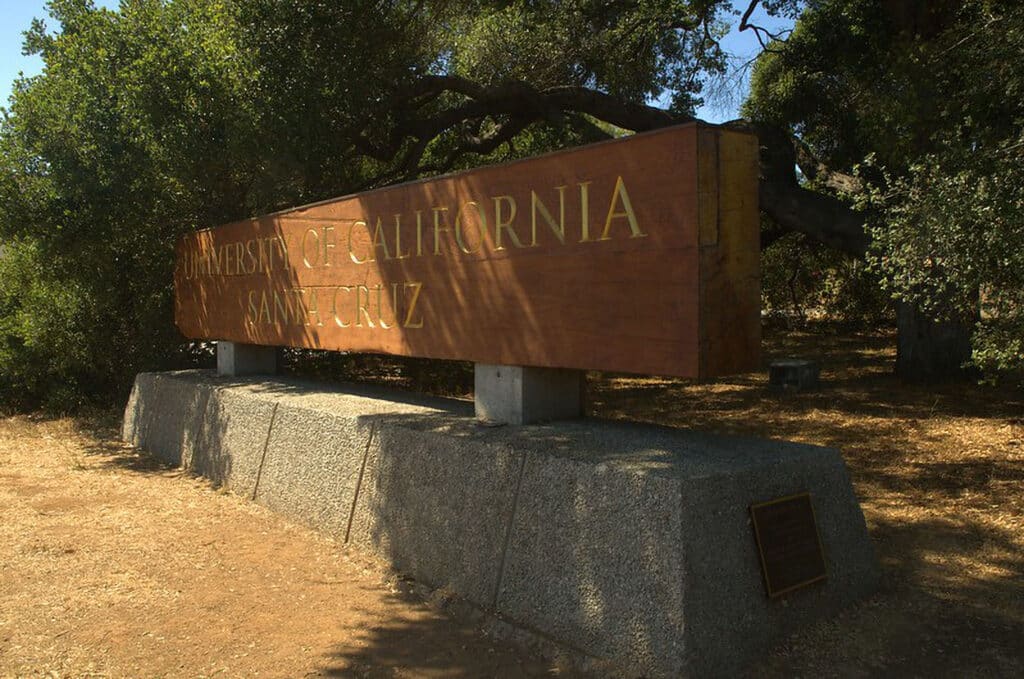
The AMCHA Initiative, a non-profit organization dedicated to investigating, documenting, educating about, and combating antisemitism at institutions of higher education in America, released a report on Thursday, Jan. 11 alleging that UC Santa Cruz’s Critical Race and Ethnic Studies (CRES) Department has engaged in “anti-Zionist advocacy” over the past couple years that “likely violate[s] UC policy and state law.”

The report, which was obtained by the Journal, begins by noting that, during the May 2021 Israel-Hamas conflict, the CRES “issued a virulently anti-Israel statement that explicitly positioned their department as politically motivated and directed, identifying themselves as ‘activists committed to anti-colonial, anti-racist, feminist, and queer organizing’ who ‘refuse to use objective language that would render us silent as Palestinians continue to experience an ongoing Nakba.’” The statement also pledged departmental allegiance to “the struggle for Palestinian liberation,” and endorsed an open letter committing faculty to bringing the academic boycott of Israel (the academic arm of the antisemitic BDS [Boycott, Divestment and Sanctions] movement) onto their campus and into their classrooms,” the AMCHA report added.

The AMCHA report proceeded to document various instances in October, following the Oct. 7 massacre, in which the CRES “issued a statement that justified Hamas’ Oct. 7th massacre, rape, torture, kidnapping and maiming of thousands of Jews, claiming that Israel was wholly to blame because of ‘75 years of settler colonial displacement’” and announced that they would not be engaging in any university work on Oct. 20 in solidarity with a “Palestinian-led Global General Strike.” Additionally, the CRES department held a teach-in titled, “The Genocide in Gaza in our Classrooms: A Teaching Palestine Workshop.”

“Several CRES faculty members provided an extremely one-sided version of events in which Hamas’ atrocities against Israeli citizens were not mentioned even once, and Israel’s attempts to defend itself were called ‘genocide,’” the report stated. “In addition, a number of speakers (all CRES professors) stated as fact, or strongly implied, that Israel had bombed a hospital in Gaza and massacred ‘800 Palestinians.’ It’s inconceivable that these professors were unaware that by October 24th, almost all mainstream news outlets, as well as U.S. and U.K. intelligence services, had concluded that the incident in question was caused by an errant rocket fired by the Islamic Jihad group, that hit the hospital parking lot and caused significantly fewer casualties and far less damage than what was initially reported by the Hamas-controlled government. Nevertheless, not one of the speakers even mentioned that there was contradictory evidence suggesting that perhaps Israel was not to blame for what had happened at the hospital, but simply repeated Hamas-aligned propaganda intended to incite rage and justify anti-Israel violence.”

Additionally, in November, the CRES’s web homepage promoted a “Shut It Down for Palestine” event on Nov. 9 that was organized by UCSC’s Students for Justice in Palestine (SJP) chapter; the event advertisement urged students and faculty to “skip school and work, do not look away from the genocide” and protest on campus instead. “According to a community announcement sent out from the UCSC Chancellor’s office on Nov. 13th, the protest itself involved unlawful behavior, including ‘blocking the main entrance of our campus for hours, preventing ingress and egress, closing the intersection, and creating unsafe situations where drivers were waved into the intersection by protestors and then surrounded,’” the AMCHA report stated. “The SJP-organized, CRES-promoted and attended event impeded, and in some cases shut down, campus operations for many hours, making it difficult or impossible for members of the campus community to get to classes, meals, healthcare, and childcare.”

On Nov. 17, the CRES announced on its webpage that they’re forming a Faculty for Justice in Palestine (FJP) chapter, linking a statement pledging their support for the “liberation of Palestinian land” and the “the right of return.”

“It is important to point out that the CRES posting was responsive to a recent call issued by the U.S. Campaign for the Academic and Cultural Boycott of Israel (USACBI) for faculty to form FJP groups on campuses ‘in order to support NSJP [National Students for Justice in Palestine]…and engage in Palestine solidarity work generally,’” the AMCHA report stated. “The USACBI call adds, ‘As advocates for the BDS movement, we ask that founding members [of FJP chapters] make a commitment to the founding principles of USACBI,’ which include support for implementing an academic boycott of Israel on their campuses.”

The CRES posting also defied “the UCSC Campus Provost and Executive Vice Chancellor’s Nov. 13th message to the UCSC Instructional Community warning about the potential UC policy violations involved with engaging in political advocacy ‘in the classroom and other instructional spaces,’” the AMCHA report contended.

The actions by the CRES highlighted in the report likely violated both UC policies and state laws prohibiting the use of the classroom for “political indoctrination” and using the UC campus to endorse a political movement, the report argued. Additionally, the AMCHA report cites correspondences from UC officials to AMCHA stating that UC policy bars academic student employees and faculty members from promoting BDS in the classroom.

“CRES’s commitment to anti-Zionist political advocacy and activism … violates students’ fundamental right to be educated and not indoctrinated.” – Tammi Rossman-Benjamin

“CRES’s commitment to anti-Zionist political advocacy and activism, as a department and as a core element of its discipline, can’t help but corrupt the academic mission of the university and violate students’ fundamental right to be educated and not indoctrinated,” AMCHA Initiative Co-Founder and Director Tammi Rossman-Benjamin, who is also a former UCSC faculty member, said in a statement. “Our research has consistently shown that on campuses where individual faculty and departments use educational spaces for anti-Zionist political advocacy and activism, rates of antisemitic activity – including assaults, threats of harm, vandalism, and bullying – are significantly elevated. Against the backdrop of a more than 700% increase in campus antisemitism since Hamas’ horrific massacre of Israeli civilians on October 7th, CRES’s unbridled expression of animus towards the Jewish state and its supporters absolutely contributes to a hostile, antisemitic environment for Jewish students, faculty and staff at UCSC.”

The university and the CRES did not immediately respond to the Journal’s requests for comment.

AMCHA Report: UC Santa Cruz Critical Race and Ethnic Studies Dept. Engaged in “Anti-Zionist Advocacy” Read More »

Why Was Armenia’s Last Synagogue Set on Fire?

The Book of Kohelet states that “What has been is what will be, and what has been done is what will be done, and there is nothing new under the sun.”

Today as we witness a world engulfed by antisemitism, this prophecy resonates particularly, and painfully. Daily marches, demonstrations, and countless smaller acts of blatant antisemitism overwhelm major cities across the globe. Calls for the genocide of Jews sound in the halls of U.S. Congress, universities, high schools, transit centers, and too many places to mention. Jewish businesses are continuously vandalized, and Jewish homes in cities such as Paris and Berlin have been literally marked with Stars of David. Jewish graveyards have been desecrated, and synagogues destroyed.

On November 15, the only synagogue remaining in Armenia was set on fire. That same synagogue had been vandalized on October 3, days prior to the tragic October 7 attacks on Israel. The Armenian Secret Army for the Liberation of Armenia (ASALA) claimed responsibility and vowed to continue attacking Jews across the globe as retribution for Israel’s close friendship with the majority-Muslim Republic of Azerbaijan. 

It is not surprising. Back in 2014 the Anti-Defamation League categorized Armenia as the second most antisemitic country in Europe and the world’s third most antisemitic country outside of the Middle East. Additionally, a Pew Research Center survey found that 32 percent of Armenians would not accept Jews as fellow citizens, which is the highest percentage in this survey among Central and Eastern Europe countries.

As there is nothing new under the sun, Armenian groups in the United States have been active in the Boycott, Divest and Sanction (BDS) movement on U.S. college campuses for decades and have a much longer history of harboring and spreading antisemitism in their diaspora, echoing the sentiments of their homeland. This was true during the Holocaust, when Armenian troops served the Third Reich and led Jewish prisoners on death marches, while Armenian-American organizations publicly praised Hitler as a “gift to mankind,” describing the Holocaust as a “surgical operation” to cleanse Germany of “poisonous elements.”

The leader of the Armenian Nazi legion – Garegin Nzhdeh – is now glorified as the most important national hero of Armenia, with 22 monuments all across the country, the tallest of which was officially unveiled in 2016 in Yerevan. According to a Forward magazine study, Armenia has the world’s largest concentration of Nazi monuments.  

Acting with levels of brutality comparable to Hamas’s October 7 attacks, Armenian forces carried out a vicious massacre against Israel’s closest majority-Muslim ally Azerbaijan, indiscriminately slaughtering Azerbaijani citizens in the early 1990’s. The Khojaly Massacre, the worst event of Armenia’s invasion of Azerbaijan’s Karabakh region, was later described by Israel’s President Rivlin, in his address to the United Nations on Holocaust Remembrance Day, as evidence that we had not done enough to claim “never again” when it comes to such a level of brutal inhumanity. 

Azerbaijani civilians, the elderly, men, women, children and babies, were horrifically murdered in Khojaly – many while fleeing their homes in the wake of the attack. Thousands of those captured, over 30 years ago, have yet to be returned. Their families remain hostage to their fate for over 30 years into today. The Armenian  invasions were based on a long standing national ideology of ethnic supremacy, something all too familiar in the climate of today, as Armenia stands with its closest ally Iran, campaigns against Israel in the U.S., and at home, in the aftermath of the worst attack on Jews since the Holocaust, has burnt its last synagogue. 

On January 1, 2024, during a march across Armenia’s capital city of Yerevan, neo-Nazis performed Hitler salute, chanting “Armenia for Armenians only”. Israel’s Ambassador to Armenia, Joel Lion, tweeted in response:

“Deeply disturbed by the march in #Yerevan, on 1.1.2024, echoing ‘Sieg Heil’ chants. Glorifying Garegin Nzhdeh, a Nazi collaborator is unacceptable. 🇦🇲Authorities must take a firm stand against any form of neo-nazism & antisemitism.”

Solemn is the realization and the reckoning – that this widespread antisemitism was already happening, well before October 7. The storm was already coming, and what could we have done to address it? Would we go back in time and make noise about the funding of American universities by Qatar? The duplicitous role of Armenian groups in the United States, supporting the antisemitic BDS movement for decades, committing unspeakable massacres against Israel’s close ally, while tokenizing Jewish relations? What about the systematic targeting of traditionally Black college campuses with antisemitic literature, groups and indoctrination, that which has been playing out for decades but has been largely unaddressed? 

This war is teaching us many things, among them the consequences of this long existing antisemitism, that has been brewing in plain sight for decades, that now populates these marches and demonstrations against Jews, and holds powerful seats in all arenas-universities, Congress, everywhere it seems. We cannot look away or remain ambiguous when it comes to the sources of antisemitism, the  consequences of which are zero sum and untenable. Even now, while our bandwidth is overwhelmed with managing the events of today, the very real danger to Jewish life everywhere in the world, we must look back and account for the recent history that has brought us here. 


Why Was Armenia’s Last Synagogue Set on Fire? Read More »

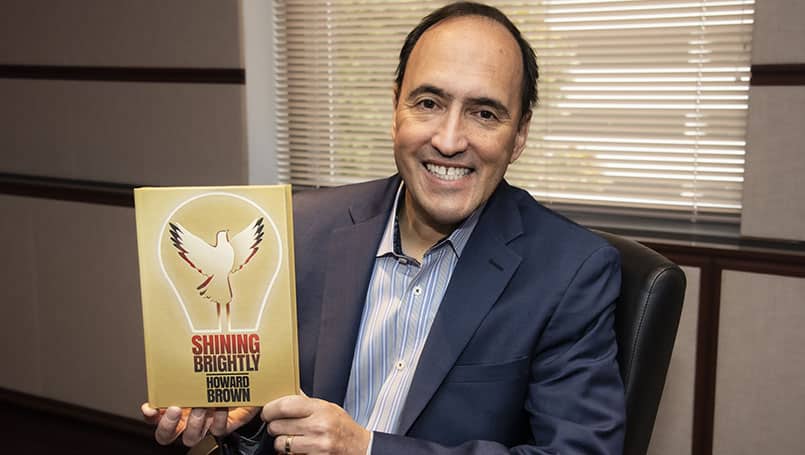
Howard Brown’s Message of ‘Shining Brightly’

In “Shining Brightly”, AUTHOR Howard Brown highlights the power of light to combat darkness.

A two-time stage IV cancer survivor, Brown is a speaker and interfaith peacemaker. He’s also an expert when it comes to resilience.

Through Brown’s own journey, along with the stories that inspired him, his book shows entrepreneurs, patient advocates and community leaders how to form supportive connections and friendships. 

A Silicon Valley pioneer, Brown helped launch a series of technology startups before becoming co-founder of two social networks (Planet Jewish and Circle Builder). They were the first to connect religious communities around the world; he shut down the networks after his more recent cancer diagnosis. Brown’s professional background, along with his devotion to family, religion and sports, drive his mission to make the world a better place.

“We are not born to hate; hate is learned,” Brown told the Journal. “For far too many people, hate is a choice. I work every day to promote understanding, build healthy relationships and confront hate in all its forms.”

“Shining Brightly” is filled with inspiring stories of how to walk the walk of peace, tolerance and love for humankind. 

Brown says he tells readers: “This isn’t my world. It isn’t your world. This world was given to all of us by G-d, so that we could share it and share of ourselves. Tikkun Olam, the Jewish calling to repair our world, is our name for a collective mission we all share. And, while that may sound like a burden, that call to spread love and hope turns out to be the key to our happiness.”

Brown, his wife, Lisa, and daughter, Emily, currently reside in Michigan. He grew up in the Boston suburbs and met his wife at the Jewish Federation of Los Angeles’ Young Leadership Development Program in 1993. They were married by Rabbi Steve Leder at Shutters at the Beach in July 1994.  

“We have fond memories of our time in
L.A.,” Brown said. “We still miss the beach and outdoor shabbat services.” They moved to the Bay area in 1997 and to Michigan in 2005.

As Judaism is the core of Brown’s life, readers will find Jewish life and wisdom interwoven throughout “Shining Brightly.”

“In fact, I have 18 chapters and 360 pages to signify Chai = Life,” Brown said. “In chapter one, I tell the story of my great grandmother who lived to 100: Bubby Bertha Budish, a Jewish refugee from Lithuania who taught me and my twin sister Cheryl lessons of Chesed (living a life of loving kindness) Tzedakah (the moral and ethical basis of giving) and Tikkun Olam (healing and repairing ourselves and our world).”

While Jewish customs, foods, rituals and holidays are interwoven throughout his storytelling, Brown attributes faith as a big part of his survival.

“I was diagnosed with Stage IV cancer twice and needed all the spiritual resources our tradition provides, along with a worldwide network of Jewish, Christian and Muslim friends who all prayed for me and my family,” Brown said. “[They] provided many forms of support for me and my family when we were in need.” 

Brown was diagnosed with Non-Hodgkins Lymphoma in 1989; subsequent treatments included a bone-marrow (now called a stem cell) transplant in May 1990 from his twin sister. His diagnosis of colon cancer in 2016 involved multiple treatments. He is now more than four years of “No Evidence of Disease.”

“Throughout those struggles for my survival, I drew on the resilience that is a central part of our tradition and … my network of men and women praying for me literally circled the globe.“

“Throughout those struggles for my survival, I drew on the resilience that is a central part of our tradition and, especially as I fought my second battle with cancer, my network of men and women praying for me literally circled the globe,” he said. “Judaism teaches us that life is fragile and we are here on earth for a short time — called on by G-d to use this gift of life to help our families, our communities and the larger world.” 

He added, “I often think of how Abraham and Sarah welcomed strangers into their tent. This outreach to include an ever-growing circle of friends is absolutely vital right now, when antisemitism is rising once again to record levels both in the U.S. and around the world.”

After Brown’s second stage IV colon cancer diagnosis, and resulting treatment, survivorship and advocacy, he decided he wanted to leave a legacy of values and inspiration. He also wanted to show the world that when you get knocked down, you can get back up again and again. 

During the COVID pandemic, Brown interviewed via Zoom the more than 150 people who were the most important, influential people in his life. Those conversations became the basis of the book, which he completed with the help of his wife, Lisa Naftaly Brown, and David Crumm from Front Edge Publishing.

Since his book’s publication, Brown started the “Shining Brightly” podcast, where he interviews guests who embody triumph over tragedy via human resolve and inspiration. 

“The goal of the show is to provide a platform to share human stories of overcoming whatever life throws at you,” he said. “Finding the resilience to survive, strive and thrive.”

Brown frequently appears wearing white metallic sunglasses. He refers to “Shining Brightly” as “a movement in which we all have an opportunity to become a force-multiplier for positive change,” he said. “If we choose to shine brightly a little each day for ourselves, then lift up others and strengthen our neighborhoods and communities, the world will become a better place.”

Learn more at ShiningBrightly.com.http://ShiningBrightly.com

Howard Brown’s Message of ‘Shining Brightly’ Read More »

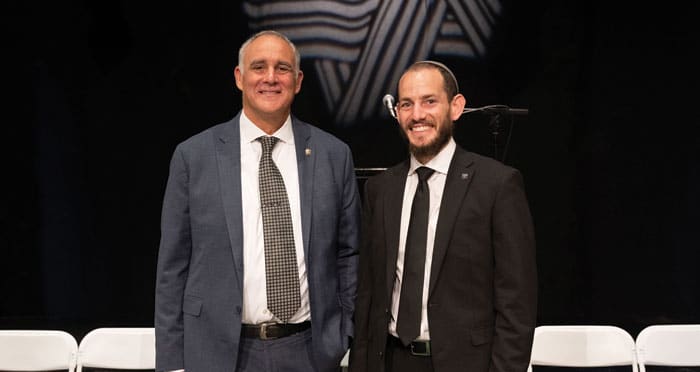
Magen Am Training Record Number of Volunteers in a Time of Rising Antisemitism

With a surge in antisemitism and hate crimes reaching the highest levels in 20 years, Magen Am has found itself facing increased demand for services. The Los Angeles-based nonprofit organization, dedicated to providing security services on the West Coast and firearm classes for members of the Jewish community, has become more crucial than ever. Additionally, Magen Am trains individuals to become Community Team Members (CTMs) who serve as security guards for their congregations.

In an interview with the Jewish Journal, Ivan Wolkind, the new CEO of Magen Am, emphasized the unique understanding and connection that Community Team Members have with the community’s needs and the threats it’s facing. Wolkind, previously the chief operating and financial officer at The Jewish Federation of Greater Los Angeles, transitioned to his current role when Magen Am decided to expand its operations.

Originally established in 2017 by Rabbi Yossi Eilfort, Magen Am successfully operated in Hancock Park before deciding to replicate its model across Los Angeles and eventually, nationwide. Wolkind, a UK native who moved to Israel at 26 and later settled in the U.S. with his family, brings a wealth of experience.

Despite the intensity of his work, he also finds time to volunteer as a reserve police officer and patrol the streets alongside other police officers. “I do it about three to four times a month,” he said. “I finish my day job, go home, take a shower, put on the uniform, get my gun and go on patrol.”

For his volunteer work, he receives a one-dollar “salary” a year, meant for insurance purposes. 

“It’s my way to give back to the community, and I take it very seriously,” he said.  This commitment has helped him forge valuable relationships with the FBI, which will benefit his work with Magen Am.

Reflecting on the organization’s mission, Wolkind expressed a deep personal connection: “I always believed that we, in the Jewish community, need to be equipped and responsible for our own security. There are no better security guards than people in the community who can recognize what is normal and what is not and act accordingly to protect the community.”  

He highlighted the surge in demand for Magen Am’s security services has increased significantly after the terror attack on Israel on Oct. 7.

“This is a problem that unfortunately isn’t going to go away,” Wolkind said. “The demand for our security services had jumped 400% across the board. We saw such a huge rise in antisemitism and we need to increase the money we raise in order to meet that demand and grow our reach within L.A. I would like nothing more than for us to be out of work, but unfortunately, I expect that we will continue to be very busy.”

Since the beginning of war in Israel, the demand for Magen Am’s Firearm 101 classes skyrocketed. Members of the Jewish community, including Orthodox and Reform Jews of all ages, who never considered owning a firearm, began applying for permits and enrolling in classes. Unlike traditional firearm courses, Magen Am focuses also on situational awareness, threat recognition, de-escalation techniques and self-protection.

In addition to individual classes, Magen Am empowers community members to become their own security guards through an extensive training program. Wolkind stressed the importance of community-wide security and the affordability of this approach.

“It’s vital that the entire community increase its security.” – Ivan Wolkind

“It’s vital that the entire community increase its security,” he said. “We train members to become licensed and insured armed security guards. We give members the state-mandated 37 hours of training and another 100 hours of training on top of that and then employ them as volunteer security guards. They stand guard outside synagogues and increase the security of the congregants while decreasing the cost. Our presence also sends a message to others that this community is being guarded and protected.”

Both women and men have enrolled in the training program, which requires hours of training and costs $5,000 per student. 

Wolkind commended the dedication of those who enrolled in the training program, emphasizing their willingness to invest time and resources for the greater good. The volunteers, hailing from various professions, view this commitment as a way to give back.

To enroll in the program, one needs to be at least 22 years old and commit to 137 hours to training. Wolkind likened the program to the LAPD academy, emphasizing its comprehensive approach to both firearm usage and de-escalation techniques.  

“I remember one incident that I witnessed and I was so impressed by,” he said. “There was a guy who approached one of the Magen Am guards while at work. He said he is with the Crips and is going to shoot the Jews. Rabbi Yossi, who was in the area, started talking to him, and after 20 minutes, the guy shook his hand, smiled and walked away. One of the guards even took his picture with Rabbi Yossi, which is good because now we know who he is. There are a few ways to deal with this type of situation. This individual was clearly looking to start a fight but we want to avoid escalation and confrontations even though we know we are going to win it. It’s better to calm the situation, start a conversation and say, this is my community and I want to keep it safe. If anything goes wrong, you know you are in charge because you have the training, the skills, and if necessary, the weapon.”

Currently boasting 50 volunteers, Magen Am aims to increase this number to 300 in the next two years. Wolkind urged the entire community to participate and support the mission, emphasizing that community involvement will ultimately save costs compared to hiring an external security company. 

To learn more about Magen Am training program, visit: https://magenam.com/ 

Magen Am Training Record Number of Volunteers in a Time of Rising Antisemitism Read More »

We Must Never Forget Them

One could call this the Gettysburg Address of the Exodus. At the beginning of Parshat Vaera, God speaks to Moses and assures him that slavery is about to come to an end:

“Therefore say to the children of Israel: ‘I am the Lord; I will bring you out from under the burdens of the Egyptians, I will rescue you from their bondage, and I will redeem you with an outstretched arm and with great judgments. I will take you as My people, and I will be your God. Then you shall know that I am the Lord your God who brings you out from under the burdens of the Egyptians. And I will bring you into the land which I swore to give to Abraham, Isaac, and Jacob; and I will give it to you as a heritage..” (Exodus 6:6-8.)

In just a few sentences, the Torah gives us an overview of the full process of redemption; not just an escape from slavery, but the creation of a new nation with a homeland of their own. The Talmud refers to the first four verbs in this section, (bring out, rescue, redeem, and take,) as the “four languages of redemption”; And to this day, the four cups of wine at Passover Seder are in celebration of these words.

The parsha begins with this speech, most probably in order to begin on a high point. But it also begins mid-conversation, which strips it of context. God’s words are actually a response to an angry challenge by Moses; after his initial petition to Pharaoh backfires, and causes even greater pain to the slaves, Moses turns to God and says: “Lord, why have you done such evil to this nation? Why is it that You have sent me?”

Moses’ words border on the sacrilegious. Indeed, several commentaries criticize Moses for this. Rashi says that God, in his response, subtly rebukes Moses for his complaint; one Midrash says Moses was later punished for challenging God, and not allowed to enter Israel.

Yet the simple reading of God’s response is that He takes Moses’ challenge seriously; that is why God offers such a thorough and detailed reply. Moses is speaking on behalf of those who are oppressed and downtrodden, and even if he speaks with chutzpah, he does so out of love for his Jewish brothers and sisters.

Another Midrash (Shemot Rabbah 5:22) amplifies Moses’ complaint. Moses knows the Jews will eventually be rescued, but he cannot tolerate the delay. A future redemption, Moses says, will not “help the Jews who are  now being thrown under the building.” This curious phrase refers to a shocking image found in Rabbinic literature (Midrash Zuta Kohelet 7:7, Rashi Sanhedrin 111a) that in the Egyptian construction projects of Pithom and Raamses, Jews were used as bricks, and squeezed into the gaps of walls. A similar Midrash (2:24) asserts Pharaoh sought to heal himself of leprosy by bathing in the blood of 150 murdered Jewish children each morning and evening.

These midrashic images amplify the biblical text, which talks at length about Pharaoh’s attempts to kill Jewish children. But they are not here just to vilify Pharaoh; they come to expose the inner workings of his regime.

Some acts of hatred are utilitarian; one feels threatened, and therefore needs to fight an enemy. But other times, hatred stands at the very foundation of a society. The historian Saul Friedlander coined the term “redemptive antisemitism,” to describe the Nazi hatred of Jews. The Nazis saw Jews as a virus that weakens and undermines humanity;  the destruction of the Jews would bring goodness to the rest of the world.

These midrashim are articulating something similar. In one, the murder of Jewish children is seen as therapeutic, a way for Pharaoh to recover his health. In the other, dead Jews are the foundation of Egyptian development. For Pharaoh, killing is no longer the means of maintaining power, but the very purpose of power itself. Violence against Jews is the scaffolding that holds his regime together.

Unfortunately, these Midrashim are prescient, offering a clear description of Hamas. There are no limits to Hamas’ “100-year war.” It engaged in a premeditated mass murder in the most horrible, depraved fashion, all proudly recorded by terrorists on their body cameras. Even more shocking is Hamas’ overt contempt for the very people they claim to represent. Palestinians were Hamas’ first victims, as this autocratic regime has regularly murdered its opponents. Today, Palestinians are enduring great suffering because Hamas cynically uses civilians as human shields, and calculates the strategic value of their deaths. Hamas will have the Palestinians fight to the death in Gaza while many of its leaders sit comfortably in Doha.

Supporters of Israel are sometimes reluctant to speak about the tragedy of Palestinian civilians because it has been weaponized by Hamas and its enablers; as I write these words, the International Court of Justice is presiding over a South African claim that Israel has engaged in “genocide.” But even so, we must mourn for the deaths of those caught in the crossfire. Every human being is created in the image of God.

Hamas has built its regime with the blood of both Palestinians and Israelis. Its great construction project, the Gaza tunnels, is built for death, and by death. Hamas’ wanton violence may shock us; but the Midrash predicted this type of hatred hundreds of years ago.

Like Moses, we are anguished over the innocent babies who were massacred, and mourn for those who were brutally murdered. Israel has had to send its best and brightest out to take up the fight; and too many of them have fallen in battle. For all of these tragedies, we cry.

Every death is a profound loss; but the death of a young person is all the more painful because it is so unexpected. In the ordinary way of the world, children bury their parents, not the other way around. My father died in a car accident, predeceasing my grandfather by nearly 40 years. My grandfather was a jovial man, who always had a smile on his face; that is, except when he spoke about my father. Then the smile left his face; even decades later, the grief would quickly return. No suffering is greater than that of losing a child.

A Hebrew expression, which is first found in Isaiah (38:10), best describes a young death: “nektaph b’mei chayav,” “cut off in the middle of their days.” It emphasizes that a young death is actually a double tragedy; one loses not just the person, but also what the person could have been.

Each of these deaths are painful for our entire community. News reports out of Israel recount the entire biography of those who have died; the entire Jewish world repeats their names and their stories. And inevitably, we find that we are one or two degrees of separation from these tragedies.

Hamas sees our response as a weakness. Yahya Sinwar sees the Israeli concern for each hostage and each soldier to be a weakness; he considers his ability to write off the lives of thousands of Palestinians to be a strength. He ridicules Israel’s willingness to call a ceasefire in order to release a handful of hostages. Like Pharaoh, Sinwar is ready to build pyramids with the bodies of babies.

Sinwar is correct that brutality holds strategic value; ignoring the suffering of one’s own people means that one can fight on without any limitations. But it is morally untenable. Moses cried for the babies Pharaoh was murdering, and we must follow his example.

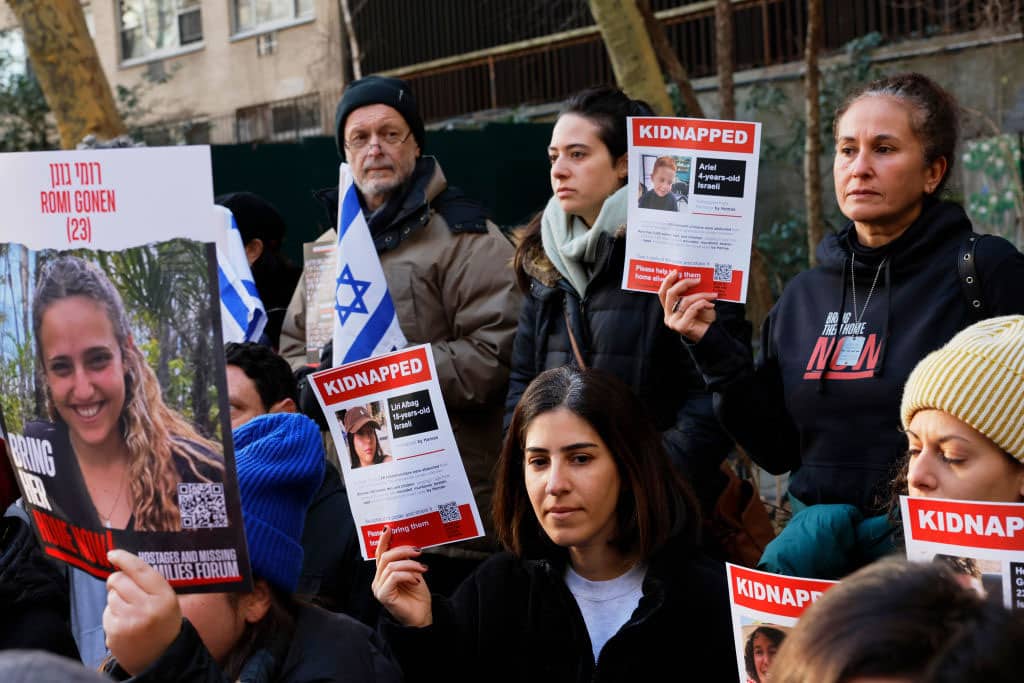
Even if it seems foolish, we must advocate for each hostage, and cry for every soldier.

We must never forget them. And we must challenge God to remember them, and put an end to the suffering now.


Rabbi Chaim Steinmetz is the Senior Rabbi of Congregation Kehilath Jeshurun in New York.

We Must Never Forget Them Read More »

Top 10 Travel and Lifestyle Blogs for 2024

As you contemplate your wanderlust-filled adventures for 2024, let this carefully curated list of the top 10 travel lifestyle blogs be your compass to the most captivating destinations and experiences. Whether you seek remote landscapes, cultural immersion, or simply a rejuvenating escape, these websites offer a wealth of inspiration and practical insights. And, to add a personal touch, it brings me immense joy to announce that We Said Go Travel, my very own blog has secured the coveted #10 spot on this esteemed list. I hope you find wonders of the world that ignite the flame of wanderlust within you. Happy exploring!

Thank you to Feedspot for naming my site, We Said Go Travel, #10 on the 100 Best Travel Lifestyle Blogs and websites for 2024. I am honored to be included among these amazing content creators.

100 Best Travel Lifestyle Blogs and Websites

Dec 29, 2023⋅

The best Travel Lifestyle blogs from thousands of Travel blogs on the web and ranked by traffic, social media followers & freshness.

Travel Lifestyle Blogs Top 10 List for 2024

1. Two Monkeys Travel Group

Two Monkeys Travel Group  UK
A travel blog about luxury and adventure travel. Aside from writing about her adventures, Kach has been blogging about traveling around the world based on her experience of visiting 180  countries. She aims to travel to every country in the world using only her Philippines passport.

2. Nomadic Matt‘s Travel Site

Nomadic Matt's Travel Site  US
Nomadic Matt has one goal : “How can I help other people travel better for less?” It’s his mission to help travelers realize their travel dreams. Since 2008, he has helped millions of people save money, travel more, and have a more authentic experience in the destinations they visit.

3. The Blonde Abroad

The Blonde Abroad California, US

The Blonde Abroad is an award-winning solo female travel blog featuring travel tips, packing guides, videos and photography from around the world.

4. The Planet D: Adventure Travel Blog

The Planet D Blog Toronto, Ontario, Canada
An adventure travel blog that features travel tips, travel advice, travel inspiration and travel photography to help plan your next vacation from Deb and Dave.

5. Goats On The Road

Goats On The Road Blog Canada
Turn travel into a lifestyle! Who Are The Goats? We are Nick & Dariece, the couple behind this blog. We left Canada in 2008 on a mission to find ways to travel & live abroad indefinitely.

6. y Travel Blog | Travel more. Create More Memories

 y Travel Blog | Travel more. Create More Memories Raleigh, North Carolina, US
Traveling since 1997 | 16 years with kids | Professional travel blog since 2010. Sharing travel tips and destination ideas to help you travel more and travel around the world. We share family travel tips and travel destinations from across the globe.

7. Bucket List Journey | Travel Lifestyle Blog

Bucket List Journey | Travel Lifestyle Blog California, US
Traveling the world in search of Bucket List worthy experiences. Thousands of unique bucket list ideas on this blog. Do you have a bucket list? Annette gives you the tools, ideas and motivation to create your list and face your fears to live your dreams.

8. La Jolla Mom | Luxury Travel and Lifestyle Blog

La Jolla Mom | Luxury Travel and Lifestyle Blog  La Jolla, California, US
La Jolla Mom is your guide for things to do in San Diego and La Jolla, and kid friendly La Jolla Mom is your expert guide for things to do in San Diego, maximizing visits to theme parks, VIP perks at luxury hotels, the best beaches and family travel tips.

9. Travels of Adam

Travels of Adam  US
One of the world’s most popular men’s lifestyle & hipster travel blogs with stories from around the world – city destinations & cultural experiences including Adam’s nightlife tips, restaurant reviews, favorite shops, and way-too-personal essays from his adventures in Brooklyn, NY and around the world.

10. We Said Go Travel

We Said Go Travel Los Angeles, California, US
I am honored to be #10 on this list with so many amazing travel writers! In 2023, my new memoir, Brave-ish: One Breakup, Six Continents and Feeling Fearless After Fifty, won an award, my podcast, Make Your Own Map, won an award and I am on this list! THANK YOU!

THANK YOU FEEDSPOT! What an honor to be including in the top 10 with these fantastic websites.

See the entire list of 100 here!

Learn more about LISA and We Said Go Travel: Meet me at one of my upcoming events in Chicago, Mexico or Utah, read my award winning memoir, Brave-ish: One Breakup, Six Continents and Feeling Fearless After Fifty, listen to my award winning podcast, Make Your Own Map. Watch my videos on YouTube where I have over two million views. Find me on social media at @LisaNiver. Thank you for all of your support.

Top 10 Travel and Lifestyle Blogs for 2024 Read More »