fbpx

June 8, 2023

A Recipe for True Women’s Empowerment

I went to a local park the other day just to sit and think. But I was distracted by the sight of a half dozen young women dressed in formal gowns and corsages, makeup generously and professionally applied, standing around and taking endless photos of themselves.

Every woman was pretty, and a few were knock-outs. One or two of the gowns were cut somewhat traditionally, but the rest looked like they had been designed by Victoria’s Secret. These women literally had a lot of skin in the game and had invested mightily in trying to look as sexy as possible. I admit that I watched these women with fascination. Their gown choices and behavior revealed much more about them than simply a lot of personal real estate. It revealed the extent to which our society celebrates—even worships–the physical over the spiritual. This damages women severely. More and more, they struggle to feel confident about their looks.    

Social media is one of the guiltiest culprits. Since its advent in 2012, rates of anxiety and depression among adolescent girls and young women have soared, largely because young females are exposed to thousands of digitally altered images of other females in fantasy versions of themselves. Newly released AI editing tools will now compound the problem throughout online platforms. How can one’s real self ever measure up?

It can’t. This explains why many cosmetic surgery centers are seeing double the number of young people (under 40) than ever before. Millennials and even Gen Z’ers are forking over big bucks for Botox, chemical peels, fillers, and lasers for non-surgical fat reduction. How many frown lines does a 28-year-old have? Are the lips of a 25-year-old already beginning to look wizened? Today’s youth are terrified of looking 30. This is a problem.

No amount of makeup, cosmetic fillers, or exposed skin in clingy or barely-there dresses will ever be able to fill the empty spaces where a sense of inner beauty and personal dignity should reside. 

No amount of makeup, cosmetic fillers, or exposed skin in clingy or barely-there dresses will ever be able to fill the empty spaces where a sense of inner beauty and personal dignity should reside. That sense of internal value and beauty often springs from a belief in God and a secure upbringing in a loving home. But Millennials and Gen Z are also peeling away from religion in unprecedented numbers. Human nature abhors a vacuum, so in the absence of meaningful spirituality, it’s not surprising that people will seek fulfillment in the world of physicality, whose limits soon become painfully clear. 

Judaism’s emphasis on tzniut can’t solve all these problems, but it can go a long way.  The word literally translates as “modesty,” but this is a real disservice. The concept more accurately means discretion, not only in hemlines and necklines but also in speech and behavior. It also applies to men as much as to women. Since most women naturally want to be admired and desired for their beauty, it’s a precious gift to teach girls that their highest beauty is internal, and that the beauty of their bodies is not meant for crude public consumption. Embracing this truth is where true female empowerment lies. Embracing this truth can protect girls and women from secular society’s merciless competition to see who can look the youngest, the prettiest, the most alluring. In this way, adopting tzniut helps build self-esteem. 

The beauties I saw at the park had been swept up by the tyranny of the physical, yet I also recognized that each woman had a distinctive style. Meira E. Schneider-Atik, a wardrobe organizer and jewelry designer who blogs about tzniut fashion on truetzniutistruebeauty.wordpress.com, maintains that personal style never needs to be sacrificed for tzniut. “Clothes aren’t just about covering your body and neither is tzniut. We can use our appearance, including our clothes and accessories to reflect who we really are. But this won’t happen if we focus too much on the physical.”

Meira encourages women to celebrate their unique body shape, face, and taste through dressing with individual style that doesn’t diminish their inherent dignity. “Every woman deserves to like what she sees in the mirror,” she affirms.

What a great lesson. It’s one that I hope begins to catch on in a society where women are ready to reclaim some dignity and real empowerment through timeless Jewish wisdom.


Judy Gruen’s most recent book is “The Skeptic and the Rabbi: Falling in Love With Faith.”

A Recipe for True Women’s Empowerment Read More »

Photo by Aaron Bandler

Controversy at UCLA Screening of “Israelism”

A screening of “Israelism” at UCLA Wednesday night was marked by tough questions from a group of students who were troubled by the film’s anti-Israel message.  The presentation of the controversial 84-minute documentary,  which argues that the American Jewish community raises its children with pro-Israel indoctrination while omitting discussion of the plight of the Palestinians, was hosted by the UCLA Younes and Soraya Nazarian Center for Israel Studies.

During the Q&A after the screening, Natalie Masachi, who serves on the board of Students Supporting Israel (SSI) at UCLA, told filmmaker Eric Axelman that she grew up in the United States and “I have never, ever heard any of the sentences mentioned in this film. To the contrary, they always, always spoke about peace between Israel and her neighbors.” She then asked Axelman: “I know the facts, I know the truth, we know the truth, but how about all of the students and my peers who are not knowledgeable and will encounter this propaganda defenseless?”

“I know the facts, I know the truth, we know the truth, but how about all of the students and my peers who are not knowledgeable and will encounter this propaganda defenseless?” Natalie Masachi (SSI)

Axelman, a transgender American Jew who goes by the pronoun “they,” replied that “this film is meant to start discussion” and argued that the “facts on the ground” in the Israeli-Palestinian conflict suggest the “opposite” of peace, lamenting a “system that over and over again [has] displaced more and more Palestinians.” They then lambasted settlements as a “system of colonization” where “Jews have full civil rights” but Palestinians don’t.  “Talking about peace to me is empty … if you’re not going to do anything.”

Photo courtesy of Natalie Masachi

Another student, Bruins for Israel board member Danielle Azani, asked Axelman about a recent tweet from Anti-Defamation League (ADL) Director Emeritus Abraham Foxman, who appears in the film: “Sadly and innocently I agreed to be interviewed being told that the film will examine the special relationship between Israel and American Jews. What a sham. I regret being part of this.” Axelman replied that Foxman’s description of what he was told the film would be about is “correct,” but claimed that Foxman received a list of questions beforehand, and thus claimed that Foxman “fully understood what he was being asked,” including talking about the occupation. Foxman then signed a release waiver after the interview took place in 2018.

One student noted that the terror group Hamas, which has run the Gaza Strip for more than 15 years and has been responsible for launching thousands of rocket attacks on Israel, wasn’t mentioned anywhere in the film. The student also asked Axelman what would be the ideal solution to the Israeli-Palestinian conflict, and how would it involve Hamas. Axelman  pointed out that Hamas was formed in 1987, 20 years after the Israeli occupation of the West Bank began. Axelman, who said they do not condone Hamas, asked “how would you live your life” if you had lived under military occupation and an 18-year-old soldier decides if you get to leave or not. As for solutions, Axelman didn’t want to say “what Palestinians should or shouldn’t do. I think what’s most important to me is freedom and equality, whether it be in one state or two states.” The student also referred  to Israeli efforts for peace like the Oslo Accords and subsequent Israeli peace plans that were rejected. Axelman noted that Israel made no efforts for peace from 1967-87.

Axelman replied that “this film is meant to start discussion” and argued that the “facts on the ground” in the Israeli-Palestinian conflict suggest the “opposite” of peace.

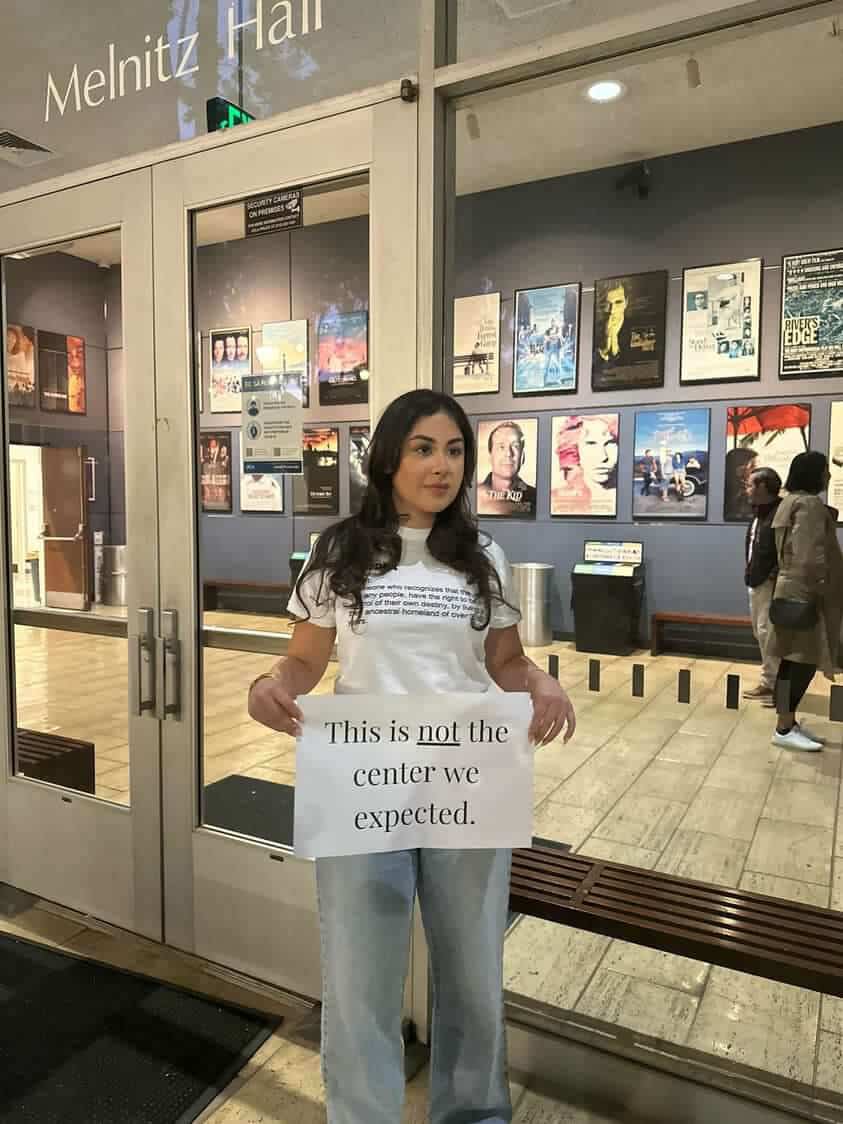
After the event concluded, Masachi stood in front of the theater and took pictures with an SSI sign and another sign saying, “This is not the center we expected.” Both Masachi and Azani told the Journal they were upset that the center showed the film. “This film is extremely problematic,” Masachi said. “If you are a Jew and an American or you’re an Israeli and you have ties to Israel … you watch this film, it’s full of propaganda.” Masachi specifically took issue with the Israeli Defense Force (IDF) soldiers who were featured in the film and using them “to attack the entirety and the legitimacy of being pro-Israel.”

Azani told the Journal she was “disheartened” at the film. “I am an Israeli. I was born in Israel. I’m very willing to criticize Israel and I think it’s a very important part of being an Israeli because blindly believing everything is also not the correct route, but in my opinion this movie was completely propaganda,” Azani said. “The excerpts taken, the context that wasn’t given, the fact that many people who participated in the movie that represented certain organizations, were unaware of the movie’s intentions … I don’t think that’s integrity in filmmaking and documentary-making.”

Azani praised Axelman for being open to criticism from the audience and for not attacking their critics, but viewed Axelman’s answers as evasive and filled with “buzzwords.” “Nothing of substance was actually discussed,” Azani contended.

One student noted that the terror group Hamas wasn’t mentioned anywhere in the film.

Both students believe that the film shouldn’t have been shown on campus. “This [film] was just a direct attack on Israel, and I think the fact that the Nazarian Center presented this film was one of the most disheartening and disappointing things I’ve ever experienced as a student on campus,” Azani said. “I love Israel, I’m a Zionist, and I’m proud of that, and I don’t think that making a film like this and displaying it at my school, where should I feel safe and happy to be that way, is going to be anything constructive,” Masachi said.

Masachi also told the Journal that when leaving the auditorium, she was approached by a man who appeared threatening and “who came up very close to my personal space, and was interrogating me about whether I had spoken to Israeli soldiers,” adding that “people had to intervene and shove him away from me, and I was very afraid in that moment.” Masachi claims the same person approached her, Azani and another pro-Israel student who were standing outside after the screening “telling the same thing in a very loud voice that made me extremely uncomfortable” and that other people were “asking us for our viewpoints in a very aggressive tone.”

While the screening of the film was not endorsed by the Nazarian Center, Levian said their name is still “affiliated with the hosting of a film with dangerous, one-sided, and misleading rhetoric about Israel.”

StandWithUs Campus Regional Manager, Southwest Chloe Levian, told the Journal that “one thing that attracted me to UCLA was the Y&S Nazarian Center for Israel Studies — I enrolled in an Israel Studies course every single quarter during my undergrad at UCLA and even graduated with a minor in Israel Studies. I am a proud former fellow for the Y&S Nazarian Center (‘21-‘22) as I received a nuanced education regarding Israel and Jewish history. And as a Persian Jew, I loved being part of an organization founded by the Nazarian family.” While the screening of the film was not endorsed by the Nazarian Center, she said their name is still “affiliated with the hosting of a film with dangerous, one-sided, and misleading rhetoric about Israel.” She was particularly concerned about the pro-Israel students who attended the screening and were “ridiculed by the community members who watched the film. I’m extremely shocked and disappointed that this screening took place, as in my experience, this partnership seems out of place with the priorities of this center.”

Before the film was shown, the center’s director, Professor Dov Waxman, told attendees that the center’s mission “is to teach and educate the UCLA community here in Los Angeles and all around the world” about Israel, present “debates about Israel” and provide “awareness of multiple perspectives and viewpoints.” The showing of “Israelism” is part of that mission, Waxman said. “It is important to state that holding an event … is not an endorsement of the speaker or the film by the Nazarian Center.” Waxman also emphasized that the center is not meant to be pro-Israel or anti-Israel but to simply be educational. “At a time when discussions about Israel … have become increasingly heated and often polarized, we hope to foster a more nuanced and civil conversation about Israel and on campus,” Waxman said.

Axelman said that since the trailer was released last week, the “number of times I’ve been called an antisemite or a Nazi in the past five days is wild.”

During the Q&A, Axelman said that the film reflects “my story,” as at one point they were a “full-hearted believer in everything Israel” and initially found the Israeli-Zionist narrative to be “incredibly inspiring.” “Israel really became my identity to a large extent,” Axelman said. But then in high school, one of their teachers was making a documentary about the Palestinians and asked Eric how much they knew about the Palestinians. At the suggestion of the teacher, Axelman began reading books from leftist Israeli historians and Palestinian historians, which “really opened my eyes.” Axelman argued that the “traditional Zionist narrative has a lot of holes in it” and “ignores” the Palestinians. By the time they got to college, Axelman claimed “to see this transformation among my fellow Jewish students” against Israel when they began hearing from Palestinians and Breaking the Silence, an Israeli NGO consisting of IDF veterans speaking out against the occupation. Axelman sometimes saw these transformations occur “very” quickly or over “years and years.”

In response to a different question, Axelman said the film is the story of “generations of Jews I saw transform” and said that many of Axelman’s friends joined the anti-occupation group, IfNot Now. The filmmaker then pointed to polling data showing that 25% of American Jews consider Israel’s actions toward the Palestinians to be apartheid and that more Democrats are now more sympathetic to the Palestinians than the Israelis. 

“It is important to state that holding an event … is not an endorsement of the speaker or the film by the Nazarian Center.” Center director Professor Dov Waxman

Axelman said that since the trailer was released last week, the “number of times I’ve been called an antisemite or a Nazi in the past five days is wild.” Axelman’s family escaped antisemitism in Russia and the filmmaker feels “like I’m living out my Jewish values to the best of my ability.”

Some of the comments from the audience were laudatory, with one audience member, claiming to be an Israeli Jew who served in the IDF, saying it should be required viewing for everyone. Asked why Zionism wasn’t mentioned in the film, Axelman responded that the film’s goal was to coin the term “Israelism” as a separate term from Zionism to describe American Jews who are “in love with Israel from afar.” Axelman argued that Zionism can mean both “a lot” and “nothing” due to the term’s overly broad usage and the various iterations of Zionism. In response to a question from an IfNotNow organizer, Axelman said that earlier iterations of the film focused more on the history of American Jewish support for Israel, arguing that American Jewish leaders were concerned that American Jewry would lose their Jewish identity as they became assimilated into the American melting pot and found that Israel, rather than Judaism itself, is what kept “Jews Jewish.”

Controversy at UCLA Screening of “Israelism” Read More »

As We Come and Go – A poem for Parsha Beha’alotcha

[Jethro] said to him, I won’t go, for I will go to my land and my birthplace.
–Numbers 10:30

The world is a much smaller place than it used to be.
Which is, of course, not true as the world is exactly
the same size as it used to be.

It is merely our ability to traverse it and connect with
those who live in what used to be regarded as
immeasurable distances which has grown smaller.

I have close friends who I almost never see.
But hardly a second goes by that I don’t receive
an electronic update from them letting me know

all the minutiae of their comings and goings.
So when I had the opportunity to dwell in their
physical presence recently, we barely

put down our phones to hug each other before
the conversation, which had never stopped, continued.
There were obligatory hugs as we breathed the same air

and went about our days until the inevitable
airport drop-off came and off we went,
our messaging devices in hand, as if it never happened.

How lucky we are to have the technology to be so close
no matter what continent our feet are on.
Not like when Jethro said he wanted to go home

instead of off into the desert with the rest of us.
Back then, this kind of decision meant you might never
see someone again. We don’t know if he came with or went

and our sacred text doesn’t work like the Find My app.
So when someone says goodbye to you in an airport
receive it with the weight it deserves.

The pull of home is strong.
But the arms of your friends –
those will last a lifetime in the desert.


God Wrestler: a poem for every Torah Portion by Rick LupertLos Angeles poet Rick Lupert created the Poetry Super Highway (an online publication and resource for poets), and hosted the Cobalt Cafe weekly poetry reading for almost 21 years. He’s authored 27 collections of poetry, including “God Wrestler: A Poem for Every Torah Portion“, “I’m a Jew, Are You” (Jewish themed poems) and “Feeding Holy Cats” (Poetry written while a staff member on the first Birthright Israel trip), and most recently “The Low Country Shvitz” (Poems written in Georgia and the Carolinas – Ain’t Got No Press, May 2023) and edited the anthologies “Ekphrastia Gone Wild”, “A Poet’s Haggadah”, and “The Night Goes on All Night.” He writes the daily web comic “Cat and Banana” with fellow Los Angeles poet Brendan Constantine. He’s widely published and reads his poetry wherever they let him.

As We Come and Go – A poem for Parsha Beha’alotcha Read More »

Reflections of a Realistic High School Graduate

Graduation is a great time to reflect on your educational journey. The obstacles we all face enable us to push harder, find solutions and grow as individuals. 

I mostly spent elementary school at a Los Angeles public school until seventh grade, when my parents transferred me to Hillel Hebrew Academy so I could build a stronger foundation in Judaism. Seventh grade was my hardest year– navigating a new school, making new friends, managing a double curriculum and struggling with Hebrew (all while figuring out how to work with my ADHD). With the help of my parents, my tutor, Jordan, and some compassionate teachers, I made it through, and going to YULA High School was the next step.

 I had no idea what was about to hit me when I started high school. This unfamiliar environment seemed so overwhelming to me that I thought I’d never be able to manage it. I struggled with my classes and my social life, and my grades were not something I was very proud of. But as time passed, I adapted to my surroundings, found new friends and finally figured out how high school worked. 

When I entered tenth grade, I was a better student. I learned to be more resourceful and started to find my place within my school. But tenth grade had its own obstacles: Teachers. 

Some teachers are incredible, and some teachers just shouldn’t be teaching. I was the kid who worked so hard to do well in school, and one of my tenth grade teachers still singled me out in nearly every class–it was devastating. And the class was on a subject I really struggled with.

One encouraging word can lift someone up, but the opposite is also true. 

One encouraging word can lift someone up, but the opposite is also true. For the rest of my high school years, every teacher I had was incredible!  My teachers were passionate and they cared about their students’ success. I improved socially and academically, which made my last two years a total blast. These were also the years that I was inspired to grow more in touch with my connection to Judaism and learn more about myself, G-d, and studying Torah.

The end of eleventh grade was the pinnacle of my high school career, when I reached out to The Change Reaction, a nonprofit organization that supports working Angelenos, to share a story about the sacrifice one of my teachers made every day to get to school. Mr. Castro, my Algebra Two teacher, always had encouraging words for his students, and he would travel by scooter and bus over two hours, every day, twice a day, to get to school and back.  

The Change Reaction, which helps hard working Angelenos who are facing a crisis, offered me the opportunity to raise $10,000, which they would match so that I could surprise Mr. Castro with a car on the first week of school. Access to a car would mean he could spend more time home with his family. 

This was the biggest and most inspiring project I had ever attempted. I put together a team of friends and devoted my entire summer to raising money to surprise one of my favorite teachers. My goal was for this surprise to change his life forever in the best way, and we succeeded. 

This was the most solidifying part of my high school career. As a graduating high schooler, it feels good to reflect on all of the things I have accomplished and the struggles that have blessed me with the tools to problem solve and stay confident. 

I hope my story was inspiring for anyone that has struggled with academics or for anyone that found it hard to find their place in their high school.


Joshua Gerendash is a graduating senior at YULA Boys High School in West Los Angeles and has appeared on major news stations worldwide for his role with the fundraiser. 

Reflections of a Realistic High School Graduate Read More »

A Graduating Senior Reflects on Transitions

It is that time of year. If you are also moving on to the next stage of your life, do you feel the electricity in the air? Are you sensing fear, anticipation, doubt or excitement?

For me, high school is now part of my history. A history that is filled with gratitude for good friends, established relationships with extraordinary and respected teachers, and the love and constant support of an amazing family.

I have come to appreciate and understand the true value of time and how precious and fleeting it is. Realizing, as my life moves forward, the people in my life are also moving forward in their own unique personal journeys.

Four years ago, I could never have imagined what it would feel like to leave behind the safety, security, and comfort I have come to find in my home and high school. 

Four years ago, I could never have imagined what it would feel like to leave behind the safety, security, and comfort I have come to find in my home and high school. Now as a graduating senior, I am nervous about the year ahead in seminary in Israel. Seminary, for those unfamiliar, is a unique experience, that typically involves a year of study in Israel as a time for spiritual growth and self-discovery while immersing oneself in the history, culture, and teachings of Judaism. Throughout my high school years the idea of attending a seminary program was always a given. It was expected that I would follow this path. Though I know how lucky I am to have this once in a lifetime opportunity, I still feel uneasy and unsure of the unknown and the changes ahead of me, because no matter how many times I tell myself change is exciting, it is still change, and change can be intimidating.

But as I contemplate my future, I remind myself that my past experiences will always be part of me. Every step I take forward is built on those lessons and experiences that have shaped me into who I am today. I have come to understand that life is about expanding. New people, new communities and new horizons that will challenge me as never before. I have questions, many questions. Questions that I intend to keep asking, as I seek answers to help me navigate who I am and how I personally fit into the Jewish people and the world around me. Me and not my parents or extended family. I will now have the ability to satisfy my own curiosity and keep the conversation going, as I explore new avenues for personal growth and independence.

And after next year? I will be continuing my academic education at Yeshiva University – Stern College for Women in New York City.

At this point in my life, though I have no definitive direction as to career choice, I plan to take a variety of classes in different fields as well as expose myself to things of interest that will hopefully stimulate and broaden my ultimate selection.

Whatever choices you consider for yourself, think about what your purpose is and know that who you surround yourself with will ultimately influence who you will become.

Wishing us all greater clarity as we transition to the next stage of our lives.


Meira Blinkoff is a graduating senior from Bais Yaakov Machon LA.

A Graduating Senior Reflects on Transitions Read More »

Knowledge Justifies the Difference Between Jews and Other Nations

Regardless of who’s at the helm,

perhaps one God, perhaps a lot,

or even none perhaps, each realm

in life should stand alone and not

be governed by another’s rules.

Our economy demands

efficiency, but different tools

are needed when we join hands

in politics, while we attain

as individuals the relief

which makes us seem to some insane,

our very personal belief.


These realmsin  which all Jews must stay

within defined halakhic borders

are found in havdalah  Jews say

after Shabbat, a text that orders

a paradigm which sanctifies

the vital differentiation

on which each faithful Jew relies

to regulate their mindful nation.

This paradigm all Jews defend

when saying havdalah requires

s to explain just why we end

Shabbat before its farewell fires.


As the Pahad Yitzhaq’s daughter

explained, the reason that we handle

havdalah in a version than that is shorter

than one recited with a candle,

in a portion of a prayer

that praises God for the great favor

of knowledge, is that it makes fair

 our difference, knowledge’s sweet flavor,

in atah honantanu, you have favored

us with knowledge, explaining this.

for if by knowledge we aren’t flavored,

why should we after Shabbat’s bliss

bless  difference between all the Jews

and all other nations? Knowledge is

what makes Jews willing to refuse

to give up  all their kollel colleges!


Rivka Press Schwartz writes in ““Rebbetzin Bruria Hutner David, 1938–2023: A former student remembers the blazing intellect who revolutionized Haredi women’s education,” Tablet, 6/1/23:

If people know of Rebbetzin Bruria Hutner David, who passed away in Jerusalem on April 9, but did not know her, they probably know two things about her: that she played an important role in the production of her father, Rabbi Yitzchak Hutner’s, masterwork, Pachad Yitzchak, and that she earned a Ph.D. from Columbia University. Both of these facts of her biography have been retold often, frequently by those who imagine that they are relaying the frisson of a gotcha or perhaps conveying a note of hidden feminism: The scion of rabbinic royalty, born in New York City in 1938, was a learned woman in ways both secular and religious, which she did not trumpet or demand credit for. But as a way of praising her or summarizing her life’s accomplishments, it fails, for it defines her on others’ terms. Others, often men, may have been impressed primarily by her contribution to her father’s Torah work, or her academic doctorate. But that was likely because they either did not know of, or did not respect, the bold undertaking in Haredi women’s education that was her life’s work.

Her teaching was buttressed by a stream of supports and examples that ranged widely: citations from a broad array of Torah sources, as well as citations from contemporary newspapers and books and instances from prevailing culture. She kept abreast of American newspapers and was well-read in contemporary academic literature in both Israel and the United States.

While she admired, enjoyed, and was drawn to raw processing power, intellect was not ultimately granted for its own sake, or to enable parlor tricks. Above all, she cited a dictum that began as a narrow halachic statement about the placement of the Ata chonantanu prayer in maariv on Saturday night but that she took as a mission statement for life: “I?” “Without discerning intellect, how can one make distinctions?” Those distinctions—between the holy and the mundane, between different gradations of holiness or importance—were characteristic of everything about her teaching and her ethos.

This is the shorter version of the Havdalah in  the  text of  אתה חוננתנו, atah honantanu, which is recited in the Amidah of maariv  after Shabbat, whose rationale inspired this poem after I read  the explanation by Rebbitsin Rivkah Bruriah David, the daughter of the Pahad Yizhaq, Yitzchak Hutner (1906-1980),  for the place atah honantanu  occupies in the Amidah:

,

 אַתָּה חוֹנַנְתָּנוּ לְמַדַּע תּוֹרָתֶךָ, וַתְּלַמְּדֵנוּ לַעֲשׂוֹת בָּהֶם חֻקֵּי רְצוֹנֶךָ, וַתַּבְדֵּל יְיָ אֱלֹהֵינוּ בֵּין קֹדֶש לְחוֹל בֵּין אוֹר לְחֹשֶׁךְ בֵּין יִשְׂרָאֵל לָעַמִּים בֵּין יוֹם הַשְּׁבִיעִי לְשֵׁשֶׁת יְמֵי הַמַּעֲשֶׂה. אָבִינוּ מַלְכֵּנוּ הָחֵל עָלֵינוּ אֶת הַיָּמִים הַבָּאִים לִקְרָאתֵינוּ לְשָׁלוֹם חֲשׂוּכִים מִכָּל חֵטְא וּמְנֻקִּים מִכָּל עָוֹן וּמְדֻבָּקִים בְּיִרְאָתֶךָ.

נוסח אשכנז: אַתָּה חוֹנַנְתָּנוּ לְמַדָּע תּוֹרָתֶךָ, וַתְּלַמְּדֵנוּ לַעֲשׂוֹת חֻקֵּי רְצוֹנֶך, וַתַּבְדֵל יְיָ אֱלֹהֵינוּ בֵּין קֹדֶש לְחוׁל בֵּין אוֹר לְחֹשֶׁךְ בֵּין ישְׂרָאֵל לָעַמִּים בֵּין יוֹם הַשְּׁבִיעִי לְשֵׁשֶׁת יְמֵי הַמַּעֲשֶׂה. אָבִינו מַלְכֵּנוּ הָחֵל עָלֵינוּ הַיָּמִים הַבָּאִים לִקְרָאתֵינוּ לְשָׁלוֹם חֲשׂוּכִים מִָּכָּל חֵטְא וּמְנֻקִּים מִכָּל עֲוֹן וּמְדֻבָּקִים בְּיִרְאָתֶך.

“Kollel” is a term that denotes a  “collective” of Torah scholars who engage in advanced scholarship of the talmud.   In  the last line of my poem I use the term adjectivally to allude to the Hebrew verb כלה, kalah, in וַיְכֻלּוּ, wayekhullu, meaning “were completed,” in Gen. 2:1:

 א  וַיְכֻלּוּ הַשָּׁמַיִם וְהָאָרֶץ, וְכָל-צְבָאָם. and the heaven and the earth were completed, and all their host.

The adjectival use of the word “kollel” poetically implies that  the link between the havdalah in the ata honantanu of the Amidah to the praise we offer God for favoring us with knowledge echoes the praise of God implied in Gen. 2:1  for having completed the whole universe before Shabbat in a process of creation that began with a havdalah, separation,   that God Himself made between light and darkness, according to Gen 1:4:

ד  וַיַּרְא אֱלֹהִים אֶת-הָאוֹר, כִּי-טוֹב; וַיַּבְדֵּל אֱלֹהִים, בֵּין הָאוֹר וּבֵין הַחֹשֶׁךְ.    4 And God saw the light, that it was good; wayavdel,and God separated, the light from the darkness.


Gershon Hepner is a poet who has written over 25,000 poems on subjects ranging from music to literature, politics to Torah. He grew up in England and moved to Los Angeles in 1976. Using his varied interests and experiences, he has authored dozens of papers in medical and academic journals, and authored “Legal Friction: Law, Narrative, and Identity Politics in Biblical Israel.” He can be reached at gershonhepner@gmail.com.

Knowledge Justifies the Difference Between Jews and Other Nations Read More »

de Toledo Sophomore Medals at CIF Championship

Olivia Friedman, a sophomore at de Toledo High School, took home two medals at the California Interscholastic Federation (CIF)-Southern Section Swimming Championships in May. In doing so she became the first female swimmer to medal in the school’s history. De Toledo is a coed, college-preparatory Jewish high school in the West Hills. 

“Olivia stands tall as a shining example of a dedicated athlete and hard-working student who exemplifies the values of our school,” said Mark Shpall, de Toledo’s head of school.

At CIF-Southern Section, Friedman placed 7th in the 100-yard Backstroke with a time of 1:07:93 and placed 8th in the 200-yard Individual Medley with a time of 2:33:51. After making qualifying times, more than 140 girls teams competed in the Division 4 meet, held at Riverside City College Aquatic Center. “I’m thrilled to be the first female in school history to medal at CIFs, but couldn’t have done this without the support of my coach, teammates and school,” Friedman told the Journal. “I’m excited about the future and the next season.” 

Friedman began swimming in 5th grade, which she said is actually a little late for a top-flight swimmer. “She worked hard and quickly caught up and even surpassed many of her teammates,” her mother, Erica, told the Journal.

During COVID, Friedman trained by swimming in her backyard pool, tied to a bungee cord and holding a weighted ball treading water while a coach would join to watch her via zoom. She would also travel to Marina Del Rey at 5:30 in the morning to swim with a former Olympic gold medalist, Mike Alexandrov, who would train her prior to school. “Olivia would zoom into class on her way driving back to Calabasas so she would not miss any classes,” Erica said. “She currently trains with CLASS Aquatics out of Oaks Christian.” Most weeks, Olivia would put in “12 hours plus in the pool … Working hard has made me realize the results will come. Having patience and trusting the process is key.”

School officials said this year’s de Toledo’s girls’ team, under the direction of varsity swim coach Laura Reardon, has been the best in the school’s 20- year history. Earlier in the season, de Toledo High came in 2nd place in the Liberty League Team Championships, edging out Buckley School. At that competition, Friedman placed first for 100-yard Backstroke with a time of 1:08:94; Friedman carried de Toledo High School to place first among the Liberty League teams at CIF SS. “Her hard work and dedication throughout the season helped her achieve new best times,” Reardon said. “Olivia is a pleasure to coach.” Friedman said swimming has taught her focus and discipline. “I try to apply this mindset to school and everything else I do,” she said. “It has guided me and made me a better student and better person.”

Friedman is a member of Temple Aliyah, where she had her Bat Mitzvah in 2019. Last summer, she traveled through Israel where she connected with Jewish history and rekindled her love of Judaism.

A member of the National Honor Society and a Red Cross Certified lifeguard, Friedman also participated in the 2022 Maccabi Games in San Diego, where she medaled in eight events.

A member of the National Honor Society and a Red Cross Certified lifeguard, Friedman also participated in the 2022 Maccabi Games in San Diego, where she medaled in eight events. She will be returning to Fort Lauderdale for the 2023 Maccabi games this summer. 

Swimming has given Friedman the foundation to thrive as an athlete, student and leader. 

“Swimming centers me,” she said.

de Toledo Sophomore Medals at CIF Championship Read More »

Good Deeds, Bad Decisions, and the Laws of Karma

Doctors have courtside seats to view the medical karma affecting patients like my father-in-law. Last week would have been his 92nd birthday. It was not to be. He succumbed to a rarely discussed but dangerous condition: A medical skeptic, he had little sense of how to balance his beliefs versus the expertise of others.  

He addressed his long-standing cancer phobia with a strict macrobiotic diet and near religious adherence to the Gerson health program. When his daughter was diagnosed with cancer that spread to her lungs, liver, brain — essentially everywhere — he encouraged her to seek help at a Gerson clinic in Tijuana, Mexico. Twenty-four years later, she’s pleased that she never considered the advice. 

My father-in-law died abruptly from cancer at age 76. He presented at a late stage and passed away within days. Given his obsession with prioritizing trendy health protocols over valid medical science, I wonder about the influence of medical karma, a health-related version of the cosmic “gotcha” that pairs our actions with consequences.  

Doctors witness medical karma in cancer, cigarette use, drug use and COVID-19 among other conditions. Of course, medical professionals are not always right, and their patients should not slavishly accept all advice. Doctors can be wrong and medical opinions can differ vastly.  But medical expertise bears at least some consideration. A pithy Halloween yard tombstone epitaph got it right with the ironic post-humous boast, “I did my own research.”  

What of life beyond the medical realm? Is there a collective counterpart of medical karma? Over the last year, I’ve watched the Russian invasion of Ukraine and wondered. The bald-faced “might makes right” power play peppered with every sort of human rights abuse seemed to pass without any accountability. The most populous nations of the world, India and China, pursued self-interest, protecting their relationship with the aggressor rather than standing up for the victim or for basic rule of law.  

Anyone fearing a Russian exemption from the laws of karma might check the Economist’s recent review of the country’s current demographic nightmare. In addition to 175,000 to 250,000 war casualties, an estimated half-million people have fled the country. The bitterness of war has also poisoned family life: Amazingly, the number of births registered last April was the nation’s lowest since the 18th  century. Due to horrendous management of COVID-19 and to alcoholism, Russian male life expectancy has plunged almost five years to equal Haiti’s and now lags a remarkable six years behind Bangladesh. It turns out that killing Ukrainians also kills Russians at home.   

But it doesn’t stop there. Despite the questionable impact of sanctions, the Russian economy now trails most of the world, with GDP falling 3.7% in the last quarter. Inflation compounds the problems. Only an iron fist allows the government to maintain this rolling disaster both at home and in Ukraine. Were Putin to indulge a contemplative moment, he might consider the fate of an earlier “might makes right” empire. For 70 years, between CE 66 and CE 135, the Roman empire fought a series of wars to suppress the Jews of ancient Judea. By the end, most of the vast Jewish population had been killed, enslaved or exiled. Roman General Titus’ victory in Jerusalem was commemorated with a victory arch in the Forum of Rome, surviving to this day, depicting the pillage.   

Two millennia later, Jews once again rule Jerusalem. Hebrew, the ancient language of those crushed by Rome, rings again through ancient streets where torrents of blood once flowed. In contrast, the Roman victors no longer even exist as a people, their Latin tongue known only to scholars and students of antiquity.

Like the health of individuals, the well-being of nations often reflects their actions. 

If this kind of karma exists, it’s not magical and the good guys don’t always win. Like the health of individuals, the well-being of nations often reflects their actions.  

The ultimate outcome of the Ukraine war remains uncertain. Regardless, the weight of Russian atrocities and the profound unjustness of the actions will not allow them to simply dissipate into history.  Eventually a “karmic accounting” can be expected. William Faulkner’s musings on the American South might serve as a warning and a reminder on both personal and national karma: “The past is never dead. It’s not even past.”


Daniel Stone is Regional Medical Director of Cedars-Sinai Valley Network and a practicing internist and geriatrician with Cedars Sinai Medical Group. The views expressed in this column do not necessarily reflect those of Cedars-Sinai.

Good Deeds, Bad Decisions, and the Laws of Karma Read More »

Klezmer Violinist & Composer Alicia Svigals Receives Honorary Doctorate

On May 18, acclaimed klezmer musician and composer Alicia Svigals accepted an honorary degree of Doctor of Humane Letters from The Jewish Theological Seminary (JTS) for “extraordinary contributions to the arts and Jewish life.” She joins the likes of Ruth Bader Ginsburg, Al Gore, Amos Oz, Philip Roth and many others. “It was thrilling,” Svigals told the Journal. 

Starting with her work in The Klezmatics during the 1980s and 90s, Alicia almost single handedly revived the tradition of klezmer fiddling. Her contemporary Jewish music combined the joyous and mystical Yiddish tradition with a postmodern aesthetic and an overtly political worldview. She co-led and toured with the band for 17 years, and recorded albums which reached the top ten of the Billboard and European World Music Charts.

When asked about the appeal of Klezmer music, Svigals said it’s secular and yet it’s not. “Traditional Yiddish culture in all its forms — folklore, idioms and literature — religion was completely intertwined with daily life,” she said. “Klezmer music is shot through with liturgical melodies, but its function is relatively secular.”

“Everybody, whether very religious or completely secular, can feel the Jewishness and own klezmer music as a Jew.” – Alicia Svigals

Klezmer is like an identity marker. It’s Jewish music that is welcoming. “Everybody, whether very religious or completely secular, can feel the Jewishness and own klezmer music as a Jew,” she said. Klezmer is also beautiful, interesting, complex, absorbing, developed music, which appeals to people outside of the Jewish community. And it has a big non-Jewish following, including many non-Jewish players. 

Svigals started playing the violin at age 5, but even before then was deeply affected by music.

Trained classically, Svigals fell in love with all different kinds of folk music in her teens. “I got involved in old-timey music: blue grass, Irish music”. She had been majoring in neuroscience in college, when she had to take time off. Svigals spent a year hitchhiking around Europe, meeting and playing with different musicians. “This was before they coined the term ‘World Music,’” she said. 

She changed her major to ethnomusicology. For about a year she went back to playing music on the streets, before getting a job in a Greek nightclub “I became very interested in Greek fiddle music,” she said.

Svigals then read an ad: somebody was forming a klezmer band. The person who placed the ad disappeared, but everyone else came together and formed the Klezmatics. “This was really early on in the revival,” she said. “I really fell for klezmer music in particular, because it was related to music I’d grown up with my family.” 

While klezmer was not considered a career path by their parents, work snowballed. And it turned into a living. “The surprises just kept coming, culminating in being awarded an honorary degree,” she said. “[This] was not anything that had ever been on my radar, although I always wanted to be a doctor. but didn’t want to do that school work and write a dissertation. So I was pleased.”

Svigals was amazed by the caliber of her fellow honorees. Rabbi Arthur Green, another honorary degree recipient, gave the commencement address. He’s a JTS alum and founding dean and retired rector of the Rabbinical School and Irving Brudnick Professor of Jewish Philosophy and Religion at Hebrew College. Other honorary degree recipients include Dr. Philip Ozuah, President and CEO of Montefiore Medicine, and Rabbi David Saperstein, Senior Advisor for Policy and Strategy at the Union for Reform Judaism and former director for 40 years of the Religious Action Center of Reform Judaism.

So what’s next for Svigals? Plenty.

An award-winning composer, she has also created powerful, inventive compositions, including music for the Kronos Quartet, as well as scores for silent films, dance and theater productions.  Svigals and pianist Donald Sosin are currently touring internationally with their unique violin and piano scores for Jewish-themed silent films. 

After meeting at a silent film festival in Italy in 2017, the two recorded their first original score for the 1923 German film “The Ancient Law,” soon followed by “The City Without Jews.” Their third score is for the 1992 satire “The Man Without a World,” by San Diego-based performance artist Eleanor Antin. These concerts, performed alongside screened silent films, are supported by a private foundation.

“We play synagogues, we play JCC, we’ve played Lincoln Center,” Sviglas said. “We play all over the world.”

Klezmer Violinist & Composer Alicia Svigals Receives Honorary Doctorate Read More »

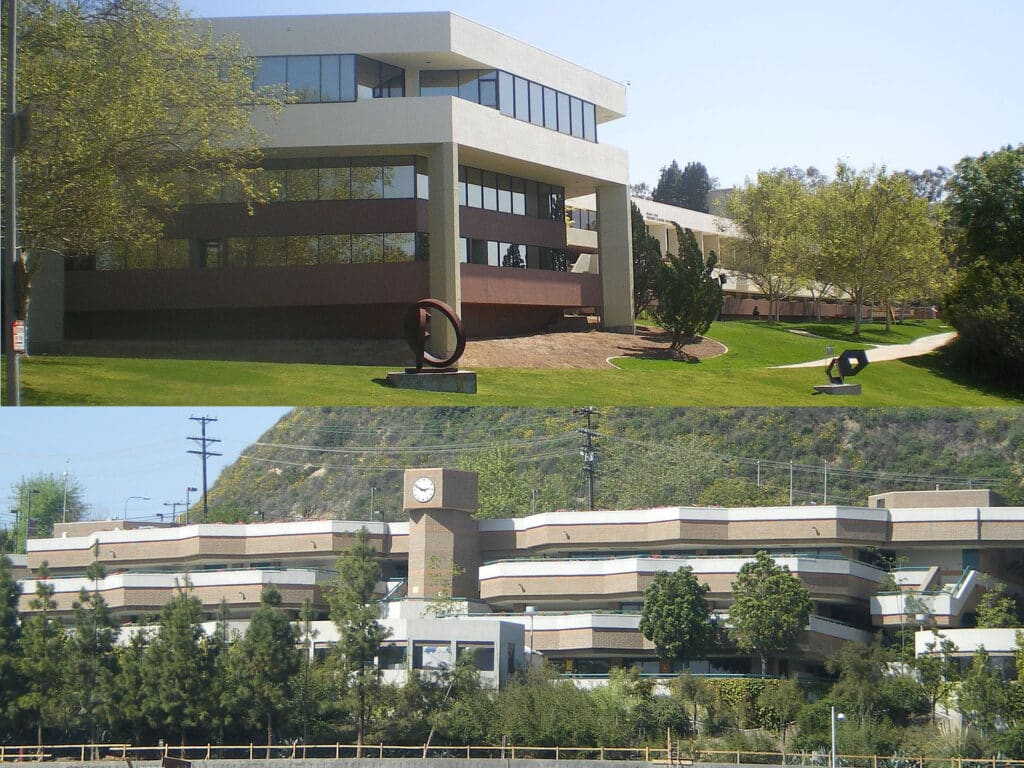
Will AJU Now Sell to Milken Community Schools or to Another Entity?

Since the big news came out yesterday that the sale of the American Jewish University (AJU) campus to an international school will not go through, I’ve received plenty of responses.

Most of them are hoping that a deal with Milken Community Schools, which was in the running the last time around, will be concluded. Because so much due diligence has already gone into this option, and from all reports the parties came close to concluding a deal, this would be the ideal outcome.

Milken is a first-class operation, is already in the Mulholland neighborhood, and has a real need for expansion space. Most importantly, Milken is engrained in the LA Jewish community, which means there is already the element of communal trust. There are important components on the AJU campus—such as a Jewish library, a mikveh and tributes to local donors—that a Jewish organization like Milken would know how to handle with the proper care and sensitivity.

But what if Milken is no longer interested? I hope that is not the case, but I heard an interesting alternative from a community leader:

“The foundation and federation should combine efforts and turn this campus into a Kosher senior citizen compound (assisted living, long term care, day programs, etc.)”

I also heard from an Orthodox outreach group who may have an interest. We’re only at the beginning. More suitors may present themselves.

The bottom line is this: The community got a reprieve. We now have a chance to keep this venerable space that holds so much meaning to so many people inside our community. At a time when in-person connection is more important than ever post-pandemic, it’s an opportunity to see what Jewish groups can come up with to bring this spectacular space alive.

It’s a perfect time for a communal conversation. How do we best use this unique opportunity for a second chance?

If you have any good ideas, email me.

Davids@jewishjournal.com.

Will AJU Now Sell to Milken Community Schools or to Another Entity? Read More »