fbpx

March 23, 2023

Pesach Cleaning: You Can Run But You Can’t Hide

I thought that going away for Pesach meant I would not have to do any Pesach cleaning. I thought wrong. In fact, not only am I using up as much chametz as possible (including dried pasta well past its expiration date), kashering the oven and emptying cabinets to make room for Pesach cookware, I am also spiffing up the place as if I’m getting ready for guests to move right in. Because that’s what’s about to happen. Ergo, cleaning for Pesach even when we won’t be here.

When we realized that our home was an attractive setting for another family coming to town for the holiday, we made a deal with them. Almost immediately, I began eyeing our home as if every room would be shown on an Airbnb listing. How many stars would we get?

Well before we were paid for the rental, I began buying nice new things to bulk up my imaginary star ratings: fluffy towels and matching bathmat sets. A few bits of fresh décor. A new Pesach tablecloth. My Amazon cart was piled high with fancier soaps and shampoos than our normal brands, a blue whale bath spout cover for the children, and a few new toys. I cast threatening glances at our aging houseplants. They would have cost me at least one star so I mercilessly tossed them into the green yard waste bin. This was no time for sentimentality. Three days before we leave, I’ll take my fading “statement” orchid to Pac 8 Orchids for a beautiful new one. When our guests arrive and see it prominently placed, it will remind them of arriving in a nice hotel lobby. But it will be more like arriving at a Best Western, not L’Hermitage.   

Of course, guests need closet and drawer space, so we stuffed several bags with giveaway clothes. We could have just shoved them to the deep, dark recesses of the closets, but it was high time to say, “Give me your tired, your poor, your huddled, faded, and too-snug masses yearning to breathe free.” After filling the bags, the looming spaces in the closets looked kind of forlorn, so I bought a big set of new cedar hangers, too. They are so pretty. I bet you could find them at a Radisson. Or even a Hilton.

My Jewish DNA carries a robust Pesach-preparation reflex that vrooms into gear the day after Purim and drives me to feats of dusting, polishing, and Marie Kondoing that otherwise lie dormant all winter. 

I have learned from this experience that guests or no guests, Pesach would not be Pesach if I weren’t working to earn it physically (and also spending a lot of money). My Jewish DNA carries a robust Pesach-preparation reflex that vrooms into gear the day after Purim and drives me to feats of dusting, polishing, and Marie Kondoing that otherwise lie dormant all winter. I like to muscle out any hint of grime with the business side of a sponge; wrestle my vacuum attachment to the hinterlands behind the couches; and climb up on my stepladder to clean above the soffits. Why, I just climbed down from having cleaned the inside frosted glass of our dining room lamp, and if I say so myself it’s so much brighter here already! Miriam had her tambourine; I have my Swiffer and my Spotify.

After all, as Hillel used to say, “If I do not do spring clean for myself, who will spring clean for me?” (Or something like that.) And while yes, the cleaning gets tiring, it is a privilege to make our home lovely and welcoming for Pesach. This year, it is a novel and welcome feeling to prepare our house — where my family has celebrated Pesach for twenty-three years — for another family. 

I picture them arriving and being pleased by my efforts. I hope they will sleep comfortably in our beds, enjoy the new soap, shampoo, cedar hangers, and the beautiful orchid. (If you can remember to give it three ice cubes every ten days that would be great — I left a note about that.) More than anything, I hope they will experience a five-star spirit of the Festival of Freedom throughout the house!


Judy Gruen’s latest book is “The Skeptic and the Rabbi: Falling in Love With Faith.”

Pesach Cleaning: You Can Run But You Can’t Hide Read More »

The Inclusive Shemesh Farms Introduces Their Spring Spices

Spring has sprung, which means Shemesh Farms in Malibu has launched its latest seasonal spices.

Among them is “TEA-kun Olam,” a delicious mix of chamomile, fennel and mint.

“In Judaism, the concept of repairing the world (tikkun olam) speaks to the very essence of who we are as an organization and enterprise,” Nicky Pitman, director of Shemesh Farms, told the Journal. 

Shemesh Farms does more than harvest and craft spice blends, honey and other organic products. It provides a sense of purpose — along with meaningful employment and community — for young adults with diverse abilities.

“Everybody needs to be part of something where they feel purposeful, and they’re doing meaningful work,” Pitman said. “Everybody is welcome, and everybody can work at their own pace.”

Shemesh Farms began in 2015 at the Shalom Institute in Malibu. Following the Woolsey Fire and the destruction of the Shalom Institute, they launched a satellite site at Malibu Jewish Center and Synagogue in 2019. The farm and enterprise are built upon a foundation of sustainability, inclusion and interconnectedness.

“For all humans, being in nature can really just bring about this incredible change in our perspective.”
– Nicky Pitman

“For all humans, being in nature can really just bring about this incredible change in our perspective,” Pittman said. “It can bring about this incredible freedom and connection with the earth. We feel better. We feel more in tune.”

Shemesh Farm uses approximately 60 Farm Fellows. The program runs Tuesdays, Wednesdays and Thursdays from 10:30 a.m. to 12:30 p.m.; anywhere from 12 to 18 Fellows, along with their coaches and volunteers, come to work. Many of the Farm Fellows come from other programs that serve adults with diverse abilities. Etta and Creative Steps have been part of Shemesh since it started. A third organization, Light of Hope, started sending a group every Tuesday just two months ago.

The day starts with an opening circle, where they get centered and talk about what’s going on on the farm that day. 

“For some of these folks, they don’t have a lot of choice in what they get to do,” Pitman said. “They participate in activities through other programs. For instance, they go to museums. Here, they’re contributing. They get to work at their own pace and see the fruits of their labor.”

The fellows get to choose where they work on the farm.  “They might work in the garden, at composting or be part of an art workshop,” said Pitman. “We use the art for our marketing purposes.”

Farm Fellows do rock art to beautify the garden, prepare spices in the kitchen, work in the office labeling or filling packets or cleaning out bottles for recycling.

Everyone comes with their own abilities and talents, Pitman said. Some people have difficulty with their fine motor skills, others are nonverbal and some have limited attention, so they can’t stay on one thing for too long.

“We just meet everybody where they’re at,” Pitman said. “That might mean you hold a bottle while your coach pours product into it or you have somebody hold your hand as you do a particular task.”

At the end of the day during a closing circle, everyone regroups to share their accomplishments. 

“It’s fun to put together the different blends and work outside,” Farm Fellow Alex M. told the Journal. When he leaves the farm, Alex says, “I feel accomplished!” 

The parents are both supportive and  thrilled. For instance, Pitman explained that the first time one of the dads visited the farm, he couldn’t believe what his son, who didn’t talk until he was 8 years old and had issues with his fine motor skills, could do. There, he was sorting herbs with his fingers and putting product in packets. 

“He’s sitting there having social conversations, because that’s what happens right when you’re sitting around a table with people doing work,” Pitman said.

Shemesh also hosts school groups, temple groups and organizations that come to learn about and perform service work on the farm.

“I love the concept that we’re all in this together,” Pitman said. “Our t-shirts don’t say ‘Staff.’ You come here and work as a Farm Fellow, coach or volunteer, you are part of Shemesh Farms.” 

Shemesh Farms offers four spice blends every season, which are available at the farm, on their website and in six boutique stores across the country. In addition to creating the products, the staff, Farm Fellows, coaches and volunteers strategize product development, branding, marketing, packaging and sales.

This spring’s Shemesh Farms’ blends include “In a Pickle,” a wonderful starter for homemade pickling. It’s a mix of celery leaves, dill, green onion, parsley, sorrel, peppercorns and Himalayan pink salt. 

Then, there’s “Za’atar Blend #4.” It took four trials to get the Middle-Eastern-inspired blend of thyme, sorrel, oregano, marjoram, mint, sumac, lemon zest, kosher salt and sesame seeds, just right. 

“Karpas Diem,” which is basically “springtime in a packet,” is a mixture of parsley, chives, dill and rosemary with just a hint of kosher salt. Since the blends change every season, you need to “seize the spices.” 

“You come here, and you kind of can’t help but be happy,” Pitman said. “There’s definitive pride in the work that goes on here.”

The Inclusive Shemesh Farms Introduces Their Spring Spices Read More »

Satirical Semite: Plasticity

For the last five years, I’ve seriously considered having a cosmetic procedure. Not to have a classic LA nose job, but for a little reconstructive surgery on the side of my head where, five years ago, I had a couple of brain surgeries. My reasoning was that the treatment would heal some emotional distress, and reset to how things were before. And of course, my photos would look better on Instagram.

Four years ago, I met with a kind Beverly Hills cosmetic surgeon, who told me to avoid surgery, and just grow my hair. That immediately saved $7000 on the medical procedure, in addition to a monthly outgoing of $29 at Supercuts.

But my demons wouldn’t rest, and I still wanted to explore my options. Last week I met with a National Health Service (NHS) surgeon in the UK, who suggested removing fat cells from my stomach, and injecting them near my face. “I’ll start eating donuts and go on a binge,” I said. He looked serious. “You can’t do that. Fat cells behave the same way around the body. If we took stomach fat cells and injected them into your head, but you then lost weight, then you would also lose weight from your face. Conversely, if you gained weight in your stomach, you would also gain weight on the side of your head.” On reflection, I won’t be dunking any donuts today.

“Are there any other risks, like damaging my ocular nerve?” I asked. He reluctantly admitted that the procedure could lead to blindness in one eye. So I would look better, but wouldn’t be able to see it.

“What about an implant?” I asked, having heard about a procedure where they insert a thin strip of silicon under the skin. “I wouldn’t recommend it,” he said. “There is a danger that the skin nearby may get infected and die, and the bone could also get infected, which would mean it would need to be removed.”

So far there were no real concerns, other than potentially going blind in one eye, needing to get part of my facial skin removed, gaining weight on one side of my head, and needing parts of my skull to be cut out. As the Yiddish saying goes, I need that like a hole in the head.

“You could always use fillers,” he suggested as a final option. “Synthetic fillers?” “No,” he explained. “They would be collagen. It has to be organic material to attach to your cells, because the body rejects non-organic ones,” he explained. I pushed to find out where these fillers would come from. “Bovine collagen,” he admitted. In other words, I would have to have cow flesh injected into my face. I chewed the cud on his idea. There is a yoga pose called gormukhasana, ‘cow-face pose,’ but this is one stage too far. I thanked him for his time, and hoofed it out of the doctor’s office.

At least it was better than a Los Angeles orthodontist who suggested that a solution to a slightly receding gum was to graft the skin of human cadaver into my mouth. It made me feel dead inside.

Nearly everything has something about their body that they would like to change. There is a time and place for cosmetic surgery, but it isn’t for me, at least not now. The reward just isn’t worth the risk. Besides, there are now easy life hacks which allow you to experience all of the benefits with none of the potential problems, or even the costs.

Cosmetic changes are now easier than as artificial intelligence leaps forward. A model friend once gave me a tutorial in the old “Facetune” app that allows you to modify specific parts of your face or body, but that’s old news. TikTok’s controversial new “Bold Glamour” filter allows people to instantly look more attractive, and does it in real-time, in a way that is undetectable.

Instead of bovine collagen fillers and a real-life cow-face yoga pose, I’ve decided to follow a different path of yoga, and pursue the path of self-acceptance. It’s calm, free, and will be accompanied by a newly-grown frizzy Jewfro.


www.marcusjfreed.com and on social @marcusjfreed. 

Satirical Semite: Plasticity Read More »

Rabbis of LA | Rabbi Julia Weisz: The Special Beauty of Community

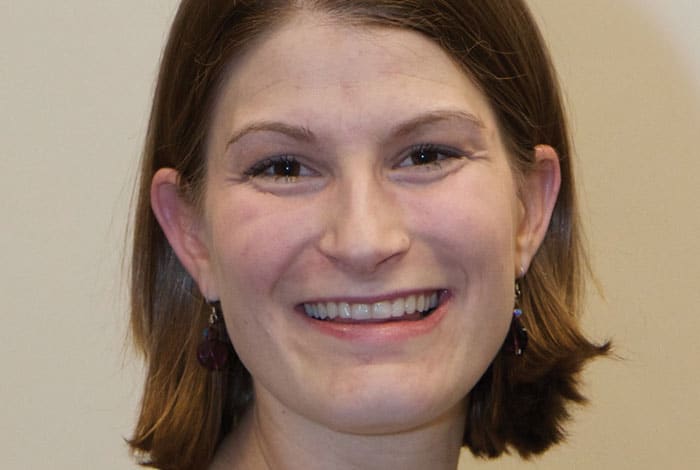
Julia Weisz, rabbi and director of education at Congregation Or Ami in Calabasas, has always made creating safe, brave spaces for their community — especially Or Ami’s youth — a priority. “The childhood that I had in a Jewish community gave me the pride to be Jewish and the confidence to be Julia,” Weisz, or Rabbi Julia, as she’s known, told the Journal. “It was crucial in my Jewish development and personal development.”

Or Ami’s slogan is “You’re home,” she said. “Rabbi Paul Kipnes and I have created a beautiful and comprehensive curriculum and experience that is relevant to today.” 

Rabbi Julia believes it’s important for kids to not only learn about history from 100 years ago, but be able to talk about things like consent, intimacy and how to change a tire.

“I think that anyone seeking community with children knows that children right now are completely overwhelmed and overcommitted,” she said. “But I do believe the Jewish community offers something different.” 

When Weisz was very young, her parents went through a tumultuous divorce. So she, her mother and sister moved in with her grandmother.

“My grandma was very involved in the Conservative synagogue in Tucson, Arizona, and my mom and my grandmother decided that it would be best for my sister and I to be in a place that was like a bubble,” she said. “They went to the rabbi of the day school and my grandmother was like, ‘They don’t have money, and they don’t have a home right now, but … these kids [need] to come to school here.’”

The rabbi supported Weisz’ family for the seven years of their Jewish education there.

“I do think that I became me in that space,” Weisz said. “There were definitely other paths I could have taken, had it not been for a school that really held my hand and believed in me — and I really knew they did. I struggled with a lot of emotional stuff the first couple of years of elementary school with my parents’ divorce.”

She continued, “They heard me, they saw me. My friends loved me for me, and I just don’t know that would have existed anywhere else except for this little private Jewish day school.”

Fast forward to when Weisz’s mom married her stepdad. They moved to Texas, and she went to a small, Modern Orthodox day school for seventh and eighth grade. “It was a great way for me to get integrated into a new community fast,” she said.

They also belonged to Temple Emanu-El in Dallas; her stepfather was Reform, and they wanted to participate as a family. Weisz didn’t connect very well at such a large temple. However, she wanted to make money babysitting.

“I took all the classes — confirmation and post-confirmation — got to know the rabbis and started babysitting their children,” she said.

When it was time for college, Weisz applied to schools with big Jewish populations, including Tulane and American University, but ended up going to Southern Methodist University (SMU), where her stepdad was a law professor. When she toured there, it clicked for her that a small class environment — and a small Jewish community — would be beneficial.

SMU had a small Hillel, trying to engage the small Jewish community, and Weisz really wanted to be part of that. “Looking back, I realized I’d rather help lead something than get lost in the crowd,” she said. 

Starting the summer after freshman year at SMU, Weisz began interning at her family’s temple. She contacted David Stern, who’s still senior rabbi — and whose children she babysat for — and asked if there was anything she could do to help out. He said, “Absolutely.” Stern and Peter Berg — who was a newer rabbi there at the time — became her mentors. 

While at the Temple, Weisz created programs for kids during Friday night services, and realized she loved doing programming for kids. She also shadowed Rabbi Berg, which led to all sorts of experiences. 

“They invited me to clergy meetings and to staff meetings and town hall meetings,” she said. “I was able to go to so many things. I preached. I led services. And I realized that’s what I wanted to do … I liked the idea of spiritual and emotional healing.”

She worked at the Temple through the rest of college, and, after graduating from SMU with a BA in Psychology and Religious Studies, Weisz moved to Los Angeles to be with her then boyfriend (now husband) and applied for rabbinical school. Weisz earned her Master’s degree in Jewish Education in 2009, both from Hebrew Union College-Jewish Institute of Religion in Los Angeles. 

Ordained as rabbi in May 2011, Weisz was consecrated as Or Ami’s second rabbi on October 13, 2011, through a Sukkot-inspired installation ceremony during a Campfire Shabbat. 

Rabbi Julia loves being part of Or Ami. During her time at the synagogue, she has created vibrant youth programs that provide essential building blocks. She is always reimagining curricula and engagement efforts to keep up with the needs of the times, for all ages and stages of development.

Weisz said her background influences everything she’s created for Or Ami.

“Jewish communities can be one of the greatest gifts ever, because the Jewish community is around for the entire life cycle journey for both the ups and the downs.“

“I don’t think we will ever stop needing space for people, where they can feel safe to express themselves,” she said. “Jewish communities can be one of the greatest gifts ever, because the Jewish community is around for the entire life cycle journey for both the ups and the downs. Clergy are trained, and want to be accessible and available and make personal connections. At the heart of our job is that we want to be your spiritual guides.” 

Rabbi Julia lives in Agoura Hills with husband, David, children Noam, Maddie and Eve, dog, Pitzi, and bearded dragon, Ninja.

Fast Takes with Rabbi Julia Weisz

Jewish Journal: What is your favorite Jewish food?

Julia Weisz: I love bagels and lox.

JJ: What is your perfect Friday night Shabbat?

JW: Being able to participate in the cooking of a dinner that is low-stress, potentially even making a challah that actually comes out well and sitting down with my family and having everyone share something about the week that was special for them.

JJ: What message do you have for someone considering their own rabbinical journey?

JW: Find a partner in the Jewish world — someone you trust — that you can study with and be challenged by.

Rabbis of LA | Rabbi Julia Weisz: The Special Beauty of Community Read More »

Desert Stars Empowers Young Bedouins in the Negev

Over a decade ago, Matan Yaffe, an Israeli Jew, was motorbiking in the Negev desert when, all of a sudden, four young Bedouins surrounded him and threatened to take his bike. While Yaffe tried to be reasonable with them and stop them from doing anything risky, they pulled out a metal bar. The former IDF officer took out his gun, and the Bedouins fled. 

However, the encounter made a lasting impact on Yaffe. He realized that the Israeli Jews in the Negev were protecting themselves from the Bedouins with barbed wire and security, rather than working with their neighbors on trying to build peace within the region. He also learned that there are more than 300,000 Bedouins in the Negev, and the majority of them are under the age of 18. At the same time, 80% of Bedouin children live in poverty, and only 8% of Bedouins end up obtaining higher education. 

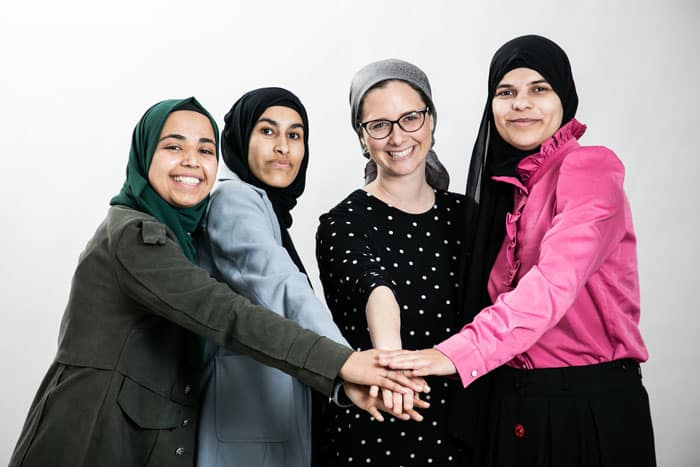
Yaffe came up with an idea: he wanted to build bridges between Jews and Bedouins, while empowering Bedouins at the same time. So, in 2013, he founded Desert Stars, a nonprofit organization that cultivates a generation of Bedouin leaders to promote a thriving Bedouin community, as well as a strong Israeli society. His co-founder, Muhammad al-Nabari, is a former mayor in the Bedouin town of Hura. 

“One thing we talk a lot about is this: the Jews living in Israel aren’t going anywhere,” said Menucha Saitowitz, partnerships officer at Desert Stars. “The Arabs living in Israel aren’t going anywhere either. We’re here together. Once you can accept that, you can begin to think of ways to make things better for all citizens of Israel.”

Desert Stars offers a more than 10 year course of educational programming: a service-based youth movement, unique Leadership High School, gap year leadership programs for both men and women and an extensive alumni program. Starting from age 12, Bedouin adolescents can become involved in the youth movement, and then attend the high school when they turn 14. The organization engages them well into their 20s, ensuring they will be prepared to succeed in their careers and beyond. 

According to Saitowitz, one of the main goals is to ensure that young Bedouins have the opportunity to go to college and graduate; between 40-50% of general Bedouin society attend university and drop out during the first year as a result of academic, social and economic barriers. Additionally, Negev Bedouins face higher unemployment rates and earn less than any other Israeli community. Only 60% of men and 24% of women are employed.

“If something drastic isn’t done, we will have a crisis in the Negev.” – Menucha Saitowitz

“If something drastic isn’t done, having such a large population so disconnected from the rest of Israeli society, and without good education and employment opportunities, we will have a crisis in the Negev,” she said. 

At Desert Stars, 70% of the graduates attend college, and almost none of them drop out. One of the participants from the organization’s second cohort is Amir Abu Kaf, who is one of 23 siblings from a remote Bedouin village with virtually no infrastructure. He took part in the Rothschild Scholars at Ben-Gurion University program and partnered with NGOs and municipalities to bring math, robotics and English language classes to his community. During the COVID-19 lockdowns, he worked with Ben-Gurion University to ensure that Bedouin students who didn’t have access to wifi and computers could still continue their studies. 

“Before Desert Stars, I didn’t know that I had the ability to give to society, that I had something to give,” said Abu Kaf. “I suddenly realized that I had abilities that I hadn’t thought about at all, [like] creating a social project.”

Along with ensuring that the Bedouin population isn’t left behind, Desert Stars aims to build on peacemaking efforts between Israeli Jews and the Bedouins. 

“Much of our work involves diving into issues of identity, [and we meet with] populations from across Israeli society [including] secular Jews, Haredi Jews, Christian Arabs, Druze, new immigrants from Ethiopia and Russia, and having intense conversations about values, identity [and] future visions for the country,” said Saitowitz. “Without these tough conversations, this meeting of different populations, then hundreds of thousands of Bedouin will never reconcile with the state. This, of course, has to come hand in hand with education, investment and opportunities for young people to integrate into academia and the workforce.”

She continued, “We have a lot more in common than we think. Making even a single friend with someone outside of your religion in Israel can lead to a whole new perspective.”

Desert Stars Empowers Young Bedouins in the Negev Read More »

Creative Aging: Dancing With Toddlers

Editor’s note: Fifth in a series

This was more challenging and nerve-wracking than the many pressured years of preparing for new business pitches to all those Fortune 500 clients or multi-million dollar charitable foundations. 

I practiced over and over for the moment. I tortured myself with doubts and questions: Can two and three-year olds hold each other’s hands? Do they know right from left? Can they clap in rhythm? Can they kick their feet out? Can they turn in a circle? What simple dance will I teach? Oh no, none of the dances I know are right for this age group. I need to make up steps they can do. I’m not a choreographer. What the hell did I get into here? 

It was my youngest grandson Max’s Shabbat at Temple Israel of Hollywood. Max Wexler. I know. Sounds like he should be my grandfather, not my grandson. You go tell my son Micah and his wife Shawna. Because I can’t say a word to any of our kids about how they parent. 

Now that I no longer have to dash out of family events to meet with clients, I volunteered one of my past professional skills — teaching Israeli folk-dancing. The problem was that I hadn’t done it in years. And I had never taught toddlers. Oh, and did I mention that I am now the owner of a 71-year-old body and that no matter how much yoga I do, it doesn’t move like it did at 20? 

I thought about walking away from this foolish notion that I could still do this. But Max already knew that Grampa Baig was coming to class to teach a dance and he was very excited. That’s what Max calls me. I’m really Grampa Gabe. I chose that name because my Hebrew name is Gavriel. And I figured with the alliteration, the grandkids would remember the name easily. But Max transposes the letters. Alliteration isn’t working for him. 

So Grampa Baig began to go out into the backyard weeks before to practice for Max’s class. I turn the Israeli music on the speakers and start jumping and circling the deck. I’m sure the neighbors peeking over the fence and through the bushes were wondering if this crazy old man had forgotten to take his meds. But then, the tortured questions about toddler movement capabilities began. 

Petrified that I’m going to fail in front of Max, I called my friend, Bonnie Vorspan, who runs toddler programs.

 “Gary, just teach them to dance ‘Uga, Uga, Uga.‘ (‘Cake, Cake, Cake,’ in Hebrew)

 “I don’t know ‘Uga, Uga, Uga.’”  

“March them in a circle and then have them bend their knees. Then march in the other direction. They can do that. You can do this.”

 “I don’t have the music to ‘Uga, Uga, Uga.’”  

“All the dances are on Youtube. Every dance you ever did is now on Youtube with the music.” “Oh.” 

I tried it out in the backyard. I hated “Uga, Uga, Uga.” Besides, in this generation where parents are sugar-phobic and don’t let their kids eat an M&M, who wants them dancing to “Cake. Cake. Cake” no matter what language it’s in? 

I’m a nervous wreck as Grampa Baig and Grammy, my wife Dana, arrive at Max’s Shabbat. I put on one of the old stand bys—”Nigun Atik,” for which I had rejiggered the dance. I get fifteen two and three-year olds holding hands. We march in a circle. We clap. We turn around. We march the other way. We bring the circle in. We pull it out. We start over again.

The toddler clients show more enthusiasm and appreciation than all the Fortune 500 clients, charitable foundations and nonprofits ever did. 

The toddler clients show more enthusiasm and appreciation than all the Fortune 500 clients, charitable foundations and nonprofits ever did. Those big clients never once fell down laughing and rolling on the floor.  And their senior management never lauded me in the way all the mommies and daddies did through their WhatsApp group, asking Micah and Shawna “Who is Grampa Baig and when is he coming back?” 

“Tell them it’s Grampa Gabe,” I said.  Then I thought about working with tech, banking and soft drink clients, and then working with Max and his toddler classmates. “Tell them I will come back. Because this is the most important profession I’ve ever had.”


Gary Wexler woke up one morning and found he had morphed into an old Jewish guy. 

Creative Aging: Dancing With Toddlers Read More »

And the Fourth Son is Silent

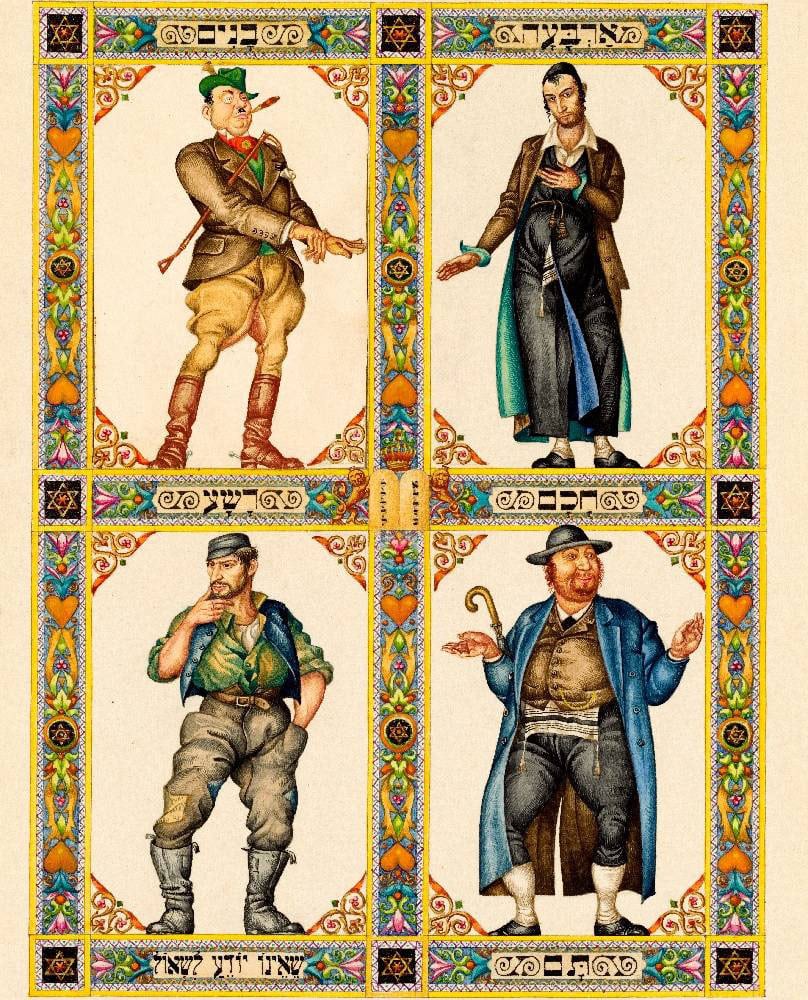
Some people come to hear the story,

the wonders and the signs,

the rationale of rituals gory,

and read between the lines


the tale they wish to hear: the wise,

the wicked and the plain,

the one who does not ask, four guys

who cannot feel the pain


their ancestors once felt, and joy

their father cannot wait

to share with them.  They don’t annoy

if they participate


by asking father questions, he

is happy they have come,

however wayward they may be,

or simple, even dumb,


though dumbness is the worst, sad choice

one makes: he loves the most

the questions that three ask, their voice

replacing Paschal roast.

The wise one learns no story, for

he only studies laws,

the wicked one, not shown the door,

is made to clench his jaws,


the simple one is told a tale

a child could understand,

the fourth one’s head is like a tail

since he does not demand,


with questions, explanations

of Jewish history,

like heads or tails, its expectations

a mighty mystery.


This Passover he gets a pass,

while we hope that he’ll ask

next year the questions that, alas,

his mind and mouth now mask.


Gershon Hepner is a poet who has written over 25,000 poems on subjects ranging from music to literature, politics to Torah. He grew up in England and moved to Los Angeles in 1976. Using his varied interests and experiences, he has authored dozens of papers in medical and academic journals, and authored “Legal Friction: Law, Narrative, and Identity Politics in Biblical Israel.” He can be reached at gershonhepner@gmail.com.

And the Fourth Son is Silent Read More »

How Jews Who Keep Strictly Kosher Pack for Vacations

I excitedly packed a suitcase with everything one would expect to take on a vacation to Hawaii: T-shirts, shorts, sandals, swimsuits, hats, sunscreen, a two-quart pot (with an accompanying lid), wooden cooking utensils, a cutting board, a few knives and my favorite frying pan. 

I packed another giant suitcase with nonperishable food, including bread and three dozen snacks. And then, it was time to pack the cooler with chicken that I had cooked and frozen at home, cheese (feta and string), meat, and two enormous logs of kosher salami. Finally, I packed the kids’ backpacks with several big sandwiches because I knew there’d be nothing for us to eat during the five-hour flight except peanuts, and my kids have never met a nut they’ve liked, whether edible or human. 

At this point, many readers might be scratching their heads. But I imagine that readers who keep strictly kosher are nodding their heads so vigorously that they’re bound to pull a neck muscle. Please contain your excitement. I see you and I’m about to unpack our shared experience (no pun intended).   

Since most Jewish schools are still open in December, their designated winter break is usually reserved for 10 days or so in January. And so, in late January, my family and I embarked on a weeklong vacation during our kids’ winter break (also known as “Yeshiva Week”). 

At least, it was supposed to be a vacation. In hindsight, it was a vacation for the kids and a change of scenery for me. 

It was my own fault. I arrived in the lush paradise of Hawaii and thought I could access a lot of sunning, swimming and tanning. Instead, I spent most of my time making sandwiches and washing dishes (yes, washing dishes) in the hotel room. I don’t like to leave food residue on my favorite frying pan for too long. 

When you keep strictly kosher, you become a pro at packing half of your home in suitcases when you travel because, unlike others, you don’t have the option of quickly grabbing a tuna sandwich at the airport cafe, a Carl’s Jr. kids’ meal halfway through a road trip or that free continental breakfast that some hotels offer as compensation for towels that are so overbleached and hard, they could double as loofahs. 

There’s a method to keeping strictly kosher and packing for a trip: It involves at least one meat pan (I bring a medium-sized pot) and one dairy pan for reheating or cooking food, as well as various meat and dairy utensils. I’ve even brought colanders on vacation. And unless their hotel room comes with a kitchen or they stay in an Airbnb, most people I know also pack an electric hot plate, portable stove or camp burner. Call it what you want, but the sight of that hot plate in your suitcase (or the trunk of your car) always chips away at the utopian concept of what a vacation is supposed to entail.

At first, I found the concept of being unable to dine out on a trip jarring and burdensome. Nearly a decade ago, when my husband and I honeymooned in Maui, I cooked every night and he washed dishes. But in keeping kosher, I had something on that trip that I had sought for a long time: Peace of mind over what I was consuming. And then, one night, while on a romantic sunset stroll in Maui, we passed by a luau dinner at a resort and I caught a glimpse of what looked like a whole pig before it was lowered into a pit (an imu) to be slow-cooked. As a Jew who chooses to keep kosher and derives great joy from it (usually), my frozen chicken back in the hotel refrigerator never looked so good.

Nine years later, my husband and I returned to Hawaii with a few kids in tow. As soon as we arrived, we entered a Walmart in Oahu and spent two hours shopping for food staples, including peanut butter, cereal, milk, frozen waffles and disposable utensils. 

Nine years later, my husband and I returned to Hawaii with a few kids in tow. As soon as we arrived, we entered a Walmart in Oahu and spent two hours shopping for food staples, including peanut butter, cereal, milk, frozen waffles and disposable utensils which, in Hawaii, are made of biodegradable materials (how nice), leaving you with a knife that always breaks in half (not so nice). In hindsight, we simply should have signed up for Instacart so that Walmart could have delivered all of those groceries right to our hotel lobby. 

We each had our own priorities while on vacation: My kids wanted to spy a sea turtle relaxing on the sand; my husband wanted to explore beautiful hiking trails; I wanted to salt my food. I knew I had packed salt in the suitcase, but I couldn’t find that small, Ziploc pack of white gold anywhere, and the thought of returning to that massive Walmart for some salt was unfathomable.

For one week, we ate eggs, pasta and anything else I could make in a pan, in addition to bagels and simple sandwiches. Ever the consummate Persian, I brought a dozen packets of cardamom tea with me from Los Angeles and enjoyed a daily breakfast of sweetened Persian tea with salty, kosher feta cheese and overpriced Persian cucumbers from Walmart. Each night, my best friend and her family, who were also vacationing in Oahu and staying at the same hotel, hosted us for dinner in their room. Like me, my friend had packed pots, pans and cooking utensils, but her pot was even bigger. One night, she even managed to make a giant pot of comforting matzah ball soup for everyone. Jewish women are amazing, especially those who still cook with love (and a heaping load of responsibility) while on vacation. 

On Friday night, over 20 of us, including members of the French-Jewish community in L.A. who were also staying near Waikiki Beach, gathered in the hotel room of our friends, Tamy and Yuri, for Shabbat dinner. I had spent the entire week with one eye on what other tourists were eating at outdoor bars and restaurants, but that Shabbat, I believe I ate better than anyone within a 100-mile radius of the Hawaiian Islands. It helped that Yuri is a chef; there were mouth-watering [kosher] appetizers, entrees and luscious Hawaiian pineapples. We were even treated to a weekly fireworks show (reserved for Friday nights) from the balcony, and the kids squealed with wonder. But the best part of that night was watching the men (and their sons) as they all stood on one side of the hotel living room and began singing Shabbat prayers in Sephardic tunes. 

I lit Shabbat candles with my friends and simply watched as the men made a makeshift synagogue and minyan at the hotel. At that moment, I connected with every Jew who ever brought G-d’s presence down to earth while traveling, whether in ancient Persia, Europe during the Middle Ages or modern-day America. And I felt so blessed that as a Jew today, my travels were so much safer and more convenient (and came with delectable pineapples right from the Dole plantation). We spent the next three hours eating, laughing and savoring the joy of Shabbat together. 

The night before we left, I finally found the salt I had brought from LA. I repacked it with my beloved frying pan, which was bundled in a kitchen towel like a baby in a swaddle. When we boarded our flight home, we found ourselves seated close to friends and their kids who live nearby back in LA and were also vacationing in Oahu. Like us, they’re Persian Jews who keep kosher. “I packed an entire suitcase with food,” my friend, Nooshene, told me. When I shared my traumatic experience of misplacing my prepacked salt, Nooshene said that she had even packed a bottle of ground turmeric for her vacation in Hawaii. I love Persians.

It took some time before I switched from a mentality of deficiency while on vacation to one of feeling joy and agency from my own choices. 

I don’t intend to “turn off” any Jews from keeping kosher, nor do I believe I’m a victim of kashrut restrictions. It took some time before I switched from a mentality of deficiency while on vacation to one of feeling joy and agency from my own choices. Simply put, I don’t turn the shut-off-the-kosher-switch while on a trip; I pack half the kitchen and consume more kosher salami than is probably healthy, but I wouldn’t have it any other way. And thank goodness for Häagen-Dazs storefronts, which are kosher.

On the heels of our Hawaii trip, we visited Las Vegas for President’s Day weekend and stayed with close friends. Rather than packing a suitcase packed with food and cookware, I simply opened my kind friends’ refrigerators and helped myself to kosher food.  

It was wonderful. It was refreshing. But I’ll be honest: It didn’t feel like vacation without my favorite frying pan.


Tabby Refael is an award-winning, L.A.-based writer, speaker and civic action activist. Follow her on Twitter and Instagram @TabbyRefael.

How Jews Who Keep Strictly Kosher Pack for Vacations Read More »

Lili Bosse: Searching for Light in the Darkness

When Rose Orenstein was a young girl living in Poland, she had dreams of one day becoming a doctor. But her town was small, and the high school she wanted to attend had a Jewish quota. She found out before school started that she couldn’t get in.

So her family sent her to Lublin, a larger city, to get an education. While she was there, World War II broke out, and it became clear that Rose and other Jews were not safe. Rose was friends with a Catholic girl at her school named Urszula Grande, and her father was the mayor of Lublin. The mayor gave Rose false papers that said she was a Polish Christian girl, which kept Rose safe from the Nazis for the time being. 

Rose never forgot her Catholic friend and the mayor. Because of them, she survived the war. And over seven decades later, in 2014, 91-year-old Rose sat and watched as her daughter, Lili Bosse, was sworn in as mayor of Beverly Hills by her friend, actor Sidney Poitier.

“The rabbis came to me and told me to say my goodbyes to my mom. She said she wasn’t ready. She said, ‘I want to see my daughter become the mayor.’”

“The year before, the doctor was telling my mother that she was on her deathbed,” said Bosse. “The rabbis came to me and told me to say my goodbyes to my mom. She said she wasn’t ready. She said, ‘I want to see my daughter become the mayor.’”

Rose, who died shortly after the swearing in, made a huge impact on Bosse, who introduces herself as the daughter of Holocaust survivors and dedicates much of her work to fighting antisemitism. 

Bosse, who is now on her third term serving as mayor of Beverly Hills, was born in Rego Park, Queens, to Jack and Rose (Orenstein) Toren. Jack was working as an engineer in Russia during the war and lost his entire family, who lived in Poland, in the concentration camps. 

While Rose’s false identity saved her initially, she was eventually sent to a Polish work camp. When she heard a woman talking Yiddish in her sleep at the camp, she approached the woman to warn her.

“She told her, ‘You’re here in a Polish work camp, and you’re not supposed to be Jewish,’” Bosse said. “She said, ’You need to be careful. I’m Jewish too.’ The woman told on my mother, and she was sent to Auschwitz.”

The Nazis told Rose she was going to die in Auschwitz. But Rose was determined to survive. 

During a death march, she ran away and hid behind a barn. There, she fell asleep for a few minutes and had a dream where she spoke with her mother, who had passed away. 

“In the dream, my grandmother said, ‘Rosele, you need to get up and run,’” Bosse said. “That’s how she survived.”

Rose met Jack in Israel after the war, and they soon got married and moved to New York, where Rose had some second cousins. They had Bosse, their only child, in 1961, and realized that they couldn’t stay in New York.

“I had a lot of ear infections, and the doctor told us that we had to live in California, Arizona or Florida,” Bosse said. “My parents chose Beverly Hills.”

The Toren family lived next to Beth Jacob Congregation on Olympic Boulevard; Bosse went to Hillel Hebrew Academy from fourth through seventh grade, and her father attended Beth Jacob every Shabbat. 

Rose and Jack worked together at Jack’s body shop in Los Angeles, and were involved in The 1939 Society, a community of Holocaust survivors and their families.  

“Growing up, all my parents’ friends were survivors,” Bosse said. “Their children were at least 10 years older than me, so I was always the youngest.” 

Bosse never met her grandparents, and didn’t have any aunts or uncles either. But through The 1939 Society and her parents’ involvement locally, she gained an extended family.

“My whole family was wiped out, so I’ve spent my life trying to create an extended family for myself.”

“My whole family was wiped out, so I’ve spent my life trying to create an extended family for myself,” she said. “My community is my family.”

After Hillel, Bosse attended Beverly Hills High School and the University of Southern California. When she married her husband Jon and had her two sons, Andrew and Adam, she became involved in their schools and local issues, serving on the Beverly Hills Traffic and Parking Commission and the Planning Commission. She then became a member of the Beverly Hills City Council, and was elected mayor in 2014. Reelected in April of 2022, she is now serving her third term.

Much has changed in Beverly Hills – and the world at large – since Bosse was a child. Back then, in the immediate aftermath of the Holocaust, the world was much kinder to Jews.

Much has changed in Beverly Hills – and the world at large – since Bosse was a child. Back then, in the immediate aftermath of the Holocaust, the world was much kinder to Jews. Today, antisemitism is on the rise, and Bosse, who serves 35,000 residents, many of whom are Jews, has faced darkness right on her doorstep.

In October of 2022, antisemitic flyers that spread lies that COVID-19 was a Jewish conspiracy were distributed in Beverly Hills. That same week, an antisemitic hate group hung a flyer that said, “Kanye is right” over the 405. And then, this past Hanukkah, vandals threw rocks at a resident’s menorah on their front lawn and carved Nazi symbols into the official Beverly Hills menorah on the first night of the holiday.

“Jewish people came to me and told me they’re scared. They said they wanted to take down their mezuzahs. I pleaded with them not to. I said we can’t let this stop us.”

“This was not something we’d seen before,” Bosse said. “Jewish people came to me and told me they’re scared. They said they wanted to take down their mezuzahs. I pleaded with them not to. I said we can’t let this stop us.”

To make a point to the antisemites of the world, after the menorah was defaced on Hanukkah, Bosse and other Beverly Hills residents turned a negative into a positive.

“The very next day, we held a public menorah lighting, with hundreds upon hundreds of people who brought light,” she said. 

Bosse’s parents were proudly Jewish and ardent supporters of the state of Israel; she has never been afraid to talk about her Jewish identity or speak up against antisemitism. 

“One of the first things I tell people is that I’m the daughter of Holocaust survivors,” she said. “That’s the first thing out of my mouth. Often, people ask why I mention it. They say, ‘What’s that have to do with being an elected official?’ I tell them it’s what defined me. I bring it into my role as mayor. I fight for justice and I have a strong work ethic. I’ll always speak up.”

Bosse is vocal on Twitter and in the media about Judaism and antisemitism. She appeared on “Dr. Phil” alongside another local leader, Sam Yebri, to discuss antisemitism, and last year along with former L.A. Mayor Eric Garcetti, she attended the second annual Mayors Summit Against Antisemitism in Athens, Greece. 

“When I was there, everyone said we were in a state of emergency with antisemitism,” she said. “It’s happening not only in the U.S., but in Europe, too.”

The mayor is right; according to multiple surveys from the ADL, antisemitic incidences and beliefs are on the rise everywhere. Just minutes from Beverly Hills, in Pico-Robertson, a man shot and injured two Jewish men this past February. He was charged with a hate crime. 

“These last few years have felt dark at times,” Bosse said. “I really choose to find the light in the darkness.”

On Tuesday, Sept. 29, Bosse and the City of Beverly Hills lit up City Hall with the message “Justice for Mahsa Amini,” and it’s been illuminated every night since then. 

That’s what Bosse has been trying to do in the wake of Mahsa Amini’s murder at the hands of the Iranian government. On Tuesday, Sept. 29, Bosse and the City of Beverly Hills lit up City Hall with the message “Justice for Mahsa Amini,” and it’s been illuminated every night since then. Beverly Hills, home to thousands of Iranian Jews, also became one of the first cities to issue a resolution condemning the government of Iran for Amini’s wrongful death. 

Bosse, who participated in a rally for Amini in Hollywood, was approached by an Iranian woman there who hugged her and cried. 

“She thanked me because I was there,” she said. “I said this is not just an Iranian issue. This is an issue of human rights, which are being taken away. We need to stand up for them. We can’t think, ‘This isn’t my problem.’ This is our problem, because we are all one people. This is our opportunity to save humanity.”

A few weeks after passing the resolution condemning Iran, Bosse was back at another rally, this time in Beverly Hills. She gathered with hundreds of other people to protest the Iranian government. 

“The day of the rally was one of the most powerful days of my life,” she said. “We were a united community. People came from all over Los Angeles to join us. We were standing up for human rights together.”

Attending the rally illustrated one of Bosse’s core beliefs: When we band together, we are stronger in our fight against hate.

“We need to fight for each other … Even though I wasn’t born Iranian, there is no difference between us.”

“We need to fight for each other,” she said. “Even though I wasn’t born Iranian, there is no difference between us. We have the same story of being persecuted, whether it’s because of our religion or culture or having our human rights being taken away. Rather than being afraid, we have to be strong and fight.”

Bosse, who was recently honored with the Woman of the Year 2023 Shamsi Hekmat Award by the Iranian Jewish Women’s Organization, makes a point to be there for all her constituents. This means she works around the clock – something that was instilled in her early on thanks to her entrepreneurial parents. She is on several residential chats, joining conversations on neighborhood happenings and making sure she responds to everybody’s needs.

“I am available to everyone,” she said. “I work 240 hours out of a 24-hour day. There isn’t enough time in the day. I go to sleep with my ear bud in my ear. If a chat goes on in the middle of the night, I hear it and get on it right away. I have a self-imposed work ethic, and I want to be there for my family and community with every sense of my being.”

The mayor holds events such as Live With Lili, a monthly meeting where members of her community can come and share their thoughts with her at City Hall. She also hosts Business With Bosse, where she visits different businesses and local events to support them and invites Beverly Hills residents to tag along. The city has a human rights commission and an arts and culture commission, and holds events like Kindness Week. They also host critical conversation events, where people can have important conversations about topics like diversity and humanity. The most recent, held on February 9, included Jewish Journal columnist Tabby Refael and a group of diverse panelists discussing women’s rights in modern times.  

Bosse’s Twitter feed is filled with pictures of her posing with different kinds of people from her community, including students at Beverly Hills High School, senior citizens at Roxbury Park Community Center and firefighters from the Beverly Hills Fire Department.  

“We pride ourselves in being a civil city, where people can live or visit, and there is a sense of home,” she said. “People feel like they belong here. It’s human nature for people to want to be heard. My goal is to ensure that everyone in my community feels seen, valued and respected. There is love here.”

Looking forward, Bosse is going to continue to be there for her constituents and fight for everyone’s rights – even when it’s not the easiest or safest road to take. 

“Because of my history, I’m not afraid,” she said. “My mother certainly wasn’t. She survived because she had strength and courage.”

Bosse often thinks about Rose, who went on to write two books about her experience in the Holocaust: “Destiny” and “A New Beginning.” She also told her story to the USC Shoah Foundation in 1995, where she talked about trying to find the grave of Urszula Grande, the long-lost friend who saved her. When she finally did locate it, she found that it wasn’t a proper grave. 

“She put Urszula’s name and said, ‘With love from Rose,’ on the tombstone,” Bosse said.  

Reflecting on her mother’s recent yahrzeit, Bosse talked about how Rose’s gravestone says, “Never give up.” It’s a motto that Bosse lives by.

“That is my theme every single day,” she said. “Never give up, and always live in gratitude. Every day I find something to be grateful for. Gratitude is my light.”


Kylie Ora Lobell is the Journal’s Community Editor.
Lili Bosse: Searching for Light in the Darkness Read More »

JNF-USA Luncheon, AJU Faculty Member Recognized, UCLA-Haaretz Conference, MDA Ambulance Sponsored

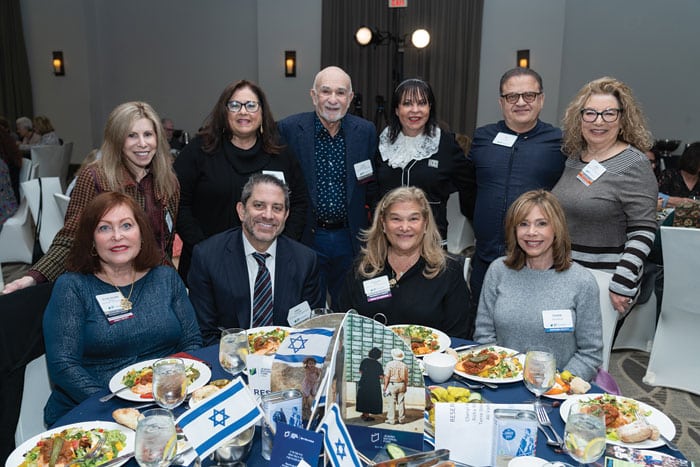
Jewish National Fund-USA’s (JNF-USA) Los Angeles Co-President Fred Toczek addressed guests at the organization’s 11th Annual Legacy Society Luncheon with two words, “Thank you,” in recognition of the community’s support for the land and people of Israel.

More than 150 philanthropists attended the March 2 event, sponsored by Hillside Memorial Park and Mortuary, at the Luxe Sunset Boulevard Hotel, where keynote speaker and former United States Special Envoy for Combating Antisemitism Elan Carr shared his determination to fight Jew-hatred.

Lamenting the current state of world affairs, Carr asked the audience rhetorically, “Who would have imagined less than eight decades since the end of the most notorious crime ever committed in the history of the world, that took [the lives of] two thirds of European Jews, that antisemitism would be rising even in Europe, and yes, even here…in the United States.”

Guests also heard from Cynthia Hizami, JNF-USA’s West Coast Director of Planned Giving, who shared the many ways supporters of Israel can achieve their philanthropic goals by supporting JNF-USA. Hizami lauded the work of the Jewish Future Pledge, an initiative that asks people who are leaving money to charity in their will to designate at least half of those dollars towards Jewish and Israel related causes. 

“I believe the true purpose of Jewish Future Pledge is not just to collect signatures, but to ask people to think about where their legacy dollars are going,” Hizami said. “We as Jews should think about how we want to make this world a better place, especially in light of all that is going on in our world today.”


Robbie Totten. Courtesy of American Jewish University

American Jewish University Chief Academic Officer Robbie Totten was named an American Council on Education (ACE) fellow, a prestigious honor only awarded to 36 educators each year.

Totten was named an ACE fellow for the 2023-2024 academic year, following a nomination by the senior administration at AJU and a rigorous application process.

 “I am excited to be part of the ACE Fellows Program and learn from its seminars and the opportunities that it provides for me to work with experienced presidents, academic vice presidents, and leaders at other universities,” Totten, who has been with AJU since 2014, said. “The ACE program is an unrivaled experience for me to enhance my acumen in higher education administration and utilize the skills that I gain from it in my job at American Jewish University, notably serving AJU’s degree-granting academic programs.”  

 The ACE Fellows Program strengthens institutions in American higher education by identifying and preparing faculty, staff, and administrators for senior positions in college and university leadership through a cohort-based mentorship model.


From left: Haaertz’s Amir Tibon and the UCLA Nazarian Center’s Dov Waxman Courtesy of the UCLA Nazarian Center for Israel Studies

The UCLA Nazarian Center for Israel Studies and Israeli newspaper Haaretz held a joint conference March 5th on “Israel and the New World (Dis)Order.”

 The virtual program featured a variety of speakers — including former Britain Prime Minister Tony Blair; Daniel Gordis, the Koret distinguished fellow at Shalem College in Jerusalem; and New Yorker writer Susan Glasser — discussing Israel’s role on the global stage.

 UCLA Nazarian Center Director Dov Waxman, a professor of political science and the Rosalinde and Arthur Gilbert Foundation Chair in Israel Studies at UCLA, said the program aligned with the center’s ongoing mission of promoting the study of modern Israel.

“It’s not about Israel advocacy,” Waxman said. “It’s about providing informed, nuanced conversation about Israel and anyone who watched the conference 


Debbie Minas (in passenger seat) celebrates the dedication of the Life Support Ambulance she sponsored for Magen David Adom with her children, grandchildren, and great-grandchildren. Photo by Vince Bucci

Debbie Minas of Reseda sponsored a Life Support Ambulance in memory of her late husband, Allen Minas, and in honor of her children, grandchildren, and great-grandchildren. A dedication ceremony took place in Tarzana with 70 family members and friends on March 12, the birthday of the late Allen Minas. The ambulance will soon be shipped to Israel for Magen David Adom (MDA), Israel’s national emergency medical and Red Cross service.

 “I grew up with Zionism ingrained in my soul, and I love Israel,” Minas said. “I would do anything in my power to help Israel. I know that my gift will benefit countless people and help save lives.”

 The Life Support Ambulance is the workhorse of the MDA fleet, dispatched to respond to everything from a fall in the home, a woman in labor, or a child in anaphylactic shock. Built in the United States on a GM chassis and assembled in Elkhart, Indiana, about 100 Life Support Ambulances are needed each year to expand the fleet and replace retired or damaged vehicles. 

All of MDA’s ambulances are sponsored by Americans and donors from around the world.

JNF-USA Luncheon, AJU Faculty Member Recognized, UCLA-Haaretz Conference, MDA Ambulance Sponsored Read More »