and you will observe and fulfill them with all your heart and with all your soul. -Deuteronomy 26:16
and to make you supreme, above all the nations that He made, -Deuteronomy 26:19
There’s a choice to be made here.
I could write a poem called Don’t Half-A*s It
in which I give details of past experiences
in which I took shortcuts that I shouldn’t have.
Not literal shortcuts, but metaphorical ones.
The kind when you don’t do something exactly right
and, as usually happens in these situations
you end up having to do the whole thing over
because your time saving measure didn’t work.
I’d have to call this poem Don’t Half-A*s It
as that’s the first thing I came up with and I’m
already so excited about it (plus a big believer
in Ginsberg’s first thought, best thought ideology.)
I’m not sure the people who typically read my poems
want to see the word a*s all over them, even if I
censor it a little by replacing one of the letters
with an asterisk. The other option is to write a poem
in which I express my discomfort (again)
with the concept of being a people, supposedly,
made supreme, above all the nations. Look,
I want to always be an example of having done
what I was supposed to do, but I stop short of
wanting to be a light to the nations. I’d settle for
lighting up my own hallway. But this is the kind
of thought that disappoints the more traditionally inclined
who look at the words of the Torah as given by
the brightest source of light possible.
So when I come along and say hey, I’m not into that
they’ll say things like more drivel from another non-believer.
I’m paraphrasing, but what is interpretation of Torah
if not the greatest exercise in paraphrasing?
I stand in the shadow of the greatest paraphrasers –
Rashi, Maimonides, Hillel, Nachson. Feinstein, Wolpe.
I run into the forest screaming my discordant ideas.
I toss punctuation around like a linguist’s nightmare.
I pray to God they’ll print any of it.
Rabbi Stephen S. Wise, the foremost American Jewish leader of the 1930s and 1940s, is widely remembered as a staunch supporter of President Franklin D. Roosevelt. But on Rosh Hashana in 1935, Rabbi Wise delivered a stinging public critique of FDR.
What could move Roosevelt’s most devoted Jewish supporter to boldly challenge the president whom he so deeply revered?
This remarkable episode began on July 26, 1935, when a German ocean liner, the S.S. Bremen, sailed into New York’s harbor, proudly flying the flag of its country—the swastika flag, the notorious symbol of Adolf Hitler’s Nazi regime. That evening, as the crew and passengers enjoyed an onboard party, several thousand anti-Nazi protesters gathered on the dock.
Trouble was brewing. The New York City Police Department alerted the Bremen’s security officer that some of the demonstrators had sneaked aboard, “accompanied by well dressed women,” Peter Duffy writes in his book, The Agitator. One of the protesters, William Bailey, climbed up the mast pole, tore off the swastika flag, and hurled it into the water below. Bailey and five others were arrested.
The six defendants appeared before New York City Magistrate Louis Brodsky on September 6. Since Bailey and company had been caught red-handed, there was every reason to expect they would be convicted. Yet Judge Brodsky dismissed the charges—on the grounds that tearing down the Nazi flag was justified.
It was the S.S. Bremen that was guilty, the judge declared. The ship had engaged in “gratuitously brazen flaunting of an emblem which symbolizes all that is antithetical to American ideals.” Hitler’s ship was the equivalent of “a pirate ship with the black flag of piracy proudly flying aloft,” Brodsky ruled.
The German government-controlled press was furious. Der Angriff, the newspaper founded by Propaganda Minister Josef Goebbels, called Judge Brodsky “an Eastern Jew” who promoted “Jewish-communistic agitation.” The Berlin newspaper Boersen Zeitung accused Brodsky of “incomparable impudence and brazen-faced provocation of the honor of the German people.” The Deutsche Allgemeine Zeitung blasted Brodsky’s ruling as “an unheard-of insult to Germany.”
Hitler’s ambassador in Washington, Hans Luther, demanded an official U.S. government apology. And he got one. Secretary of State Cordell Hull sent the Hitler regime a note expressing “regret” at Judge Brodsky’s ruling.
Many American Jews, including Rabbi Wise, were shocked and dismayed by the Roosevelt administration’s action. When Rosh Hashana arrived later that month, Wise rose to address his congregants at Manhattan’s Free Synagogue, and for the first—and last—time, publicly challenged FDR’s policy concerning the Nazis.
Wise told his congregation that the “horror” of the Nazis’ recent adoption of anti-Jewish laws “was made more full of horror by the act of our own government in apologizing with exaggerated profuseness and abjectness to the Nazi regime for a word of disrespect and contempt for that regime, uttered in the course of a judicial decision from the bench of the lower criminal court of our city.”
“Such apology would have come more fitly,” Wise continued, “if our government had ever uttered one brave word in condemnation of the program and the practices of the Nazi regime.”
Wise was referring to the fact that President Roosevelt had not uttered even “one brave word” against the Nazis’ persecution of the Jews since Hitler’s rise to power two years earlier. And that silence would continue: during the entire period from 1933 until after the Kristallnacht pogrom, in late 1938, FDR never publicly criticized Hitler’s anti-Jewish policies.
The reason for President Roosevelt’s silence was that he was keenly interested in maintaining friendly diplomatic and economic relations with Nazi Germany. That was a higher priority for the Roosevelt administration than Hitler’s persecution of the Jews or the Nazis’ aggressive actions against Germany’s neighbors.
That’s why Secretary Hull apologized to the Nazis again, in 1937, when New York City Mayor Fiorello La Guardia called Hitler a “fanatic who is threatening the peace of the world.” That’s also why President Roosevelt compelled Interior Secretary Harold Ickes to remove critical references to Hitler and Nazism from several of Ickes’s speeches in the 1930s. Political expediency trumped all other considerations.
The question is: why was Rabbi Wise willing, in 1935, to challenge Roosevelt’s policy, something Wise had never done previously?
Mostly it was a matter of timing. In the autumn of 1935, Wise had not yet developed the relationship with the president for which he would later become known. The doors of the White House were opened to Wise only in 1936, following the death of FDR’s senior adviser Louis Howe, who disliked Wise.
Rabbi Wise’s personal meetings with the president in 1936 and later changed everything. “Wise was charmed by FDR,” historian Richard Breitman has noted. “Known for his monumental ego,” Rabbi Wise loved being considered “a Washington insider” and enjoyed “the flattering level of familiarity Roosevelt permitted him to enjoy.” Any further criticism of the president would have jeopardized that relationship.
But on that particular Rosh Hashana, the charm and flattery were still months away. So on Judaism’s solemn Day of Judgment, Rabbi Wise rendered his blunt judgment on the president’s inexcusable policy toward Nazi Germany. It was a brief expression of boldness that Wise would never repeat.
Speaking in front of a crowd of hundreds of attendees at the annual conference of The Jerusalem Post in Manhattan on Monday, former Israeli Prime Minister Edud Olmert told Yaakov Katz, Editor-in-Chief, that the current Israeli leaders are good guys, but lack a special spark that Menachem Begin, Yitzhak Rabin and Yitzhak Shamir possessed.
Olmert said that with the best leaders, “you can feel that something is burning in their belly, in their chest, that is threatening to explode all over the place in order to achieve what they think is essential for the security, for the well-being and for the prosperity of the state of Israel.”
He said he would be fine to see the current coalition continue for four years but isn’t happy about one thing.
“I’m afraid that there is not enough fire in the chest of some of these people and I wish that there will be,” Olmert said.
Katz asked Olmert if he plans to run for office; Olmert told Katz his outlet would be the first to know should he make any big decisions.
Olmert spoke about his decision to attack the Syrian nuclear power plant in 2007, against the recommendation of then President George W. Bush, who favored only a diplomatic approach.
“I immediately, without even a second of waiting, I said, ‘Mr. President, you will not do it, I will do it, because the responsibility for the defense of the state of Israel is mine and not yours, thank you very much,’” he said to applause from the audience.
Olmert added that it is wrong not to attempt a peace deal.
“We don’t talk about the Palestinians, this is a mistake,” Olmert said, adding that Israel needs to separate from Palestinians, or it is a “recipe for terror, for confrontations, for pain, for blood that we don’t want and they don’t need.”
Olmert said Iran’s nuclear weapons apparatus is much more difficult to eliminate than it was for the destruction of Iraq and Syria’s programs, as Iran has weapons buried deep underground. While he did not specify how, he said Israel could prevent Iran from being a nuclear power and the reason they are not doing so now is not because of Iran’s “commitments.”
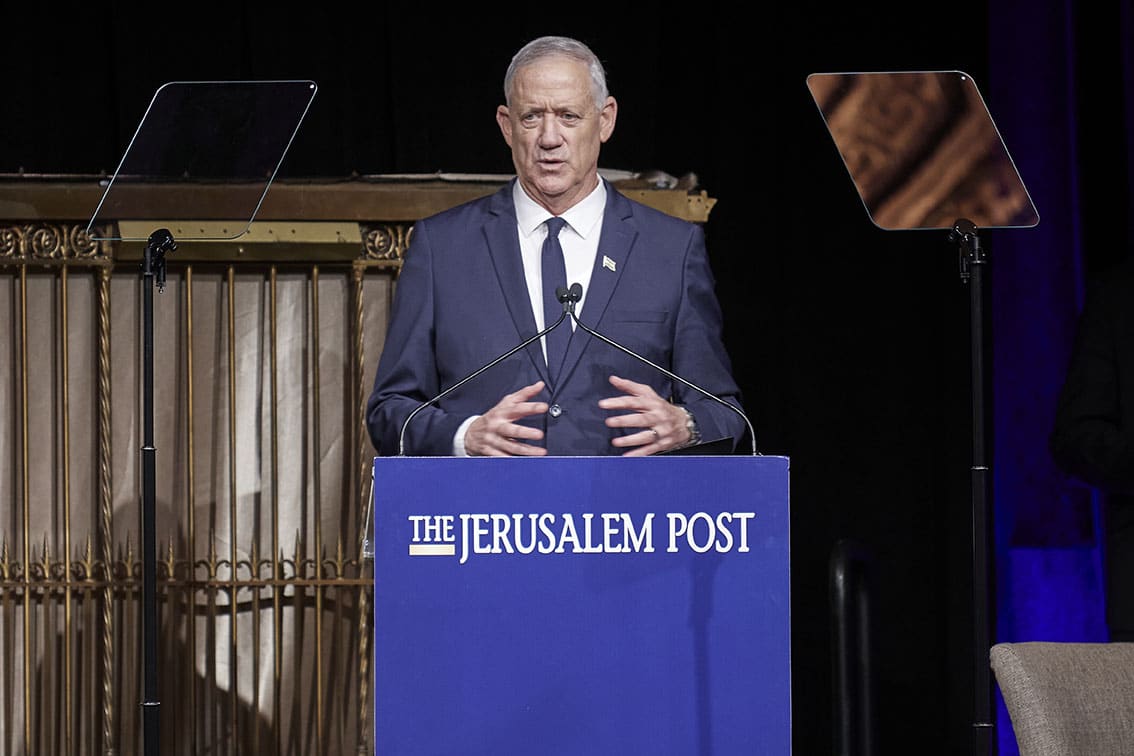
Israeli Defense Minister Benny Gantz, also in attendance, was asked by Mark Adler, a former Canadian Parliament member, if Israel has the weaponry to destroy Iran’s nuclear capabilities or if it is too late to do so.
Israeli Defense Minister Benny Gantz said Iran is a major concern. (Photo by Perry Bindelglass)
Gantz replied, “Obviously we cannot elaborate on our capabilities,” and received applause.
“We will never ask the United States to do it for us,” Gantz said. “We will defend ourselves by ourselves.”
Asked by another audience member if he would “in the interest of stability” join former Israeli Prime Minister Benjamin Netanyahu and be rotating leaders of Israel, Gantz said he would not.
Gantz said Iran has stepped up its violent activities and that lifting sanctions would increase Iran’s ability to terrorize. He suggested that Iran, unfettered in its hegemonic ambitions, will spark a nuclear arms race.
“And to Israel, it will impose an existential threat which we will never accept,” Gantz said.
Thomas Nides, America’s ambassador to Israel, told the crowd that President Joe Biden will not allow Iran to become nuclear.
Republican New York Congressman and gubernatorial candidate Lee Zeldin said an Iran deal would be a mistake and worse than the original one. Zeldin, who is Jewish, received applause when he said the United States should walk away from the table. Zeldin noted that there was a city council hearing on antisemitism scheduled around the CUNY chancellor’s schedule, but the chancellor didn’t show up to the hearing.
“The culture has to be overhauled and if that means setting an example at the very top by removing the chancellor of the city university of New York, so be it,” Zeldin said.
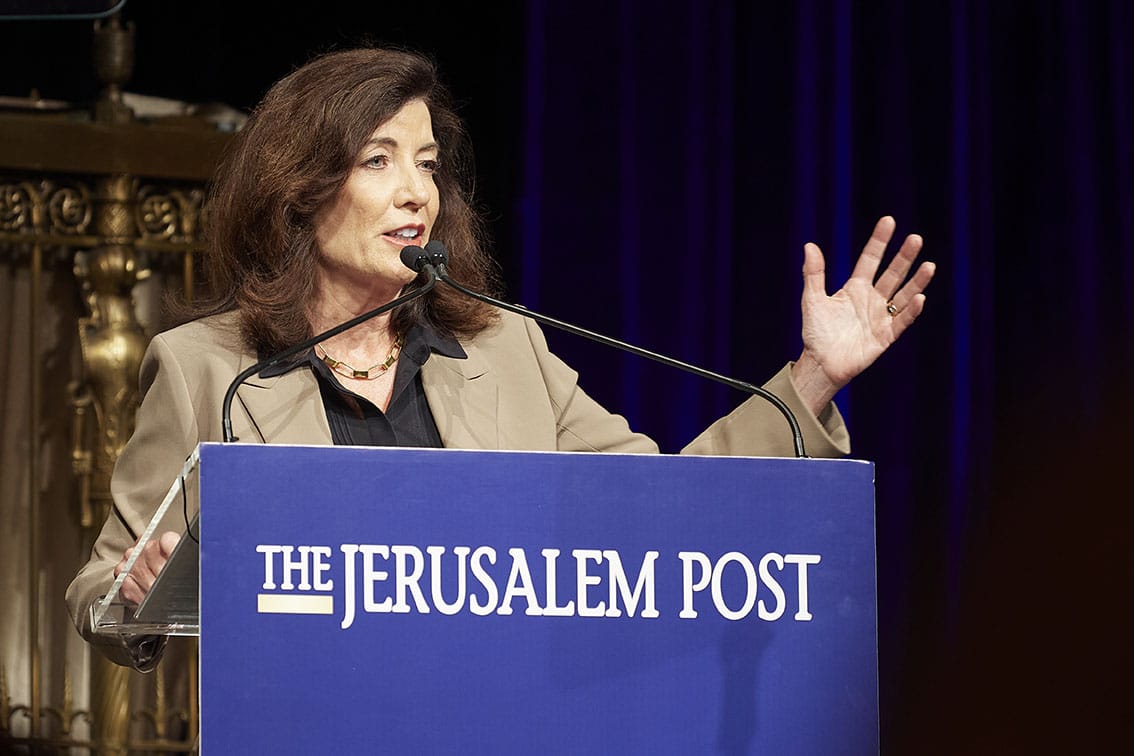
Democratic New York Governor Kathy Hochul called Israel “an oasis of democracy.”
New York State Governor Kathy Hochul said she is concerned about the rise in anti-Semitism. (Photo by Perry Bindelglass)
“The rise in antisemitism is a deep personal concern to me as human being,” Hochul said, adding that New York has worked to protect yeshivas and synagogues in New York, allocating some $68 million to fortify them.
She said a 13-year-old Jewish boy told her he was afraid to wear his yarmulke, as he might get knocked down on the street. She said she told him wear it “proudly because you’re upholding a tradition for generations.”
She added that many Holocaust survivors in New York were living in poverty, and she said she wanted to give them resources to lift them up. She said she wants to make sure New York schools teach the Holocaust, adding that “I’m not sure I remember learning about it as a child at school.”
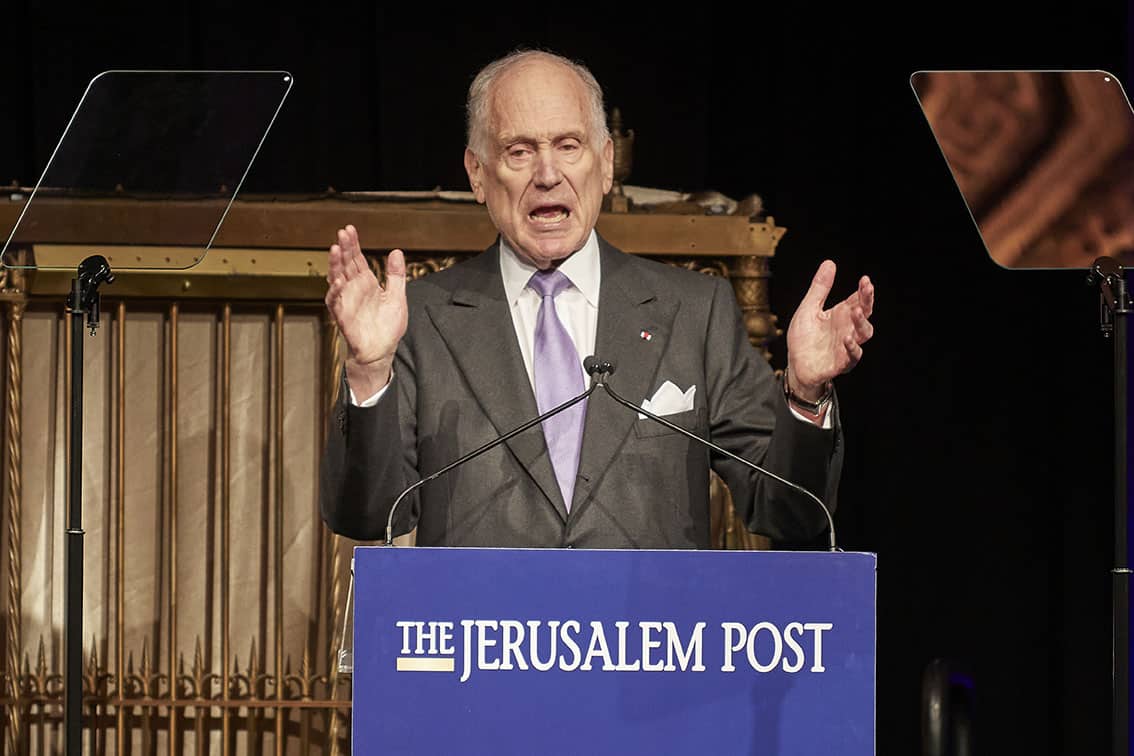
Ronald Lauder, President of the World Jewish Congress, said Israeli prime ministers have been held hostage by government members threatening to leave coalitions and while America, England and France have two major political parties, Israel has 22 parties. He was among a number of speakers to say that five elections in three years is not normal, calling for a change in the electoral system.
President of the World Jewish Congress, Ronald Lauder, said Israel needs to fix its electoral process to avoid frequent elections. (Photo by Perry Bindelglass)
“It’s like the elephant in the room,” Lauder said. “…Some people, when they go to bed, count sheep. Today, in Israel, a prime mister needs to count Knesset members.”
Moshe Lion, the mayor of Jerusalem, interjected some humor when he said, “It is my great pleasure to be with you in The Big Apple, all the way from The Big Falafel.”
Then he got serious, saying a Jew, a Muslim and a Christian walk into a startup: “It’s not a joke, it’s a reality. It happens every day in Jerusalem.”
Moshe Lion, the mayor of Jerusalem, lightened the mood with a joke and then boasted of his city’s high tech power. (Photo by Perry Bindelglass)
He said there are more than 600 tech companies employing 20,000 people in his city.
Speaking of the younger generation of American Jewry and Israel, Asaf Zamir, Consul General in New York, said “the connection isn’t always there” and he wanted to see it strengthened.
Waze co-founder Uri Levine was the only speaker in jeans and a t-shirt. Asked what his secret sauce is, he said an entrepreneur has to fall in love with the problem, not the solution, words humorously printed on his shirt.
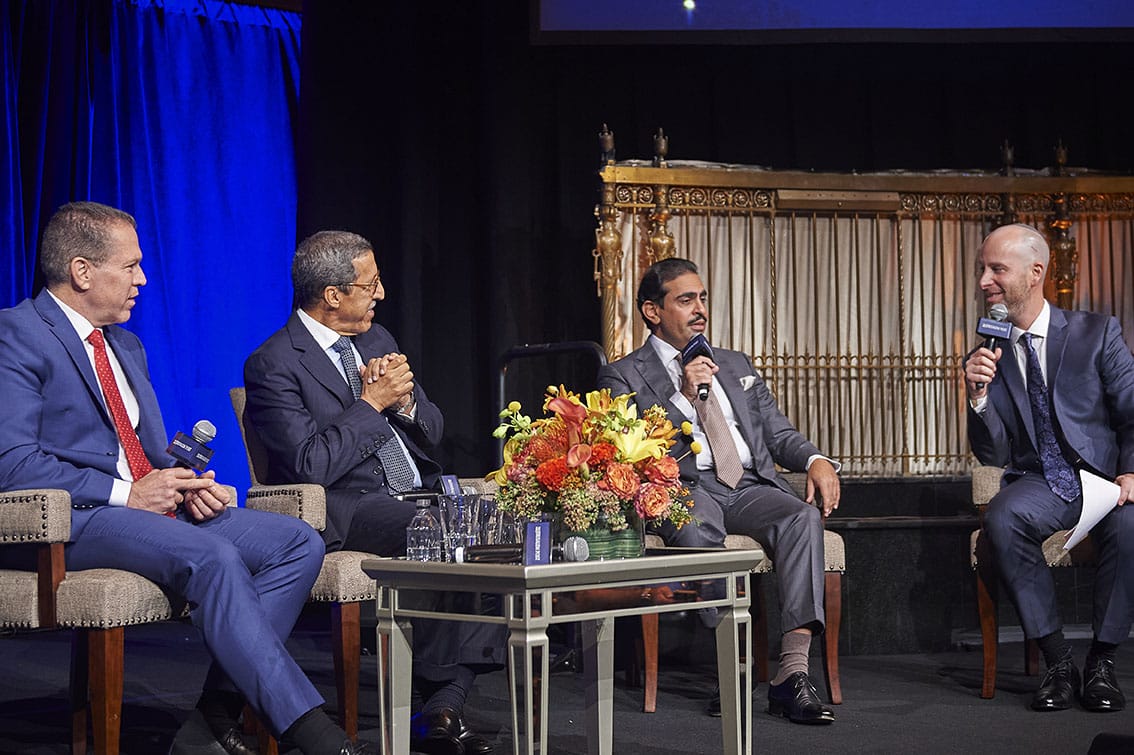
For the first time in the annual conference, representatives from Bahrain and Morocco were speakers. Morocco’s ambassador to the United Nations, Omar Hilale, and Bahrain’s ambassador to America, Shaikh Abdulla Bin Rashid Bin Abdulla Al-Khalifa, joined Israel’s ambassador to the UN, Gilad Erdan, in a discussion moderated by Katz.
Israeli ambassador to the U.N. Gilad Erdan, Morocco’s ambassador to the U.N. Oma Hilale, Bahrain’s ambassador to the U.S. Shaikh Abdulla bin Rashid bin Abdulla Al Khalifa and Editor-In Chief Yaakov Katz. (Photo by Perry Bindelglass)
Erdan said he is seeing some progress at the UN. He added that he hopes by the example of Morocco, Bahrain, Jordan, Egypt and the United Arab Emirates, Palestinians will eventually see peace is a better alternative. Al-Khalifa wished condolences to anyone who lost a loved one in the attacks of September 11, 2001, and said he hoped Bahrain and Israel will continue to grow closer, while Hilale said he is looking forward to continuous good trade between the two countries.
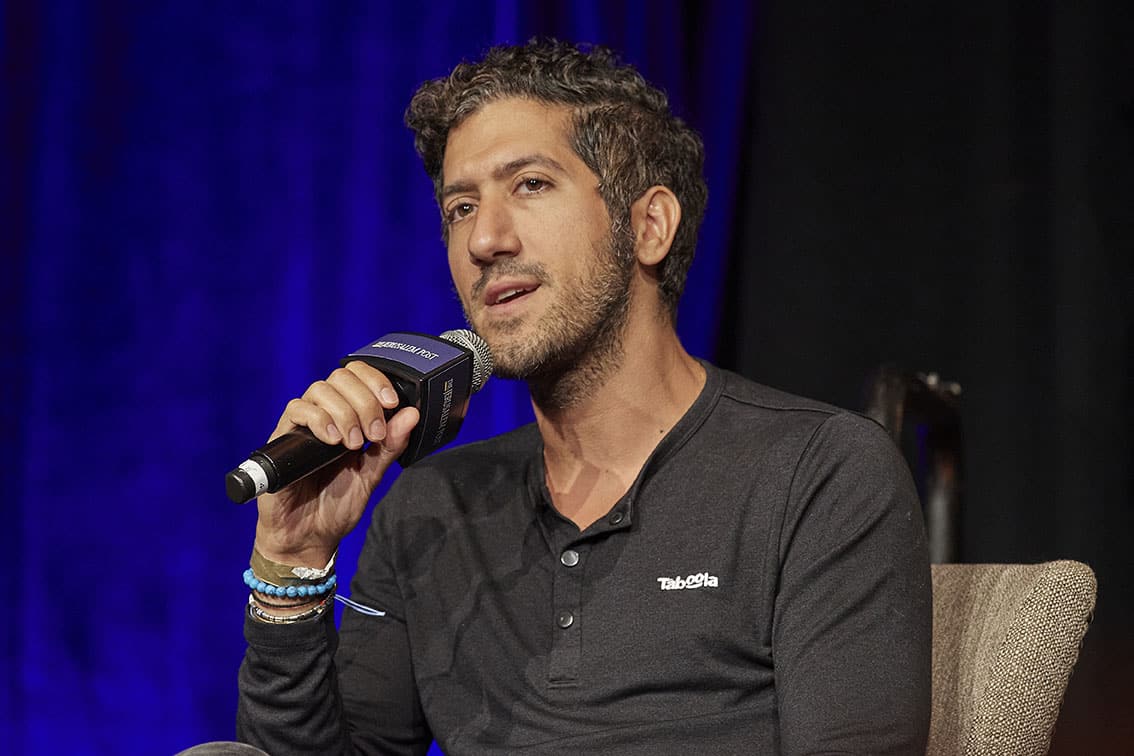
Adam Singolda, founder of the discovery and advertising platform Taboola, said that after he served in the IDF and had a career as an engineer, he told his mother that instead of searching for information someone wants, the information should find them. Her response was that he should stop drinking and smoking. But his company is on fire, as it became a unicorn, the phrase used for any billion-dollar company. Its 22 offices include its flagship in New York City, as well as sites in Los Angeles and Tel Aviv.
Taboola founder and CEO Adam Singolda’s mother doubted his business idea. He used it to build a billion dollar company. (Photo by Perry Bindelglass)
Canadian philanthropist Sylvan Adams said he made aliyah six years ago and realized he could show off Israel to millions of people who think of it as merely a conflict zone, by televising sporting and entertainment events hosted there. He brought Madonna to perform for Eurovision in 2019 and a year earlier, brought Italy’s famous 21-day bike race known the “Giro d’Italia” to The Holy Land. He said that more than a billion TV spectators were able to see the beautiful landscape from Haifa to Eilat. He is also part of Save A Child’s Heart, an NGO that helps kids from countries around the world, including Palestinian children. He said his efforts to broadcast live events are speaking to the silent majority.
“They don’t want a history lesson or a political science lesson,” Adams said. “They just want to enjoy their sport, or their music concert or their cultural event.”
Democratic New Jersey Congressman Josh Gottheimer, who is Jewish, railed against possible Iran deal and said it is a foolish path to go down. He said while some members of “The Squad” have made negative comments or posts about Jews or Israel, one should look at the record of Democrats regarding Iron Dome or anti-BDS and should not believe that the Democratic Party has been taken over by them.
Stuart Force described terrorists as setting up the Wild Wild West, only instead of a “Wanted” poster, there is a blank poster, and terrorists get rewarded for killing innocent people. The Taylor Force Act is named after his son, a Vanderbilt University graduate student killed by a terrorist in Tel Aviv in 2016. Its goal is to stop the “pay for slay” transaction where Palestinian governmental agencies pay successful terrorists or their families, by cutting funds to Palestinian governmental agencies if they continue this policy.
Nitsana Darshan-Leitner, president of the NGO Shurat HaDin, also known as the Israel Law Center, recalled hearing a story of a five-year-old girl who was killed by a terrorist at a bus stop. She said a male relative of the girl told her, “I wish I would have killed this bastard.” But he told her he knew he could not take the law into his own hands.
Bret Stephens, senior Opinion columnist for The New York Times, and a former Jerusalem Post Editor-In-Chief, said one tough moment of leading the outlet was when one of his reporters was almost killed in a terrorist bombing.
He said he sees a decline in quality of American journalism and democracy and that it is astonishing that polls show there is less public trust in the news media than there is in Congress. Stephens, who is not on Twitter, said if it were up to him, he might forbid reporters from being on Twitter as some reporters can be motivated to write whatever they think will grow their online following.
Maayan Hoffman, head of conferences for The Jerusalem Post who moderated one of the two panels with Stephens, asked a different speaker about the need for accuracy and fairness, and cited an article by media watchdog Honest Reporting, claiming that three New York Times freelancers in the Gaza Strip praised Adolf Hitler and Palestinian terrorist attacks, though The Times had not been aware of their opinions as they had been expressed on social media in Arabic.
Stephens noted that the three were no longer working for The New York Times.
Stephens said that while The Jerusalem Post was seen only as an Israeli newspaper in 2002, he worked to give it greater reach. He commented that serving as editor was one of the proudest achievements of his life, saying that his mindset during that era was that “we are that bridge to an engaged diaspora, North American Jewish community, whose heart beats for Israel.”
Alan Zeitlin is a New York based writer. His articles have appeared in The New York Jewish Week, The Forward, The Jerusalem Post and other publications.
There is an understanding that during this time of year, God comes closer. In spiritual proximity, God is explained to be “in the field” rather than enthroned on high, seemingly far from approach. Meaning, God is ready for conversation, eager to hear our thoughts, joys, and frustrations. The question is less about God’s ability to listen. The challenge is whether we will let ourselves pause long enough to admit what it is we need God to hear.
As I ran into the house in the middle of the day, rushing to catch my breath, I noticed the most beautiful butterfly sitting on the sidewall. I have seen this butterfly before. Each time, I inch closer, hoping to examine its vibrant hues, but expectedly, it quickly flies away. This time, the butterfly stood still. Still long enough for me to wonder if something was wrong. Again, I inched closer, thanked God for this chance to witness a piece of Creation. I took a deep breath in, let it out, and moments later, the butterfly flew away.
A precious chance to pause, reminding me that others need me to hold still. How will I listen if I am always rushing? How will I hear what needs to be said if I am always flying away?
God’s role in our liturgy serves as an example as to how we should behave with those we love. The Jewish calendar asks us to come out of isolation and reapproach those with whom our connection wanes. Will we pause long enough for our loved ones to come close? Or will the days and month pass us by, time scurrying away just like the beating wings of the butterfly?
Elul begs us to slow down. Who needs you to listen? And whom do you wish would listen to you? God dwells in the field, beseeching us to come near. So too may we open our hearts to those that wish to dwell in our presence.
Slow down. Pause. Reconnect. Imagine what you might hear if you’re willing to listen.
Shabbat Shalom and Shana Tovah
Rabbi Nicole Guzik is a rabbi at Sinai Temple. She can be reached at her Facebook page at Rabbi Nicole Guzik or on Instagram @rabbiguzik. For more writings, visit Rabbi Guzik’s blog section from Sinai Temple’s website.
One of my kids asked the other day, “What’s the hole in the bagel for?”
We explored a variety of answers (from the practical to the humorous). I finally simply said, “Well, without a hole, it’s not a bagel.”
It got me thinking…. We all experience voids in our lives. There may be emotional, spiritual, or medical wounds that leave us broken.
Other people may have academic, athletic, or musical talents that I lack.
Failed relationships, job losses, death of loved ones…. Life would be so much easier without these wounds. But while we may often feel broken, these experiences contribute to the whole person that we become. It’s often in that darkest of moment in time when we begin to experience light once again.
Leonard Cohen put it well: “There’s a crack in everything. That’s how light gets in.”
And remember – holes can lead to wholeness, and through the that you can find holiness!
The Torah reading of Ki Tavo includes a lengthy passage filled with curses, the misfortunes that will visit the Jews if they abandon the covenant. This is the second time in the Torah that there is a set of curses, but this section of curses is much longer, and far gloomier, than the previous one in Parshat Bechukotai.
Yet the Talmud manages to strike a positive note about the curses. It tells us that Ezra, at the very beginning of the Second Temple, established that this Parsha be read before Rosh Hashanah, “that the year should end, and with it, its curses.” Placing this Torah reading just prior to Rosh Hashanah expresses the hope that the difficulties of the past year be left behind as we enter a new year.
There is a Sephardic liturgical poem, “Achot Ketanah,” that is read on Rosh Hashanah; its refrain repeats the words “May the year end, and with it, its curses.” In the final stanza it adds the phrase “may the new year begin and with it, its blessings.” (In Hebrew, the words for “end” and “begin” are homonyms, similar sounding words that are spelled differently.) And this is now a popular phrase in Hebrew: “Tichleh Shana v’Kililoteha. Tachel Shana u’Virchoteha”; “may the year end, and its curses, and the new year begin with is blessings.”
The appeal of this phrase is obvious. Who wouldn’t want an end to curses, and a beginning of the blessings? For this reason we dip an apple in honey on Rosh Hashanah, and add a prayer for “a good and sweet year.” And it is not just apples; many have the custom to dip the Shabbat challah in honey from Rosh Hashanah until Simchat Torah.
From a religious perspective, sweetness is not an obvious aspiration. Some religious traditions require unending discipline and seriousness. H.L. Mencken quipped that Puritanism is “the haunting fear that someone, somewhere, may be happy.” To stand in awe of God is seen as a continuous experience of fear and trembling.
In the Jewish tradition, we intertwine many significant religious experiences with sweetness. There was a medieval custom, cited in the 14th-century Sefer Kolbo, that when a young child is first brought to study Torah, they are offered cakes and sweets. Then the child is shown the letters of the Hebrew alphabet on a board, and taught them. Afterward, honey is placed on each letter, and the child gets to lick the honey. This ritual, which is still practiced today, is meant to convey a message to the child that the Torah is very sweet.
The Torah must be a joy. Many Jewish philosophers see creation as an act of love, a gift of joy to mankind, and that should be reflected in our religious lives. But it is unfortunate that some parents and educators instruct children with a puritanical type of Judaism, one that drains the joy out of the religious experience. All too often, children raised in that environment rebel, not wanting to take any part in a Judaism of negativity and bitterness.
But it is unfortunate that some parents and educators instruct children with a puritanical type of Judaism, one that drains the joy out of the religious experience.
Sweetness has become a part of Jewish culture as well. In 2012, the Gallup-Healthways Well-Being Index found that Jews have the highest well-being of any of the American faith groups. Being happy is as Jewish as chicken soup, and joy is an important mitzvah.
But realists understand that unending sweetness is impossible. In my early years in the Rabbinate, I would announce before Parshat Ki Tavo that with the reading of the Torah, we are now leaving the curses of the previous year behind. But after a few years, I realized that announcing it on a yearly basis sounded absurd; every year new curses popped up that now had to be left behind. The yearly announcement ended up emphasizing that curses are perennial, with new ones occurring every year. Sweetness doesn’t last forever.
The Midrash Tanchuma offers a very different perspective on the curses in Ki Tavo. It connects the curses with the first words of the next Parsha, “you are standing here today.” The Midrash says that the point of this juxtaposition is to express that “even after all the suffering [of the curses] occurs, you can still remain standing.” Instead of looking for hope, this Midrash focuses on the importance of resilience.
It might be sweet to get past curses; but it is more important to know how to get through curses, to remain standing when everything goes wrong. A well-lived life requires courage and determination along with sweetness and satisfaction.
Sweetness is not our final goal; happiness and meaning are not one and the same. In a 2013 study, a group led by Professor Roy F. Baumeister studied both the interconnection, as well as the differences, between happy lives and meaningful lives. Often, meaningful lives were fairly happy as well, but not always. The researchers found that “happiness without meaning characterizes a relatively shallow, self-absorbed or even selfish life,” while “the unhappy but meaningful life … [is] seriously involved in difficult undertakings.” Those who pursued meaningful lives, even if it limited their happiness, were true givers, people who made substantial differences in society.
At times, we are forced to choose between meaning and happiness. And in those moments sweetness is no longer a priority. John Stuart Mill put it best when he wrote, “It is better to be a human being dissatisfied than a pig satisfied; better to be Socrates dissatisfied than a fool satisfied.” This echoes the Talmud, which says one should serve God without interest in a reward, and do what is right simply because it is right, even if it is painful to do so. In the choice between happiness and meaning, meaning comes first. Judaism believes that it is better to be a good person than a happy person.
Nowadays, the pursuit of sweetness comes first. The American Council on Education has been surveying incoming college freshmen since 1966. In 1967, 82.9% of freshmen felt that “developing a meaningful philosophy of life” was essential; in 2015, only 46.5% felt that was an important objective. (In contrast, in 1967, 43.5% of freshmen considered it essential to be “well off financially.” By 2015, that number had gone up to 81.9%).
But if only happiness is the goal, then life is diminished. As the character Estragon says in Samuel Beckett’s play “Waiting for Godot”: “What do we do now, now that we are happy?”
Jews cherish happiness, but we know that there is still more to life. In centuries of challenges and persecutions, a quick conversion could have immediately improved the quality of life for any Jew. Some did take that route; but we are here today because so many remained loyal to their roots, no matter how difficult it was. Had our ancestors decided that happiness was the ultimate goal, there would not be any Jews left today.
Professor Marc Michael Epstein tells a powerful story from his days working in the rare book department at Sotheby’s. Inevitably, elderly people would show up with older books of little value, assuming they were important antiques. One day, one such elderly man arrived, with a book of Psalms printed in 1920; it was worth pennies, if that much. Not knowing how to break the news, Epstein asked the man what he paid for it, hoping to let him down slowly in conversation. In response to the question, the man became far more serious. Epstein describes that “the old man drew himself up to his full 5 feet, 2 inches. ‘For this, I paid seven days’ Auschwitz bread,’ he replied … It seems that the Nazis had caught him with the little Psalm book, and, as a penalty for possessing it, imprisoned him without food—only water to drink—for an entire week.” Epstein was overwhelmed by the response, and turned to the elderly man: “This,” I stammered, “is too valuable for us to sell.” Some things are more valuable than money, and there is more to life than just sweetness.
As we start the new year, we come to leave the past behind, ready to celebrate a sweet future. But even at times like this we must never forget that some things are more important than happiness, and some goals are more noble than joy.
Rabbi Chaim Steinmetz is the Senior Rabbi of Congregation Kehilath Jeshurun in New York.
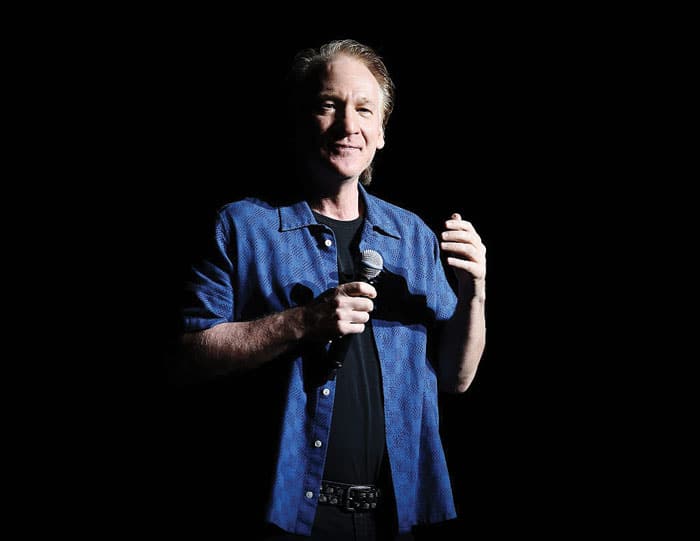
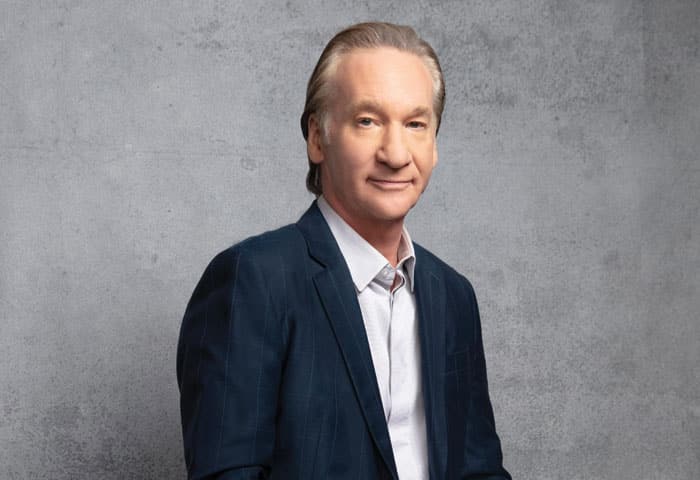
I didn’t think I would find a connection between the passing of Queen Elizabeth II and Bill Maher, the subject of this week’s cover story. After all, they couldn’t be more different: The Queen was supremely careful not to offend anyone with her words, while Maher fearlessly speaks his mind regardless of whom he might offend.
Then I read this line in a tribute to the Queen that spoke of the monarchy as “an institutional force for stability that partisan politics could never provide.”
A force for stability that partisan politics could never provide? Where do I get some of that?
Maher has emerged as a uniquely powerful voice in America precisely because he gives us what predictable, win-at-all-cost partisan politics can’t provide: an honest voice.
Maher would be a good start. The comedian-host has emerged as a uniquely powerful voice in America precisely because he gives us what predictable, win-at-all-cost partisan politics can’t provide: an honest voice.
Maher has developed this stunning habit of telling us what he really thinks, even if it upsets his legions of fans.
Maher will brutalize Trump with unrelenting force, but will push back against those who simply assume his 74 million voters are just as dangerous.
As a longtime icon of the left, he knows that defending Israel won’t win him any popularity points. But he has the courage to say things like:
“There’s just not another country in the world that would allow missiles to be rained down on them without fighting back. What I find so ironic is that after World War II everybody said, ‘I don’t understand the Jews. How could they have gone to their slaughter like that?’ Ok and then when they fight back: ‘I don’t understand the Jews. Why can’t they go to their slaughter?’”
Last week, he had the nerve to launch missiles at the widely beloved hit movie of the summer, “Top Gun: Maverick,” which he called “a two-hour propaganda ad for defense contractors, militaristic, jingoism, and bombing foreigners.”
On his “Real Time With Bill Maher” show on HBO, the host-comedian asked: “If you’re a film critic and you’ve been making your life’s mission to root out the insufficiently liberal in cinema, did you not notice that ‘Top Gun’ is a lot about making warmongering sexy? The weapons porn, the endless money shots of engines, burning jet fuel … The aircraft carriers dancing in the sun’s haze, all to the manly macho masculine sounds of … Kenny Loggins?”
As someone who recently saw the movie and loved it, I loved even more that someone challenged me with a fresh take I hadn’t considered.
Because so many of us have allowed partisan politics to consume us, we fight with ferocity for our side, just as Cruise fought for his side in “Top Gun.” When we fight so hard to win, the last thing we want to hear is anything that might challenge our narrative and, God forbid, introduce doubt.
Maher is a doubt merchant for partisans.
It’s odd to think of doubt as a “force for stability,” but by arousing our curiosity rather than our tribalism, doubt makes us more empathetic and civilized. The novelist E.L. Doctorow called doubt “the great civilizer on earth” because it civilizes and stabilizes human societies.
He probes each issue independently, going wherever the facts and common sense will take him. This keeps his audience guessing. How often can you say that about any commentator today — that they keep their audience guessing?
At a time when countless Americans are paralyzed either by blind partisanship or a fear of offending Twitter mobs, Maher isn’t afraid of either one. He probes each issue independently, going wherever the facts and common sense will take him. This keeps his audience guessing.
How often can you say that about any commentator today — that they keep their audience guessing? I can’t think of too many.
Queen Elizabeth provided “stability” by transcending partisan politics and staying above the fray. Maher provides stability by jumping into the fray, using his curiosity and common sense as balancing weapons that mitigate extremism.
In this week’s Journal cover story, our Community Editor Kylie Ora Lobell interviews Maher to explore his courageous voice and help us understand where it comes from.
My favorite part of the story is when Kylie asks Maher if has any ideas to make things better.
“My prescription has always been to stop talking politics all the time,” he responded.
I can’t think of a better starting point as we enter the High Holy Days, where we are called upon to look honestly at our mistakes and work to improve ourselves, than to “stop talking politics all the time.”
Just as the Queen transcended politics, and Maher has transcended political tribalism, they both represent the Jewish idea of transcending our basic instincts and aiming for something higher.
At a time of hyper political tribalism, it’s hard to find major voices who will challenge their own side.
Bill Maher is one of those voices.
He’s a liberal who is anti-woke. He owns guns but is outspoken against Hollywood’s culture of violence. He’s pro-choice but understands the pro-life position. He doesn’t like organized religion, but he’s a staunch defender of the Jewish state. Maher doesn’t believe in tribalism. He’s over it.
“I’ve never voted along party lines,” said Maher, who is the host of “Real Time with Bill Maher” on HBO. “I’ve mostly voted along Democrat party lines because a Democrat was someone I liked or because it was the lesser of two evils. But there is no guarantee I would vote Democrat this time.”
Along with pointing out the flaws in the Republican party, on his weekly show Maher also goes after his own party.
Along with pointing out the flaws in the Republican party, on his weekly show Maher also goes after his own party. One of the reasons he’s become so disenchanted with the Democrats is their handling of the pandemic and the fallout from it.
“There is an issue that could absolutely make me vote Republican, and that’s COVID vaccines and paranoia,” he said. “[California] is talking about criminalizing medical misinformation. So much of the misinformation we had about COVID came from them. Misinformation according to whom?”
Maher seeks out the truth no matter the source. In regards to COVID, dogmatic worship of the mainstream medical establishment in his own party was just too much for him.
“People want to believe there is a priesthood in white lab coats, and I could prove very easily that this is not the case,” he said. “There are a lot of people who have different understandings of medical science. There are thousands of dissenting MDs who have various opinions on COVIDand everything else. I’m not an anti-vaxxer. I just want to treat my body as I see fit.”
Even though Maher disagrees with the Democrats on COVID, among other issues, he still believes they have a good chance of winning in the midterm elections because of the Supreme Court overturning Roe v. Wade.
Even though Maher disagrees with the Democrats on COVID, among other issues, he still believes they have a good chance of winning in the midterm elections due to the Supreme Court overturning Roe v. Wade.
“A few months ago, I would have thought the Democrats would be beaten pretty badly, but obviously things have really turned around,” he said. “Abortion turned out to be an issue that I’m wondering if the Republicans now are regretting being the proverbial dog that caught the car. They’re finding out people don’t like what they’re doing.”
At the same time, Maher is recognizing Biden’s change in his approach that he displayed in his September 1 speech, where he bashed Trump supporters in front of a red wall and two Marine officers.
“Previously, Biden has been all about reconciliation and working with the other side, and now he is calling them out,” said Maher. “Of course, they say he’s attacking half the country, but it’s a specific group of Republicans. Everyone is so tribal these days that they say even if someone attacks part of a tribe, you’re attacking half the country. We’ll see how it works out. I think the Democrats are going to do a lot better than people think.”
Maher has always been interested in politics. Growing up in River Vale, New Jersey, he’d hear the news-radio his parents would play in the home. The liberal values he learned from his parents were compassion and common sense.
“[The liberals] used to be known for common sense,” he said. “That is a little shakier these days. We wanted to make sure that everybody in our country had an equal shot. I think that’s pretty basic to liberalism.”
Maher’s father, who worked in radio, was Irish Catholic. He brought up Maher in his religion and took his son to church with him.
“I was so traumatized by church,” Maher said. “My mother never went, and I didn’t think to ask why.”
At 13 years old, he discovered why. One day, it was revealed that his mother was Jewish. However, she wasn’t practicing.
“Maybe she went to temple when she was a child,” he said. “They weren’t the religious side of the family. They didn’t deny their Judaism, though.”
Despite being Jewish, Maher is an atheist who doesn’t engage with his heritage.
“I’ve never been in a temple,” he said.
What he did was film part of his 2008 documentary “Religulous” — in which he challenges all types of religious beliefs — in Israel. He didn’t have a religious experience there or change his mind about faith, but he did gain a tremendous amount of respect for Israel.
“It’s a beautiful country with great people and an inspiration, or it should be, to the part of the world that values freedom and democracy,” he said.
Maher doesn’t hold back when he expresses his support for Israel. In May of 2021, during the fighting with Gaza, he went on his show and blasted anti-Israel activists like Bella Hadid, as well as anybody who got their information from her.
“You can’t learn history from Instagram,” he told his viewers. “I would submit that Israel did not steal anybody’s land.”
Maher said, “Israel is one of the main reasons the woke hates me. Somehow, in their mind, in their blinkered view of it and limited understanding of history, Israel is the bad guy. My analysis is they don’t know very much about history, especially the history of Israel. They don’t know much about anything.”
Maher pointed out how people who are anti-Israel often compare the problems in the Middle East to America’s racial issues.
“The Israelis must be the bad guys and the oppressors because they like to divide everything into the oppressor and the oppressed. That’s an incredibly simplistic and positively ridiculous way of looking at it…You can’t learn history from Instagram.”
“In their view, the Palestinians are browner and poorer than the Israelis, who are whiter and richer,” he said. “The Israelis must be the bad guys and the oppressors because they like to divide everything into the oppressor and the oppressed. That’s an incredibly simplistic and positively ridiculous way of looking at it.”
When Maher made “Religulous,” he was 51 years old; now, he is 66. His views on religion have not changed — he still thinks organized religion is a sham. However, he acknowledges that people have their genuine reasons for being faithful.
“What’s important to them is when they put their head on the pillow at night, if they die in their sleep, they will go to a better place. I guess that gives them great solace. It wouldn’t work for me.”
Where Maher takes serious issue with religion is when people use it to justify doing bad things.
“Belief in God can keep some people on the straight and narrow,” he said. “Some people believe in God and worry God will punish them. Others believe in wicked things and think God is endorsing them. That’s how you get people flying into a building. It’s a faith-based initiative. The people bringing down the World Trade Center believed they were on a mission.”
Maher often makes provocative statements and takes flack from both the left and the right. He feuded with Donald Trump before Trump became president, and Trump went so far as to launch a $5 million lawsuit against the comedian. He eventually dropped it, but he still occasionally attacks Maher, as he did when he was president, calling Maher “the enemy” and “a jerk.”
When Maher says something on his “Real Time” show that upsets the left, many will go after him. On Twitter, thousands of people may condemn him for whatever thing he’s said they have deemed offensive that day. A recent spat with Rob Reiner over Hunter Biden’s laptop led to people taking sides; many agreed with Maher, while others called Reiner a “true American patriot.”
Maher wasn’t sticking to the liberal talking points on the Biden laptop story. Unlike most of the late-night talk show hosts, he took on the mainstream media for downplaying, if not ignoring, the story.
“They’re normally so scared of saying anything that will get anybody upset in any way,” he said of liberal talk show hosts. “They will just say the thing that makes their audience clap like seals.”
So, the mainstream media is biased and the country is more polarized than ever. Where do we go from here? Maher has an idea.
“My prescription has always been to stop talking politics all the time,” he said. “One of the biggest problems is that people go on Facebook and argue about Ivermectin with some kid they went to third grade with.”
When Maher was younger, he said his parents didn’t know what their friends’ religions were, or if they knew, they wouldn’t talk about it. They may have known what politics their friends believed in, but it was considered private and almost rude to engage in political conversations.
“As long as we are in this place where we think the other side is an existential threat, I don’t know how we’ll move forward…My prescription has always been to stop talking politics all the time.”
“It worked out a lot better,” he said. “We had no idea how much we hated each other, and that worked. We’re constantly trying to convince people to come to our side, which never works. You’d have better luck convincing Tom Cruise to give up Scientology than convincing a conservative to be a liberal or a liberal to be a conservative. As long as we are in this place where we think the other side is an existential threat, I don’t know how we’ll move forward.”
Maher has always had conservative friends, and it isn’t a big deal. He can have civil conversations with them. He focuses on the things they have in common, which is what he recommends others to do, too.
His latest project, a podcast he launched this past spring called “Club Random with Bill Maher” features guests with a wide range of views. Many of them would probably disagree with Maher on most issues. But politics rarely comes up. So far, he’s had a fun time talking about all kinds of subjects with people like Jay Leno, Leslie Jones, Jeff Ross, Quentin Tarantino and Howie Mandel.
“It’s a nice outlet that’s completely different from my show,” he said. “It could veer into politics, but I have no agenda. I barely know who the guest is when I walk into the room.”
With “Club Random,” Maher hopes to reinvent podcasting. To set up his studio, he brought in a reality TV production crew to put cameras in the walls. That way, guests forget they’re being filmed and can relax and enjoy themselves. There are no bright lights like a studio has; instead, it looks like a nightclub.
“I created something I didn’t see anywhere else,” he said. “That’s a fun thing to do, to take an art form and make it into something it hasn’t been before.”
In his long career, Maher has toured the country doing standup. He’s acted, written books and been on TV for over three decades. Now, he has a new podcast as well. Reflecting on his career, he feels lucky for having been given a platform, and a way to speak out about what matters the most to him.
“You find out what you’re good at,” he said. “For me, that’s podcasting, touring and my show. If you’re very fortunate as I have been, they let you do it for 30 years.”
He added, “In general, if you can do one thing in show business, count yourself lucky and just do it.”
Rosh Hashanah is a time for reflection and celebration. In Jewish tradition, we dip apples and challah in honey for a sweet New Year.
“I am all about the symbolism of honey for the sweet new year,” Challah guru Mandy Silverman, founder of Mandylicious, told the Journal. “And like honey, sometimes the new year can mean sticky times can be ahead, but overall the hope is that the sweet will be the part it is remembered for.”
Silverman believes every year it is “a journey in personal growth, with a side serving of delicious food and wonderful family moments.”
Mandylicious’ Honey Spice Challah is the perfect addition to any holiday meal.
Mandylicious Honey Spice Challah
For the Challah Dough
1 1/3 cup water
1/3 cup canola oil
4 large egg yolks
2 teaspoons table salt
4 1/4 cups high quality bread flour
1/4 cup honey
1/4 cup dark brown sugar
1 tablespoon white sugar
2 tablespoons ground cinnamon
1 tablespoon ground allspice
1 scant teaspoon ground cloves
1 tablespoon instant yeast (Note: Instant
yeast does not need to be proofed. Just
add it in)
Extra water and flour, if needed
For the Egg Wash
1 egg yolk
1 teaspoon water
Combine all the ingredients in a large bowl and knead for 5 to 7 minutes by hand or by using the dough hook in a stand mixer. To reach desired consistency: if sticky, add additional flour, 1 tablespoon at a time; if dry, add additional water, 1 tablespoon at a time.
Allow dough to rise in a large bowl, covered with a towel for 1 ½ hours.
(Alternatively, you can add dry and wet ingredients to a bread machine in the order specified by the manufacturer. Set machine for the “dough” cycle.)
Remove dough from the bowl or bread machine and divide into 6 equal portions. On a floured surface, roll three portions into long ropes, carefully braid together, then place on a greased loaf pan or greased cookie sheet. Repeat with remaining dough.
To craft a round-challah for Rosh Hashanah, make your three strands extra long (20” to 24”), braid them, and then roll it into a circle shape, tucking the tail underneath.
Cover with a towel and let rise for 20 to 30 minutes in a draft-free place.
Preheat oven to 350°F.
Beat egg yolk and mix in water to prepare the egg wash. Brush over each challah.
Bake challahs for approximately 35 minutes or until golden brown. Remove from pans and allow to cool on a wire rack. Best served slightly warm.
If you have any problems or questions, direct message @mandyliciouschallah on Instagram.
“In my family, delectable culinary delights vie for top billing when it comes to Jewish holidays,” Chef Jeff Frymer told the Journal. “For Rosh Hashanah, that means baked apples with honey.”
Frymer’s dessert is the perfect recipe for the High Holy Days.
“It represents the simple sweetness of what is true for me,” he said. “We can taste and savor the essence of a new year of life, forgive others and be forgiven of ourselves.”
For this recipe, Frymer prefers Granny Smith apples as a savory balance to the sweetness of honey. However, if you are big fan of sweet, feel free to use Fuji apples instead.
“I use butter in this recipe, so I usually prepare a honey glazed salmon as the main course to keep everything on theme and kosher,” Frymer said.
Photos courtesy Jeff Frymer
Chef Jeff Frymer’s Baked Apples with Honey
Organic Ingredients
Granny Smith Apples
For each apple:
1 tsp honey
1 tsp crushed pecan/walnuts
1/4 tsp lemon juice
1/2 tsp ground cinnamon
1/4 tsp fresh ground nutmeg
1 tsp butter, melted
Preheat oven to 375°F.
Cut the top off the apples, about 3/8 inch, allowing the stem to remain. Be sure to remember which top goes to which apple for presentation.
Using a melon-baller, if you have one, core the apple, removing seeds and surrounding area. You want to leave a little clean apple bowl ready for the rest of the ingredients.
Squeeze a few drops of lemon juice over the honey and surrounding apple. Add crushed pecan/walnuts. Smear butter to cover it all. Finally, season with cinnamon and fresh grated nutmeg.
Return the apple tops to their respective recipients, place in an oven-safe baking dish and add a cup of water to the dish. Bake for approximately 40 to 45 minutes, until the apples soften and caramelize. Once done, allow to cool, quarter, plate, and serve.
Warning: Your house is going to smell amazing.
Those allergic to honey can add sweetness to their meal in other ways. For instance, Michael Tanenbaum’s Festive Fruit Compote and Fruit Punch will “knock your socks off.”
Tanenbaum’s recipe uses coconut sugar instead of honey (honey works too), and you get the sweetness from the fruit as well.
For Tanenbaum, founder of Consciously Kosher, the High Holy Days hold deep meaning.
“I feel joy and renewal during this time of year,” Tanenbaum told the Journal. “It’s a time to reconnect to the source of all Creation, to meditate upon the abundance that God has provided me and my family and to consider what lies in the year ahead.”
Photos courtesy Michael Tanenbaum
Consciously Kosher’s Homemade Hawaiian Punch
Ingredients (amounts are approximate)
1/2 gallon water (filtered or spring)
3 large Ceylon cinnamon sticks
1 tsp vanilla extract
1/8 tsp ground cloves
1/8 tsp ground allspice
1/8 tsp ground nutmeg
2-3 Tbsp coconut sugar (or substitute
agave or raw honey)
8 – 10 ripe and pitted fruits, including
but not limited to peaches, nectarines,
plums, pluots, apricots, apples (Fuji or
Gala), Asian pears and strawberries
In a large pot, bring a large pot of water to a boil. Pour in the coconut sugar and the spices.
Wash the fruit well, slice it in halves (or quarters), remove the pits and/or seeds and add the fruit to the boiling water mixture.
Simmer for 30 to 40 minutes with the lid slightly ajar, then remove from the heat and let it cool.
Filter the liquid from the fruit, using a fine mesh sieve.
Bottle the liquid and serve chilled. Serve the fruit with non-dairy yogurt or parve ice cream.


 Los Angeles poet Rick Lupert created the Poetry Super Highway (an online publication and resource for poets), and hosted the Cobalt Cafe weekly poetry reading for almost 21 years. He’s authored 26 collections of poetry, including “God Wrestler: A Poem for Every Torah Portion“, “I’m a Jew, Are You” (Jewish themed poems) and “Feeding Holy Cats” (Poetry written while a staff member on the first Birthright Israel trip), and most recently “I Am Not Writing a Book of Poems in Hawaii” (Poems written in Hawaii – Ain’t Got No Press, August 2022) and edited the anthologies “Ekphrastia Gone Wild”, “A Poet’s Haggadah”, and “The Night Goes on All Night.” He writes the daily web comic “Cat and Banana” with fellow Los Angeles poet Brendan Constantine. He’s widely published and reads his poetry wherever they let him.