fbpx

February 24, 2022

Malachi Reverses Zephaniah’s Doomsday

Whereas Zephaniah,

great pre-exilic prophet,

accurately predicts destruction of Jerusalem

with the expression

yom Hashem,

which denotes ‘day of the Lord’,

on which all Jews would be imperiled,

the great post-exilic prophet Malachi

provides a different meaning

to these words, applying them

to the day of messianic restoration

of the Jews

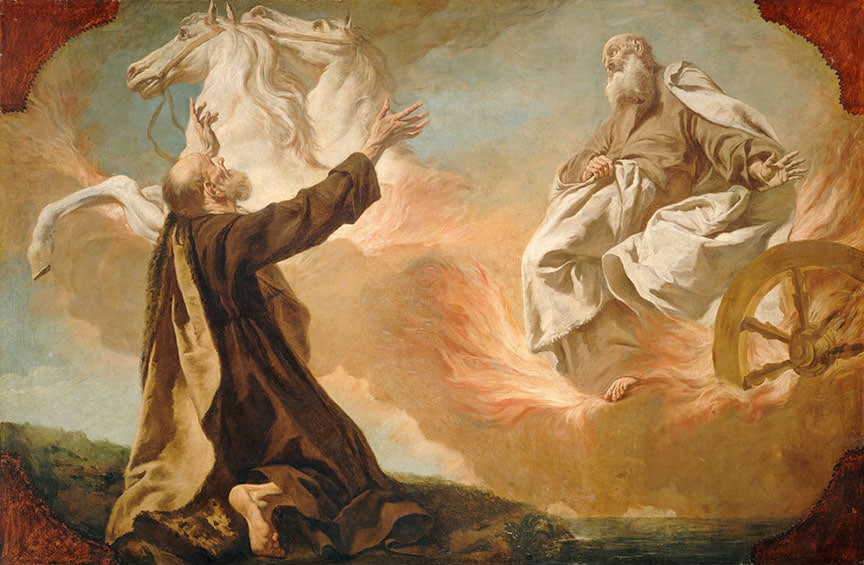
when Elijah would be their prophetic herald.

Whereas the Babylonians

said to all Judeans

whom they’d ordered to build their canals,

“Sing to us all about

Jerusalem which we’ve destroyed,”

that song about Jerusalem

was changed about two and a half

millennia later to the Hallel psalms they sing,

recalling Jews’ recapture of that great redoubt

where Solomon had built a temple,

Hallel: on this day the holy city and the holy temple’s

living epitaph.


Meir Soloveichik, in his Bible 365 series Podcast 190 on 2/18/22, “Zephaniah, Malachi, and the Two Days of the Lord” drew attention to Zephaniah who provides a negative connotation to the term “day of the Lord,” in contrast to Malachi. “Day of Jerusalem” has a negative connotation in Ps. 137: 7, but a positive connotation when celebrated annually, becoming a day on which Jews praise God for the recapture of Jerusalem in the Six Day War. Ps. 137:7 states:

ז זְכֹר יְהוָה, לִבְנֵי אֱדוֹם– אֵת, יוֹם יְרוּשָׁלִָם:

הָאֹמְרִים, עָרוּ עָרוּ– עַד, הַיְסוֹד בָּהּ.

7 Remember, O LORD, against the children of Edom the day of Jerusalem; {N}

who said: ‘Raze it, raze it, even to the foundation thereof.’


Yom Yerushalayim, the Day of Jerusalem, celebrated each year by Jews after the Six Day War, is a fulfillment of the prediction of the reversal of Zephaniah’s prophesy by Malachi in verse 3:23:

כג הִנֵּה אָנֹכִי שֹׁלֵחַ לָכֶם, אֵת אֵלִיָּה הַנָּבִיא–לִפְנֵי, בּוֹא יוֹם יְהוָה, הַגָּדוֹל, וְהַנּוֹרָא. 23 Behold, I will send you Elijah the prophet before the coming of the great and terrible day of the LORD.

Zephaniah had predicted: in 1:14:

יד קָרוֹב יוֹם-יְהוָה הַגָּדוֹל, קָרוֹב וּמַהֵר מְאֹד; קוֹל יוֹם יְהוָה, מַר צֹרֵחַ שָׁם גִּבּוֹר. 14 The great day of the LORD is near, it is near and hasteth greatly, even the voice of the day of the LORD, wherein the mighty man crieth bitterly.

In the last three verses of his book, Zephaniah anticipates Malachi, predicting the restoration of the Jews to their land. Zeph. 3:18-20 states:

יח נוּגֵי מִמּוֹעֵד אָסַפְתִּי, מִמֵּךְ הָיוּ–מַשְׂאֵת עָלֶיהָ, חֶרְפָּה. 18 I will gather them that are far from the appointed season, who are of thee, that hast borne the burden of reproach.

יט הִנְנִי עֹשֶׂה אֶת-כָּל-מְעַנַּיִךְ, בָּעֵת הַהִיא; וְהוֹשַׁעְתִּי אֶת-הַצֹּלֵעָה, וְהַנִּדָּחָה אֲקַבֵּץ, וְשַׂמְתִּים לִתְהִלָּה וּלְשֵׁם, בְּכָל-הָאָרֶץ בָּשְׁתָּם. 19 Behold, at that time I will deal with all them that afflict thee; and I will save her that is lame, and gather her that was driven away; and I will make them to be a praise and a name, whose shame hath been in all the earth.

כ בָּעֵת הַהִיא אָבִיא אֶתְכֶם, וּבָעֵת קַבְּצִי אֶתְכֶם: כִּי-אֶתֵּן אֶתְכֶם לְשֵׁם וְלִתְהִלָּה, בְּכֹל עַמֵּי הָאָרֶץ, בְּשׁוּבִי אֶת-שְׁבוּתֵיכֶם לְעֵינֵיכֶם, אָמַר יְהוָה. {ש} 20 At that time will I bring you in, and at that time will I gather you; for I will make you to be a name and a praise among all the peoples of the earth, when I turn your captivity before your eyes, saith the LORD.

The words , שֹׁאָה וּמְשׁוֹאָה, wasteness and desolation, an allusion the Shoah, are transformed from being a מַשְׂאֵת עָלֶיהָ, חֶרְפָּה, burden of reproach, when God ensures the return of the Jews to the land of Israel: בְּשׁוּבִי אֶת-שְׁבוּתֵיכֶם, when I turn your captivity before your eyes.


Gershon Hepner is a poet who has written over 25,000 poems on subjects ranging from music to literature, politics to Torah. He grew up in England and moved to Los Angeles in 1976. Using his varied interests and experiences, he has authored dozens of papers in medical and academic journals, and authored “Legal Friction: Law, Narrative, and Identity Politics in Biblical Israel.” He can be reached at gershonhepner@gmail.com.

Malachi Reverses Zephaniah’s Doomsday Read More »

Two Ways Ukraine Can Fight Back

Remember Patrick Henry on the eve of the American Revolution? History teaches us that nations unwilling to fight for their freedom generally lose it, unless a third party is willing to fight on their behalf. America and Europe have abandoned Ukraine to its fate. The Ukrainian people is being put to the ultimate test: Will they cower in their homes or dash for the closest border, or will they go out and confront the Russian Army?

Unfortunately, there are only two ways that the Ukrainians can save their country. The first is the Stalingrad option- to turn every apartment building in every city into a death trap for the Russians. The cost would be indescribable, but if anyone knows what such a struggle would mean it is the Russians, whose own heroism in the battle against the Nazis brought about one of the greatest victories in history. The result of turning Kyiv into Stalingrad would be tragic, but the Russian people are likely to draw the same conclusion they did after their experience in Afghanistan, overturning Putin and his fellow oligarchs and once again attempting to build a truly democratic country.

The result of turning Kyiv into Stalingrad would be tragic, but the Russian people are likely to draw the same conclusion they did after their experience in Afghanistan.

The other alternative for Ukraine is to adopt a strategy based on a second, non-violent but no less dangerous example of Russian heroism.  On August 19, 1991, the KGB carried out a putsch against Mikhail Gorbachev, author of the liberal policies of glasnost and perestroika. Boris Yeltsin, the mayor of Moscow, gathered thousands of courageous Russians around his official residence, known as the “White House”. In response, the KGB and the leadership of the plot ordered Soviet tanks to confront the demonstrators. One brave tank commander, Sergey Yevdokimov, ordered his men to surround the White House and to turn their tanks around in order to protect it. Demonstrators surged forward to confront the Soviet troops with flowers in their hands; the Russian soldiers refused to shoot them and the coup was defeated.

There are 40 million people in the Ukraine. If enough of them come out to confront the Russian Army with flowers many are likely to pay the ultimate price. But Putin is not Stalin, the Russian Army is not the S.S. and Russia itself is not Nazi Germany. If Ukrainians come out in the millions shouting “Give Me Liberty or Give Me Death,” maybe they could still save their own freedom and possibly that of Russia as well.

Two Ways Ukraine Can Fight Back Read More »

david suissa shanni suissa podcast

Could the War in Ukraine Have Been Prevented?

Why did the world fail to prevent the war in Ukraine? What will be the repercussions and who will pay the biggest price? Is Web 3 the future of the internet? Does technology lead us or is it the other way around? An amazing school for kids with special needs, and much more in this latest episode of “Conversations with Shanni.”
Follow David Suissa on FacebookTwitter and Instagram & Shanni Suissa on InstagramTwitter and TikTok
You can check out Shanni’s new show here!
example one
example two
example two

Could the War in Ukraine Have Been Prevented? Read More »

The Year of American Potential

Perhaps nothing encapsulates these past two years as poignantly as the term “the before times.” We look back on our way of life before the pandemic with nostalgia, but also with a sense that it is not something to which we can ever return. There were high hopes for 2021: Biden assumed office, vaccine rollout had begun, and normalcy was on the horizon.

Flash forward past an attempted coup, our disastrous retreat from Afghanistan, a global shipping crisis, hundreds of mass shootings, and underwhelming vaccination rates—one year later, Biden is facing a 41% approval rating and we’re staring down over a dozen COVID-19 variants, most notably the Delta and Omicron strains. It’s hard to be optimistic in the wake of what some are calling the Year of American Disappointment.

And yet, there is something to be said for optimism. The Omicron variant is burning itself out, and COVID-19 infections have fallen by 60% and hospitalizations by 25% over the past two weeks. Not only are we seeing a declining rate of transmission for COVID-19 cases, but the global solidarity that allowed us to develop vaccines in record time has also pushed mRNA research to the forefront, allowing for the potential development of vaccines against shingles, malaria, and even skin cancer.

Of course, the pandemic is only half of our daily source of stress these days. There’s also the broader political situation—the U.S. is still a deeply-divided nation trying to heal, both economically and socially. This year’s midterm elections are shaping up to hand the GOP control of the Senate, and coupled with a conservative-leaning Supreme Court, we can expect the remaining two years of the Biden administration to be characterized by obstructionism, infighting and inaction. Regardless of where you stand politically, we can all agree that a gridlocked, ineffectual government is the last thing we need right now as a country.

On the Democratic side, the party must stop squabbling amongst themselves and take a hard look at their options. Infighting between progressives and moderates has done nothing but disillusion voters, and an overly-critical cancel culture means that the party has been unable to accept their own political achievements—from the stimulus package to pandemic recovery—so long as there is a single critique to be found. In holding out for a perfect solution, Democrats are letting other opportunities pass them by. Come November, the balance of power will almost certainly shift to the right, and they can either find avenues of bipartisan cooperation, or else remain obstinate and take the risk that they’ll be able to mobilize voters to retake the Senate and maintain the presidency in 2024—assuming that the U.S. can still count on free and fair elections by then.

The American right is thankfully far less disjointed than their liberal counterparts, but far more alarming, actively “shattering faith in the integrity of our elections and abandoning their commitment to the peaceful transfer of power” by defending the January 6 insurrection and passing increasingly draconian voting restrictions. Unless Republicans can recenter their party around actual policies rather than prejudice and authoritarianism under the guise of MAGA hats, they will be responsible for not only the eventual implosion of the GOP, but of American democracy.

House Speaker Nancy Pelosi exemplifies the pragmatism our country needs in the coming months, arguing that “[what] unifies us is the empathy that we have for America’s working families and the priority of meeting their needs.” After all, the average American is less concerned with political theory and more concerned with the day-to-day realities of inflation, job security, and public health. We want to know that a tank of gas is affordable, that our children’s schools have enough staff to stay open, that we can walk into a grocery store and see fully-stocked shelves. When voters head to the polls, we will do so with only one question in mind: Am I better off now than before?

After all, the average American is less concerned with political theory and more concerned with the day-to-day realities of inflation, job security, and public health.

There’s no single answer to that question, but across the board, there’s cause for optimism. The U.S. added over 400,000 jobs last month and is on track for economic recovery despite the Omicron-induced slowdown. College completion rates are on the rise despite the hiccups that came with remote learning. The U.S. and China made history with a joint pledge to the Paris Agreement goals despite concerns that their domestic politics would hurt diplomacy. On every level and on every issue, there are signs of progress. We simply need to nurture it, and both parties have a role to play.

So enough with the doom-and-gloom predictions for 2022. It’s not that the future is bright, exactly. But the future is changeable. It will be what we make of it. In normalizing hopelessness, the only thing we achieve is to excuse our complacency. What might this country accomplish if we not only cultivate hope, but also act on it?


Seth Jacobson is the founder and principal of JCI Worldwide, a Los Angeles-based communications and research firm. He spent several years in the Carter and Clinton administrations in positions focused on economic development, foreign policy, and media relations. He is a frequent lecturer on policy and public affairs at Pepperdine University and UCLA.


The Year of American Potential Read More »

Kyiv’s Jewish community watches with apprehension as Russia attacks Ukraine

(February 24, 2022 / JNS) Chief Rabbi of Kyiv Jonathan Markovitch and his wife Inna are hoping for the best as Russian forces bombard Ukrainian cities. Hunkered down in Kyiv, where they run the Kyiv Jewish Center, the Markovitchs said they decided to stay in the city “because we have a flourishing community of 2,500 here that depend on us.”

Thousands of citizens around Ukraine are fleeing westward in the hopes of escaping what could turn out to be a brutal and dangerous war with many casualties and injuries.

However, not everyone is fortunate enough to be able to leave.

Speaking to journalists on a Zoom call arranged by Jerusalem-based MediaCentral, the Markovitchs explained the dire situation they face.

“Many have nowhere else to go,” Jonathan said. “Those who left are either wealthy or young. The people who stayed are unable to leave either for financial or health reasons. We decided to stay with them.”

They said they prepared stocks of food, mattresses, water and fuel so that people can come to the center and take what they need.

Thousands of citizens, including Jews, are in Kyiv because they cannot leave. Highways are jammed and one family even turned around and returned to Kiev after giving up.

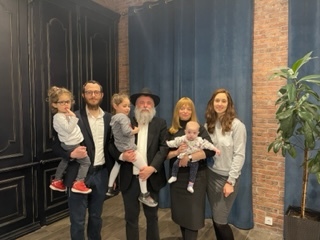
Chief Rabbi of Kyiv Jonathan Markovitch and his family. Credit: Courtesy.

Inna described the frightening situation and the poor preparation and communication by Ukrainian authorities.

“We saw smoke. It seems the airport was bombed so there are no flights out,” she said. “It was very frightening because there is no infrastructure here in Kiev. There are no bomb shelters, organized information or help from the government like we are used to in Israel. People are being advised to go to metro stations which are deep underground, but we live 20 minutes away from the closest metro station.”

Inna said that instructions are contradictory and “there is no one clear voice we can listen to.” She said that the Israeli embassy had advised citizens to leave Kyiv, but the French embassy recommended staying.

The synagogue is currently being used as a communal space. The Markovitchs prepared 50 mattresses and plenty of food ahead of time to assist community members in need.

“There is no bomb shelter but at least we can be together and cheer each other up,” Jonathan said.

Fearing riots and looting, the likes of which had occurred in 2014, the couple had arranged for a security company to protect the center, but they disappeared after demanding double the price they had originally quoted.

The Markovitchs also tried to organize buses, but the drivers were unable to get anywhere once Russian forces began bombing the city.

“We tried to organize many things and we have been successful on many fronts,” Jonathan said. “Some things we were successful with but some less.”

Their daughter-in-law Sherry explained the fear and panic when the air-raid sirens sounded Thursday morning.

“The city is empty. Most citizens have left Kiev,” she said.

She said that she is “packed and ready to go” should the need arise.

The question is, where will they go?

“We don’t know yet, but we have our passports ready,” she said.

Asked if they are connected to other Jewish communities in Ukraine, the Markovitchs answered in the affirmative.

“We have cooperation with all of the Ukrainian Jewish communities. We are in touch through WhatsApp,” Rabbi Markovitch said.

“We are connected,” Inna added. “If community members from Jewish communities from other cities come to Kiev, the rabbi calls us, asks for help for hosting or directions. We are connected. We are also in touch with the Chabad rabbi in Lviv so if our community members in Lviv who are there need something, we are in touch with him.”

Rabbi Markovitch said he isn’t yet sure what they are doing and will base their decision on how the situation develops. ​​

“We plan to stay here and help those who need help,” Inna said. “We stayed because we feel obliged to the community. We feel responsible for the people who stayed.”

Kyiv’s Jewish community watches with apprehension as Russia attacks Ukraine Read More »

What I Don’t Talk About When I Talk About Anne Frank

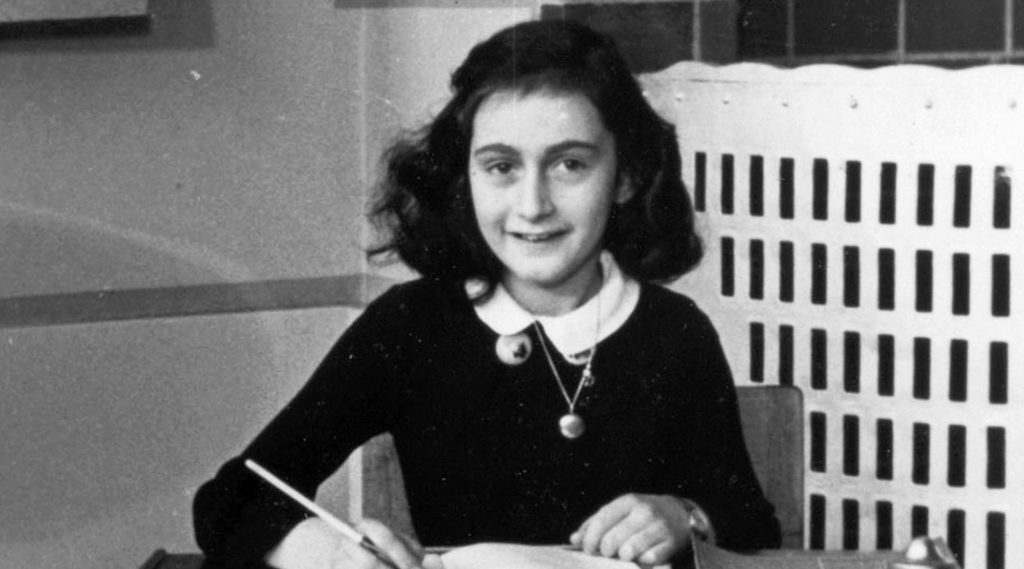
When I was nine years old, I became absorbed in the world of Anne Frank.

That year, my Catholic mother pressed Anne’s diary into my hands with the same sweet urgency with which Anne recorded Edith Frank pressing a prayer book into her own, stating: “Read this.”

Years later, a secondary school classmate borrowed my copy. In transit, she asked why it was so beat up. I responded quickly that I was careless with things; rather, I was careless enough with things I was devouring multiple times a year alongside the Sweet Valley High series and “Beyond the Diary: A Photographic Remembrance.”

In truth, the Franks’ family structure was mine. I adored my father; often, like Anne, I felt that he was the only one who understood me. At times, I came to the conclusion with Anne that my father and my mother did not understand me. I shouted at my mother; this was before and after she sweetly pressed Anne’s diary into my hands. At times, my father, like Anne’s, encouraged me to try to understand my own mother.

Time and again this was a failed attempt, and I ran to Anne for comfort.

In truth, I reminded myself that the Franks had two daughters who perished, each with her own diary; often, I wanted to focus on the one more known to me. Externally, I was Margot in age, looks and scholastic temperament. Like that brainy, bespectacled teenager, I wrote letters to and birthday poems for my younger and sole sibling. Like Anne, she was always at the center of a group of girls and at least two boys.

Internally, I was Anne and immediately identified with her; like that teenager, I was a self-described smart aleck. God might know everything, but I knew everything better, and did not hesitate to tell family and friends so.

As a previous publication of mine put it: Anne, a self-described chatterbox and “frolicsome little goat tugging at its tether,” functions for me as an adored older sister—even as I surpassed her in age two decades ago.

August, 1944: Three days after Anne’s last entry.                                                                

A typical Tuesday morning in Amsterdam: The police in plain clothes.                              

A typical arrest: A group of Jews, good for 60 guilders.                                                       

A group that joyfully listens to the radio in secret, thinking that this is the year.                           

Of, as Anne writes, peace and a mocha cake, prewar quality.                                            

Of, as Anne writes, looking at the world, feeling young and knowing one is free.             

Quicksilver Anne, who walks the floorboards quietly, on little cat feet, for twenty-five months.                                                                                                                                      

Anne is instead arrested with the others this year. 

Each year on August 4, a certain former helper went into her room and shut the door. There was the sound of jackboots in the street no longer for her. Each year on August 4, I think that this year will be different. This year I will let go: of dates, photographs, and sentence phrasing, of this knowledge of a small group of people and one precociously small girl. This knowledge does not help one person.

This attempt alone, though, to push away Anne? It brings me to her. This attempt to let go.

How to let go of a world that will not let go of me?

As Anne writes in her last entry: “You can’t imagine how often I’ve tried to push away … Anne … to beat her down, hide her.” Her enormous, absorbing eyes haunt me even as I attempt to push her world out of me. How to let go of a world that will not let go of me?

Nor can I let go of the world that I want to inhabit—a dreamy world of cities. These are the usual westernized dreams for a woman of such upbringing: Chicago, New York, London and Oxford, Paris, and, since the age of nine, Amsterdam, with thanks to Anne.

These, then, are the desperate desires of my heart. To return to the city of big shoulders and little cat feet. To return to the city of dreams. To return to the city of life and to the city of dreaming spires. To return, less desperately, but still dreamily, to the city of light. To travel for the first time, with dreamy trepidation, to a citified annex, now not-so-secret.

As taken from Virginia Woolf’s imitable novel “The Hours”: “there is the life she is leading and the book she is writing.” There is the life I am living, with its continuous push of quiet, and the dreams I am having—both despite an attempt to exist in a different, writerly way.

In dreams begin responsibilities, as Delmore Schwartz believed.

Time and again I think this ora that must count for something. In my current employment as an office coordinator, nine stories up in an office building. In my current twin city as the wail of a siren goes by and I sit, dreamily, worriedly by. This brings me, again, to Anne: “if only there were no other people in the world.” This girl who was once here in the world.


Vanessa Waltz‘s writing has been published with Image, The Jewish JournalMslexia, PRISM: An Interdisciplinary Journal for Holocaust Educators, and the Star Tribune. She received her MA from Middlebury College and completed her studies at Lincoln College, Oxford. 


What I Don’t Talk About When I Talk About Anne Frank Read More »

Curtains Call – A poem for Parsha Vayakhel

Then all the wise hearted people of the performers of the work
made the Mishkan out of ten curtains
-Exodus 36:8

If you’re following my poems you’ll know
that I moved recently. Don’t let this news
frustrate you. You can binge-read all the
previous poems by clicking in the right places.

The previous residents had lived here for
thirty six years…They were the first people to
occupy this structure after it was raised up out of
the dirt, much to the chagrin of the local coyotes.

They left choices for us to make. The curtains,
for example, they didn’t take with them to
North Carolina. (Please don’t stalk them.)
Old carpet. Wall colors. More than our share

of rose bushes. We changed the carpet.
(The cats insisted.) We wouldn’t dare
remove the rose bushes…especially the
memorial one for service in Vietnam.

The colors are different, and we felt guilty
doing so. Who are we to second-guess
the wise hearted choices of those who
came before? That may be why the curtains

are still hanging. White sheers that hang
to the floor with valances styled by
craftspeople whose sensibility must have
come from decades of study of valance history.

We know so little about curtains. I mean,
we know what they do and are thankful
for their service. And who’s to say our eye
is any better than those who came before?

We build our home on the shoulders of
those who came before. We’ll scratch our
initials in the concrete, next to theirs. So the
ones yet to come will know what we did here.


God Wrestler: a poem for every Torah Portion by Rick LupertLos Angeles poet Rick Lupert created the Poetry Super Highway (an online publication and resource for poets), and hosted the Cobalt Cafe weekly poetry reading for almost 21 years. He’s authored 25 collections of poetry, including “God Wrestler: A Poem for Every Torah Portion“, “I’m a Jew, Are You” (Jewish themed poems) and “Feeding Holy Cats” (Poetry written while a staff member on the first Birthright Israel trip), and most recently “The Tokyo-Van Nuys Express” (Poems written in Japan – Ain’t Got No Press, August 2020) and edited the anthologies “Ekphrastia Gone Wild”, “A Poet’s Haggadah”, and “The Night Goes on All Night.” He writes the daily web comic “Cat and Banana” with fellow Los Angeles poet Brendan Constantine. He’s widely published and reads his poetry wherever they let him.

Curtains Call – A poem for Parsha Vayakhel Read More »

The War in Ukraine: Thoughts from a Jewish Ex-Soviet

“Ukraine my native land,” thus spoke my maternal grandfather Aron (Arkady) Polyak, who was born and grew up in Kamenets-Podolsk (Kamianets-Podilskyi) and moved to Moscow in his youth to obliterate his “bourgeois” status and then to attend university. Prior to entering the gymnasium, my paternal grandfather, Peysakh (Pyotr) Shrayer, who also grew up in Kamianets, spoke Ukrainian not as well as he did Yiddish, but much better than Russian. As a young man in the 1920s he moved to Leningrad to become a member of the new Soviet intelligentsia. After a lifetime of living in Leningrad, Grandfather Pyotr never forgot his Ukrainian childhood—the high bank of the Smotrich, the “Turkish” bridge, the mills on the land our family rented from a Polish count.

Nyusya (Anna) Studnits, my maternal grandmother, was born in the town of Bar presently in the Vinnitsia Province. After graduating from the Kharkov (Kharkiv) Institute of Engineering and Economics, she settled in Moscow in the late 1930s and became a true Muscovite; she even spoke Russian with just a trace of a provincial accent and with the typical old Moscow singsong intonation. And yet Ukraine remained to her, a Jew and a longtime Moscow resident, the domain of youth and first love.

I experience emotional torment because the troops of Russia, the country of my native language and my beloved Russian culture, are massacring the land of Ukraine.

My mother was born and grew up in Moscow, my father—in Leningrad. In childhood and youth my parents visited the relatives who had survived and returned to Ukraine after World War 2 and the Shoah—in Kamianets, Kyiv, Vinnitsia, Odessa. During the twenty years that I spent in the former Soviet Union, I only once had occasion to visit Ukraine, in the summer of 1986, when I stayed briefly in the Luhansk Province. Already an American, a Jewish-Russian immigrant, I came to Kyiv for the first time in 2013 along with my older daughter, who was seven at the time.

The author with his daughter Mira as they signed copies of Shrayer’s book “Waiting for America” at a bookstore in central Kyiv.

And all these years I was dreaming about placing stones on the dilapidated ancestral graves in Podolia. But life made other arrangements.

When I visited Ukraine during the post-Soviet years, to lecture and do research, I would be overcome by mixed emotions. This was the land of both my grandfathers and my maternal grandmother (I’m a Litvak on the side of my paternal grandmother), and our family history was rooted in this land and its past. In this sense my experience betokens that of hundreds of thousands of former Soviet Jews, now predominantly living in Israel, the U.S., Germany and Canada. But I couldn’t think of Ukraine only as the place where my ancestors had been born, lived, went to shul, worked the land. I couldn’t not think of Ukraine as a place on the map of Europe, where in ditches and ravines lay our native bones—the bones of the murdered Jews.

I couldn’t not think of Ukraine as a place on the map of Europe, where in ditches and ravines lay our native bones—the bones of the murdered Jews.

Why am I writing about it now? I’m writing about it because last night, on 23 February 2022, all those mixed and contradictory feelings receded into the background. Now Ukraine has become my own native land, because enemies of peace and happiness have invaded it. Now Ukraine is a victim of Russia’s imperial aggression. A victim of a neocolonial war. A country with which I feel bonds of kinship and solidarity. And I experience emotional torment because the troops of Russia, the country of my native language and my beloved Russian culture, are massacring the land of Ukraine. I feel terrified and ashamed.

As I think of the war in Ukraine, I cannot but turn my thoughts to those who wear the Russian military uniform, and especially to the generals and admirals, to the officers of the Russian army, navy and air force. I say to them in this hour: Do not make Russia’s lads into statistics of an unjust war. Do not destroy what little remains of Russian culture and of Russia’s hopes for the future. Stop, Russia’s military commanders!

And cursed be you, who sent the Russian troops to kill and to die in Ukraine.


Maxim D. Shrayer is an author and a professor at Boston College. His recent books include “Voices of Jewish-Russian Literature” and “A Russian Immigrant: Three Novellas.” Shrayer’s newest book is “Of Politics and Pandemics.”

The War in Ukraine: Thoughts from a Jewish Ex-Soviet Read More »

Jewish Groups React to Russian Invasion of Ukraine

Jewish groups have issued various statements denouncing the ongoing Russian invasion of Ukraine and standing with the Ukrainian Jewish community.

Russia launched the invasion against Ukraine on February 24; Russian President Vladimir Putin alleged that the invasion is necessary to “denazify” Ukraine. The Associated Press (AP) reported that Putin was depicting “members of Ukrainian right-wing groups as neo-Nazis, exploiting their admiration for WWII-era Ukrainian nationalist leaders who sided with the Nazis.” “Ukraine is now led by a Jewish president who lost relatives in the Holocaust and angrily dismissed the Russian claims,” the AP report added. President Joe Biden announced a new round of sanctions in response to Russia’s actions and pledged that United States forces in Europe would only be there to defend NATO allies and not get involved in the fighting in Ukraine. “Putin’s actions betray a sinister vision for the future of our world, one where nations take what they want by force,” Biden said.

Israeli Foreign Minister Yair Lapid also issued a statement denouncing the invasion and pledging to provide aid to the Ukrainian citizenry. “Israel is a country that has experienced wars, and war is not the way to resolve conflicts. The first hours and days of any war, are also the last time you can still stop.” He added that “Israel has deep, long and good relations with Russia and with Ukraine. There are tens of thousands of Israelis in both countries, there are hundreds of thousands of Jews in both countries––maintaining their security and safety are at the top of our considerations.”

The Anti-Defamation League (ADL) said in a statement that they condemn “in the strongest terms Russia’s unprovoked war of aggression against Ukraine, a blatant violation of international law.  This unnecessary war instigated by President Vladimir Putin has already caused thousands of deaths over the last eight years, will unleash untold misery on the civilian population, and threatens the independence of Ukraine, a fellow democracy.” They also denounced Putin’s “denazification” rationale. “Invoking Nazism to legitimize Russia’s aggression is unacceptable. Ukraine is a democracy with equal rights for its Jewish citizens, including the right to be elected to its highest office, as President [Volodymyr] Zelensky has demonstrated.”

The American Jewish Committee (AJC) similarly tweeted, “AJC strongly condemns Russia’s invasion of Ukraine in flagrant violation of international law. We stand in solidarity with the Ukrainian people and remain committed to supporting Ukraine’s sovereignty and territorial integrity. Russian aggression cannot go unpunished.”

The Simon Wiesenthal Center also tweeted that they condemn the Russian invasion of Ukraine. “We pray for the safety of the people of #Ukraine and we add a special prayer for Jews caught, again, in harm’s way.” The tweet linked to a Jewish News Syndicate (JNS) story about the Chief Rabbi of Kyiv staying behind to help out members of the Jewish community who weren’t able to escape to the western part of Ukraine.

J Street tweeted, “We’re horrified and deeply saddened by the ongoing Russian attack on Ukraine. Our thoughts are with the Ukrainian people and all those who will suffer from this terrible war. A truly sad day for all those who stand for peace, justice and international law.”

The Republican Jewish Coalition said in a statement that they condemn the invasion and that “Putin aims to destroy the nascent democracy in Ukraine, to threaten the former Soviet republics in eastern Europe, and to weaken the NATO alliance. The free world must stand up to this violent expansionism now, and the US must lead that effort from a position of strength and in solidarity with our allies.” They called on Biden “to accelerate the implementation of punishing sanctions on Russia and its leaders and call on Congress to pass legislation to broaden sanctions authority.”

Iranian Americans for Liberty Executive Director Bryan E. Leib put the blame of the invasion on “Biden’s weak leadership on the world stage” in a statement. “The same weak leadership that has resulted in the Iranian Regime enriching uranium at historic levels has now resulted in Russia invading Ukraine,” Leib added. “Russia would never be invading Ukraine if President [Donald] Trump was still America’s [president]. He knew that peace through strength was the only way to deal with our adversaries.”

The Jewish Democratic Council of America (JDCA), on the other hand, tweeted that “that Trump & his acolytes are praising Putin & abandoning Ukraine. Trump removed support for Ukrainian independence from the GOP platform. Trump was impeached for trying to extort Ukraine by withholding military aid. We know where Trump stands.” Trump had said during a February 22 interview that Putin’s invasion was “genius” and “savvy” because “he’s gonna go in and be a peacekeeper. That’s the strongest peace force… we could use that on our southern border.” He went onto say that “this never would have happened with us. Had I been in office, not even thinkable” and criticized Biden’s lack of a response to Putin.

The JDCA also urged their followers in a separate tweet to “add your name to send a letter to your members of Congress urging they support [Biden]’s commitments and #StandWithUkraine.”

The Jewish Federation of Greater Los Angeles is “closely monitoring the conflict in Ukraine and concerned for the safety of all Jews in the region” and that their partner, the American Jewish Joint Distribution Committee (JDC) is “in the region working to ensure the well-being of the Jewish population there. We are also providing support to the Russian-speaking Jews here in Los Angeles, many of whom have loved ones in the region.” “We must remember that whenever and wherever one Jew is threatened, we are all threatened,” the Federation added. “While we are vigilant in these troubling times, we join all of those who wish for peace.”

Stop Antisemitism urged their followers to donate to Tikva Odessa, a Jewish orphanage in Ukraine that’s currently attempting to evacuate children to the nearby nation of Moldova with the help of an Israeli security firm. “Donations are desperately needed, ANY amount helps,” they wrote.


Jewish Groups React to Russian Invasion of Ukraine Read More »

How the JDC is Operating in Ukraine to Assist Jews

As the entire world is focusing on the Russia-Ukraine situation, the American Jewish Joint Distribution Committee is keeping one goal in mind: to continue to aid the Jewish population in Ukraine.

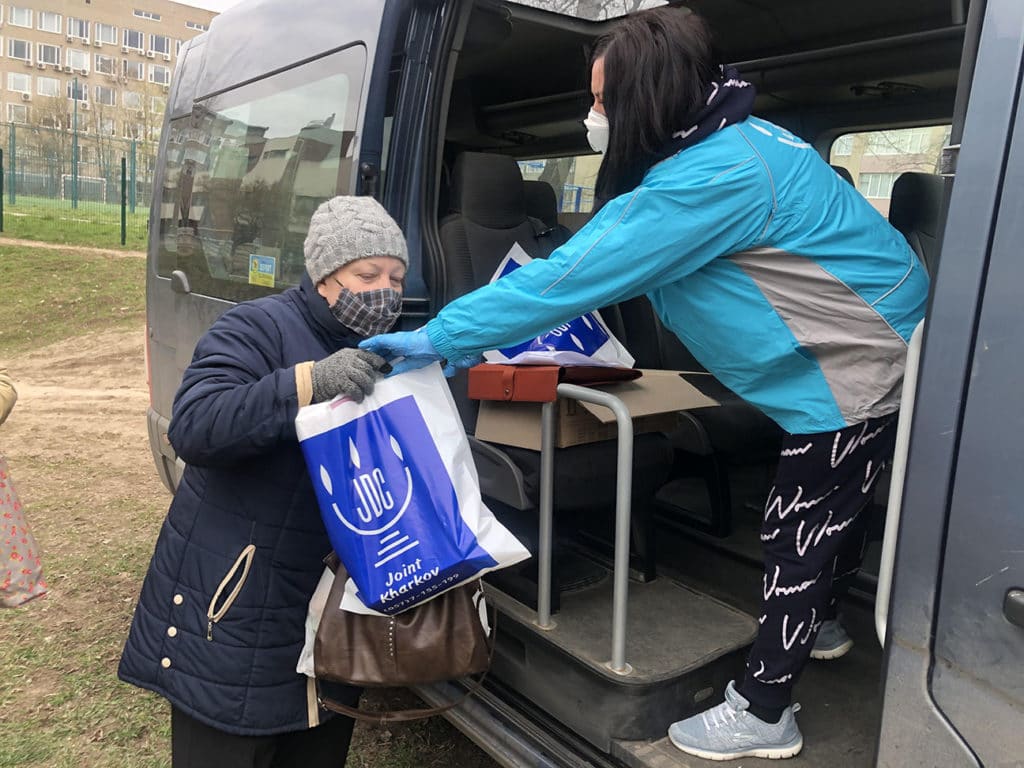
The humanitarian organization provides food, homecare, medicine and other services to 37,000 poor elderly Jews there, including nearly 10,000 Holocaust survivors, supports six major JCCs, manages METSUDA, a young adult leadership training program and has programs for Jewish teens and volunteers. There are 200,000 Jews total in Ukraine.

In recent days, the JDC has ramped up its efforts in case war breaks out. “We’re preparing for any number of scenarios,” said Michael Geller, director of media relations at the JDC. “People could need extra food, medicine or other essentials and psychosocial support. They may be displaced. We’re planning for a variety [of situations].”

The JDC has infrastructure set up to provide remote care via online platforms and offer food delivery if people can’t leave their home. They are mapping out where clients live and making sure that someone is close by in case of an emergency, as well as coordinating with other Jewish organizations, like Chabad, to ensure there’s a network of people to care for those in need.

“There’s been growing concern in the last few days,” said Geller. “I would imagine it’s going to continue. Up until a few days ago, it was really a mixed bag. Some people were concerned and others were not.”

According to Geller, the JDC has a lot of experience helping Jews in Ukraine in a crisis; they were there to assist during the 2014 Russo-Ukrainian War, and they’ve been helping people throughout the pandemic.

“We are planning for any number of scenarios.” – Michael Geller

“Among the tens of thousands of Jews we serve, there is a significant number of them who have been hard hit by inflation and the rising costs of food, medicine and utilities as result of tensions [in the region],” he said. “COVID has really hurt the Ukrainian economy quite a bit.”

Many of the people the JDC assists are pensioners living on $2 to $3 a day who have to make a choice between getting food and medicine or turning on their heat during the winter. According to Geller, the cost of sugar has spiked up 61%, sunflower oil has gone up 57% and there is a 20 to 30% increase for utilities.

The political situation is causing prices to rise because “imports and exports aren’t running as well as they should,” said Geller. “Last year, even before the tension started, you had sunflower oil being restricted. Ukraine exports sunflower oil, and because they didn’t have a good crop year, prices went up.”

While the state of Israel urged its citizens to leave Ukraine immediately earlier in February, the JDC does not advise anyone to do anything. Instead, Geller said their role is “to take care of Jews [no matter] what decision they make. If they decide to stay, we take care of them. If they decide to leave, we coordinate as we need to.”

There may be some challenges in the days and weeks ahead, but so far, the JDC has been able to fulfill its mission in Ukraine.

“Our work continues uninterrupted,” said Geller. “And, we are planning for any number of scenarios to ensure we can continue to do so.”

How the JDC is Operating in Ukraine to Assist Jews Read More »