fbpx

February 24, 2022

Duke SSI Chapter Reinstated

Duke University’s Students Supporting Israel (SSI) chapter has officially been reinstated on February 23.

The SSI chapter’s recognition as a campus club was vetoed by the student government in November after the chapter issued a social media post calling out a student by name. The student had posted on Twitter that the university’s recognition of the SSI chapter meant that the school promotes “settler colonialism.”

“Almost four months after the veto of our club, tonight the Duke Student Government did the right thing and unanimously approved SSI to be officially registered on campus again, like it should have been from the very beginning,” SSI announced in an email to supporters. “We would like to congratulate the SSI Duke chapter leaders Alex Ahdoot and Alanna Peykar! We are so proud of you: in the past months all SSI activists and the national team were cheering on you while you reminded us of what it means to not give up and stand by your beliefs, truly representing the spirit of our movement!”

Zionist Organizations of America (ZOA) President Morton A. Klein congratulated Senator Rand Paul (R-KY) in a statement over his efforts to overturn the veto against SSI. Paul, himself a Duke alum, had sent a letter to the university on January 10 calling the veto “arbitrary and biased.” “Denying a student group recognition based on personal or political differences weakens the legitimacy of any academic institution,” he wrote. “More voices, more viewpoints, and more debate will always be beneficial to the student body.”

“The ZOA is pleased and proud to have actively helped obtain this important victory against Israelophobia and to have contacted our friend Sen. Rand Paul asking his critical help to reinstate this strongly pro-Israel group,” Klein said. “Among other things, ZOA sent a detailed letter to Duke University’s president reminding him of the university’s policy and legal obligations to reverse the discriminatory action against SSI, and encouraged and praised a prominent Senator for speaking on this pro-Israel group’s behalf.”

Alyza D. Lewin, President of the Louis Brandeis Center for Human Rights Under Law, also said in a statement: “I commend the university for finally correcting the injustice that was done when SSI was singled out for discriminatory treatment and its recognition was revoked. It’s important to note that SSI was treated differently from the start. They were subjected to intense questioning in the application process unlike any other groups. They were asked to appear, in-person, at their application hearing to answer questions, when other groups are approved without any in-person appearance.  And then, and most egregiously, they were singled out and their recognition was revoked, all because they support Israel.  These behaviors directly violated the SSI students’ right to free speech, and discriminated against them on the basis of the Zionist component of their Jewish identity. 

“We are pleased the university finally did the right thing and righted this egregious wrong without our needing to take legal action,” she added. “But this type of discrimination must not happen at Duke or any other university.”

Duke SSI Chapter Reinstated Read More »

New Memoir Details a High-Risk Pregnancy

When Aileen Weintraub was four months pregnant and taking a walk with her new husband in Manhattan, she felt a sharp pain in her stomach. She went to the doctor for an emergency sonogram, which showed that there were large fibroids growing right next to her baby in her uterus. She was promptly ordered to stay in bed for the next five months until labor started.

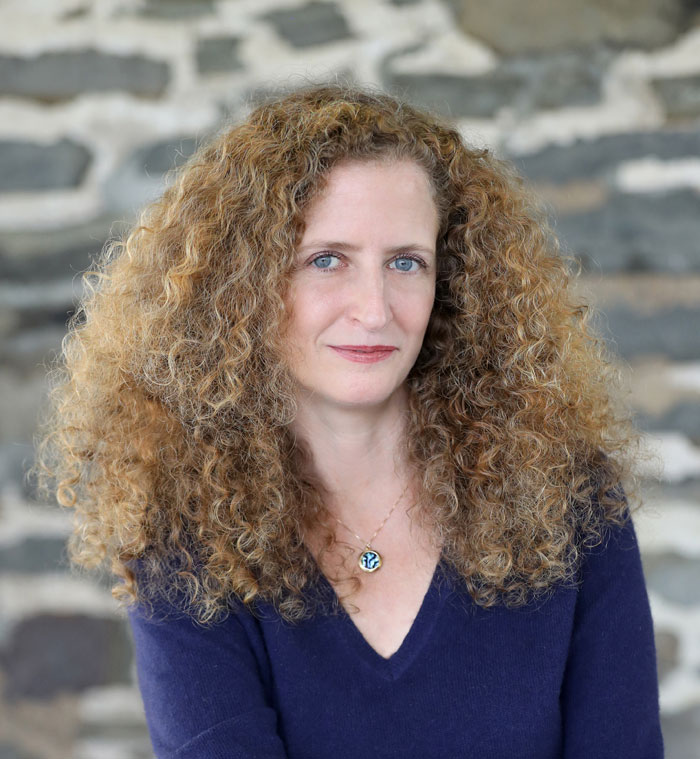
Aileen Weintraub
Photo by Greg Payan

At that point, Weintraub’s life was already hectic. She had moved away from Brooklyn, and her Jewish community, to upstate New York, where she was living with her non-Jewish husband in a run-down farmhouse. Her father had recently passed away, and someone who she thought was her friend had scolded her for being in an interfaith relationship. Now, with her high-risk pregnancy diagnosis, Weintraub had to find a way to stay in good spirits and keep her marriage intact. She details her experience in her new book, “Knocked Down: A High-Risk Memoir.”

“So many women experience obstacles around pregnancy, marriage and motherhood, and there is a real need to share our trauma and talk about it.” – Aileen Weintraub

The author, who tells her tale with a dose of humor, said, “I’m giving my story light and space in the world. So many women experience obstacles around pregnancy, marriage and motherhood, and there is a real need to share our trauma and talk about it. I wrote about my personal journey so others will feel less alone on theirs.”

When Weintraub was on bed rest, she connected to her spirituality to get through it. She prayed every day that her baby would survive, and she prayed for her father who had just died. 

“I was processing the grief I felt for him, coming to terms with who he was as a father, a husband and a man,” she said. “My baby was born on Rosh Hashana and that was very meaningful as well.”

Despite the traumatic start to marriage and motherhood, today, Weintraub is still married to her husband, Chris, their son is a teenager now and they have stayed put in the Hudson Valley. Though she doesn’t live in a place that’s as Jewish as her hometown of Midwood, Brooklyn, she finds ways to carve out fulfilling Jewish experiences of her own. 

“My Jewish community in Brooklyn shaped the fabric of my childhood and I’m so grateful that I was given that wonderful gift,” she said. “But when my child was born, I knew I would have to work on building a new community, and while it is different than my conservative Jewish upbringing, I have a newfound appreciation for moments that I had previously taken for granted, like lighting the Shabbat candles, eating homemade challah or having neighbors over to light the menorah. Moving to a new place has made me appreciate the beauty of Judaism even more.”

Weintraub hopes that when people read “Knocked Down,” it sparks a conversation about the many medical issues woman face, specifically when it comes to reproductive health. She said that when these issues are brought up, shame, blame and guilt are often placed on the woman. 

“The terminology used to describe certain conditions such as, ‘incompetent cervix’ [and] ‘hostile uterus’ [are] so unnecessarily offensive, and that needs to change. There is also very little research on bed rest and whether it is effective. Some studies actually imply it does more harm than good. My hope is that women begin to feel secure enough to advocate for their healthcare needs so they can be seen and heard.”

To the women reading her book, she advised this: “Ask your doctor a lot of questions. Don’t be afraid to advocate for yourself, and do your own research. I would also say, be prepared to protect your mental health and ask for help. Get a support team in place to do the shopping and cleaning, but also find someone who is there to listen to you.”

New Memoir Details a High-Risk Pregnancy Read More »

A Unique Kosher Experience Is Brewing in Long Beach

When husband and wife Levi and Harmony Fried lived in Israel, they couldn’t find any good beer in the country. So, they decided to make it themselves.

“We brewed beer out of our garage,” said Harmony. “We’d drink it with our friends, and then we started selling it. I’d serve snacks with beer every Friday. We were paying our rent that way.”

At the time, Levi was a medical student at The Technion, and brewing beer was something he did with Harmony on the side. Since they were so successful with it, they looked into opening up their own beer business in Israel. But, it proved to be too difficult.

“It was just so expensive, and because we are not natural-born Israelis, trying to traverse the system was not easy for us,” said Harmony, who is from the Valley and attended pastry school in New York City. 

The two decided to move to Long Beach, where Levi had grown up. In 2017, they opened up the Long Beach Beer Lab, a brewery and restaurant that serves kosher-certified dairy and parve foods like artisan pizza and breads, grilled cheese sandwiches, hummus plates and salads. Customers can also swing by and pick up groceries such as  flour, sourdough starters and housemade dips.

Harmony and Levi Fried (courtesy of Harmony Fried)

The beer flavors include Tiki Dole-Light, which is a sour double piña colada IPA, May the Schwartz Be With You, a dark lager and Dad Beer, a German pilsner. The labels for each of the beers feature a funky design, many featuring Long Beach Beer Lab’s mascot, a “Lab” rat. 

The Frieds try to use environmental best practices when brewing their beer and making their food; they have 30 egg-laying chickens, and they partner with local farmers to bring in items such as milk and mushrooms. The business is solar-powered, and the Frieds donate the restaurant’s leftovers to the Gray Panthers, which feeds the elderly and homeless in Long Beach. 

“We like the circle of sustainability,” said Harmony. 

When COVID hit Southern California, Long Beach Beer Lab stayed open and changed their business model. They offered grab-and-go menu items as well as the groceries. 

“We were more of a bakery and grocery store then,” said Harmony. “When we lived in New York, we’d go to these stores where you could get fresh produce, pasta, cuts of meats and cheeses and sit down. They don’t have that in Southern California. But now that people are sick of staying inside, we’ve gone back to a service model so customers can sit down, eat and drink.”

The Frieds, who have two sons and live a block away from Levi’s childhood home, frequently host events at the Long Beach Beer Lab. Recent ones have included a fermentation workshop and a “Sip and Shop” afternoon, featuring local artists selling their works. 

“We offer fun things for the community to experience,” said Harmony. 

While the Frieds love what they do, Harmony said that running a small business can be difficult. “All of your heart and soul and time goes into, and you get very emotionally involved. It’s hard to find a balance between life and work.”

But, according to Levi, they don’t try to simplify their operation.

“Everything takes time and effort, and I think that comes across to the people who buy our products.”  – Levi Fried

“Nothing we do is easy or fast,” he said. “Everything takes time and effort, and I think that comes across to the people who buy our products.”  

One of the motivating factors for the Frieds is the support from the Jewish community.

“We were surprised at how many Jewish people come from L.A. to enjoy our food,” Harmony said. “That’s why we decided to continue with it.”

Image courtesy Harmony Fried

For the Frieds, community is what it’s all about in the end. 

“Our vision is to have a place for the community,” Harmony said. “Our favorite types of customers are people who stop by after their run in the morning, come back for lunch and have pizza and beer with friends and then take a loaf of bread home for dinner. It’s a beautiful community space.” 

Long Beach Beer Lab, 518 W Willow St, Long Beach, CA 90806 (562) 270-3253 lbbeer.com

A Unique Kosher Experience Is Brewing in Long Beach Read More »

A Bisl Torah – Teaching Spontaneity

A friend was describing her experience in chaplaincy. The other chaplains-in-training felt very comfortable formulating their own spontaneous prayer. But she realized that even as a knowledgeable Jew, spontaneous prayer wasn’t something she felt trained in. Give her a siddur, no problem. But to pause in the middle of the day and start offering prayer felt foreign. And as I reflected on our conversation, I wondered if the point of a Jewish ritual structure is to make room for spontaneity.

In reading “Creating Sacred Communities” by Dr. Ron Wolfson and Rabbi Brett Kopin, Dr. Wolfson explains the necessity of a check-in. A check-in should begin each meeting. An opportunity to feel as if you are wholly present because you are encouraged to bring your whole self to any meeting or setting. He shares a story in which at one meeting, his team leaders explained that during a check-in, one person confided, “My father was just diagnosed with terminal cancer.” The check-in paused and the rabbi leading the meeting asked everyone to pray for healing. Within a structured moment, Dr. Wolfson built openings for spontaneity. Someone might share their celebrations; another might vent their frustrations. But if the check-in is present, there remains a chance to share oneself.

We have check-ins throughout our liturgy. But we have forgotten how to use them. After reciting Modeh Ani each morning, do we pause and offer gratitude for our individual blessings? At the end of a book of the Torah, we stand and recite the words, “Hazak, Hazak, v’Nithazek.” We declare strength in returning to our sources of knowledge and faith. But do we take the moment to explore which areas of our own lives need strength and resilience? Our rituals begin to lose meaning when we rush through, forgetting to add our own voice to the thousands of years of history that sit within our hands.

Keva and Kavannah. Fixed prayer and thoughtful intention. Routine may give us solace in knowing what comes next. But life occurs in between.

Responding, reacting, wondering, asking, struggling, growing, living.
May Jewish life offer a sense of rootedness.
And may Jewish life offer a sense of awe.

Shabbat Shalom


Rabbi Nicole Guzik is a rabbi at Sinai Temple. She can be reached at her Facebook page at Rabbi Nicole Guzik or on Instagram @rabbiguzik. For more writings, visit Rabbi Guzik’s blog section from Sinai Temple’s website.

A Bisl Torah – Teaching Spontaneity Read More »

A Moment in Time: Support for the Jewish Community of Ukraine

Dear all,

As we tucked our children in for the night, my heart soared with the innocence of their childhood. I then turned to the news of the military operation in Ukraine …. And my heart sank. Though Ukraine is a world away, the Jewish community is a heartbeat away. And while we may not be in a position to effectuate international relations, there is a tremendous mitzvah we can do by helping our people – as well as many others who are threatened in this conflict.

Please join me in making a donation to the Ukraine Crisis Fund through the World Union for Progressive Judaism (WUPJ). The WUPJ is the international organization of Reform Judaism. Our dollars will go to ensure the safety and security of individuals and communities.

Please do not put this off. Right now is the moment in time to make a difference. The world needs our action.

With love, and with prayers of Shalom,

Rabbi Zach Shapiro

A Moment in Time: Support for the Jewish Community of Ukraine Read More »

UK Parliament Passes Anti-BDS Amendment

The British parliament passed an amendment on February 22 combating the Boycott, Divestment and Sanctions (BDS) movement.

The Jewish Chronicle (JC) and i24News reported that the amendment bars local councils from going toward businesses that boycott Israel. Conservative Member of Parliament (MP) Rob Jenrick, who introduced the amendment, said on the floor of the House Commons, “For too long we have seen public pension schemes pursue pseudo foreign policies and all too often the foreign policy of these public pension schemes is I’m afraid, exclusively focused on rewriting the UK’s relationship with the world’s only Jewish state, Israel.” 

He proceeded to call BDS a fringe campaign. “You don’t have to look very hard to find a pattern of antisemitic behavior in connection with campaigns promoting a boycott of Israel,” Jenrick said. “Successive studies have shown the single best statistical predictor of anti-Jewish hostility is the amount of BDS activity.”

David Siegel, President of Friends of the European Leadership Network (ELNET), said in a statement to the Journal, “ELNET praises steps taken in the U.K. Parliament to pass this measure, which would prevent BDS activists from targeting the Jewish state through public pension fund divestments. Anti-Israel actors politicizing the management of public pension funds is not in the interests of U.K. citizens and does not advance peace.” 

Various Labour MPs had voiced opposition to the amendment; The JC quoted one MP, Zarah Sultana, as saying that the amendment would have a “chilling effect” on “human rights campaigns.”

Back in December, Jenrick had said he was “confident” that BDS would be outlawed by the spring of 2022, Jewish News Syndicate (JNS) reported. “There is no political party in the U.K. that would support BDS today and [supporting BDS] is becoming much more of a fringe activity,” he said.

UK Parliament Passes Anti-BDS Amendment Read More »

“Don’t Look Up” Is Actually a Conservative Movie

(Warning: spoilers!)

I didn’t know what to expect after reading conflicting Facebook reviews of Netflix’s “Don’t Look Up.” With its stars being among the most prominent celebrity climate activists and left-wingers, I was afraid the film would nauseate me with all of its “woke” virtue signaling. Then a friend told me that she had thought it was a conservative movie parodying Corona politics until someone told her it was actually about climate change. So I watched it. Surprisingly, I was entertained and enthralled.

In an interview, the liberal writer-director, Adam McKay, said the apocalyptic comet of the film was indeed an allegory to climate change and that he wrote it even before the pandemic began. In re-writing it during the pandemic, however, could it be he was actually subversively mocking the way the world governments were handling Covid?

The protagonist astronomers (Leonardo DiCaprio as “Dr. Randall Mindy” and Jennifer Lawrence as “Kate Dibiasky”) furnished “follow-the-data” proof that Comet Dibiasky (named after the one who discovered it) was on a collision course with Planet Earth. The White House took them seriously only when their data were verified by Ivy Leaguers, thus putting titles and prestige over hard science, a tendency for Corona politics. For example, when I recently argued with a friend about the potential dangers of the Covid vaccine given the amount of underreported vaccine injures, he “argued” that no Ivy League college came out against the medical consensus that the vaccine is “safe and effective.” Therefore, it must be as safe as the earth is flat.

A nuclear intervention to knock out the comet was foiled by President Orlean (“Orwellian”?), played by Meryl Streep, when the eccentric hi-tech billionaire, Peter Isherwell, CEO of Bash Cellular, steps in with a new panacea: blast the comet into pieces by drones and then mine it for its trillions of dollars worth of precious minerals. The mogul, played cleverly by Mark Rylance, comes off as a caricature of Steve Jobs (for his marketing savvy), Elon Musk (for his autistic bent), and Bill Gates (for his activism). Orlean agrees to collaborate with him in a symbol of Big Tech-D.C. collaboration, which has been all too evident with Corona politics, especially the vaccine push.

The handling of the pandemic, much like the handling of the comet in the film, demonstrates how science is not a discipline but a fashion, often fueled by popularity indicators. DiCaprio’s character becomes known as that “sexy scientist” (just like Anthony Fauci) when he plays to mainstream media. At first, Dr. Mindy loves the attention and lets it sway his scientific thinking, until, after questioning the science of Bash’s drone project, he can no longer hide his hesitation.

In a televised rant against political correctness and a cry for freedom of speech, Dr. Mindy says: “I’m sorry, but not everything needs to sound so goddam clever or charming or likeable all the time. Sometimes we need to just be able to say things to one another. We need to hear things.” He should be the first to line up for a Trump rally.

For breaking rank, DiCaprio’s character is cancelled and literally sent “off-the-grid” to obscurity. Soon, the comet becomes visible to the naked eye, and the world becomes divided into the #LookUp and #DontLookUp crowds, much like the world is divided now over Corona politics. The defamed “Corona deniers” and “anti vaxxers” are the ones being cancelled today for asking the public to pay serious attention to the science that shows that lockdowns and vaccine mandates pose more dangers than benefits to public health.

President Orlean is supposedly a caricature of President Trump but she behaves more like Biden. (Interesting how McKay has her posing with Bill Clinton and Mariah Carey as opposed to prominent Republicans.) Orlean, like Biden, allies with Big Tech and sets up a marketing (i.e. propaganda) campaign to tout the virtue of the drones’ “safety and effectiveness.” Orlean’s obnoxious, materialistic son, played brilliantly by Seth Rogan, is not Donald Trump Jr., but the hedonistic Hunter Biden. When his mother literally jumps ship into an escape rocket, she comically forgets to take her son along. That’s something Biden would do to Hunter, but probably more out of forgetfulness and senility than for the problems Hunter’s laptop caused him during the election.

But what gives away “Don’t Look Up’s” subliminal sympathy with a Christian-led conservative movement is the ending. Yule, the head of a group of anti-Bash misfits, reveals to Dibiasky, now his lover, that he grew up in an evangelical Christian home and that he still believes in God.  Dibiasky is touched, betraying the usual tone of mockery that leftist Hollywood have towards Christians.

When Dr. Mindy realizes the error of his ways, he goes back to his wife who had left him after catching him with his glamorous lover, the news anchor played by a riveting Cate Blanchett. Realizing that banging a phony media personality would bring him no real joy, he apologizes and invites himself for a family dinner with his friends, new and old, knowing it might be their last.

This poignant moment tells us that what’s most important in life is not fame and fortune, but the mundane joys of being with loved ones, at home, sharing life’s simple pleasures. The family, not the government, provides us with ultimate salvation. That’s a conservative message.

The family struggles to say grace, but Yule steps in and lends his Christian roots: “Dearest Father and Almighty Creator, we ask for your grace tonight despite our pride, your forgiveness despite our doubt. Most of all, Lord, we ask for your Love to soothe us through these dark times.”

Indeed, we are living through dark times, and we desperately need God’s love, acting through us, to save humankind as we know it. It’s not a message I would have ever imagined to hear from a modern-day Hollywood movie. But maybe some Hollywood filmmakers finally looked up (but can only subversively admit it).

“Don’t Look Up” Is Actually a Conservative Movie Read More »

A Tale of Two Grandmothers

My first memory of my grandmother Savta Rosa is at the wedding of her youngest son Aryeh in Israel. At the time, I was seven years old and living in Sydney, Australia.

The granddaughter of a rabbinic judge, she was born in Baghdad at the turn of the century. Tall, blonde and blue-eyed, she was renowned for her beauty and her intelligence. By all accounts, my grandfather Rafi was besotted with her and together they had nine children. He was the proprietor of a very successful wholesale food business. He moved his family from the crowded alleys of the Jewish center of Baghdad to the upper-class district of Kerrada, where the wealthier Jews lived in large waterfront houses on the Tigris River.

My great-aunts would reminisce about youthful afternoons whiled away at my grandparents home. And all the goodies that would appear from their underground cellar that was filled to the brim with dried dates, nuts, jams, cheeses and other delicacies. 

When my grandparents emigrated to Israel in Operation Ezra and Nehemiah, they were able to avoid the ma’abarot, the miserable transit camps that were the fate of many immigrants from Arab lands. They lived in a house in Tel Aviv. When the Baghdadi Jews began to settle in Ramat Gan, my father and his brothers built them a house there. A decade later, my grandfather passed away before I ever got to meet him. 

My children were lucky enough to taste my grandmother Nana Aziza’s Kubbah Bamia and they loved it.

Over the years, I would visit my quiet and dignified grandmother and we would converse in Iraqi Judeo-Arabic, a language I learned from my other grandmother, Nana Aziza. 

Like my Nana Aziza, she would always serve tea with Baba Tamar, crispy coookies with a date filling. On Friday afternoons, she would have a big pot of Kubbah Bamia, okra stew with semolina balls stuffed with a ground meat filling. My uncles would sit in her backyard and enjoy several bowls of her delicious Kubbah. 

Thirty years after her passing, my father still remembers her Kubbah Bamia as his favorite dish. 

My grandmother Nana Aziza also made Kubbah Bamia. I remember sitting in her kitchen watching her form the balls from semolina dough and then stuff them with ground beef, grated onion and finely chopped parsley. 

The Kubbah were steamed in a sweet and sour tomato broth studded with sweet butternut squash and thickened with the addition of okra. I guess bamia wasn’t so readily available in Australia, so she would use canned okra from Greece. 

(Nowadays, fresh okra is easy to find at the Persian markets and the bags of frozen okra are really delicious.)

My children were lucky enough to taste my grandmother Nana Aziza’s Kubbah Bamia and they loved it. After her passing, I would always cook okra stew minus the Kubbah. I was too intimidated to even try. Rachel pushed me to do it and together we made the most beautiful Kubbah. The shells were thin and didn’t fall apart when cooked in the stew and the dough was soft enough to absorb the flavor of the soup. Served over fluffy basmati rice, it’s heaven in a bowl.

Kubbah Bamia is a labor of love. For me, it’s a way of transmitting the love that my grandmothers gave to me. 

Kubbah Bamia is a labor of love. For me, it’s a way of transmitting the love that my grandmothers gave to me. 

One day, when you have a little love, time and patience, maybe you will try our recipe for Kubbah Bamia.

Semolina Kubbah

1 pound ground beef
1/2 cup finely chopped Italian parsley
1 medium onion, grated
2 teaspoons baharat spice
1 teaspoon kosher salt
1/2 teaspoon pepper
For the dough
1 cup farina
1 cup semolina
1/4 pound ground beef
1 cup warm water
1 teaspoon kosher salt
1/2 teaspoon pepper

  • In a large bowl, combine one pound ground beef, Italian parsley, grated onion, baharat, salt and pepper. Set aside.
  • In a second large bowl, combine farina and semolina, the 1/4 pound of ground beef, water, salt and pepper until incorporated. Cool in refrigerator for at least 30 minutes.
  • Wet palms with water and roll the dough mixture into walnut-sized balls and place on a tray lined with parchment or wax paper.
  • Flatten each dough ball into your palm and place a large teaspoon of filling in the center.
  • Gently gather the sides of the dough to cover the filling and delicately pinch closed and roll into a ball.
  • Place the stuffed kubbah balls on a tray, loosely cover and leave in the refrigerator for at least 4 hours.
  • Gently drop the balls into a pot of boiling soup and cook for about 25 minutes.
  • Raw kubbah can be frozen for up to 2 months.

Okra Stew

2 tablespoons avocado oil
2 large onions, finely chopped
6 cloves garlic, minced
4 celery stalks, finely chopped
3 Roma tomatoes, chopped
2 cups butternut squash,
peeled and diced
1 teaspoon paprika
1 teaspoon turmeric
3 tablespoons tomato paste
1 cube chicken consommé
4 tablespoons sugar
2 lemons, juiced
1 14 ounce can chopped tomatoes
6 cups water
Salt and pepper to taste
2 pounds fresh or frozen okra

  • In a large pot, warm oil over medium heat, then add onions and sauté until translucent.
  • Add garlic, celery, tomatoes, butternut squash, paprika and turmeric, then simmer about 10 minutes, until vegetables soften.
  • Add tomato paste, chicken consommé, sugar, lemon juice, chopped tomatoes, water and salt and pepper. Stir well, cover and let simmer for 20 minutes.
  • Add okra, cover and simmer for 10 minutes.
  • Very gently drop the Kubbah balls into the stew, making sure that the liquid covers the Kubbah completely.
  • Reduce heat to low, cover pot and cook for 25-30 minutes.

Sharon Gomperts and Rachel Emquies Sheff have been friends since high school. They love cooking and sharing recipes. They have collaborated on Sephardic Educational Center projects and community cooking classes. Follow them on Instagram @sephardicspicegirls and on Facebook at Sephardic Spice SEC Food. Website: sephardicspicegirls.com/full-recipes

A Tale of Two Grandmothers Read More »

A Special Fund to Support Children with Special Needs

Albert Elay Shaltiel and his wife Yael went through years of unsuccessful fertility treatments and were considering adoption. After visiting a facility for disabled orphans in Haifa, they started raising and distributing money for medical equipment and therapy for sick children. Then, in 2005, they were blessed with a natural pregnancy and a healthy son, Ilai Benyamin. 

That same year, to express their gratitude for their son, they founded The ILAI Fund, a nonprofit organization that assists underprivileged special-needs, sick and disabled children in families experiencing financial hardships. It helps families from all religious backgrounds and circumstances around the world. 

“I am here to serve,” Albert told the Journal. “And I am serving these children as I would my own child.”

Both Albert and Yael were born in Tehran in 1969. The couple immigrated to Israel individually and were married in the early 2000s. They spent time in New York and Los Angeles as well, but they wanted their child to be born in Israel.

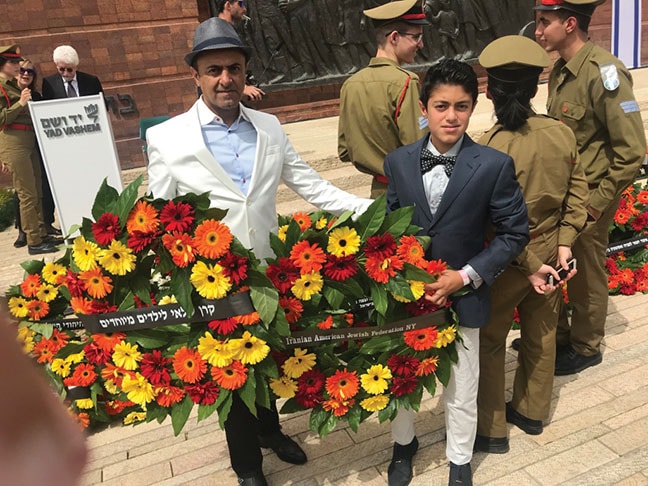
Albert Shaltiel and Ilal at the Holocaust memorial museum (Yad VaShem) on Yom HaShoah (the memorial day) in Jerusalem. Photo courtesy of Albert Shaltiel.

Although Albert travels around the world to speak, meets with social workers, develops relationships with organizations and finds families to help, his Israeli base is in Modi’in. His son, now 17, frequently joins Albert on his visits to see the children the Fund helps. As a young child, Ilai would play with the sick children; he proudly brought them toys and books.

For Albert, everything he does and believes in relates to the organization’s mission: “To fulfill God’s biggest commandment: ‘Love thy neighbor as you love thyself.’”

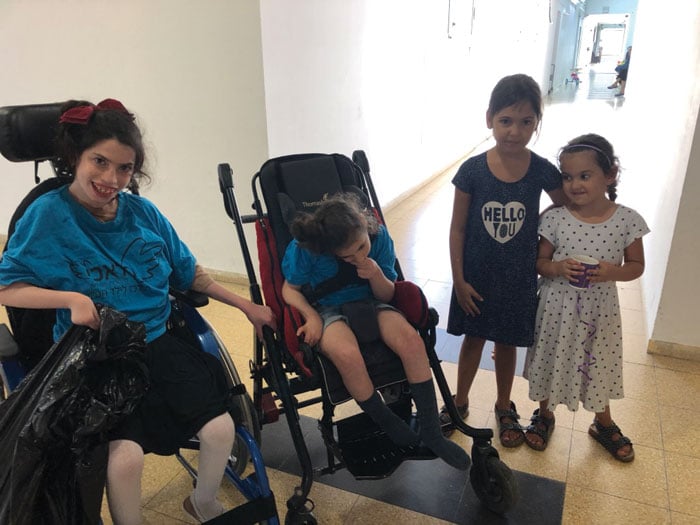
The Foundation provides iPads to children with autism and cerebral palsy (iCan-iPad), funds for hearing aids and hearing implants for deaf and hard of hearing children (iHear) and diapers, medicine and other necessities for families struggling financially (iLive).

The Foundation provides iPads to children with autism and cerebral palsy (iCan-iPad), funds for hearing aids and hearing implants for deaf and hard of hearing children (iHear) and diapers, medicine and other necessities for families struggling financially (iLive). They also have programs that assist financially with wheelchair lifts (iMove) and mobility equipment (i-am-Independent).

The nonsectarian foundation has thus far helped more than 3,000 special children from needy families, mostly with single mothers. The recipients of the Fund’s generosity are called “Heroes,” while donors are referred to as “Donating Angels.” 

Albert frequently receives calls from mothers asking for help or just checking in. Many of these mothers are living in poverty with no husband and some have more than one special child. 

“These children don’t have an Abba, so I want to be [their] Abba,” he said.

He ends each call by telling the mother to say “Hello” to her child from him, and turns what starts as a sad conversation into a happy one.

“I ask them to tell [the child] no worries,” Albert said. “Moshe Rabbeinu was a special-needs child too (he had Ankyloglossia, or was tongue-tied), so if he made it and became the greatest leader, so can you. If his biblical parents, Amram and Yocheved, would send us a request, we would pay for his speech therapist expenses to help him with his stuttering behavior, as we do here for hundreds of special children.”

As Jewish Disability Awareness, Acceptance and Inclusion Month (JDAAIM) comes to a close, Albert has a message for parents of special needs children. “Please don’t hide them,” he said.

As Jewish Disability Awareness, Acceptance and Inclusion Month (JDAAIM) comes to a close, Albert has a message for parents of special children. “Please don’t hide them,” he said.

In Jewish communities, especially Orthodox, when families are making a shidduch (matchmaking), he said they think having a special-needs child would hurt the match. 

“It’s a nonsense way of thinking,” he said. “Do not [leave] these children in their rooms. Bring them out. All of us are handicapped somehow … There is no perfection. Perfection only belongs to the great Creator of the universe.”

And for those who consider themselves fortunate, a lot can be done to make a difference. 

“If you identify with [my] message, don’t just write a check for charity or tzedakah,” Albert said. “Act. Get a flower, gifts [and] some food and go to the hospitals and [visit].”

People in need are everywhere. Be aware of them and give them respect, he said. 

“Believe in yourself, believe in humanity and believe in love. Believe in tikkun olam. We are here to be a light unto the nations.”

A Special Fund to Support Children with Special Needs Read More »