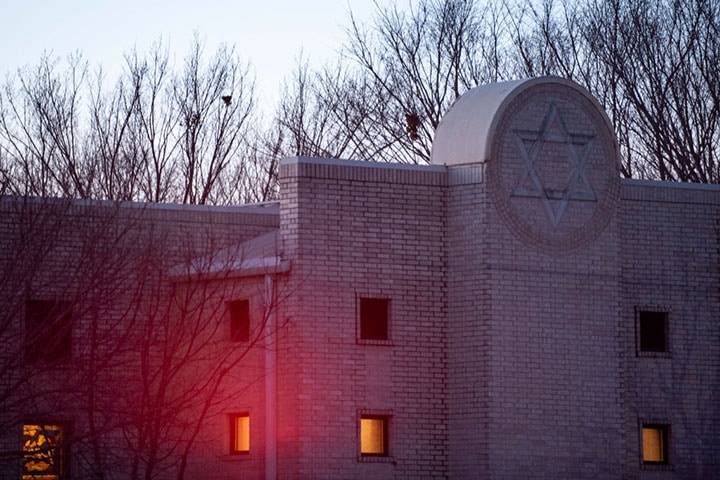
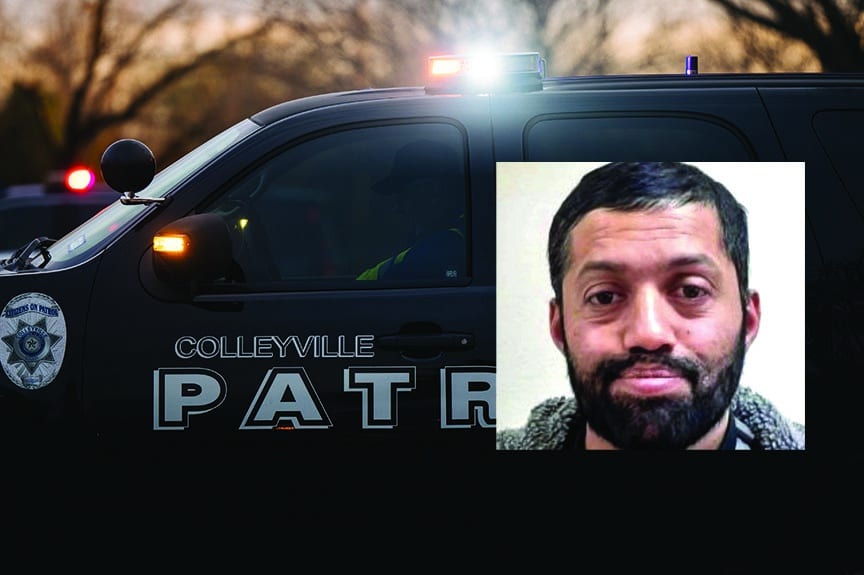
The Jewish Chronicle (JC) reported on January 20 Malik Faisal Akram, who held four hostages at gunpoint inside a synagogue in Colleyville, TX, on January 15, said in 2021 that he wanted to kill Jews.
The JC report stated that Akram, 44, uttered those remarks during a May 2021 councillor meeting discussing the conflict between Israel and Hamas at the time. Akram is said to have called for Jews to be “bombed” as punishment for the conflict, according to The JC. A councillor at the meeting told The JC that he reported it to the police but nothing was done about it.
“The only shock was that he went so far, to the [United States], to execute his views,” the councillor said. “My worry was that he would do something stupid in this country and will bring a bad name to the whole community.”
The police declined to comment on the allegation to The JC.
Various reports have stated that Akram was on MI5’s radar prior to the hostage crisis at Congregation Beth Israel. He was reportedly put on MI5’s “subject of interest” watchlist toward the end of 2020 for more than four weeks as a potential Islamist terror threat, but was eventually taken off the list. Akram also has a record of prior arrests involving violent disorder, property destruction, harassment and theft and was barred from a British court after allegedly telling a court usher “you should have been on the f—ing plane,” an apparent reference to the 9/11 terror attacks.
Audio of Akram’s last phone call to his brother, Gulbar, was obtained by The JC, where Akram can be heard saying that maybe the U.S. will “have compassion for f—ing Jews, but guess what? I’m opening the doors for every f—ing youngster in England to know, live your f—ing life, bro, you f—ing coward. We’re coming to f—ing America and f— with them. If they want to f— with us, we’ll give them f—ing war.”
More details have also emerged as to what took place during the hostage crisis on January 15. The JC reported that Akram had initially shown up to the synagogue that morning asking for help; Congregation Beth Israel Rabbi Charlie Cytron-Walker invited him in, and they conversed over tea. The Shabbat morning service proceeded as usual until after the Amidah prayer, at which point Akram pulled out his gun and started making demands for Pakistani neuroscientist Dr. Aafia Siddiqui to be released. Siddiqui, known as “the Lady of Al-Qaeda,” has been serving an 86-year prison sentence since 2010 for attempting to kill U.S. soldiers and FBI agents in Afghanistan; she is currently being held in a federal prison in the Fort Worth area. Akram told the hostages that he targeted them because “President [Joe] Biden will do things for the Jews.” At one point he railed about “about Israel and Palestine, threatening to kill the hostages because America only cares about Jews, Jews control the media and Jews control the world,” according to The JC. The hostages eventually escaped when Cytron-Walker threw a chair at him, giving the hostages the opportunity to run to the exit.
The Algemeiner reported that a few days before the attack, Akram became “agitated” after the Islamic Center of Irving would not let him sleep there for the night; the mosque forced him to leave. He came back the next day and apologized. “Thank God that he didn’t shoot anybody or do anything bad at our place,” Khalid Hamideh, the mosque’s spokesperson, told CNN. “I am shocked that he did not do something like this at our mosque because they said he was really agitated the first day.”
Bethesda, Maryland-based humanitarian and philanthropist Vivian Bass was elected president of Save a Child’s Heart (SACH), Israel’s preeminent humanitarian organization.
The board of directors of the SACH United States branch announced her election, effective Jan. 1.
“Vivian is an outstanding visionary and legendary leader who is highly respected and admired by individuals of all ages, cultures, religions, and socioeconomic statuses,” SACH US Executive Director David Litwack said in a statement. “We are honored that she has accepted this pivotal role with SACH US, especially during such a precarious and unpredictable pandemic period.”
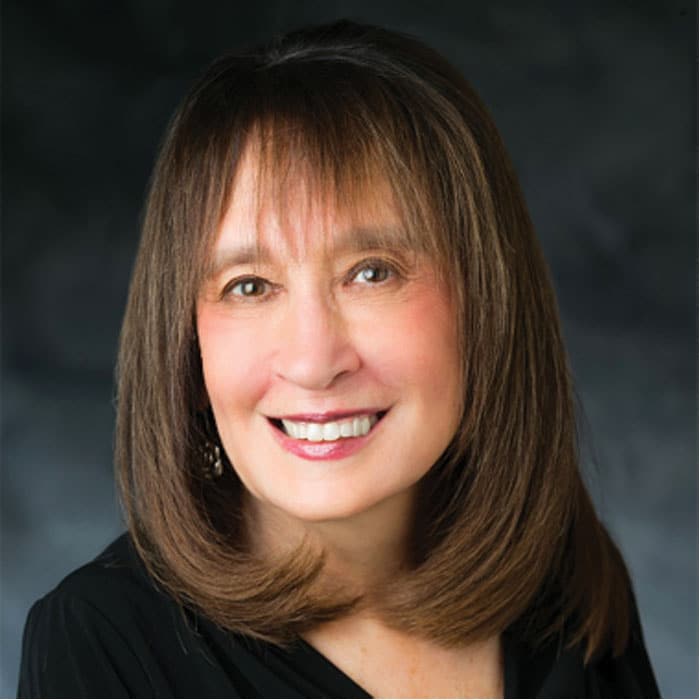
Bass previously served as SACH’s U.S. vice president in 2020 and was a recipient of the organization’s inaugural Lifetime Achievement Award in 2019. She is CEO emeritus of Jewish Foundation for Group Homes and current vice chair of RespectAbility, a national advocacy group advancing opportunities for people with disabilities.
At SACH, she succeeds Co-Presidents Jeff Hoffman and Judith Shore.
“Knowing that every single day Save a Child’s Heart is turning heart wrenching stories into heartwarming stories for children and their families throughout the world regardless of race, culture, religion, or disability is truly remarkable and extraordinarily compelling,” Bass said. “Being a parent of a child who died of congenital cardiac disease and a lifelong human services professional, the captivating mission of SACH resonates intensely and fervently for me on a multitude of levels. I am indescribably honored and thrilled to be afforded this esteemed position on behalf of our stellar and globally acclaimed organization, working closely with our passionate and talented board and staff. I eagerly anticipate extending every fiber of my being on its behalf.”
Established in 1995, SACH is working to improve pediatric care around the world, having saved the lives of more than 6,000 children dying from heart disease in 63 developing countries.
Elana Vorspan
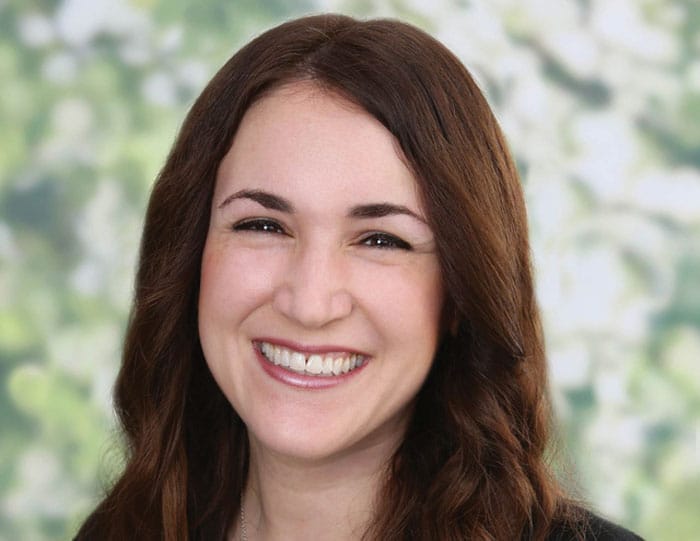
Elana Vorspan has joined Milken Community School as associate director of communications, part of the private day school’s external relations department.
Along with her husband, Ben, creative director at Woodland Hills-based Conservative congregation Temple Aliyah, Vorspan is a longtime Los Angeles Jewish community professional. She served for six years as director of marketing and communications at Valley Beth Shalom (VBS) and was the director of communications at VBS Day School.
An alumna of Milken Community School, Vorspan joined the Milken staff in August. Her hiring comes as Milken Community School is preparing to celebrate its 30th anniversary.
Debby Singer
During a virtual Friday night service on Jan. 14, Pasadena Jewish Temple and Center (PJTC) honored its longtime congregant Debby Singer with the second annual Marv Gross Social Justice Award.
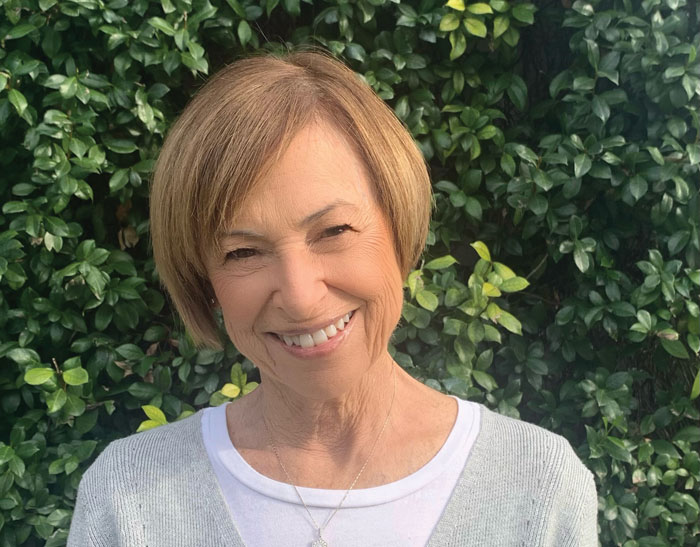
“Debby Singer is a person who cares and who puts her concern into action,” the synagogue said in a statement ahead of the service. “A long time member of Pasadena Jewish Temple and Center, the Arcadia resident is involved in providing service to the homeless as well as Jewish education.”
Singer is on the board of Friends in Deed, an interfaith organization dedicated to supporting Pasadena’s homeless and at-risk communities. Rabbi Joshua Levine Grater, executive director at Friends in Deed and former PJTC rabbi, said, “Singer is always focused on ways to help others and to bring the community together, including our children, to do the most good.”
PJTC’S Social Justice Committee created the Marv Gross award to honor its former chairman, Rabbi Marv Gross, who died in 2019. Each year, the winner receives $500 to go to the charity of their choice. In addition, the winner’s name is inscribed on a plaque attached to a stone sculpture created by temple member Brian Mark.
Pasadena Jewish Temple and Center is a Conservative community, describing itself as a “vibrant synagogue that embraces tradition, invites innovation and inspires participation.”
Founded in 1921, the congregation celebrated its centennial anniversary last year, marking the occasion of its 100-year anniversary with a series of videos published on the PJTC website.
“PJTC has meant everything to me,” one congregant says in the video.
“It has given me a place to turn when I needed it,” another congregant says.
While PJTC was unable to mark the milestone in-person because of the pandemic, the community has hopes for celebrations this year.
“We have come together to make it through the pandemic as a community,” the PJTC website says, “but will have to wait a little longer to come together to honor our centennial anniversary in person.”
Globally, 2.3 billion people cannot access basic sanitation services. For menstruating women who do not have things like a handwashing facility and soap at home, this poses a huge problem.
Additionally, women in low and middle-income countries have challenges when it comes to menstruation education. For example, in some regions in India, getting your period is considered impure, and women are often banned from social and religious events when they are menstruating.
To give women and girls access to supplies they need, a community of local students and their teacher came up with the idea for The Pad Project in 2013. The non-profit was formed in 2018. Through bake sales, fundraisers and two Kickstarter campaigns, they purchased a sanitary pad machine for a rural Indian town, an effort that was the subject of the 2019 Academy Award-winning short documentary film “Period. End of Sentence.” Today, it provides menstrual products and education to communities in the United States and abroad.
Sorelle Cohen (maxx&me photography)
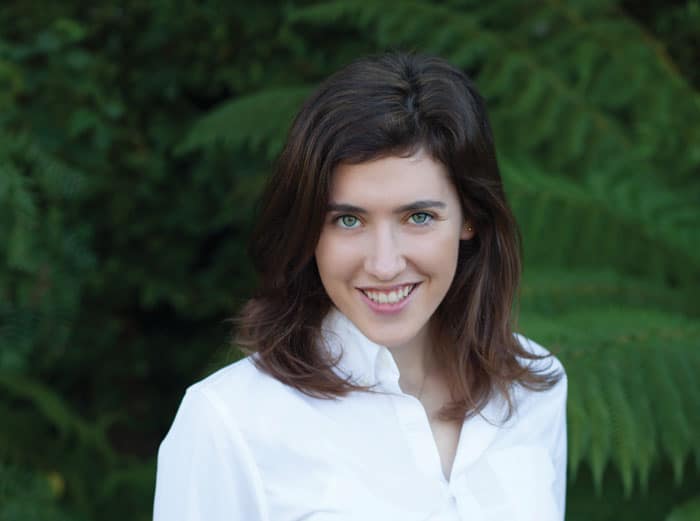
The nonprofit’s Director of Development, Marketing and Communications, Sorelle Cohen, said she wanted to become involved with The Pad Project after watching the documentary.
“Since the project was started locally by Oakwood High School students, I saw the power of community and grassroots organizing working to end period shame and stigma,” she said. “The organization is impacting women and girls around the world.”
Instead of just giving out pads to women, The Pad Project provides grants to NGOs to purchase and start pad-making machine social enterprises. Essentially, women in underdeveloped countries can have their own businesses making and selling menstrual pads.
According to Cohen, in many cultures, it’s traditional to use cloth to absorb menstrual blood, but clean cotton cloth is too expensive. Now, there are fewer options available to women and girls, and they may use old rags or cloth or pads for longer than they should, which leads to infection. The lack of access to sanitation facilities makes it difficult for girls to change their menstrual products in places like schools, too.
“The organization is impacting women and girls around the world.”
This public health crisis is called “period poverty,” and it exists in the U.S. as well. A State of the Period survey found that 23% of students have struggled to afford menstrual products and 38% often or sometimes cannot do their best schoolwork because they lack access to menstrual products. Cohen pointed out that SNAP or WIC do not cover menstrual products, and families struggling to afford food cannot also afford pads and tampons.
“No one should have to choose between putting food on the table and managing their period,” said Cohen.
Along with providing period supplies, The Pad Project’s partners run menstrual hygiene management workshops. The nonprofit’s new film celebrating menstruation, “Long Line of Ladies,” ispremiering at Sundance this year.
Working at The Pad Project has been a form of tikkun olam for Cohen, who said her Jewish values involve making the world a better place.
“It has been really comforting, and not surprising, that I have the opportunity to work with strong powerful Jewish women around the world working to end period poverty,” she said. “As I continue to learn about taboos from different cultures and religions about menstruation, I was inspired to reread and learn through a different lens about the connection between Judaism and menstruation.”
Cohen, and the entire team at The Pad Project, hope to spread awareness about period poverty and ensure that girls and women everywhere have the resources they need when they are menstruating.
“I look forward to the day where we won’t receive dozens of emails each week asking for period care products,” Cohen said. “The demand for addressing this issue is so high, and I hope other nonprofits and NGOs see the relevance of this global issue.”
While the pandemic has become a constantly evolving dynamic, Rabbi Avrohom Stulberger did not need long to ponder how it has affected Valley Torah High School, where he is rosh yeshiva.
“We have not been significantly impacted,” said Stulberger, who has led the Valley Village school for 36 years.“The real question is how has this impacted the kids. [It’s] hard to quantify. Emotionally, there are kids who have been drawn into themselves because this experience has taken a year-and-a-half out of their lives.”
Since what Stulberger calls “this craziness” struck 22 months ago, he has been concerned about the internal, often invisible, toll on the most vulnerable boys and girls.
Since what Stulberger calls “this craziness” struck 22 months ago, he has been concerned about the internal, often invisible, toll on the most vulnerable boys and girls.
“I think about the residual damage to individual students who, maybe, their families weren’t that sensitive to the need for social interactions,” he said. “Maybe there were other factors. Some students might have been a little more inclined to depression or being introverted in general. And then you give them this added factor of COVID, of being alone, of being in isolation. It took a toll.”
A few of the boys in the school, which consists of 130 students, dropped out when COVID struck. “Minimally, I would say 10% of our students have been adversely affected,” Stulberger said.
The girls’ campus also has been impacted.
Sheindy Gross, the girls’ principal, told Stulberger numerous times about girls who “went into a shell. They were not who they could have been as part of the natural process of maturing as a teenager going into adolescence. COVID threw a whole monkey wrench into the works. That is where the untold story is. This is what you hear throughout the country.”
Stulberger said he believes he knows where to assign fault.
“The government has been so quick to say they are closing schools,” he said. “But they are not taking into account the incredible damage done to our youth in not giving them the social norms they are so used to.”
The rosh yeshiva and Valley Torah leadership have been implementing creative ways to combat this. When COVID first hit, Stulberger – who is no fan of Zoom – and Valley Torah were determined to restore normalcy with lightning speed.
By September, students were back on campus 50% of the time. In a camp-style setting, Torah classes were taught on campus and secular classes were on Zoom.By last Passover, the school resumed a normal class schedule “pretty much all the way,” said Stulberger.
Then came one of the proudest moments for Stulberger.
“We decided to end the year in an incredible fashion,” he said. “We felt the kids had been missing so many special opportunities throughout the year [like] Shabbatons, onegs and the various experiences that allow them to bond. We just said we are going to go all out, and we did something crazy.”
He took 100 students to Utah for a four-day trip.
“We wanted to give these kids as much, as large a dose of normalcy, of excitement, of interaction and fun because we felt they really deserved it.”
“We called it an Epic-aton (as in a Shabbaton). It was done specifically because we wanted to give these kids as much, as large a dose of normalcy, of excitement, of interaction and fun because they have been hurting for a long time. We felt they really deserved it.”
The students went to Yellowstone National Park, did river rafting and hung out at a hotel and resort, where they barbecued and relaxed.
Afterward, teachers noticed that students were upbeat and positive.
“They felt bonded and connected with each other,” Stulberger said. “It was a welcome dose of normalcy, of real social interactions that clearly had been lacking.”
In striving for a regular environment, he said that Valley Torah tries, but there is so much caution and concern. The school has in-person therapists available each day at both campuses to help.
While therapists were present on campus before COVID, “there is no comparison to then and now,” Stulberger said. “The number of individuals who were having real challenges definitely has increased. Some were not comfortable coming back to classes.”
He continued, “We don’t really know the [extent of] residual damages, because when a family says ‘My child is not returning,’ we don’t know if they were too afraid to come back to school. Some kids developed a real phobia about germs, about COVID, about what it’s going to be.”
Some reasons were valid, the rosh yeshiva acknowledged. “But to take it to the extreme, saying ‘I am not coming back to school,’ we did lose kids. We lost families because of that. But we can’t measure [the legitimacy] because they are not here [with] us to see how they are doing.”
Finally, there is the centerpiece of much contemporary learning: Zoom.
“Based on our experience, Zoom learning is pretty much doomed learning.”
– RabbiAvrohom Stulberger
“Based on our experience, Zoom learning is pretty much doomed learning,” Stulberger said. “It is not learning. It’s a poor replacement. Is it better than nothing? It is, but not much better.”
He continued, “You can be in your ivory tower and say ‘let’s learn remotely,’ and you can get statistics back and forth. But if you are not on that computer, looking at those kids’ faces, seeing who is not engaged, seeing who is lost, seeing who is not interested, seeing who puts a picture up there while they are watching Netflix– and they have a picture up there making you think they are present but they are really not – it is a complete joke. The people on the front lines know it. Is it better than nothing? Yes, but really slightly.”
“Luscious Legacies Cookbook: L’Dor V’Dor: From Generation to Generation” is designed to inspire, as well as nourish. Chef Idalee Cathcart, who combines recipes with food for thought, hopes her book will bring families together.
“The COVID 19 pandemic … basically brought us back to the table,” Chef Cathcart told the Journal.
Cathcart and her husband keep a kosher home, and are active members of Tiferet Israel in Dallas, home of the annual Kosher Chili Cookoff.
The author, who is Ashkenazi, was raised Conservadox on Long Island. “I loved going to services,” she recalled. “I remember walking home [from shul]. It was family time.”
Although Cathcart “fell off the wagon” religion-wise in her college years, she eventually found her way back.
“I know that Hashem wanted me to get back to my roots because, one time when I had gone off the deep end, I had gone out to dinner with some people and they ordered me seafood,” she said. “I tried it and wound up in the hospital with anaphylaxis.”
She continued, “That was an eye-opener. I got [the] message from above and it brought me back to kosher. This was around 2007.”
Cathcart had built a business in Houston in the 1980s selling her signature truffles, The Idalee’s of Texas. The truffles were a combination of marshmallows and caramel and a blend of chocolates and crushed pecans.
After years of working 16-hour days, seven days a week, she sold off part of her business, went to the Culinary Institute of America and got her degree in Baking & Pastry Arts in the early 1990s.
“I loved it,” she said. “I was like a sponge. The chefs would even stay after to coach me because they saw the potential in me.”
After culinary school, Cathcart worked for other people for a while before starting another business. She was about to start distributing her signature sauce made with her mother’s recipe when COVID hit and the endeavor stalled.
“The good thing about what’s happened with COVID is that it gave me the time to sit down and put down thoughts that I had been wanting to put into print for a long, long time,” she said. “My book is a recipe-type book, but there’s also some psychology to it.”
The first chapter is called, “The Meat of the Matter,” which, according to Cathcart, relates to your quality of life and your relationships.
“The greatest relationship you can have is with yourself,” she said. “Knowing who you are allows you to [develop] productive relationships with other people without compromising your integrity.”
Following each chapter’s introduction are recipes from Cathcart, as well as those handed down to her from previous generations and from family, friends and master chefs.
Throughout the kosher book, each recipe is noted as “meat,” “dairy” or “parve.” However, Cathcart sees her cookbook as mainstream.
“[Readers] can tweak the recipe however they want,” she said. “If I give them a recipe for meat, and they want to put cheese in it with meat, that’s their choice.”
As for the title?
When Cathcart started making desserts, people would say to her, “‘This is delicious. This is luscious,’” she said. Photos of two of her desserts, carrot cake and chocolate mousse torte, as well as a fruit plate adorn the cover.
“When I thought about honoring the memory of those that shared a piece of their life with me through their recipe, I thought luscious and legacies would be really good.”
“I love the word [luscious],” she said. “So I kept [it] in my heart. And when I thought about honoring the memory of those that shared a piece of their life with me through their recipe, I thought luscious and legacies would be really good.”
She added, “One of my taglines is, ‘Bringing back life to those who gave us life.’ So, it’s quite an honor to do that.”
This is what so many of us felt when the four hostages emerged physically unharmed after the terror in Colleyville when an intruder threatened congregation Beth Israel last Shabbat.
But what if things hadn’t gone so well? Would we be cursing God? Would we reason that God doesn’t “work” that way?
Yes, I am thankful.
I am thankful that Rabbi Charlie stood up heroically to face the terrorist.
I am thankful to law enforcement, who mobilized immediately.
I am thankful to community – friends and colleagues around the world – who stood together in solidarity.
And yes, I am thankful to You, God – but not because You saved the four hostages. I am thankful to You, God because through Rabbi Charlie, through law enforcement, and through community, You breathed courage into this very scary moment in time.
Friends, I can’t tell you how prayer works. But I am inspired by the words of Rabbi Abraham Joshua Heschel, who taught:
“Prayer cannot bring water to parched fields, or mend a broken bridge, or rebuild a ruined city; but prayer can water an arid soul, mend a broken heart, and rebuild a weakened will.”
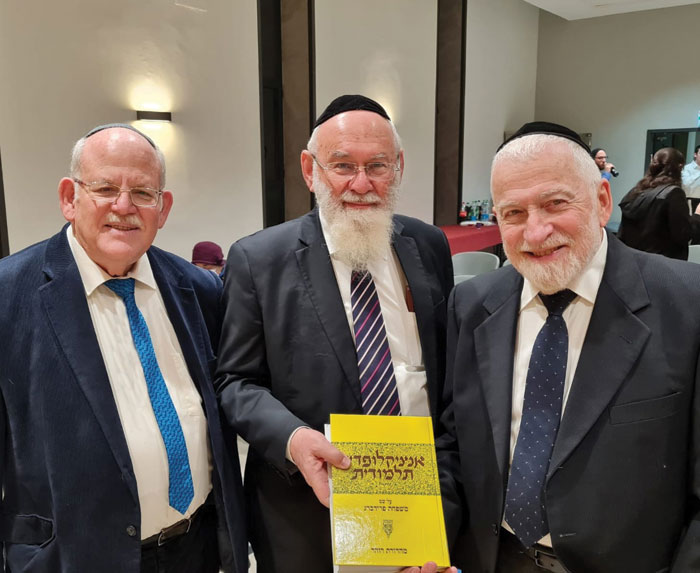
An event honoring the 75th anniversary of the Talmudic Encyclopedia took place on December 30th at the residence of the President of Israel, Isaac Herzog. It was especially moving because it was also marking three generations of involvement of the Herzog family in the project.
The event was also to honor Rabbi Hershel Schachter, the leading Rosh Yeshiva and Rosh Kollel at Yeshiva University, halachic advisor for the Orthodox Union, advisor and mentor for the Rabbinical Council of America, and world renowned posek. The Talmudic Encyclopedia will dedicate a future volume to Rav Shachter.
The 48th volume was released just a few days before the event. It is hoped that the project will be completed by 2024.
One doesn’t usually give special mention to the MC of an event like this, but in this case it was meaningful, as the person introducing the chief rabbis of Israel, the chief rabbi of the IDF, and Rabbi Professor Avraham Steinberg, head of the Editorial Board of the Talmudic Encyclopedia, all of whom addressed an audience that included rabbinical judges and roshei yeshiva, was a woman.
Sara Beck, a Torah-observant journalist, mentioned that it was Rav Yitzhak Hacohen Kook who first raised the idea of such an encyclopedia, though he wanted such a project to include agada as well.
Sara Beck, a Torah-observant journalist, mentioned that it was Rav Yitzhak Hacohen Kook who first raised the idea of such an encyclopedia, though he wanted such a project to include agada as well. According to various sources, he talked about this in 5681 (1920 or 1921) in a lecture he gave about the importance of creating a number of Torah initiatives. The lecture was called “Toward a life of Creation” and was delivered in memory of the yartzheit of the Rambam, before “The Chachamim [wise men] of Mercaz Harav [Yeshiva].”
Beck quoted from one of her two websites, “Zusha,” a site on Chassidic stories: “Once a renowned talmid chacham came before Rabbi Menachem Mendel of Kotzk, and asked to be accepted as a chassid of his. The Rabbi asked him, ‘What have you learned?’ The man replied, ‘I already learned and completed the entire Shas—the Talmud Bavli.’ The Rabbi replied, ‘You didn’t understand my intention. I asked what did the Talmud teach you?’ The Talmudic Encyclopedia, to a great extent, answers that question: What did the Talmud teach you?”
The history
In 1942 Rav Meir Bar-Ilan, who lived in Israel, got word of what was happening to the Jews of Europe. In addition to the horror of their annihilation, there was a fear that not only would the Jews be destroyed, but so would their Torah, everything they had studied and preserved throughout the centuries.
Therefore, he decided to organize the vast Talmudic and post-Talmudic literature as an encyclopedia so the essence would remain. He asked Rav Shlomo Yosef Zevin to join him. Rabbi Zevin commenced the collection of information and concepts for 2,500 encyclopedic Talmudic entries. The work included the entire written Torah and the oral Torah – Mishna, Gemarra, Rishonim, Aharonim, and Shutim (halachic questions and answers) throughout the ages, and including all the gedolei Yisrael — the great scholars of the Jewish people — from eastern Europe through to North Africa. Their feeling was that perhaps the Nazis could destroy the bodies of the Jews but not the Torah and the soul.
Rav Yehoshua Hutner was the first director of the Encyclopedia. The first volume appeared in 1947. Rav Steinberg accepted the position after him, in 2006. He has his own connection to the Shoah. His parents were refugees who fled from Galicia to Siberia and from there to Uzbekistan. He was born in a DP camp in Germany after the war.
Four Rabbis, a President and a Judge
President Herzog spoke first at the event.
President Herzog with Rav Steinberg (Photo by Toby Klein Greenwald)
“I am proud to host this important event not just as the President of Israel – and this is the place to say that the Talmudic Encyclopedia has a place of honor among my books – but also as the grandson of my grandfather, Rabbi Yitzhak HaLevi Herzog, who in 1949, after the death of Rav Meir Bar-Ilan, joined with others to continue the establishment of the Talmudic Encyclopedia, and as the son of my father – the sixth president of Israel, Chaim Herzog—who through the years also supported and encouraged others to support the Encyclopedia. And it is no wonder, as this is an enterprise of an entire cultural life of the Jewish people.
“From the wise men of the Talmud we learn how to carry on a debate and still demonstrate “These are all the words of the living God.” From them we drew inspiration and with their help we succeeded in keeping the basic commandment of every mother and father, every grandmother and grandfather in Israel, ‘And you shall teach it to your children,’ the passing on of the Jewish tradition from one generation to another.” He also quoted from the warm praise that the Lubavitcher Rebbe had given to the project, upon receiving the seventh volume.
The Sephardi Chief Rabbi Yitzhak Yosef said that his father, Rav Ovadia Yosef ztz’l, was a close talmid of Rav Herzog and that he would go to him for a number of years every Friday. They were a group of rabbanim who would learn together; his father emulated Rav Herzog.
“This magnificent project, the Talmudic Encyclopedia, gives students the breadth of the Torah…I read the entry ‘Hazaka.’ Anyone who learns in the world of the yeshiva knows this is a very difficult topic, there is a lot of ‘lamdanut’ in it, but if one reads this entry in the Talmudic Encyclopedia, it is so clear, it is so organized, all the intricate details, it’s astonishing. One who learns with the Talmudic Encyclopedia, he sees what our Torah is, and his mind becomes clear…I bless Rav Steinberg and everyone who is working on this project…Continue with it, I think we should strengthen it, and fortify Rabbi Avraham Steinberg — may you continue to spread your wellsprings of Torah.”
Rabbi David Lau (Photo by Toby Klein Greenwald)
Ashkenazi Chief Rabbi David Lau, son of Rav Yisrael Meir Lau, who is president of the Talmudic Encyclopedia, addressed the President by his full name, Yitzhak HaLevi Herzog, after his grandfather, for whom he was named. He said that in the 18th century, there was an expression used for people who were writing encyclopedias,“the encyclopedists,” but that it took on a negative connotation because they wrote entries according to their personal viewpoints. He said they distorted reality.
In contrast, he spoke warmly of the Talmudic Encyclopedia, of the many great rabbis who worked on it through the decades, whose wisdom was to define things accurately, “Not as things appeared to them personally, but according to ‘darkei avot,’ the ways of our forefathers. They would define things according to the truth.” Rav Lau quoted from Parshat Hashavua Va’era, Avraham Yitzhak and Yaakov, that we go in their path; we don’t cut the chain.
“We are nearing Tu B’Shvat, and we know about the tree, that the deeper its roots are, the stronger it will be.” Referencing Sara Beck’s story of the Rabbi of Kotzk, asking what the Torah has taught us, he asked, “What has it done to one’s character? Has it taught you compassion? The Talmudic Encyclopedia enables one to see a wide view of the entire Torah, and to understand what, and where, and how, and to define things in a precise way. It is a masterful work for every rav and researcher.”
Brigadier General Eyal Krim, Chief Rabbi of the Israel Defense Forces, by way of demonstrating the complexities of modern day halacha, gave a fascinating short talk on the halachic status of the placenta. The connection to the IDF was a question he received that week, asking if placentas could be used in training dogs to locate body parts of soldiers who have fallen in battle (whereas until now they have been trained by identifying bits of pork), as it is so important to bring them to “kvurat Yisrael” (a Jewish burial).
A midwife had also written to him once asking about what use, if any, could be made of placentas after birth, for example for homeopathic remedies that would improve the medical condition of the newborn, any of these situations of course with the permission of the mother. He also addressed the issue of the burial of placentas, whether or not it was required, and other related issues, concluding with a blessing that, “May all those involved in this enormous enterprise, all those who sit before me, have the zchut to raise up the Torah and make her splendorous.”
Noam Solberg (Photo by Toby Klein Greenwald)
Supreme Court Justice Noam Solberg, a graduate of the Hebrew University Faculty of Law who had also studied at Yeshivat Har Etzion in Alon Shvut, spoke about the “machloket,” the debate that has existed for many years between different judges regarding the value of having “Mishpat Ivri”— Jewish-halachic Jurisprudence – inform decisions in Israeli courts who operate by the Israeli law as enacted in the Knesset. He described it as an “argument of great men,” and also as a “clash of civilizations.”
“There is nothing that compares to Jewish-halachic Jurisprudence, which is refined in the theoretical dimension, and applied on the practical plane; the Talmudic Encyclopedia proves this.”
– Israeli Supreme Court Justice Noam Solberg
“There is nothing that compares to Jewish-halachic Jurisprudence, which is refined in the theoretical dimension, and applied on the practical plane; the Talmudic Encyclopedia proves this.” He said that “Jewish-halachic Jurisprudence should be part of the intellectual effort in arriving at everyday decisions. The contribution of the Talmudic Encyclopedia in this connection, is invaluable. I claim that arriving at a legal decision after a deep reading of Mishpat Ivri can greatly enrich the Israeli judicial conversation, and Mishpat Ivri will also be challenged by the innovations of progress and will benefit.”
Rav Professor Steinberg, head of the enterprise and recipient of the Israel Prize in 1999 for original Rabbinic literature for his Encyclopedia of Jewish Medical Ethics, spoke last, and like Rav Krim, he gave a scholarly but short talk on current halachic topics. He spoke about the issue of IVF and noted that these eggs that are fertilized while outside of the uterus do not have the halachic status of being a human, until after the fertilized egg is planted in the uterus and then, also, the first 40 days have a different status then they do later.
Rav Steinberg described how a couple who have a high percentage of risk of giving birth to a child with a serious genetic disease can have an egg extracted and fertilized, have one cell checked for the disease, which would have the same problematic gene as every other cell in the egg, and return it to the womb if it is healthy and destroy it if it is not.
Rav Steinberg described how a couple who have a high percentage of risk of giving birth to a child with a serious genetic disease can have an egg extracted and fertilized, have one cell checked for the disease, which would have the same problematic gene as every other cell in the egg, and return it to the womb if it is healthy and destroy it if it is not. “This is how we save thousands of families from the birth of sick children without going through any halachic problem.”
He also addressed the possibility of using such eggs for stem cell research and the curing of certain diseases, such as Parkinson’s, a topic beyond the scope of this article.
“The Talmudic Encyclopedia provides a base to all who wish to know the basic halachic approach regarding almost every topic and issue with halachic implications,” said Rav Steinberg. He added, in a TV interview, that they are working to digitalize the encyclopedia. He said that every entry is written by a team, not an individual, talmidei chachamim who also know how to write in an appropriate style, to ensure clarity, consistency and accuracy.
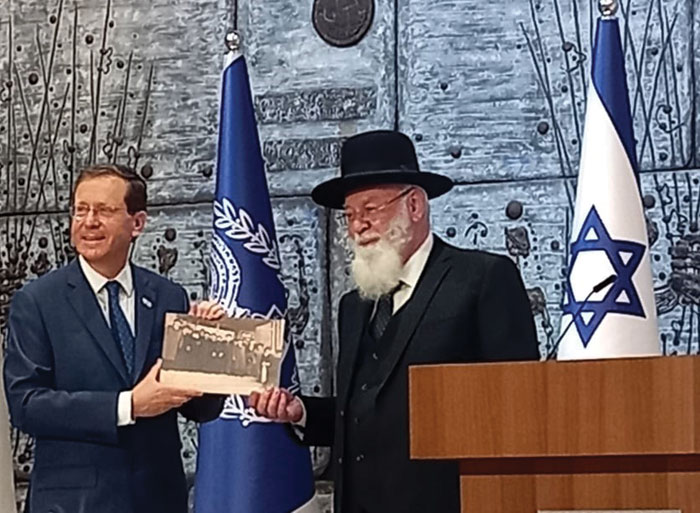
At the end of the event, Rav Steinberg presented President Herzog the latest volume – #48 – and emotionally presented the President with a photograph in which their grandparents appeared together after WW II in Brussels 75 years ago, connecting them across the generations and marking the 75th anniversary of the Talmudic Encyclopedia.
Rav Nechemiah Goldberg ztz’l was the chief editor of the Encyclopedia until he passed away, a year ago.
Dr. Dov Friedberg, an outstanding and humble philanthropist, is the major contributor to the Talmudic Encyclopedia together with families Rohr and Ryzman and many devoted donors. Yedidut Toronto (Toronto Foundation), supported by the Friedberg Charitable Foundation, was represented by its Director Mr. Moshe Shapiro, who spoke eloquently on behalf of the organization.
Master pianist Paul Salter played a musical interlude during the event.
The Talmudic Encyclopedia is published by Yad HaRav Herzog, named after Rabbi Yitzhak HaLevi Herzog zt”l, in Jerusalem. A fund-raising campaign is currently in progress for the volume that will be honoring Rav Hershel Schachter. For more information: https://talmudicencyclopedia.ravpage.co.il/greetingbook
Toby Klein Greenwald is an award-winning journalist, educational theater director and editor-in-chief of WholeFamily.com
On Saturday night, I told my daughter, “It is ok to be afraid.” I couldn’t entirely shield her from the hostage situation at a Texas synagogue. She is old enough to know when her parents are worried and brushing off her fears would be akin to dismissing her. She wanted to know everything about the gunman. His name, his motives, his reasons for wanting to visit a synagogue. It became clear to her that although “Texas” feels far away, this was a person that came very close to harming a rabbi and his congregants. She has two parents as rabbis. She is often a congregant in the sanctuary. For any rabbi’s kid, the hostage situation unfolded a nightmare they didn’t know exists. And so, I told her, “It is ok to be afraid. I’m scared too.”
Because I am.
We also spoke about how safe we are, the precautions we take every day, the blessings of having a Jewish Federation that knows the importance of strong security and how proud we were of the rabbi’s actions. We praised law enforcement. And reinforced a familiar mantra to the Jewish people: We can be afraid. But fear doesn’t preclude living. Fear must not inhibit loving. Fear will not prevent returning.
I listened to Rabbi Charlie Cytron-Walker in an interview. He was asked if he plans on returning to his synagogue after experiencing such a traumatic ordeal. He seemed confused by the question. The rabbi explained that of course he would return. The synagogue is his home. I found myself nodding. Rabbis spend more time at shul than almost anywhere else. This is where we connect, pray, learn, and love. The shul is where Judaism expands, innovates, takes root, and grows. The synagogue IS home.
Many have expressed a similar fear. And I stand with you. It is ok to be afraid. I am afraid. But I will acknowledge my fear and on Shabbat morning, walk proudly through the doors of our sanctuary. Gathering with my community. Praying as we have for thousands of years. Connecting with God. Holding each other.
Join me Shabbat morning. Come home. There is no place I would rather be.
Shabbat Shalom
Rabbi Nicole Guzik is a rabbi at Sinai Temple. She can be reached at her Facebook page at Rabbi Nicole Guzik. For more writings, visit Rabbi Guzik’s blog section from Sinai Temple’s website.
The Jewish Chronicle (JC) obtained audio of Malik Faisal Akram, who held four people hostage at the Congregation Beth Israel synagogue in Colleyville, TX on January 15, telling his brother in a phone call that he’s setting a precedent to bring “f—ing war” to the United States.
The audio, which The JC said they obtained through a “security source,” features Akram’s brother, Gulbar, imploring him to let the hostages go and give himself up. Gulbar was talking to Akram at a police station in Blackburn, England, according to The JC. Akram responded, “I’ve come to die,” prompting Gulbar to tell Akram that what he’s doing is a sin. Akram then sounded agitated.
“You wanna preach what is a gunnah [sin] and what ain’t a gunnah,” Akram replied. “I promised my brother when I watched him on that death bed that I will go down as a martyr, I’ll let no motherf—er suppress me.” Akram and Gulbar’s other brother had died from COVID-19 a few months earlier.
Akram went on to call the hostages “four beautiful … Jewish guys” who are “trying to play ball with me” with his demands to free Pakistani neuroscientist Aafia Siddiqui, who is currently serving an 86-year prison sentence for attempting to kill U.S. soldiers and FBI agents in Afghanistan. Siddiqui has stated through an attorney that she had nothing to do with the hostage crisis and denounced it.
“I’m bombed up, I’ve got f—ing every ammunition, I’ve only been here two weeks and I’ve got them all at gunpoint,” Akram said. “I’m gonna die, I’ve told them I’ll release these four guys, I’ll come on the yard, I’ll have a toe-to-toe with you, shoot me dead, shoot [Siddiqui] dead.” Akram then claimed that Siddiqui was “f—ing framed” and that he told his children “to man up and don’t f—ing cry at my funeral.” “I’ve come to die [Gulbar], ok? I’ve prayed to Allah for two years for this.” He added that he’d “rather live one day as a lion than 100 years as a jackal.”
Gulbar argued that Akram’s death would not cause the U.S. to release Siddiqui, prompting Akram to exclaim, “Who gives a f—. I’ve asked Allah for this death and Allah’s with me.” Gulbar again pleaded with his brother to stop what he was doing, telling him that the hostages are “innocent” and that he should think about his children. “They will never take another woman from a Muslim,” Akram replied. “I’m opening the doors for every youngster to enter America and f— with them. Why does Afghanistan have to have a defensive war… why do we need these motherf—ers to come to our country and do f—ing battle and we can’t come in their country? They come into our f—ing countries and rape our women and f— our kids and we can’t come in their countries and f— with them?”
He added that maybe the U.S. will “have compassion for f—ing Jews, but guess what? I’m opening the doors for every f—ing youngster in England to know, live your f—ing life, bro, you f—ing coward. We’re coming to f—ing America and f— with them. If they want to f— with us, we’ll give them f—ing war.”
EXCLUSIVE: The JC has obtained a recording of the last phone call made by Malik Faisal Akram during his siege of a Texas synagogue pic.twitter.com/LrMSXxQwFb
The JC also reported that Akram’s family was listening into the call, and they concluded “that Akram did not want to live anymore, would not put down his weapon, and intended to die in the siege.” Akram was subsequently killed by the FBI Hostage Rescue Team after the hostages escaped; one of the hostages, Congregation Beth Israel Rabbi Charlie Cytron-Walker, had thrown a chair at Akram, giving the hostages the opportunity to escape.
The Algemeiner reported that a few days before the attack, Akram became “agitated” after the Islamic Center of Irving would not let him sleep there for the night; the mosque forced him to leave. He came back the next day and apologized. “Thank God that he didn’t shoot anybody or do anything bad at our place,” Khalid Hamideh, the mosque’s spokesperson, told CNN. “I am shocked that he did not do something like this at our mosque because they said he was really agitated the first day.”
Various news outlets have reported that Akram was placed on MI5’s “subject of interest” watchlist toward the end of 2020 over being a potential Islamist terror threat but was eventually removed from it. He had a prior criminal record and reportedly became radicalized in 2017; Gulbar had told The New York Times that Akram had been dealing with mental health issues that were exacerbated after his other brother died from COVID-19 a few months ago.



 Los Angeles poet Rick Lupert created the