
Print Issue: How Colleyville Unfolded | Jan. 21, 2022
Print Issue: How Colleyville Unfolded | Jan. 21, 2022 Read More »

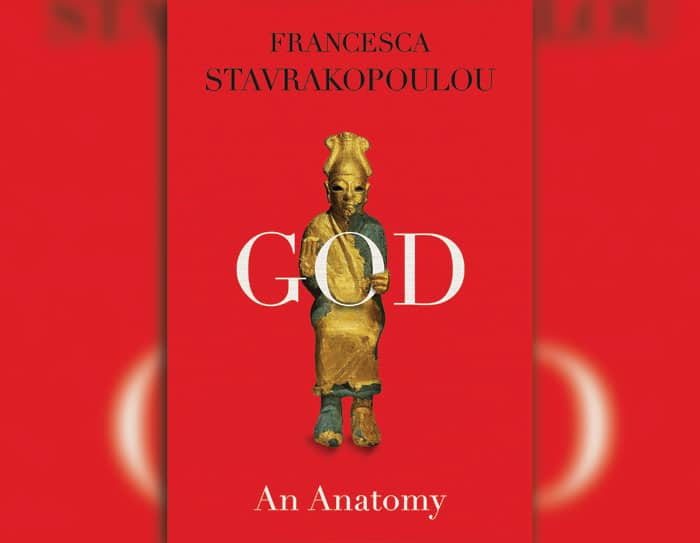
Jack Miles embraced an audacious literary device in his masterwork, “God: A Biography,” which presents the life story of the Almighty as if the authors of the Bible were telling the life story of a character in a book. The Pulitzer Prize Board endorsed his approach by awarding him the Pulitzer Prize in the category of biography in 1996. So what does Miles make of “God: An Anatomy” by Francesca Stavrakopoulou (Knopf)? We find out in the blurb that appears on the back cover of her book:
“Brilliant,” enthuses Miles. “Fascinating. A tour de force, a triumph. A stunning book.”
The truth that Stavrakopoulou tells in her book is perhaps best summed up in the old saying that “the emperor has no clothes” – and almost literally so. She recalls what she learned as an undergraduate when the gender of God was pondered: “[T]he way in which both feminist and traditionalist theologians proposed getting around this sticky issue was to insist that God couldn’t possibly have a sex or a gender, because God didn’t have a body.” But the Bible plainly “conjured a startling corporeal image of God as a human-shaped deity, who walked and talked and wept and laughed.”
So Stavrakopoulou insists on taking the authors of the Bible at their word when they depict God as possessing a human form. She points out that “this potent figure had been somehow theorized away and replaced by the abstract being with whom we are more familiar today.” And, a real sense, she wrote “God: An Anatomy” for her younger self: “This is the book I’d have liked to read when I was at university.”
“By mapping God’s body, rather than the Bible itself,” she boldly announces, “[w]e can meet the real God of the Bible.
Stavrakopoulou is an authentic scholar who studied at Oxford and holds a chaired professorship in the Hebrew Bible at the University of Exeter. As a featured presenter on the BBC and the History Channel, she knows how to address a lay audience without dumbing down her ideas or her information. All of these skills are on display in “God: An Anatomy,” which is closely argued, deeply rooted in scholarship, richly illustrated, and yet both accessible and compelling.
“Anatomy,” as the word appears in the subtitle of her book, is used quite literally. The book divided into five sections: Feet and Legs, Genitals, Torso, Arms and Hands, and Head. She points out how these body parts are attested in the biblical narrative, and she insists that the first readers of the Bible – if not the modern ones – were entirely comfortable with a deity with body resembled their own.
“In Genesis, Adam and Eve hear Yahweh’s footsteps approaching as he walks in the Garden of Eden,” she points out. “[L]ater in the same book, Abraham sees Yahweh standing with two other divine beings beneath a group of sacred trees, and subsequently goes for a walk with him.” Nor are God’s feet merely a matter of happenstance: “In the Bible, God’s feet are crucial to his social existence – fundamental to his very being – and so they are the bodily features by which he often renders himself evident in the world.”
The author’s use of the male pronoun in reference to God is not merely a grammatical convention. “[T]he Biblical writers (and their later translators) have done their best to sanitizing the story by diluting Yahweh’s corporeal sexuality,” she points out. “Essentially, genitals were to be considered an aspect of the human condition, not the divine. And yet the body of the God of the Bible suggests otherwise.” When Ezekiel describes his glimpse of God, for example, he describes “God’s motnayim, a Hebrew word term traditionally (and politely) rendered ‘loins’ or ‘waist,’ but which more accurately refers to the groin and its genitals.” Nor is Ezekiel “the only biblical figure to acknowledge God’s genitals,” writes Stavrakopoulou.
Such musings may be challenging to some readers, but Stavrakopoulou means only to inform and not to sensationalize. Indeed, there is no part of the human body that she overlooks, but each organ is considered as way of understanding what the biblical authors intended to say about God and how their vision differs from our own. At certain moments, her prose transcends her powers of analysis and explanation and approaches the sublime.
Consider, for example, a passage in Deuteronomy in which God beholds an infant named Jeshurun, a metaphorical reference to the people of Israel (Deut. 32:10). Conventional translations erase “an old Hebrew idiom…which refers to the eye’s pupil as ‘the little man’ – a vivid allusion to the tiny reflection that we can see of ourselves when we look closely into someone’s eye.” For Stavrakopoulou, God’s utterance “goes beyond metaphor” and says something poignant about God himself. “His eyes were not simply seeing organs, but feeling organs,” she explains. “Translated more carefully, this ancient poem portrays the deity gazing at his baby so intently that the boy is imprinted onto God’s shiny black pupil.”
Throughout “God: An Anatomy,” Stavrakopoulou contrasts the differing perceptions of God in Jewish and Christian tradition. If we use the Hebrew Bible as a benchmark, she insists, the Jewish tradition got it right.
Throughout “God: An Anatomy,” Stavrakopoulou contrasts the differing perceptions of God in Jewish and Christian tradition. If we use the Hebrew Bible as a benchmark, she insists, the Jewish tradition got it right. “The Christian construct of god as a transcendent, invisible and incorporeal being is a distorted refraction, not a reflection, of the biblical image of God. The real God of the Bible was an ancient Levantine deity whose footsteps shook the earth, whose voice thundered through the skies and whose beauty and radiance dazzled his worshippers.”
That contrast is the single most illuminating achievement in her book precisely because it brings the reader so much closer to “a deity who crafted god-shaped humans from clay…[a] god who wept and talked and slept and sulked. A god who felt and fought and loved and lost.” Above all, she insists that the deity she describes “was a god more like the best of us and the worst us. A god made in our own image.” n
Jonathan Kirsch is book editor of the Jewish Journal, and author of, among other books, “The Harlot by the Side of the Road: Forbidden Tales of the Bible.”
Examining a Deity Made in Our Own Image Read More »

One verse, five voices. Edited by Salvador Litvak, the Accidental Talmudist
You shall not murder. You shall not commit adultery. You shall not steal. You shall not bear false witness against your neighbor.
-Ex. 20:13
At first glance, the two tablets of the Ten Commandments seem to focus on two different themes. The first five appear to stress the hierarchical relationship between human beings and God, while commandments six through ten focus on social laws– lateral relationships between people. However, Rabbi David Fohrman of AlephBeta.org teaches that in reality there is one single unifying principle of all ten. That theme is respect.
This deeper layer of meaning emerges when we read the commandments across, rather than down. For example, the first commandment, “I am your God,” connects to number six, “Do not murder.” God created all life; human beings were created in His image. Therefore, erasing an individual through murder is also, in a way, erasing the foundational idea of God as that Creator of all life. The second commandment, “Do not worship any other gods” relates to the seventh, “Do not commit adultery.” How so? Idolatry and adultery both weaken (adulterate) relationships that are meant to be exclusive.
Without a God-based morality, all values become relative. Reinforcing the concept of respect for God in the first five commandments is vital because once we let that respect slip away, we easily elevate our self-interest over God’s laws. Commandments six through nine warn us how easily we can begin to violate other people: their bodies; their sacred relationships; their property; and their reputations. The Ten Commandments teach us that everyone has a spark of the divine.
This isn’t just a list of Don’ts. As my rebbe, R. Fohrman, magnificently highlights, these commands mirror their horizontal counterparts on the other tablet. The first five commandments articulate values as they manifest in our Divine relationship, while the second five commandments articulate precisely those same values in our human relationships.
Take One and Six. Six: Don’t Kill. Don’t deny the existence of another. In the spiritual realm, even if we’re not interested in God, if we feel like life would be easier without God, we still can’t murder God. But we can choose to live without God, and thus deny God’s existence. Command One: I am God. Don’t deny My existence.
Two and Seven. Seven: Don’t commit adultery. Don’t take the most sacred human relationship and betray it. In the spiritual realm: Don’t take the most sacred relationship you have with God and betray it. Command Two: Don’t commit idolatry.
Three and Eight. Eight: Don’t Kidnap. Don’t take one’s body, don’t hold hostage or desecrate the essence and expression of oneself. And in the spiritual realm? God has no body, but God’s most authentic expression of self in this world is through God’s names (Kuzari 4). Command Three: Don’t “take” (tisa) God’s name in vain. Don’t violate God’s expression of self in this world.
I leave it to you to uncover the rest. But the lesson is clear: Our human relationships should be microcosms of our Divine relationship, and our Divine relationship a teacher for our human relationships.
Why is the prohibition against stealing included in the Ten Commandments? It seems to be a fundamental code of human behavior. Parents everywhere tell their children not to take what doesn’t belong to them; it’s hard to imagine that a society can survive without a taboo against stealing. Do we really need to be told not to steal?
Rabbi Benjamin Blech, in his book “Understanding Judaism,” explains that “Ten Commandments” is a misnomer. A commandment is a mitzvah but we don’t say “The Ten Mitzvot.” A better translation would be “The Ten Sayings,” with each of them representing a major category or principle.
“Do not steal” encompasses more than just taking something that doesn’t belong to you. For instance, according to Italian commentator Sforno (circa 1500), deliberately lying to someone is considered stealing, because you are stealing their mind by making them believe lies are truth. “Stealing” also includes slander since you are stealing someone’s reputation. Another form of stealing is being late, as we’re stealing time from the person who is kept waiting.
For many of us who try to live by the Ten Commandments, the prohibition against stealing seems like an easy rule to follow. Most adults don’t literally steal things from others. But how many can say we’ve never told an untruth or kept someone waiting? When we understand the “commandments” as “categories,” we see that none of them is simple or easy, yet all of them bring us closer to God in a myriad of ways.
It is extraordinary that this single verse – 11 Hebrew words – contains four of the Ten Commandments, and covers most of the ground from which U.S. law fills dozens of thick volumes. It’s true that Jewish law also elucidates these four at length, but that applies equally to the other six commandments, and they are far wordier. Our question is, why was God so terse re criminal law, and so verbose regarding faith in Him, keeping Shabbos and coveting?
The Torah distinguishes between mishpatim, laws we intuitively grasp like “you shall not murder” and chukim like “you shall not wear a garment made of linen and wool.” The former we’d legislate anyway. The latter we obey simply because God said so, and the majority of the Ten Commandments fall into that category.
There’s no self-evident reason to worship a hidden God, nor to rest on the Seventh Day. And what legislature would ever pass a law ordering us not covet our neighbor’s stuff? That’s a thought crime! Even honoring one’s parents doesn’t come naturally – certainly not to the degree demanded by our Sages.
So why all these chukim? The answer lies in the most fundamental commandment of our relationship to God, “you shall love the Lord.” How do we fulfill it? By loving what God loves, mercy and justice. By caring for His creatures. And by obeying all those chukim because He said so.
Back to the four mishpatim of our verse. If they’d be legislated by all societies anyway, why did God include them in the Ten Commandments? To remind us that the other 6/10ths of the law is even more important, and requires constant devotion to fulfill. Good Shabbos!
The literal interpretation of Lo Tignov, You shall not steal, seems to make many commentators uneasy. Rashi, Sforno, Ibn Ezra and others prefer to interpret it as kidnapping. They seem to struggle that on the surface the command to not steal doesn’t belong on the list with murder and adultery. It appears important to them that all prohibitions in our verse are comparable, and the prohibitions carry the same penalty: capital punishment. But perhaps what binds these prohibitions is not the severity of their punishment so much as the nature of the injury.
If we look at the earliest accounts of stealing in the Bible, we find Rachel stole her father Lavan’s idols, and next Yaakov plans to run away and steals Lavan’s heart “vayignov et lev Lavan”. Many commentaries, grappling to understand how a heart can be stolen, explain that Yaakov concealed but did not actually steal anything from Lavan.
Gnivat lev. How does one steal the heart of another? Theft perhaps is any instance where we benefit ourselves by diminishing the other. This can be as severe as taking another life, carrying the most extreme penalty or it can be something smaller. Lavan’s reaction to the gneiva speaks volumes of the damage to the relationship and the impact of the injury. Yaakov took from Lavan his family, his beliefs and his connection. The question then becomes not whether Yaakov was right in leaving, but rather, could he have done it without diminishing Lavan’s heart?
Table for Five: Yitro Read More »
“I’m grateful to be alive.”
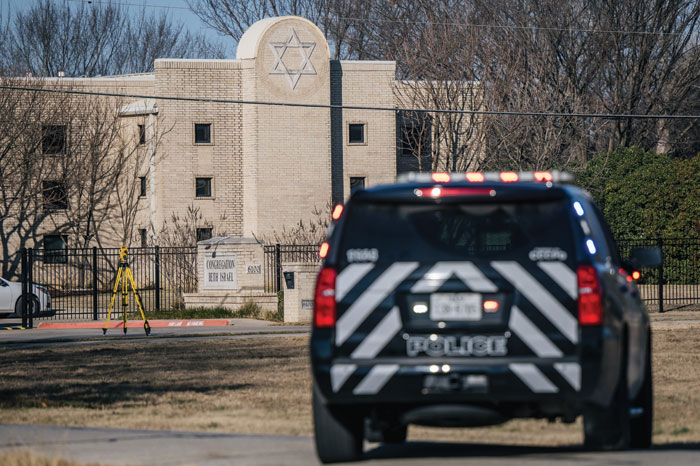
Those were the words that concluded Congregation Beth Israel Rabbi Charlie Cytron-Walker’s Facebook post after he was held hostage for 11 hours inside the synagogue in Colleyville, Texas, that he has been part of since 2006. The situation had the Jewish world gripped in tension throughout the ordeal. Cytron-Walker and the three other hostages, who have yet to be publicly identified, survived unharmed, while the hostage-taker—later identified as 44-year-old British national Malik Faisal Akram—was killed by law enforcement.
It began like any other Saturday morning for the synagogue, at least the type of Saturday morning to which the Jewish community has become accustomed in the age of COVID-19. The synagogue, which seats 160 people, only had four in attendance, including Cytron-Walker, due to the fast-spreading omicron variant. The services were being livestreamed at Facebook before being taken down at around 2 p.m. CST; while those watching could not see Akram, the audio of the situation unfolding could be heard.
“I got text messages from several other congregants urging me to get on Facebook, where we had a live feed of the morning worship services,” congregant Anna Salton Eisen told National Public Radio (NPR). “And when I logged in, I saw that the camera was on the pulpit, but you couldn’t see any people. But the audio was on, and it stayed on for several hours. So I stayed, you know, glued to the computer.” While the audio quality wasn’t always clear, she described the hostage-taker as “not very calm.”
“He was talking about Israel, Palestine, Islam and that he had a gun. He implied he had a bomb in his backpack, and that he could, you know, let it loose at any minute. It was horrifying.”
Another congregant, Stacey Silverman, told ABC News that Akram was “foul-mouthed” and used “antisemitic tropes.” “He was talking about Israel, Palestine, Islam and that he had a gun. He implied he had a bomb in his backpack, and that he could, you know, let it loose at any minute. It was horrifying.” At one point during the livestream Akram could be heard saying “I am going to die.”
All the while, Cytron-Walker sounded “very calm,” according to Salton Eisen, adding that his voice sounded “soothing” though it wasn’t entirely clear what he was saying. “At another time, he was on the phone. I’m not sure who he was speaking with, but he was reassuring them that the hostages were, at that time, not harmed,” she said.
Law enforcement is investigating the full story of Akram, who arrived legally in the U.S. approximately five weeks ago, landing at New York’s JFK airport. Reviews of both U.S. and British intelligence databases show no “prior derogatory information” on Akram. Those who listened to the livestream heard him call for the freedom of Aafia Siddiqui, who was sentenced to 86 years in prison in 2010 for attempting to attack American soldiers and FBI agents in Afghanistan. At one point Akram referred to Siddiqui as his “sister,” which led some to believe that the hostage-taker was Siddiqui’s brother, Muhammad Siddiqui; however, Muhammad’s lawyer later said that he was not the hostage-taker and had no involvement in the matter. The “sister” reference appears to have been made in the solidarity sense, not biologically.
Additionally, Akram had Cytron-Walker call another rabbi in New York to free Siddiqui, NBC News reported. Joe Duenas, an independent filmmaker and writer, tweeted that this showed that Akram “actually believed that a [New York] rabbi had this power. These antisemitic conspiracy libels are spread openly by prominent activists, at universities, and by politicians in Congress.”
Eventually, law enforcement —including SWAT and the FBI— arrived at the scene and an hours-long standoff ensued. At around 5 p.m. local time, the first hostage was released. More than four hours later, reports of a “loud bang” and “two fast pops” reverberated through Twitter, eventually followed by the following tweet from Texas Republican Gov. Greg Abbott: “Prayers answered. All hostages are out alive and safe.” Akram was shot and killed by law enforcement.
FBI Special Agent in Charge Matthew DeSarno said in a subsequent press conference that law enforcement had been in contact with Akram throughout the day, which helped keep the hostages alive. He didn’t say what precisely caused the FBI to move in and rescue the hostages, other than that it was “deliberate,” the Fort Worth Star-Telegram reported. He also claimed that Akram’s motivation was an issue that “was not specifically related to the Jewish community,” a statement that was ridiculed on Twitter, as many argued that Akram’s decision to use a synagogue to launch a hostage crisis showed it was obviously an act of antisemitism. In a subsequent statement, the FBI acknowledged that the hostage crisis was “a terrorism-related matter, in which the Jewish community was targeted.” DeSarno also said that a global investigation would be underway; since then, two teenagers in Britain were arrested in connection to the hostage situation.
“I am thankful and filled with appreciation for all of the vigils and prayers and love and support, all of the law enforcement and first responders who cared for us, all of the security training that helped save us,” Cytron-Walker wrote in his Facebook post. “I am grateful for my family. I am grateful for the [Congregation Beth Israel] Community, the Jewish Community, the Human Community. I am grateful that we made it out. I am grateful to be alive.”
The statements expressing gratitude and solidarity with the Jewish community have since been pouring in. “Thanks to the courageous work of state, local and federal law enforcement, four Americans who were held hostage at a Texas synagogue will soon be home with their families,” President Joe Biden said in a statement posted to the White House’s website. “I am grateful to the tireless work of law enforcement at all levels who acted cooperatively and fearlessly to rescue the hostages. We are sending love and strength to the members of Congregation Beth Israel, Colleyville, and the Jewish community.”
He added: “There is more we will learn in the days ahead about the motivations of the hostage taker. But let me be clear to anyone who intends to spread hate—we will stand against antisemitism and against the rise of extremism in this country. That is who we are, and tonight, the men and women of law enforcement made us all proud.”
Biden provided more information on January 16 while packing food at a food bank in Philadelphia. While he admitted that he doesn’t yet have all the facts, the president said that Akram allegedly purchased his firearms off the street and didn’t have any explosives on him despite claiming he did. Akram also spent his first night in Texas at a homeless shelter, according to Biden. When asked if the hostage situation should result in more gun control measures, Biden responded: “The idea of background checks are critical, but you can’t stop something like this if someone is on the street buying something from somebody else on the street.” The president will be holding a press conference on January 19 and said that he will contact Cytron-Walker at some point.
The new head of the Jewish Federation of Greater Los Angeles, Rabbi Noah Farkas, released a statement during the crisis that “This is a sobering reminder of the threats of antisemitism that continue to face Jewish communities both across the United States and here in Los Angeles” adding that the Federation’s mission is “to keep our beloved Jewish community as safe and secure as possible and we are coordinating with local law enforcement and our own Community Security Initiative (CSI).”
This event is a stark reminder that the dark forces of antisemitism still exist. We must and we will do what we can to fight it.”
— Israeli Prime Minister Naftali Bennett
Israeli Prime Minister Naftali Bennett also weighed in. “To the Jewish community in the U.S. and diaspora Jewry around the world, I say: You are not alone. We are one family and we stand strong and united together,” he said during his morning cabinet meeting on January 16. “This event is a stark reminder that the dark forces of antisemitism still exist. We must and we will do what we can to fight it.”
The Jerusalem Post, which reported on Bennett’s aforementioned remarks, also reported that Bennett told Cytron-Walker in a phone call: “We are brothers.” He also commended Cytron-Walker’s “admirable” leadership during the hostage crisis. “Israel stands united with the Jewish community in Colleyville,” Bennett reportedly said to him. “I was praying here for your safety, together with the rest of Israel … Please send strength to your congregation.”
Jewish groups also released various statements. “We are deeply grateful to Texas law enforcement and the FBI for their work in ending the tense hostage situation in Colleyville and for the safe return of the hostages to their families,” Anti-Defamation League (ADL) CEO Jonathan Greenblatt said in a statement. “We are also thankful for the support of Texas Gov. Greg Abbott and the many other public officials who handled this situation with the gravity it deserved. Our thoughts and prayers are with the victims and their families, who have endured a horrific trauma. ADL will remain on the scene now and in the difficult days ahead.” He added that the “situation is a painful reminder of the fact that synagogues in America continue to be at risk for terrorist attacks. There is no doubt, given what we know so far, that the hostage-taker chose his target carefully. We urge law enforcement and prosecutors to investigate the role antisemitism may have played in motivating the suspect.”
The American Jewish Committee (AJC) tweeted thanks to Biden for his “forceful condemnation of antisemitism and strong signal of support following the Congregation Beth Israel attack. Further action is needed in the fight against antisemitism. We look forward to our continued work with your [administration] on this critical issue.”
Stop Antisemitism Executive Director Liora Rez also said in a statement, “When Jews tell you antisemitism is a problem, listen to us. Antisemitism doesn’t just come from the white neo-Nazi movement—it comes from many sources like we see unfolding today in Colleyville, Texas. It’s critical not to turn a blind eye to any of it as the consequences can be catastrophic.”
“The fact that this could happen to any synagogue in America, and any of us could be trapped inside, any of our rabbis or any of our children in Jewish schools could be targeted, is entirely unacceptable and tears at the very fabric of the American dream.”
Conference of Presidents of Major Jewish American Organizations Chair Diane Lob, CEO William Daroff and Vice Chair Malcolm Hoenlein said in a joint statement, “This attack against our community once again reveals the imminent dangers emanating from the far left, the far right, and Islamist extremists. This hate is the reason many must memorize the exit signs when entering a synagogue, are wary of doors opening and closing, and must consider where to shelter should the unthinkable happen. Let us be clear: an attack against one of us is an attack against us all. The fact that this could happen to any synagogue in America, and any of us could be trapped inside, any of our rabbis or any of our children in Jewish schools could be targeted, is entirely unacceptable and tears at the very fabric of the American dream.
“We are grateful to live in a time and a country where the government is ready, willing, and able to protect us, no matter the threat,” they added. “We thank the White House, Department of Homeland Security, and the Department of Justice for ensuring open lines of communications and providing updates. We appreciate our colleagues who were on the ground in Texas yesterday dealing with the emergency needs of the community.”
StandWithUs CEO and Co-Founder Roz Rothstein said in a statement, “We appreciate the brave diligence of law enforcement and vocal support of people of different faiths and backgrounds, including local Christian and Muslim leaders in Texas.”

The Muslim Jewish Advisory Council (MJAC), founded by the AJC and Muslim community members, issued “a Muslim-Jewish call for solidarity” on January 16. “The Jewish and Islamic traditions both teach that diversity is a sign of the holiness of creation and that our Creator endowed all people with dignity and freedom,” the statement read. “We denounce any ideology—whether religious or political—that justifies attacks against people based on who they are or how they choose to worship. We call on our communities and all people of good will to come together in solidarity. We ask our allies to learn to identify the many sources and manifestations of antisemitism and to show Jewish neighbors and friends solidarity amidst this moment of vulnerability. Likewise, we encourage Jews across the country to maintain pride in their identity and to not shrink from the free expression of their faith for fear of attack.”
The MJAC statement concluded: “Together, we commit to use this incident to achieve greater understanding and to work together to combat all forms of hatred, including antisemitism and Islamophobia. We reject any attempt to use the identity of the attacker to stoke hatred against all Muslims.”
Rabbi Marc Schneier and Imam Shamsi Ali, who co-authored the book “Sons of Abraham: A Candid Conversation About the Issues That Divide and Unite Jews and Muslims,” said in a joint statement that they were “heartened by the demonstration of solidarity by the Islamic Center of Southlake (TX) and the local Muslim community in support of Congregation Beth Israel of Colleyville, Texas, in the midst of the recent terrorist attack that thankfully was brought to a positive resolution.”
“In the spirit of Dr. Martin Luther King Jr. who recognized that a people who fight for their own rights are as honorable as when they fight for the rights of all people, this Muslim-Jewish solidarity is a profound example of the strengthening of Muslim-Jewish relations in our country,” they added.
Akram’s family also issued a statement saying that they “do not condone any of [Akram’s] actions and would like to sincerely apologize wholeheartedly to all the victims involved in the unfortunate incident.” They added that Akram had “mental health issues” but they “were confident that he would not harm the hostages.” The family also claimed that Akram had allowed the remaining hostages to escape through the fire escape before he was killed in a firefight with the FBI. “There was nothing we could have said to him or done that would have convinced him to surrender.”
However, the family’s claim that Akram let the hostages go is contradicted by Cytron-Walker, who told CBS News that he threw a chair at Akram so he and the other two remaining hostages could escape. “When I saw an opportunity where he wasn’t in a good position, I made sure that the two gentlemen who were still with me, that they were ready to go, and that the exit wasn’t too far away,” he said. “I told them to go. I threw a chair at the gunman, and I headed for the door, and all three of us were able to get out without even a shot being fired.”
The family’s statement concluded: “Any attack on any human being be it a Jew, Christian or Muslim etc. is wrong and should always be condemned. It is absolutely inexcusable for a Muslim to attack a Jew or for any Jew to attack a Muslim, Christian, Hindu vice versa etc. etc.”
So who is Aafia Siddiqui, the woman who Akram was allegedly trying to free with the hostage crisis? Dubbed the “Lady of Al Qaeda,” Siddiqui, a Pakistani neuroscientist, was arrested by Afghan police after she was found carrying sodium cyanide, a flash drive containing documents on how to build chemical weapons and use the Ebola virus as a weapon and detailing New York landmarks that could be targeted for terror attacks. While in custody, Siddiqui is alleged to have grabbed an M-4 rifle and fired at the American soldiers and FBI agents holding her while shouting, “Allahu Akbar!” and “I am going to kill all you Americans!” She was eventually neutralized. During her trial, the federal government presented evidence that Siddiqui had taken part in firearms training prior to the incident.
Siddiqui and her supporters have denied that this ever happened, claiming that it was fabricated, as are her alleged links to terror (some have claimed she is married to 9/11 mastermind Khalid Sheikh Mohammed’s nephew, though this has never been confirmed). Nevertheless, a unanimous jury found the evidence against her to be “overwhelming” and the judge sentenced her to 86 years in prison; she is currently being held in FMC [Federal Medical Center] Carswell prison in Fort Worth.
It is also worth noting that Siddiqui demanded that the jurors not be seated if they had “a Zionist or Israeli background”; during the trial, defense psychologist Thomas Kucharski testified that Siddiqui believes that “Jews are responsible for 9/11 and have infiltrated American political and nongovernmental organizations,” prompting Siddiqui to interject that she is simply “a student of Noam Chomsky” who wants “peace,” according to The Forward. When the verdict came in, she said that it “came from Israel and not America. That’s where the anger belongs.”
In jihadi folklore, Siddiqui is well known––both the Taliban and ISIS offered former Army soldier Bowe Bergdahl and the late journalist James Foley, respectively, in exchange for Siddiqui, Foreign Policy reported. Al Qaeda has also called for her release and offered in exchange federal worker Warren Weinstein. But it’s not just Islamic terrorists calling for her release: the Council on American-Islamic Relations (CAIR) has been beating the drum for her freedom. Many on Twitter noted that in November, CAIR’s Texas chapter held a Facebook Live discussion with former Women’s March, Inc. leader Linda Sarsour about the campaign to free Siddiqui. CAIR issued a statement on Twitter condemning the hostage crisis, calling it “pure evil” and that they “stand in solidarity with the Jewish community.” But many on Twitter did not find their statement to be satisfactory. David Draiman, lead singer of the metal band Disturbed, tweeted, “You stood by Aafia Saddiqui who stated Jews are behind 9/11 and that she didn’t want Jews on her jury, the very person the terrorist is trying to free. You have blood on your hands @CAIRNational.” Former Miss Iraq Sarah Idan tweeted that CAIR’s advocacy to free Siddiqui is further evidence that it’s “time to ban @CAIRNational who actively seek to free terrorists in our country.”
Nihad Awad, CAIR’s National Executive Director, replied to Idan that she is “shameless” for “exploiting the suffering of the Jewish community to score political points and ignoring the facts.” He linked to a statement from CAIR-Houston Board Chair John Floyd, who provides legal counsel to Muhammad Siddiqui, condemning the incident and that “Siddiqui and her family strongly condemn this act.”
“All it takes is to publicly rescind this statement,” Pearl wrote. “Can you? We are listening.”
Judea Pearl, Chancellor Professor of Computer Science at UCLA, National Academy of Sciences member and Daniel Pearl Foundation President, tweeted that CAIR’s condemnation of the hostage crisis can only be taken seriously if they condemn CAIR-San Francisco head Zahra Billoo’s December remarks that “Zionist synagogues” are the enemy. “All it takes is to publicly rescind this statement,” Pearl wrote. “Can you? We are listening.” CAIR National defended Billoo in a lengthy December 10 Medium post, accusing various news outlets of misquoting her.
In the aftermath of the hostage crisis, the Jewish community is putting a renewed emphasis on security. The Simon Wiesenthal Center said in a January 16 statement that “it is left to Jewish communities to once again have to elevate security measures for our synagogues, Jewish schools, and community centers—not only against neo-Nazis and white supremacists, but Islamists, incited by Jew-hating campaigners and apologists who cynically wrap their hate behind the mask of politics and theology.” Greenblatt similarly said in his statement that the ADL urges “continued vigilance in securing synagogues and all Jewish institutions in the wake of this attack. The risks remain high in light of the historic level of antisemitism across the country and the proliferation of anti-Jewish hate online. ADL offices across the country will be reaching out to local law enforcement in the coming days to ensure that steps are being taken to ensure the safety and security of the Jewish community.” Evan Bernstein, who heads the Community Security Service, told JNS: “We will be dissecting lessons from this incident as details emerge, and redoubling our efforts to strengthen the safety and security of synagogues and Jewish institutions across the country,” adding that the hostage crisis is “another clear reminder to Jewish communities nationwide that prioritizing security is paramount.” Newsweek Opinions Editor Josh Hammer tweeted, “I literally cannot remember the last time I stepped foot inside a shul where (1) I was not carrying and/or (2) there was not armed security. If your shul does not have either—or ideally, both—of these, then find a new shul. And do so yesterday.”
In a January 16 statement, Cytron-Walker said that the hostages were “alive” because of the various security courses his synagogue has taken with the FBI, ADL, Colleyville Police Department and Secure Community Network. “In the last hour of our hostage crisis, the gunman became increasingly belligerent and threatening,” he said. “Without the instruction we received, we would not have been prepared to act and flee when the situation presented itself.”
In the aftermath of the hostage crisis, the Jewish community is putting a renewed emphasis on security.
Department of Homeland Security Secretary Alejandro Mayorkas said in a statement that “the fear of antisemitism remains.” “We must answer hate with action and ensure synagogues and all houses of worship are sanctuaries of safety, Shabbat and other days of faithful observance a time of peace, and America a place of freedom for all.”
Others have urged the Senate to confirm Jewish and Holocaust Studies Professor Deborah Lipstadt as the Special Envoy to Monitor and Combat Antisemitism. Greenblatt wrote in an op-ed for The Hill that Lipstadt needs to be confirmed “immediately” and the hostage crisis shows “we cannot afford to wait.” Jewish on Campus tweeted that Lipstadt’s confirmation is “imperative.”
Regardless of what comes next, the first priority for the Colleyville Jewish community is to heal.
“It’s going to take a long time for this congregation to heal, because you don’t know who next is going to approach your building,” Silverman told ABC. “You don’t know what’s going to happen, because [antisemitism is] so prevalent right now. We know that it could happen again. It’s terrifying.”
Cytron-Walker concluded his January 16 statement by saying that while the hostage crisis was a “traumatic experience … we are resilient and we will recover.”
How Colleyville Unfolded Read More »