fbpx

January 19, 2022

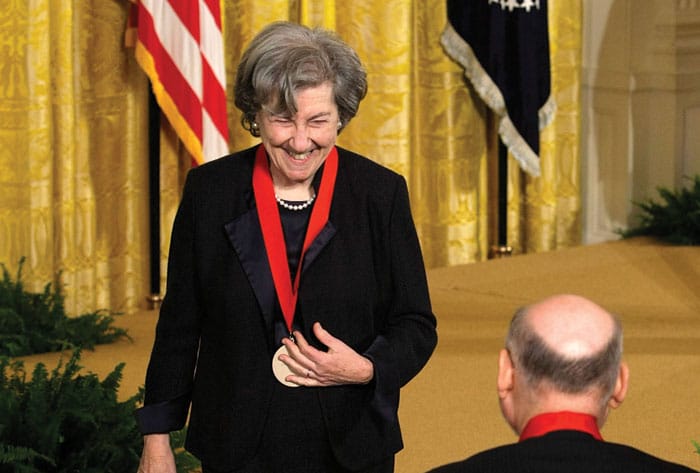
All Rise for Ruth Wisse

In November of 2019, Ruth Wisse was asked what Jewish college students can do to successfully combat antisemitism on campus. Knowing that she is a staunch Zionist, a former professor of Yiddish literature at Harvard and McGill and a particularly passionate polemicist on the complications (and failures) of contemporary academia, I believed then as I do now there is no better person to answer this question. “Never let the war of words ever be fought against Israel’s nature,” Wisse responded without hesitation. “Let it be fought about why you can’t accept Israel, why you need to single out this tiny people. Try to find Israel on the map…it’s hardly there! Are you really going to tell me these are the people you want to blame?”

When young people need advice on how to stand up to “the mob” on campus, I implore them to heed Professor Wisse’s words: To demand an answer as to why the Jewish people alone are deprived of the right to a country, and also to interrogate their opponent as to how this viewpoint can be twisted to look like progressivism. 

Wisse’s answer has served as the north star of my career in my Zionist activism, always reminding me to take the offensive and prosecutorial stance when a debate on whether or not the Jewish state should exist is to be held. When young people need advice on how to stand up to “the mob” on campus, I implore them to heed Professor Wisse’s words: To demand an answer as to why the Jewish people alone are deprived of the right to a country, and also to interrogate their opponent as to how this viewpoint can be twisted to look like progressivism. “Teach them how to defend by attacking” is the motto. Wisse views the world and the Jewish people’s place within it as a lopsided, asymmetric assault on our rights and freedoms disguised as warring tribes on an even playing field. During weeks like this, when antisemitic violence scourges the nation once again, this time in the form of a hostage crisis, it’s a marvel how refreshing it is to hear someone speak of the Jews and our enemies with such politically incorrect truth. Wisse’s latest book, “Free As A Jew: A Personal Memoir of National Self Liberation,” is a review of how her worldview matured and developed — to the benefit of our entire community.

Ruth Wisse has invited readers to view the formulation of her intellectual and Jewish identity amidst the setting of twentieth century Montreal, New York City and Israel.

The memoir stretches far beyond wisdom on how to defend Israel, however. Ruth Wisse has invited readers to view the formulation of her intellectual and Jewish identity amidst the setting of twentieth century Montreal, New York City and Israel. As she advances in her career and navigates obstacles, important literary figures in the Jewish world bloom from every page, from Yiddish poets lecturing and arguing in her parents’ home to Leonard Cohen’s cool aloofness at summer camp. It is indeed an encyclopedia of the men and women who fashioned an art form out of living Jewishly—some easily recognizable to the Jewish ear, others living most predominantly in the memory of scholars and intellectuals. In its vivid characterization of all the brilliant people with whom Wisse has been acquainted, including Elie Wiesel and Norman Podhoretz, we are submerged in the marvelous infrastructure of knowledge Jews have built in North America, shown by our newspapers, our institutions and organizations, and by our strict adherence to the principles of liberal democracy. Indeed, Wisse effectively makes the case that, by way of our tradition of chattering and endless questioning, we Jews represent the strongest foundations of a free society. When Jews are in peril, there is evidence that these foundations have cracked. The manner in which the intellectual spirit of Judaism is described in “Free as A Jew” has inspired me to pursue Judaic studies in the academy like nothing else, though the academy is one among the many institutions Wisse fearlessly takes aim at.

When Wisse was four years old at the dawn of World War II, her parents managed to flee Eastern Europe to safe haven in Canada. Considering escape eluded so many millions, Wisse acknowledges the psychological implications this daring escape wrought, forcing her to live Jewishly and to defend Jewishness as something that is one with her existence. We never see any indication that this couldn’t be the case. Everything in the life of Ruth Wisse, even if secular in nature, is a salute to her heritage and a commitment to our continuation as a people. Recounting her visit to Israel sometime in the late 50’s, she does not offer a polemic on the country’s then vulnerability or a dazzling description of renewed spirituality. Instead, she recalls a conversation with an elderly shopkeeper in a Jerusalem store who knew that her grandmother Fradl was the most beautiful woman in all of Vilna. The two speak in Yiddish of the burgeoning romance between Fradl and a bookseller in the Old World, and though it fills merely one page of the memoir, to me this is what bolsters the moral clarity of defending the Jewish people as well as Wisse does. Our story is not best punctuated by drama, but rather by the history and culture that surrounds us every day we walk as Jews. To a person so filled with this spirit that they can fashion their own academic courses on Yiddish prose, advocating for our own self-interest in the political realm must come as easily as breathing. 

I’m aware that my previous writings make it hard to believe I’d be enamored with Professor Wisse’s work. It’s true, we assuredly disagree on matters including but not limited to draft dodgers, feminism, and Donald Trump. Yet at the same time, I’ve been unsuccessful in finding someone who speaks to my inner Jewish yearning for dignity and confidence as well as her, and still have yet to hear anyone who makes the case for Israel with more conviction. Several years ago, I first read Wisse’s previous works, “If I Am Not For Myself: The Liberal Betrayal of the Jews” (1992) and “Jews and Power” (2007). These books shattered my preconceptions of both the Jewish people and those opposed to us, and although it was uncomfortable to step out of my ideological bubble that had been coddled all my life, it was completely necessary in order to efficiently understand what I would be up against as a public-facing Jew and Zionist critiquing my own side of the spectrum. 

We will need a lot more of this strength in the coming years, and Ruth Wisse’s iconoclasm and courage are just the things to get us there. “Rare and precious are the writer-intellectuals and those who lead the Jews without yielding to despair,” she writes. Let mine be a generation who continues that legacy.


Blake Flayton is New Media Director and columnist at the Jewish Journal.

All Rise for Ruth Wisse Read More »
Rabbis of LA | Repairing the World With Paul Kipnes

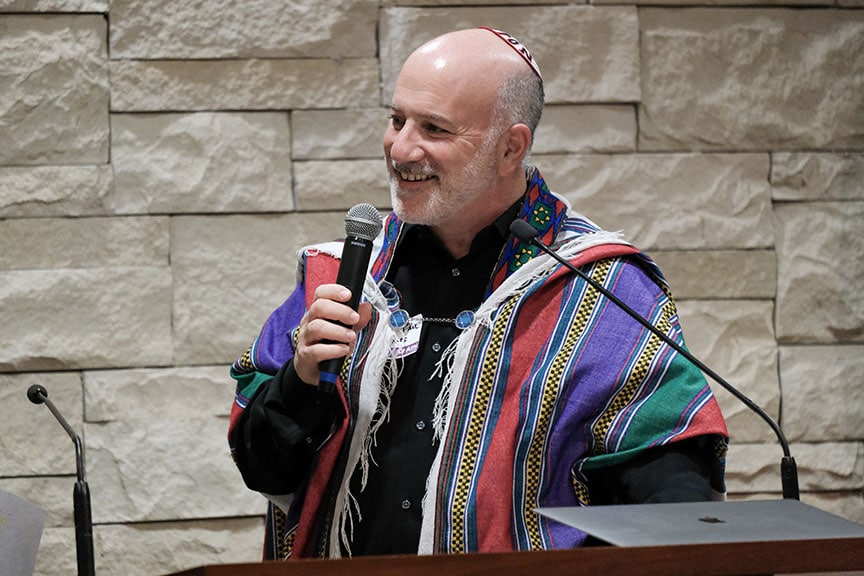
When Rabbi Paul Kipnes was a teenager, he met rabbis who inspired him and started him on his spiritual journey.

“I had memories from high school of vibrant rabbis who were supportive, intellectual and spiritually engaging, and they were there for me during difficult times,” he said. “They made Judaism exciting and accessible. I wanted to be like them.”  

Kipnes, who has been the spiritual leader of Congregation Or Ami in Calabasas for 22 years, didn’t start studying to become a rabbi after he graduated from high school. Instead, he went to college for physics. 

“I discovered I liked the idea of physics, but I was tired of the math,” he said. 

He subsequently went to Hebrew Union College-Jewish Institute of Religion in Los Angeles and New York City and received his ordination. Following that, he went to Washington, D.C. for a year and served as an Eisendrath fellow at the Religious Action Center of Reform Judaism, where he discovered his calling.

“I learned that religious values can and must have real world consequences. Otherwise, why bother?” 

“I learned there that religious values can and must have real world consequences,” he said. “Otherwise, why bother?” 

Today, as the leader of a congregation with over 400 families, Kipnes take his role as a rabbi and his obligation to make a positive impact on the world very seriously. 

In the past, he ran 12-step programs at Or Ami, which consisted of retreats for Jews recovering from addiction. The synagogue had rabbinic student interns who were trained to lead 12-step meetings and counsel attendees.

“I learned to talk to people about how holiness can transform their lives,” he said. 

Kipnes, who was involved in youth groups like NFTY, Reform Judaism’s youth movement, when he was younger, is also passionate about working with teens. Ori Ami holds groups for teens in seventh through twelfth grade so that they can discuss deep personal questions they have and feel like they’re in a community. 

“It allows young people to talk about real issues like stress, pressure and suicidal ideations,” he said. “We use Jewish texts and knowledge and are guided by therapists and youth workers. We give teens safe places to think things through.”

Additionally, Kipnes wants teens to know he and other spiritual leaders are there for them. “When every young person gets a cell phone, they also get two rabbis’ cell phone numbers,” he said. “They are told that if they have nowhere else to turn, now they have our numbers and they can text and call throughout their lives as needed.”  

Other projects Kipnes is working on are an interfaith coalition that advocates for the needs of the unhoused, and the Village, a community for adults ages 55 and older that offers socializing and virtual programming. 

“We reach out to our community in the good times and the hard times,” Kipnes said. “We talk about the hard stuff honestly. We invite people to join us individually, and not with just an email or flyer. The rabbis and cantor are totally accessible.” 

Through all of Or Ami’s offerings, Kipnes is being proactive about what he believes is the entire point of Judaism. 

“The Torah was given for the purpose of transforming the world into a place of truth, justice, tzedaka, love and peace,” he said. 

Along with his congregational work, Kipnes hopes to transform the world through his writings as well. He wrote “Jewish Spiritual Parenting: Wisdom, Activities, Rituals and Prayers for Raising Children with Spiritual Balance and Emotional Wholeness” with his wife Michelle November, and he’s working on a book that contains a collection of 120 poems he wrote in the aftermath of the sudden death of his father and mother. 

During his time of mourning, when he sat shiva, he didn’t worry about his appearance and let others take care of him. He was reminded how valuable Jewish teachings are, especially during life’s tumultuous moments. 

“Judaism helps us embrace ourselves and our imperfections and fix them,” he said. “The prayers and the texts and the communal aspects are about creating care and compassion and kindness and helping people repair themselves. Nothing is more important than that.”

Fast Takes With Paul Kipnes

Jewish Journal: What do you do on a day off? 

Paul Kipnes: I love to go down to the Pacific Ocean and walk on the seashore.

JJ: What is your favorite Jewish food?

PK: Bagels and whitefish. Yeah, I’m Ashkenazi.

JJ: How about your favorite Jewish holiday?

PK: The humorous answer is Thanksgiving. The real answer is Passover, because it is a multimedia, hands-on, play-with-your-food holiday that reminds us of who we are. 

JJ: What is the best place you’ve ever traveled to?

PK: Put me anywhere in Israel and my heart soars.

Rabbis of LA | Repairing the World With Paul Kipnes Read More »

For Marek Edelman, Every Day Was Holocaust Remembrance Day

Marek Edelman had fought alongside the legendary fighters of the Warsaw Ghetto Uprising in 1943. Fifty-five years later, when I attended a talk he was due to deliver in Cape Town, South Africa, he was the last surviving member of the Warsaw Ghetto Uprising high command. I could feel the excitement in the room as several hundred people readied themselves to hear heroic stories from the sewers and flaming streets of the ghetto. He had helped lead an epic battle against the might of the German military, which hundreds of years from now will likely be recalled alongside the Siege of Masada and the Bar Kochba Revolt.  He was a true Jewish hero.

Marek Edelman opened his talk speaking Yiddish, stating,‭ ‬דאָס‭ ‬איז‭ ‬אַ‭ ‬דענקמאָל‭ ‬טאָג – this is a day of memorial. He repeated it several times for emphasis, but it was not Holocaust Remembrance Day, or Yom Ha Shoah, or any other day of memorial for that matter. He was making the point that every day is a day to remember. His act of remembrance was to stand before his audience as a witness on behalf of the dead.

Like many Holocaust survivors, after World War II he had assumed the world would want to hear and had shared his story in detail. And, like many Holocaust survivors, he had been bitterly disappointed by the silence of a world not ready to listen.

In 1946, Marek Edelman had written one of the first accounts about the Holocaust in a book entitled “The Ghetto Fights.” He was no stranger to telling his story.  In his book he detailed what had unfolded day-by-day, blow-by-blow. Like many Holocaust survivors, after World War II he had assumed the world would want to hear and shared his story in detail. And, like many Holocaust survivors, he had been bitterly disappointed by the silence of a world not ready to listen.  In 1998 the audience in Cape Town was enthusiastic to hear his stories of heroism and resistance in the face of overwhelming odds.

He suggested that the most appropriate way to memorialize the past is through how we live our lives in the world today.  

But Edelman had nothing to say about his heroic past, and cut straight to his conclusions. He talked about human values, and the need to speak out against injustice. He suggested that the most appropriate way to memorialize the past is through how we live our lives in the world today.  He told his audience that such actions were the best way to remember the victims of the Holocaust, who had had no such advocates at the time. Within ten minutes he completed his remarks and returned to his seat, without so much as a word about the Warsaw Ghetto Uprising. Edelman agreed to take questions, whereupon the frustrated audience tried to elicit stories from his time in the ghetto. One questioner begged him to give some historical details so that he could tell his own children. Edelman responded to the father that if he wanted to tell his children anything about the encounter, that he should remind them never to behave toward others as the Germans had behaved towards the Jews. Twenty minutes into his ninety-minute program, Marek Edelman concluded his remarks, much to the disappointment of his audience.

In November 2005, the United Nations General Assembly officially adopted January 27th as the International Day of Commemoration in Memory of the Victims of the Holocaust. Many other countries around the world adopted the day as their own National Day of Holocaust Remembrance.  In 2005 I became the Chairman of the UK Holocaust Memorial Day Trust, a not-for-profit founded and funded by the British Government to oversee a program of Holocaust memorial activities across the country.  As a National Day of Remembrance, it was patronized by the Queen and attended by successive Prime Ministers. Still today it attracts millions of people — the vast majority of whom are not Jewish — to participate in memorial activities.  A world that was once silent about the Holocaust is now ready to listen. But what is the right way to remember events quickly receding into the past?

Marek Edelman’s talk in Cape Town has always helped guide me.  Firstly, he began by remembering the dead. Edelman had fought with some of the most courageous Jewish leaders of his time. He saw them die just because they were Jews, alongside hundreds of thousands of others in the Warsaw ghetto. Every day thereafter had been a day of memorial for him. Secondly, he made clear that legendary stories from the past are only meaningful if they are applied in the present.  He did not want to become an object of the past.  He was a living person in the present.  He wanted the father in the audience to imbue his children with the kind of values that would enable them to make courageous choices in future. In 1943 he had made a choice to fight for justice and survival. It was not a decision to become a hero, but to be willing to die for his principles.  He was teaching us that if that past is to have meaning in the present, we sometimes must make difficult choices in the present. 

As I left the room that day in Cape Town I was not disappointed that Marek Edelman had not described his experiences in the Warsaw Ghetto Uprising. I realized that a true hero of the Warsaw Ghetto Uprising had just personally invited me to join him and be willing to make sometimes risky, but worthwhile contributions to the present.


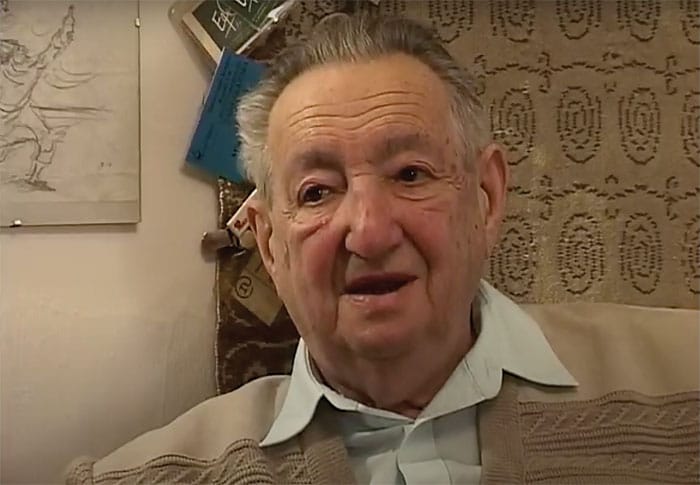
Stephen D. Smith is Executive Director Emeritus of USC Shoah Foundation and CEO of StoryFile Inc. 

For Marek Edelman, Every Day Was Holocaust Remembrance Day Read More »

Grateful for Gratitude

I used to complain constantly. When I’d wake up in the morning after a bad night of sleep and stub my toe on the way to the bathroom, I’d think “here we go,” and decide that everything else that day was going to go wrong as well. 

I’d complain in my head, to my friends, to my family. In my perspective, life was tough, and complaining was one of the ways to feel better about it.

But the truth is that complaining did not make things any better. In fact, I complained so much that it made things worse. When I was in high school, one of my friends stopped hanging out with me because, as she told our mutual friend, I was a “Debbie Downer.”

When I discovered Judaism in my early 20’s and began the conversion process, I learned about how we have to be grateful for everything we have. As soon as we wake up in the morning, we say thanks to God for giving us another day of life. We thank Him every time we go to the bathroom, we thank Him for all the food we eat, and for making the world go ‘round. Every day, I think about how with all the chaos in the world and things that could go wrong, so much goes right because God wills it.

If I’m running late to an appointment because there’s bad traffic, I wonder: Did God put this traffic here to prevent me from getting into a car accident? 

Shifting my mindset from one of complaining to one of gratitude did wonders for me. Whenever anything goes wrong, I think, “I guess God was protecting me from something.” If I’m running late to an appointment because there’s bad traffic, I wonder: Did God put this traffic here to prevent me from getting into a car accident? It helps me cope and makes me more positive about tough situations.

I realized that complaining not only didn’t make me feel better, but when I complained, I was draining others of their emotional energy. There is someone in my life who complains whenever they call me. When they solve one problem in their life, they quickly come up with another problem to complain about. I try to deflect by saying, “So, how’s the weather?” or “Anything good happen?” Usually, that works for a second before they go back to complaining. I have to hang up quickly, because I discovered I was always in a worse mood after talking to them. 

When I feel the urge to complain, I think about how life is short and it goes by fast. If I got hung up on every little thing that went wrong, I’d be wasting my precious time if I have on this planet. Chances are, I won’t remember the issues I’m having today just a week from now. 

Plus, I very much believe in a mind-body connection and that stress and negativity can cause you to become physically ill. I know that being anxious can increase your heart rate, but I think it can affect you on a deeper level as well as lead to disease in the body. It’s not worth it to me to feel stressed, anxious, or down because it could shorten my lifespan. 

I’m not saying that I don’t believe in venting. I think there’s a difference between mindless complaining and constructive venting. With the latter, you can accomplish something and figure out a better solution to a problem you’re facing. 

I save most of my venting for therapy, because my therapist is a trained professional who can interpret my issues, help me decide what to do about them, and empower me to feel better about my life. Everyone should have a trained professional they can talk to, because just as much as complaining can cause sickness, so can holding everything in. Constructive venting is a very necessary form of self-care and self-love. 

Things are going to go wrong in life; that’s something I cannot control. But by being grateful and resisting the urge to complain all the time, I can control the narrative in my brain and look at life from a much more uplifting – as well as healthier – perspective.


Kylie Ora Lobell is the Community and Arts Editor for the Jewish Journal.

Grateful for Gratitude Read More »

“It Is Burning”: A Reminder of our Past and Present

It is burning, brothers, it is burning.
Our poor little town, a pity, burns!
Furious winds blow,
Breaking, burning and scattering,
And you stand around
With folded arms.
O, you stand and look
While our town burns. 

Mordecai Gebirtig was a Polish-Jewish poet and songwriter who wrote one of his most memorable Yiddish songs in 1936: “Undzer Shtetl Brent!”; “Our Town is Burning!” The song (full lyrics at the end) was written following antisemitic pogroms in Poland. To this very day, its words echo as a prophecy of the impending Holocaust, which tore through European Jewry shortly thereafter. Its telling words and ominous warnings were largely ignored at the time by the intelligentsia, only later to become popular in the Krakow Ghetto and far beyond, inspiring resistance against the abominable Nazis and sung by many in other camps and ghettos.

The powerful words of this song come to mind as later this month, on January 27, the world will commemorate International Holocaust Remembrance Day. Along with the commemorative events, in many of which this song is a part, the words “Never Again” make their annual appearance as we remember the Holocaust. And yet, despite these annual commemorations and attempts at education, antisemitic events such as the one at Congregation Beth Israel in Colleyville, Texas, and too many others like it, keep on happening and even intensifying as time goes by. It casts a dark shadow on our efforts to educate and raises the horrible question: Could it be that Never Again and the accompanying formalities have become just that, formalities? Are they nothing more than a lullaby for humanity? Have they turned into mere background noise? Into a sort of elevator music that carries no meaning, just playing along only to be ignored and forgotten as soon as the elevator doors open?

The sad truth is that antisemitism has reared its ugly head in the United States and around the world in recent decades and not only has it happened more often, but also it has become normalized, ignored, forgiven.

Take Trayon White, for instance. White is a Democratic member of Washington D.C.’s City Council who announced he intends to run for mayor of Washington D.C. In 2018, he posted a Facebook video accusing “the Rothschilds” of controlling the climate to make money. He has also made donations to the Nation of Islam, whose notorious leader, Louis Farrakhan, is a well-known antisemite. He has since mumbled a half-apology and taken a tour of the U.S. Holocaust Museum, which he symbolically abandoned half-way through the tour. Yet he’s still vying for the lofty position, and his candidacy is considered like any other. Could you imagine a candidate making anti-black or anti-Latino comments and getting away with it the way Trayon has? No. And justifiably so. Such a candidate would have been “cancelled” as soon as they uttered such words. Yet, when it comes to the Jews, all is allowed, and all is forgiven. Never Again? Think again.

Antisemitism has also paved itself a path of political and social legitimacy through the ploy of using Israel, the one and only Jewish state, as a cover.

Only last month, in Dec 2021, Zahra Billoo, a prominent CAIR leader, the Council on American-Islamic Relations, gave a speech in Chicago. In her address, she asked attendees to focus their attention on not only the extreme right-wing but also on “polite Zionists, including the Anti-Defamation League, Jewish Federations, Hillel, and Zionist synagogues.” “I also want us to pay attention to the polite Zionists. The ones that say, ‘Let’s just break bread together,’” Billoo said. In her words, she pointed the finger at the Jewish community, marking its institutions and synagogues as enemies, so why wonder when they become the target of such antisemitic attacks?

Her words drew much anger from the Jewish community but not much beyond. When targeting the Jews goes unpunished, violence is certain to follow. CAIR was quick to denounce the antisemitic attack in Texas “as an unacceptable act of evil,” words that sound hollow against the backdrop of Billoo’s past statements as well as those of her peers. “Israel” and “Zionism” proudly play the role of code words for Jews in today’s political and social discourse, where antisemitism is allowed to roam freely and uninterrupted.

So, what can be done, so many of us ask? The warning bells are ringing. Never Again is a right and just demand we should make of all around us—of mainstream society, of states and local governments, of politicians and the media, of our friends and colleagues.

So, what can be done, so many of us ask? The warning bells are ringing.

But it should also be a demand we make of ourselves.

Zack Singerman is a young student at the Charles E. Smith Jewish Day School. His grandmother is a congregant at the Tree of Life synagogue in Pittsburgh who was spared during the horrendous antisemitic attack there a few years ago. However, Zack was awakened as a result of the murderous attack. It was then that he decided, as an 8th grader, that he could keep quiet no more. He realized the importance of standing up tall as a Jew. He found his voice and founded Gen Z Jews: Fighting Anti-Semitism, whose mission is to educate his fellow students and community on what antisemitism is and how to counter it.

Zack decided he would keep quiet no more, and so should all Jewish community members. Gone must be the days when Jews listen in on a conversation, a lecture or a business talk and keep quiet in the face of blatant, naked, ugly antisemitism. Don’t rock the boat, too many of us tell ourselves. It’s just a joke. We should just let it pass, and it will disappear, vanish into thin air. The problem is that it never does. Instead, it further circulates in the body’s bloodstream and persists until it brings about its demise.

We cannot afford to keep quiet anymore.

The bells are ringing all around us and the red bulbs flickering against our very eyes. Heed the warning, Gebirtig’s song implores us, as he laments the fact that while “furious winds blow … you stand around with folded arms … stand and look while our town burns.”

Make some noise, Jews.

“It Is Burning”

It is burning, brothers, it is burning.
Our poor little town, a pity, burns!
Furious winds blow,
Breaking, burning and scattering,
And you stand around
With folded arms.
O, you stand and look
While our town burns.

It is burning, brothers, it is burning
Our poor little town, a pity, burns~
The tongues of fire have already
Swallowed the entire town.
Everything surrounding it is burning,
And you stand around
While our town burns.

It is burning, brothers, it is burning!
You are the only source of help.
If you value your town,
Take up the tools to put out the fire,
Put out the fire with your own blood.
Don’t just stand there, brothers,
with your arms folded.
Don’t just stand there, brothers,
Put out the fire, because our town is burning.

(Mordecai Gebirtig, April 4, 1877-June 4, 1942, murdered by the Nazis in the Krakow Ghetto)


Shahar Azani is a former Israeli diplomat and Senior Vice President at JBS.

“It Is Burning”: A Reminder of our Past and Present Read More »

The Farmer’s Market Still Delivers

By the time COVID finally came for my family, in January 2022, the customary comforts were wearing thin. Long walks to nowhere while listening to Leonard Cohen, outdoor meet-ups on empty golf courses with double-masked friends,even nibbling a cookie on the patio of my local coffee shop while gazing at the sky were doing nothing for me.

I needed to leave my neighborhood. I headed to the original Farmer’s Market in search of a boost. Almost everything was exactly how I left it. Beat-up, pale green cafeteria chairs cluttered the aisles, Magee’s House of Nuts was still churning out peanut butter in its mesmerizing mixer, the Du-Pars’ case was stacked with legendary pies of every variety, and Magee’s Kitchen was slinging corned beef and cabbage, Irish-style. Attendance was perfect that day—enough people to feel human, but no one close enough to inhale droplets.

The Farmer’s Market, now surrounded by the razzle-dazzle Grove shopping center, has been a source of solace for me since I moved to LA in the early eighties. Like many New Yorkers, I missed my hometown terribly when we first moved to southern California. Having been raised to devour a city by foot, I had trouble finding Los Angeles in the first few years. A flaneur in a city without any streets, I often felt bereft.

Unbeknownst to us, our first apartment in West Hollywood was ten minutes from the Market. Back then, it was easy to dip in for a quick bite—parking was free! But it was never about the food. It was more about a place that felt urban: a mess of real people and a cacophony of  languages in a sea of colorful candies, exotic fruits, decorated layer cakes, glazed donuts and mis-matched signage. It was sensory overload, and it matched my metabolism.

I would sometimes go just to inhale the energy and do some eavesdropping. It was so New Yorkish that when my mother visited from Miami, she would take the bus to the Market, to hang out while I was at work. She loved to be wherever the action—and the pastry—was.

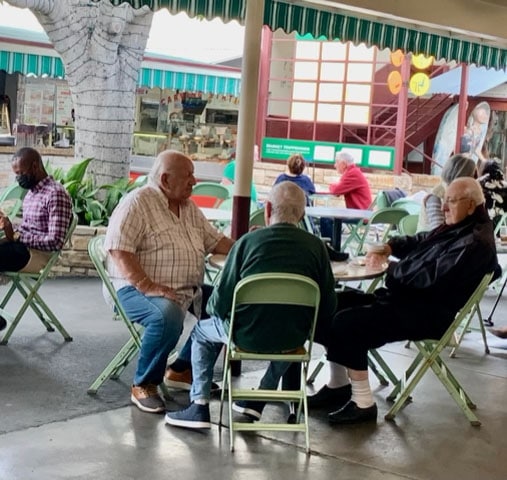
These days, toward the twilight of the pandemic, I am happy to report that the Farmer’s Market remains an excellent place to go and forget how awful everything is. I watched work colleagues gossiping about their boss, a couple on what looked like a first date, and a classic grouping of white-haired gents bent over their coffees, in no hurry at all. They could have been teleported in from New York’s Upper West Side.

These days, toward the twilight of the pandemic, I am happy to report that the Farmer’s Market remains an excellent place to go and forget how awful everything is.

Like a real city, of course, the market does evolve. I can recommend new places and foods like Nonna’s handmade empanadas; Michelina, an artisan French bakery serving authentic tartines and pure butter croissants for breakfast; and the restaurant Singapore’s Banana Leaf, currently getting raves on Eater.com.

An old favorite, Monsieur Marcel has extended his empire along the western rim. In addition to the original wine bar, there is table service at a respectable bistro. A Marcel-branded fish market sells pre-cooked lobster, crab, several types of caviar and a selection of sparkling fresh fish to-go. The small indoor department store is packed with all things French and culinary. Opinel knives and Laguiole flatware, Provencal ceramics, straw baskets, confiture, liqueurs, artisan cheeses, bon bons, party goods, tablecloths, ovenproof porcelain, bottled cherries in brandy. Mostly affordable, and much easier than a trip to Paris right now.

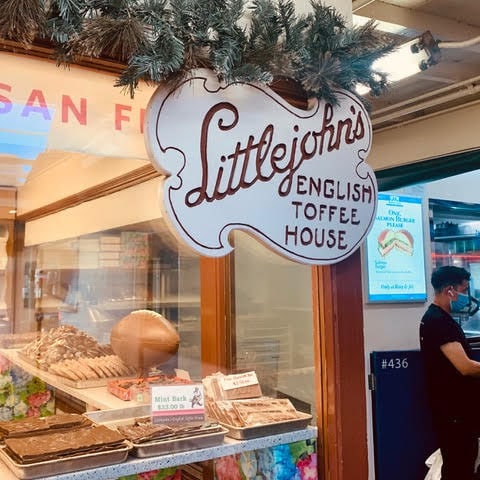
The pièce de résistance however is Littlejohn’s Candies stand. Tucked in a center aisle, this handcrafted candy shop whose logo features a jaunty little man in top hat and tails looked and felt exactly as I remembered it. The owner is still making fresh toffee, pillowy chocolate-dipped marshmallows and excellent caramels also dipped in chocolate.

On my last visit, I overheard the client ahead of me explaining her favorite pandemic pick-me-up to the salesperson ringing up her small order. “I come a few times a week for the free sample,” she said brightly.

As the tagline says, “handcrafting smiles since 1924.”


Los Angeles food writer Helene Siegel is the author of 40 cookbooks, including the “Totally Cookbook” series and “Pure Chocolate.” She runs the Pastry Session blog.

The Farmer’s Market Still Delivers Read More »

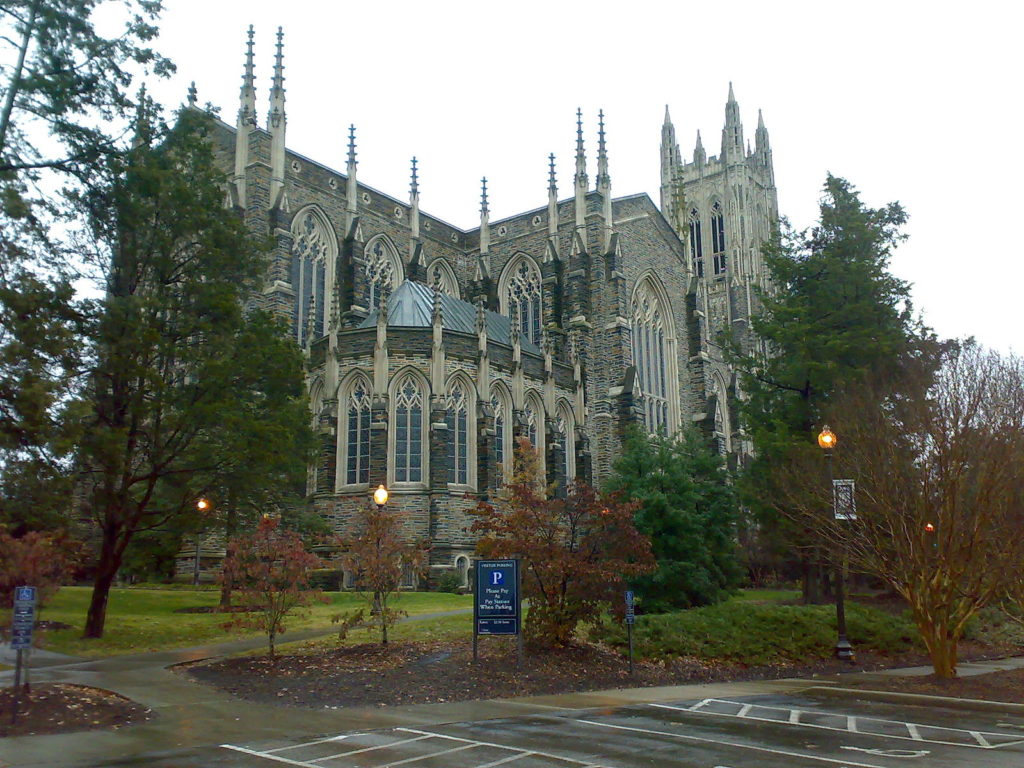
Duke Muslim Prof Says American Muslims “Have an Increasing Antisemitism Problem”

A Muslim professor at Duke University tweeted out a viral thread on January 16 arguing that American Muslims need to have a “tough conversation” about the “increasing antisemitism problem” with their community.

Imam Abdullah Antepli, Associate Professor of the Practice of Interfaith Relations and Associate Professor of the Practice at the Sanford School of Public Policy, wrote that in light of the January 15 hostage crisis at Congregation Beth Israel in Colleyville, TX, “we North American Muslims need to have the morally required tough conversations” about notable antisemitic comments from members of the community. As examples, he pointed to Representative Ilhan Omar’s (D-MN) “It’s all about the Benjamins” remarks in 2019 and Council on American-Islamic Relations (CAIR) San Francisco head Zahra Billoo’s December comments that “Zionist synagogues” are the enemy. 

“We Muslims living North America undeniably have an increasing anti-Semitism problem and seemingly we have yet to even begin to address the issue honestly, morally and accurately … but again we have to,” Antepli wrote. “I am really sick and tired of the over all [the] defensiveness and tribal nature of our reaction to this alarming internal problem. We are better than this! We can no longer pretend the problems of anti-Semitism within us does not exist. There are more urgent moral calls than ‘Let’s not bring shame to our already vulnerable communities.’” He added that not only is the problem “not going anywhere”; it is “getting worse.”

Antepli’s thread received plaudits on Twitter.

“Thank you Abdullah for having the courage to say what many will not,” Stop Antisemitism tweeted.

Sinai Temple Rabbi David Wolpe tweeted to Antepli, “Thank you. It is very tough to confront hatred in one’s own community – it takes courage and on this [Martin Luther King Jr.] day, we salute you.”

George Mason University Law Professor David Bernstein asked in a tweet, “Why doesn’t the media pay more attention to voices like [Antepli] instead of CAIR and the like?”

https://twitter.com/ProfDBernstein/status/1482821621702402059?s=20

On January 15, a gunman, identified as 44-year-old British national Malik Faisal Akram, held four people hostage in Congregation Beth Israel, including the synagogue’s rabbi, Charlie Cytron-Walker. All of the hostages escaped unharmed and Akram was killed. 

According to the hostages, Akram had held them hostage because he thought Jews would have the power to free Aafia Siddiqui, who is currently serving an 86-year life sentence for attempting to kill American soldiers and FBI agents in Afghanistan. Among those who have called for her release include CAIR and former Women’s March Inc. leader Linda Sarsour. CAIR has denounced the hostage crisis.

Duke Muslim Prof Says American Muslims “Have an Increasing Antisemitism Problem” Read More »

Texas Synagogue Gunman Known to British Intelligence

Malik Faisal Akram, 44, who was identified as the gunman who held four people hostage inside a Texas synagogue, was reportedly known to British intelligence agencies and had a criminal record.

Akram held the four hostages in Congregation Beth Israel in Colleyville for nearly 12 hours on January 15; one hostage was released and the rest later escaped after one of the hostages, Rabbi Charlie Cytron-Walker, threw a chair at Akram. Akram was subsequently killed by the FBI Hostage Rescue Team. His reported motivation was the release of Aafia Siddiqui, who is serving an 86-year prison sentence for attempting to kill United States soldiers and FBI agents in Afghanistan. Siddiqui has stated through an attorney that she had nothing to do with the hostage crisis and denounced it.

According to various reports, Akram was put on MI5’s “subject of interest” watchlist for more than four weeks toward the end of 2020 for being a potential Islamist terror threat, but was subsequently removed from it after British intelligence he did not present a terror threat at that time. Akram was reportedly imprisoned in 1996, 1997, and 1999 for violent disorder, property destruction, harassment and theft; he was also arrested in 2012 but the charges against him were dropped. Additionally, Akram was reportedly barred from a British court in 2001 after he allegedly telling one of the court ushers, “You should have been on the f—ing plane.”

A former neighbor of Akram told The Telegraph that in 2017, Akram became “radicalized” and “absolutely obsessive” about Islamic fundamentalism; his family, by contrast, believes in a more moderate form of Islam. Akram’s brother, Gulbar, told The New York Times that Akram had been dealing with mental health issues that were exacerbated after his other brother died from COVID-19 a few months ago.

“Why would a man on MI5 radar be able to obtain visa?” the Simon Wiesenthal Center asked in a tweet. “FBI special forces saved the day. But how did other agencies allow him into [the] US?”

When a reporter asked White House Press Secretary Jen Psaki that very question, she replied: “Our understanding, and obviously we’re still looking into this, is that he was checked against U.S. government databases multiple times prior to entering the country, and the U.S. government did not have any derogatory information about the individual in our systems at the time of entry.” 

Former federal prosecutor Andrew McCarthy wrote in the conservative publication National Review, “Any one of these three criteria—criminal history, mental illness, or terrorism sympathies—is sufficient by itself to exclude an alien from the United States. There is increasingly good reason to believe Akram hit the trifecta . . . and got in anyway.” He also noted that President Joe Biden had revoked a Trump administration executive order requiring foreign nationals to be more extensively vetted prior to entering the United States and “that the FBI is hypersensitive to complaints from Islamist organizations about ‘Islamophobia’ in the application of immigration restrictions.” “So naturally the question arises: How energetic is our counterterrorism vetting of aliens seeking entry into the United States now that Biden has countermanded Trump’s heightened vetting?” McCarthy asked.

Texas Synagogue Gunman Known to British Intelligence Read More »

Paul Koretz, LAPD Chief Announce $50,000 Reward for Information About Suspected Killer of UCLA Grad Student

Los Angeles City Councilmember Paul Koretz and Los Angeles Police Department (LAPD) Chief Michel Moore announced a $50,000 reward for information about the suspected killer of UCLA graduate student Brianna Kupfer in a January 18 press conference.

Kupfer, 24, was working alone at the Croft House furniture store in Hancock Park on January 13 when she was stabbed to death; her body was found by a customer 20 minutes later. The suspect has been identified by police as Shawn Laval Smith, 31; Smith was reportedly arrested several times in North Carolina from 2015-18, once in South Carolina in 2019 and once in Los Angeles County in October 2020. After his most recent arrest, Smith was released on $1,000 bail. He is believed to be homeless, armed, and dangerous. The LAPD announced in a statement that the attack was “random” and they do not have a motive at this time.

The reward could be as high $200,000 thanks to public and private donations, Koretz said. He said that Kupfer “embodied everything that is great about Los Angeles and the entire city should grieve over this senseless act” and vowed to “find this vicious criminal.”

Moore said that the suspect entered various businesses before and after the stabbing, so “someone out there knows this man. You need to come forward.”

Dr. Jennifer Botelho, who owns a chiropractor business next to the Croft House, told CBS Los Angeles that the suspect entered her business sometime before the stabbing. “He came in and asked a couple of questions: ‘Do you do orthopedics here?’ What kind of care we provide, and then he left,” she said. “So he was just here for a few minutes.”

Botelho added: “It’s terrifying. It’s horrible. She’s such a young girl. We feel so horrible for Brianna’s family, and hope we can catch this guy.”

Croft House Co-owner Riley Rea told The Los Angeles Times that Kupfer was “mature beyond her years” and had worked at the store for a year. “Really there are no words to say how shocked we are to lose such a wonderful person,” she said.

Kupfer’s father, Todd, told Fox News that Kupfer wasn’t even supposed to be working that day and that usually the store would have at least two employees in the store at a time. He also said that there seems to be a societal focus on “bestowing favor on people that rob others of their rights. We should be celebrating the good in people and trying to recognize that’s the job [politicians] have, is to try and make communities better, to try and make people care more to not tear down communities by exposing them to people that are falling out the bottom, that really don’t care about other human beings and think they can do whatever they like in our society.”

He added that while he’s not sure if politicians themselves are to blame, “we don’t elect them because we think they’re great, we elect them because we think they can do great things. And it shouldn’t be about them, they should want to be in that role because they want to serve the community, and the community needs love and support. People need to understand what should motivate them in their daily life, and it’s all been lost. All we’re doing is trying to divide people and get angry at everything around us and it’s gotta end.”

Todd also called his daughter “a great model, she was very, very caring … she really is the role model. I’m so proud of what she had accomplished.”

A vigil will be held for Kupfer in front of the store on January 20 at 1:30 p.m.

Paul Koretz, LAPD Chief Announce $50,000 Reward for Information About Suspected Killer of UCLA Grad Student Read More »

The Hostage Crisis and My Conversation with God

If worrying were an Olympic event, Jews would always carry home the gold like Kenyans almost always win the Boston Marathon. Most Jews have never met a piece of information that didn’t trigger acid reflux, dizziness, or at least, baldness.  

Of course, we have much to worry about—you don’t need a list. Our news media, both from the left and the right, are merciless super-spreaders of anxiety and doom. Whether sounding the alarm over the COVID variant of the week, political infighting, social divisiveness, inflation, crime, or supply chain stoppages, what good is a COVID booster when a shot of the news can give you a heart attack?  

Naturally, we Jews are hardest hit by all these dismal dispatches. Over millennia of being persecuted, our genetic code got reprogrammed with indestructibly robust nucleotides carrying worry and fear to every cell. (No supply chain shortages there!) 

But did you know that being Jewish isn’t supposed to mean living life clutching a bottle of Xanax? Even though we continue to face dire threats, including antisemitism and assimilation of existential proportions, God doesn’t want us to worry. From the time of Mount Sinai, He’s assured us repeatedly that if we follow His commandments and walk in His ways, He’ll take care of the rest. I know, this isn’t easy. The bar for good and ethical behavior has been set very high, and nobody — nobody — can do it all. But even with all our failings and rebellions, how many times has God delivered us from seemingly impossible odds? Too many to count.

Harsh times in history may have warped our DNA. Maybe today it stands for Distressed, Nervous and Anxious but it was meant instead to stand for Do Not Agonize.

Harsh times in history may have warped our DNA. Maybe today it stands for Distressed, Nervous and Anxious but it was meant instead to stand for Do Not Agonize.

The last two chaotic years have prompted millions of people to rebel against trusting authority figures at every level. Who can blame them? After all, so many people have been so spectacularly, arrogantly wrong about so many vital things. Today, we watch those in charge flailing around as they announce their new rules and ideologies, reminding me of the Wizard of Oz after Toto pulled back the curtain, revealing him as a hapless fake, pulling on the pointless levers of his pointless machine.   

I believe that God loves us and doesn’t want us to live in fear, sickness, loneliness, or any other forms of suffering. Nobody can know why God has allowed our current agonies and turmoil to menace the world, but I see a few silver linings. This includes seeing that more people recognize what God told us all along—that it is folly to trust in humankind. No human being, no matter their title or official powers, can offer our deliverance. There is one true helper and healer.  

When Shabbat ended on January 15 and I saw the horrible news about the hostage situation at Congregation Beth Israel in Colleyville, Texas, I told my husband about it. We both stopped what we were doing, sat down, and started reciting some Tehillim together. Psalms speak to every aspect of the human condition, and we particularly turn to them in times of trouble. Our hearts moved along with our lips. 

“Save them, HaShem!” I demanded, imagining thousands of other Jews at the exact same moment also praying for the hostages. It should not take moments like this for us to be “as one person with one heart,” as we are meant to be. When we heard the ordeal had ended as it did, we thanked God aloud and relaxed. Reciting the Tehillim was a formal form of prayer, but I added my own inward, impromptu pleas. Praying made me proactive instead of reactive, anxiously waiting for news. It turned worry into a conversation with God and helped me feel empowered instead of helpless. 

We don’t have to wait for the next crisis to start the conversation.


Judy Gruen’s books include “The Skeptic and the Rabbi: Falling in Love with Faith.” 

The Hostage Crisis and My Conversation with God Read More »