fbpx

January 19, 2022

From Santa Monica to Colleyville

The devil went down to Texas last weekend, but on the way, he stopped in Santa Monica. 

The hostage crisis in the small Texas town of Colleyville’s only synagogue that captivated a worldwide audience last Saturday was a narrowly-averted tragedy. It was also a reminder that the slaughters in Poway and Pittsburgh were not aberrations, but rather examples of a persistent and ongoing threat that Jews will continue to face in this country and elsewhere.

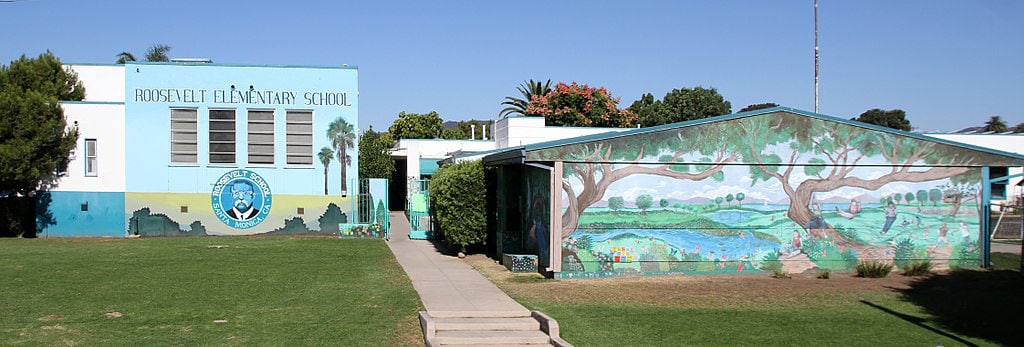
Two days before Jewish hostages were taken in Texas, a less visible act of terrorism happened in Santa Monica. 

But two days before the gunman invaded Congregation Beth Israel during Shabbat morning services, a less visible and less violent act of terrorism shook the community of Santa Monica.

When school district employees at seven Santa Monica elementary and middle schools arrived at work last Thursday morning, they were greeted by antisemitic posters and flyers that accused Jews of being responsible for the anti-vaccine movement that has been instrumental in the coronavirus’ continued spread.

No bullets were fired, no lives were lost, and those who posted their invective did so without daring to appear in public and stand behind their noxious views. So there was no personal encounter between the intruders and their targets, and there was much less in-the-moment drama for the media to cover. But angry and ugly propaganda inevitably serves to normalize antisemitism and provides false comfort to those considering violence. And so there is a direct line between Santa Monica and Colleyville, between those who advertise their hate and those who act on it, between flyers and posters on a schoolhouse wall and gunfire inside of a temple sanctuary. 

The leaflets plastered on the seven Santa Monica schools accused Jews of fueling the movement against COVID vaccines, a twist on previous accusations that blamed Jews for spreading the virus. 

But both are merely contemporary takes on a series of charges that have been leveled at Jews throughout history. To wit: the terrorist attacks of 2001 were a Jewish conspiracy. The Great Recession was caused by Jewish greed. The hostage-taker in Texas claimed that Jews were responsible for the incarceration of a Pakistani terrorist. 

According to Jew haters, we control the government, the media and the world banking system. We were responsible for both Gulf wars, both World Wars, as well as almost any other outbreak of violence, even when perpetuated by our fiercest critics. And when the COVID pandemic has passed, there will be new charges, new allegations and new accusations against the Jewish community for every injustice, every inequity and every possible source of unhappiness or dissatisfaction in society.

So this isn’t going away anytime soon. Which means we need to revisit our strategy if not for stopping these attacks, at least minimizing their impact. One of the least-noticed aspects of the Texas crisis were the statements from the Council on American-Islamic Relations (CAIR) and other Muslim groups condemning the attack. To their credit, CAIR’s leaders temporarily set aside the immense and often wrenching disagreements between our two communities to make it clear that this type of attack is an unacceptable way to resolve these differences.

It’s likely that some of CAIR’s motivation was the organization’s self-interest, to distance themselves from an indefensible violent act. But it was also an example of solidarity, a recognition that mosques can be the target of this type of hostility as often as synagogues. Organizations like New Ground, a Muslim-Jewish partnership in Los Angeles, work every day to create and strengthen relationships between the two communities. It shouldn’t require a hostage situation – or worse – to remind ourselves that even strident geopolitical arguments should not be an obstacle to greater cohesion and cooperation.

Such efforts are necessary with other communities that face similar anger and similar hatred, both on the political left and the right. Antisemitic posters at a Santa Monica school aren’t just a Jewish problem, any more than anti-Asian hostility during a pandemic or anti-immigrant fervor during a border debate is only relevant to the targets of that hostility. These coalitions are in dire need of strengthening: that was the most important message to come out of Santa Monica and Colleyville last week.


Dan Schnur is a Professor at the University of California – Berkeley, USC and Pepperdine. Join Dan for his weekly webinar “Politics in the Time of Coronavirus” (www/lawac.org) on Tuesdays at 5 PM.

From Santa Monica to Colleyville Read More »
Five Lessons from Colleyville

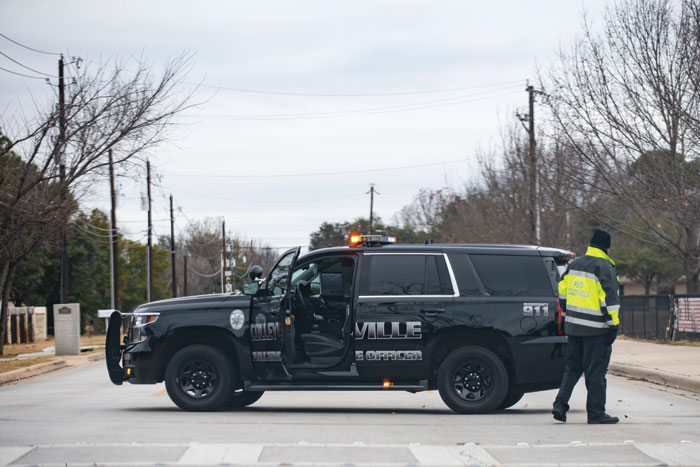
No Jews were killed when a gunman took four hostages at Congregation Beth Israel in Colleyville, Texas on January 15. It was nothing less than a miracle. But that doesn’t mean we shouldn’t learn as much from this incident as we did from deadly attacks that targeted Jews around the country, from Pittsburgh and Poway to Jersey City (remember Jersey City? Assailants killed three people at a kosher market there in December 2019). I, for one, am treating the hostage attack in Colleyville as if Jews had been killed, because they easily could have, and as a reminder to not brush off this moment of time in American Jewish history. I’ve learned many lessons from Colleyville:

We have allies, many of them wonderful and in positions of great power. But more than ever, I now believe that we are increasingly on our own. 

Jews Have Allies, But We’re Still on Our Own 

Jews have allies, many of them wonderful and in positions of great power. But more than ever, I now believe that we are increasingly on our own. 

This is less so in America, fortunately, but Colleyville taught me that even in this exceptional country, we have to fight for ourselves. Case in point: When Jews are killed simply for being Jews, they are buried twice: Their bodies are buried in the ground, and their stories are buried in the press and on social media. Don’t believe me? See last Sunday’s print edition of The New York Times. The major story on Colleyville was on the 19th page. Yes, the 19th page. 

Social Media, By Its Nature, Magnifies Performative Sympathy

Some Americans couldn’t have cared less about Jews being taken hostage. The day after the incident, #antisemitism wasn’t even in the top 30 trending Twitter hashtags in this country.

And then, there was the repulsive silence of many elected officials during the hostage situation. For hours, they didn’t say anything, and yet, they spoke louder than anyone, because their silence said it all. Rep. Rashida Tlaib (D-MI), who has repeatedly put Jews at risk with her vocal Israel hatred, tweeted support to the “Beth Israel community and synagogue family.” In response, AISH HaTorah CEO Rabbi Steven Burg replied, “Said the arsonist to the firefighters…” 

Jews Know When We’re the Target

Like many American Jews, I was horrified when an FBI special agent initially stated that the incident wasn’t “specifically related to the Jewish community.” 

On January 17, the FBI said it is now investigating the hostage standoff as a “terrorism-related incident.” That’s an upgrade, though it still doesn’t mention antisemitism. But ask many Jews, from wholly secular to totally observant, and they will assert: If it walks like an antisemite and talks like an antisemite, it probably is an antisemite. 

The assailant, 44-year-old Malik Faisal Akram, took four Jews hostage in an attempt to secure the release of his self-proclaimed ideological “sister,” Aafia Siddiqui, whom Afghan police arrested in 2008. Siddiqui possessed instructions on how to make explosives as well as papers describing New York landmarks. According to prosecutors, after her arrest, she picked up an M4 army rifle and shot at American soldiers. Nicknamed “Lady al-Qaeda,” Siddiqui was convicted in 2010 and is currently serving an 86-year prison sentence in Texas for the attempted murder of American troops and FBI agents. 

Here’s the best (and by that, I mean worst) part of Siddiqui’s story: During her trial in the U.S., she demanded that all jurors be DNA-tested to ensure they weren’t Israeli or Zionist, just “to be fair.” She also dismissed her legal team because, you guessed it, she said her lawyers were Jewish. Naturally, it takes a whole other level of Jew hatred to do such a thing. In a letter to then-president Barack Obama, Siddiqui said that Jews “have always back-stabbed everyone who has taken pity on them and made the ‘fatal’ error of giving them shelter.” Did I mention that Siddiqui is a neuroscientist?

Jewish Kindness Is Ubiquitous 

It’s truly a sad day when Jewish kindness becomes a liability, especially at a synagogue. 

Ironically, it was Akram, the deceased hostage-taker, who knocked at the welcoming door of Congregation Beth Israel on January 15. Rabbi Charlie Cytron-Walker, the courageous rabbi who is being praised for his calming presence amid 11 hours of terror, allowed Akram to enter believing he needed shelter. Cytron-Walker told CBS that he not only let Akram inside, but made him a cup of tea. This is not because the rabbi was naive, but because as someone who has studied Judaism, Cytron-Walker knows about the Jewish imperative of offering hospitality to strangers (“hakhnasat orchim”). It’s truly a sad day when Jewish kindness becomes a liability, especially at a synagogue. 

Words Matter, Especially If You’re CAIR 

Remember what I said about Siddiqui, the Pakistani woman convicted of trying to kill Americans, who also demanded DNA tests to prove the jurors in her case weren’t Zionists? In November 2021, the Texas chapter of CAIR (Council on American-Islamic Relations) demanded her release during an online event titled “Injustice: Dr. Aafia and the 20-year legacy of America’s wars.” The speakers were none other than Siddiqui’s attorney and everyone’s favorite Jew-basher, Linda Sarsour. That same month, CAIR and other American Muslim organizations met with members of Congress to lobby for Siddiqui’s release during a “Free Dr. Aafia Advocacy Day” in Washington, D.C. How do we know that Akram, the hostage-taker, didn’t interpret such advocacy as a literal call to action? To be fair, CAIR national deputy director Ed Ahmed Mitchell called the incident “antisemitic,” adding, “We stand in solidarity with the Jewish community … No cause can justify or excuse this crime.” 

No cause, with a few exceptions. Let us remember the words of CAIR San Francisco executive director Zahra Billoo, who, last November, warned listeners at an American Muslims for Palestine convention: “Know your enemies.”

She also said, “When we talk about Islamophobia, we often think of the vehement fascists … but I also want us to pay attention to the polite Zionists, the ones that say, ‘Let’s just break bread together’ … We need to pay attention to the Anti-Defamation League, we need to pay attention to the Jewish Federation, we need to pay attention to the Zionist synagogues, we need to pay attention to the Hillel chapters on our campuses.”

Does CAIR really believe that words don’t matter? On Twitter, Adiel Cohen, a pro-Israel influencer based in Tel Aviv, astutely observed, “Remember a month ago when CAIR’s Zahra Billoo said we ‘need to pay attention to ‘Zionist’ synagogues’? Well, attention was paid.”

In the end, we’re still reckoning with what happened in Colleyville. If Jews can be taken hostage in a previously little-known town in Texas, they are at risk everywhere. We all need to sound the alarm of Jew hatred with greater magnification and gravity: Houston, we have a problem.


Tabby Refael is a Los Angeles-based writer, speaker and civic action advocate. Follow her on Twitter @RefaelTabby

Five Lessons from Colleyville Read More »

“Stop Making This About You,” Media Says to Jews After Attack On Jews

On Saturday, an armed radical Islamic terrorist, or what most publications are harshly referring to as a “British man,” took a group of four congregants, including the rabbi, hostage at Congregation Beth Israel, a Reform synagogue in Colleyville, Texas. Upon hearing the news, the same thought crossed my mind that crossed FBI agent Matt Desarno’s, which was, “What the hell does that have to do with Jews?”

According to the FBI’s statement, the studly hostage was “singularly focused on one issue,” and it wasn’t the Jews. It takes a special kind of assurance to announce that attacking Jews because they are Jews, inside of their Jewish sanctuary, along with their chief Jewish official, is actually “not related” to the Jewish community. I’m glad Agent Desarno was up to the task. I can just see him and his team working hard to connect the dots, putting two and two together to make fifteen.

The BBC and Associated Press couldn’t wait to quote DeSarno, reporting “not related to the Jewish community” as the headline of the story, just in case someone might notice any semblance of  a “pattern,” or “connection,” or “mild association” with synagogues or Jews. The New York Times prefaced their article with, “The suspect is dead, officials said, and his motives are still under investigation.” Motive? There couldn’t be. If only documentary teams didn’t take so much time and money, maybe we could get to the bottom of this New York Times crossword puzzle. But mysteries are really hard to solve.

The issue was so confounding that not even the President of the United States could make sense of it. While declaring twice that the event was certainly a terror attack, Biden still wasn’t confident regarding who exactly was the target of this terror. “I don’t think there is sufficient information to know about why he targeted that synagogue … why he was using antisemitic and anti-Israeli comments. I … we just don’t have enough facts,” Biden said while high on shrooms, where not only colors but motives can alter in appearance. The White House then offered some clarity, revealing that “enough facts” is the equivalent of no less than 10 trillion “Heil Hitlers.”

The rumor going around that this was an antisemitic crime is highly improbable. This terrorist probably didn’t realize he was even in a synagogue. It’s Texas, after all, where temples are on every block and super easy to find. Synagogues are like the Starbucks of the deep South. There’s no official quote, but I’m sure this guy said “oopsie” as he walked into Saturday morning services, baffled upon arriving in a building with a huge Jewish star and the word “Israel” on the front of it, thinking it was nothing more than a sweet ice-cream shop. Unfortunately for him, Beth Israel doesn’t sell any ice-cream, not even the dirty kosher kind.

Even when an armed man attacks Jews, even when a terrorist explains himself using antisemitism, even when a fanatic calls our full names and social security numbers, looks us directly in the eye and points, we will assume nothing. It’s not them, but we the Jews, who should stop making it about us.

The armed terrorist, Malik Faisal Akram, demanded the release of his (possibly figurative) sister, Aafia Siddiqui, better known as “Lady Al-Qaeda.” Siddiqui has unequivocally no connection with Jews other than when she happened to mention that the case brought against her for trying to kill American soldiers was a Jewish conspiracy, dismissing her lawyers based on their Jewish identity, and then requesting that Jews be excluded from her jury and get DNA tests to ensure they did not have a Zionist or Israeli background. Seems like a reasonable and impersonal list to me. Sure, she did also write a warning letter to former President Obama that said, “Study the history of the Jews. They have always back-stabbed everyone who has taken pity on them and made the ‘fatal’ error of giving them shelter … This is why ‘holocausts’ keep happening to them repeatedly!” But are we so blind that we can’t understand that this was only one letter, to one president? It seems quite far-fetched to say that these terrorists are even thinking about Jews at all. “They totally got over them last summer and they are thinking about a million other things these days. Um, hello, there’s a pandemic and it’s football season,” said one witness.

During the eleven-hour ordeal, Akram forced the Colleyville Beth Israel rabbi to call another rabbi in New York, which makes sense because everybody knows that all rabbis are best friends, if not related. He also assumed this “New York gefilte fish,” as he liked to call the rabbi, had the authority to release a convicted terrorist. This is clear confirmation that all Jews have the power to do anything they want, whenever they want. If you need more evidence, just ask the rabbi who was being held hostage, in fear for his life.

The nation’s largest Muslim civil rights and advocacy organization, CAIR, recently supported one of their executive directors, Zahra Billoo, who said, “Zionist synagogues are your enemy.” CAIR also created a campaign hosted by Linda Sarsour to free the very same terrorist, Aafia Siddiqui, that Akram was screaming about in the synagogue. Regarding the recent misunderstanding in the Texas synagogue, a CAIR representative said: “We’ve totally condemned the attack so everything is okay now. After low key rolling our eyes, raising a middle finger, and urging allies to stand up and say, ‘stop making this about you’ to any Zionist who happens to be or not be Jewish, we feel like we are really making progress.”

It’s understandable. If you were a journalist, politician or public activist, would you really want to use inappropriate words like “antisemitism” or “Jew”? I mean, one is too long and the other is too short, gross and icky. So let’s take society’s advice. Even when an armed man attacks Jews, even when a terrorist explains himself using antisemitism, even when a fanatic calls our full names and social security numbers, looks us directly in the eye and points, we will assume nothing. It’s not them, but we the Jews, who should stop making it about us.


Alexandra Ozeri is a writer living in Los Angeles.

“Stop Making This About You,” Media Says to Jews After Attack On Jews Read More »